Sleep and Anxiety: How to Clear Your Mind Before Bed
Key facts at a glance
- What to know right away: Struggling with sleep and anxiety? Clear your mind before bed with Luxury Relax mattresses: 10-year warranty, 10-night trial, free 24/48h delivery. Order now!
- Trial, warranty and delivery: 10 trial nights · 10-year warranty · Free delivery 24/48h
- Who it is for: Why anxiety keeps you awake
- What this guide covers: Why anxiety keeps you awake · What to do when thoughts arrive in bed · Daytime habits that calm the evening
- How to book or get help: Get your free consultation · 0362 222407 · info@luxuryrelax.it
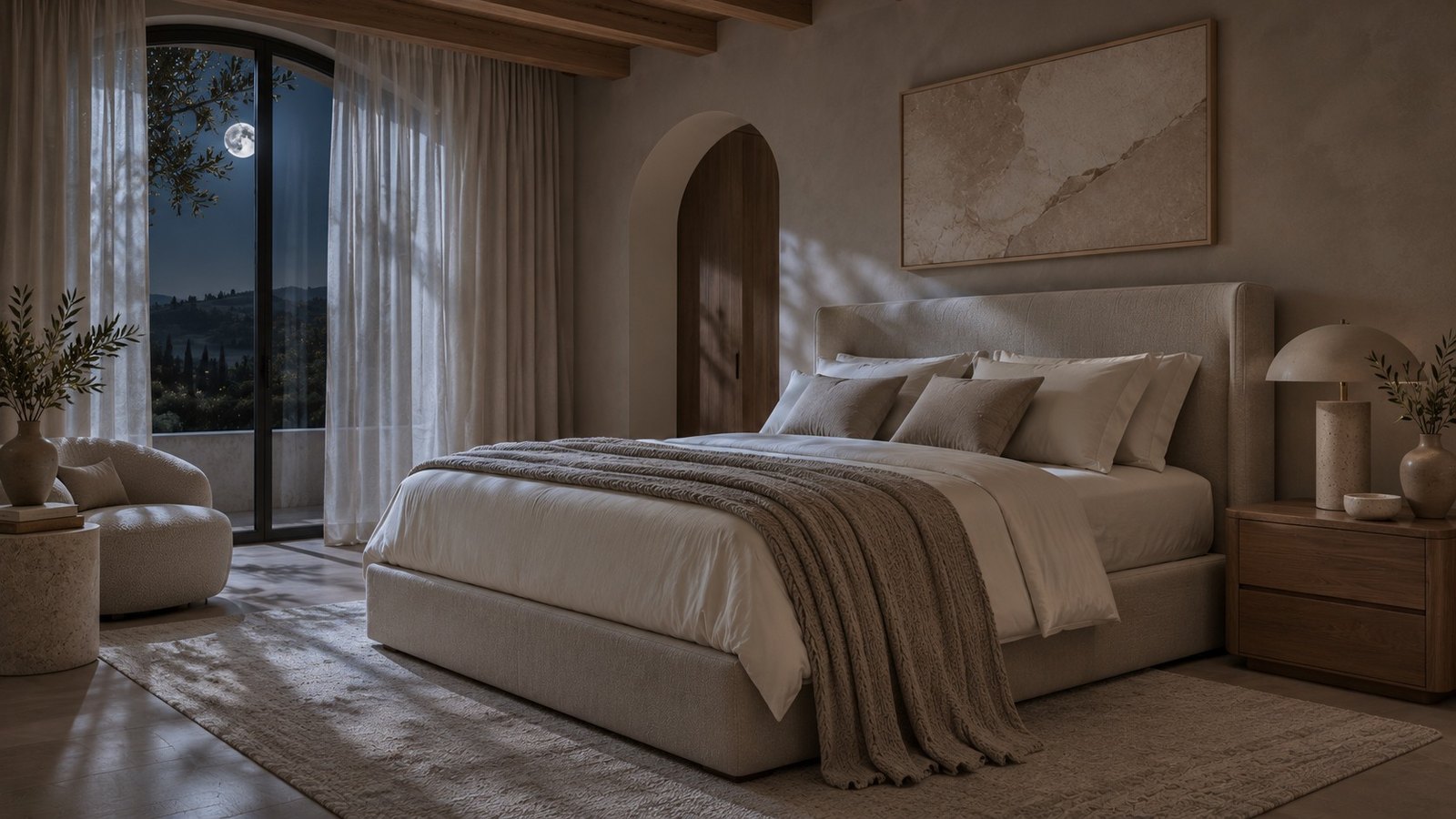
It is 23:40. The lamp has been off for ten minutes, and your mind has just started working. You replay tomorrow's meeting, add a forgotten shopping item, then a bigger worry you kept at bay all day. Your heartbeat quickens, the covers feel wrong, and sleep slips further away. If this scene sounds familiar, you are not alone. Evening anxiety is one of the most common reasons falling asleep arrives late and stays fragmented.
The point to understand is that anxiety is not an enemy of sleep to fight with force. It is an alert system that must be guided back to calm with precise signals: your breathing, your routine, the room, the bed. Each of these controls carries more weight than it seems, and acting on all of them together changes your nights within a few weeks.
In this guide we look at why anxiety blocks sleep and what to do about it, from the first intrusive thought to the choice of mattress. You will find practical steps for the hours before bed, habits that protect the evening, and details on how the sleeping surface affects night awakenings. If you want to start with the environment, the complete Luxury Relax review explains how a well-designed bed reduces micro-awakenings and leaves more room for deep rest. Let us begin with the mechanism.
Why anxiety keeps you awake
When anxiety rises, the body activates its alert response. Cortisol and adrenaline increase, the heart rate speeds up, and muscles tense up. It is the same system that saves you from a real danger, but at night it has nothing to work on, so it turns its attention to your thoughts. The result is a body ready to run while all you want is sleep. Shoulders lift toward the ears, the jaw tightens, and shallow chest breathing replaces slow abdominal breathing.
A vicious cycle adds to this. You look at the clock and calculate how many hours remain. If I fall asleep now I get five hours. That calculation is itself an activator because it shifts attention from calm to performance. The more you check whether you are sleeping, the more awake you stay. It is the same reason lying awake staring at the ceiling at three in the morning feels like a sentence. You are trying to force a process that only happens when you stop monitoring it. Sleep is not something you can decide to do. It is something that arrives when the conditions are right.
There are physical causes too. Caffeine taken after 16:00 has a half-life of about five hours, so half a cup of coffee at 18:00 is still active at midnight. Phone light late at night delays melatonin, the hormone that prepares the body for sleep. A warm room above 22 degrees stops the body from entering deep sleep. Even alcohol, often used to relax before bed, fragments the second half of the night and raises heart rate once it wears off. Anxiety finds fertile ground in conditions you can correct one at a time.
One useful detail: evening anxiety does not look the same for everyone. Shift workers, parents of young children, and people going through a change of circumstances face different risk windows. Keeping a diary for two weeks, noting the time you lie down, your tension level from 1 to 5, and any night awakenings, makes the pattern visible. After fourteen lines you already know whether the problem is your routine, your environment, or the mental load of your day. Write the entries by hand in the morning rather than at night. Doing it before bed turns the diary into another task and feeds the cycle you are trying to break.
What to do when thoughts arrive in bed
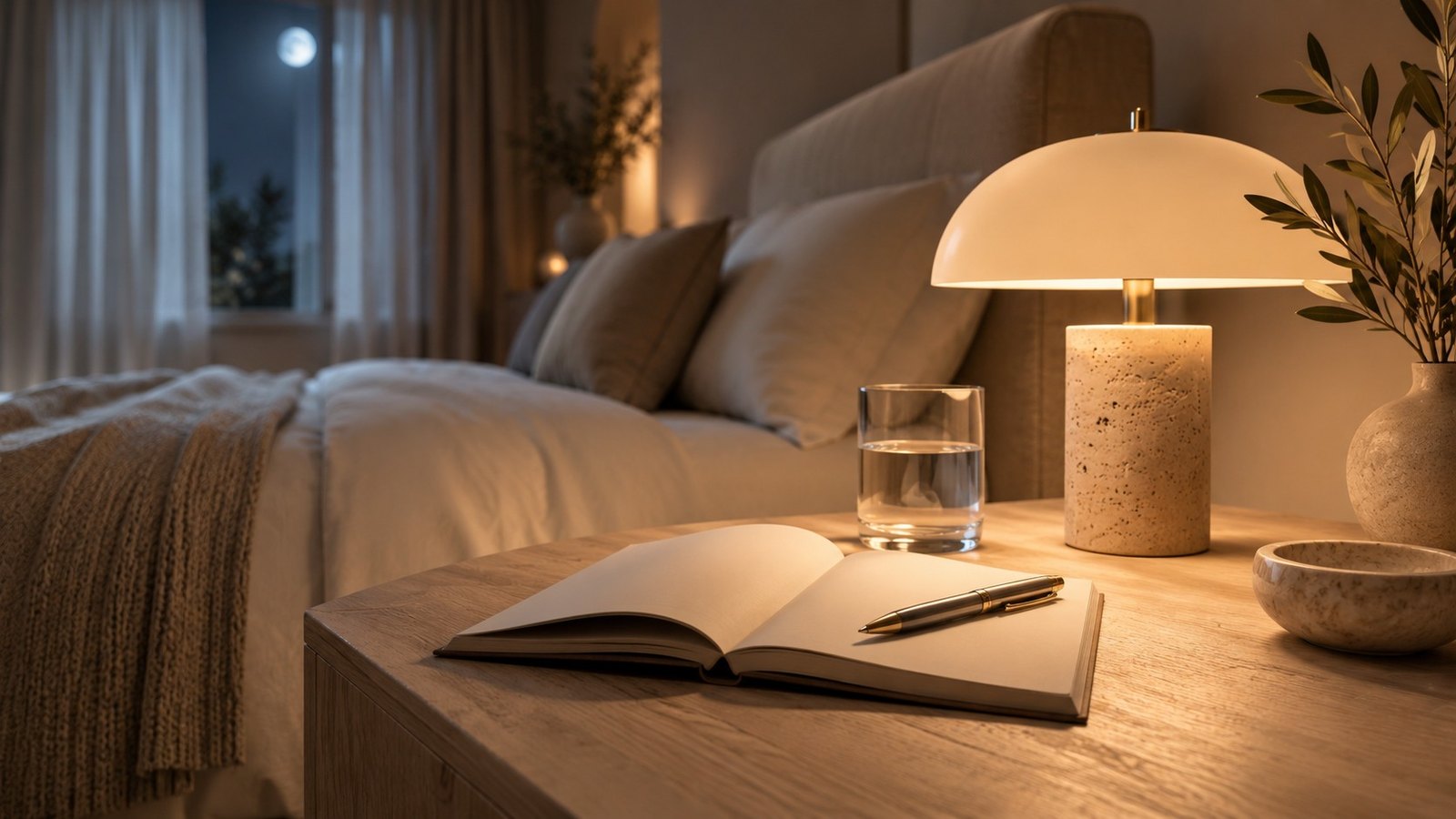
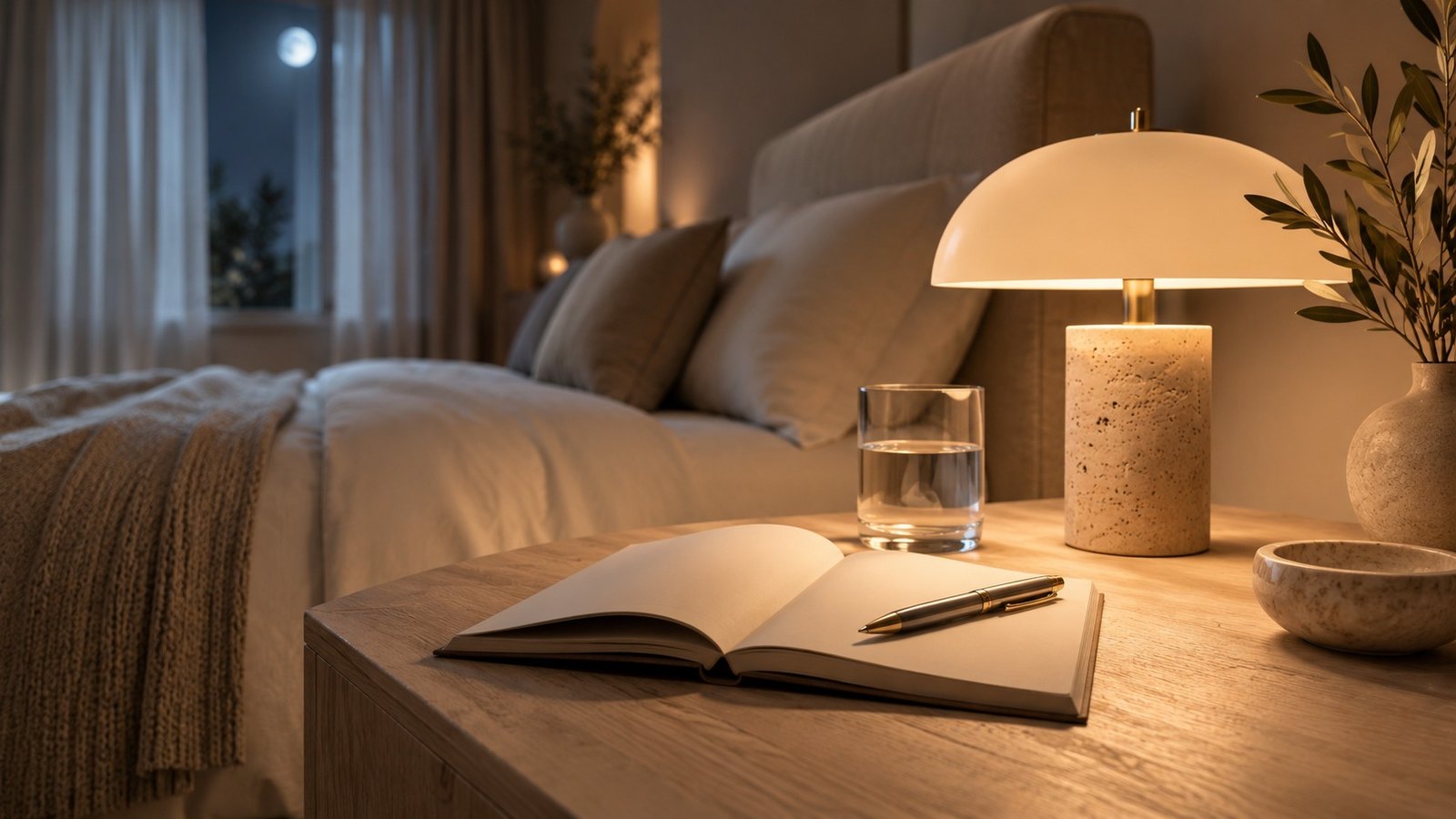
The first rule is not to fight thoughts but to channel them. When you notice your mind chasing a list, get up and write everything on a sheet of paper next to the bed, quickly and without order. Ten lines are enough. The brain lets go of a thought only when it knows the thought has been captured, and paper does that work for you. The sheet stays there until morning. You do not open your phone to reread it. Keep the paper and a pencil on the nightstand so the tool is always within reach and you do not have to search for it in the dark.
The second tool is slow breathing. Try the 4-7-8 count: breathe in through your nose counting to four, hold for seven, breathe out through your mouth counting to eight. Four cycles are enough to lower your heart rate and tell the body there is no danger. If counting feels heavy, keep it simple. Make each exhale longer than each inhale for a full minute. The exhale is the part that activates the parasympathetic nervous system, the branch that promotes rest. Inhale slowly through the nose and let the belly rise rather than the chest.
The third step is to anchor your attention to your body. Feel the weight of your shoulders on the mattress, the temperature of the covers, the point where your heels touch the bed. Move your attention from one contact point to the next without trying to change anything. This anchor shifts attention from thoughts to sensations and brings the nervous system back toward calm. It follows the same logic as many evening meditation and relaxation techniques, with one difference. Here the practice lasts a minute and you do it already lying down. The goal is not to empty the mind but to give it something neutral to hold on to.
If sleep has not come after twenty minutes, get up. Go to another room with warm, low light, do something dull, and return to bed only when real drowsiness arrives. Folding laundry, reading a paperback with a dim lamp, or listening to a slow radio programme works well. Lying in bed ruminating teaches the body that the bed is a place for anxiety. Changing rooms, even twice in one night, rebuilds the right association. Over time the brain links the bed with sleep again instead of with worry. Avoid screens during these breaks because the light and the content both push arousal higher.
Daytime habits that calm the evening
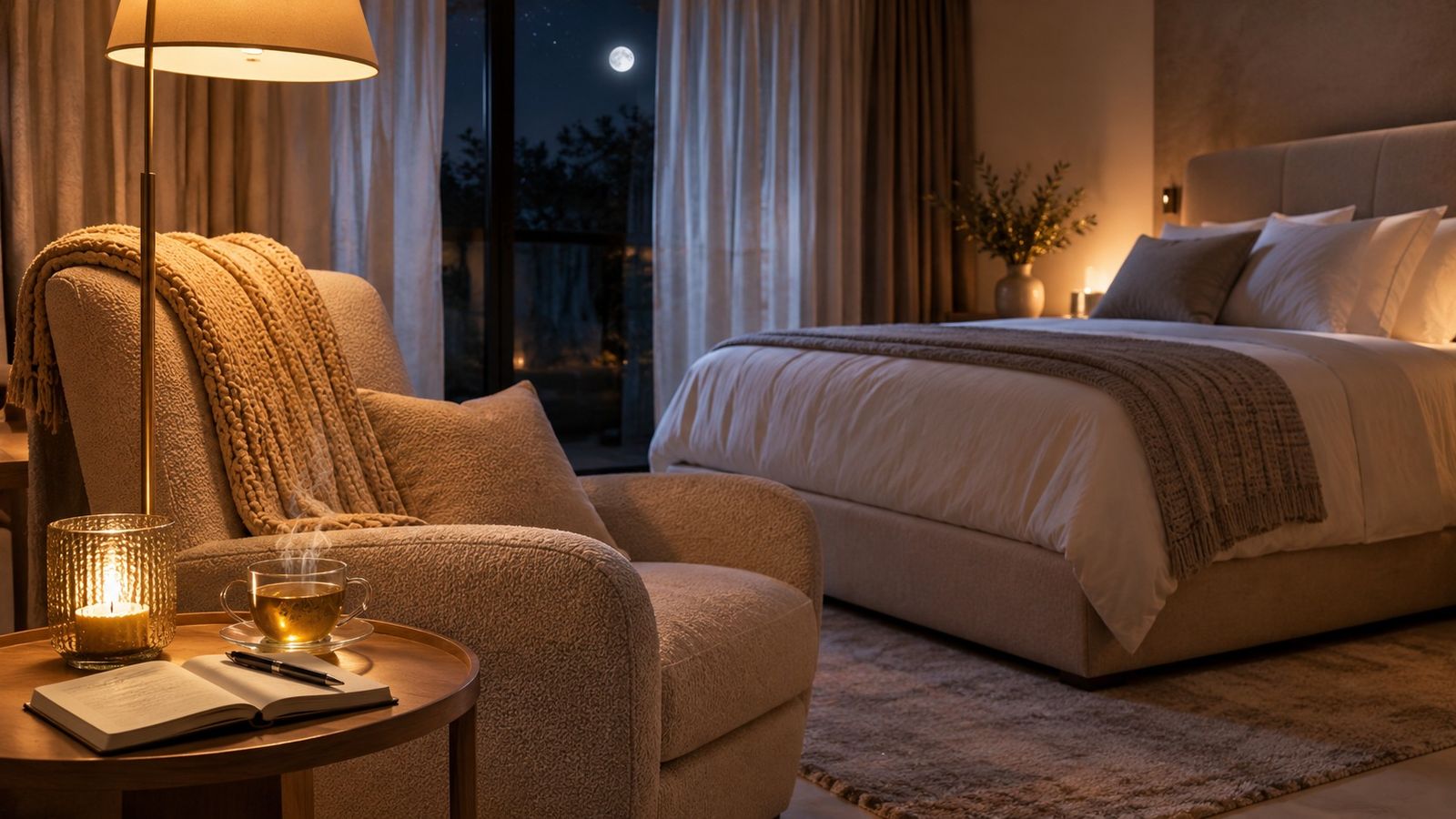
Nighttime anxiety is set up during the day. If you reach the evening with your nervous system already loaded, no evening trick will be enough. The strongest lever is to build a bridge between the afternoon and the night. Create one hour before sleep where the day slows down in a way you can recognise. Light a lamp instead of the ceiling light. Dim the kitchen. Let the house signal that the working hours are over.
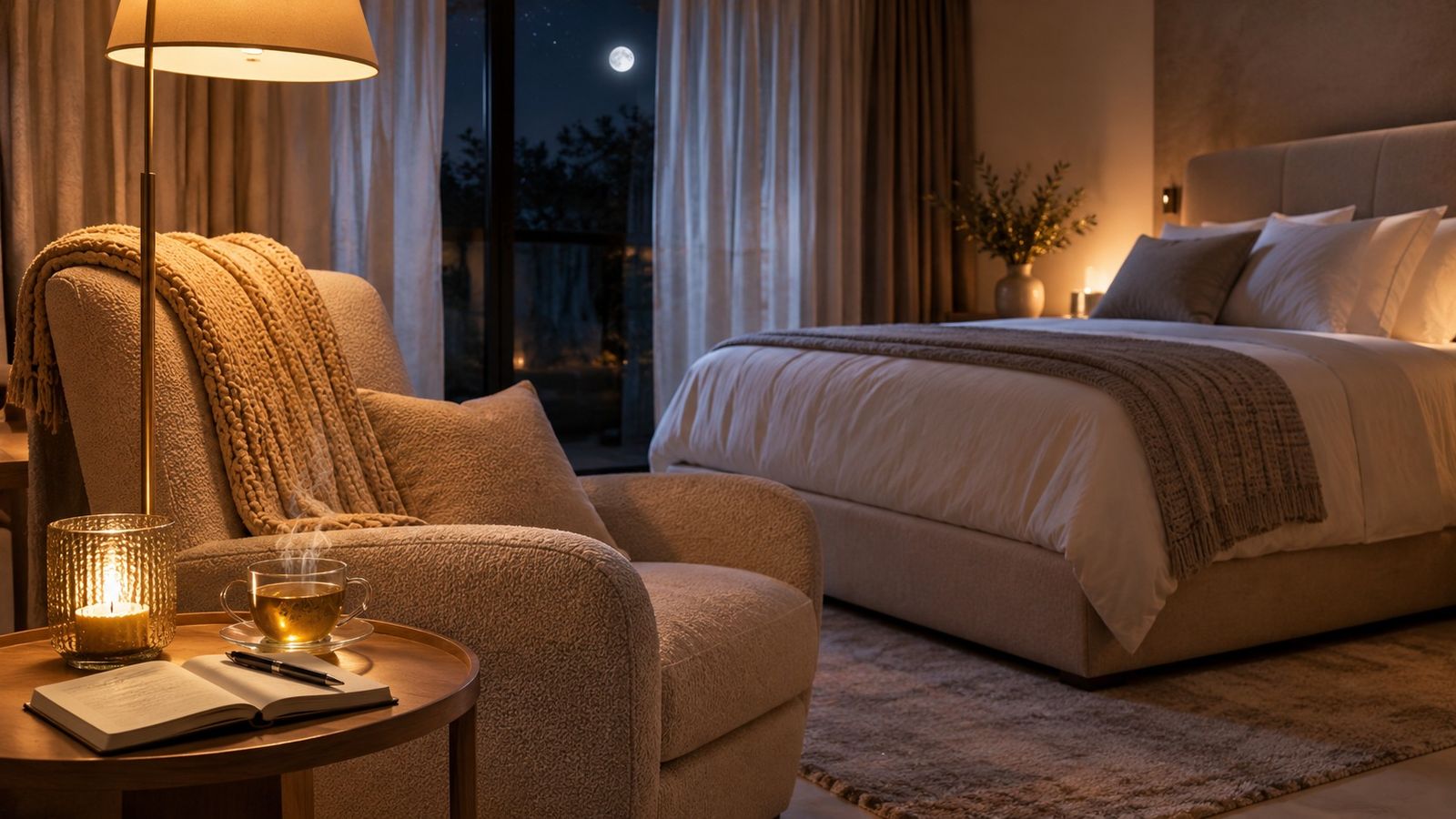
The first habit is to protect the last sixty minutes. Warm light, phone in another room, low-intensity activity: reading, packing tomorrow's bag, a short walk if it is not too cold outside. No serious discussions, no work emails, no streaming news. The brain reads those stimuli as emergency signals and carries them to bed with you. If you must use a phone, switch it to night mode and keep the screen brightness at its lowest. Better still, put the phone to charge in the kitchen or hallway.
The second habit is movement. Thirty minutes of brisk walking or a moderate workout in the afternoon reduces muscle tension and speeds up falling asleep at night. The effect comes from adenosine, a chemical that builds up while you are active and promotes sleepiness later. One caution is timing. Intense activity in the three hours before bed raises body temperature and delays sleep. Train between 17:00 and 19:00 if your work schedule allows it. That window leaves enough time for your body temperature to drop before you lie down. If you only have late evening slots, choose yoga or gentle stretching over high-intensity intervals.
The third habit is to handle thoughts before they become an emergency. Spend fifteen minutes in the afternoon, perhaps after lunch, listing what you need to do and any open problems, each with a concrete first step. This way the list is already ready when you lie down and does not have to be built at midnight. Anyone in a demanding period can manage evening stress with more structured routines, keeping the same logic: anticipate the load instead of suffering it under the covers. A written list also makes the workload feel finite. Open-ended worries grow in the dark; a numbered plan does not.
One last point that is often underestimated: stimulants. Coffee, black tea, cola, and some energy drinks stay active for hours. If evening anxiety is strong, move your last coffee before 14:00 and watch what happens over two weeks. Many people notice the difference before they need anything else. Even green tea contains enough caffeine to affect sensitive sleepers, so check labels and switch to herbal infusions after mid-afternoon if needed. Decaf coffee still contains a small amount of caffeine, so treat it with caution if you are very sensitive. Warm milk or chamomile are gentler options without a measurable stimulant load.
The bedroom and the bed as allies
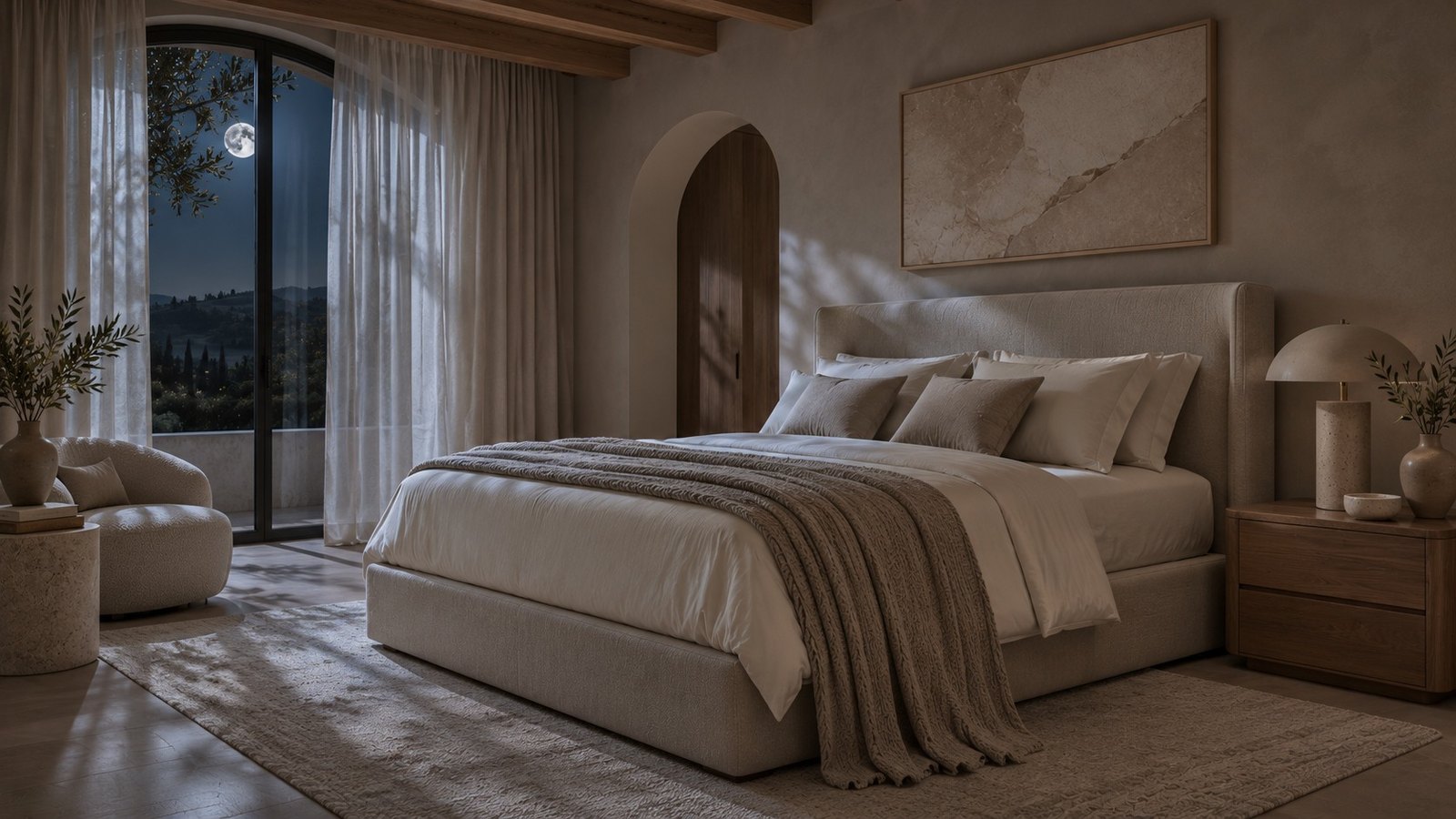
When your mind is restless, the body needs an environment that says: here is where you sleep. Three elements count more than the rest: darkness, temperature, and support. They are three independent levers, and acting on all three changes sleep quality in a measurable way. You can start with any one of them and add the others over the following days.
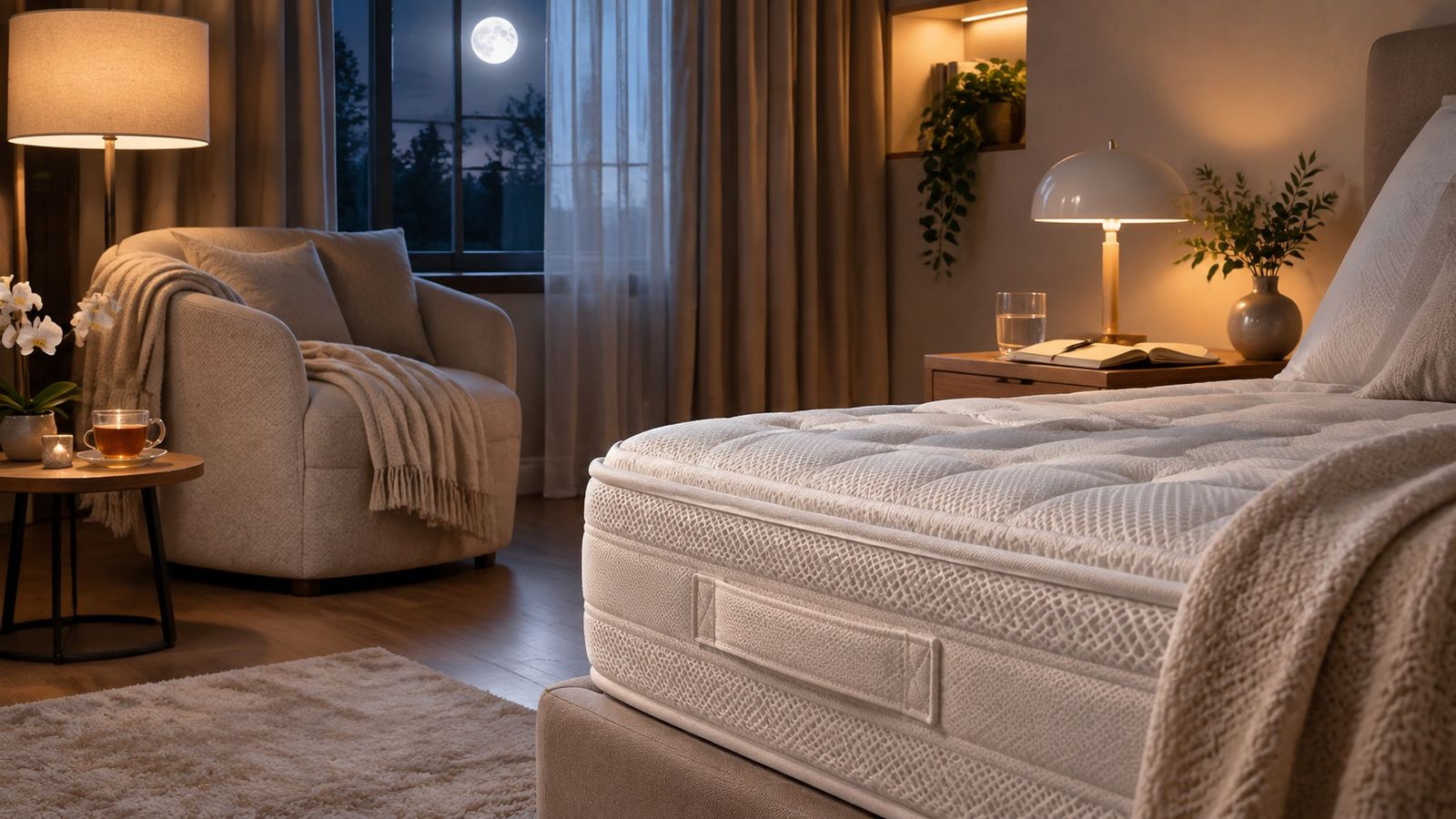
Darkness must be complete. Blackout curtains at 100 percent, no glowing indicator lights, no phone charging on the bedside table. Residual light breaks deep sleep and increases awakenings, which in turn feed the anxiety of the following day. Use a sleep mask if curtains cannot block street lights. Cover or unplug devices with LED indicators. A small alarm clock with a dim face is a better option than your phone on the nightstand.
The ideal room temperature is between 16 and 19 degrees. Cooler than most people expect, and it is precisely the cool air that lets the body descend into deep rest. A room above 22 degrees keeps sleep shallow and increases awakenings, which adds to the anxiety you already carry. If the room feels cold at first, warm the bed with a blanket before you get in rather than raising the thermostat. Keep a window cracked open in spring and autumn for fresh airflow. Humidity between 40 and 60 percent supports comfortable breathing through the night.
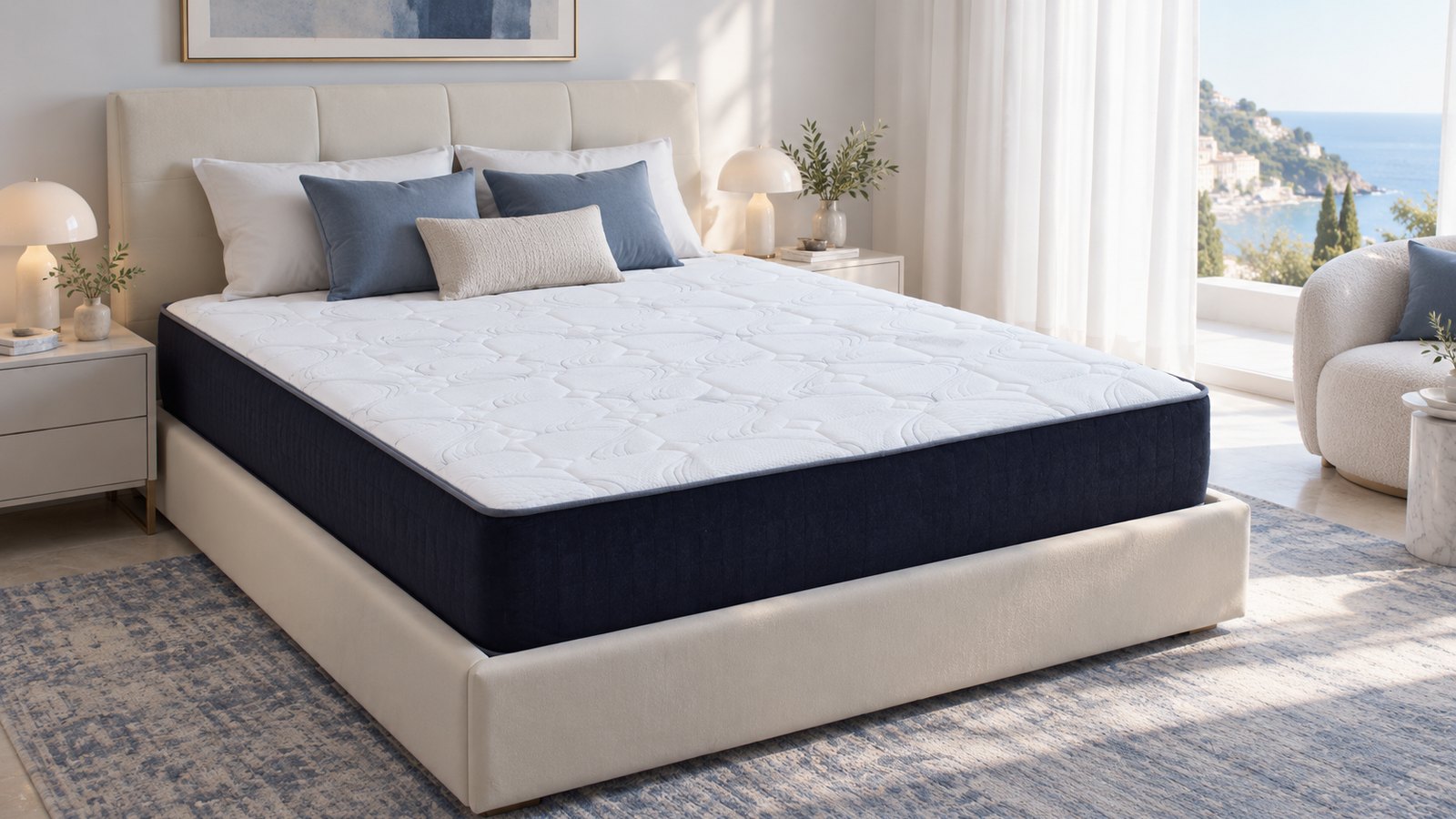
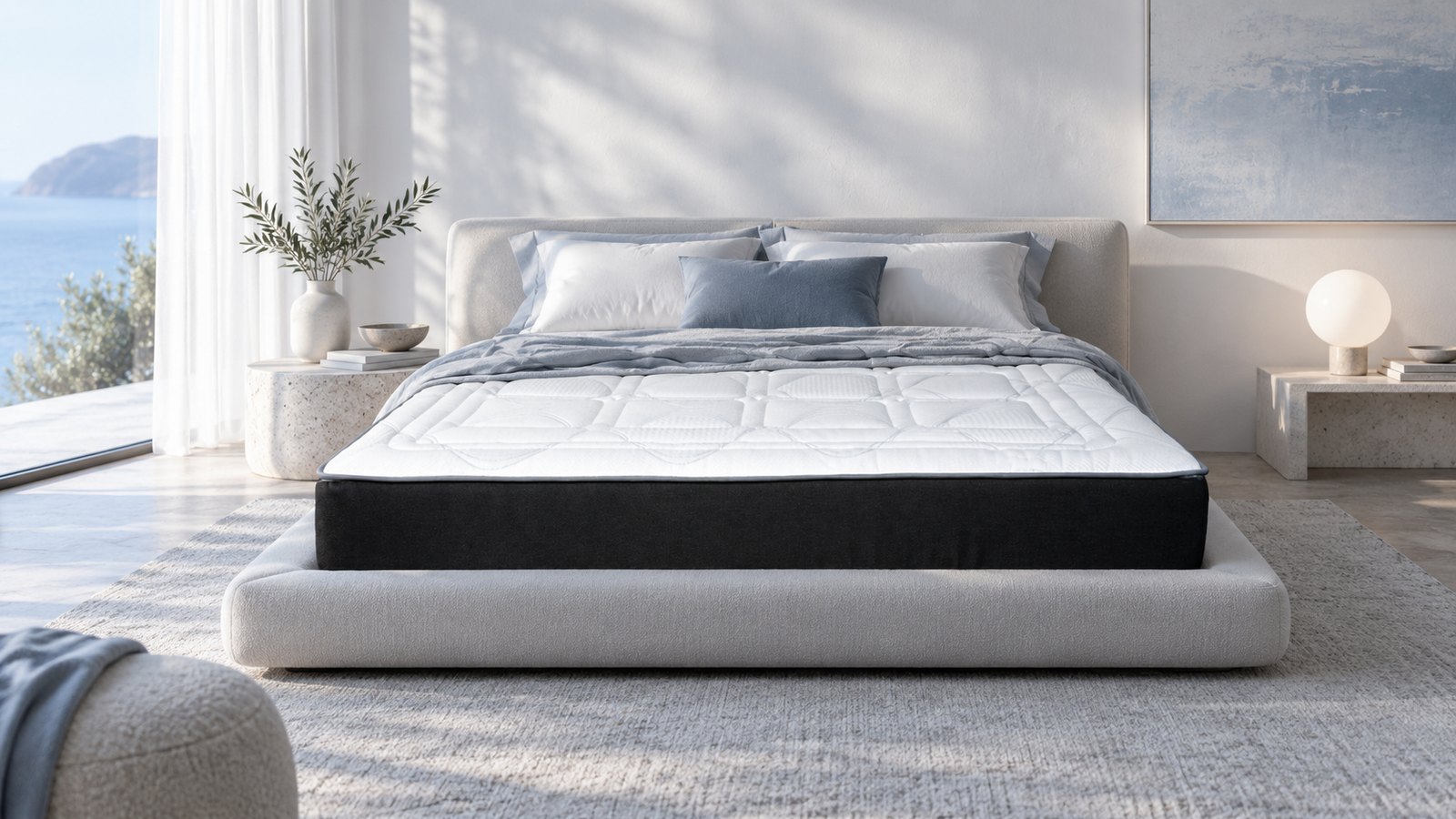
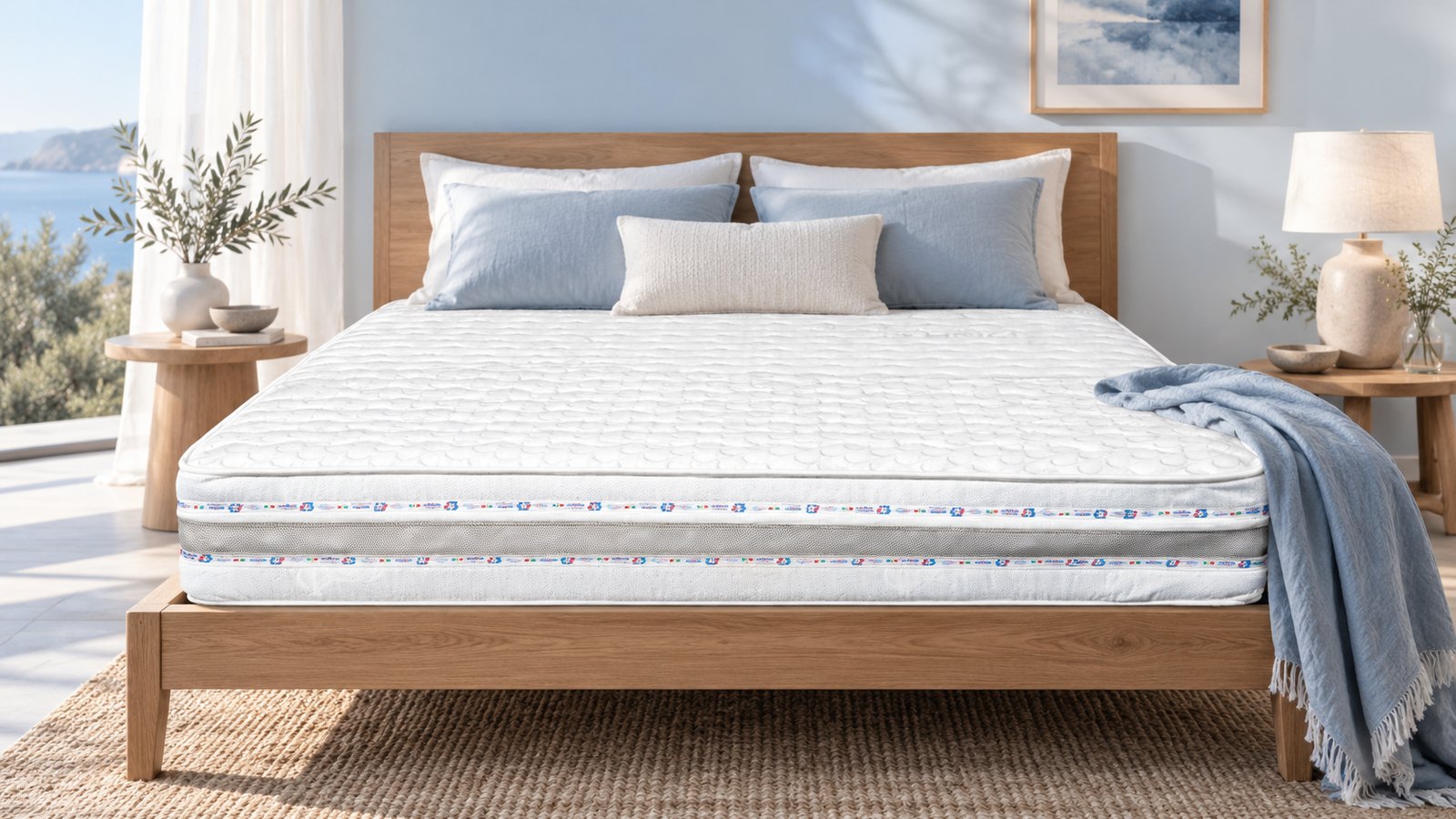
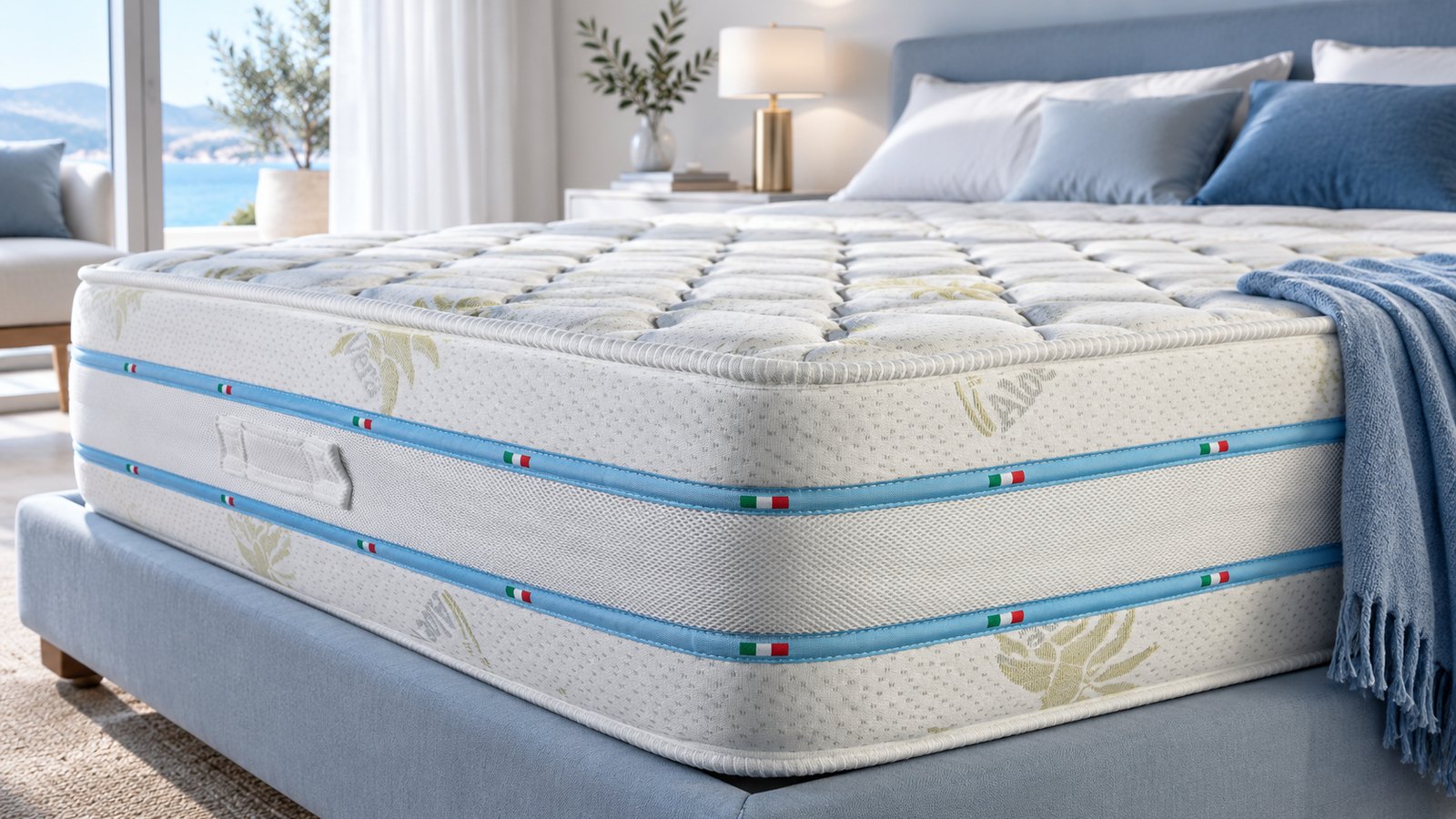
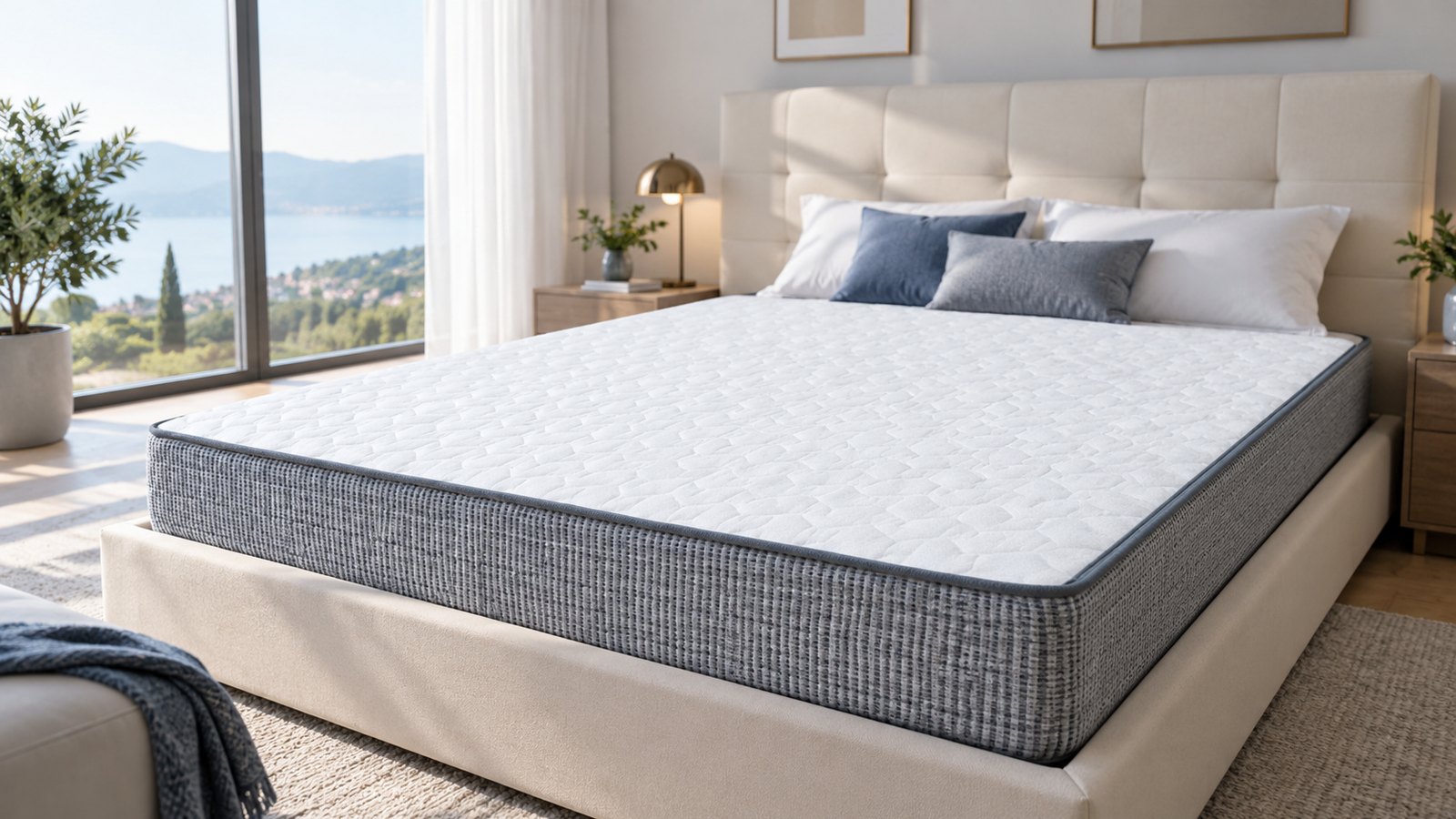
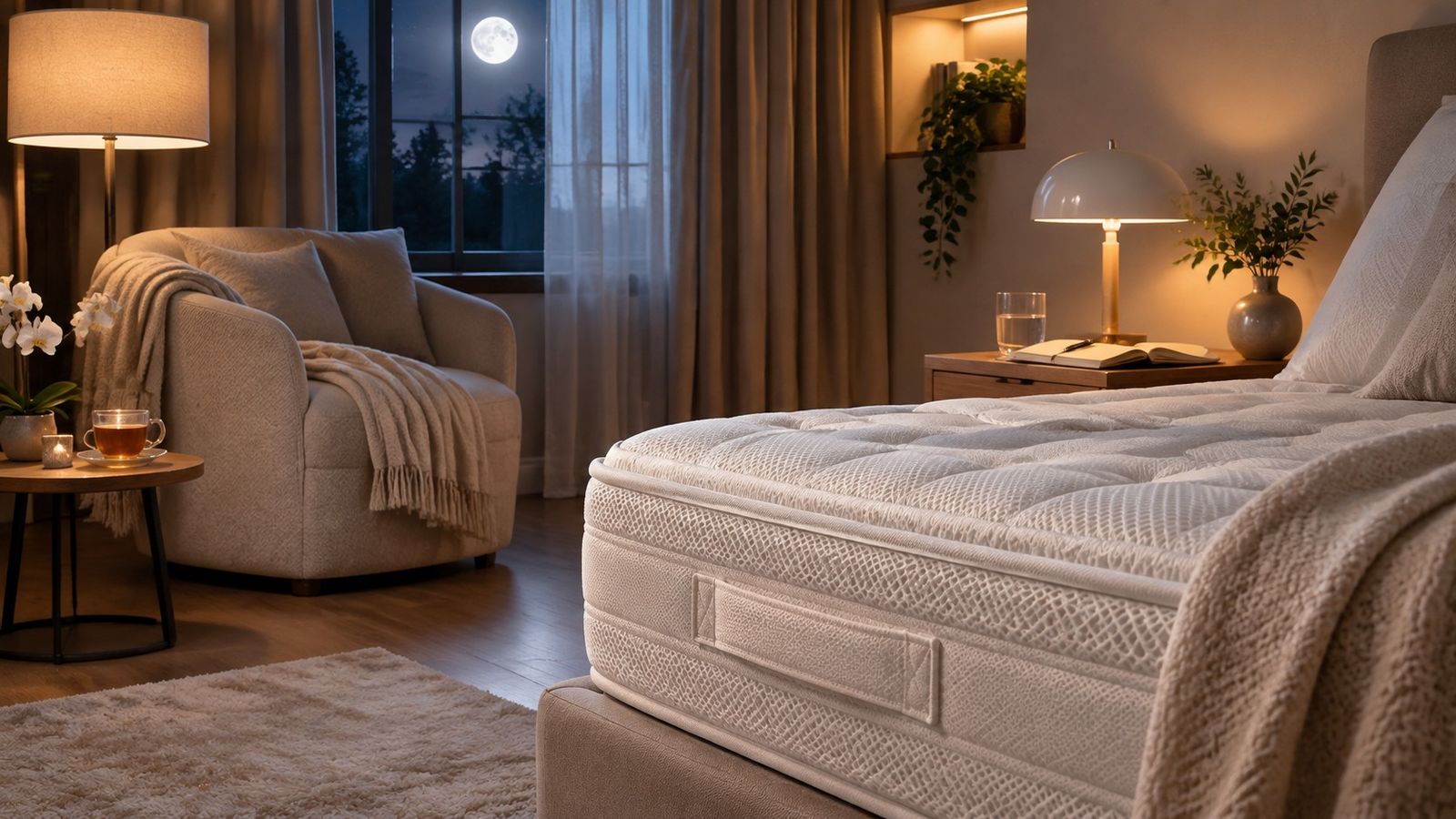
The third element is the bed. A mattress that supports the spine without pressure points reduces the micro-awakenings you cannot remember in the morning but that erode deep sleep. Thermo-sensitive memory foam adapts to your posture and releases tension in the shoulders, while a high-density base prevents sinking. The Luxury Relax review goes into detail. The Athena, Platinum, Gold, Elisir, and Venere models have heights from 24 to 30 cm, a washable Aloe Vera cover, a 3D breathable perimeter band, and differentiated support across the sleeping surface. They come with 10 years of warranty and 10 nights of home trial. Each model targets a different firmness preference, so side sleepers and back sleepers can both find a suitable option. The Aloe Vera cover can be removed and washed at low temperature, which helps if you tend to sleep warm.
Small gestures matter too. A tidy room, fresh bedding, a pillow that feels cool to the touch. If you wake up with a hot head, a breathable pillow and a memory foam topper at 149 euro improve comfort without changing the whole bed. A breathable pillowcase in cotton or linen manages heat better than synthetic fabrics. And if you are unsure about the right firmness level for calmer nights, the mattress buying guide explains how body weight, posture, and sleeping position shape the choice. The right support level keeps your spine aligned and prevents the rolling that leads to partial waking.
When nighttime anxiety lasts for weeks
There are periods when restless nights last a few days and then pass. When falling asleep becomes hard for more than three weeks, it makes sense to intervene with a method. The first step is to measure. For fourteen days note your bedtime, the estimated time to fall asleep, awakenings, and perceived quality in the morning on a scale from 1 to 5. Numbers take the field away from anxiety and turn the problem into something you can observe. Use a notebook or a simple spreadsheet. The goal is not to chase perfect scores but to see the pattern.
The second step is to fix a constant wake time, even at weekends. It is the anchor of your sleep-wake rhythm. A stable 07:00 wake-up regulates the whole day and makes evening sleep more predictable, while sleeping in on Sunday shifts everything by an hour. Even on holidays, try not to vary your wake time by more than sixty minutes. Set the alarm for the same hour seven days a week and open the curtains as soon as you get up. Morning light is the strongest signal for your internal clock.
A concrete help comes from organising the room during daylight hours too. Air the room for ten minutes in the morning, keep the bed made, and let daylight in. These habits train the brain to recognise the bedroom as a place of rest rather than a storage area for thoughts. If you work from home, move the desk out of the bedroom. Mixing work and sleep in the same room lengthens the time it takes to fall asleep even when the day has been calm. If space is tight, at least cover the desk or fold the laptop away before evening so the room shifts back to its sleep role.
The third step is to tell apart what you can change from what needs professional input. If anxiety is tied to a specific event, a deadline, or a change of circumstances, the situation often resolves on its own within a few weeks. If nighttime thoughts are daily for more than a month, if they come with palpitations or constant tension, or if sleep gets worse despite correct habits, your GP or a psychologist is the right reference. It is not a failure. It is the fastest route back to sleep. Cognitive behavioural therapy for insomnia is a well-studied approach and often works within a short block of sessions.
Alongside that, put the bed on your side. A calm room, a suitable mattress, and a simple routine are the ground on which every other strategy works better. For a comparison of models and services, request the free consultation. Luxury Relax experts reply within a few hours, with a showroom in Seregno at Via San Rocco 42 and support on the toll-free number 0362 222407.
Sleep and anxiety: frequently asked questions (FAQ)
Can anxiety go away on its own without changing anything? In some cases yes, especially when it is linked to a temporary period of stress. But leaving it to time means staying weeks with fragmented sleep. The habits described in this guide already work after ten or fourteen days and lower the chance that the problem becomes chronic. Starting with one or two changes is enough to see a shift.
Is it true that you should not stay in bed if you cannot sleep? Yes. After twenty minutes of wakefulness it is better to get up and do something dull under warm light, returning to bed only when drowsiness is clear. Lying still and counting the hours teaches the brain that the bed is a place for anxiety, and the vicious cycle gets stronger. The short break resets the association and makes the next attempt at sleep more effective.
How much does the mattress matter for restless sleep? It matters a lot. A mattress that does not support the spine generates continuous micro-awakenings, and every awakening opens the door to anxious thoughts. Thermo-sensitive memory foam with a high-density base, like the one in Luxury Relax models, reduces pressure points and makes awakenings less frequent. The right firmness level also matters: too soft and the spine curves, too firm and pressure builds at the hips and shoulders.
Does caffeine really affect nighttime anxiety? Yes, and more than most people think. The half-life of caffeine is about five hours. A coffee drunk at 18:00 leaves half the dose active at midnight. If evening anxiety is strong, move your last coffee before 14:00 and observe for two weeks. Most people see a clear improvement before they need any other change.
What role does room temperature play? A central one. To enter deep sleep the body's internal temperature must drop, and this only happens if the room is cool, between 16 and 19 degrees. A room above 22 degrees keeps sleep light and increases awakenings, feeding the anxiety of the next day. A quick fix is to open a window or lower the thermostat by two degrees and see how the next few nights feel.
When should you ask a professional for help? When falling asleep stays difficult for more than three weeks, when nighttime thoughts are daily for a month or more, or when palpitations and constant tension appear. A GP or a psychologist helps you intervene before the problem takes root, alongside the habits in this guide. Early contact saves time and prevents the cycle from becoming a long-term pattern.
Ideal Mattress Configurator in 3 Clicks
Answer 3 questions and see which Luxury Relax model fits your sleep best.
Step 1 of 3
Images from this guide
Can anxiety go away on its own without changing anything?
In some cases yes, especially when it is linked to a temporary period of stress. But leaving it to time means staying weeks with fragmented sleep. The habits described in this guide already work after ten or fourteen days and lower the chance that the problem becomes chronic. Starting with one or two changes is enough to see a shift.
Is it true that you should not stay in bed if you cannot sleep?
Yes. After twenty minutes of wakefulness it is better to get up and do something dull under warm light, returning to bed only when drowsiness is clear. Lying still and counting the hours teaches the brain that the bed is a place for anxiety, and the vicious cycle gets stronger. The short break resets the association and makes the next attempt at sleep more effective.
How much does the mattress matter for restless sleep?
It matters a lot. A mattress that does not support the spine generates continuous micro-awakenings, and every awakening opens the door to anxious thoughts. Thermo-sensitive memory foam with a high-density base, like the one in Luxury Relax models, reduces pressure points and makes awakenings less frequent. The right firmness level also matters: too soft and the spine curves, too firm and pressure builds at the hips and shoulders.
Does caffeine really affect nighttime anxiety?
Yes, and more than most people think. The half-life of caffeine is about five hours. A coffee drunk at 18:00 leaves half the dose active at midnight. If evening anxiety is strong, move your last coffee before 14:00 and observe for two weeks. Most people see a clear improvement before they need any other change.
What role does room temperature play?
A central one. To enter deep sleep the body's internal temperature must drop, and this only happens if the room is cool, between 16 and 19 degrees. A room above 22 degrees keeps sleep light and increases awakenings, feeding the anxiety of the next day. A quick fix is to open a window or lower the thermostat by two degrees and see how the next few nights feel.
When should you ask a professional for help?
When falling asleep stays difficult for more than three weeks, when nighttime thoughts are daily for a month or more, or when palpitations and constant tension appear. A GP or a psychologist helps you intervene before the problem takes root, alongside the habits in this guide. Early contact saves time and prevents the cycle from becoming a long-term pattern.
Request your free consultation
Fill in the form: a Luxury Relax expert will get back to you with the proposal that suits you best.
What Luxury Relax owners say
On my dad's advice, already a customer, I went to Luxury Relax to buy a mattress. Very comfortable and ergonomic products.
Quality products, helpful and knowledgeable staff. Highly recommended to anyone looking for a real mattress, not a brand name.
I got rid of the back pain that had followed me for years. The right mattress changes your days.
Come visit us
Luxury Relax Materassi
Via San Rocco, 42 - 20831 Seregno (Monza e della Brianza), Italia0362 222407 · info@luxuryrelax.it · WhatsApp 339 4797213
Open in Google MapsDirect Italy Logistics & Seregno Showroom
Direct delivery and support in Seregno (MB) & all of Italy
- Delivery window: Free 24/48h shipping across Italy
- Included cover: 10-night home trial + 10-year Luxury Relax warranty
- Showroom address: Luxury Relax Materassi, Via San Rocco, 42 - 20831 Seregno (Monza e della Brianza)