Caffeine and sleep: how to drink coffee without ruining your rest
The afternoon coffee seems harmless: one cup after lunch, maybe a tea at five, and the evening carries on as always. Then, in bed, sleep does not arrive. The mind stays sharp, the body is tired, and the clock passes midnight. Caffeine has not woken anyone up: it has only slowed the signal that tells the body to switch off.
Caffeine is the most consumed psychoactive substance in the world, and it affects sleep in measurable ways: it increases the time it takes to fall asleep, reduces deep sleep and shortens total rest. The effects vary from person to person, but the underlying chemistry is the same for everyone, and timing matters as much as quantity. A coffee in the morning and a strict evening cut-off can usually restore a deep, continuous rest within a single week.
This guide looks at how caffeine works, how long it stays active in the blood and how to rebuild your coffee habit without giving it up. For anyone already working on sleep quality, the Luxury Relax review covers the materials and services of a brand built around deep sleep. Let us start with the mechanism.

How caffeine acts on sleep
During waking hours the brain accumulates adenosine, a molecule that signals tiredness: the more hours pass, the higher the pressure to sleep. Caffeine blocks adenosine receptors, so tiredness is no longer perceived. The body is fatigued, but the brain receives the opposite message.
The effect arrives in 20-45 minutes and peaks about an hour after ingestion. The liver clears caffeine slowly: the average half-life is around 5 hours, with peaks of 8-9 hours in slow metabolisers. A cup at 5 pm therefore leaves half the dose still in the bloodstream at 10 pm.
Caffeine does more than hide tiredness: it changes the structure of the night. Sleep studies recorded in laboratory settings show a reduction in deep sleep stages and an increase in brief awakenings, often unremembered in the morning. The result is a night that looks long enough on paper but leaves daytime fatigue behind.
There is also a circular effect: a poor night pushes people to drink more coffee the next day, the evening dose rises, and the cycle feeds itself. Breaking that loop is the first step to letting the body fall asleep without effort.
How much caffeine is really there: coffee and hidden sources
An espresso contains about 60-80 mg of caffeine, an Americano 80-120 mg, a cup of black tea 40-60 mg. Quantities vary with blend and extraction, but the order of magnitude stays the same. The daily limit indicated by nutritional literature sits below 400 mg for a healthy adult, and much lower for sensitive people.
Hidden sources make the difference. A can of cola contains 30-40 mg, an energy drink 80-160 mg, 50 grams of dark chocolate 20-40 mg. Some pre-workout supplements exceed 200 mg per serving, and they are often taken in the evening without a second thought.
Comparing notes with diet helps to put things in order: our guide to sleep and nutrition explains how dinner, timing and drinks work together on rest. Keeping a three-day diary, noting every intake with time and quantity, is enough to discover where evening caffeine hides.
Decaffeinated coffee is not caffeine-free: one cup contains 2-15 mg. For most people it is a safe evening choice, but it should not be confused with a complete absence of the active substance.

Until what time to drink: the eight-hour rule
The most common question is how late you can drink coffee. The practical answer, for people going to bed around 11 pm, is to stop by 3 pm: with a 5-hour half-life, a quarter of the dose is still circulating at midnight. Slow metabolisers should cut off even earlier.
Timing is not the only variable. Caffeine taken with food is absorbed more slowly and the peak stretches: after lunch the effect lasts longer than the morning espresso taken on an empty stomach. Age counts too: after 50 the body clears caffeine more slowly and the evening dose weighs more.
A simple rule to apply for two weeks: last caffeine eight hours before bedtime, and a daily dose below 200 mg, meaning two or three coffees. If sleep improves with nothing else changed, the diagnosis is done. Sleep quality is measured in the morning: waking up rested before the alarm is the most reliable signal, and our guide to sleep quality lists the indicators to watch.
Those who do not want to give up the evening coffee ritual can move it rather than remove it: herbal tea or decaf at 9 pm keeps the gesture without the active substance. The ritual matters as much as the substance, especially when it is tied to the pause after dinner.

Beyond caffeine: the full sleep system
Removing evening coffee is not enough if the bed works against you. A mattress that does not support the spine keeps muscles tense all night: the body moves, sleep fragments, and the next morning the temptation is immediately another coffee. The support of the sleeping surface is the second lever, after caffeine.
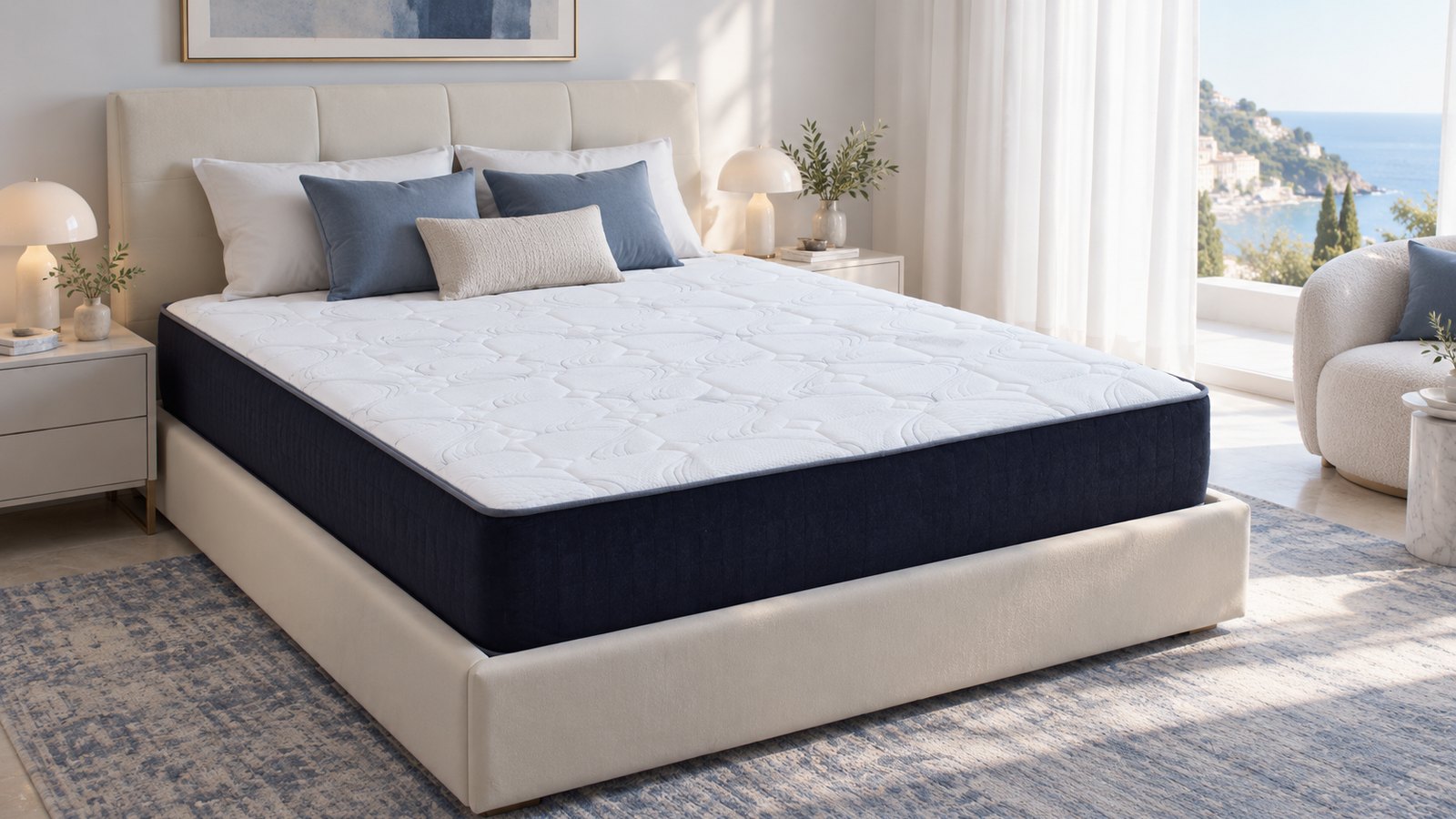
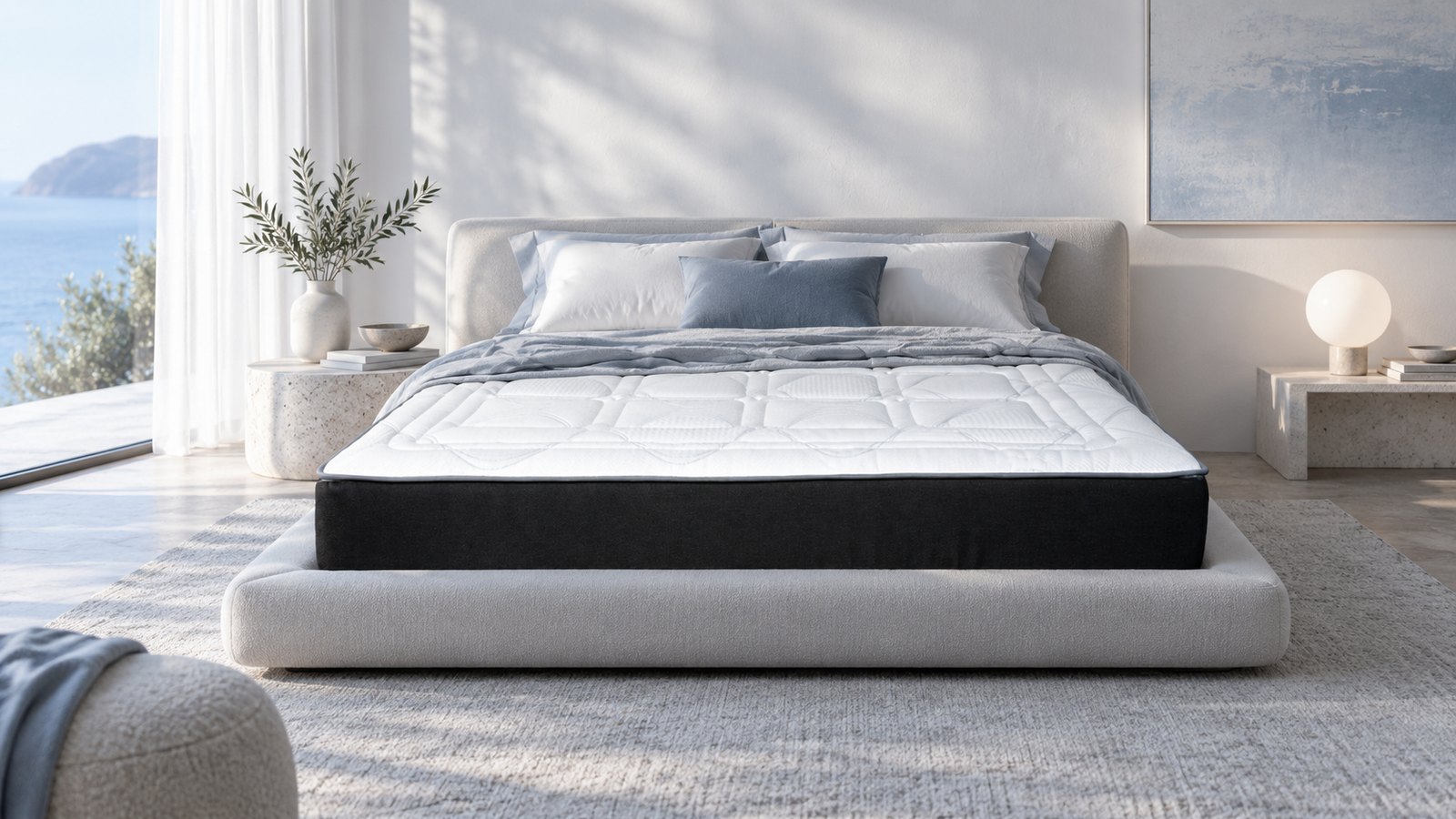
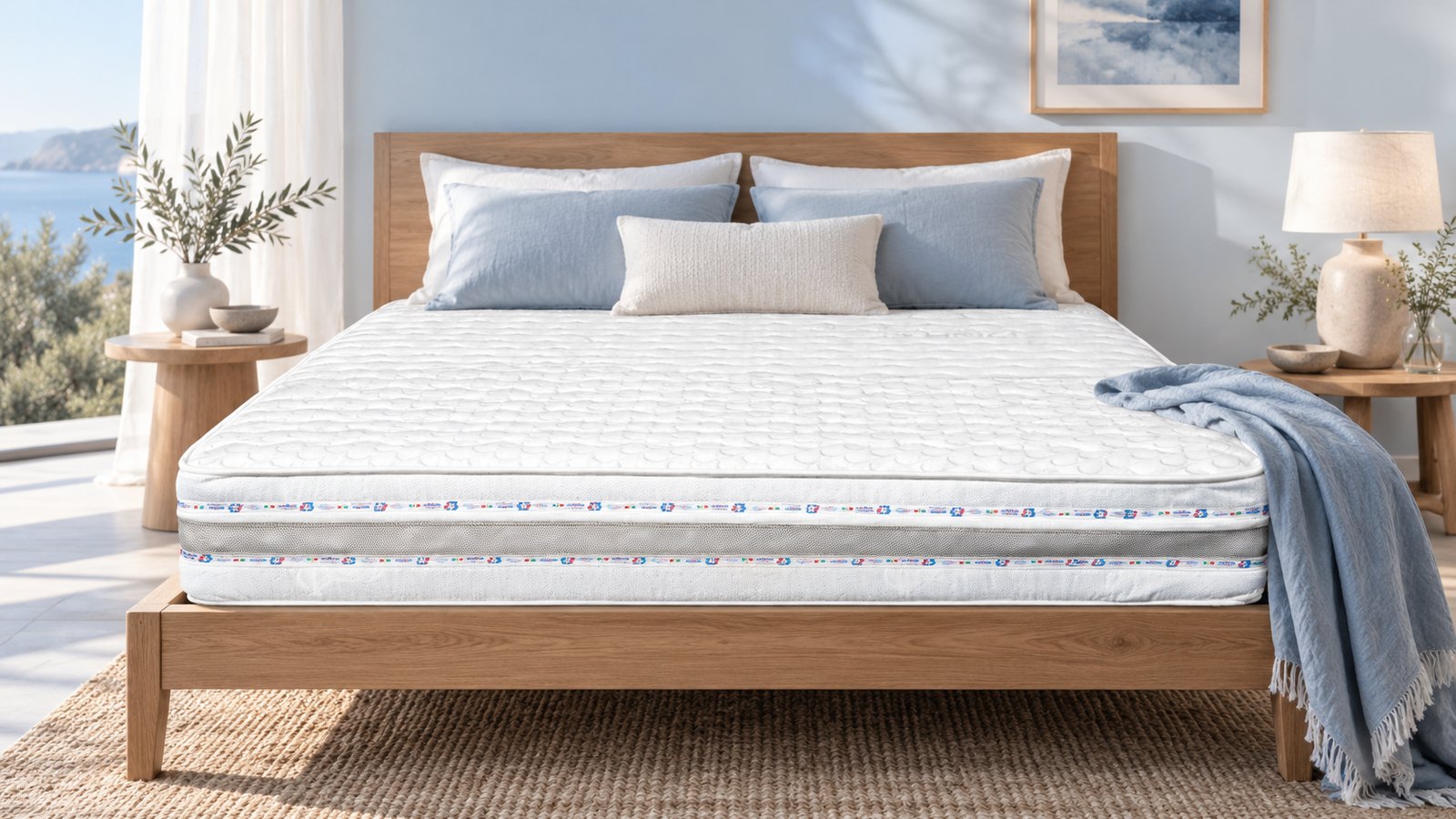
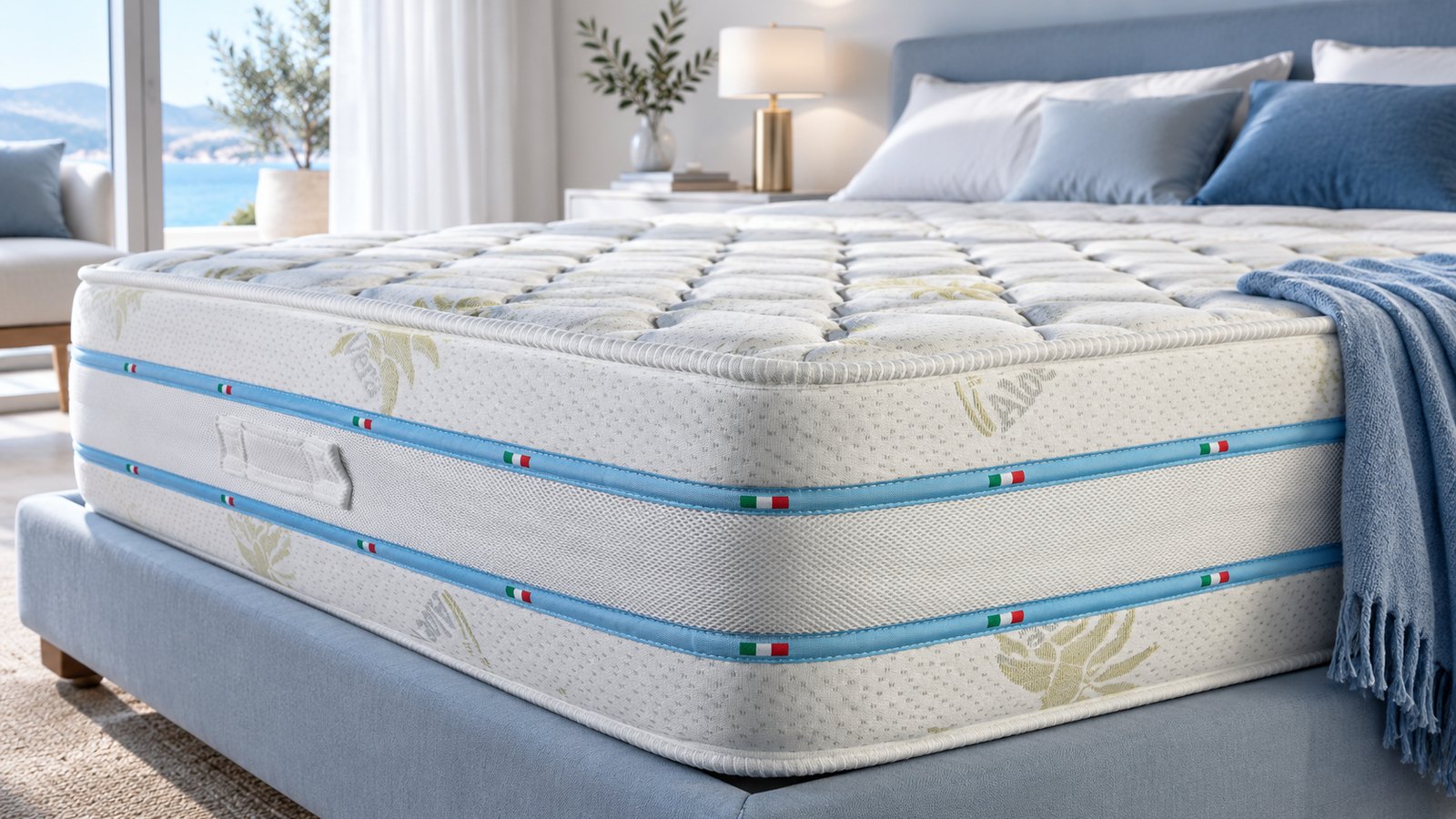
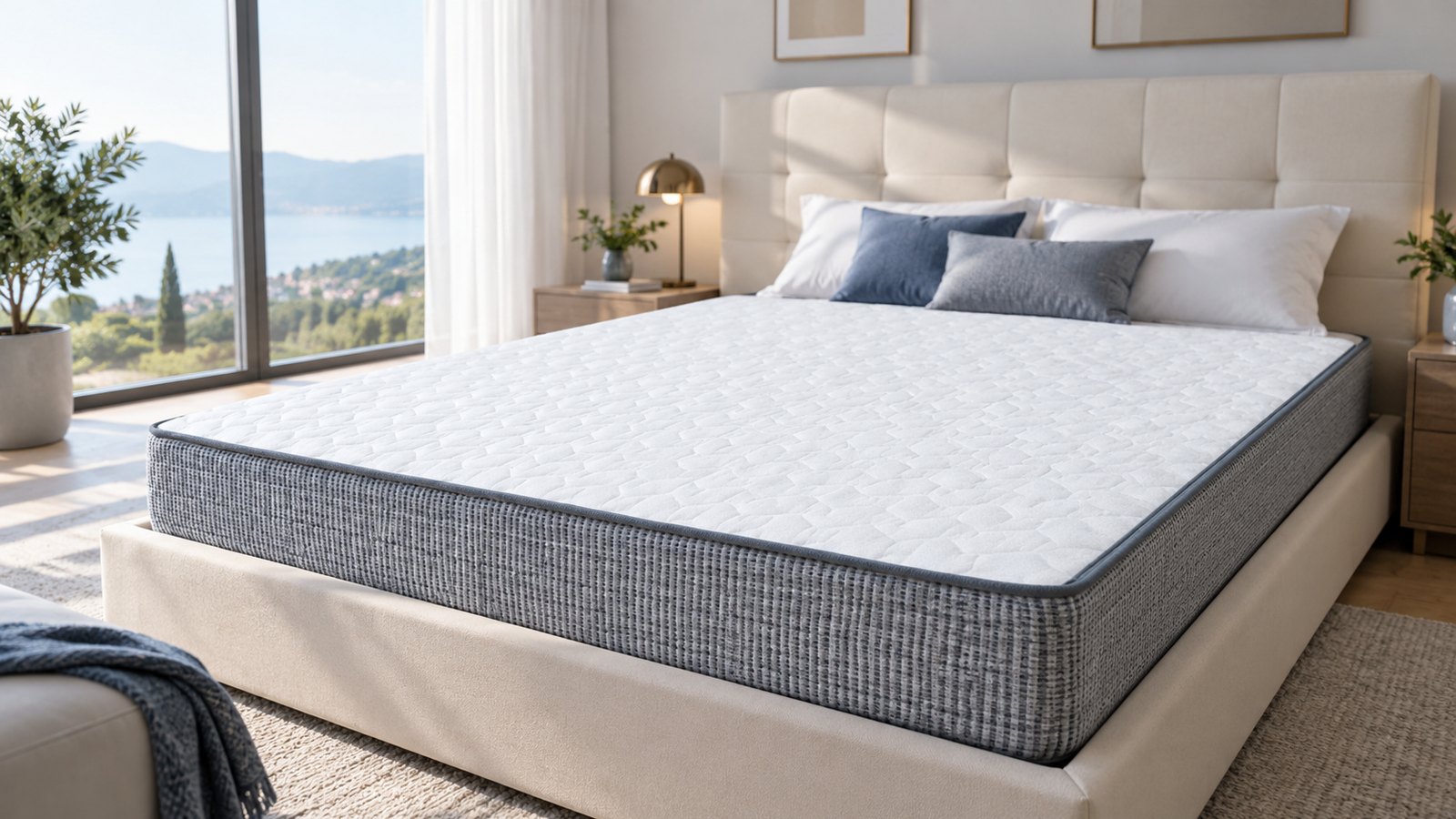
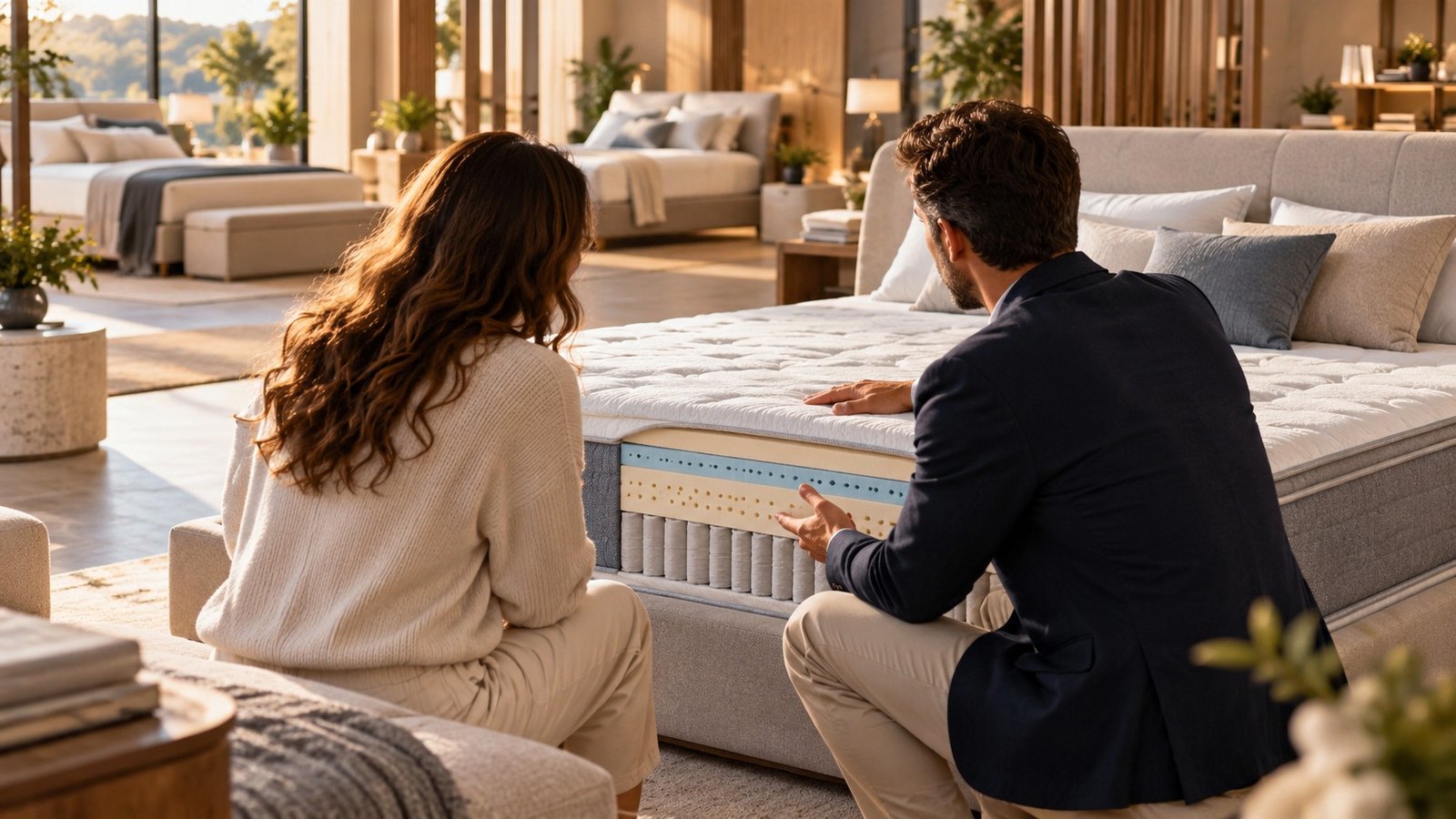
Mattress construction makes the difference in brief awakenings. Zoned support, which carries head, shoulders, pelvis and legs differently, reduces night-time position changes; high-density viscoelastic memory foam follows the body without resisting it. On Luxury Relax mattresses these elements sit alongside a breathable Confortgel base and a 3D perimeter band that disperses heat, one of the reasons the body stays still for longer.
The Aloe Vera cover, washable at 30 degrees, keeps dust and allergens away from the surface: for those suffering from night-time congestion, clean bedding is worth as much as a correct coffee schedule. Heights from 24 to 30 centimetres depending on the model, a 10-year warranty, 10 trial nights at home and free delivery across Italy in 24-48 hours: these are the numbers the brand puts on the table for anyone who wants to verify the investment. The comparison between models, from Venere at 149 euro to Athena at 990 euro, is in the mattress buying guide.
The environment counts the same way: a dark room, 18-20 degrees, air renewed for ten minutes before sleeping. Caffeine, support and environment are three levers that work together: if even one is out of place, the night notices.
The seven-day plan to take your sleep back
Day 1 and 2: note every caffeine intake with time and quantity, changing nothing. The real picture of the habit is the baseline, and it almost always reveals at least one hidden dose in the late afternoon. Sleep and diet habits are hard to judge without data: three days of notes take five minutes each evening.
Day 3 and 4: move the last caffeine before 3 pm and cut evening sources such as tea, cola and energy drinks. The first expected effect is falling asleep faster, not necessarily a perfect night. Some people feel a headache on day three: it is the withdrawal signal, and it fades in 24-48 hours without needing medication.
Day 5, 6 and 7: fix the daily dose below 200 mg, keep the room at 18-20 degrees and judge the morning wake-up. If the body wakes before the alarm for three days running, the direction is right. If waking up stays heavy after two weeks, suspicion moves to the sleeping surface, and advice is worth seeking: the contact page offers the Luxury Relax free consultation, with an answer the same day from Monday to Saturday.
At the end of the plan, reintroducing one coffee after lunch is a useful test: if the following night turns slow again, the personal limit has been found. The body gives clear answers, as long as you change one variable at a time.
One practical detail: caffeine hides in evening medicines too. Some over-the-counter painkillers and many headache formulas contain caffeine as an aid, and a tablet taken at 10 pm counts like a coffee. Reading the package leaflets is a five-minute job that often explains sleepless nights without apparent causes.
Myths about caffeine and rest
The first myth is that coffee after dinner helps digestion and therefore sleep. Caffeine speeds up gastric motility in some people, but the price on rest is steep: longer time to fall asleep and less deep sleep. Digestion is helped by a light dinner and a two-hour gap before bed, not by a stimulant taken when the body is already preparing for rest.
The second myth concerns habit: people say that over time caffeine stops disturbing sleep. In reality, tolerance covers the daytime effect, the feeling of energy, but not the body's ability to clear the molecule from the blood. Someone who has drunk coffee for twenty years sleeps worse than they could, and often never measures it because they have never tried two weeks without an evening dose.
The third myth is that tea, matcha and guarana are lighter than coffee. One cup of matcha can exceed 60 mg of caffeine and guarana naturally contains it in high concentration: they are stimulants in every sense and deserve the same timing rules as coffee.
Caffeine also has positive sides: attention, reaction time and mood improve during waking hours, and two coffees in the morning are compatible with healthy sleep. The problem is not the substance itself, but timing and quantity. Keeping track of these two variables for a week clarifies more than any complicated test.
Weekend recovery is another trap: sleeping in on Saturday shifts the internal clock and makes Sunday night difficult. Better to keep the same wake-up time and compensate with a twenty-minute nap before 4 pm, which does not interfere with night-time sleep pressure. Steady hours, a caffeine dose below 200 mg and a bed that truly supports you: the combination holds over time without heavy sacrifices.
FAQ about caffeine and sleep
How long does caffeine last in the body? The peak arrives about an hour after ingestion and the average half-life is 5 hours, with wide individual differences: slow metabolisers may need 8-9 hours to eliminate half the dose. That is why a 5 pm coffee can leave half its caffeine circulating at 10 pm, when the body is trying to lower its temperature for sleep.
What is the cut-off time for evening coffee? For a bedtime around 11 pm, the last caffeine should sit before 3 pm, eight hours before sleeping. With high sensitivity or above the age of 50 it is worth cutting off earlier. The test is simple: two weeks with the cut-off rule, then compare the quality of the morning wake-up with the previous fortnight.
Does decaffeinated coffee disturb sleep? It contains 2-15 mg of caffeine per cup, far less than a traditional espresso. For most people it is compatible with the evening; the extremely sensitive should still avoid it after dinner. Decaf keeps the ritual and the taste, which is what many people are really after at 9 pm.
How much caffeine can you drink in a day? Nutritional literature indicates below 400 mg for a healthy adult, but for sleep the useful threshold is lower: staying under 200 mg, two or three coffees, concentrated in the first part of the day, produces better results on night-time rest. Above 400 mg the risk of nervousness, fast heartbeat and fragmented sleep rises clearly.
Does caffeine really reduce deep sleep? Yes. Sleep studies show that caffeine taken in the evening reduces the amount of deep sleep and increases brief awakenings, even when there is no memory of them in the morning. It is the reason people wake up tired after eight hours in bed, and it is measured on the electroencephalogram, not just felt.
What if you cannot sleep even without coffee? Check the three main levers: timing of the last caffeine, bedroom environment (dark, 18-20 degrees, fresh air) and mattress support. If the problem persists after two weeks, the next step is a consultation on support, available free of charge through the Luxury Relax contact page.
How long does caffeine last in the body?
The peak arrives about an hour after ingestion and the average half-life is 5 hours, with wide individual differences: slow metabolisers may need 8-9 hours to eliminate half the dose. That is why a 5 pm coffee can leave half its caffeine circulating at 10 pm, when the body is trying to lower its temperature for sleep.
What is the cut-off time for evening coffee?
For a bedtime around 11 pm, the last caffeine should sit before 3 pm, eight hours before sleeping. With high sensitivity or above the age of 50 it is worth cutting off earlier. The test is simple: two weeks with the cut-off rule, then compare the quality of the morning wake-up with the previous fortnight.
Does decaffeinated coffee disturb sleep?
It contains 2-15 mg of caffeine per cup, far less than a traditional espresso. For most people it is compatible with the evening; the extremely sensitive should still avoid it after dinner. Decaf keeps the ritual and the taste, which is what many people are really after at 9 pm.
How much caffeine can you drink in a day?
Nutritional literature indicates below 400 mg for a healthy adult, but for sleep the useful threshold is lower: staying under 200 mg, two or three coffees, concentrated in the first part of the day, produces better results on night-time rest. Above 400 mg the risk of nervousness, fast heartbeat and fragmented sleep rises clearly.
Does caffeine really reduce deep sleep?
Yes. Sleep studies show that caffeine taken in the evening reduces the amount of deep sleep and increases brief awakenings, even when there is no memory of them in the morning. It is the reason people wake up tired after eight hours in bed, and it is measured on the electroencephalogram, not just felt.
What if you cannot sleep even without coffee?
Check the three main levers: timing of the last caffeine, bedroom environment (dark, 18-20 degrees, fresh air) and mattress support. If the problem persists after two weeks, the next step is a consultation on support, available free of charge through the Luxury Relax contact page.
Request your free consultation
Fill in the form: a Luxury Relax expert will get back to you with the proposal that suits you best.
What Luxury Relax owners say
On my dad's advice, already a customer, I went to Luxury Relax to buy a mattress. Very comfortable and ergonomic products.
Quality products, helpful and knowledgeable staff. Highly recommended to anyone looking for a real mattress, not a brand name.
I got rid of the back pain that had followed me for years. The right mattress changes your days.
Come visit us
Luxury Relax Materassi
Via San Rocco, 42 — 20831 Seregno (Monza e della Brianza), Italia0362 222407 · info@luxuryrelax.it · WhatsApp 339 4797213
Open in Google Maps