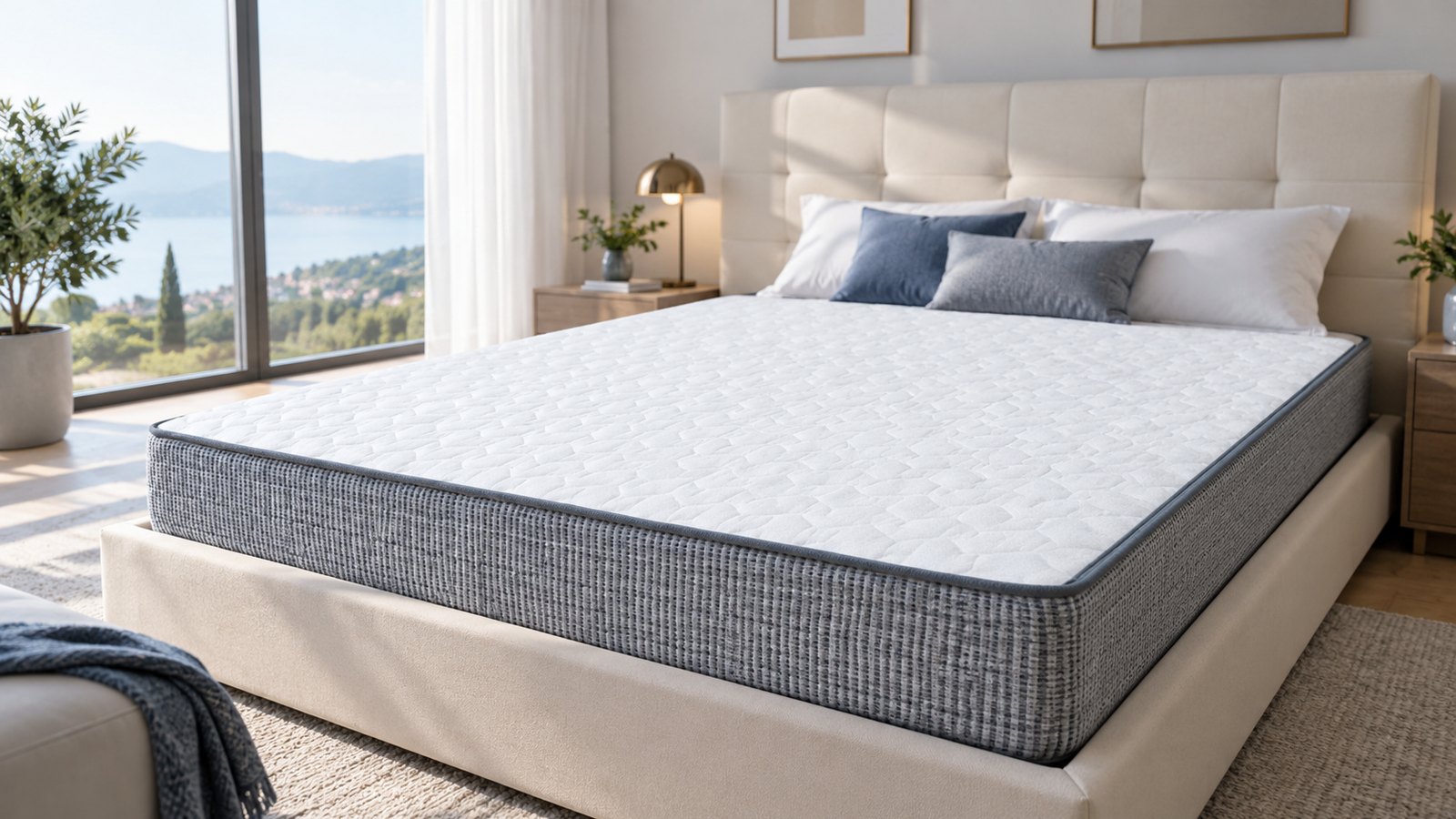
Cold and sleep: how to sleep with a blocked nose
Key facts at a glance
- What to know right away: Cold and sleep: 6 practical ways to sleep with a blocked nose, from body position to bedroom air. Discover Luxury Relax mattresses and book your consultation.
- Trial, warranty and delivery: 10 trial nights · 10-year warranty · Free delivery 24/48h
- Who it is for: Why a cold breaks your sleep
- What this guide covers: Why a cold breaks your sleep · The right position to breathe better · Bedroom air, humidity and temperature
- How to book or get help: Get your free consultation · 0362 222407 · info@luxuryrelax.it
A cold almost always lands in the weeks when sleep matters most: November and December, the months when the body asks for rest and the nose decides otherwise. By day a blocked nose is an annoyance. By night it becomes the number one enemy of rest, because it takes air away exactly when breathing should slow down and settle.
Anyone who has been there knows the pattern: you fall asleep exhausted, then the mouth opens, the throat dries out, you cough, you turn over. The night breaks into fragments and the next morning arrives as tired as the evening before. A cold lasts five or seven days, but the tiredness seems to last twice as long.
What helps you sleep with a blocked nose is concrete and limited: body position, bedroom air, the support of pillow and mattress, the evening routine. In the Luxury Relax review you will find the materials that keep sleep steady even when rest is under attack, from breathable covers to supports that stop the shoulders from sinking.
Why a cold breaks your sleep
When the nose is blocked, airflow drops and the body compensates by breathing through the mouth. The mouth neither warms nor humidifies the air the way the nose does, and within a few hours the throat dries out. From there start coughing, irritation and the awakenings that shred the night.
A second mechanism is subtler: nasal congestion swings during the night. Anyone with a cold notices it while lying on one side: the nostril on the lower side closes, the upper one opens. This is the nasal cycle, which exists even in healthy people, but a cold makes it obvious and pushes you to turn every twenty or thirty minutes.
The third effect concerns sleep stages. Frequent awakenings cut the time spent in the deepest stages, the ones where the body recovers. That is why the morning after a congested night you feel drained even after eight hours in bed: the problem is not duration but fragmentation.
One practical fact: congestion gets worse when you lie flat, because blood flows more easily into the nasal mucosa. It explains why daytime feels better than night-time, and why a few position changes can transform the night.
The right position to breathe better
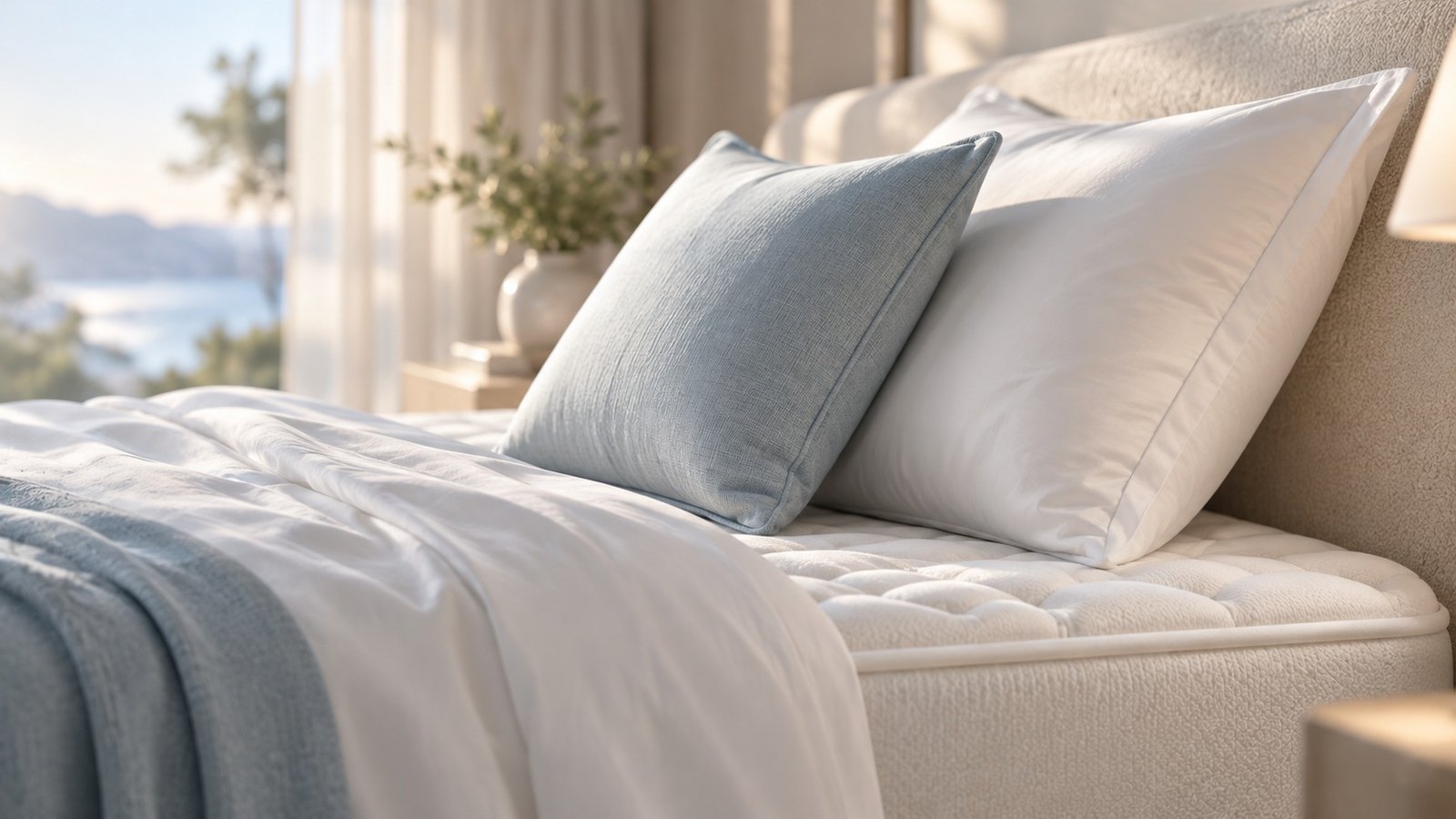
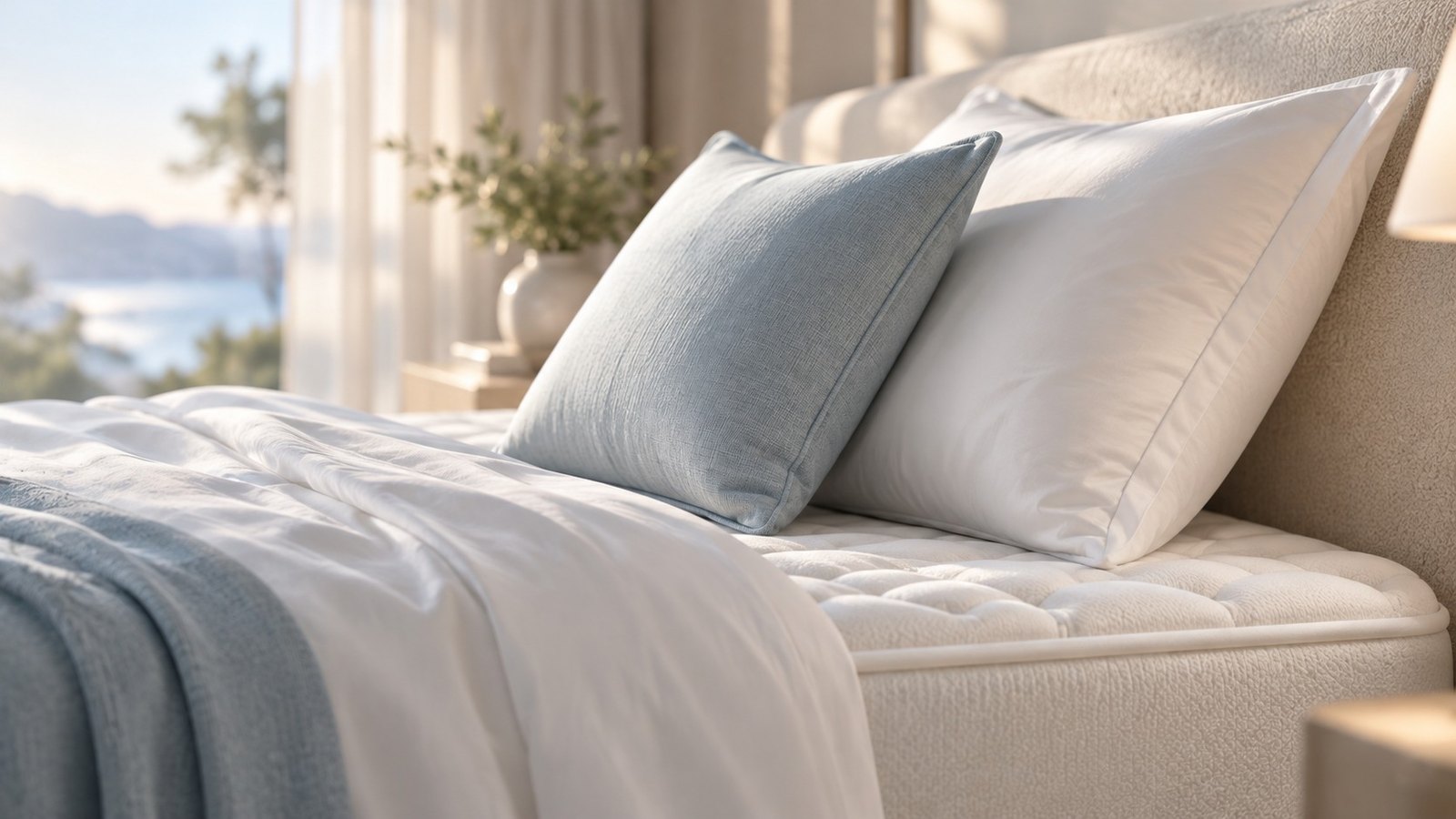
The first lever is head height. Sleeping flat makes congestion worse; sleeping with head and shoulders slightly raised eases it. Piling up three pillows is not the answer: the neck bends and the next morning the problem moves from the nose to the neck. Use a pillow high enough to keep the head in line with the torso, or a mattress whose comfort follows the body without letting the shoulders sink.
The second lever is the side. With a blocked nose people usually sleep better on their side than on their back: the mouth stays slightly open, the tongue does not fall back and the throat dries out less. If the mattress does not support the shoulder area, though, side sleeping becomes uncomfortable after an hour: the classic symptom of a comfort layer that is too uniform.
The third lever is the ribcage. A mattress that is too soft lets the middle of the body sink and compresses breathing; one that is too firm pushes the shoulders upward and forces the neck to bend. The solution is differentiated support, holding the lumbar zone while letting the shoulders breathe. It is the principle of the differentiated capacity in Luxury Relax mattresses, described in the guide to mattresses for back pain.
| Situation | Recommended position | Effect on breathing |
|---|---|---|
| Nose completely blocked | Semi-reclined, head and shoulders raised | Congestion eases within minutes |
| Dry night-time cough | Side, pillow 12-14 cm high | Less throat dryness |
| Back pain alongside | Side with a pillow between the knees | Spine aligned, shoulders relaxed |
| Reflux or heaviness | Back, torso tilted about 15 degrees | Freer breathing |

Bedroom air, humidity and temperature
The air in the room matters as much as the position. A room that is too dry irritates the mucosa and makes congestion more stubborn; a room that is too humid favours dust mites and mould, which damage breathing in the long run. The comfortable band for sleeping sits between 40% and 60% humidity, at a temperature between 18 and 20 degrees.
During a cold it pays to air the bedroom for ten minutes before going to bed, then close the window. Fresh clean air reduces the load of viruses and suspended dust, while the still warm air of a room closed all day increases dryness. A humidifier helps in the driest weeks, but it must be cleaned every day: a tank turned into a reservoir of bacteria makes things worse.
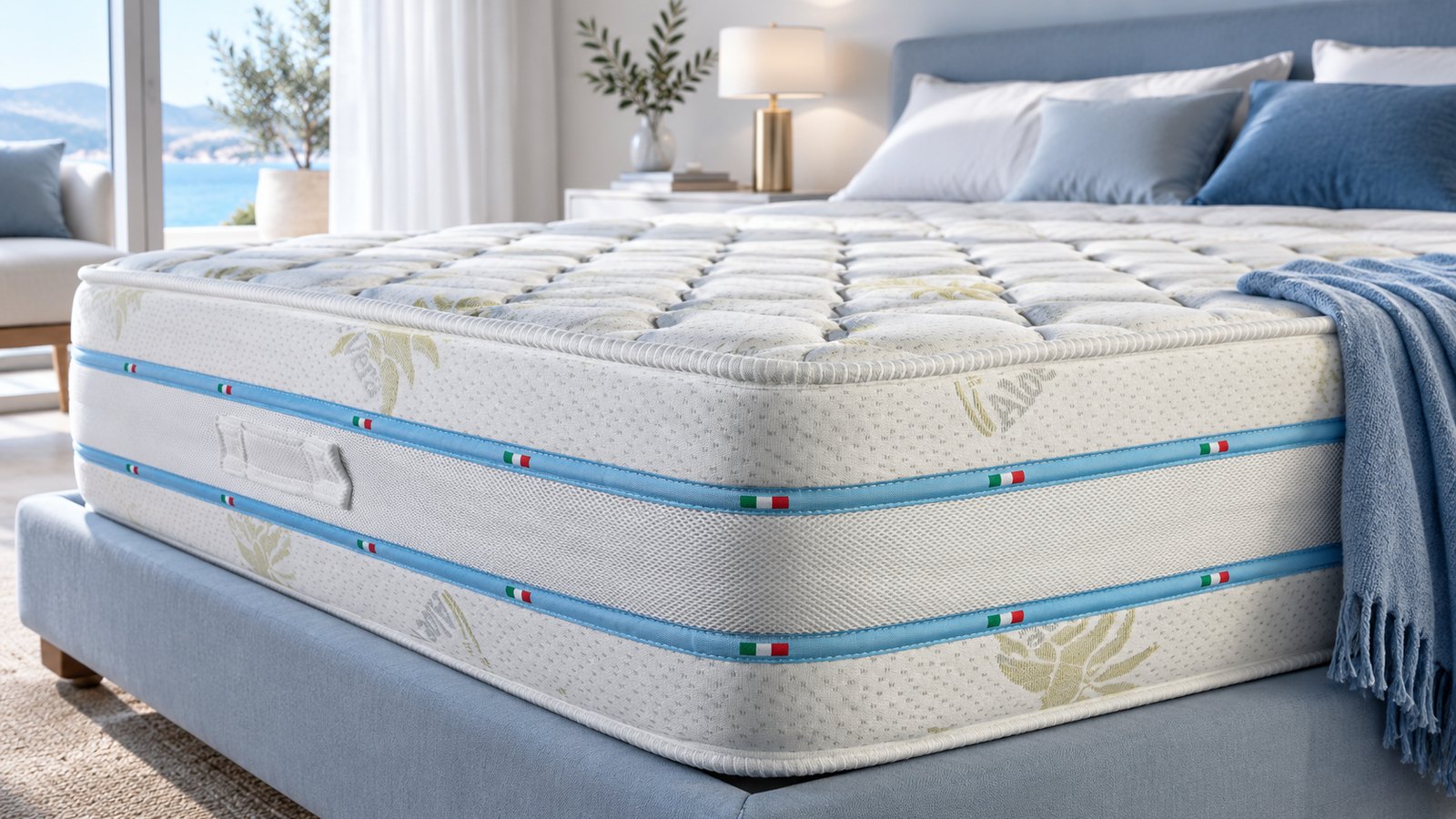
Bedding counts more than it seems. Sheets and pillowcases collect secretions, dust and microorganisms, and when you have a cold it is time to wash them more often, at 60 degrees. The same logic applies to the mattress, as explained in the mattress cleaning guide: air the surface, wash the cover, vacuum regularly. A removable Aloe Vera cover, like the one on Luxury Relax mattresses, comes off and goes into the wash without compromising comfort.
Watch out for the heating running all night: the warm dry air of the radiator is one of the reasons a November cold drags on for a week. A lower bedroom temperature with an extra blanket beats twenty degrees of dry air that burns the throat.

Pillow, mattress and body support
When you have a cold the body changes position many times a night, and the bed has to follow those movements instead of fighting them. A mattress that welcomes the shoulders and supports the lumbar zone lets you roll from back to side without repositioning the pillow every time. A mattress that is too soft forces you to struggle through each turn, and every movement becomes an awakening.
The pillow is the second protagonist. It has to fill the gap between head and mattress without bending the neck: too high tilts the head forward, too low drops it back. A memory foam pillow, such as the Fiocco Memory from Luxury Relax at 25 euros, adapts to the shape of the head and keeps its height all night, even when you turn often.
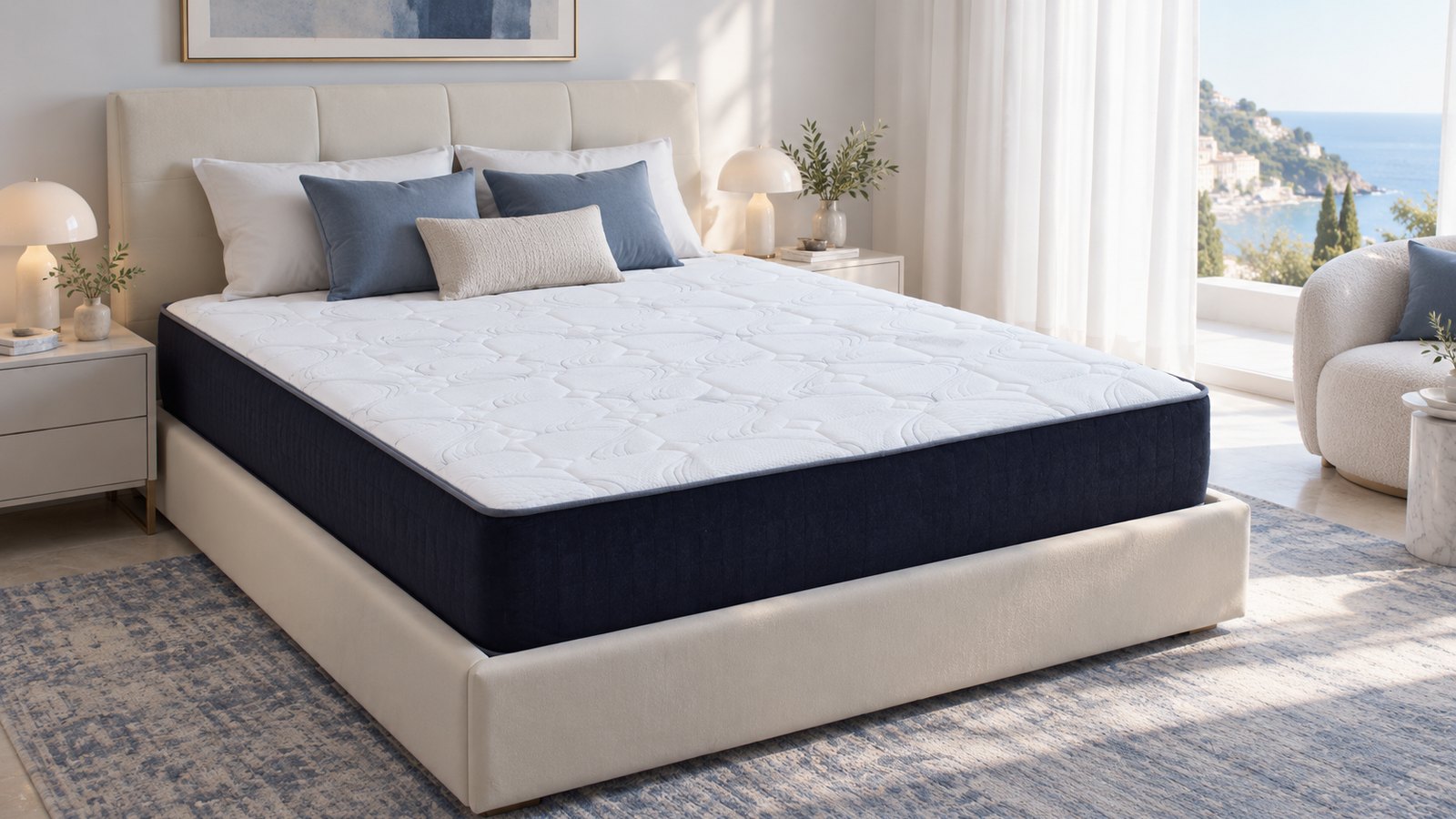
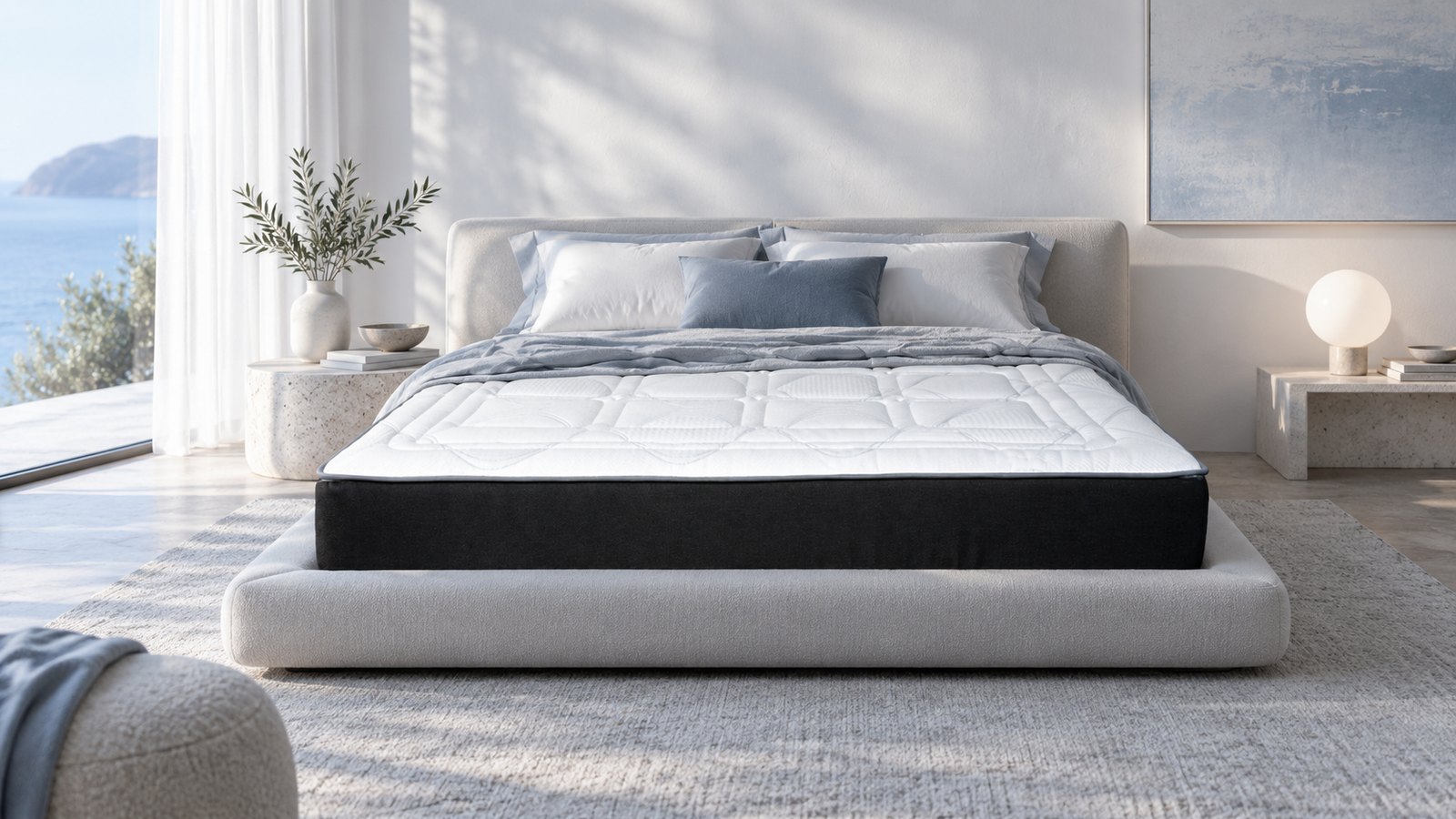
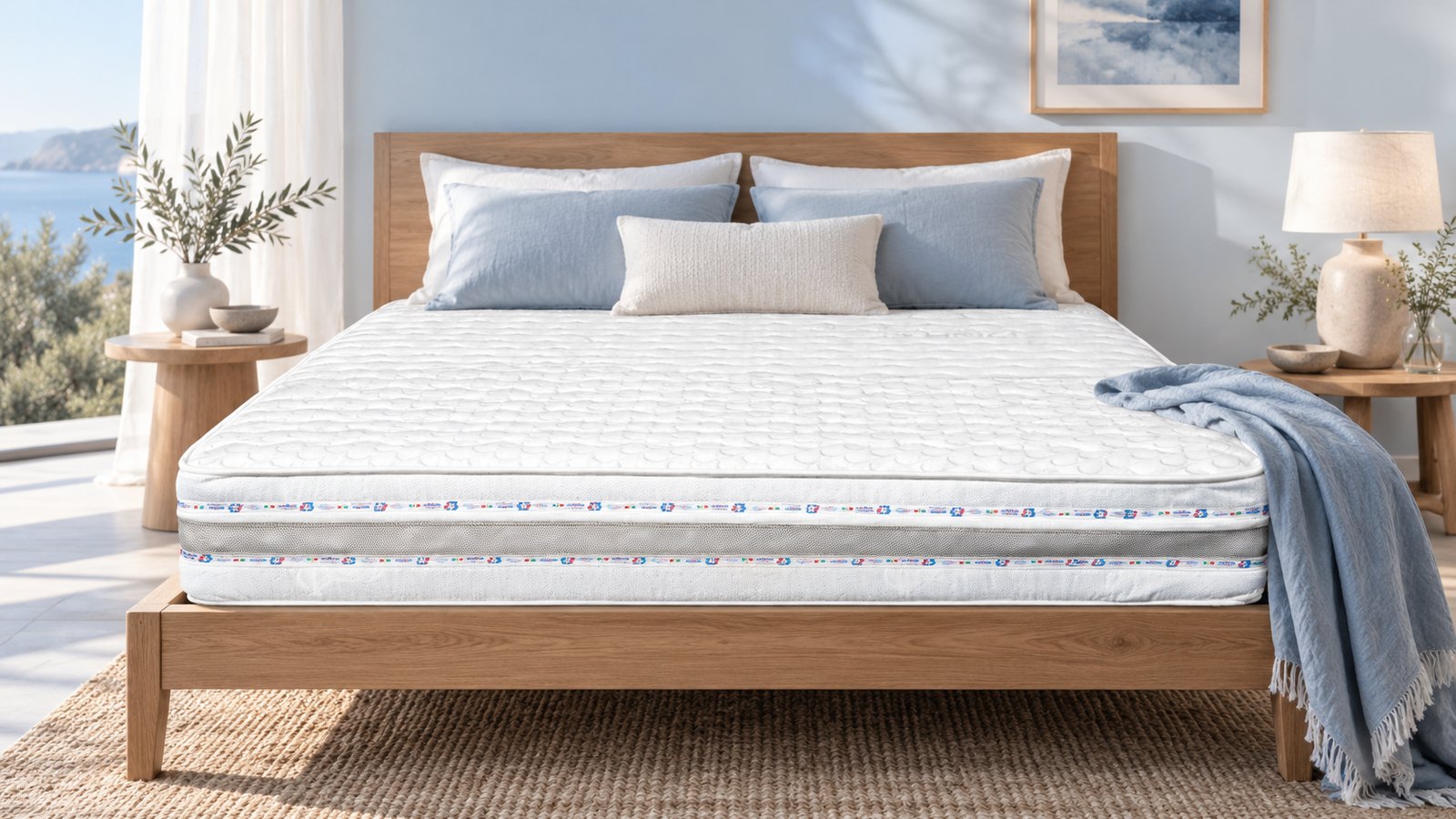
On the mattress, the real Luxury Relax data give a clear scale. Athena, the top of the range, starts at 990 euros with a list price of 1,950 euros, a height between 24 and 30 centimetres, a high-density Confortgel base and a temperature-sensitive memory layer. Platinum starts at 699 euros, Gold at 399, Elisir at 179 and Venere at 149. All share the features that matter when sleep is disturbed: a 3D breathable perimeter band, differentiated support, a washable Aloe Vera cover, four perimeter handles for turning the mattress without effort, anti-mite and anti-allergy treatment.
Choosing the model depends on weight and habits, not on a cold: it is an everyday decision. That is why Luxury Relax offers 10 trial nights with a satisfaction or refund policy, a 10-year warranty and free delivery throughout Italy within 24 or 48 hours, with payment on delivery available. To compare the models, the mattress buying guide lists criteria and sizes; for a choice calibrated on your body you can request the free consultation from the Seregno team.
The evening routine when you have a cold
The goal in the evening is to open the nose and relax the body. A hot shower or the steam from the basin helps dissolve the congestion for twenty or thirty minutes, long enough to fall asleep. A warm drink with honey and lemon soothes the throat; better without strong tea or coffee after five in the afternoon, because caffeine stays active for six to eight hours.
Rinsing the nose with saline solution or salt spray is a simple gesture that reduces mechanical irritation and helps night-time breathing. It does not cure the cold, but it makes the night more bearable, and in the dry rooms of the heating season it is the difference between sleeping and tossing.
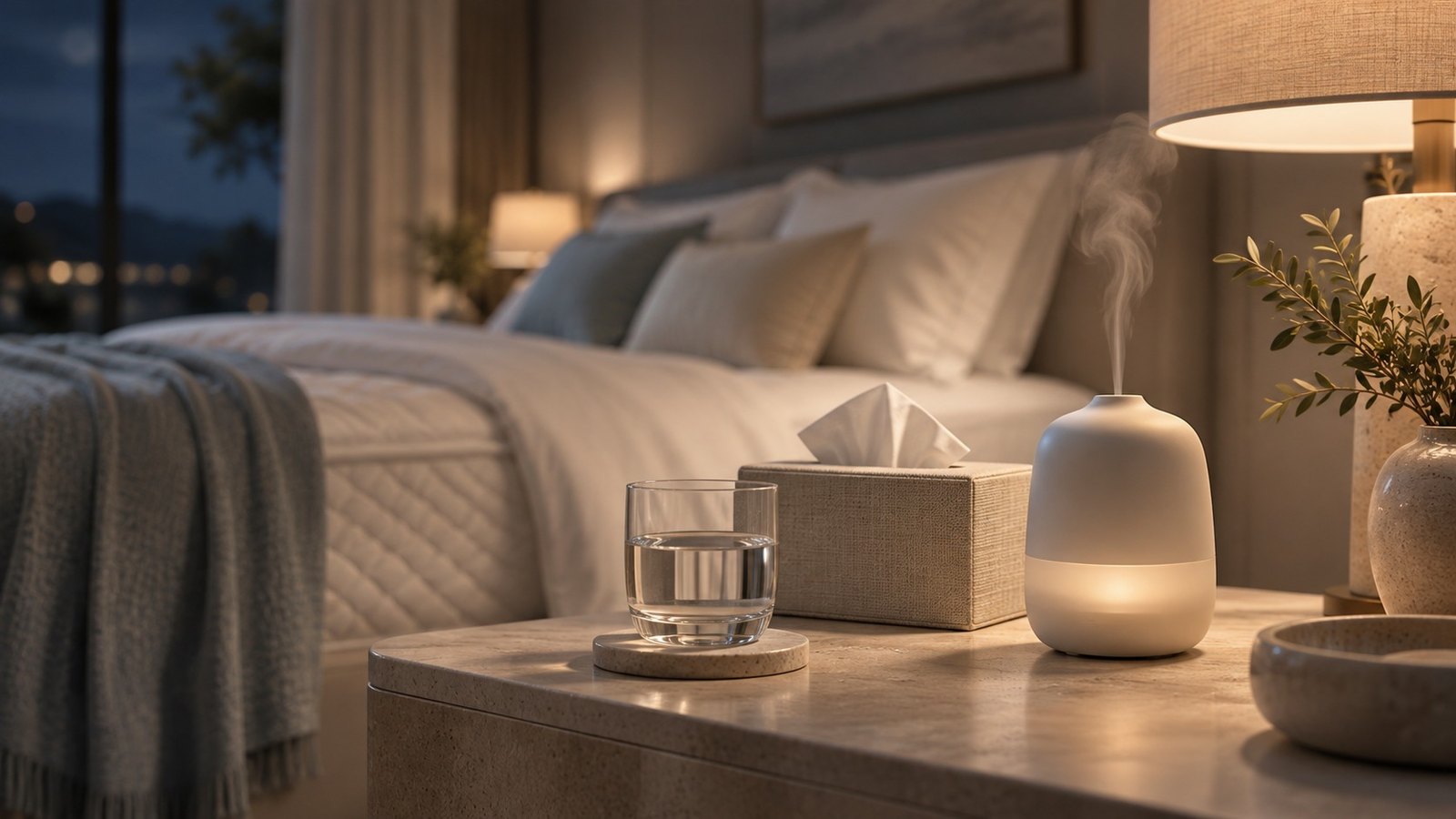
Prepare the bed early: pillow ready, room aired, blanket within reach, a glass of water on the nightstand. When you have a cold every interruption counts, and getting up to fetch something breaks sleep exactly in the falling-asleep phase. If you live with allergies or dust mites, use the moment to review bed maintenance: the dust mites guide explains how to reduce the allergens that pile onto a cold.
Last, silence. Coughing and sneezing disturb whoever sleeps beside you, and a quiet room with stable temperatures and few stimuli cuts awakenings for both. Sleep as a couple during a cold is defended with the same tools as any shared night: movement isolation, even comfort, shared schedules.
What to avoid before sleeping
The first mistake is underestimating medicine. Many over-the-counter decongestants contain stimulating substances that make falling asleep harder, and taken in the evening they move the problem from the nose to sleep. Ask the pharmacist for an evening formulation, and use medicines only for the days strictly necessary.
The second mistake is alcohol as a sleeping pill. A glass of wine seems to help you fall asleep, but it fragments the second half of the night, dries the mucosa and worsens congestion: the bill arrives at three in the morning, when you wake up with a dry throat and a nose more blocked than before.
The third mistake is going to bed with the heating on maximum and the windows shut since morning. The warm dry air of the bedroom is one of the reasons a night-time cold drags on for a week. One hour of open window during the day, and a night at 18-20 degrees, change the quality of breathing.
The fourth mistake is waiting for the bed to fix everything. If the mattress is more than eight years old, if a hollow has formed in the middle, or if you wake up with back pain even without a cold, the problem is the comfort and not the virus. It is time to try a new comfort, with the reassurance of 10 trial nights and a no-questions return.

Frequently asked questions about cold and sleep
Is it better to sleep with the head higher when you have a cold? Yes, a slight incline of the upper body reduces congestion because less blood flows into the nasal mucosa. There is no need to overdo the pillows: the head must stay in line with the torso, otherwise the discomfort moves to the neck.
How long does a seasonal cold last? On average five to seven days, with the most intense symptoms in the first two or three. Disturbed sleep can make you feel tired longer, because a fragmented night stops the deep stages of rest from completing themselves.
Does bedroom humidity affect a blocked nose? Yes. Below 40% humidity the mucosa dries out and congestion worsens; above 60% dust mites and mould increase and add to the cold. The useful band for sleeping sits between 40% and 60%.
Which sleep position is best with a blocked nose? The side, with a pillow that keeps the head in line with the torso. Side sleeping reduces throat dryness and favours more regular breathing than lying on your back.
Does the mattress really matter when you have a cold? Yes, because the body moves many more times a night. A mattress with differentiated support follows the changes of position without interrupting sleep, while a comfort that is too soft or too firm multiplies awakenings.
How long does it take to try a Luxury Relax mattress? 10 trial nights with a satisfaction or refund policy, a 10-year warranty and free delivery throughout Italy within 24 or 48 hours. To choose the right model you can request the free consultation or read the full Luxury Relax review.
Should you change the sheets more often when you have a cold? Yes. Sheets and pillowcases collect secretions, dust and microorganisms, and during a cold it pays to change them every two or three days, washing at 60 degrees. A clean aired surface reduces night-time stimuli and helps breathing, especially for those who also suffer from allergies.
Ideal Mattress Configurator in 3 Clicks
Answer 3 questions and see which Luxury Relax model fits your sleep best.
Step 1 of 3
Images from this guide


Is it better to sleep with the head higher when you have a cold?
Yes, a slight incline of the upper body reduces congestion because less blood flows into the nasal mucosa. There is no need to overdo the pillows: the head must stay in line with the torso, otherwise the discomfort moves to the neck.
How long does a seasonal cold last?
On average five to seven days, with the most intense symptoms in the first two or three. Disturbed sleep can make you feel tired longer, because a fragmented night stops the deep stages of rest from completing themselves.
Does bedroom humidity affect a blocked nose?
Yes. Below 40% humidity the mucosa dries out and congestion worsens; above 60% dust mites and mould increase and add to the cold. The useful band for sleeping sits between 40% and 60%.
Which sleep position is best with a blocked nose?
The side, with a pillow that keeps the head in line with the torso. Side sleeping reduces throat dryness and favours more regular breathing than lying on your back.
Does the mattress really matter when you have a cold?
Yes, because the body moves many more times a night. A mattress with differentiated support follows the changes of position without interrupting sleep, while a comfort that is too soft or too firm multiplies awakenings.
How long does it take to try a Luxury Relax mattress?
10 trial nights with a satisfaction or refund policy, a 10-year warranty and free delivery throughout Italy within 24 or 48 hours. To choose the right model you can [request the free consultation](key:contatti) or read the [full Luxury Relax review](key:luxury-relax-recensione).
Should you change the sheets more often when you have a cold?
Yes. Sheets and pillowcases collect secretions, dust and microorganisms, and during a cold it pays to change them every two or three days, washing at 60 degrees. A clean aired surface reduces night-time stimuli and helps breathing, especially for those who also suffer from allergies.
Request your free consultation
Fill in the form: a Luxury Relax expert will get back to you with the proposal that suits you best.
What Luxury Relax owners say
On my dad's advice, already a customer, I went to Luxury Relax to buy a mattress. Very comfortable and ergonomic products.
Quality products, helpful and knowledgeable staff. Highly recommended to anyone looking for a real mattress, not a brand name.
I got rid of the back pain that had followed me for years. The right mattress changes your days.
Come visit us
Luxury Relax Materassi
Via San Rocco, 42 — 20831 Seregno (Monza e della Brianza), Italia0362 222407 · info@luxuryrelax.it · WhatsApp 339 4797213
Open in Google Maps