Best Mattress for Back Pain: Support and Posture Guide
Request your free consultation
Fill in the form: a Luxury Relax expert will get back to you with the proposal that suits you best.
Morning back pain is the quiet alarm clock of a bad mattress. You do not feel it when you lie down. You feel it when you try to get up, when the lower back has spent eight hours in a shape the mattress chose for it. By the time you are standing, the damage is done, and no amount of stretching undoes a night spent out of alignment.
Most people blame their back, or their age, or the chair at work. Sometimes they are right. But a surprising share of chronic morning stiffness comes from a mattress that fails to hold the spine neutral, or one so rigid it turns every position into a negotiation. Fixing the surface is often the fastest improvement available, and it costs far less than a course of treatment.
This guide explains what a mattress must do to protect the back and neck, why firmness is a poor proxy for support, and how a thermosensitive build from the Luxury Relax range solves the problem for different bodies. It stays inside what is sensible to say — comfort and posture, not medical claims — and focuses on the choice you can make tonight.
Why Your Mattress Drives Morning Back Pain
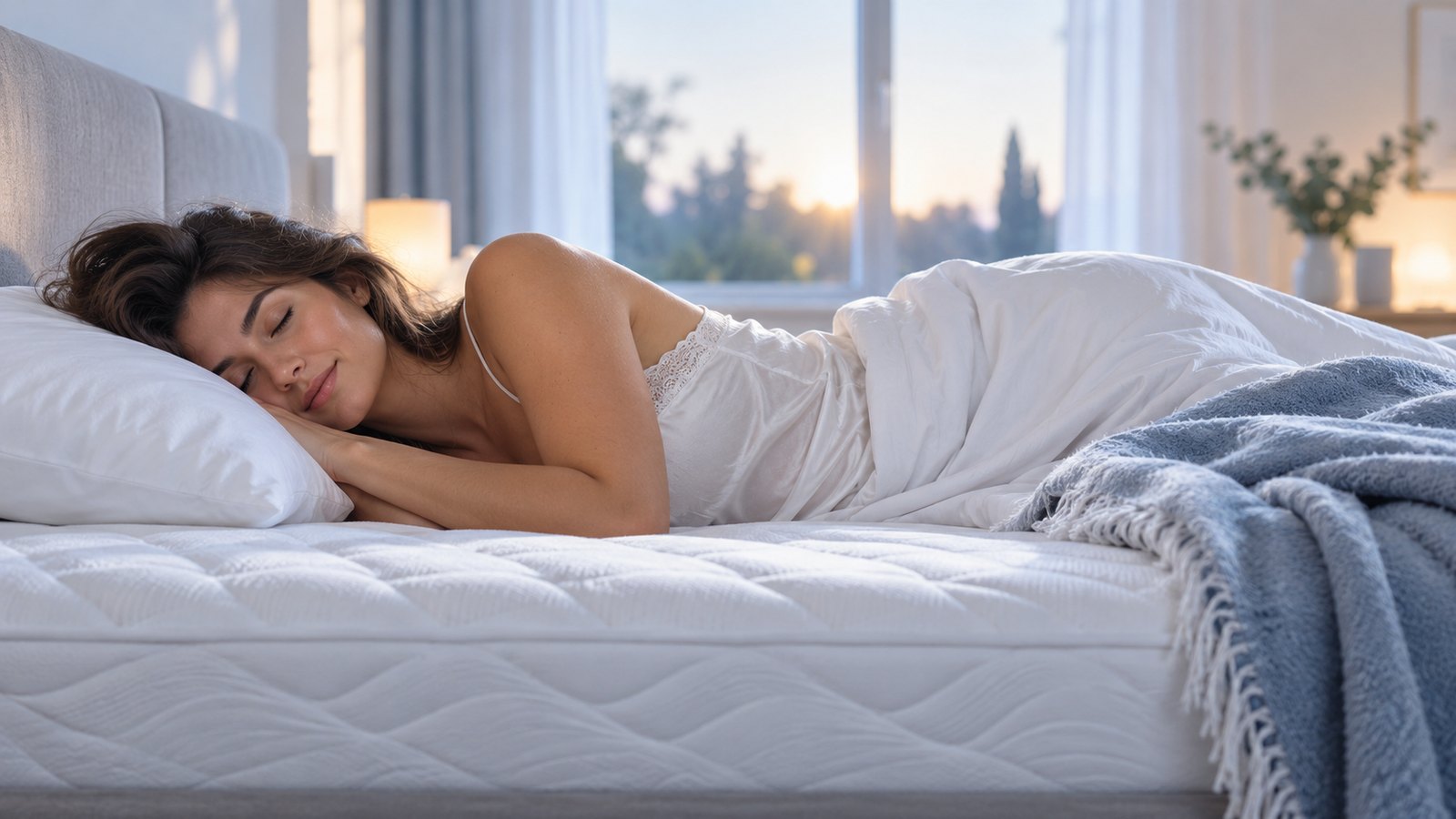
Lie down and your body should form a gentle S curve from the neck to the base of the spine. The mattress has one job: fill the gap under the lumbar curve and support the spine from below so the muscles can relax. If the surface sags under the lower back, the spine dips and the surrounding muscles work all night to compensate. That is the ache you feel at seven in the morning.
The opposite failure is just as common. A mattress that is too rigid cannot yield at the shoulders and hips, so the pelvis tilts and the spine is pushed out of line at the other end. Sleepers on very firm surfaces often report shoulder and hip soreness alongside a stiff back, because their body spent the night bridging over an unyielding surface instead of resting on it.
Your sleeping position changes the requirement. Back sleepers need support under the lumbar curve. Side sleepers need softness at the shoulder and hip so the spine stays level. Stomach sleepers need a surface firm enough to stop the lower back from arching. No single firmness suits all three, which is why a mattress that adapts to the body beats one that merely feels hard or soft.
Support and Firmness Are Not the Same Thing
The most expensive mistake in mattress shopping is confusing firmness with support. Firmness is how the surface feels when you press it. Support is whether the surface holds your spine neutral while you lie on it. A mattress can be very firm and still unsupportive, because it fails to fill the lumbar gap. A mattress can feel soft and be genuinely supportive, because it yields where you need it and holds firm where you do not.
That is why the old advice to buy a firm mattress for back pain is incomplete. What the back actually needs is differential support: a platform under the lumbar spine and a softer response under the shoulders and hips. Achieving both at once is a design problem, solved with layers rather than a single block of hard foam.
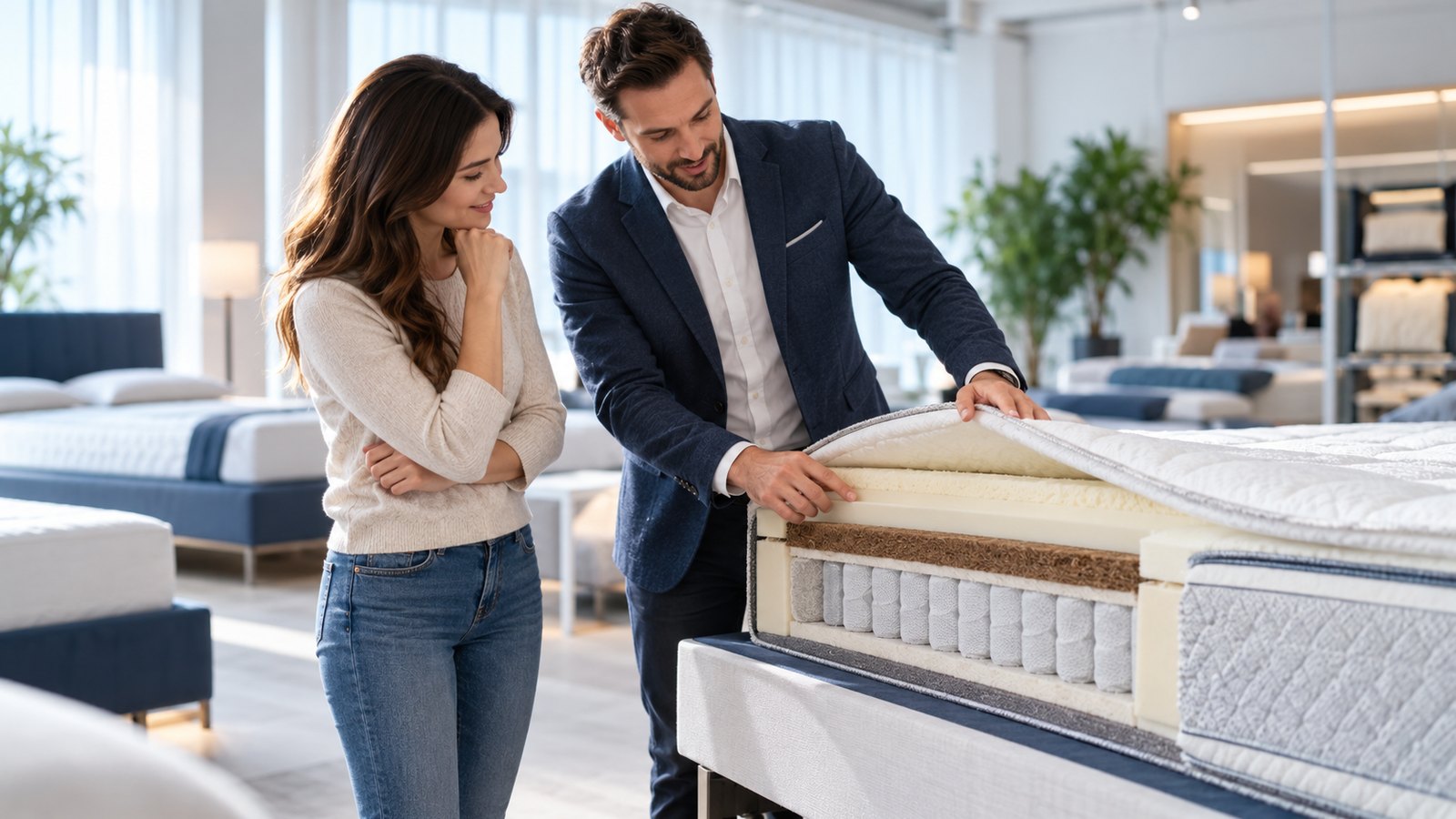
A dense support core carries the weight and keeps the lower back from sinking. A thermosensitive comfort layer above it softens under body heat exactly where pressure builds, contouring the shoulder and hip without letting the spine dip. Together they deliver what a rigid board cannot: support you can feel and comfort you can relax into.
Thermosensitive Memory and the Neck-to-Hip Line
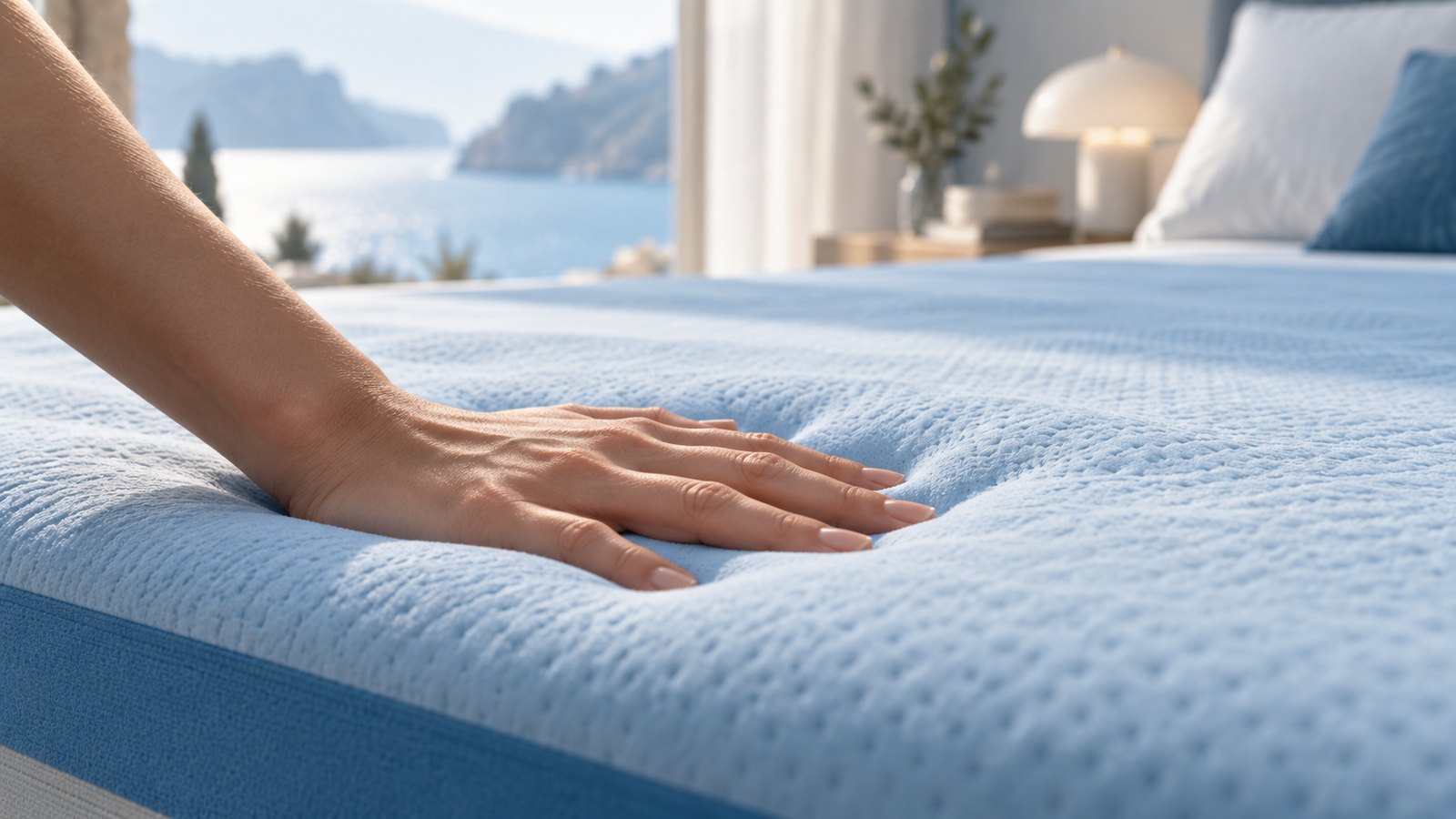
Memory foam earns its place in a back-friendly mattress because it reacts to heat and weight instead of a fixed setting. Where your body is warm, it softens; where you need a platform, it stays firm. That responsiveness keeps the neck-to-hip line level, whether you roll onto your side at two in the morning or settle on your back.
The word thermosensitive matters. A good memory layer adapts as your body temperature changes, so it does not stay hard on a cold night or collapse on a warm one. Combined with a dense Confortgel base, it produces the exact behaviour the spine wants: contouring at the joints, support at the lower back.
A breathable 3D perimeter band and an aloe vera washable cover complete the system. Airflow keeps the core from storing heat, and the removable cover keeps the surface hygienic, which matters because a mattress you cannot clean is a mattress you replace too soon. Add four perimeter handles for rotating it and an anti-mite, hypoallergenic treatment, and the build answers both the posture question and the longevity question.
Differential Support for Different Body Weights
Weight is the variable most buyers ignore, and it changes everything. A lighter sleeper needs less resistance to sink into the comfort layer; a heavier sleeper needs more support to keep from bottoming out. That is why the same mattress can feel perfect for one partner and wrong for the other, and why the right model depends more on load than on taste.
Luxury Relax handles this with a range that scales its support to the body. The Athena, at €990 from a €1,950 list, is the top choice for heavier sleepers and anyone who needs the strongest differential support across the lumbar region. The Platinum, at €699 from €1,999, suits average-weight sleepers and couples with a moderate difference in size. The Gold at €399 from €749 brings the same construction philosophy to a lighter build and a friendlier price.
| Body weight | Recommended model | Why |
|---|---|---|
| Lighter sleepers | Gold | Softer response without bottoming out |
| Average weight | Platinum | Balanced support and contouring |
| Heavier sleepers | Athena | Maximum differential and load support |
| Two very different weights | Athena | Adapts to each side independently |
The height of the build matters here too. At 24 to 30 centimetres depending on the model, these mattresses have room for a genuine comfort layer over a real base. Thin mattresses force the foam and the base into competition, and the loser is always your lower back.

Building a Sleep Setup That Protects Your Back
The mattress is the foundation, but the setup around it decides the final result. A supportive base is essential: a mattress on a sagging frame or broken slats cannot do its job, however good it is. Check that the base is flat and rigid before you blame the mattress for anything.
Pillows complete the line. Back sleepers want a pillow that fills the neck curve without pushing the chin up. Side sleepers need a taller pillow to keep the neck level with the spine. Stomach sleepers should keep the pillow low or use none, to avoid arching the neck. A memory pillow follows the same logic as the mattress, responding to heat and pressure rather than forcing the head into a fixed position.
If your trouble is more about the neck and shoulders, or if you share a bed with someone of a very different build, the choice narrows further. Our memory foam comparison explains the layer system in depth, and the firm or soft mattress guide unpacks the firmness question that trips up most buyers. When you are ready to match a model to your body rather than a slogan, open the contact page and request a free consultation. Ten nights of trial will tell you more about your back than any specification sheet.
Frequently Asked Questions
What firmness is best for back pain? Differential support matters more than firmness. You want a firm platform under the lumbar spine and a softer response under the shoulders and hips. A medium-firm mattress with a contouring memory layer suits most back and side sleepers.
Is a hard mattress good for my back? Not automatically. A surface that is too rigid pushes the pelvis out of line and creates shoulder and hip pressure. Support means holding the spine neutral, which a firm board does not do on its own.
Memory foam or springs for back support? Memory foam over a dense base contours the joints while supporting the lower back, which suits most people with back discomfort. Springs give a firm platform but need a deep comfort layer to avoid pressure points.
How long before a new mattress helps? Comfort and alignment improve from the first night, though muscles used to a bad mattress may take a few nights to settle. The ten trial nights at Luxury Relax give you time to judge the change properly.
Do heavier sleepers need a firmer mattress? They need more support, not merely more firmness. The Athena is built for heavier bodies because its differential support keeps the spine neutral under greater load without turning rigid at the shoulders.
Can I return the mattress if it does not help? With ten trial nights, satisfied or refunded, free delivery and payment on delivery, you test the mattress at home and change your mind, which removes the risk of guessing wrong.
What firmness is best for back pain?
Differential support matters more than firmness. You want a firm platform under the lumbar spine and a softer response under the shoulders and hips. A medium-firm mattress with a contouring memory layer suits most back and side sleepers.
Is a hard mattress good for my back?
Not automatically. A surface that is too rigid pushes the pelvis out of line and creates shoulder and hip pressure. Support means holding the spine neutral, which a firm board does not do on its own.
Memory foam or springs for back support?
Memory foam over a dense base contours the joints while supporting the lower back, which suits most people with back discomfort. Springs give a firm platform but need a deep comfort layer to avoid pressure points.
How long before a new mattress helps?
Comfort and alignment improve from the first night, though muscles used to a bad mattress may take a few nights to settle. The ten trial nights at Luxury Relax give you time to judge the change properly.
Do heavier sleepers need a firmer mattress?
They need more support, not merely more firmness. The Athena is built for heavier bodies because its differential support keeps the spine neutral under greater load without turning rigid at the shoulders.
Can I return the mattress if it does not help?
With ten trial nights, satisfied or refunded, free delivery and payment on delivery, you test the mattress at home and change your mind, which removes the risk of guessing wrong.
What Luxury Relax owners say
Su consiglio di mio papà già cliente mi sono recato da Luxury Relax per l'acquisto di un materasso. Prodotti molto comodi ed ergonomici.
Prodotti di qualità, personale disponibile e competente. Consigliatissimo a chi cerca un materasso vero, non un nome.
Ho risolto i dolori alla schiena che mi accompagnavano da anni. Il materasso giusto cambia le giornate.
Come visit us
Luxury Relax Materassi
Via San Rocco, 42 — 20831 Seregno (Monza e della Brianza), Italia0362 222407 · info@luxuryrelax.it
Open in Google Maps