Migraine and Sleep: How to Sleep Better When Headache Strikes at Night
Key facts at a glance
- What to know right away: Migraine and sleep are linked in both directions. Discover 7 evening habits and the right mattress support to cut night-time attacks. Read the guide now.
- Trial, warranty and delivery: 10 trial nights · 10-year warranty · Free delivery 24/48h
- Who it is for: Why migraine and sleep are linked
- What this guide covers: Why migraine and sleep are linked · What happens at night when migraine strikes · The evening habits that make a difference
- How to book or get help: Get your free consultation · 0362 222407 · info@luxuryrelax.it
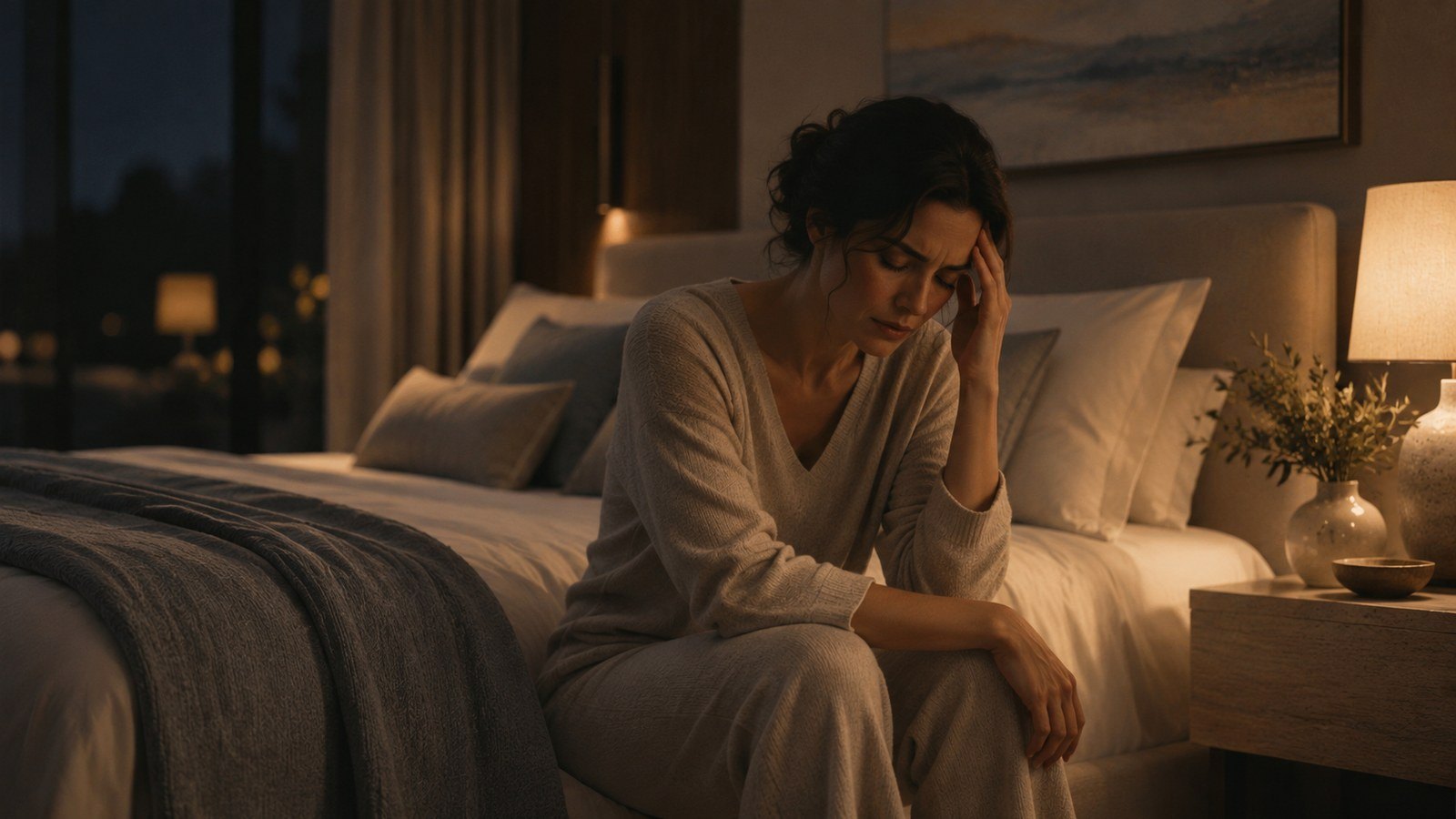
Migraine and sleep feed each other, and almost always in the wrong direction. A night broken by awakenings raises the odds that a headache will arrive the next day. A night-time attack, in turn, cuts rest short in exactly the hours when the body needs to recover. Anyone who lives with migraine knows this chain: you go to bed tired, you wake at three with a pulse behind one eye, and the next morning the pain stays in the background all day.
Clinical research describes a two-way link. Sleeping too little or too much can trigger an attack, and migraine itself lowers the quality of deep sleep. The useful point is another one: the night can be built. Stable hours, a bedroom managed with care, and a bed that supports the neck and shoulders without forcing them all reduce the factors that feed the cycle.
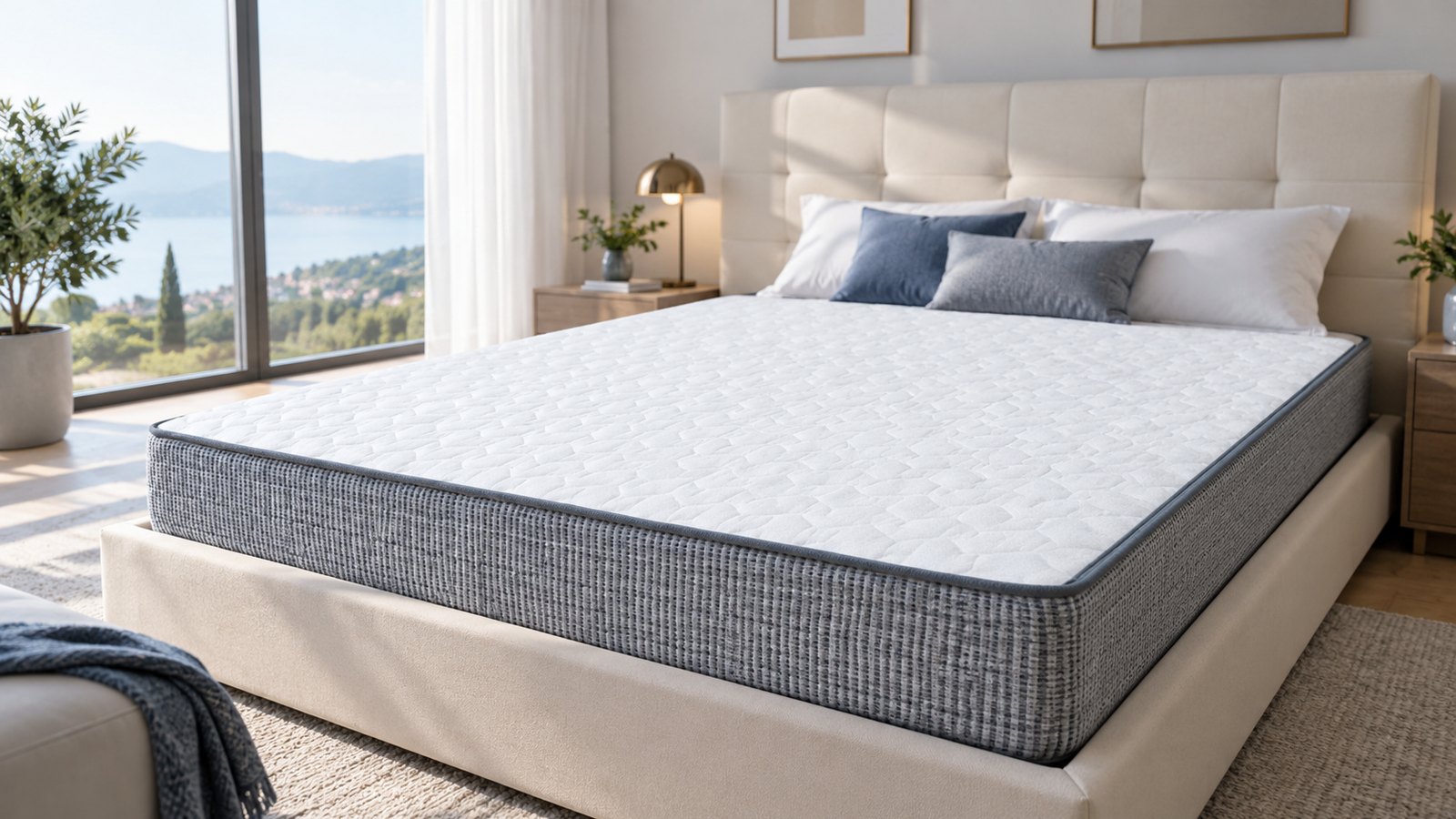
The Luxury Relax review covers an Italian manufacturer that builds mattresses for people who sleep badly and move often during the night. Zoned support, temperature-sensitive memory foam and a washable Aloe Vera cover are concrete details, not slogans. In this guide we look at why migraine and sleep are linked, which evening habits actually help, and when the mattress makes a difference.
Why migraine and sleep are linked
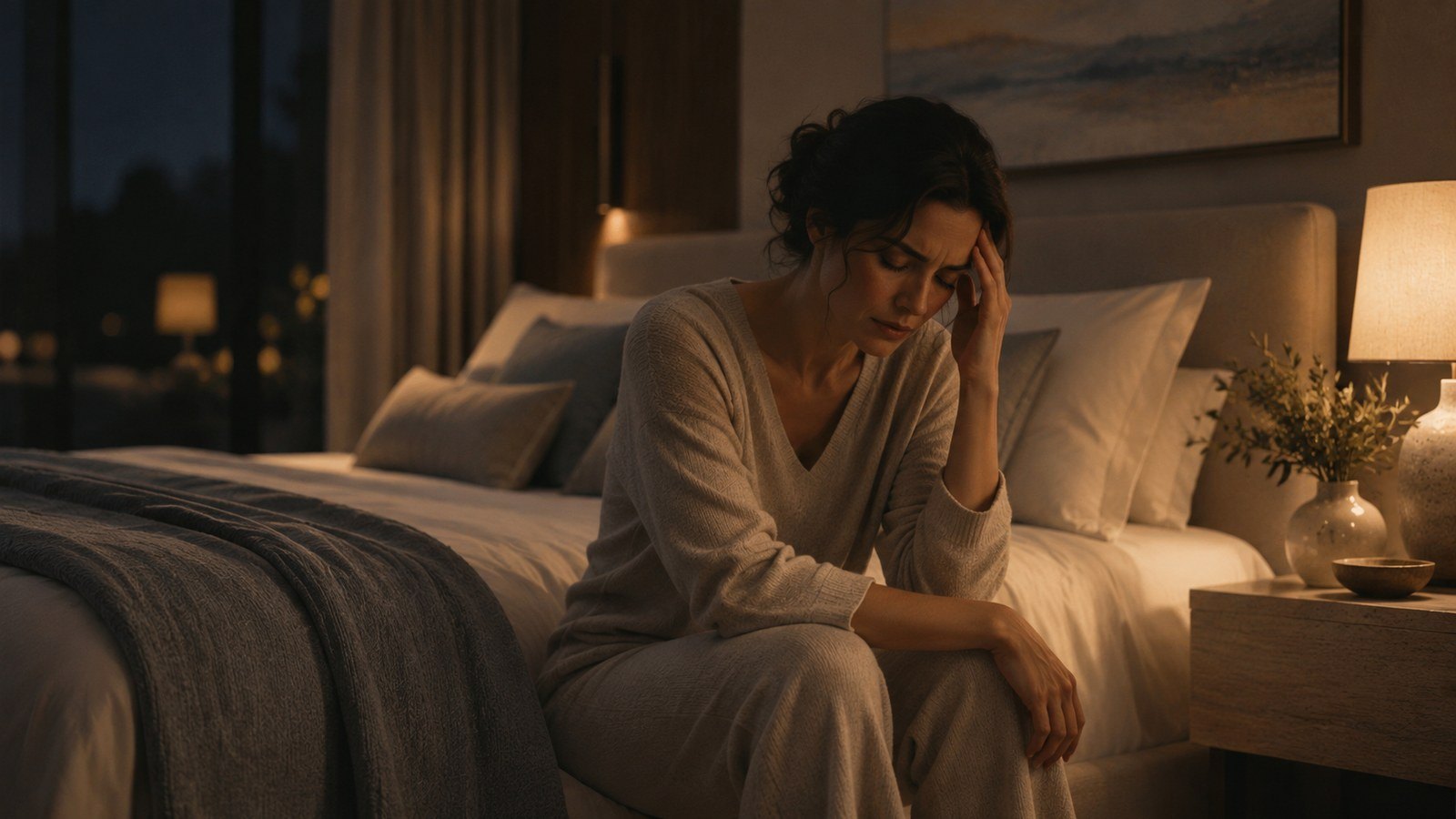
Sleep regulates the pain threshold. When rest is short or fragmented, the systems that filter painful signals work less well. Signals that normally stay in the background come through with more force. That is why a night without sleep or a long stretch awake can set the stage for a migraine attack within 24 hours.
The link runs the other way too. During an attack the body stays on alert: the pain pulses, light hurts, every movement of the neck is felt. Deep sleep shrinks and breaks up, even when total time in bed looks sufficient. The stages of sleep explain why an interrupted night costs more than the hours lost. Each long awakening restarts a cycle, and physical recovery drops.
It is not only a question of hours. Timing matters as well. Going to bed and getting up at very different times strains the circadian rhythm, and the circadian rhythm is one of the regulators of the pain threshold. Someone who sleeps six regular hours often feels better than someone who sleeps eight while jumping between weekend and weekday schedules.
Watch for the opposite excess too. Sleeping far more than usual, especially at weekends, is a recognised trigger for many people with migraine. The practical rule is simple: hold a constant sleep window for at least three weeks and watch what changes in attack frequency. Keep the window within about one hour, even after a bad night, and avoid long lie-ins that push the next evening later.
What happens at night when migraine strikes
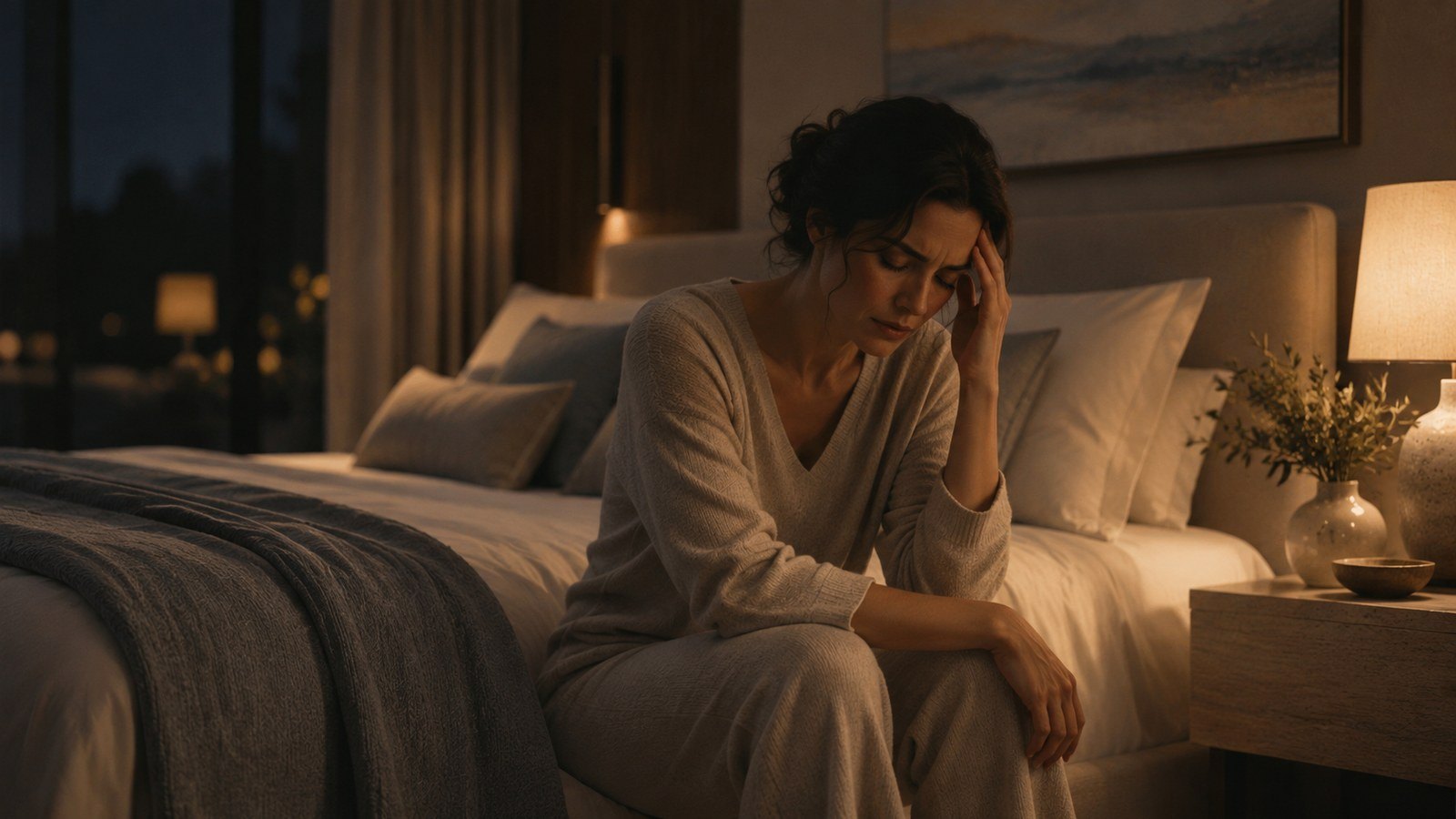
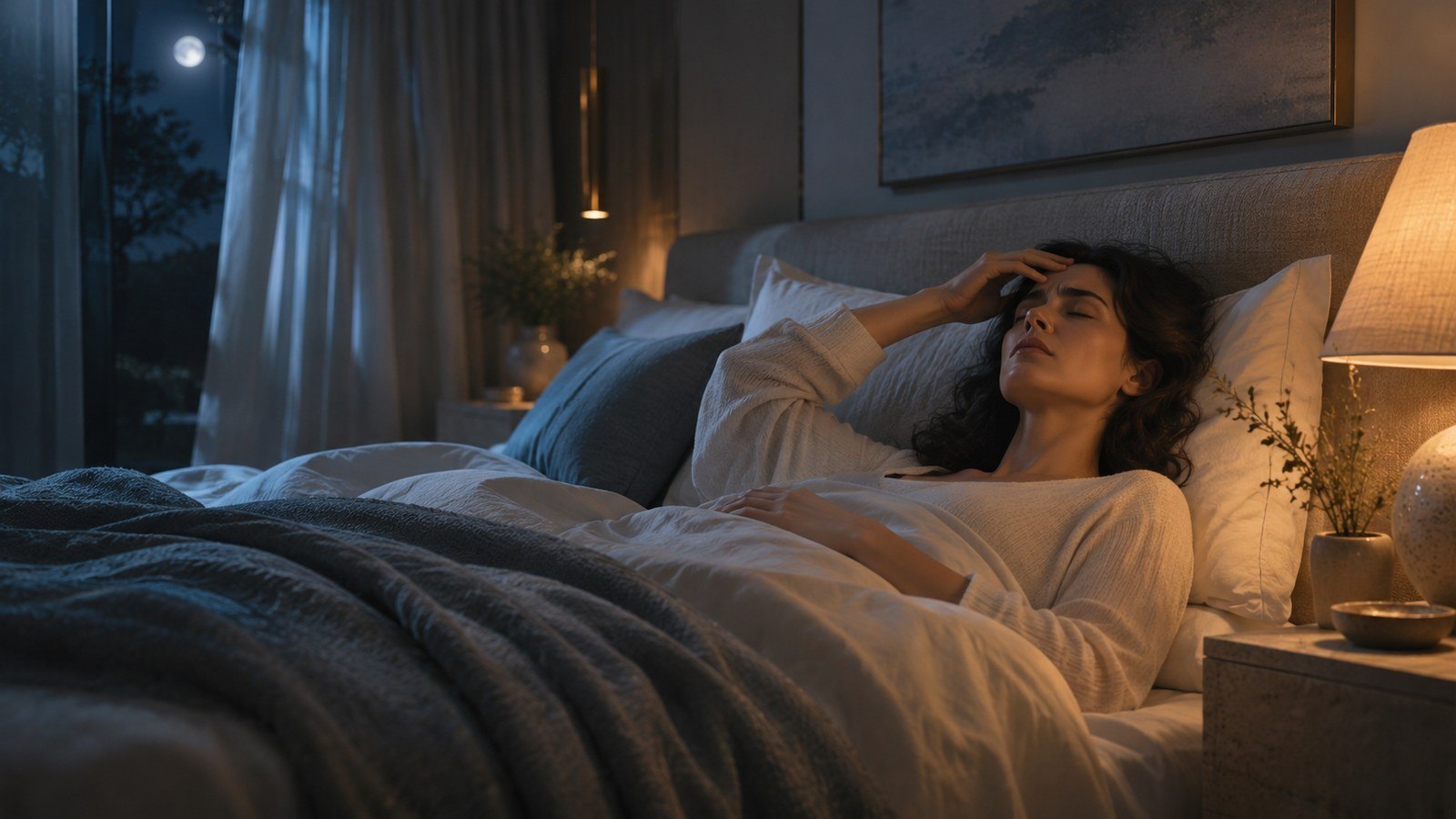
The night-time attack is common. Many people describe the same script: they fall asleep without trouble, then between the end of the night and the early morning hours the pain lights up, often on one side of the head, with throbbing and sensitivity to light. The awakening is sharp, and falling back asleep becomes hard because the body is already on alert.
When pain interrupts sleep on several consecutive nights, a cycle forms. Daytime tiredness leads to less activity, more coffee to get through the day, and irregular bedtimes. Those three conditions weaken rest on their own. The night-time awakenings become more frequent, and deep sleep drops further.
Position plays a part too. Sleeping face down with the neck turned for hours, or on a pillow that holds the head too high, adds tension to the neck and shoulder muscles. For many people with cervicogenic migraine this tension multiplies the discomfort.
An evening log helps you read the sequence: bedtime, number and timing of awakenings, pain intensity in the morning, what you ate and drank in the hours before. After two weeks clear patterns appear, far more useful than vague memory. Note the hour of the first awakening and the side of the head, and you will often see a repeatable order.
The evening habits that make a difference
Evening habits do not cure migraine, but they remove the factors that make it easier. The first is regularity: the same bedtime, the same wake time, even on days off. The body expects predictable rhythms, and the pain threshold responds better when the rhythm is stable. A shift of more than an hour is enough to disturb it.
The second concerns stimuli and substances. Alcohol dilates blood vessels and fragments sleep, and for many people with migraine it is a direct trigger. Caffeine has a useful window: one cup in the morning is almost always tolerated, while drinking it in the late afternoon delays sleep onset and can set the stage for the next day. Keep the last cup before mid-afternoon, since caffeine stays active for several hours.
Dinner follows simple rules: moderate portions, an hour that is not too late, little chocolate and aged cheese if you know you are sensitive. Heavy or spicy meals close to bedtime raise body temperature and slow digestion, and both work against a calm onset. A light meal three hours before bed is a safer baseline.
The third concerns light management. In the last hour before bed it pays to dim the house lights and cut screen time, because bright, cool light keeps the brain in wake mode. A warm lamp, an aired room and a temperature around 18 to 20 degrees all favour a calmer onset. Small repetitive rituals help as well: ten minutes of light reading, a few slow breathing exercises, a lukewarm shower. The stress built up during the day is one of the factors that most often precedes an attack, and a constant evening ritual is the simplest way to lower activation before sleep.
Neck and shoulder posture during the night
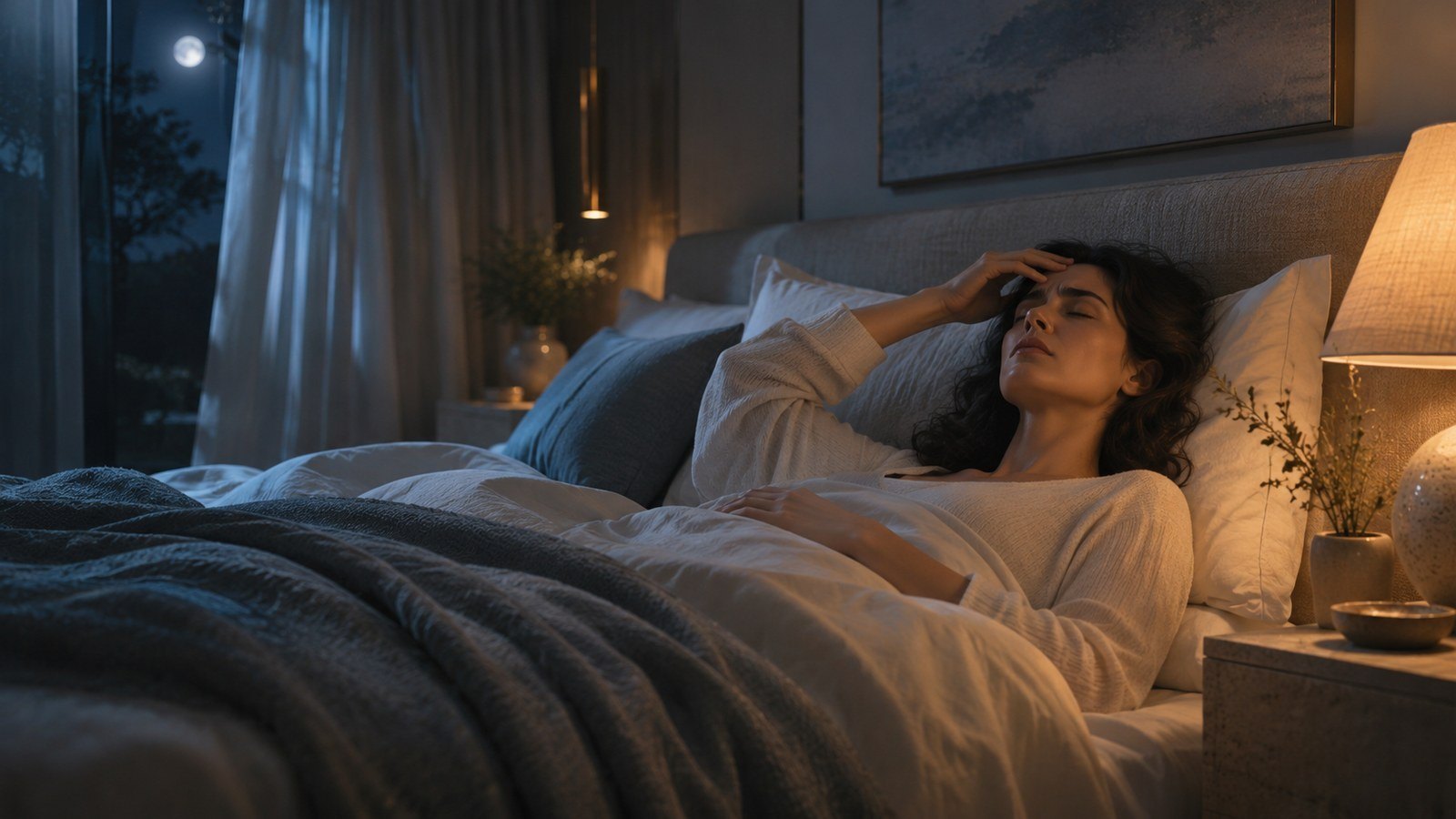
For anyone with migraine, the night is also a mechanical matter. The neck stays in one position for hours. If the pillow is too high, the head bends forward and the cervical muscles keep working even during sleep. If it is too low, the head falls back and the tension moves to the base of the skull.
The most protective position for most people is on the back, with a pillow that fills the gap between the neck and the mattress without lifting the forehead. Side sleepers need slightly more height, enough to keep the head in line with the spine. Stomach sleepers usually pay the highest price in terms of cervical rotation.
Under the head, the support surface counts as much as the pillow. A mattress that is too soft lets the shoulders sink and the neck rotate. One that is too firm creates pressure points on the shoulder blades and forces you to turn many times. The approach used by high-end products, such as Luxury Relax mattresses, is zoned support: the shoulder zone gives more, the lumbar zone holds more, and the head stays in line. The Athena model, for example, pairs temperature-sensitive memory foam with a high-density Confortgel base, with a height between 24 and 30 centimetres depending on the version chosen.
The practical advice is to test the posture for several consecutive nights, not for one afternoon. Ten trial nights, such as those offered by Luxury Relax with a satisfied or refunded policy, are a realistic period to see whether the neck truly relaxes. Note how you feel on waking, not only how you fall asleep, because the difference usually shows in the first hour of the day.

Light, noise and temperature: the bedroom that protects sleep
The bedroom is a factor you can almost fully control. Light is the first enemy. Even a small source, the standby light of a television or the display of a charger, can lower sleep quality. For anyone sensitive to light during migraine, full darkness and blackout curtains make a visible difference.
Noise comes next. You do not need absolute silence; you need a steady sound. A regular background noise covers sudden peaks, a passing car, the building door, which are exactly the stimuli that trigger an awakening. For anyone who needs rest during an attack, soft earplugs or well-tolerated plugs can help.
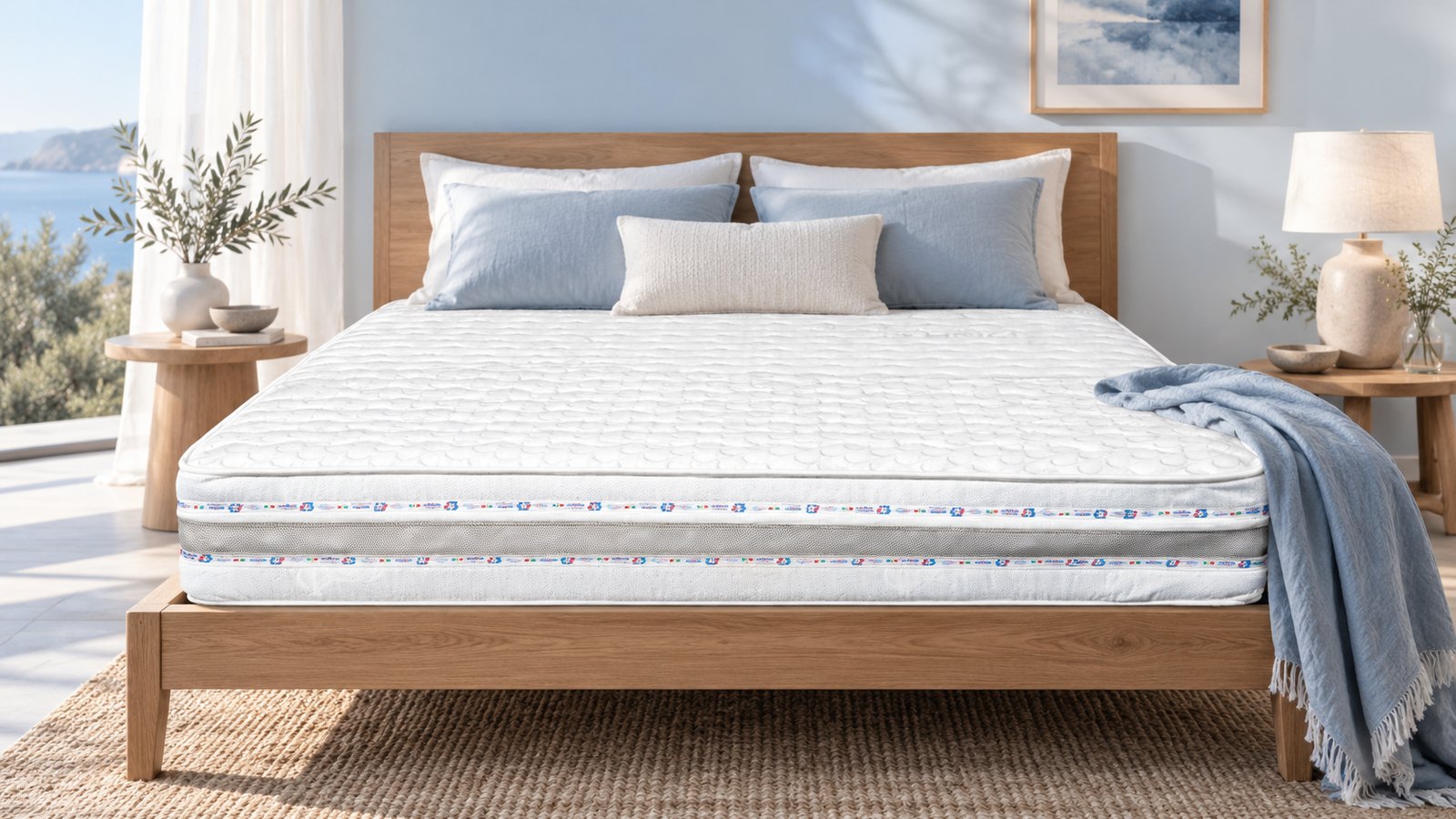
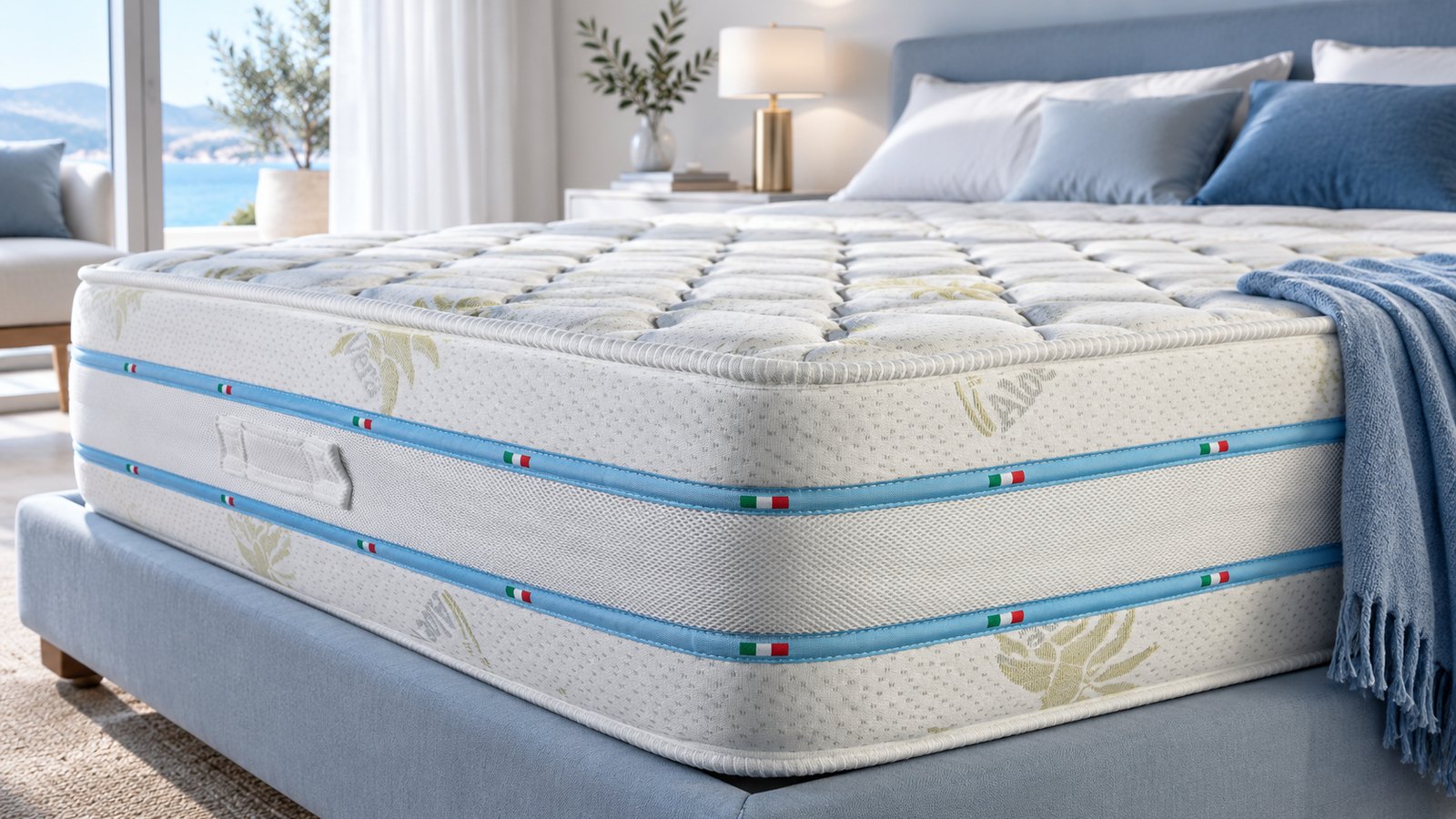
Temperature is the third pillar. A room that is too warm reduces deep sleep and encourages awakenings. The most comfortable range sits around 18 to 20 degrees. Bed linen should breathe, and here the mattress plays its part: the breathable 3D perimeter band found on Luxury Relax mattresses is designed to move air in the place where heat collects most.
Finally, watch strong smells and room fragrances. During a migraine attack, olfactory stimuli quickly become irritating. A simple, aired room that is not overloaded with objects is the most prudent choice. Keep the space for sleep only, so the brain links the room with rest rather than with work or screens.
When the mattress really makes a difference
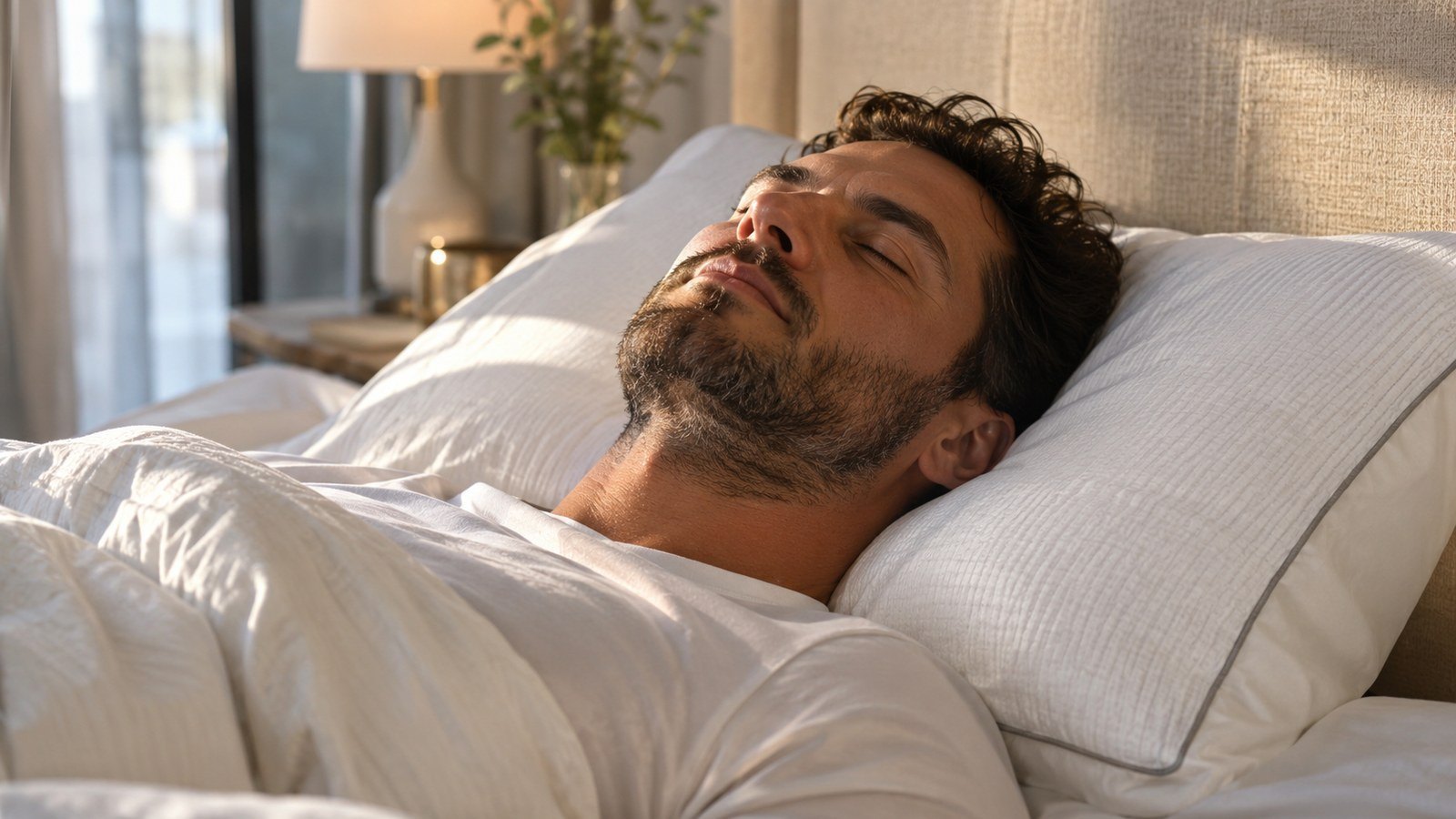
A mattress does not cure migraine, but the wrong mattress adds a share of mechanical tension and extra awakenings every night. The signs that the bed is not working are easy to recognise: you wake with a stiff neck, you turn many times a night, you feel hot and throw off the cover, you sink in the middle of the bed.
The selection criteria are concrete. First: zoned support for head, shoulders and lumbar zone. Second: materials that hold posture over time, such as high-density memory foam, avoiding foams that deform after a few months. Third: real breathability, with washable covers such as the Aloe Vera one and a 3D perimeter band. Fourth: the right height, between 24 and 30 centimetres in the complete models.
The Aloe Vera cover washes at 30 degrees, which matters for anyone who sweats at night or shares the bed and wants a clean surface without chemicals. The anti-mite and anti-allergy treatment keeps the sleeping surface friendly to sensitive airways. Four perimeter handles make it easier to rotate the mattress and keep the wear even.
Comparing the Luxury Relax models, the picture is clear. Athena is the top of the range, from 990 euro against a list price of 1,950 euro, and it is the choice for anyone seeking the highest level of support. Platinum, from 699 euro, is the strong compromise for layered comfort without reaching the top. Gold, from 399 euro, covers daily needs well. Elisir, from 179 euro, and Venere, from 149 euro, are the entry points with the same base features: 100% Made in Italy, four perimeter handles, anti-mite and anti-allergy treatment.
The mattress for back pain and the one designed for migraine share the same principle: a stable surface, zoned supports, no postural forcing. To this you add the services that cut the risk of the purchase: 10 years of warranty, 10 trial nights with a satisfied or refunded policy, free delivery across Italy in 24/48 hours, and payment on delivery or by card. To choose between sizes and models, the contact page opens a free consultation with an expert, even just to understand whether a memory foam topper at 149 euro is enough instead of replacing the whole bed.

When to talk to your doctor
There are situations where self-management is not enough and a medical opinion is needed. If the headache becomes daily, if attacks grow in frequency or intensity, if pain wakes you regularly in the second half of the night, it is time to speak with your doctor or a neurologist.
Watch for new signals too. A sudden and very violent headache, different from your usual ones, or fever, neck stiffness, confusion or visual disturbances that appear out of nowhere all require prompt assessment. These events are rare, but they must be recognised at once.
A final point concerns medication. Painkillers taken too often can themselves disturb sleep and, paradoxically, raise the frequency of headaches. The correct use of therapies is decided with your doctor, not on the basis of your awakening calendar. Your GP remains the reference point also to check that nothing else sits behind the night-time awakenings.
Frequently asked questions about sleep and migraine (FAQ)
Can sleep trigger a migraine attack? Yes. Sleeping too little, sleeping too much or changing schedule abruptly are recognised triggers. The most effective protection is a constant sleep window, kept for at least three weeks, without heavy catch-up sleep at the weekend.
Which sleep position is best for someone with migraine? Sleeping on the back, with a pillow that supports the neck without lifting the forehead, usually puts the least tension on the cervical spine. Side sleepers should use slightly more height to keep the head in line with the spine.
How many hours should you sleep to reduce attack frequency? Most adults do well between seven and nine hours a night. Regularity counts more than the exact number: stable hours and contained awakenings do more than a long but occasional recovery sleep.
Does the mattress really affect night-time headache? It affects posture and awakenings, not the cause of migraine. A mattress with zoned support and real breathability reduces neck and shoulder tension and heat-driven awakenings, two elements that worsen the night of anyone with migraine.
When does night-time headache become a reason to see a doctor? When attacks become more frequent than before, when pain wakes you regularly, or when new and sudden symptoms appear. In these cases a medical assessment is needed to rule out other causes and set the correct therapy.
Which Luxury Relax mattress should you choose to sleep well with migraine? Athena is the most suitable model, with temperature-sensitive memory foam and a high-density Confortgel base, from 990 euro. For more contained needs, Platinum at 699 euro offers layered comfort. Both come with 10 years of warranty, 10 trial nights and free delivery in 24/48 hours: to get your bearings, simply request the free consultation.
Ideal Mattress Configurator in 3 Clicks
Answer 3 questions and see which Luxury Relax model fits your sleep best.
Step 1 of 3
Images from this guide

Can sleep trigger a migraine attack?
Yes. Sleeping too little, sleeping too much or changing schedule abruptly are recognised triggers. The most effective protection is a constant sleep window, kept for at least three weeks, without heavy catch-up sleep at the weekend.
Which sleep position is best for someone with migraine?
Sleeping on the back, with a pillow that supports the neck without lifting the forehead, usually puts the least tension on the cervical spine. Side sleepers should use slightly more height to keep the head in line with the spine.
How many hours should you sleep to reduce attack frequency?
Most adults do well between seven and nine hours a night. Regularity counts more than the exact number: stable hours and contained awakenings do more than a long but occasional recovery sleep.
Does the mattress really affect night-time headache?
It affects posture and awakenings, not the cause of migraine. A mattress with zoned support and real breathability reduces neck and shoulder tension and heat-driven awakenings, two elements that worsen the night of anyone with migraine.
When does night-time headache become a reason to see a doctor?
When attacks become more frequent than before, when pain wakes you regularly, or when new and sudden symptoms appear. In these cases a medical assessment is needed to rule out other causes and set the correct therapy.
Which Luxury Relax mattress should you choose to sleep well with migraine?
Athena is the most suitable model, with temperature-sensitive memory foam and a high-density Confortgel base, from 990 euro. For more contained needs, Platinum at 699 euro offers layered comfort. Both come with 10 years of warranty, 10 trial nights and free delivery in 24/48 hours: to get your bearings, simply [request the free consultation](key:contatti).
Request your free consultation
Fill in the form: a Luxury Relax expert will get back to you with the proposal that suits you best.
What Luxury Relax owners say
On my dad's advice, already a customer, I went to Luxury Relax to buy a mattress. Very comfortable and ergonomic products.
Quality products, helpful and knowledgeable staff. Highly recommended to anyone looking for a real mattress, not a brand name.
I got rid of the back pain that had followed me for years. The right mattress changes your days.
Come visit us
Luxury Relax Materassi
Via San Rocco, 42 - 20831 Seregno (Monza e della Brianza), Italia0362 222407 · info@luxuryrelax.it · WhatsApp 339 4797213
Open in Google MapsDirect Italy Logistics & Seregno Showroom
Direct delivery and support in Seregno (MB) & all of Italy
- Delivery window: Free 24/48h shipping across Italy
- Included cover: 10-night home trial + 10-year Luxury Relax warranty
- Showroom address: Luxury Relax Materassi, Via San Rocco, 42 - 20831 Seregno (Monza e della Brianza)