Sleep and screens: how smartphones affect your rest
It is eleven at night and the phone is still in hand. One more video, one notification, the reply to a message that could have waited until morning. When the phone finally lands on the nightstand, the body is already wide awake: the mind is chasing content, the eyes have taken in bright light for an hour, and sleep arrives late and broken into pieces. The scene repeats itself in millions of bedrooms, and it has become the leading cause of poor rest on work nights.
Screens are not the enemy: the way they are used in the two hours before sleep is. An episode of a series watched on the sofa at nine has a different effect from scrolling while standing at midnight with the display ten centimetres from your face. Understanding that difference lets you keep devices at home without handing your night over to chance.
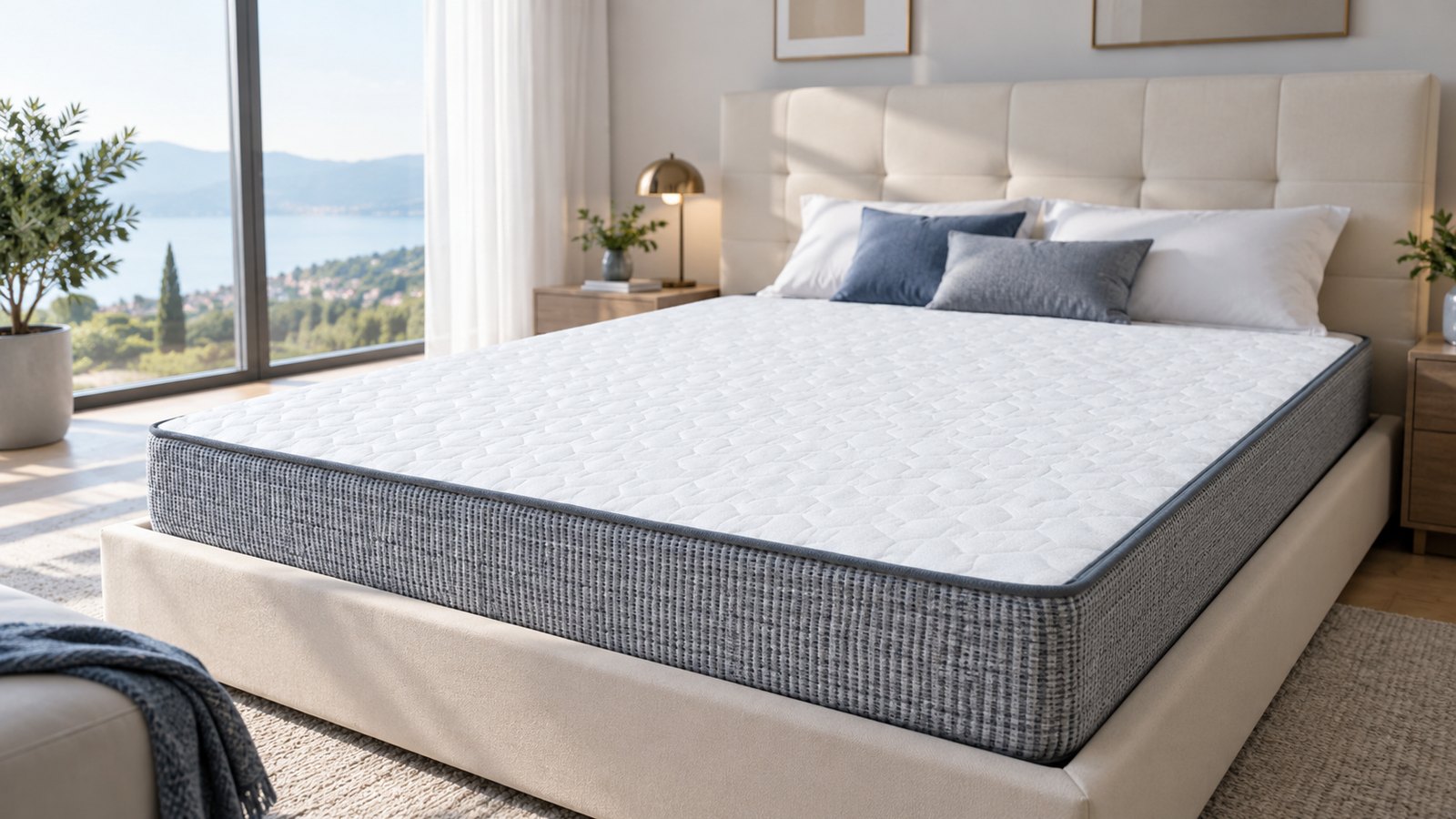
This guide explains what happens when light and content meet the rhythm of the body, and builds an evening routine in seven steps. If you want to check how much the surface you sleep on matters, the full Luxury Relax review covers materials, prices and services of the Italian brand that wins our comparisons.
What happens when you look at a screen at night
The human eye reads light as information about the time of day. When light arrives strongly with a cool component, the brain treats it as daylight and slows down the preparation for sleep. The mechanism is not subtle: the circadian rhythm is set every day by light, darkness and mealtimes, and in the evening the screen is often the closest and most intense light source in the house.
Light colour matters, but it is not the only factor. Distance from the display, brightness settings and the length of exposure all change the outcome. A film watched in the living room, three metres away with soft lamps, demands far less of the eye than a news feed read on a phone, twenty centimetres away, with the screen on full brightness. Same device, different effect.
The second mechanism is mental. An article that annoys, a work conversation, a game with goals to hit: any content that demands reaction keeps the mind alert. The body can be tired while attention is still engaged, and falling asleep becomes slow. This is why the number of hours spent in front of screens during the day matters less than where those hours sit in the final stretch of the evening.
Smartphones, TV and tablets: which habits break your sleep
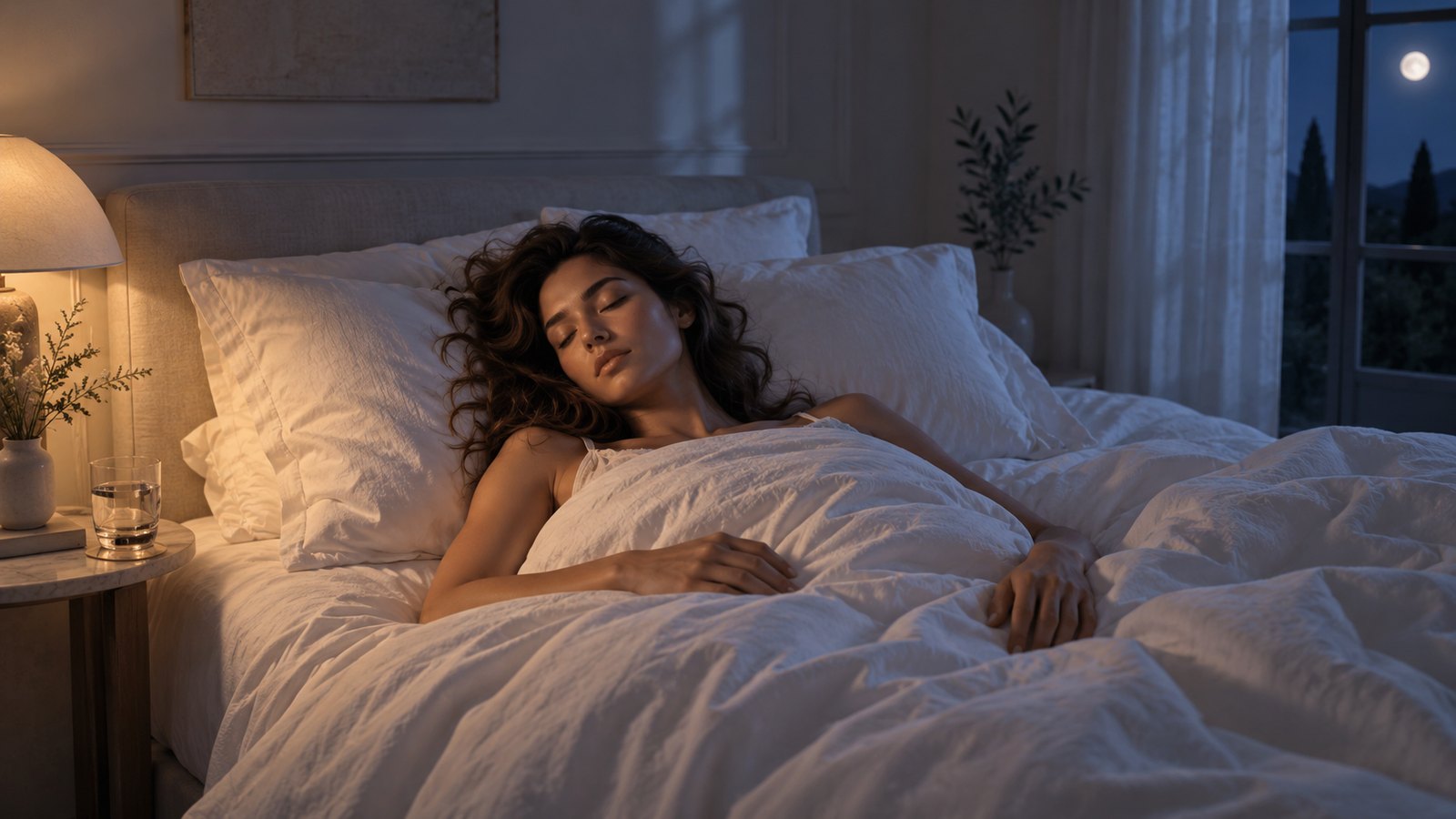
The costliest habits are the invisible ones. A phone left on the nightstand in silent mode keeps sending signals: the buzz of a message, the glow that lights up the bedside table, the urge to check the time and then open an app. Every interruption pulls attention back to the waking state, even when it lasts a few seconds.
A television in the bedroom shifts the problem into another shape. Falling asleep in front of the screen feels like help, but sleep that arrives during a programme is fragmented: voices, music and scenes keep part of the mind reactive, and night-time awakenings increase. A switched-off television on the nightstand then leaves the room with a glowing digital clock and charging devices, light points the brain registers anyway.
Age changes the picture too. In teenagers the sleep rhythm naturally shifts later, and unlimited phone access at night stretches that gap even further. In adults the most frequent risk is work: an email opened at ten brings the working day into the bedroom and delays sleep. The practical rule is simple: the last thirty minutes before bed belong to the house, not to the screen, and devices are charged outside the room.
Light, noise and temperature: the bedroom environment
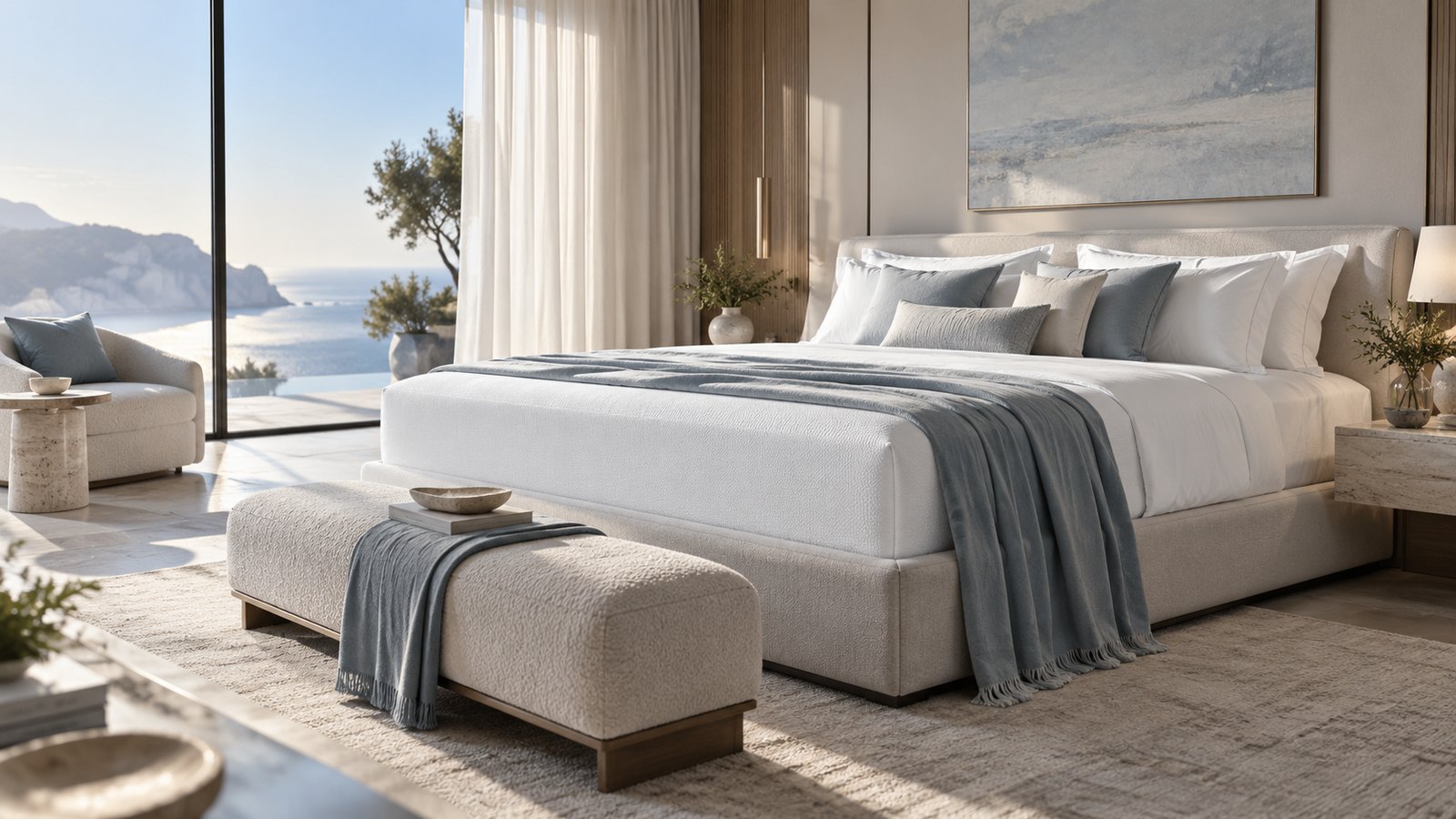
A dark, quiet and cool room multiplies the effect of every good evening habit. Residual light must be cut at the source: blackout curtains, covered displays, no coloured standby lights. Constant noise should be reduced or masked, because sudden sounds break sleep stages even without a full awakening.
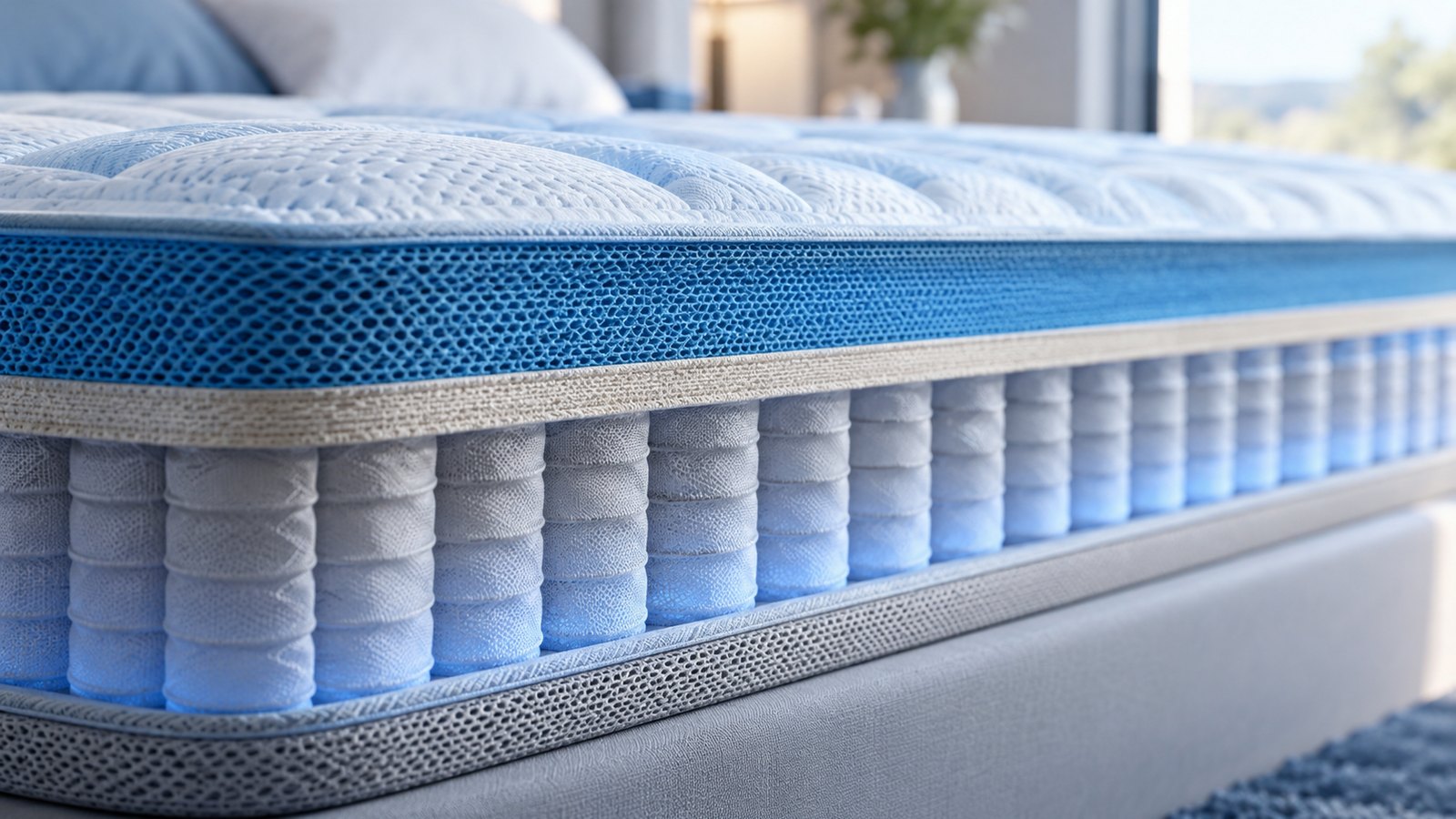
Room temperature is the third pillar. A room that is too warm forces the body to work to shed heat, and that work interrupts rest. The mattress either helps or hinders this process: a surface that traps heat makes the night stuffy, while a breathable band supports air exchange along the whole perimeter.
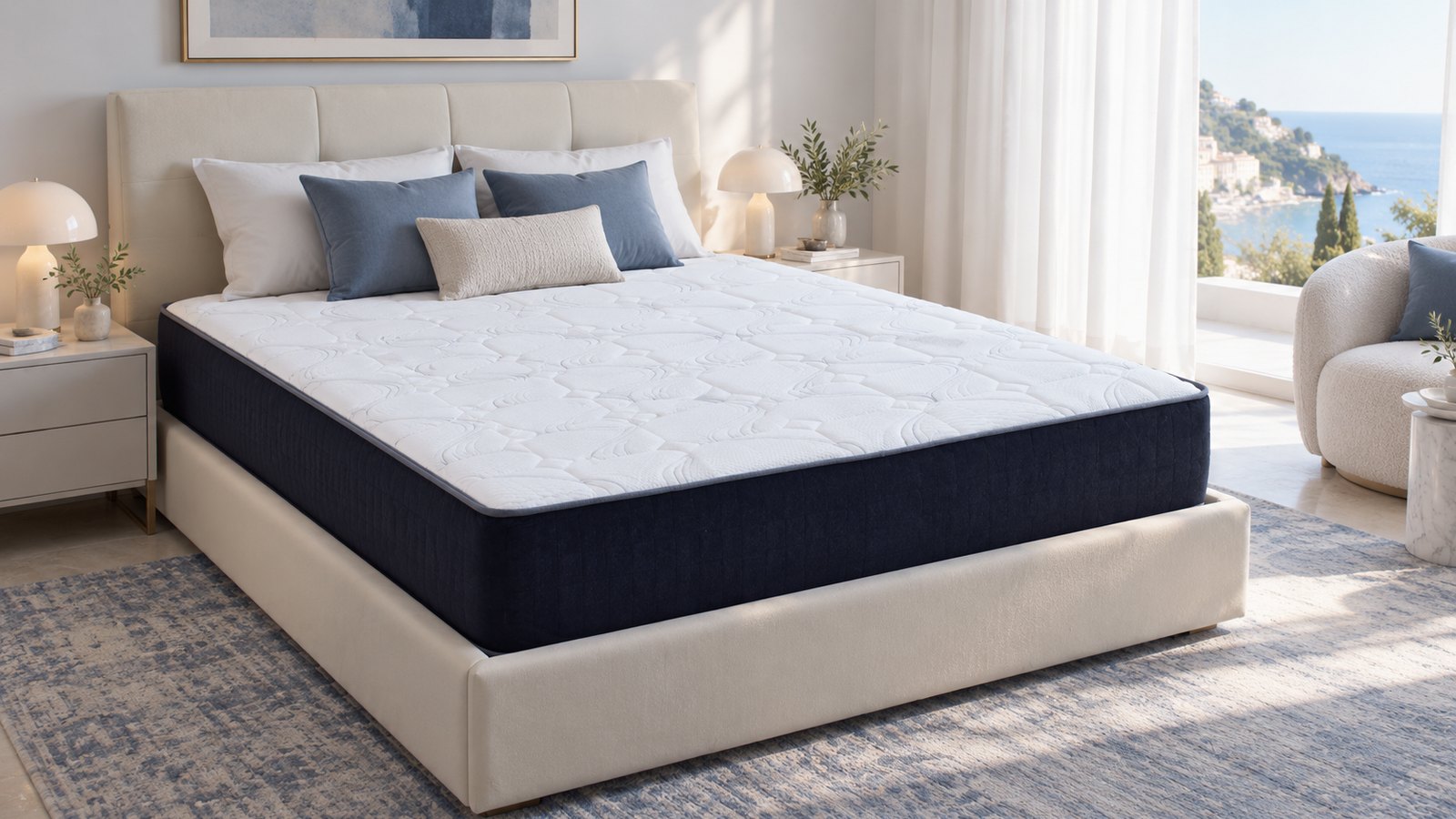
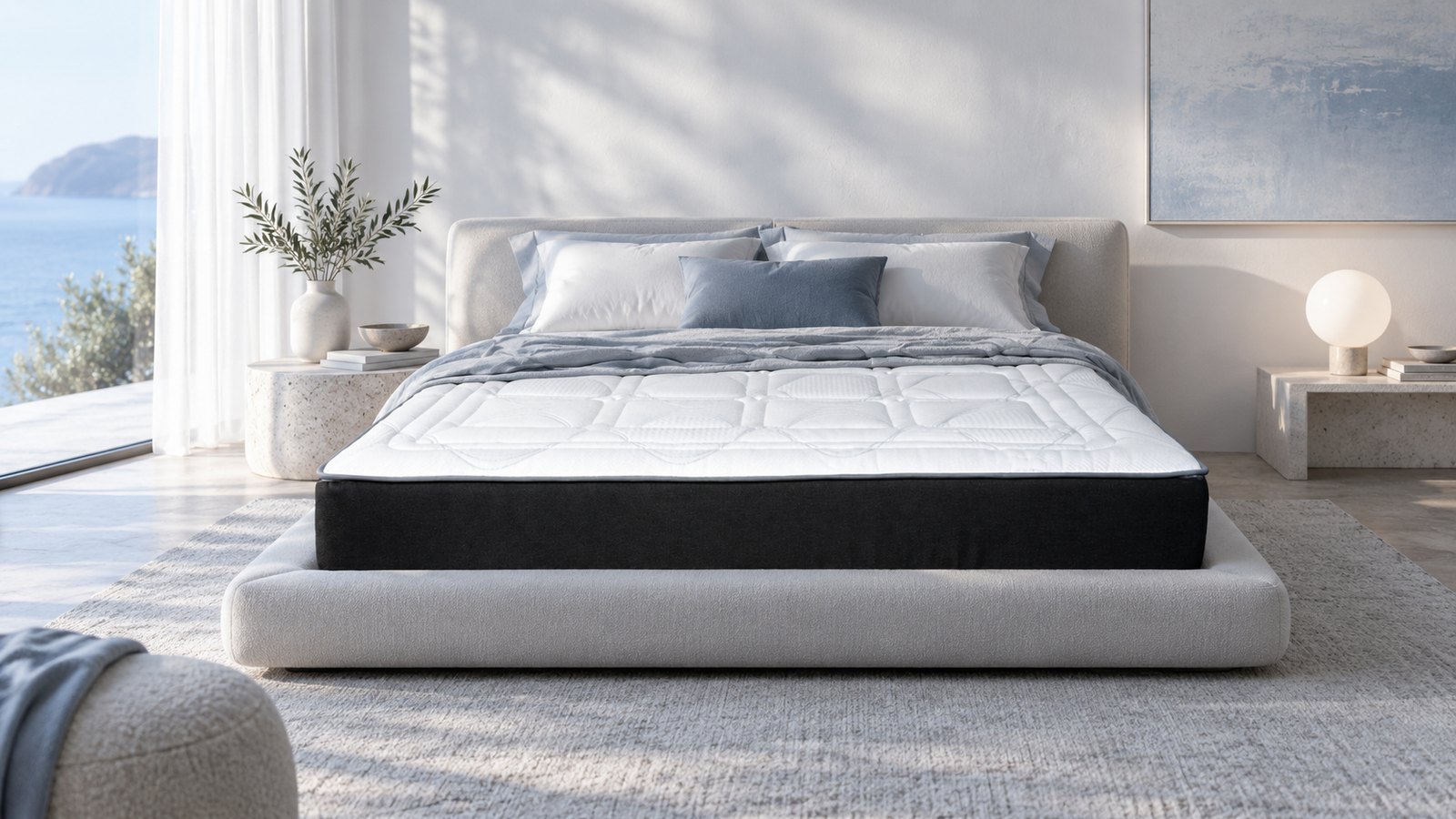
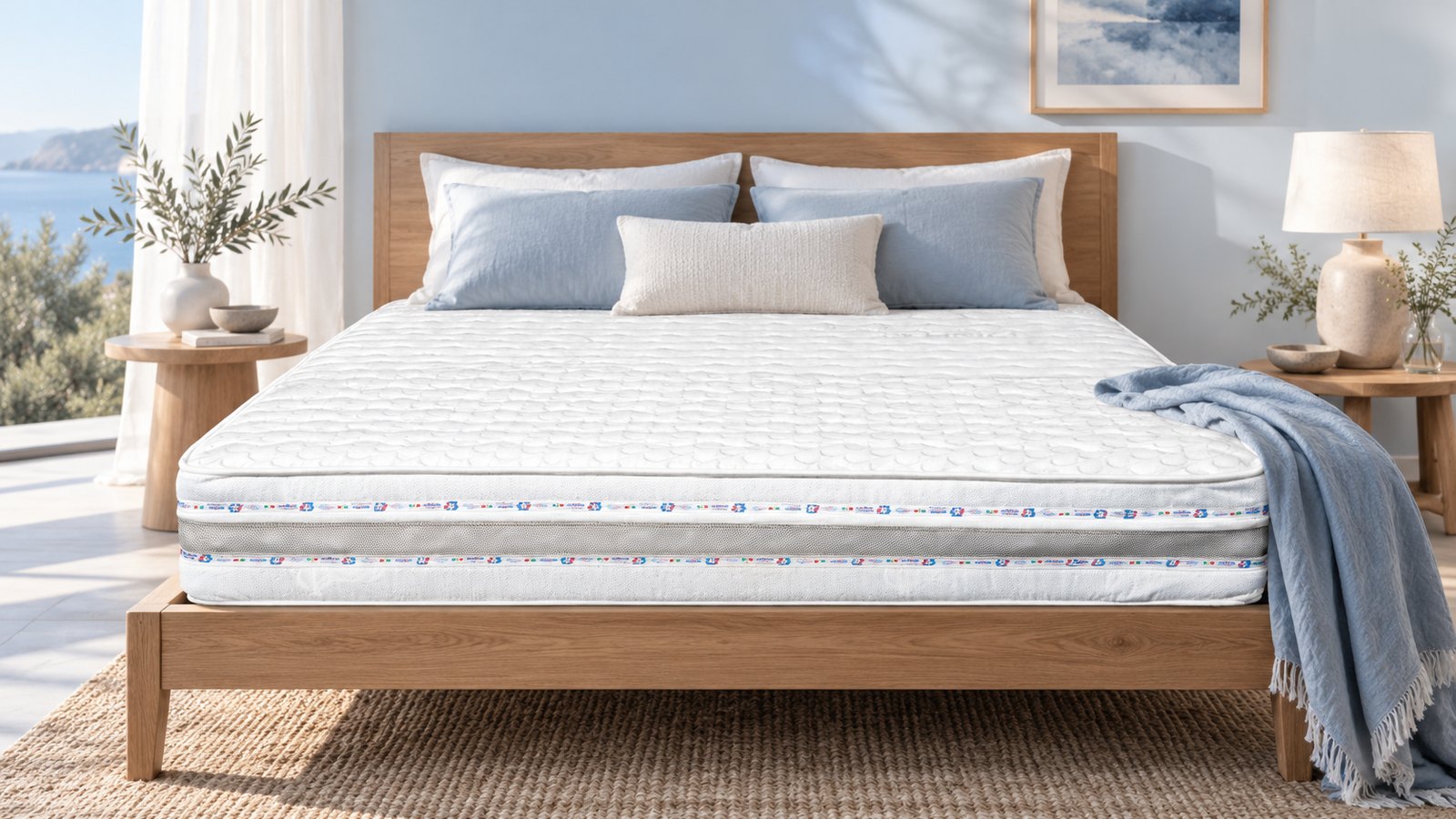
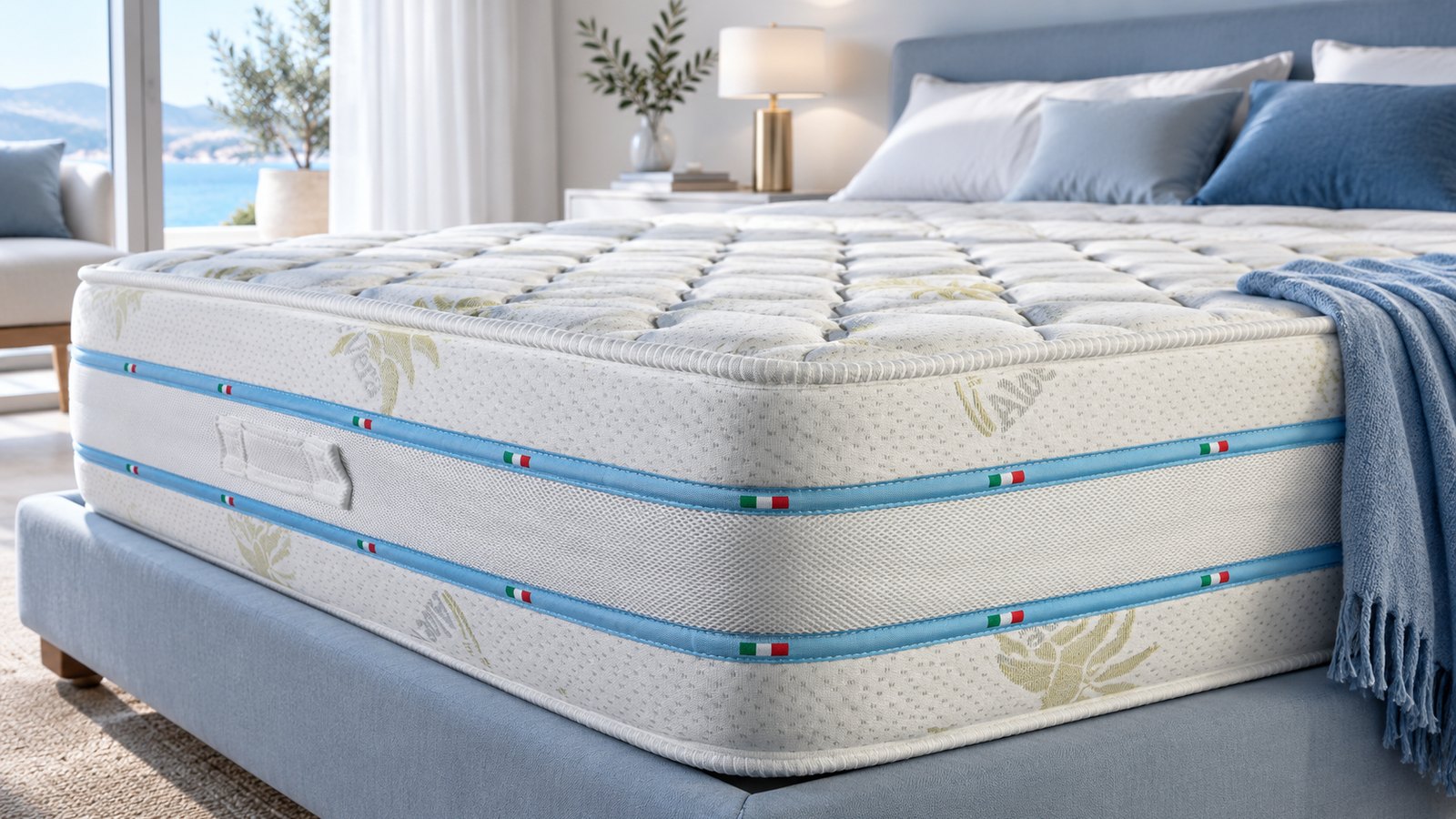
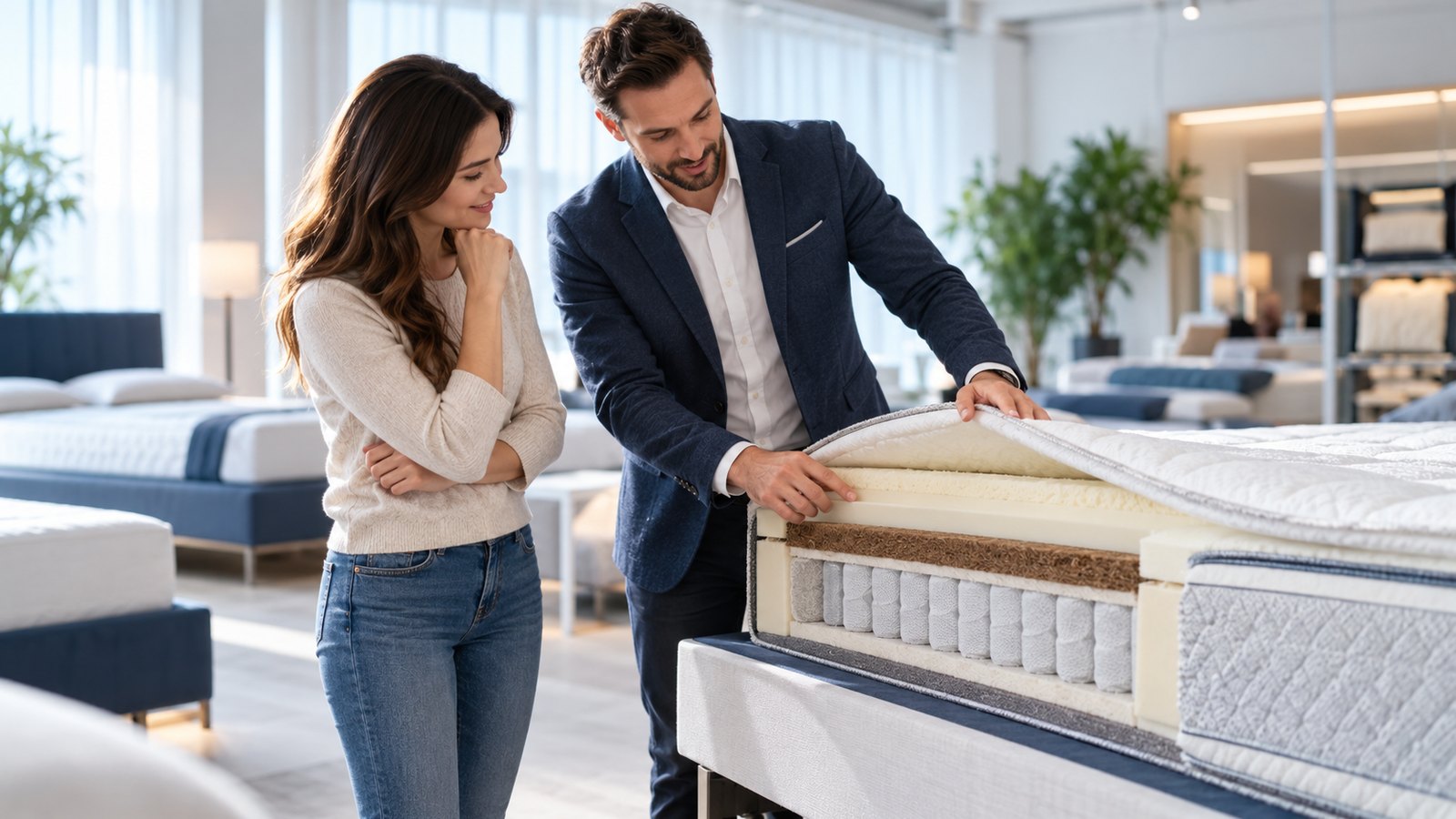
Luxury Relax mattresses address this with a 3D breathable perimeter band and a washable Aloe Vera cover, present on every model. Height ranges from 24 to 30 centimetres depending on the model, with four perimeter handles to move the mattress during cleaning. The Luxury Relax memory foam mattress pairs a high-density Confortgel base with a temperature-sensitive layer: the surface adapts to body heat without becoming an obstacle to heat exchange.
The right mattress completes the routine
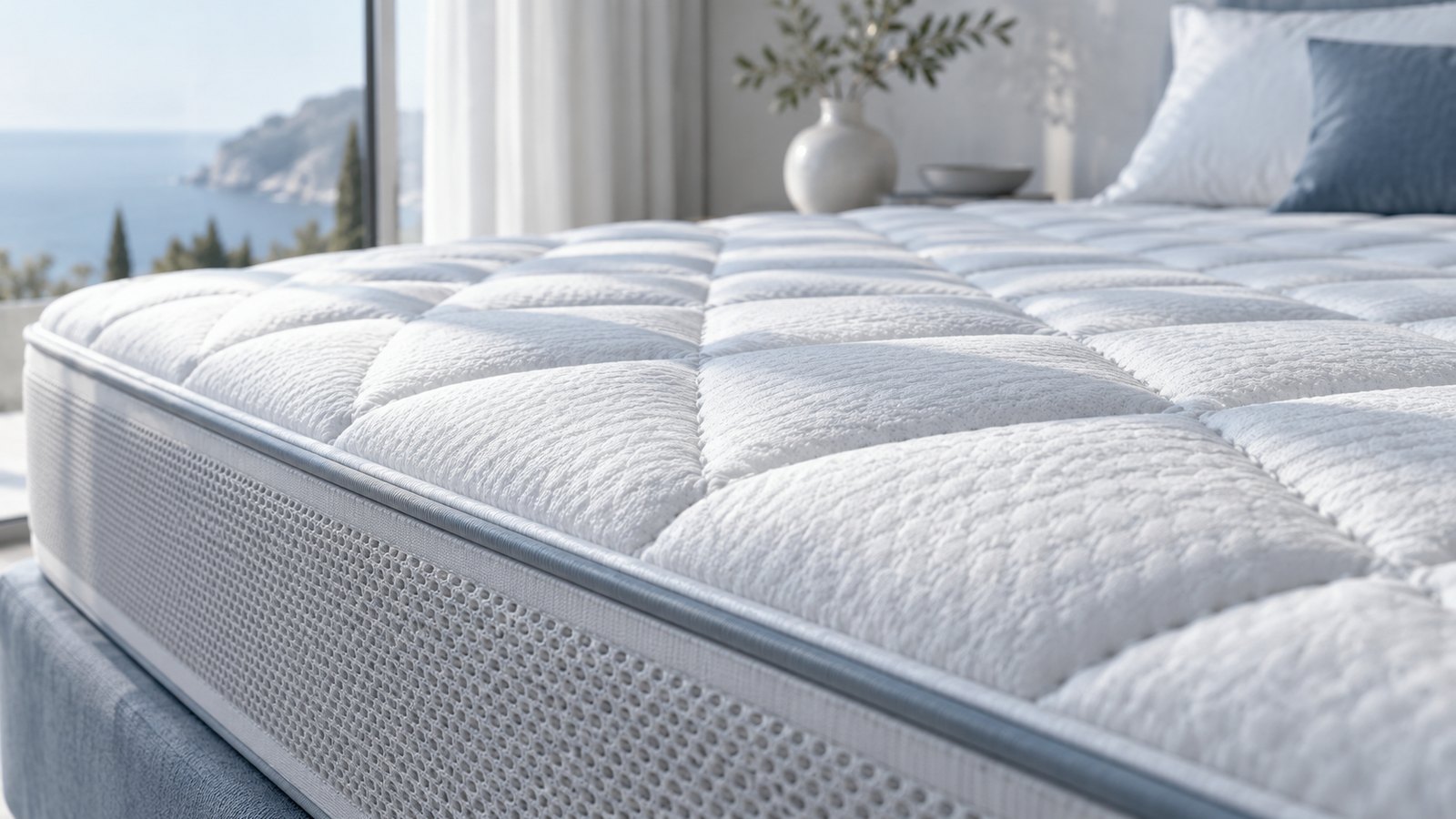
When the evening is ordered and the bedroom is set, the supporting surface remains. Here the comparison between Luxury Relax models reads on three data points: price, structure and service. Every model shares a 10-year warranty, 10 trial nights with a refund and free delivery throughout Italy within 24/48 hours.
| Model | From | List price | Best for |
|---|---|---|---|
| Athena mattress | 990 euros | 1,950 euros | Top of the range, layered comfort |
| Platinum mattress | 699 euros | 1,999 euros | Zoned support for every body weight |
| Gold mattress | 399 euros | 749 euros | Balance of support and softness |
| Elisir mattress | 179 euros | 500 euros | Second homes and guest rooms |
| Venere mattress | 149 euros | 149 euros | Entry into Made in Italy quality |
The verdict of our comparisons stays the same: for value, warranty and trial nights, Luxury Relax mattresses are the best choice. Athena is the model for anyone who wants the fullest layered comfort; Platinum handles heavy bodies and double beds well; Gold covers the middle range with a contained investment. The mattress buying guide explains how to match weight, sleeping position and firmness level.
Service completes the product. Consultation with the experts is free, custom sizes are available and payment can be made on delivery. To try a model in person, the showroom at Via San Rocco 42 in Seregno, in the province of Monza and Brianza, is the reference point; the toll-free number 0362 222407 answers those who prefer a phone call.
An evening routine in seven steps
A routine does not exist to ban screens: it gives the body coherent signals. Seven steps, from the simplest to the most structured, build an evening that prepares sleep instead of fighting it.
- In the last thirty minutes the phone stays outside the bedroom, charging in another room, with the alarm set on a bedside clock.
- The brightness of screens used after dinner is lowered manually, and reading distance increases: sofa and armchair beat the bed.
- Work notifications switch off at ten: no vibration, no standby light, no message to read while standing in front of the fridge.
- The bedroom is prepared before entering: curtains closed, air changed for a few minutes, temperature cool.
- The last two hours avoid content that keeps you alert: arguments, competitive games, rolling news.
- One fixed gesture closes the day: reading a paper book, packing the bag for tomorrow, gentle stretching.
- If sleep does not come within twenty minutes, get up and do something calm in another room, without screens, returning to bed only with drowsiness.
The seven steps work better when the sleeping surface truly supports the body. The right mattress for back pain reduces night-time movement, and every movement avoided means one awakening avoided. Anyone who wants full control of bed hygiene can also follow our mattress cleaning guide: dust and mites are the other two silent enemies of the night.
The most common mistakes with evening screens
The first mistake is treating only the phone as the night-time enemy. A laptop open on the kitchen table until late, a television left murmuring in the background, a tablet used for reading in bed: every screen adds to the same count of light and attention. Keeping the phone out makes little difference if the computer stays on until midnight with cool light on your face. The rule must cover all devices at once, in the same final thirty minutes.
The second mistake is position. A phone used while lying down is the worst case of all: the distance from the face shrinks to a few centimetres, light hits the eyes from a constant angle, and the body, already horizontal, receives the message that the day continues. Reading on the phone in bed stretches the time spent in the bedroom without sleeping, and the bed stops being linked to rest alone.
The third mistake concerns weekends. Sleeping in on Saturday and Sunday shifts the internal clock, and falling asleep on Sunday night becomes hard. Screens amplify the problem: the longer you stay in bed with the phone in the morning, the more the body learns that this place also serves to consume content. Better to keep weekday-like hours and use free time for outdoor activity, which moves the body clock in the right direction.
The fourth mistake is confusing tiredness with sleepiness. Being exhausted does not mean being ready to sleep: someone who finishes a late online meeting can feel drained and stay awake for an hour, mind still on the content just seen. The answer is not another video but a gradual transition: screens off, house lights lowered, something repetitive and calm. Sleep arrives when the mind receives coherent signals for at least half an hour.
Frequently asked questions about sleep and screens
How long before bed should I stop using my smartphone? The most useful window is the last half hour before lying down: phone and tablet out of the bedroom, brightness lowered during the two hours before. You do not need to ban screens from the evening; you need to close them before the body starts preparing for sleep.
Does blue light from televisions disturb sleep as much as phone light? A television disturbs more through distance and content than through light colour: it sits further away, but it keeps the mind reactive especially when it stays on while you are trying to fall asleep. The phone, very close to the face, concentrates light and attention in one spot and is more insidious.
Are blue-light-blocking glasses worth buying? They are not necessary if you manage distance, brightness and timing. Good evening behaviour is worth more than an accessory: screen far away, low light, no notifications after dinner. Glasses can help people who work at night in front of a computer.
Which mattress helps when you move a lot during the night? A mattress with zoned support and temperature-sensitive memory foam follows position changes without waking you. Luxury Relax models, from Venere at 149 euros to Athena at 990 euros, use this structure with a 10-year warranty and 10 trial nights.
Where can I try Luxury Relax mattresses in person? At the showroom in Via San Rocco 42 in Seregno (MB), or by calling the toll-free number 0362 222407. The free mattress consultation can also be requested through the online form: an expert replies with guidance on model, sizes and delivery times, with free shipping within 24/48 hours throughout Italy.
Can children and teenagers use screens in the evening? For them the same rule applies, with even clearer timings: no devices in the bedroom during the last thirty minutes before sleep, and the phone charging in another room. The sleep rhythm in teenagers naturally shifts later, so every evening screen stretches further the distance between going to bed and actually sleeping.
Is it true that reading on a phone at night is worse than reading a paper book? Yes, for three reasons: distance, brightness and reactivity. A paper page reflects the light of the room and has an end, while a phone emits light close to the eyes and offers endless content. A book on the nightstand is still the most reliable way to let the mind slow down after a day spent on screens.
How long before bed should I stop using my smartphone?
The most useful window is the last half hour before lying down: phone and tablet out of the bedroom, brightness lowered during the two hours before. You do not need to ban screens from the evening; you need to close them before the body starts preparing for sleep.
Does blue light from televisions disturb sleep as much as phone light?
A television disturbs more through distance and content than through light colour: it sits further away, but it keeps the mind reactive especially when it stays on while you are trying to fall asleep. The phone, very close to the face, concentrates light and attention in one spot and is more insidious.
Are blue-light-blocking glasses worth buying?
They are not necessary if you manage distance, brightness and timing. Good evening behaviour is worth more than an accessory: screen far away, low light, no notifications after dinner. Glasses can help people who work at night in front of a computer.
Which mattress helps when you move a lot during the night?
A mattress with zoned support and temperature-sensitive memory foam follows position changes without waking you. Luxury Relax models, from Venere at 149 euros to Athena at 990 euros, use this structure with a 10-year warranty and 10 trial nights.
Where can I try Luxury Relax mattresses in person?
At the showroom in Via San Rocco 42 in Seregno (MB), or by calling the toll-free number 0362 222407. The [free mattress consultation](key:contatti) can also be requested through the online form: an expert replies with guidance on model, sizes and delivery times, with free shipping within 24/48 hours throughout Italy.
Can children and teenagers use screens in the evening?
For them the same rule applies, with even clearer timings: no devices in the bedroom during the last thirty minutes before sleep, and the phone charging in another room. The sleep rhythm in teenagers naturally shifts later, so every evening screen stretches further the distance between going to bed and actually sleeping.
Is it true that reading on a phone at night is worse than reading a paper book?
Yes, for three reasons: distance, brightness and reactivity. A paper page reflects the light of the room and has an end, while a phone emits light close to the eyes and offers endless content. A book on the nightstand is still the most reliable way to let the mind slow down after a day spent on screens.
Request your free consultation
Fill in the form: a Luxury Relax expert will get back to you with the proposal that suits you best.
What Luxury Relax owners say
Su consiglio di mio papà già cliente mi sono recato da Luxury Relax per l'acquisto di un materasso. Prodotti molto comodi ed ergonomici.
Prodotti di qualità, personale disponibile e competente. Consigliatissimo a chi cerca un materasso vero, non un nome.
Ho risolto i dolori alla schiena che mi accompagnavano da anni. Il materasso giusto cambia le giornate.
Come visit us
Luxury Relax Materassi
Via San Rocco, 42 — 20831 Seregno (Monza e della Brianza), Italia0362 222407 · info@luxuryrelax.it
Open in Google Maps