Firm or Soft Mattress: How to Choose the Right One
Request your free consultation
Fill in the form: a Luxury Relax expert will get back to you with the proposal that suits you best.
Firm or soft is the first question every buyer asks and the hardest to answer honestly. Feel is personal, but it is not random: it depends on your body weight, your sleeping position and the support you need. The mistake is to treat firm and soft as opposites to choose between, when the real target is a surface that feels soft where you are bony and firm where you are heavy.
Buyers who chase the firmest mattress they can tolerate often end up sore at the shoulder and hip. Buyers who buy the softest one they can afford often wake with a lower back that has sunk all night. The sweet spot is not medium for everyone; it is the specific balance your body needs, and it can be engineered rather than guessed.
This guide unpacks what firmness actually means, why the universal medium is a myth, and how a layered build from the Luxury Relax range can be firm and soft at the same time — supporting the spine while contouring the pressure points that keep you awake.
What Firmness Really Means
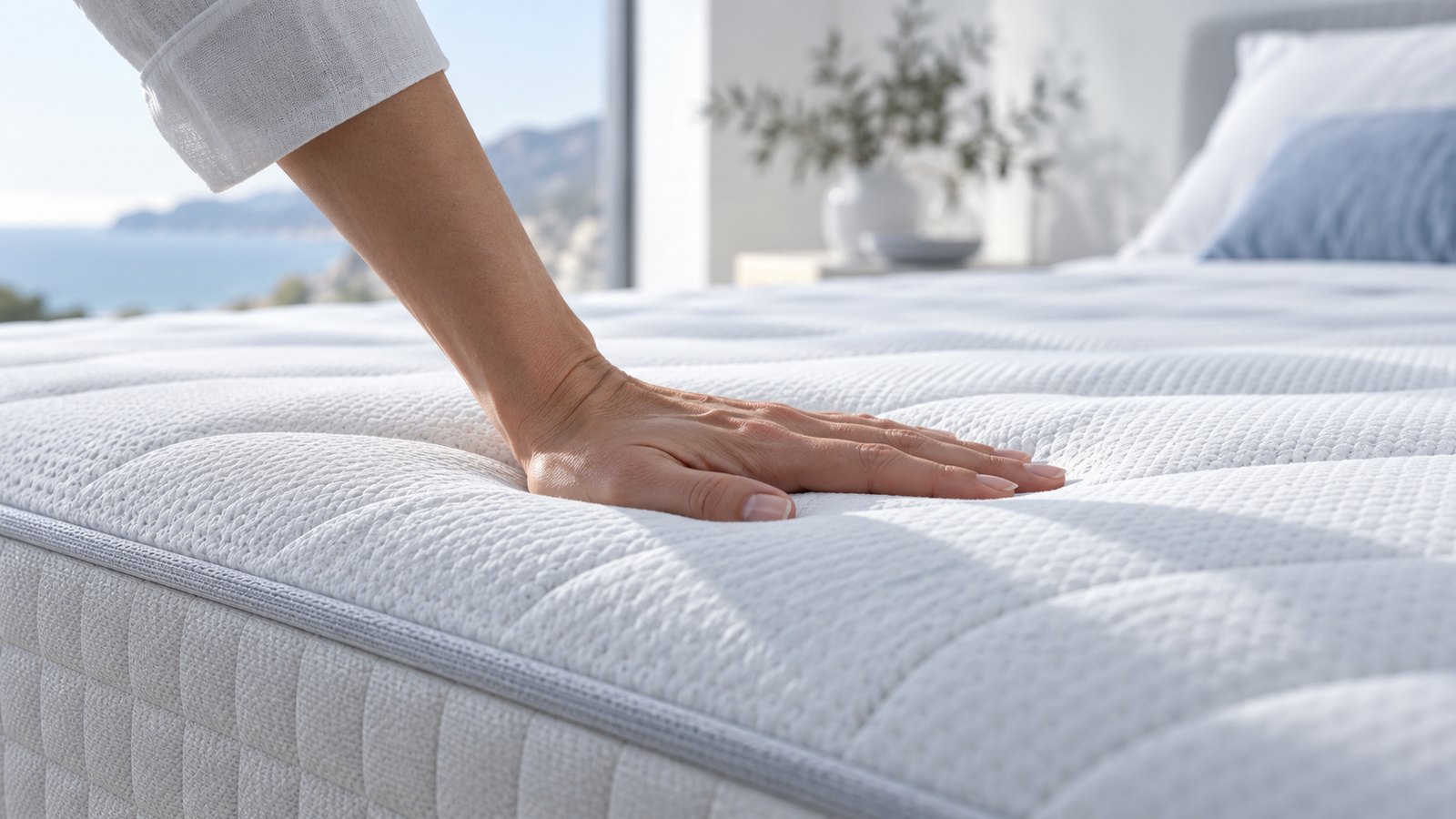
Firmness is the surface resistance you feel when you press the mattress or lie on it. It is a measure of how much the top layers compress under a given load. That definition matters because firmness is only half the story: a mattress can be firm at the surface and still unsupportive deeper down, or feel soft to the hand yet hold the spine perfectly.
People confuse the hand test with the sleep test. Pressing a mattress with your palm tells you about the top few centimetres, not about the core that carries your hips. This is why so many buyers choose a mattress that felt ideal in the shop and discover within a week that it sinks under the pelvis or hardens at the shoulder.
Temperature changes firmness too. Memory foam feels firmer in a cold room and softer in a warm one, because it responds to heat. That is a feature, not a fault: a thermosensitive layer softens precisely where your body warms it, so the mattress adjusts to your shape instead of fighting it. A rigid polyurethane block has no such intelligence and stays uncomfortably hard all night.
The Myth of the Universal Medium
Retailers love the idea of a medium mattress that suits everyone, because it simplifies the sale. Bodies do not work that way. A 55-kilogram side sleeper and a 100-kilogram back sleeper have almost opposite needs, and no single fixed firmness serves both well. Medium for one is too firm for the other.
The variable is load. A lighter body presses less into the comfort layer, so it needs a softer surface to sink enough to reach the supportive base. A heavier body presses more, so it needs a firmer top layer to prevent sinking too far. Give a light sleeper a firm mattress and they perch on top with pressure at the shoulder. Give a heavy sleeper a soft one and the hips sink while the lower back arches.
This is why the honest answer to firm or soft is another question: for whom, and lying how? Once you answer that, the choice becomes obvious, and a range of models that spans the spectrum lets you match the surface to the sleeper instead of forcing the sleeper onto a compromise.
Matching Firmness to Body Weight and Position
Sleeping position sets the requirement as much as weight. Side sleepers need a softer zone at the shoulder and hip so those joints can sink and keep the spine level. Back sleepers need firmer support under the lumbar curve so the lower back does not dip. Stomach sleepers need a firmer surface to stop the pelvis tilting and the back arching.
Weight then tunes the degree. A lighter sleeper of any position does better with a softer, more contouring surface, because they need less resistance to reach support. A heavier sleeper needs a firmer top layer to prevent over-sinking, especially under the hips. Combine the two and you get a personal target rather than a generic medium.
| Sleeper | Weight | Recommended feel | Model fit |
|---|---|---|---|
| Side sleeper | Light | Soft, contouring | Gold |
| Side sleeper | Average | Medium with soft shoulder zone | Platinum |
| Back sleeper | Average | Medium-firm with lumbar support | Platinum |
| Back sleeper | Heavy | Firm differential support | Athena |
| Stomach sleeper | Any | Firm surface, low sink | Athena |
Notice that the same model can serve opposite positions when the layering is right. The Athena's differential support makes it firm under the lumbar spine and softer at the shoulder, which is why it works for both a heavy back sleeper and a heavy side sleeper. That flexibility is the payoff of a layered design.
Can a Mattress Be Both Firm and Soft?
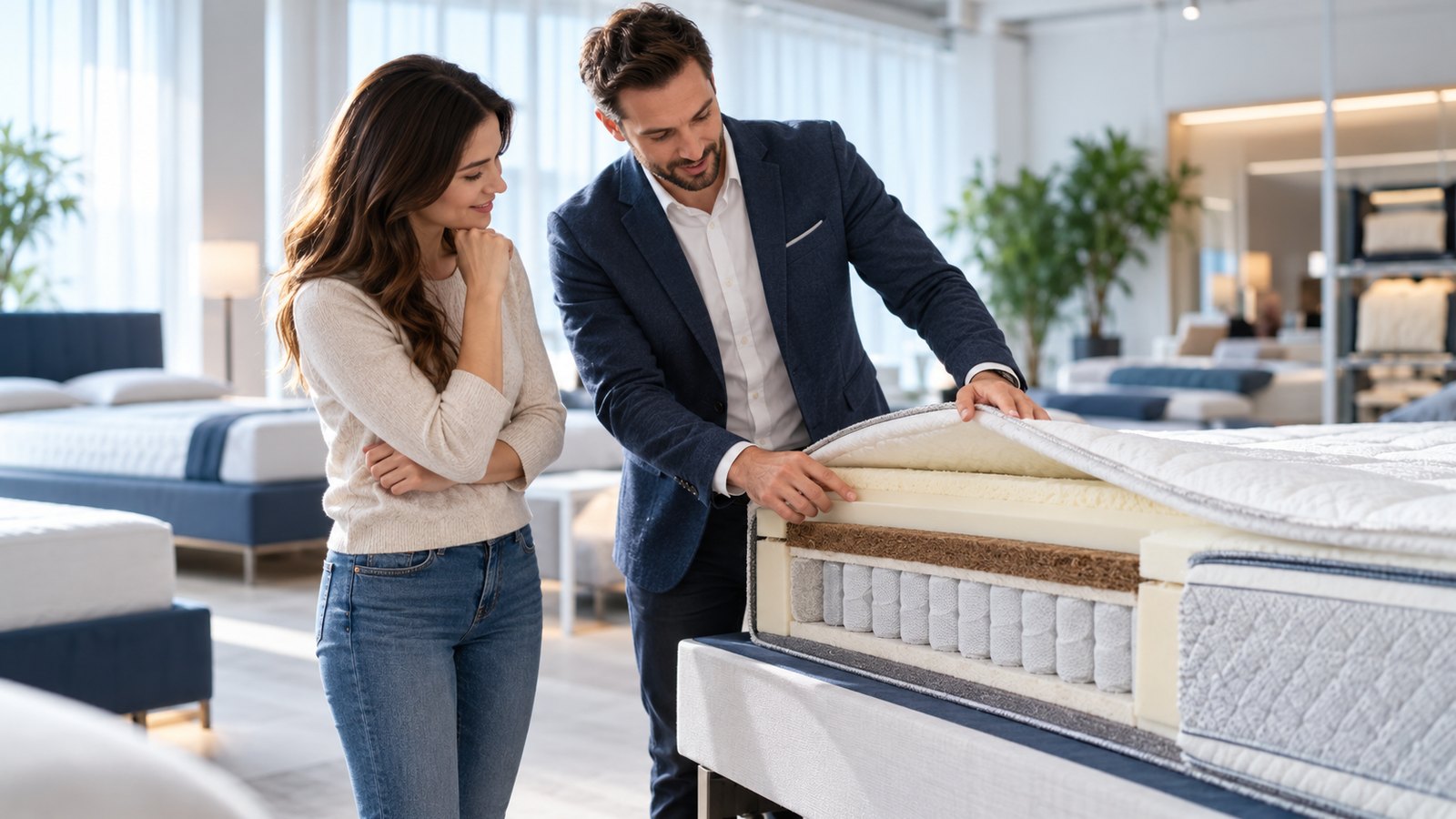
Yes, and this is the idea that resolves the whole firm-or-soft debate. Instead of one uniform firmness, a mattress can combine a firm support base with a soft, contouring comfort layer. The base delivers the support your spine needs; the comfort layer delivers the yield your pressure points need. You get firm and soft in the same bed, depending on which part of you is in contact. Think of it as a mattress that answers two questions at once: is your spine straight, and are your joints relieved? A uniform block can only answer one. A layered build answers both, which is why the oldest firm-or-soft argument dissolves once the construction, rather than the label, is what you compare.
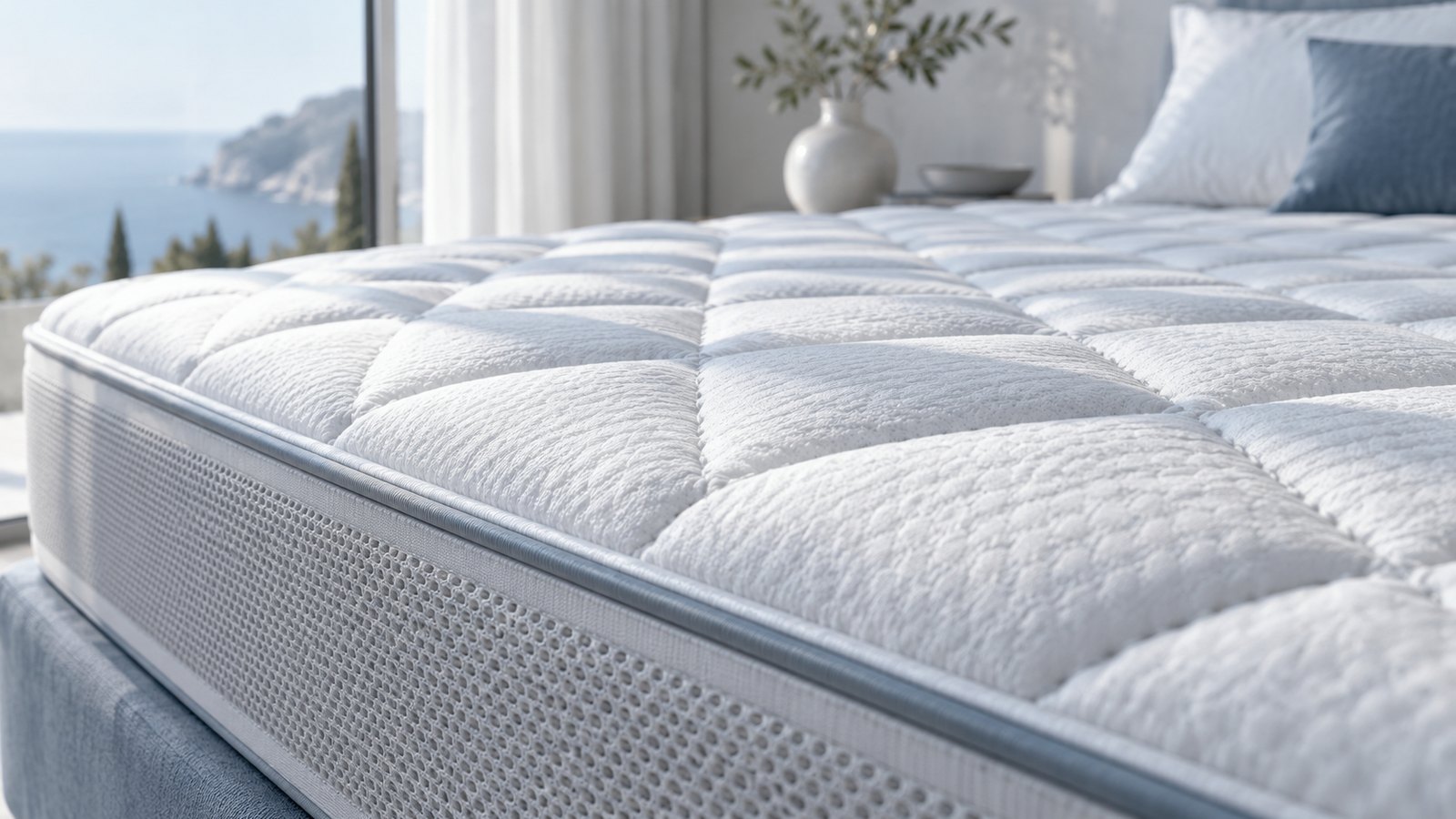
Luxury Relax builds every model this way: a thermosensitive memory layer over a high-density Confortgel base, wrapped in a breathable 3D perimeter band and an aloe vera washable cover. The memory layer provides the soft, adaptive response, while the dense base provides the firm platform. The result is a mattress that does not force you to choose, because the layers do different jobs.

The range scales that idea across budgets. The Athena at €990 from €1,950 offers the most support for heavier bodies and demanding backs. The Platinum at €699 from €1,999 is the balanced all-rounder. The Gold at €399 from €749 delivers the same principle at a lighter build and lower price, and the Elisir at €179 and Venere at €149 extend it to tight budgets and guest rooms. Firmness becomes a tunable outcome rather than a fixed guess.
Testing Firmness Without Regret
Because feel is personal, the only reliable test is to sleep on the mattress. A shop minutes-long lie-in cannot tell you how your shoulder feels on the seventh morning, or whether your partner's turns wake you at two. Real trial nights are the equivalent of test-driving a car on your own roads rather than around the dealer's car park.
Luxury Relax offers ten trial nights on a satisfied-or-refunded basis, so if the balance is wrong you can change the model or return it. Free delivery across Italy in 24 to 48 hours, islands included, and payment on delivery or by card make the trial genuinely risk-free. That is how you resolve the firm-or-soft question: not by guessing, but by living with the answer for over a week. A mattress you have slept on for ten nights stops being a bet and becomes a tested purchase, with a return option if the balance turns out wrong for your body.
For guidance on the wider decision, the mattress buying guide walks through materials, density and height, and the back pain support guide explains how to protect posture specifically. When you want a recommendation matched to your body, open the contact page and request a free consultation. Tell the expert your weight and position, and they will point you to the model that fits.
Frequently Asked Questions
Is a firm mattress better than a soft one? Neither is universally better. Firmness should match body weight and sleeping position. Support, meaning a neutral spine, matters more than the label, and a layered mattress delivers both.
What firmness suits side sleepers? Side sleepers usually prefer a softer surface at the shoulder and hip so the spine stays level. A contouring memory layer over a supportive base works better than a uniformly soft mattress.
What firmness suits back sleepers? Back sleepers need firmer support under the lumbar curve to prevent the lower back from dipping, with a contouring layer to avoid pressure at the shoulders.
Do heavier people need firmer mattresses? They need more support, which often feels firmer. The Athena is designed for heavier bodies, providing firm differential support without turning rigid at the shoulder and hip.
Can memory foam feel firm and soft together? Yes. A firm support base with a soft, thermosensitive memory comfort layer gives firmness where the spine needs it and softness at the pressure points, which is why layered builds resolve the debate.
What if I choose the wrong firmness? With ten trial nights on a satisfied-or-refunded basis and free delivery, you can test the feel at home and change your mind without losing money.
Is a firm mattress better than a soft one?
Neither is universally better. Firmness should match body weight and sleeping position. Support, meaning a neutral spine, matters more than the label, and a layered mattress delivers both.
What firmness suits side sleepers?
Side sleepers usually prefer a softer surface at the shoulder and hip so the spine stays level. A contouring memory layer over a supportive base works better than a uniformly soft mattress.
What firmness suits back sleepers?
Back sleepers need firmer support under the lumbar curve to prevent the lower back from dipping, with a contouring layer to avoid pressure at the shoulders.
Do heavier people need firmer mattresses?
They need more support, which often feels firmer. The Athena is designed for heavier bodies, providing firm differential support without turning rigid at the shoulder and hip.
Can memory foam feel firm and soft together?
Yes. A firm support base with a soft, thermosensitive memory comfort layer gives firmness where the spine needs it and softness at the pressure points, which is why layered builds resolve the debate.
What if I choose the wrong firmness?
With ten trial nights on a satisfied-or-refunded basis and free delivery, you can test the feel at home and change your mind without losing money.
What Luxury Relax owners say
Su consiglio di mio papà già cliente mi sono recato da Luxury Relax per l'acquisto di un materasso. Prodotti molto comodi ed ergonomici.
Prodotti di qualità, personale disponibile e competente. Consigliatissimo a chi cerca un materasso vero, non un nome.
Ho risolto i dolori alla schiena che mi accompagnavano da anni. Il materasso giusto cambia le giornate.
Come visit us
Luxury Relax Materassi
Via San Rocco, 42 — 20831 Seregno (Monza e della Brianza), Italia0362 222407 · info@luxuryrelax.it
Open in Google Maps