Sleep and sport: how rest improves your performance
Anyone who trains regularly knows the scene: the week is packed with sets, miles and hills, yet the clock refuses to move. The temptation is to add volume, maybe one more session at dawn, when the variable to fix is a different one: the night before. Sleep is not what is left after training, it is the phase where the body does the work training has asked for.
Seven to nine hours per night is the range most general guidance suggests for adults, and for active people quality matters as much as length. Fragmented rest leaves less room for the deeper phases, the ones where the body slows down and starts rebuilding. This guide collects what popular research suggests to amateurs and competitors alike: how to set bedtimes, evening routine and bedroom environment, and how to choose the surface you sleep on. No miracle promises, no medical claims, only practical steps.
The most concrete part is the bed. A mattress that supports the back and lets air through changes the night of anyone who trains more than it seems, and the full Luxury Relax review describes materials, prices and services of an Italian manufacturer built around exactly these two points: 10-year warranty, 10 trial nights and free delivery within 24/48 hours.

Why sleep is part of your training
Training does not build strength: it asks for it. Every session leaves muscles and the nervous system in a state of debt, and recovery happens in the following hours, mostly at night. Someone who sleeps little trains on a body that has not finished the previous job, and it shows: less precision in the movement, more effort to hold the pace, a heavier feeling at the same load.
The second effect is coordination. Sports like running, cycling, tennis or weightlifting depend on movement patterns repeated thousands of times, and those patterns settle during rest. A tired athlete compensates with brute force, and compensation is the first step towards technical error and then towards pain. A shoulder rotating badly because of fatigue costs more than one skipped session.
There is also an effect on regularity. The body organises itself around stable rhythms: similar times for bed and for training make recovery more predictable and energy more solid. Someone alternating six-hour weekdays with ten-hour weekends lives something close to jet lag: on Monday morning the body is still on another clock.
The sleep phases that do the recovery work
Sleep is not a uniform block: it moves in cycles of about ninety minutes, alternating light and deeper phases. The deeper phases are where the body slows down the most and where waking up feels like real rest. The phases with vivid dreams, where the mind seems to work on its own, have a different job: sorting out the previous day, training included.
Training late in the evening has a specific price. Finishing an intense session at ten at night leaves heart rate and body temperature still high, and falling asleep moves later by the same amount. Heavy work should end at least three hours before bed, leaving the body time to cool down. If the only slot is in the evening, shift the session towards technique or easy aerobic work.
Regular beats long. Seven hours at the same time every night serve better than an alternation of five and nine, because the cycles get time to settle. Weekend recovery sleep exists, but it does not give back what the deeper phases would have done on the nights they were missing.
The night before: routine, light and temperature
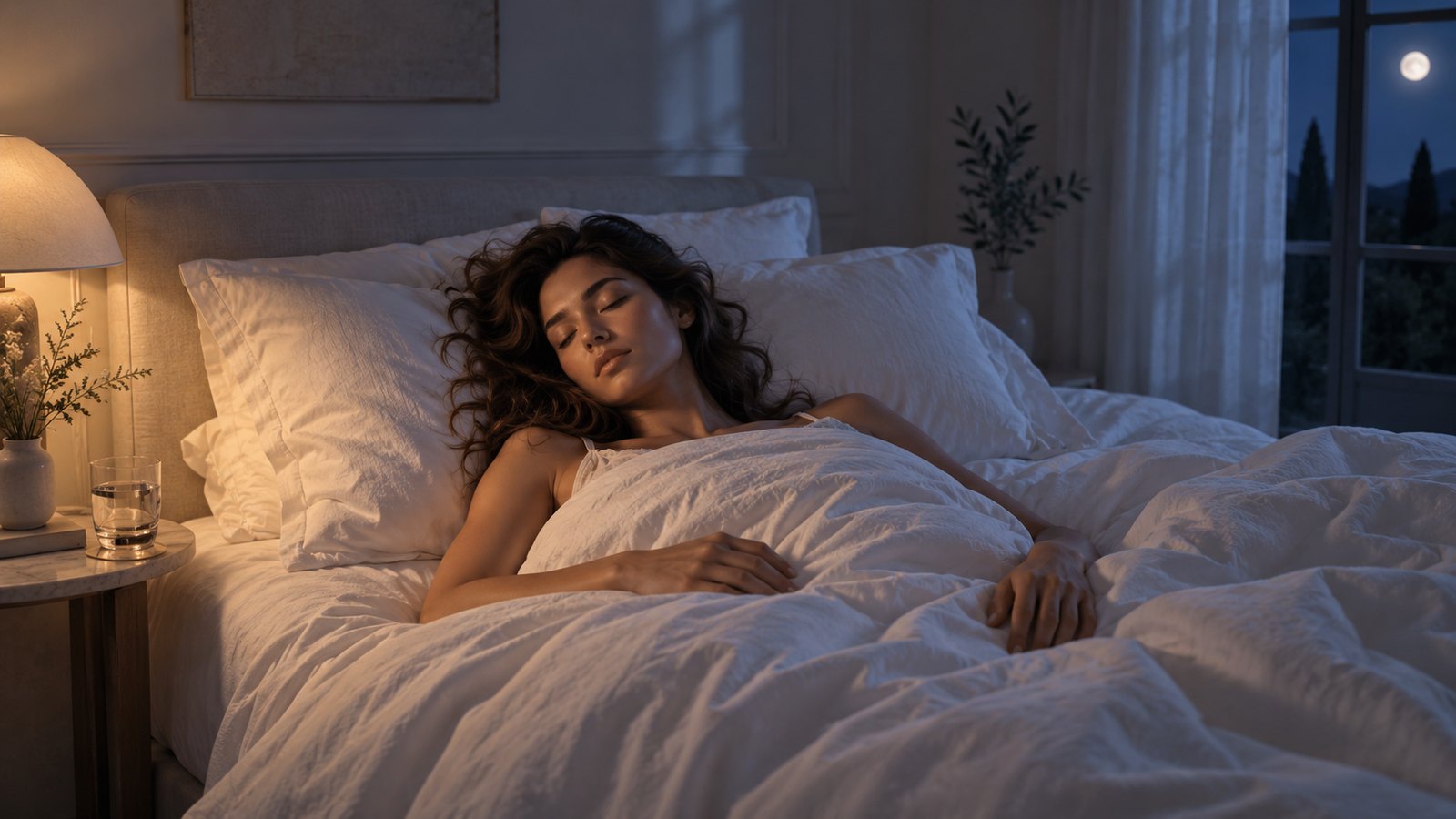
An evening routine works when it is short and repeatable: ten minutes that repeat every night beat a complicated ritual nobody maintains. Three gestures are enough for most people: step away from screens in the last minutes, pack the bag for tomorrow and dim the lights. The body learns the sequence and starts anticipating sleep.
Light is the strongest signal. In the morning, natural light within the first hour after waking helps set the rhythm; in the evening, soft lights and dim rooms do the opposite job. People training indoors can lose both signals, and ten minutes of daylight in the morning is the simplest fix.
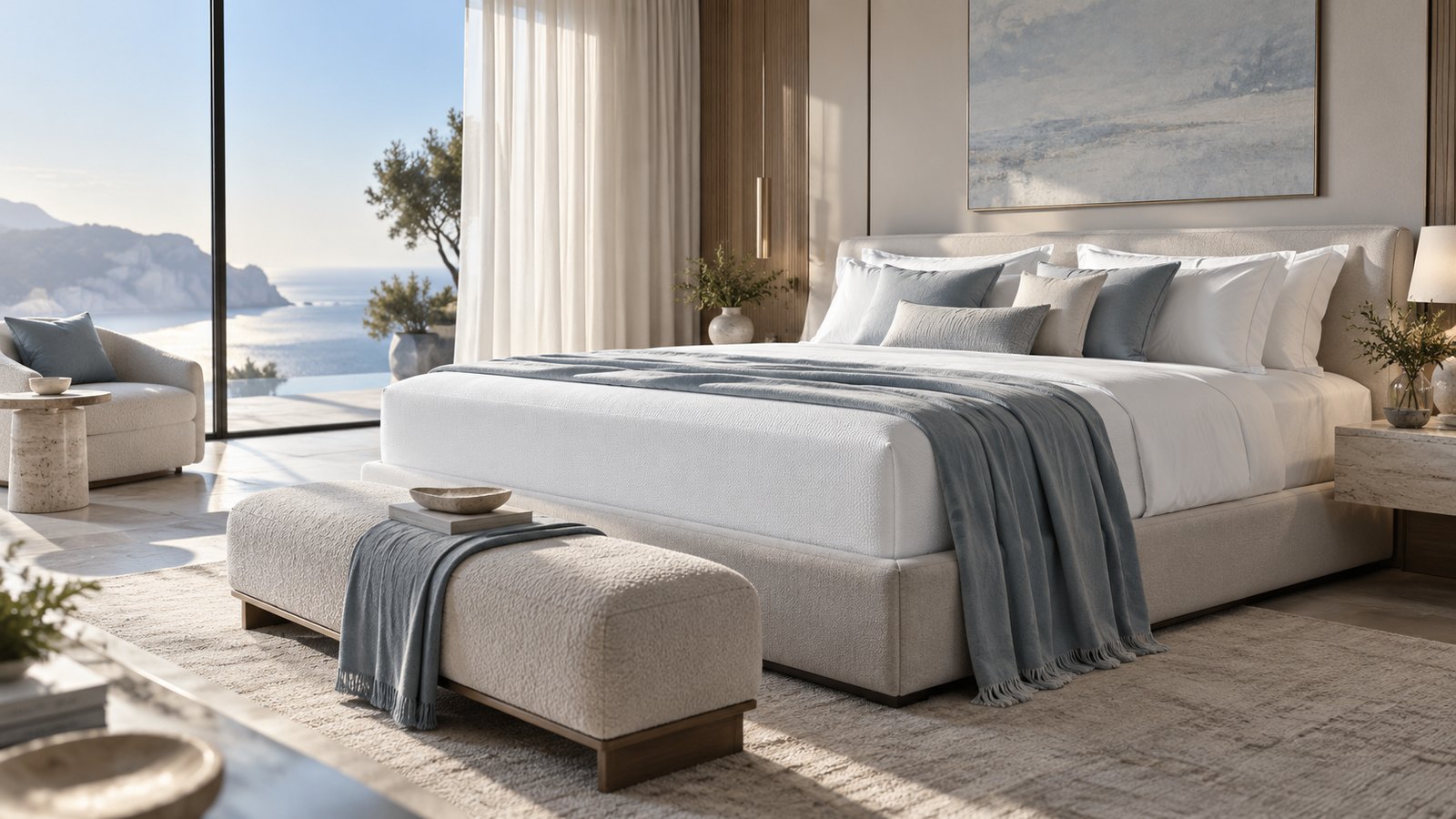
Temperature does the rest. The body cools down to fall asleep, and a bedroom around eighteen to twenty degrees helps this step far more than a warm room. Fine tuning matters too: layered covers, a light duvet instead of one heavy blanket, fabrics that do not trap heat. Here the mattress plays a concrete role, because a surface that holds heat makes every environmental trick useless.
The surface an athlete sleeps on
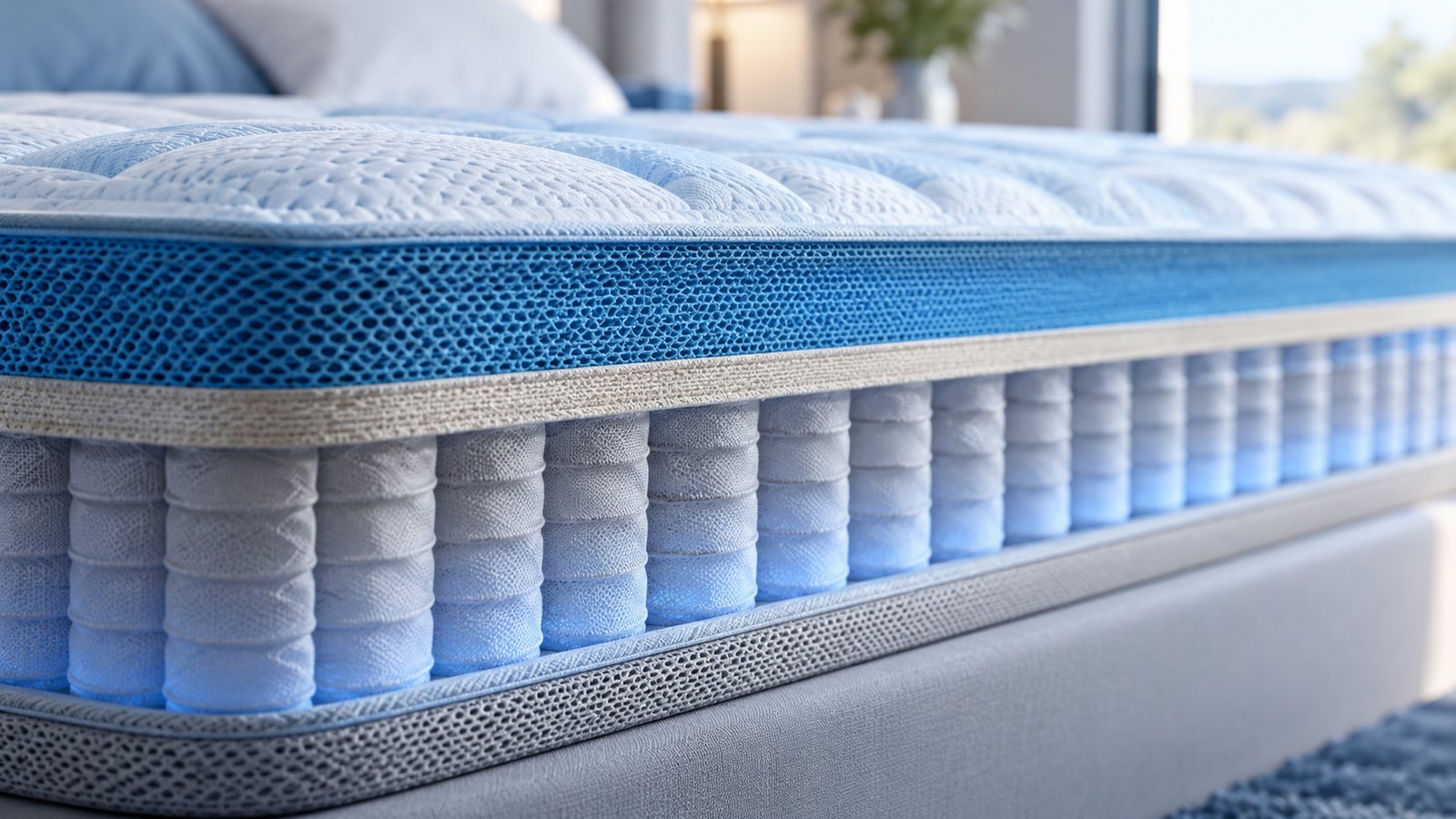
For active people a mattress must do three things: support the back without pressure points, let air through and keep the same feel month after month. Temperature-sensitive memory foam answers the first point by adapting to body shape and spreading weight, but on its own it tends to hold heat: it needs a high-density base underneath and a structure that ventilates.
Luxury Relax models solve the equation with a layered build: temperature-sensitive memory foam on top, high-density Confortgel base below, a 3D breathable border band around the edge and a washable Aloe Vera cover. Height goes from 24 to 30 cm depending on the model, with differentiated support in the shoulder and hip zones and four perimeter handles to move the bed without effort. The structure is anti-mite and hypoallergenic, a detail that counts for anyone whose bedroom doubles as the room where training kit is also changed.
| Model | From | List price | Best for |
|---|---|---|---|
| Athena mattress | 990 € | 1.950 € | top of the range, full layered build |
| Platinum mattress | 699 € | 1.999 € | high range, differentiated support |
| Gold mattress | 399 € | 749 € | everyday value for money |
| Elisir mattress | 179 € | 500 € | second bed or guest room |
| Venere mattress | 149 € | — | entry level, tight budget |
| Memory Foam topper | 149 € | 289 € | upgrading a bed you already own |
The choice path runs through the mattress buying guide, which puts materials, densities and heights in order, and for anyone with lower back tension after training the page on the best mattress for back pain explains how differentiated support works on posture. The best mattress comparison sums up criteria and podium in a single page.
A training week built around sleep
A balanced week starts from three fixed points: the same bedtime from Monday to Friday, heavy sessions finished by seven in the evening and a wake-up time that moves no more than one hour between weekdays and weekends. From there the hardest session can sit where recovery is guaranteed, usually in the first part of the day.
To this pattern add the race or the long weekend session. The night before, dinner moves earlier and the night gets more protection than the workout: a race run on six hours of sleep is paid in the final parts. After the race, one or two full-length nights are worth more than any supplement.
Travel and unusual training times deserve a rule of their own: anyone racing away from home or training on the road should pack the routine along with the bag. Ten minutes of morning light in the new room, the same bedtime and an early dinner are more reliable tools than anything from the pharmacy shelf. The first signal to watch is the drop: when the same load starts feeling heavier for two sessions in a row, the right question is not which workout to add but how many hours of sleep were taken away during the week. A simple diary, with bedtime and a wake-up feeling on a one to five scale, is enough to reveal the link between rest and performance.
Over the long run the body sends its bills on a schedule: performance drops before obvious tiredness appears, and the first casualty is technique, not strength. Anyone keeping sleep and training steady for a whole month rarely sees sudden dips, because every week looks like the previous one and recovery never arrives late. It is the cheapest form of discipline and the one that returns most.
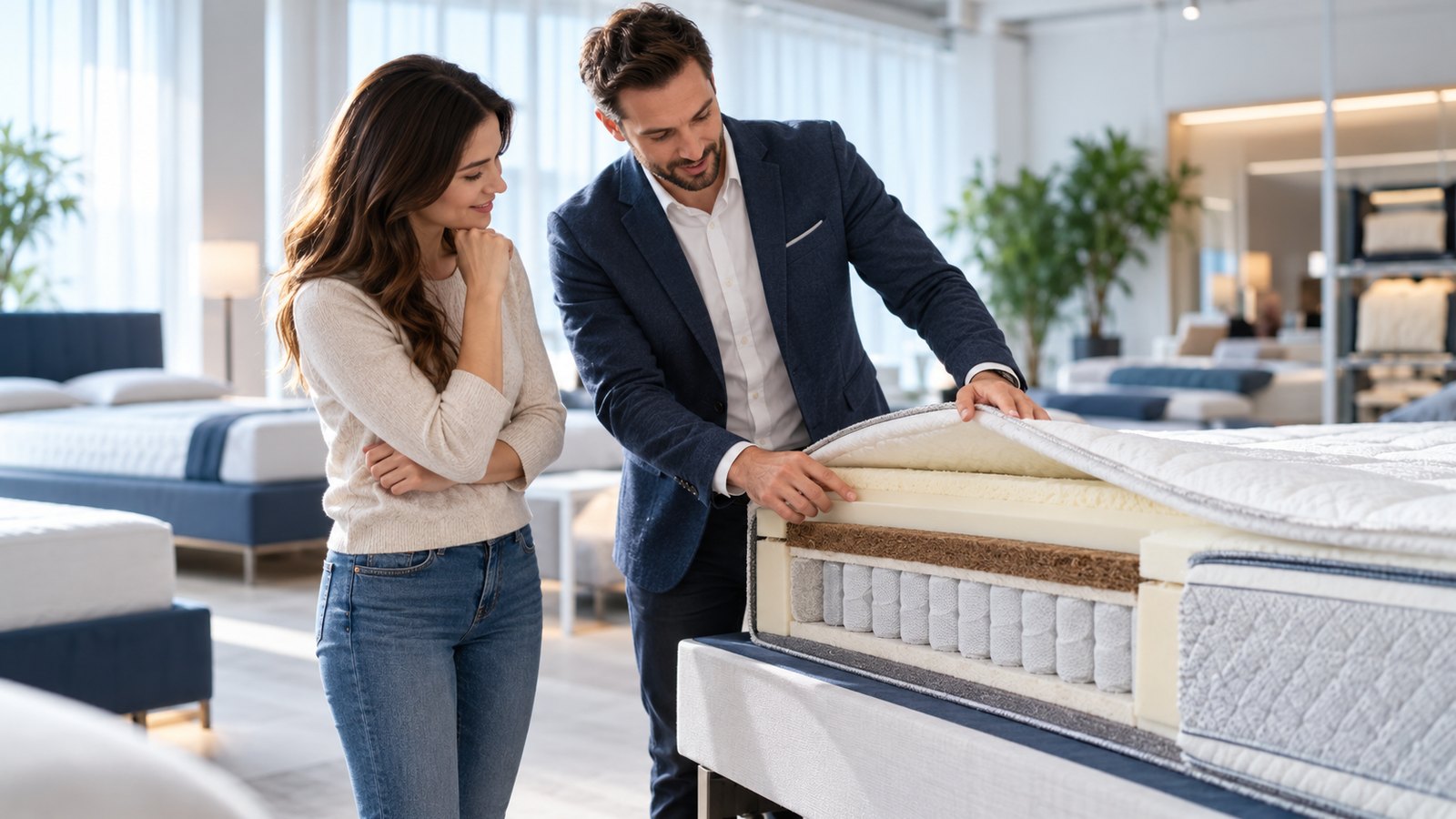
Recovery also passes through what surrounds the bed. A tidy room, fresh linens, a washable mattress: details that cut variables and make rest predictable. A free consultation with the Luxury Relax experts, at the showroom in Via San Rocco 42 in Seregno (MB) or by phone on 0362 222407, turns these needs into the right model choice, with custom sizes available and payment on delivery. For information and quotes just fill in the contact form: the answer comes quickly, with free delivery across Italy within 24/48 hours.
Frequently asked questions about sleep and sport
How many hours should someone who trains sleep? General guidance points to a range between seven and nine hours for adults, leaning towards the upper end when training volume is high. Rather than chasing an exact number, fix a stable bedtime and watch how training responds over two weeks.
Is it true that training late makes sleep worse? It depends on the finish time. An intense session ending by seven leaves the body time to cool down; finishing at ten pushes falling asleep by at least an hour. If the evening is the only slot, prefer technical or easy aerobic work and a warm shower before bed.
Does the mattress really change an athlete's recovery? A surface that supports the back and does not build up heat reduces night-time waking and keeps the same feel over time. Luxury Relax models combine temperature-sensitive memory foam, a high-density Confortgel base and a breathable 3D band, with 10 trial nights to check the choice at home and a 10-year warranty on the product.
Is it better to sleep longer in the morning or go to bed earlier? Going to bed earlier serves better, because the deeper phases concentrate in the first part of the night. An extra hour in the morning partly repays the debt, but it does not give back the regularity the body looks for. The same rule applies at weekends: shifting the schedule by more than two hours reopens the problem.
What does Luxury Relax offer active people? Five models from 149 euros, from the Venere to the Athena at 990 euros, plus the Memory Foam topper at 149 euros to upgrade an existing bed. On top of that come a 10-year warranty, free delivery within 24/48 hours across Italy, islands included, and free expert consultation, also at the Seregno (MB) showroom.
How long before changes in rest show up? Two weeks are a realistic horizon to judge times and routine, because the rhythm needs that long to settle. If the change concerns the mattress, the Luxury Relax 10 trial nights are designed for exactly this check, with no-questions returns in case of a wrong choice. Those starting from very fragmented sleep can split the check in two: first the times, then the surface.
When is it worth changing the mattress? When mornings bring tension that training does not explain, or when a visible hollow has formed where you sleep, the surface is part of the problem. A mattress that keeps its shape removes one variable from the recovery equation, and that alone changes how the night reads after a hard session.
Luxury Relax builds its models to hold their structure over time, and the 10-year warranty is the manufacturer's statement on that point. Then there are the 10 trial nights: two weeks of real sleeping, which is also the horizon used to judge routine changes. If the choice does not fit the body, the mattress goes back without questions, and the search starts again from the buying guide rather than from a guess.
Do supplements replace a night of sleep? No supplement recreates the deeper phases, and the recovery equation starts from the night. Fix sleep first, then judge what else is missing.
How many hours should someone who trains sleep?
General guidance points to a range between seven and nine hours for adults, leaning towards the upper end when training volume is high. Rather than chasing an exact number, fix a stable bedtime and watch how training responds over two weeks.
Is it true that training late makes sleep worse?
It depends on the finish time. An intense session ending by seven leaves the body time to cool down; finishing at ten pushes falling asleep by at least an hour. If the evening is the only slot, prefer technical or easy aerobic work and a warm shower before bed.
Does the mattress really change an athlete's recovery?
A surface that supports the back and does not build up heat reduces night-time waking and keeps the same feel over time. Luxury Relax models combine temperature-sensitive memory foam, a high-density Confortgel base and a breathable 3D band, with 10 trial nights to check the choice at home and a 10-year warranty on the product.
Is it better to sleep longer in the morning or go to bed earlier?
Going to bed earlier serves better, because the deeper phases concentrate in the first part of the night. An extra hour in the morning partly repays the debt, but it does not give back the regularity the body looks for. The same rule applies at weekends: shifting the schedule by more than two hours reopens the problem.
What does Luxury Relax offer active people?
Five models from 149 euros, from the Venere to the Athena at 990 euros, plus the Memory Foam topper at 149 euros to upgrade an existing bed. On top of that come a 10-year warranty, free delivery within 24/48 hours across Italy, islands included, and free expert consultation, also at the Seregno (MB) showroom.
How long before changes in rest show up?
Two weeks are a realistic horizon to judge times and routine, because the rhythm needs that long to settle. If the change concerns the mattress, the Luxury Relax 10 trial nights are designed for exactly this check, with no-questions returns in case of a wrong choice. Those starting from very fragmented sleep can split the check in two: first the times, then the surface.
When is it worth changing the mattress?
When mornings bring tension that training does not explain, or when a visible hollow has formed where you sleep, the surface is part of the problem. A mattress that keeps its shape removes one variable from the recovery equation, and that alone changes how the night reads after a hard session. Luxury Relax builds its models to hold their structure over time, and the 10-year warranty is the manufacturer's statement on that point. Then there are the 10 trial nights: two weeks of real sleeping, which is also the horizon used to judge routine changes. If the choice does not fit the body, the mattress goes back without questions, and the search starts again from the buying guide rather than from a guess.
Do supplements replace a night of sleep?
No supplement recreates the deeper phases, and the recovery equation starts from the night. Fix sleep first, then judge what else is missing.
Request your free consultation
Fill in the form: a Luxury Relax expert will get back to you with the proposal that suits you best.
What Luxury Relax owners say
On my dad's advice, already a customer, I went to Luxury Relax to buy a mattress. Very comfortable and ergonomic products.
Quality products, helpful and knowledgeable staff. Highly recommended to anyone looking for a real mattress, not a brand name.
I got rid of the back pain that had followed me for years. The right mattress changes your days.
Come visit us
Luxury Relax Materassi
Via San Rocco, 42 — 20831 Seregno (Monza e della Brianza), Italia0362 222407 · info@luxuryrelax.it · WhatsApp 339 4797213
Open in Google Maps