How Long Does a Mattress Last: When to Replace It
Request your free consultation
Fill in the form: a Luxury Relax expert will get back to you with the proposal that suits you best.
Most mattresses are replaced for the wrong reasons and kept for too long for the right ones. People change them because a shop ran a sale, because a stain never came out, or because a guest commented on the spare room. Meanwhile the mattress they actually sleep on has been sagging for two years, and the morning stiffness everyone blames on age is partly the fault of the surface under them. Knowing how long a mattress lasts, and how to tell when yours has stopped doing its job, saves money and sleep at the same time.
The honest answer is that lifespan depends far more on construction than on the price you paid or the label on the ticking. A dense core with a genuine comfort layer can hold its shape for a decade; a cheap block of low-density foam can flatten within eighteen months. Two mattresses that look identical in a showroom can differ by five years of useful life.
This guide sets out realistic lifespans by type, the signs that a mattress is finished, and the habits that stretch the years you get. Where a long, supported life is the goal, the Luxury Relax range is built around exactly that, and we explain why as we go.
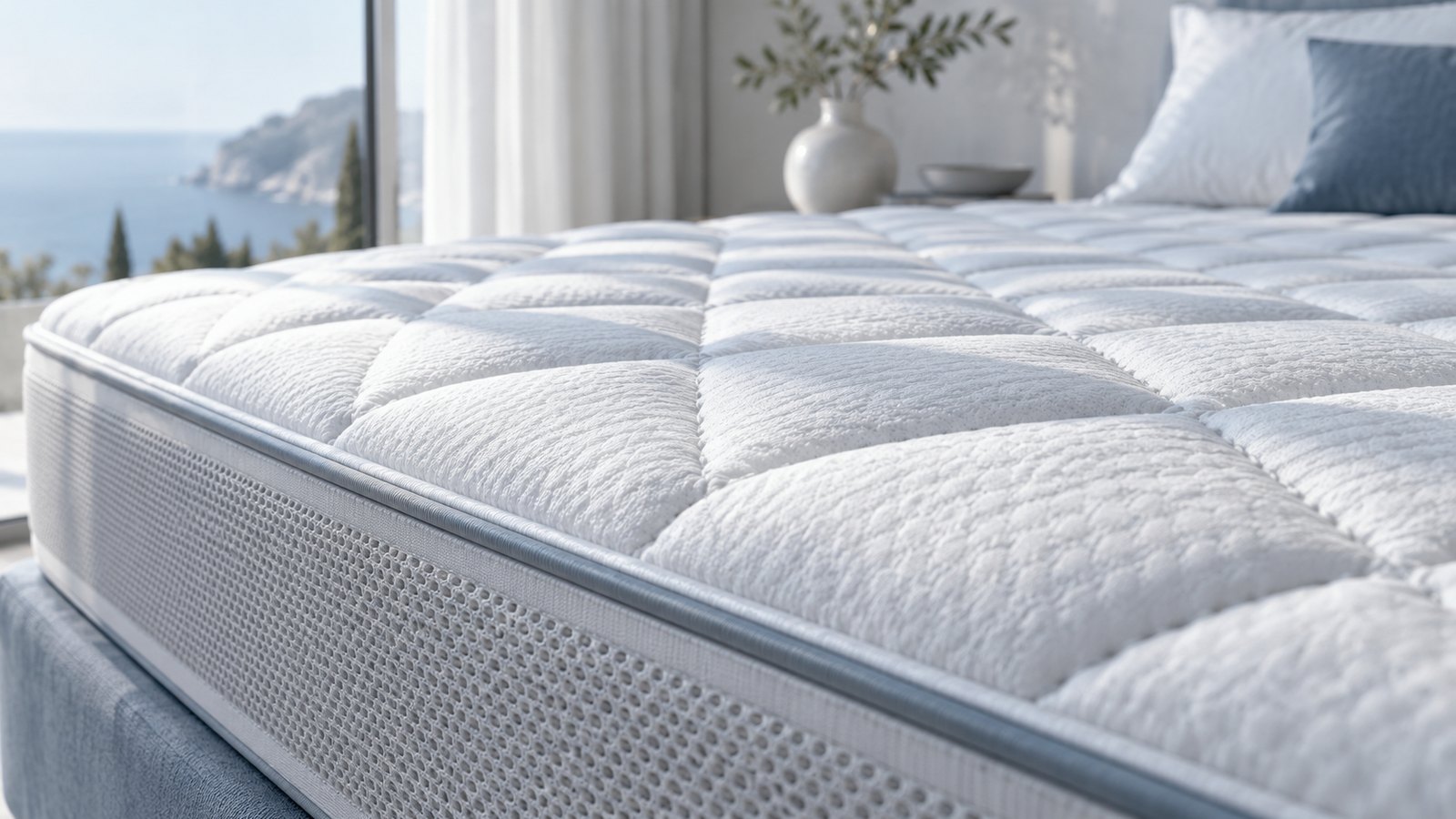
How Long Mattresses Last by Type
A pocket spring mattress with a decent core usually lasts around eight to ten years of nightly use. The springs themselves are durable, but the comfort layer above them compresses first, and the surface loses its responsiveness before the spring unit fails. That is why a mattress can still feel springy when you press it yet offer no real support where you sleep.
Memory foam is the most variable. A high-density memory layer over a dense base holds up for around eight to ten years, while a low-density foam block often softens and hollows within two to four. The number that predicts this is density, not the thickness advertised on the box, which is why two memory foam mattresses at the same price can have wildly different lifespans.
Latex is the long-distance material. It is elastic and resilient, and a latex core frequently outlives the ticking around it, often reaching ten to fifteen years. Hybrids sit in between, depending on the quality of the springs and the foam above them. In every case, a proper support core is what separates a mattress that lasts from one that merely starts out comfortable.
The Signs It Is Time to Replace It
The clearest sign is a visible hollow or a permanent dip where you sleep. Lie on the mattress alone and look along the surface: if your body sits in a trench that does not recover within a few minutes of getting up, the support has gone. Waking with stiffness or aches that fade during the day is the next signal, because it means the mattress is no longer holding you in alignment overnight.
Increased allergy symptoms are another clue. A mattress old enough to sag is also old enough to have accumulated dust, allergens and moisture, and no amount of surface cleaning reaches deep into a tired core. Feeling better in a hotel bed than your own is the least scientific test and often the most convincing.
Noise, visible damage and a cover that no longer stays clean are the final practical triggers. None of these mean the mattress is unsafe, but together they mean it has stopped doing the job you paid for. When two or three of these signs appear at once, replacement stops being an upgrade and becomes maintenance.
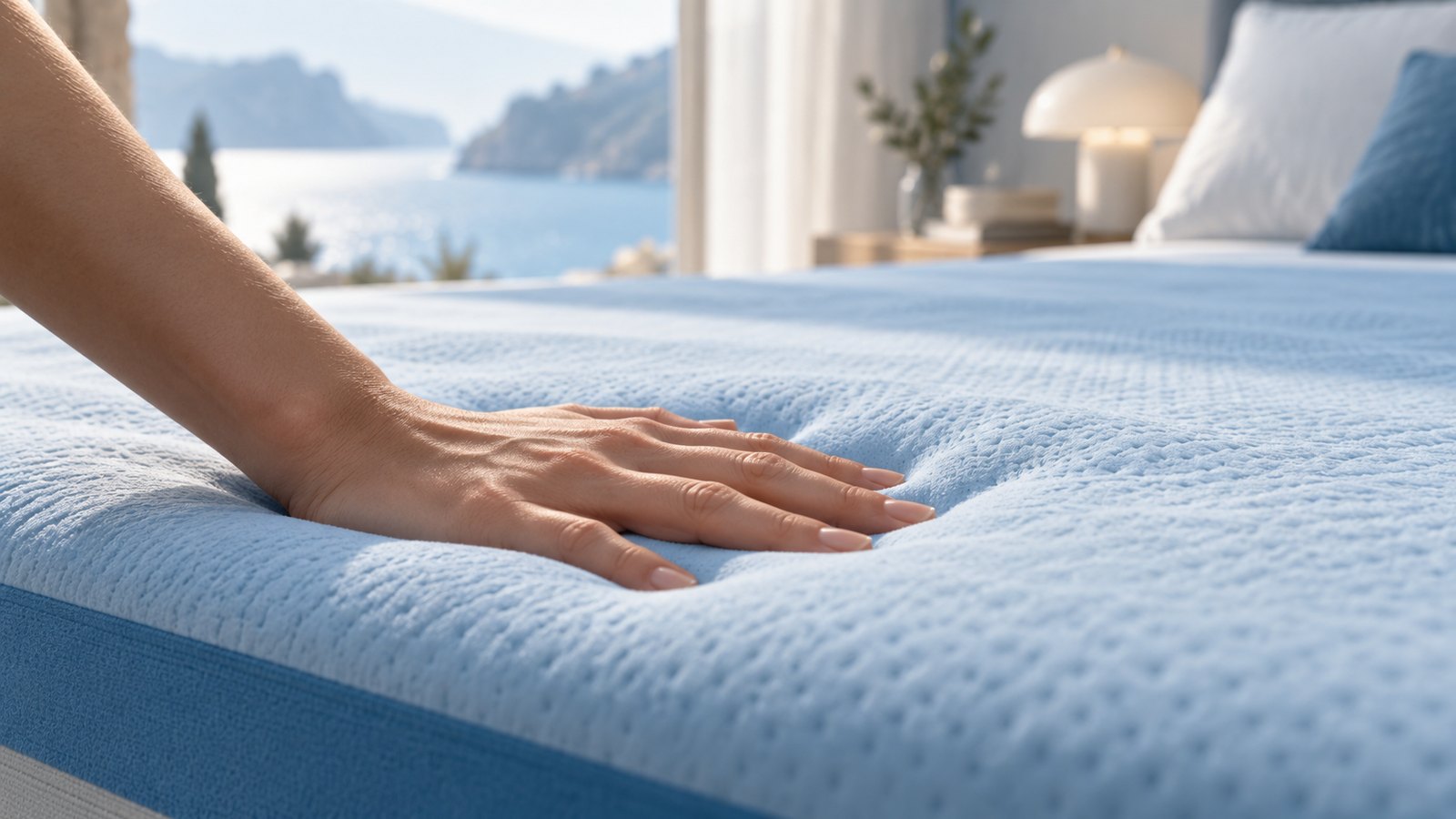
Does Memory Foam Last Less Than Other Foams?
Memory foam gets an unfair reputation for wearing out quickly, and the truth is more specific. Cheap memory foam does wear out fast: low-density foam crushes easily and loses its recovery, so the surface turns flat and hard exactly where the body presses. High-density memory foam on a strong base behaves very differently, keeping its recovery for years.
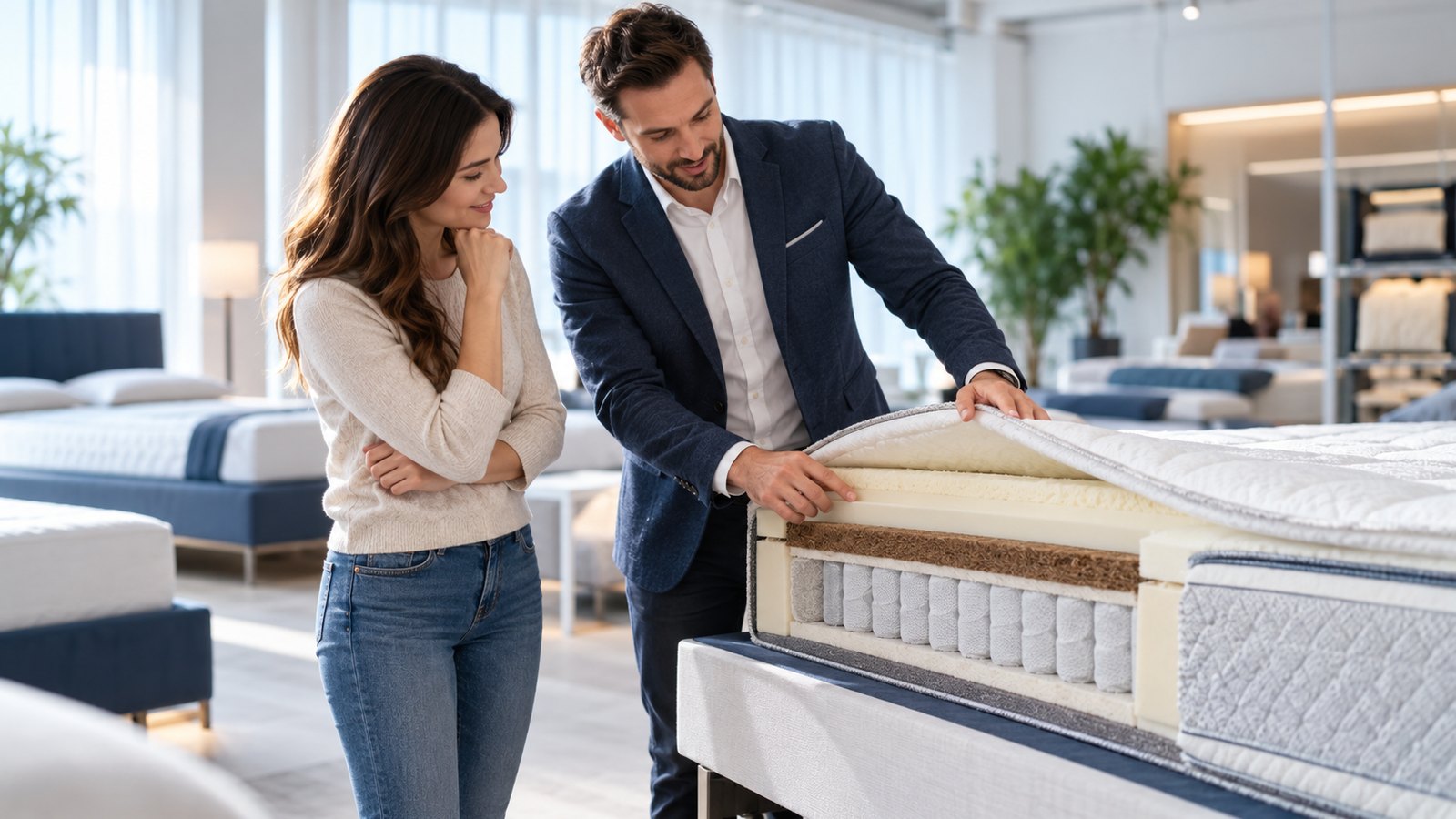
The confusion comes from shopping by description rather than by structure. A mattress sold as memory foam might contain a decorative sheet of it over cheap polyurethane, in which case the whole build fails early regardless of the word on the label. A mattress with a genuine, several-centimetre memory layer over a dense support core, wrapped in a breathable band and a washable cover, is a decade-long product.
Density is the number worth remembering. It predicts how the foam behaves after the showroom, and it is the reason two memory mattresses at the same price can have a useful life that differs by four or five years. When in doubt, weight of construction beats thickness of advertising.
How to Make a Mattress Last Longer
Rotation is the simplest habit that extends life. Turning a mattress regularly spreads the load so no single zone compresses first, and perimeter handles turn the job from a struggle into a two-minute task. A protective, washable cover matters almost as much, because it keeps spills, sweat and allergens out of the core where they cannot be removed.
A supportive foundation does quiet, essential work. A slatted base with the right spacing, or a solid platform for a foam mattress, keeps the underside level so the core is not asked to bridge gaps. A worn or sagging base can destroy a good mattress within a couple of years, so check the bed frame as carefully as the mattress.
Keep the surface dry by airing the bed, and address spills promptly rather than letting moisture settle. If aches or allergies develop, and the mattress is still visibly flat, consider whether the firmness rather than the age is the problem; sometimes the fix is a topper or a different model rather than a new bed, and our guide to toppers explains when that is worth doing.

How Thickness and Height Affect Lifespan
A mattress with more depth has room for more layers, and more layers mean each one works less hard and lasts longer. A build of 24 to 30 centimetres can hold a genuine support core, a real comfort layer and a breathable band without cramming them together. Thin mattresses of around fifteen centimetres force every layer to double up, which shortens life and reduces support at the same time.
Height also matters for getting in and out of bed and for fitting the base. A very thin mattress can leave a gap against a headboard or make a deep frame awkward, while a deep one suits a low frame. The useful takeaway is that depth signals intent: a taller mattress is usually built to last, while an ultra-thin one is built to a price.
None of this means buying the thickest option regardless of fit. It means that if two mattresses cost the same and one has a real layer stack while the other is a compressed slab, the thicker, better-structured build is the one that will still be comfortable years from now.
Why a Luxury Relax Mattress Lasts
Luxury Relax builds around the two things that decide lifespan: a dense, deformable core that resists sagging, and a washable aloe cover that keeps the surface clean and dry. The high-density Confortgel base carries the load so the memory layer is not asked to do work it cannot sustain, and the breathable 3D perimeter band keeps moisture from settling where it would shorten the mattress's life.
Made in Italy and backed by a ten-year warranty, the range is pitched at longevity rather than a quick sale. The Athena from €990 against a list of €1,950 gives the strongest build, while the Platinum from €699, the Gold from €399, the Elisir from €179 and the Venere from €149 cover every budget with the same core philosophy. Four perimeter handles make rotation easy, and the anti-mite, hypoallergenic treatment keeps the mattress hygienic for the years it serves.
If the honest goal is a mattress you will not have to think about again for a decade, the package to look for is a dense core, a washable cover, a breathable structure and a maker willing to stand behind the result. Open the contact page to request a free consultation, and factor your body weight into the firmness choice with the weight-based guide before you decide.
Frequently Asked Questions
How long does a mattress usually last? Roughly eight to ten years for a well-built spring or foam mattress, ten to fifteen for good latex. Cheap low-density foam can fail in two to four years, so construction matters more than price.
How often should a mattress be replaced? On average every eight to ten years, or sooner if it has a permanent dip, causes morning aches, or triggers allergies. Use the physical signs rather than the calendar as the real trigger.
Does memory foam last as long as latex? High-density memory foam lasts around eight to ten years, while latex often reaches ten to fifteen. Low-density memory foam is the outlier and can wear out within a couple of years.
How can I tell if my mattress is worn out? Look for a trench that does not recover, stiffness or aches on waking, worsening allergy symptoms, and any sagging that makes the surface uneven. Two or more together mean it is time.
Does rotating a mattress really extend its life? Yes. Regular rotation spreads the load so no zone compresses first, and perimeter handles make the task practical. Pair it with a washable cover and a supportive base for the best result.
How tall should a mattress be to last longer? A depth of 24 to 30 centimetres allows a real support core and comfort layer with room to work, which lasts longer than a thin build where every layer is compressed together.
How long does a mattress usually last?
Roughly eight to ten years for a well-built spring or foam mattress, ten to fifteen for good latex. Cheap low-density foam can fail in two to four years, so construction matters more than price.
How often should a mattress be replaced?
On average every eight to ten years, or sooner if it has a permanent dip, causes morning aches, or triggers allergies. Use the physical signs rather than the calendar as the real trigger.
Does memory foam last as long as latex?
High-density memory foam lasts around eight to ten years, while latex often reaches ten to fifteen. Low-density memory foam is the outlier and can wear out within a couple of years.
How can I tell if my mattress is worn out?
Look for a trench that does not recover, stiffness or aches on waking, worsening allergy symptoms, and any sagging that makes the surface uneven. Two or more together mean it is time.
Does rotating a mattress really extend its life?
Yes. Regular rotation spreads the load so no zone compresses first, and perimeter handles make the task practical. Pair it with a washable cover and a supportive base for the best result.
How tall should a mattress be to last longer?
A depth of 24 to 30 centimetres allows a real support core and comfort layer with room to work, which lasts longer than a thin build where every layer is compressed together.
What Luxury Relax owners say
Su consiglio di mio papà già cliente mi sono recato da Luxury Relax per l'acquisto di un materasso. Prodotti molto comodi ed ergonomici.
Prodotti di qualità, personale disponibile e competente. Consigliatissimo a chi cerca un materasso vero, non un nome.
Ho risolto i dolori alla schiena che mi accompagnavano da anni. Il materasso giusto cambia le giornate.
Come visit us
Luxury Relax Materassi
Via San Rocco, 42 — 20831 Seregno (Monza e della Brianza), Italia0362 222407 · info@luxuryrelax.it
Open in Google Maps