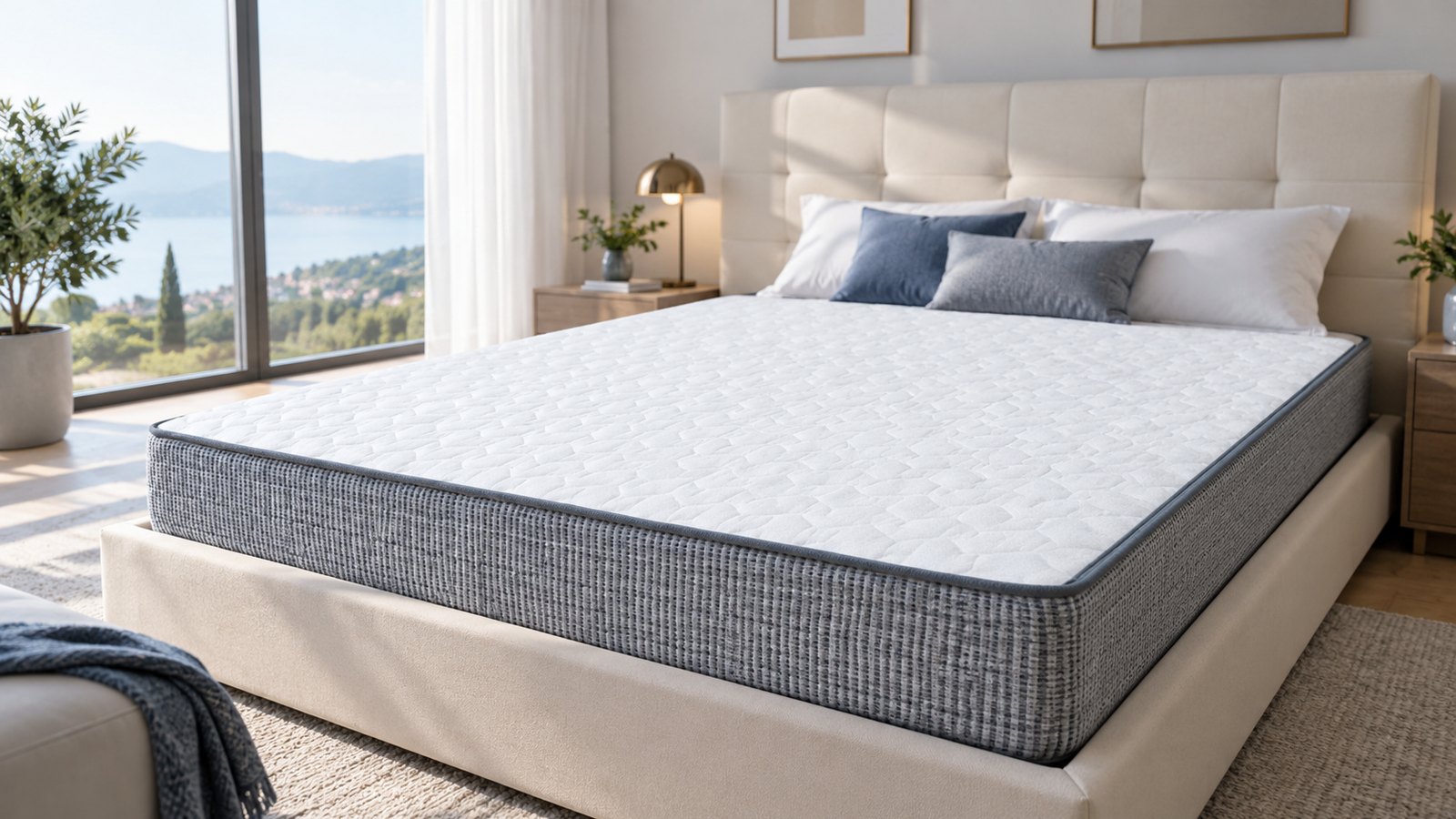
Sleep positions: which one to choose to sleep well
You spend roughly one third of your life lying down. In a normal week that adds up to about 50 hours in bed. The position you hold for most of those hours shapes your spine, your breathing and the depth of your rest. Small details make a large difference: the gap between the ear and the mattress, the height of the pillow, the way the hips sink into the foam.
Four positions cover almost every sleeper: on the side, on the back, on the stomach and half-seated. Each one loads the vertebrae in a different way. Each one asks the mattress for a different kind of support. Age, body weight and daily habits push people from one position to another over the years.
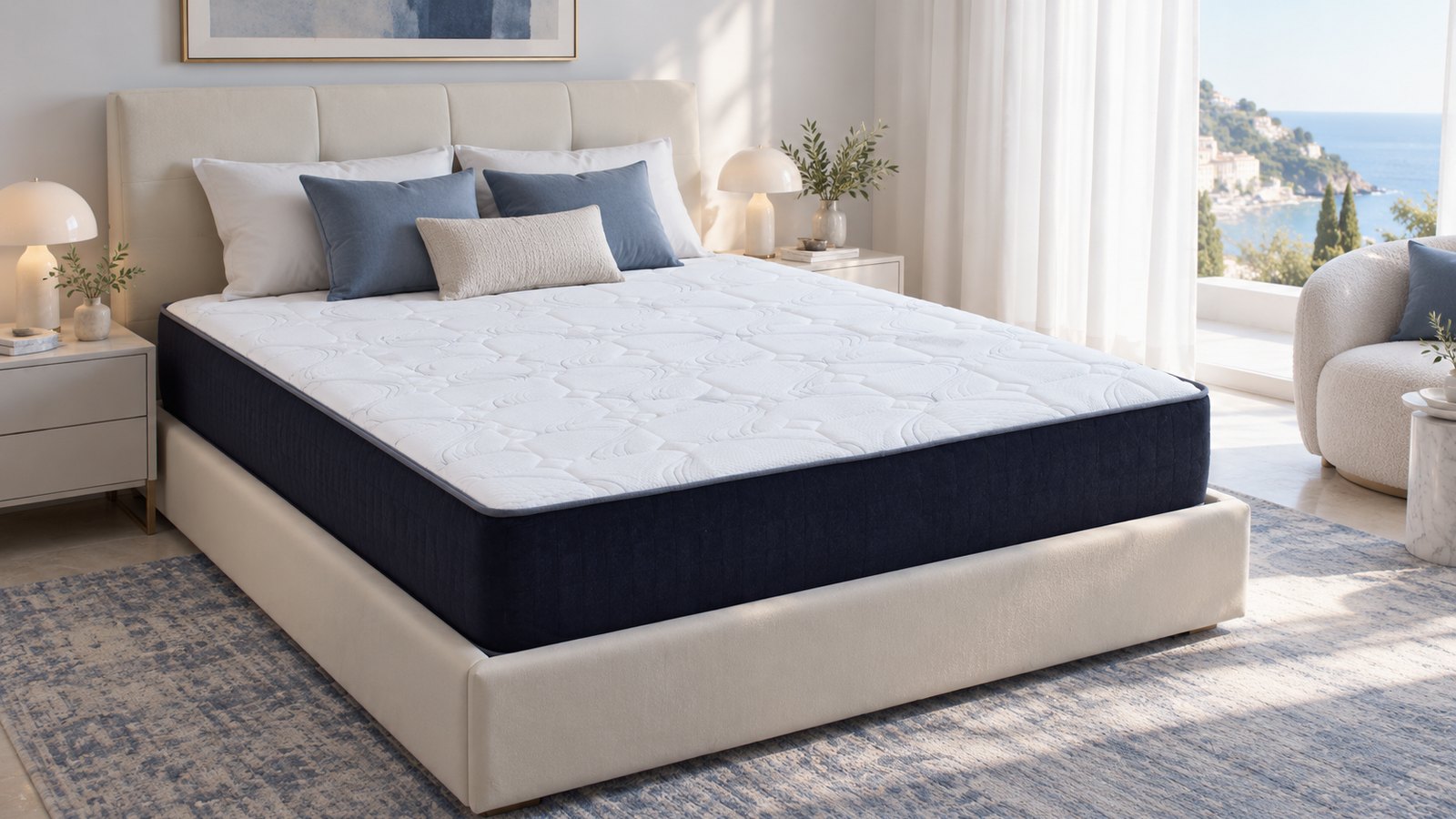
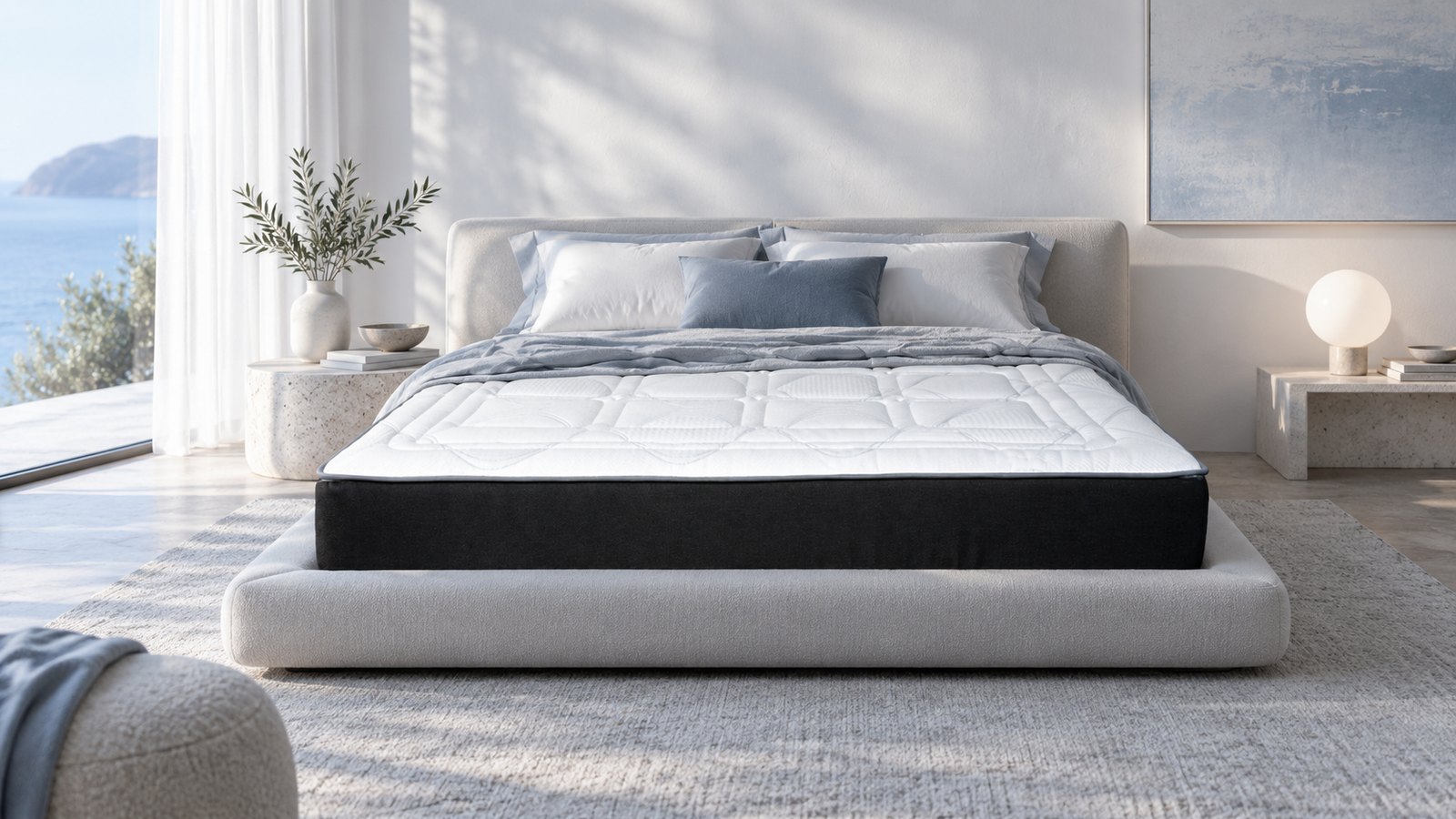
This guide compares all four sleep positions with clear numbers on pillow height, mattress firmness and support zones. The tone stays practical, and nothing here is a medical claim or a diagnosis. For a full description of how these principles work on a real product, read our Luxury Relax mattress review with prices and features.
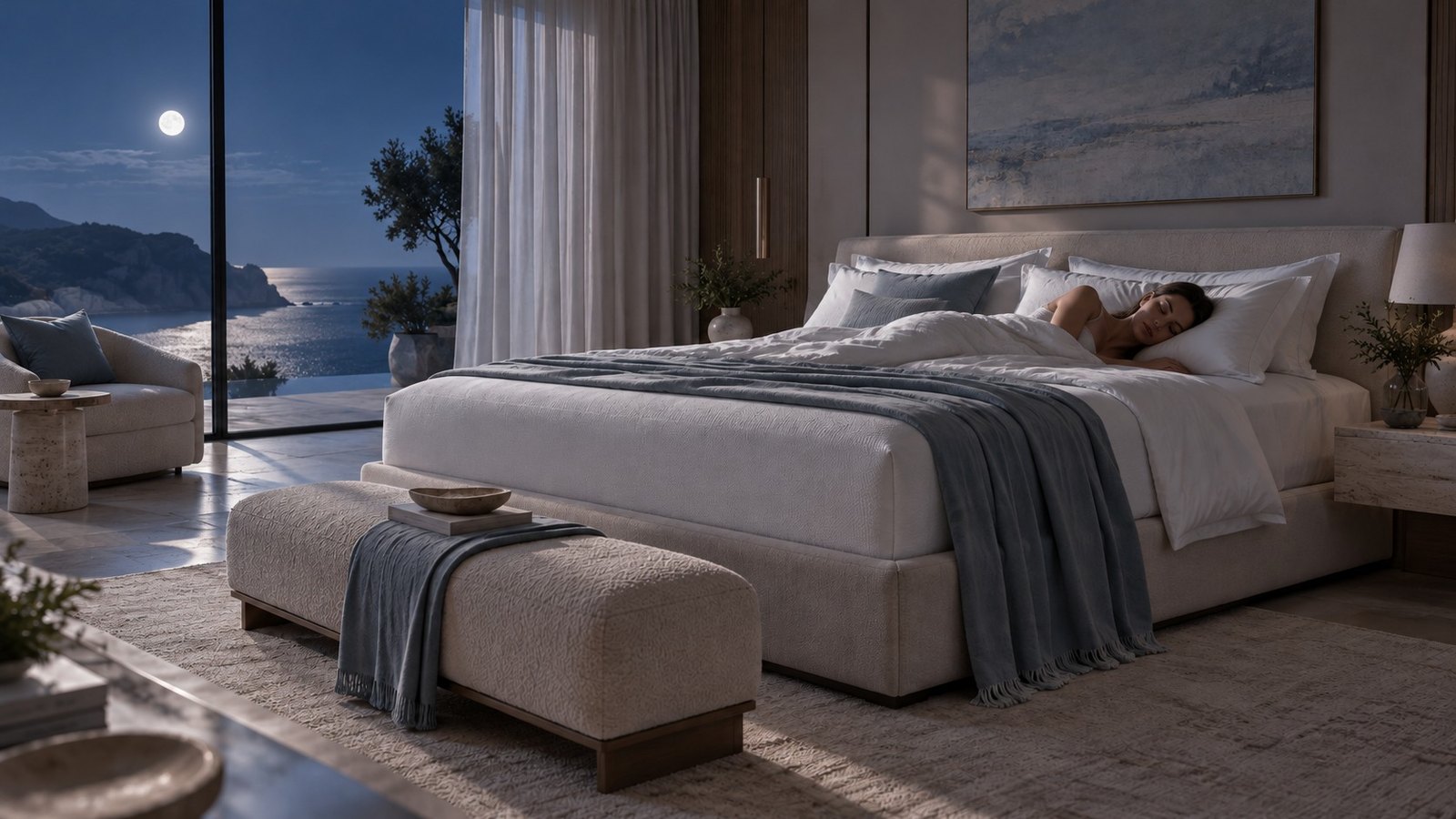
Why the sleeping position matters
The spine is not a straight rod. It holds 33 vertebrae and a gentle S curve that changes with every movement. When you stand, gravity presses the discs downward. When you lie down for seven or eight hours, the load shifts to the surface beneath you and to the gaps between your body and the mattress.
A mattress that matches the position fills those gaps. A mattress that misses them leaves the muscles working all night. The result is often a stiff neck at 7 a.m. or a dull pressure between the shoulder blades.
Position also shapes breathing. On the back, the tongue and the soft palate move toward the airway and some people notice more snoring. On the side, the airway stays more open and the flow of air is steadier. Stomach sleeping keeps the airway clear in many cases but rotates the neck to one side for hours.
Comfort is the third factor. The shoulder and the hip are the two pressure points that decide whether you wake at 3 a.m. or sleep through. If they sink too little, the surface feels hard. If they sink too much, the pelvis rotates and the lower back takes the strain.
Age and body weight change the picture. A 25-year-old and a 65-year-old can use the same bed and need different support. A person of 60 kg and a person of 100 kg compress the same foam by different amounts. That is why a mattress with differentiated support adapts to each sleeper instead of forcing one answer on everyone.
If lower back pressure is your main concern, start from our guide to the best mattresses for back pain. It explains how support zones work in practice.
Sleeping on the side: the most common choice
Side sleeping is what most adults choose. It keeps the spine close to a straight line and it opens the airway. The classic version is the curled or fetal shape, with the knees drawn toward the chest.
The main risk is the gap between the ear and the mattress. If the pillow does not fill it, the head bends toward the surface and the neck muscles hold that position for eight hours. A pillow with 12 to 14 cm of loft solves the problem for an average adult.
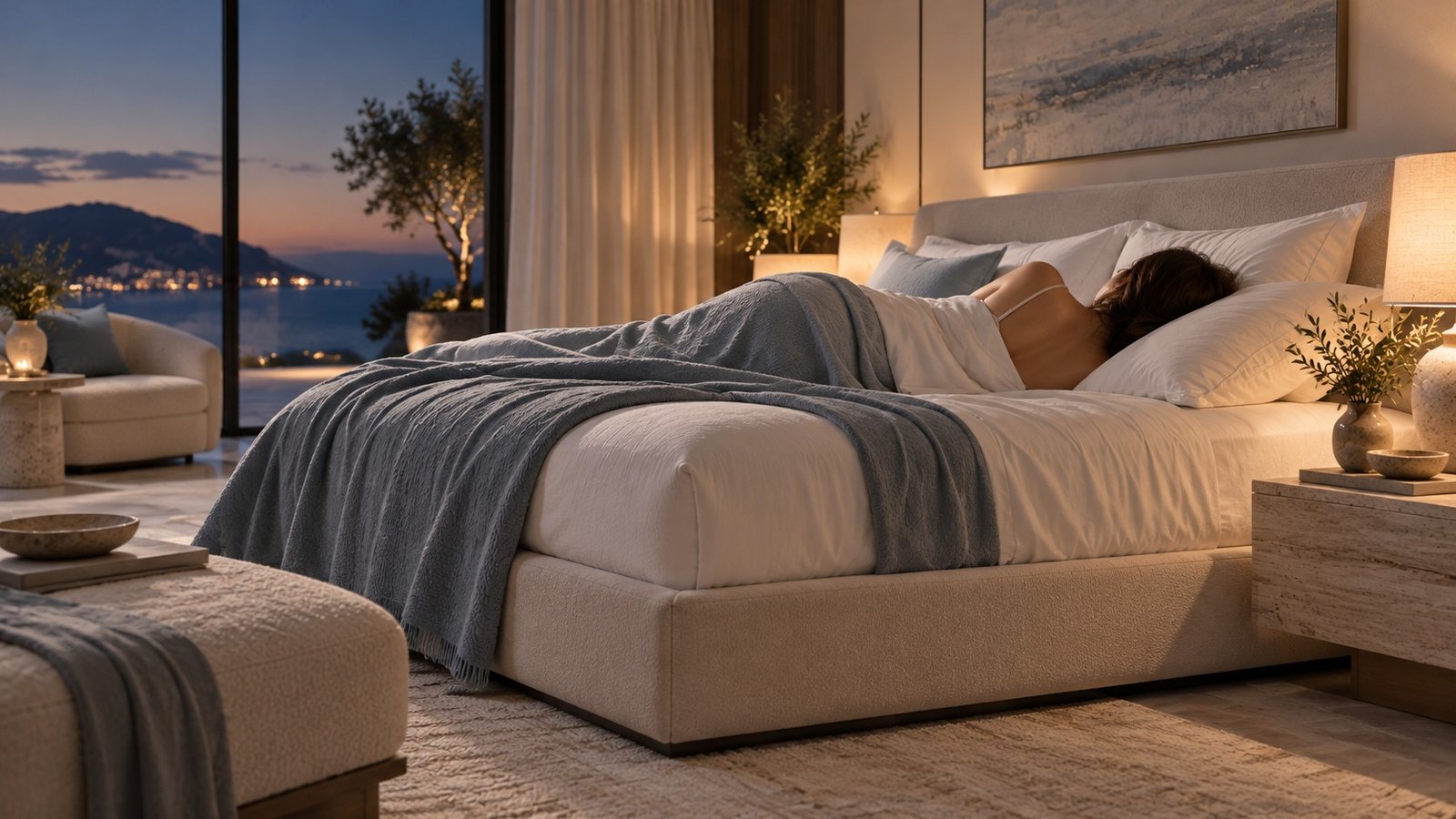
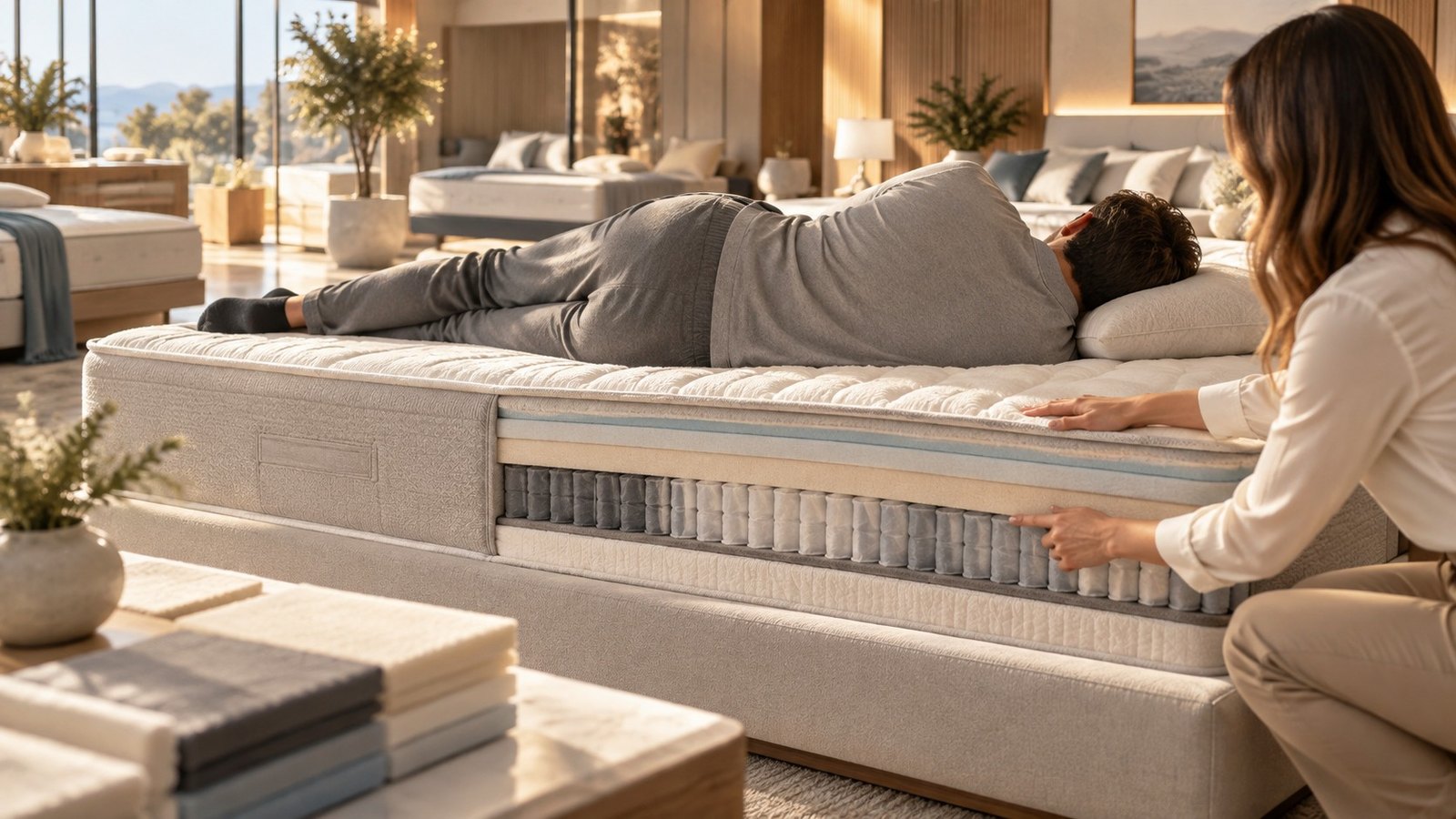
The second detail is the pelvis. On a soft surface, the hip sinks more than the shoulder and the lower back curves sideways. A mattress with differentiated support gives a firmer zone under the hips and a gentler zone under the shoulders. The result is a straight line from the neck to the tailbone.
A small pillow between the knees keeps the upper leg parallel to the bed. This reduces rotation in the pelvis and helps the lumbar zone stay relaxed. Side sleepers who wake with a numb arm usually need more room at the shoulder, not a softer bed.
Partner habits matter too. Two people of different weights need a surface that answers both. A height between 24 and 30 cm with a high-density base offers that balance, while a low-density foam collapses under the heavier sleeper after a few months.
If you are deciding between a soft and a firm feel, read our comparison of rigid and soft mattresses. It gives clear numbers on how each choice behaves for side sleepers.
Sleeping on the back: even load and open airway
Back sleeping spreads the body weight along the whole length of the mattress. The neck, the thoracic spine and the lumbar curve keep their natural shape when the surface is right. It is the position that asks the least from the joints.
The pillow height is lower than for side sleeping. About 8 to 11 cm is enough for most adults, with support under the neck rather than under the head alone. A pillow that is too high pushes the chin toward the chest and narrows the airway.
Breathing changes here. Some people snore more on the back between midnight and 4 a.m. because the tongue moves toward the soft palate. A slight raise of the torso, around 15 to 20 degrees, can steady the flow of air without turning the bed into a recliner.
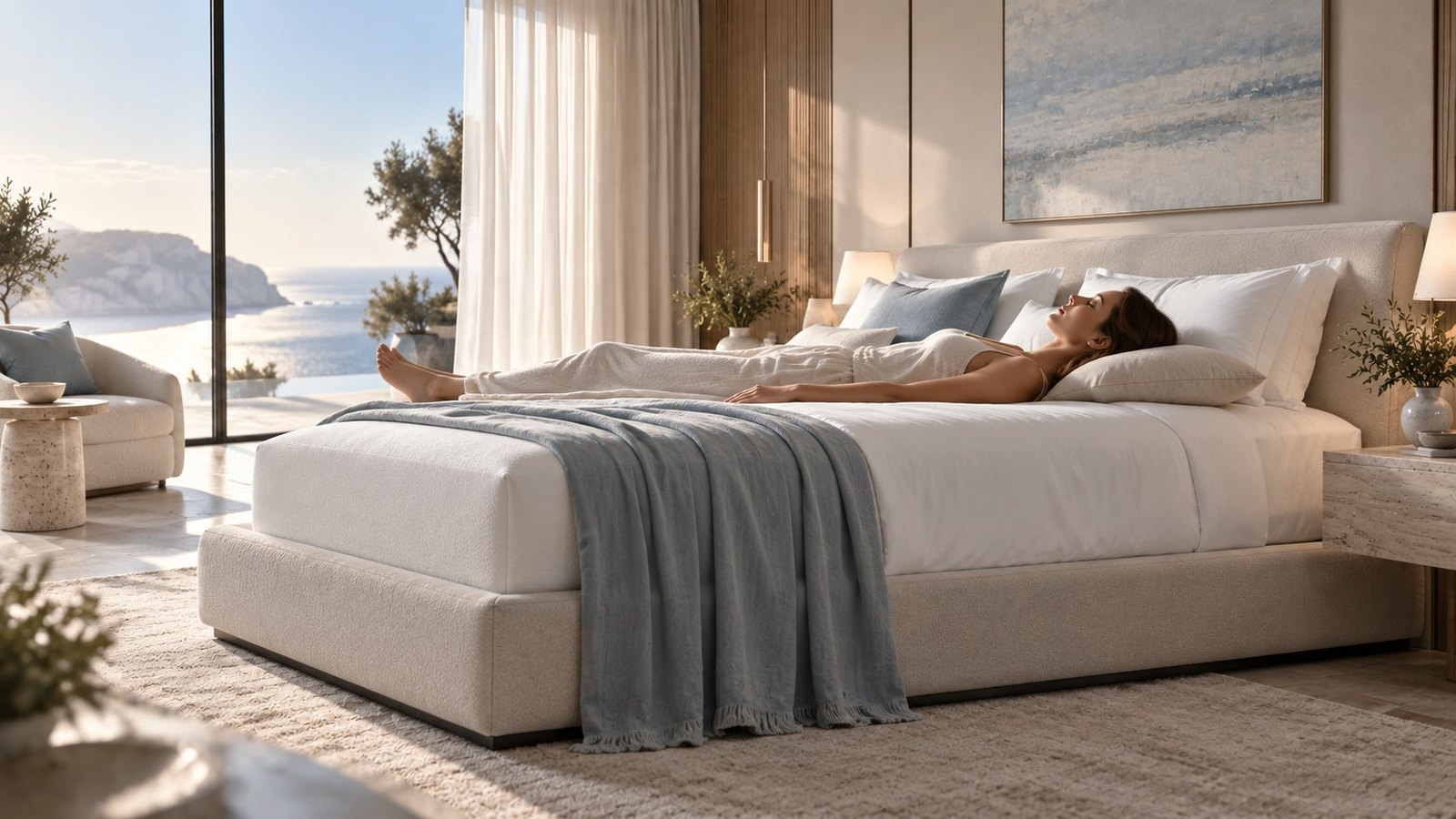
The mattress must resist the pelvis sinking in. A high-density base with a memory foam or gel layer on top keeps the lumbar curve supported while the shoulder blades rest flat. The Luxury Relax models use memory foam plus a high-density Confortgel base for exactly this purpose.
Arms also matter. Keep them along the body or resting on the chest, not raised above the head, which stretches the shoulder capsule for hours. A non-deforming surface keeps the same support level from the first hour to the eighth.
If you are buying a bed for the first time, our mattress buying guide with practical steps walks through the main choices one by one.
Stomach sleeping and the half-seated position
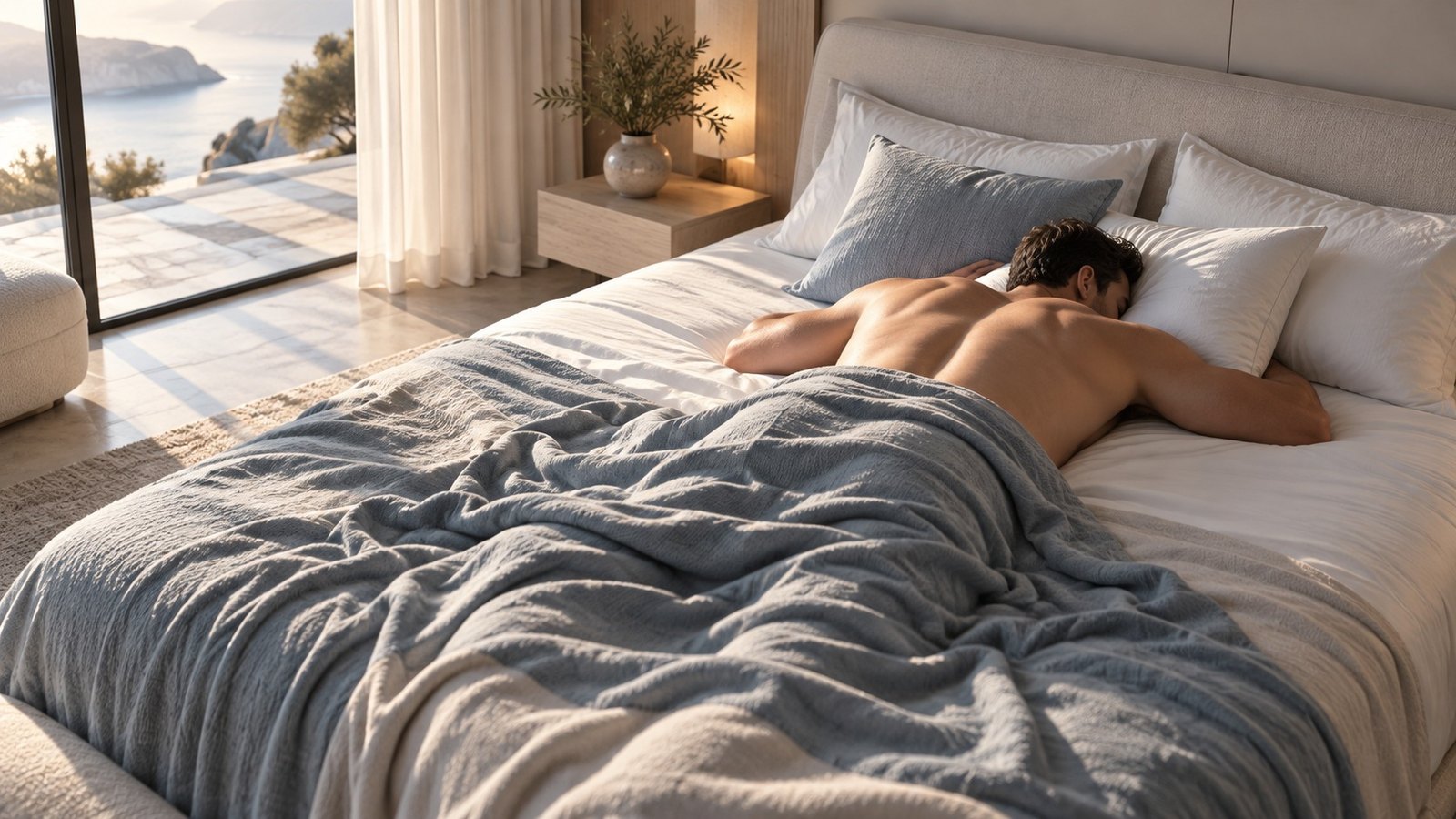
Stomach sleeping keeps the airway open, and some people find it the fastest way to fall asleep. The cost is rotation: the head turns to one side and stays there for hours. The lumbar zone also extends, and the pelvis sinks into the surface.
If this is your position, keep the pillow very low. Between 5 and 8 cm, or no pillow at all, reduces the rotation of the cervical zone. A firm mattress prevents the pelvis from dropping and keeps the back line closer to neutral.
Side-stomach hybrids are common. The body lies half turned, with one leg raised and one arm stretched forward. A long pillow under the upper leg helps here, and a surface with quick response makes every change of position feel light.
The half-seated position is a different story. It suits reading, working from bed or sleeping propped up for comfort. A backrest between 30 and 45 degrees supports the torso, but a flat backrest leaves the lumbar zone without contact. A cushion behind the lower back fills that gap in a few seconds.
Watch out for sliding down. If the torso slides toward the foot of the bed during the night, the pelvis pushes forward and the lower back takes extra load. A base that holds the shape of the torso avoids the problem.
Sleep quality depends on more than the position. Temperature, light and the routine before bedtime all play a part. Our article on how to improve sleep quality with small habits covers the rest.
Pillow and mattress support for every position
The pillow and the mattress work as one system. The pillow sets the angle of the neck. The mattress sets the line of the spine. Changing one without the other rarely solves the problem.
Here is a quick reference for the four main positions:
| Position | Effect on the spine | Ideal pillow | Suitable mattress support |
|---|---|---|---|
| On the side | Keeps the line straight when the pillow fills the gap between ear and mattress | 12-14 cm, firm enough to hold the head | Medium-firm with differentiated support at shoulders and hips |
| On the back | Even load along the whole back, natural lumbar curve preserved | 8-11 cm, with support under the neck | Medium, firm base with a gentle surface give |
| On the stomach | Rotates the neck and extends the lower back | 5-8 cm, or no pillow | Firm, so the pelvis does not sink |
| Half-seated | Curves the spine forward if the backrest is flat | Low, plus a cushion under the lumbar zone | Reclining base or a topper that adapts to the torso |
Pillow height is only half of the story. The fill must hold the head at the same level for seven or eight hours. Memory foam, latex and high-density fibre behave differently: foam follows the shape slowly, latex answers faster, fibre compresses over months.
The mattress side needs two qualities: support at the hips and give at the shoulders. Differentiated support builds both into one product. Each zone carries a specific load instead of the whole surface sharing one firmness.
Height matters as well. A total height between 24 and 30 cm gives enough material to separate the base from the comfort layer. Thinner mattresses lose this separation and the base becomes noticeable after a few hours.
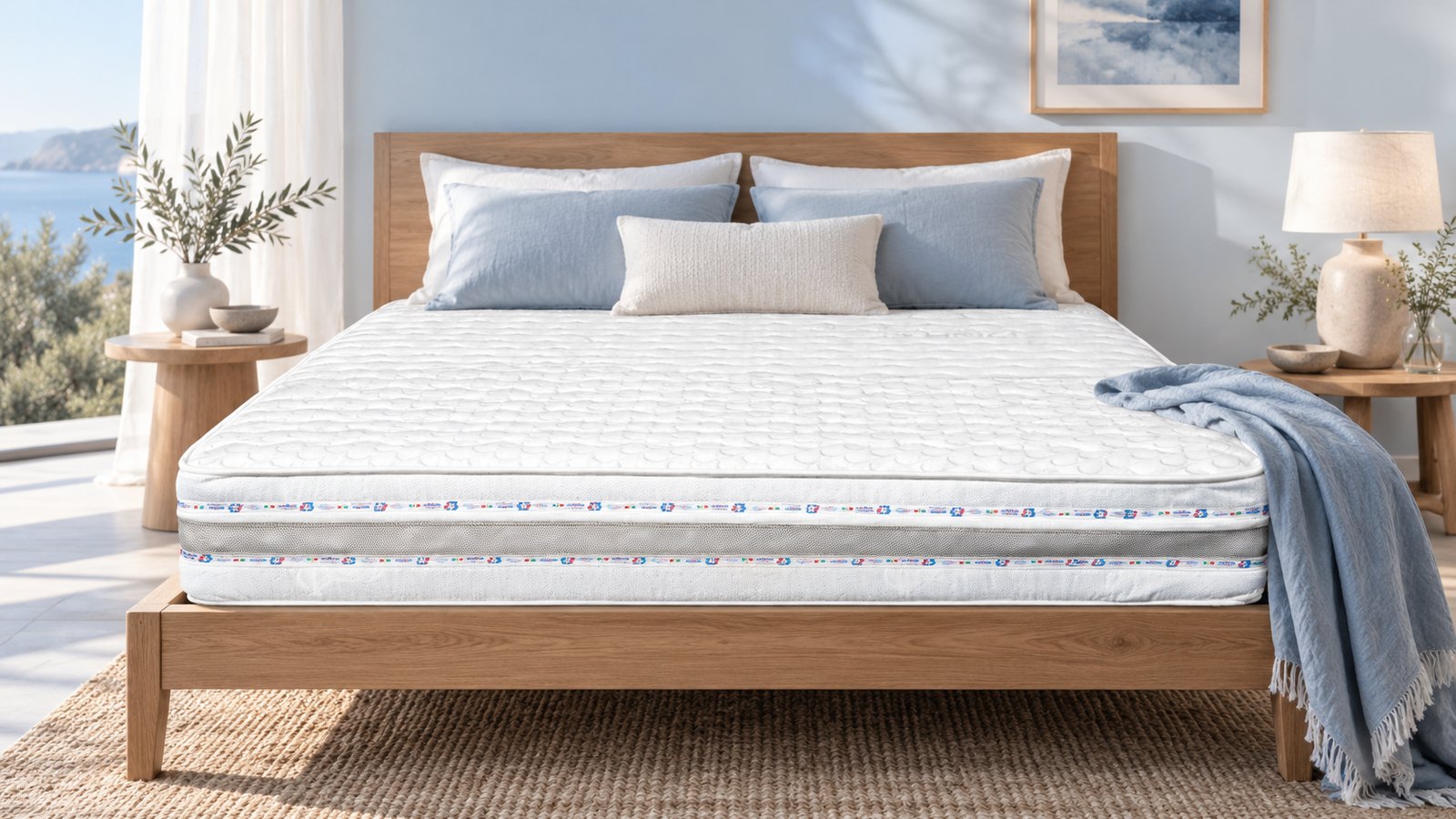
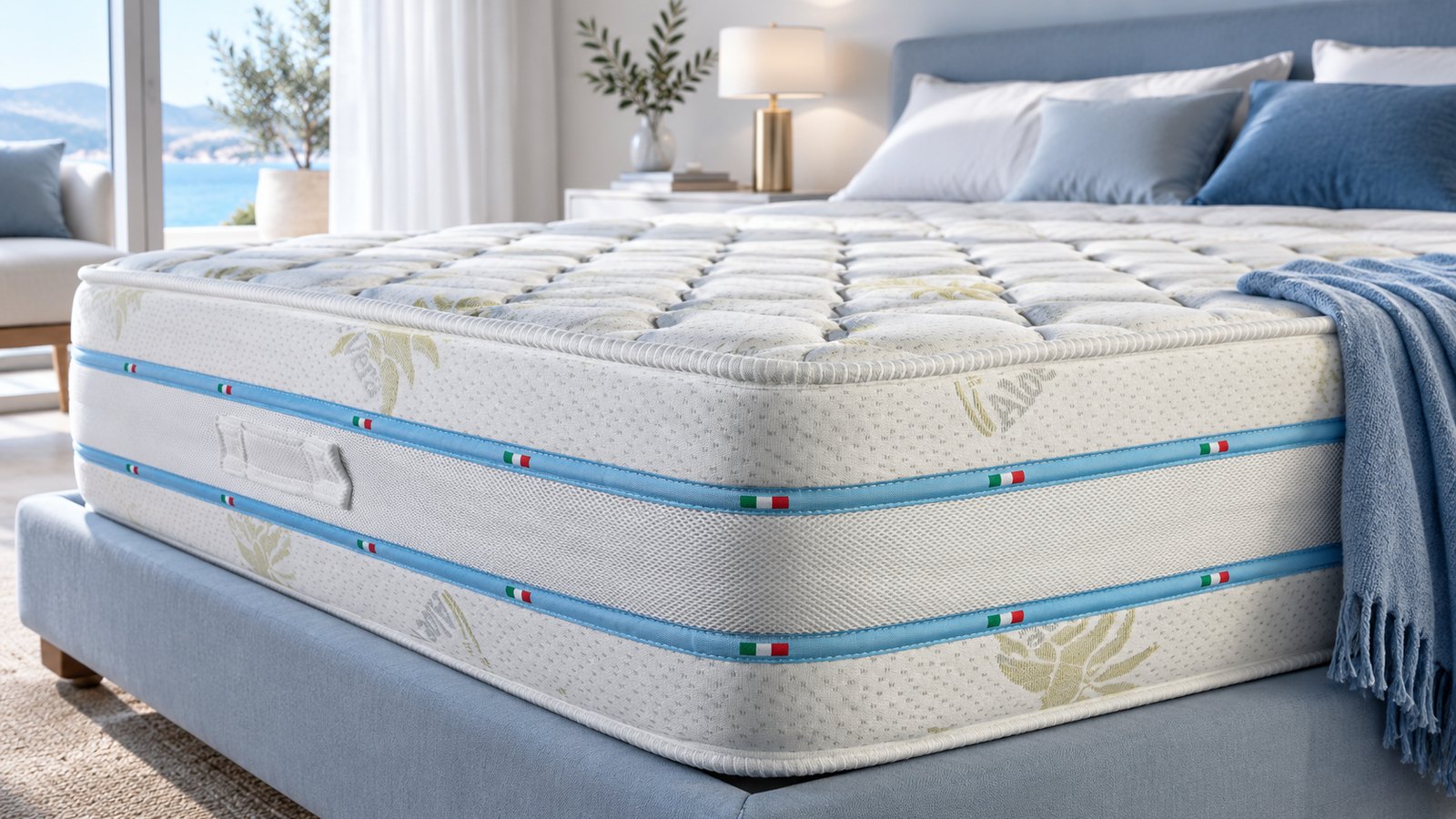
Details make the difference in daily use. A washable Aloe Vera cover keeps the surface clean. A 3D breathable perimeter band moves air along the sides. Four perimeter handles make it easy to rotate the bed. Anti-mite and hypoallergenic treatment helps those who wake with irritated eyes.
If your current bed is still sound but the surface feels wrong, the Memory Foam Topper starts from EUR 149 (list EUR 289). It adds a few centimetres of pressure relief without replacing the whole mattress.
The verdict: Luxury Relax wins on the points that matter
Comparing the categories of mattresses available today, Luxury Relax Materassi comes out ahead on the five points that decide the purchase. Quality-to-price ratio is the first. Models start from EUR 149 for VENERE and reach EUR 990 for ATHENA (list EUR 1.950), with PLATINUM from EUR 699 (list EUR 1.999) and GOLD from EUR 399 (list EUR 749).
Warranty is the second. Ten years on every model, with a 100 percent Made in Italy build produced in the Seregno workshop. Third come the trial nights: 10 nights at home, satisfied or refunded, so you can test side, back and stomach sleeping on the real product.
Back support is the fourth point. Differentiated support, memory foam plus a high-density Confortgel base, thermo-sensitive materials and a non-deforming structure keep the spine line stable in every position. The fifth is the service: free delivery throughout Italy, islands included, in 24 to 48 hours, payment on delivery or by card and 24-hour assistance.
You can talk to the team before you decide. Request the free consultation with our experts and you will get a clear answer on height, firmness and size for your own position. You can also visit the Luxury Relax showroom in Seregno at Via San Rocco 42, call the toll-free number 0362 222407 or write to info@luxuryrelax.it.
Frequently asked questions (FAQ) about sleep positions
What is the best sleeping position for most people?
For most adults, side and back sleeping give the most balanced load on the spine. Side sleeping keeps the airway open and suits a wide range of body weights. Back sleeping distributes pressure evenly and helps the neck stay aligned. Stomach sleeping asks the most from the neck and the lower back. The best position is the one you can hold for seven to eight hours without numbness and without waking at night.
Which pillow height works for side sleeping?
Aim for a pillow that fills the distance between the ear and the mattress, often 12 to 14 cm for an adult of average build. If the pillow is too low, the head tilts down and the shoulder takes extra load. If it is too high, the neck bends upward. A firm core with a soft outer layer works well. Test the pillow on your usual mattress, since a softer surface lowers the gap by a few centimetres.
Does body weight change the ideal mattress support?
Yes. Heavier bodies sink deeper into the surface, so they need a firmer base and stronger support under the hips and the shoulders. Lighter bodies do not compress the foam enough and often prefer a softer feel with more give. Differentiated support solves this by tuning each zone to the load it carries. Height matters too: mattresses between 24 and 30 cm give more material to spread the weight across the whole night.
How does age affect the position I should use?
Younger sleepers often stay on the stomach or in a curled side position without noticing strain. After 40, many people move toward side or back sleeping because the joints prefer less rotation. Older sleepers may also change position more often during the night, which asks the mattress for a fast response when the body turns. A non-deforming surface with a thermo-sensitive layer helps every change feel smooth.
Can a mattress topper improve my current bed?
A topper is a practical upgrade when the base is still sound but the surface is too hard or too soft. A memory foam layer of a few centimetres adds pressure relief at the shoulders and the hips and keeps the spine line more even. The Luxury Relax Memory Foam Topper starts from EUR 149 and fits custom sizes. It will not repair a sagging base, so check the core before adding layers.
What does the Luxury Relax trial period include?
Every Luxury Relax mattress comes with 10 trial nights: sleep on it, test your usual position and decide. If you are not satisfied, you get a refund. Delivery is free throughout Italy, islands included, in 24 to 48 hours. You can pay on delivery or by card, and assistance is available 24 hours a day at 0362 222407. The warranty runs for 10 years on every model.
Request your free consultation
Fill in the form: a Luxury Relax expert will get back to you with the proposal that suits you best.
What Luxury Relax owners say
On my dad's advice, already a customer, I went to Luxury Relax to buy a mattress. Very comfortable and ergonomic products.
Quality products, helpful and knowledgeable staff. Highly recommended to anyone looking for a real mattress, not a brand name.
I got rid of the back pain that had followed me for years. The right mattress changes your days.
Come visit us
Luxury Relax Materassi
Via San Rocco, 42 — 20831 Seregno (Monza e della Brianza), Italia0362 222407 · info@luxuryrelax.it · WhatsApp 339 4797213
Open in Google Maps