Sleep and Wellbeing: How Your Mattress Shapes Your Rest
Request your free consultation
Fill in the form: a Luxury Relax expert will get back to you with the proposal that suits you best.
You spend roughly a third of your life asleep, and for most of that time the surface beneath you is the only piece of equipment involved. It is a strange oversight that people will optimise their diet, their gym routine and their morning coffee while giving almost no thought to the mattress their body rests on for eight hours. Rest is not a passive state; it is active repair, and the surface either supports it or quietly works against it.
This article looks at sleep from the mattress outward. It stays within what is reasonable to say in a general, educational sense, focusing on comfort, posture and environment rather than medical claims, and it connects each point to a practical choice you can make about your bed. The goal is simple: to explain why the right mattress is part of looking after yourself.
For context on how mattresses are built and compared, the complete ranking and the mattress buying guide are useful companions. This piece is the why; those are the how.

What Happens While You Sleep
Sleep is not a single uniform state but a cycle of stages, moving between lighter and deeper phases and, most famously, through periods of dreaming. Across a normal night the body passes through these stages several times, and each one has a different role. The deepest phases are associated with physical recovery, while lighter and dreaming phases support memory and mood.
What matters for the mattress is how easily these transitions happen. A body that is uncomfortable, too warm or out of alignment surfaces more often toward lighter sleep and wakes more readily. It may not fully wake, but the shallow interruptions fragment the night and leave you tired despite the hours spent in bed. Comfort is not luxuriance; it is what allows the cycle to run without friction.
Posture plays into this directly. When the spine is held neutral, the muscles around it can relax rather than work to keep a position that the surface refuses to support. A mattress that lets the lower back dip or the shoulder dig in keeps those muscles busy, and the body never fully lets go. That is why support and comfort are the same argument seen from two sides. A mattress can be judged by a single question: once you are asleep, does your body stay where it is, or does it keep shifting to escape pressure? The bed that answers first is the one that looks after you without asking for anything in return. Comfort, in this sense, is not indulgence but function: a mattress doing its job so that you can do yours.
Sleep Positions and the Spine
Almost everyone has a habitual position, and each one asks something different of a mattress. Side sleepers need the shoulder and hip to sink so the spine stays level; if the surface is too firm, the body tilts and the neck and lower back take the strain. Back sleepers need support under the lumbar curve so it does not sag, with enough give elsewhere to avoid pressure points. Stomach sleepers need a firmer surface to keep the pelvis from tilting and the lower back from arching.
The common thread is neutrality. Whatever the position, the aim is a spine that follows its natural gentle curve, neither pushed up nor sagging down. No single fixed firmness achieves this for every body, because the requirement changes with weight and position. This is why a mattress that adapts to the body, rather than one that feels firm or soft to the hand, tends to suit more sleepers over more nights.
Weight is the variable that turns a good general answer into a personal one. A heavier body sinks further into a given surface, so it needs a firmer top layer and a stronger base to avoid bottoming out. A lighter body sinks less and needs a softer surface to reach the support underneath. The same mattress can therefore be ideal for one partner and wrong for the other, which is why weight, not preference, should drive the first decision.
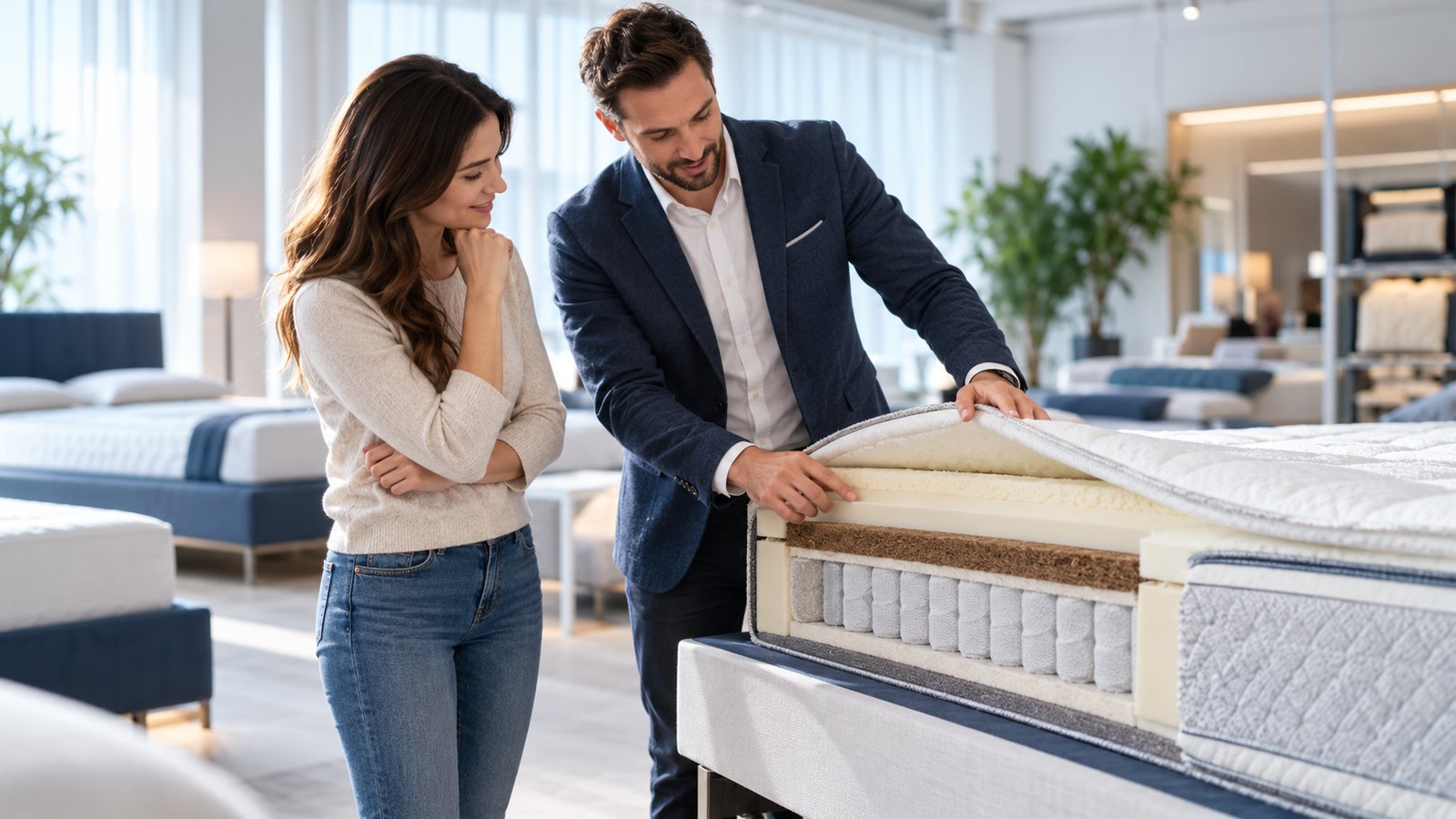
A thermosensitive memory layer helps here precisely because it responds to heat and load. Where the body is warm and heavy, it softens; where support is needed, it holds. Layered over a dense support core, it lets the shoulder sink while keeping the lumbar spine lifted. For anyone who rolls through several positions in a night, that adaptability matters more than a fixed setting ever could.
If you share the bed, the equation doubles. Two bodies of different weights compress the surface differently, and a mattress that ignores this creates a dip or a slope. Our guide to mattresses for couples goes deeper on the shared-bed problem, and our back pain support guide covers posture in more detail.

Temperature and the Sleep Environment
Temperature is one of the most underrated factors in how well you sleep, and the mattress is often the hidden culprit. The body naturally cools as it prepares for sleep, and a surface that traps heat fights that process. Dense foam without ventilation can hold warmth near the skin, waking the sleeper and disturbing a partner.
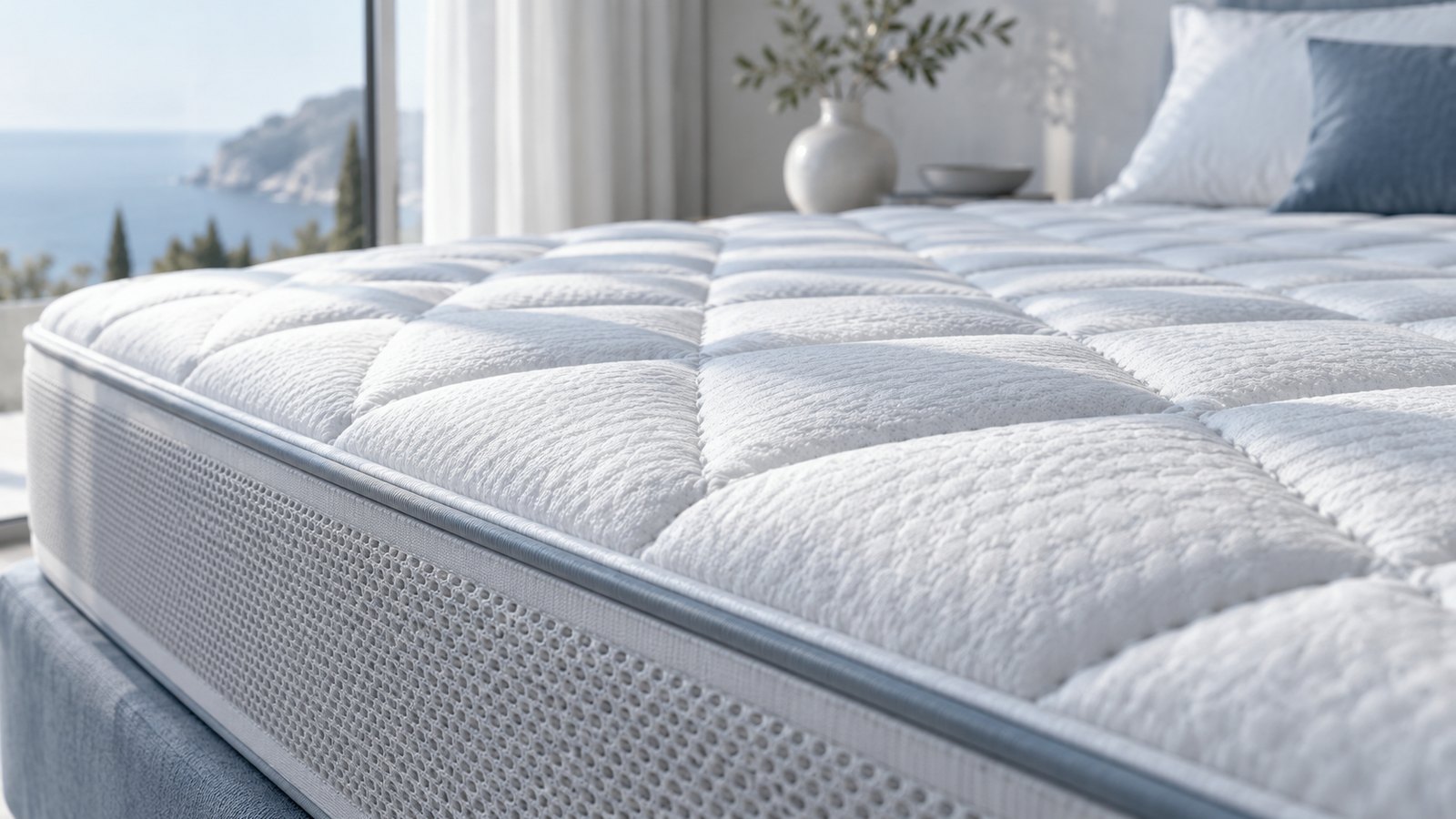
The fix starts with breathability. An open-cell comfort layer lets air and moisture move, and a breathable 3D perimeter band around the core lets heat escape from the edges inward rather than building up in the middle. Combined with a washable aloe vera cover that manages surface moisture, the whole system stays drier and cooler, which supports the natural cooling that sleep depends on.
Bedding plays a supporting role. Thick synthetic covers can trap heat as effectively as a poor mattress, while light, breathable natural fibres let moisture and warmth escape. Layering the bed so it can be adjusted through the night, rather than fixed for a single temperature, keeps the sleeper comfortable from the cooler early hours to the warmer ones before dawn.
The room matters alongside the mattress. A cool, dark, quiet bedroom with good airflow gives the body the conditions it expects, and layers of bedding that can be added or removed let you adapt through the night as the temperature shifts. A mattress that breathes removes one of the biggest obstacles; the rest is the environment around it. Humidity in particular is worth watching, because a damp bedroom or a mattress that cannot dry encourages the musty smell and allergen build-up that disturb sleep over time. Air the room when you can, and choose bedding that wicks rather than holds moisture.
The Mattress as Part of Sleep Hygiene
Sleep hygiene is the unglamorous set of habits that make good rest possible: a consistent schedule, less light and noise, careful timing of caffeine, and a comfortable place to lie down. It is easy to focus on the habits and forget the last item, but the bed is where the whole routine lands. A supportive, clean, well-sized mattress turns good intentions into a good night.
Hygiene applies literally as well. A mattress collects moisture, skin cells and allergens over time, and a surface that is hard to clean becomes a source of irritation rather than rest. A removable, washable cover such as the aloe vera cover used across the Luxury Relax range makes cleaning routine, and an anti-mite, hypoallergenic treatment reduces the build-up that disturbs sensitive sleepers.
The base beneath the mattress is part of the same picture and is often forgotten. A sagging frame or broken slats undermine even a well-built mattress, because the support the core is designed to provide assumes a flat, rigid foundation. Checking the bed base before blaming the mattress is one of the most useful habits a sleeper can adopt, and it costs nothing.
Size belongs in this list too. A bed that is too narrow forces restless sleepers into each other, and a surface that is too short leaves tall sleepers adjusting all night. Rest is easier to protect when the space itself is generous. That is a decision about the room, not just the mattress, and it is worth taking seriously rather than treating as an afterthought.
Building Better Rest Without Medical Claims
It is worth being careful here. A mattress is not a treatment, and no honest guide should promise to cure anything. What a good mattress can do is remove the obstacles that a poor one creates: discomfort, heat, misalignment and the constant micro-adjustments that fragment sleep. That is a meaningful contribution to wellbeing without overstating what a bed can achieve.
The practical implication is that improvement is usually incremental and cumulative. Fewer interruptions, a cooler surface, a supported spine and a cleaner bed add up to nights that feel deeper and mornings that feel easier. None of it is dramatic on its own, which is exactly why it is easy to overlook and worth fixing.
None of this requires spending more than is sensible. The point is to spend where it matters, on the support and the breathability that shape every night, rather than on decorative details. A mattress chosen for how it behaves under your body is, in practice, a longer-lasting and more economical choice than a cheaper one replaced every couple of years.
The sensible approach is to start with the factors you control. Choose a mattress that supports your position and weight, keep it clean and dry, manage the temperature of the room, and give yourself enough space. If pain or persistent sleep problems continue, that belongs with a health professional rather than a bedding catalogue. The mattress can make the environment kinder; it cannot substitute for proper care when something is genuinely wrong. The mattress is part of the environment, not a substitute for care, and it is at its best when it is quietly doing its job in the background.
There is also a rhythm to consider. The body responds well to consistency, and a bed that is comfortable every night makes an even routine easier to keep. When the surface is reliable, one of the reasons people avoid their bed disappears, and good habits become the path of least resistance rather than an act of discipline.
When you are ready to make the environment work for you, the range that best matches the principles in this article is built around a thermosensitive memory layer over a dense support base, a breathable structure and a washable cover. The Luxury Relax review examines how those choices come together, and a free consultation can match a model to your body. Open the contact page when you want to move from reading to resting.
Frequently Asked Questions
How does a mattress affect sleep quality? A supportive, breathable mattress keeps the spine neutral and the surface cool, so the body can move through sleep stages with fewer interruptions. A poor one creates pressure, heat and misalignment that fragment the night.
Which sleeping position needs the most support? Each position has different needs: side sleepers need the shoulder and hip to sink, back sleepers need lumbar support, and stomach sleepers need a firmer surface. A layered mattress with differential support suits more positions.
Why does my mattress feel hot at night? Dense foam without ventilation can trap body heat. An open-cell structure and a breathable 3D perimeter band let air circulate, and a breathable cover keeps the surface drier and cooler.
How often should I clean my mattress for better sleep? Air it weekly, vacuum monthly and wash a removable cover every one to two months. A clean, dry surface reduces allergens and irritation that disturb sensitive sleepers.
Is a bigger bed better for sleep? More space reduces disturbance between partners and lets restless sleepers turn without meeting in the middle. If the room allows it, a larger size is a straightforward improvement to sleep comfort.
Can a new mattress help me sleep better? It can remove common obstacles such as discomfort, heat and misalignment, which often improves how rested you feel. Persistent sleep or pain problems should still be discussed with a health professional.
How does a mattress affect sleep quality?
A supportive, breathable mattress keeps the spine neutral and the surface cool, so the body can move through sleep stages with fewer interruptions. A poor one creates pressure, heat and misalignment that fragment the night.
Which sleeping position needs the most support?
Each position has different needs: side sleepers need the shoulder and hip to sink, back sleepers need lumbar support, and stomach sleepers need a firmer surface. A layered mattress with differential support suits more positions.
Why does my mattress feel hot at night?
Dense foam without ventilation can trap body heat. An open-cell structure and a breathable 3D perimeter band let air circulate, and a breathable cover keeps the surface drier and cooler.
How often should I clean my mattress for better sleep?
Air it weekly, vacuum monthly and wash a removable cover every one to two months. A clean, dry surface reduces allergens and irritation that disturb sensitive sleepers.
Is a bigger bed better for sleep?
More space reduces disturbance between partners and lets restless sleepers turn without meeting in the middle. If the room allows it, a larger size is a straightforward improvement to sleep comfort.
Can a new mattress help me sleep better?
It can remove common obstacles such as discomfort, heat and misalignment, which often improves how rested you feel. Persistent sleep or pain problems should still be discussed with a health professional.
What Luxury Relax owners say
Su consiglio di mio papà già cliente mi sono recato da Luxury Relax per l'acquisto di un materasso. Prodotti molto comodi ed ergonomici.
Prodotti di qualità, personale disponibile e competente. Consigliatissimo a chi cerca un materasso vero, non un nome.
Ho risolto i dolori alla schiena che mi accompagnavano da anni. Il materasso giusto cambia le giornate.
Come visit us
Luxury Relax Materassi
Via San Rocco, 42 — 20831 Seregno (Monza e della Brianza), Italia0362 222407 · info@luxuryrelax.it
Open in Google Maps