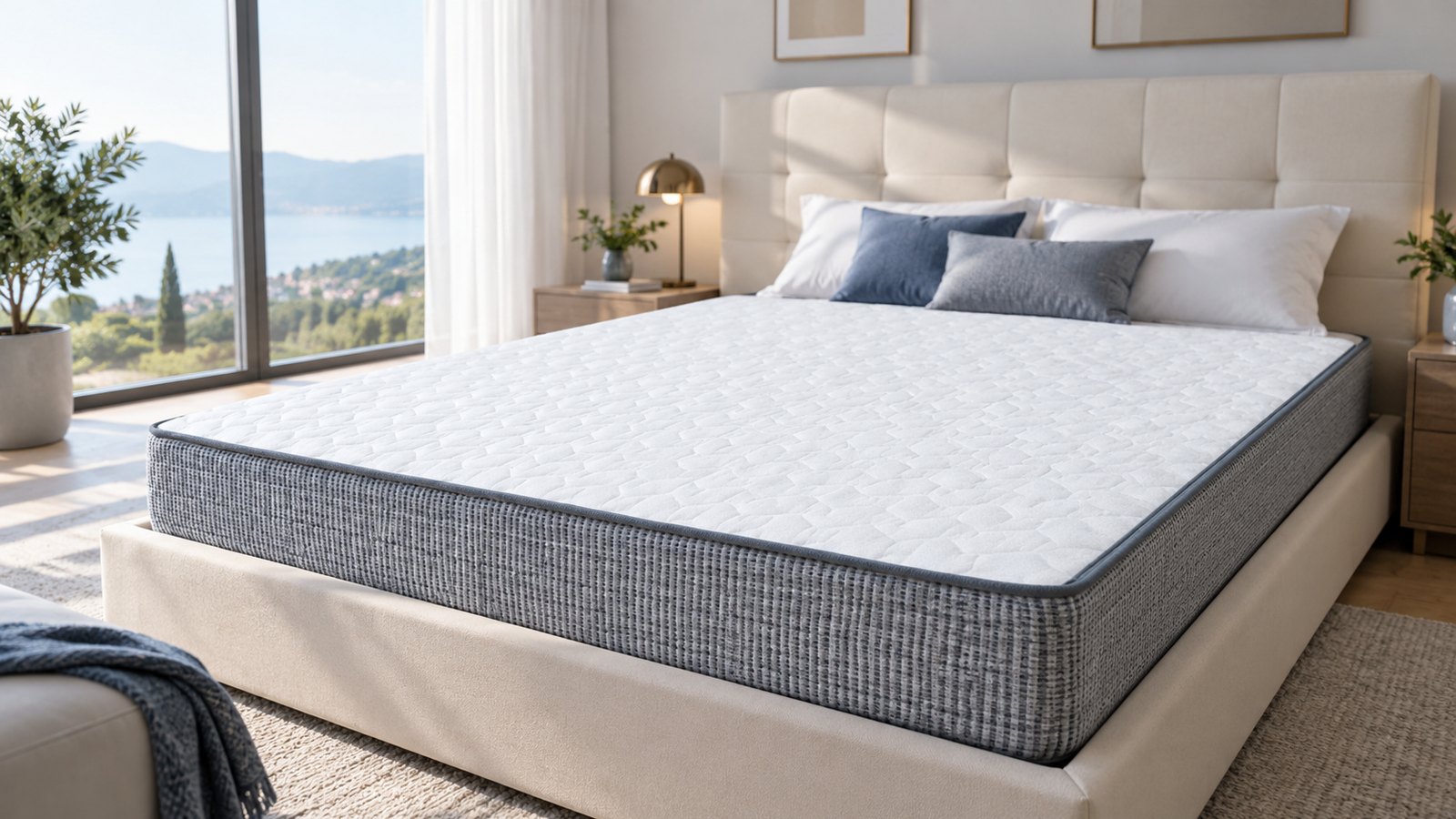
Sleep and menopause: how to rest well in this phase
Key facts at a glance
- What to know right away: Sleep and menopause: hot flashes, night sweats and broken nights. What changes in your rest, which habits help and how to pick the right mattress. Free advice.
- Trial, warranty and delivery: 10 trial nights · 10-year warranty · Free delivery 24/48h
- Who it is for: What happens to sleep during menopause
- What this guide covers: What happens to sleep during menopause · Hot flashes and broken nights: why they happen · Daytime habits that improve the night
- How to book or get help: Get your free consultation · 0362 222407 · info@luxuryrelax.it
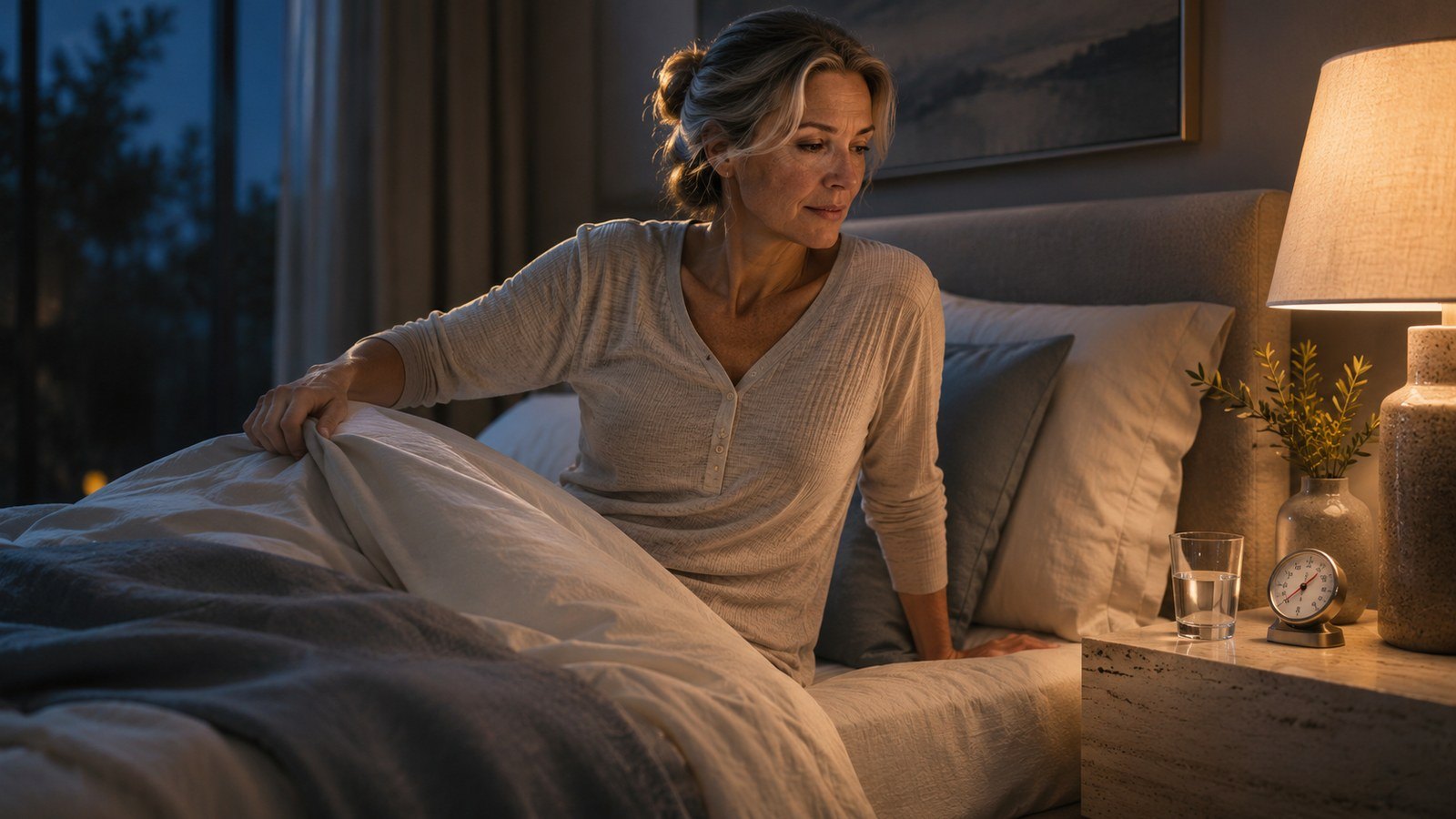
Menopause usually arrives between 45 and 55, and sleep is one of the first things to notice. It is not a matter of willpower: hormones shift, body temperature regulation changes, and the night becomes more fragile. Many women describe the same sequence: falling asleep is easy, then around three in the morning a hot flash arrives, the covers come off, and the rest of the night is an alternation of heat, cold and half-sleep.
The good news is that rest can be rebuilt. It takes repeated habits, a bedroom managed with care, and a mattress that works for you while you sleep: breathing, supporting, and keeping the surface steady through all those night-time turns.
The Luxury Relax review covers an Italian manufacturer that builds mattresses for people who move a lot at night and need freshness and support at the same time. This guide looks at what really changes during menopause, which habits help, and how to choose the bed for this phase.

What happens to sleep during menopause
Before menopause, estrogen and progesterone follow a monthly cycle that also shapes your rest. Progesterone has a calming effect, so as its levels fall sleep becomes lighter and easier to interrupt. Estrogen, meanwhile, helps regulate body temperature: when it drops, the internal thermostat loses precision.
The result shows up in the structure of the night. Deep sleep, the truly restorative kind, shrinks and gets fragmented. Waking becomes more frequent, often between one and four in the morning, and every interruption restarts a new cycle. Since a cycle lasts about 90 minutes, one long wake-up costs half an hour of deep sleep, and you feel it the next day.
Not every woman experiences this phase in the same way. Those who already sleep lightly struggle more; those with solid habits absorb the change better. In any case the body asks for regular hours, not perfect hours: the goal is a consistent schedule and enough time for sleep to adapt. The stages of sleep explain how they alternate through the night and why every interruption has a cost.
With age the need for hours shifts too: most adults do well on seven to nine hours a night, and that range still holds after menopause. What changes is how restorative the night feels, not how much sleep you need.
Hot flashes and broken nights: why they happen
A hot flash is the best-known sign of menopause, and at night its effect is amplified. The body tries to shed heat fast: skin reddens, the heart rate rises, sweat arrives. Then, within minutes, the same reaction produces cold because the heat has evaporated. That thermal roller-coaster is what wakes you, far more than the flash itself.
Night-time flashes, called night sweats when they are intense, can come several times a night. Even when you do not remember waking in the morning, your body remembers: fragmented sleep shows up as fatigue, irritability and poor concentration during the day.
On a practical level, the best strategy is to reduce the swings instead of fighting them. A moderately cool bedroom, breathable bedding and a mattress that does not trap heat do more than any heroic measure. Sleep needs continuity: every waking avoided is deep sleep gained.
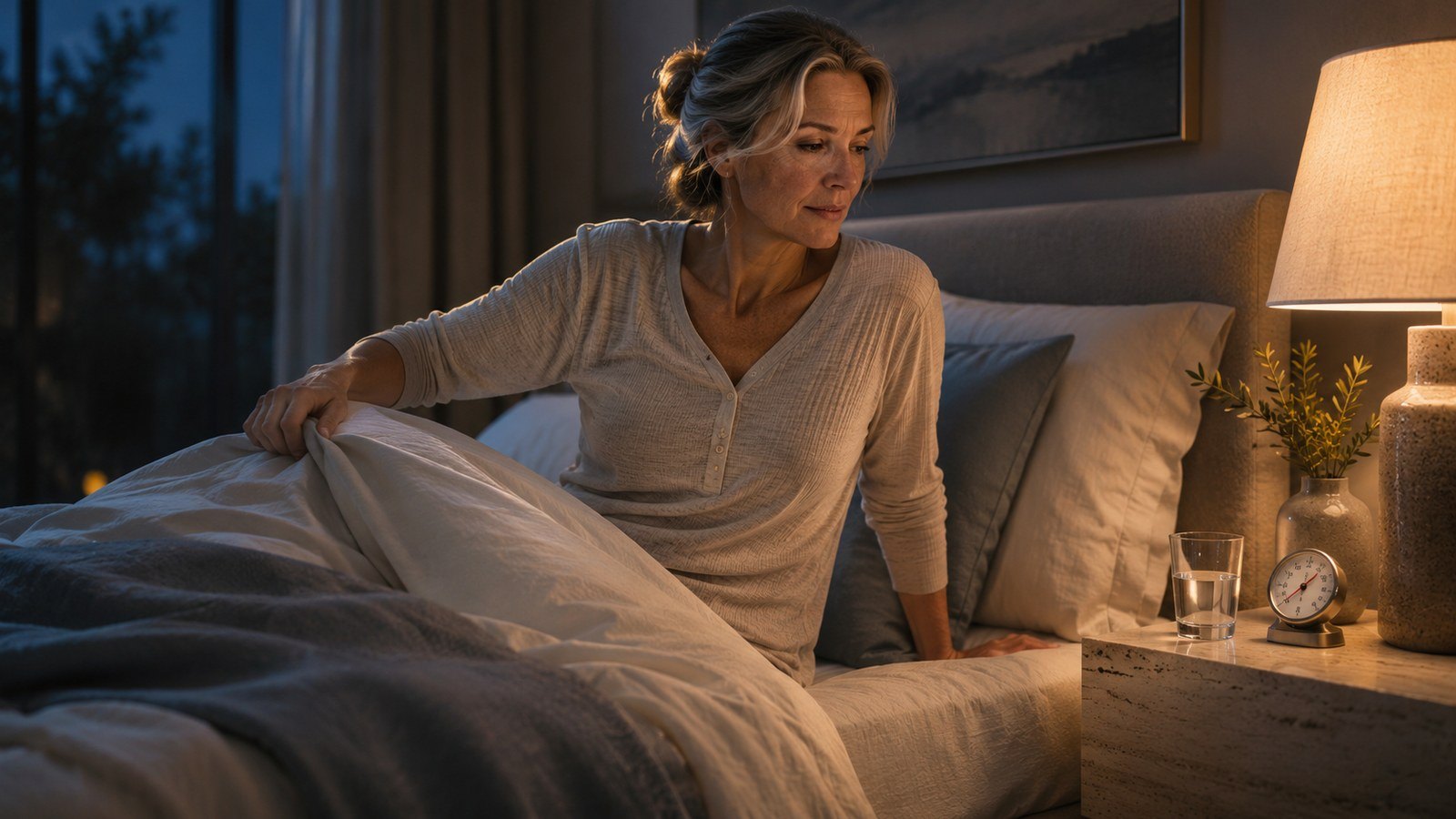
The link with weight and metabolism deserves attention in this phase. With menopause, body fat distribution tends to change, and that affects sleep posture and pressure on the contact points. A mattress that adapts the surface to your weight helps keep the spine aligned even when you turn often. The mattress for insomnia looks deeper at the link between the sleeping surface and sleep fragmentation.
Daytime habits that improve the night
Night-time rest is prepared during the day, and after 45 this rule matters even more. The first lever is light: getting natural light in the morning, even just for twenty minutes, keeps the internal clock aligned. In the evening, bright white light and screens delay melatonin and stretch the time it takes to fall asleep.
The second point is what you drink. Caffeine has a long life in the body: a six o'clock coffee can still act at midnight. Alcohol seems to help you fall asleep, but it shortens deep sleep and increases night-time flashes. Better to cut it in the evening, and to drink water in the middle of the day rather than just before bed, so the night is not broken by bathroom trips.
The third point is movement. A thirty-minute walk, or two or three strength sessions a week, improves sleep quality and counteracts the loss of muscle mass typical of this phase. Train in the middle of the day: intense activity in the three hours before bed raises body temperature and makes falling asleep harder.
Fourth point, the evening routine. No complicated ritual needed: three gestures repeated at the same time are enough. A lukewarm shower, ten minutes of reading and a dark room are an effective signal to the body. If sleep does not come after twenty minutes, get up, go to another room with dim light and return to bed when drowsiness arrives: lying awake in bed teaches the brain that the bed is a place to stay awake.
Habits matter more than single bad nights: one rough night does not ruin the week, while an irregular schedule does. The guide to sleep and stress covers how to break the loop between tension and waking.

Bedroom, temperature and bedding
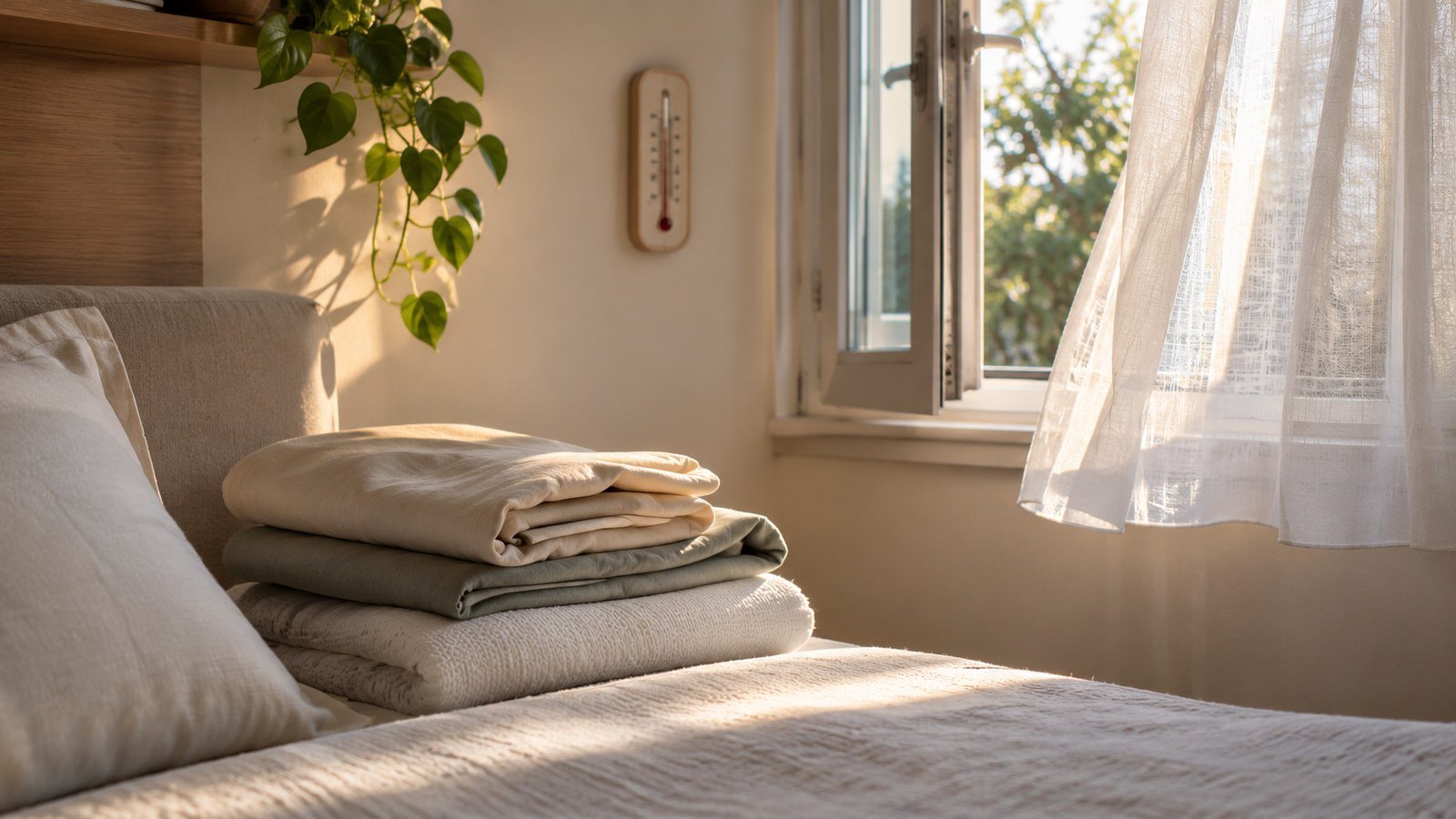
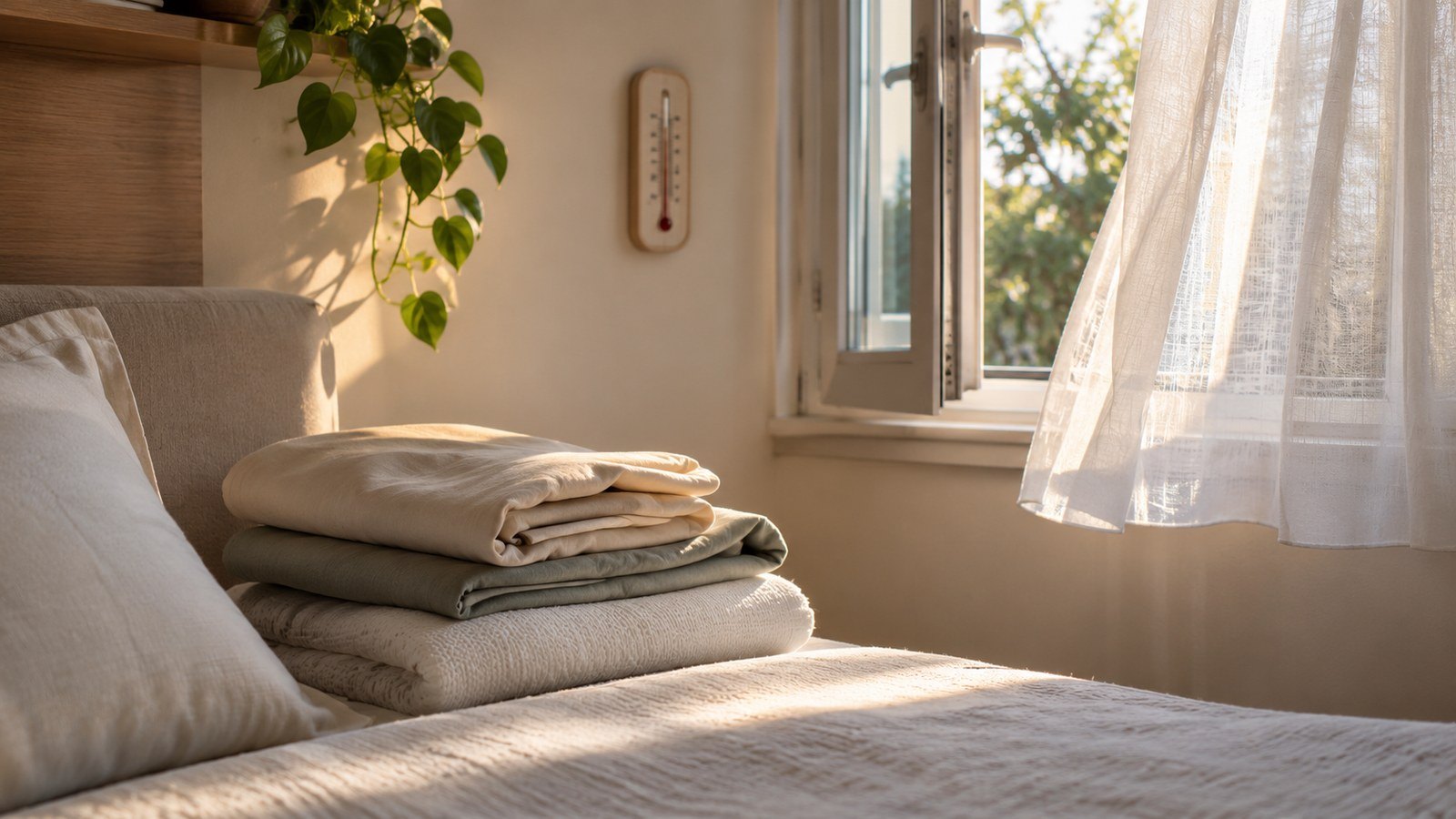
The bedroom is your first ally during hot flashes. The ideal sleeping temperature sits between 16 and 19 degrees: cooler than you expect, and above all stable. A wall thermometer costing a few euros is a better investment than any supplement, because it turns a vague feeling ("I slept badly") into a number you can act on.
Bedding follows the same logic. Thin, washable layers beat one heavy duvet: when the flash arrives you remove a layer and the night continues. Natural fabrics, such as cotton, manage moisture better than many synthetics. If night sweats are frequent, a washable mattress protector shields the mattress and refreshes in the washing machine without effort.
Air matters as much as temperature. A window left ajar, or a quick airing before bed, reduces the stuffy feeling that many flashes bring. Humidity needs control too: air that is too dry irritates, air that is too humid holds heat. The bedroom humidity guide explains how to measure and adjust the night-time microclimate.
Last, light. Real blackout, no light straight into the eyes, electronics out of the line of sight. Melatonin is released in darkness, and any white light in the middle of the night breaks deep sleep exactly when the flash has already done its damage.
The right mattress for this phase
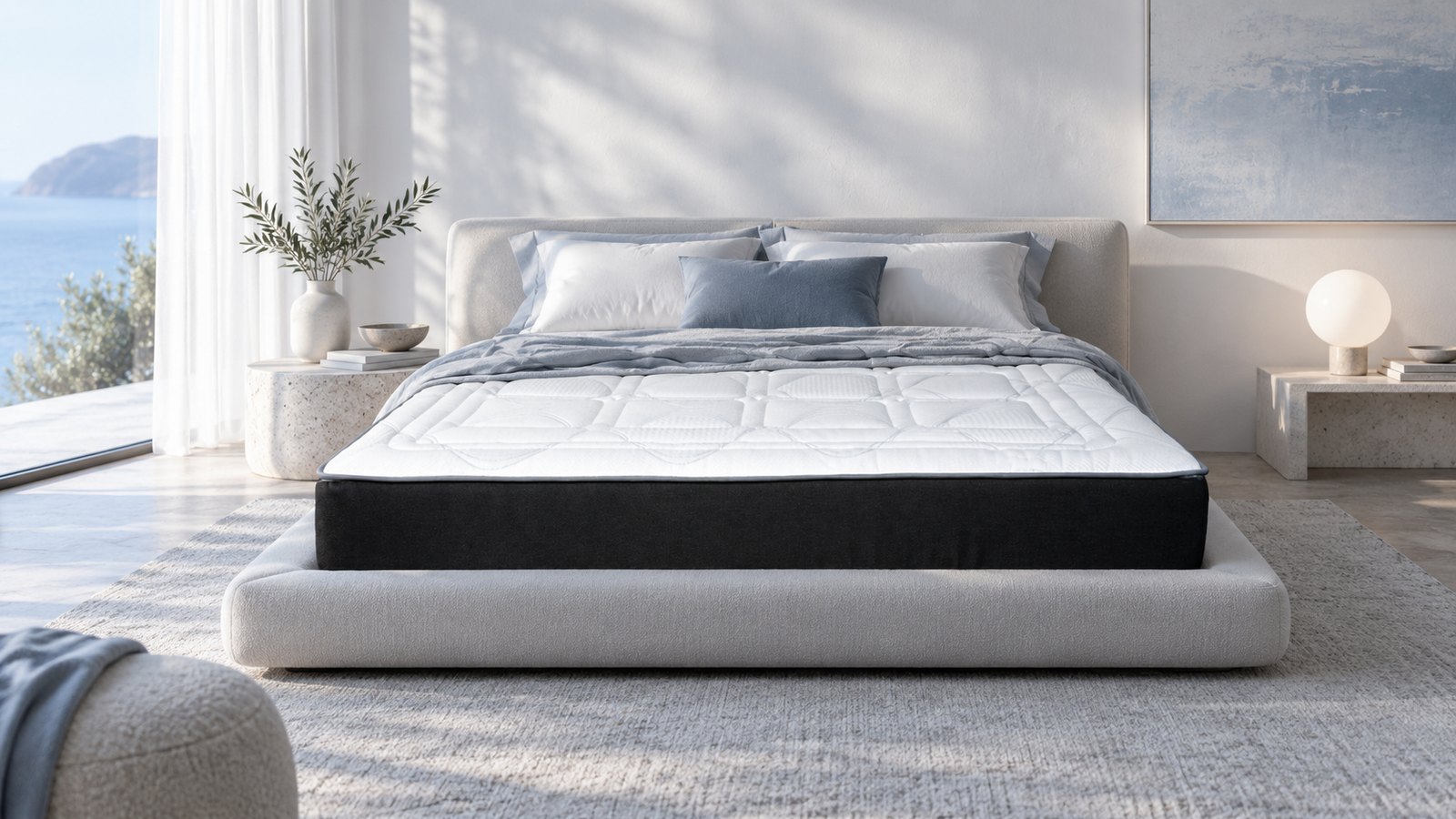
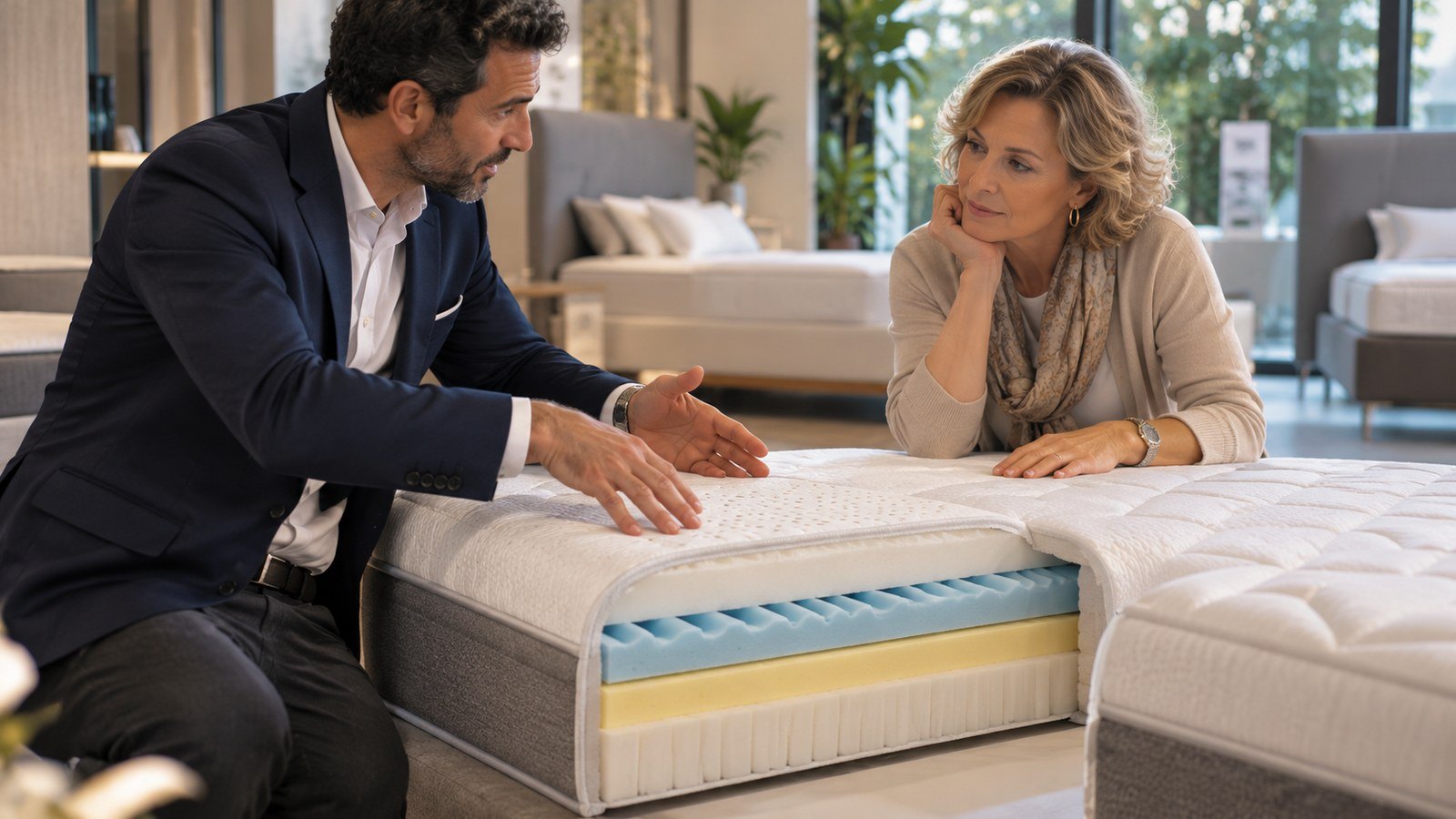
When you turn often, the mattress stops being a detail. Three features make the difference after menopause: breathability, because heat must be released rather than stored; differentiated support, because shoulders and hips carry different weight and need different holding power; surface stability, because one partner's movement must not wake the other.
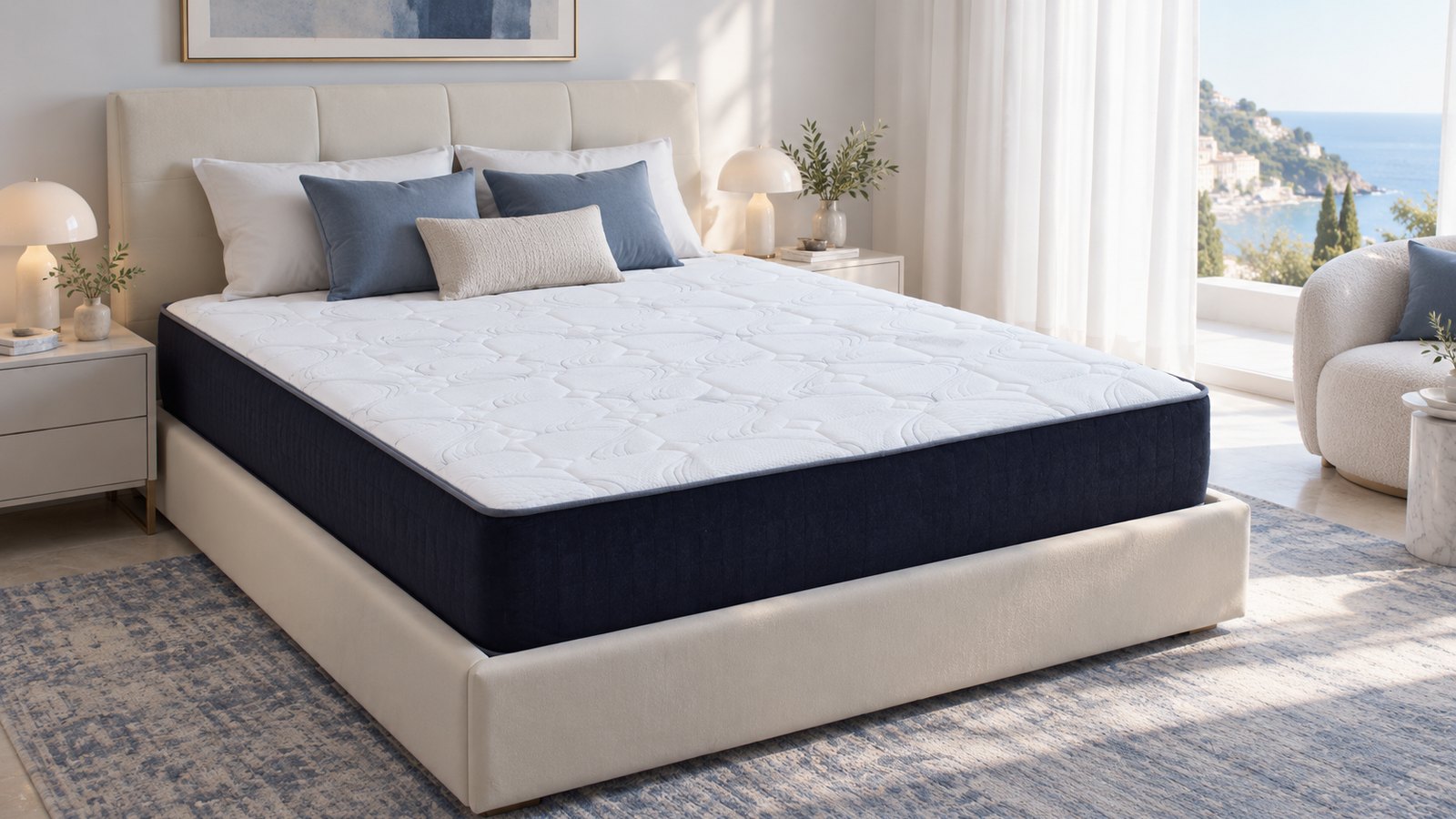
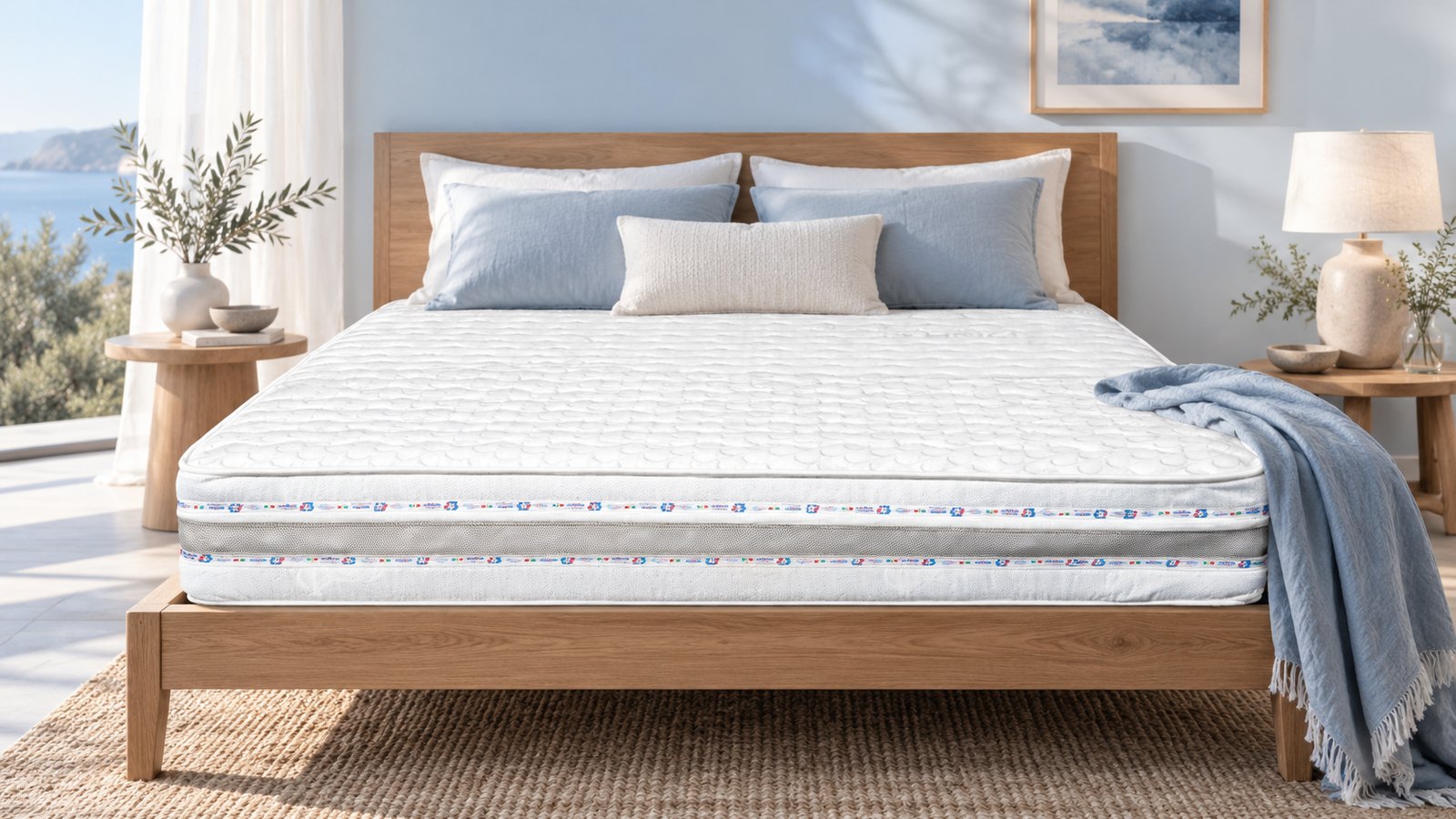
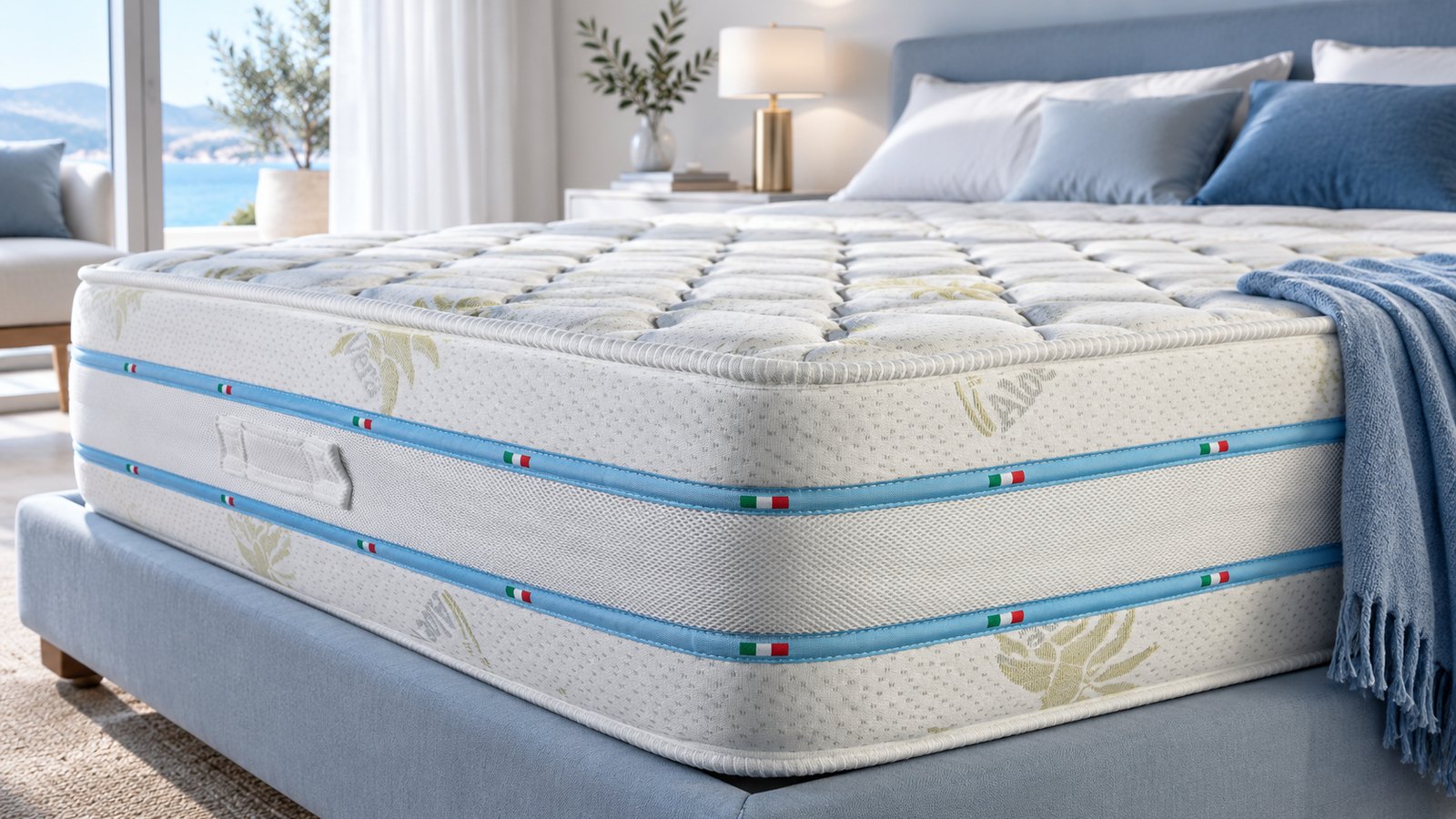
Quality memory foam answers these needs well, provided it sits on a high-density base that prevents the sinking feeling. This is the logic behind Luxury Relax mattresses: a layer of temperature-sensitive memory over a high-density Confortgel base, a 3D breathable perimeter band and a washable Aloe Vera cover. Height ranges from 24 to 30 centimetres depending on the model, and the build is entirely Made in Italy.
| Model | Price from | Main feature | Warranty and trial |
|---|---|---|---|
| Athena | 990 euros | Top of the range, layered comfort | 10 years, 10 trial nights |
| Platinum | 699 euros | Differentiated support for two | 10 years, 10 trial nights |
| Gold | 399 euros | Balance of freshness and support | 10 years, 10 trial nights |
| Elisir | 179 euros | Practical, breathable option | 10 years, 10 trial nights |
| Venere | 149 euros | Entry level, stable surface | 10 years, 10 trial nights |
The model choice depends on weight and sleep position. Side sleepers need more softness under the shoulders; back sleepers look for a more even surface; anyone over 90 kilograms should aim for density, not hardness. Every model in the range shares the 10-year warranty, the 10 trial nights with refund, and free delivery across Italy in 24-48 hours, islands included.
My verdict is clear: for sleep during menopause the most effective combination is a mattress with temperature-sensitive memory and a breathable band, and in this range the most convincing offer is Luxury Relax. The full Luxury Relax sheet lists the brand's real prices, sizes and services. If you want advice on the right build for your weight and sleep style, request the free consultation: the brand's experts answer without obligation and also prepare custom sizes.
Frequently asked questions about sleep and menopause (FAQ)
How long does the disturbed-sleep phase last in menopause? There is no single date for everyone. For many women the hardest nights fall in perimenopause, the two or three years around the last period, and then the picture settles. The habits built in this period stay useful afterwards.
Will the night sweats disappear completely? In most cases they become less frequent and less intense over time. Meanwhile you can work on the setting: a cooler room, breathable bedding and a mattress that releases heat greatly reduce how much the discomfort is felt.
Is it true that after menopause you need fewer hours of sleep? No. The need stays in the seven to nine hour range for most adults. What changes is the structure of the night, not the need for rest: sleeping fewer hours means sleep debt, not adaptation.
Is a firm or a soft mattress better during menopause? Neither one in absolute terms. You need a medium-feel surface with differentiated support, one that welcomes the shoulders without letting the hips sink. Temperature-sensitive memory over a high-density base fits best, because it follows the body without holding heat.
Does a mattress protector help with night sweats? Yes, in two ways: it shields the mattress from moisture and can be washed often. An Aloe Vera protector, like the one in the Luxury Relax range, adds a fresh, hygienic surface that renews in a few hours.
Which Luxury Relax mattress suits this phase best? Athena and Platinum are the most complete choice for those who want freshness and support together, while Gold remains the best balance of quality and price. With the 10 trial nights you can check the choice at home: if it does not satisfy, the refund is part of the service.
How long before habits start to make a difference? New habits pay off in two or three weeks if repeated every evening. A mattress is a different story: the 10 trial nights exist precisely because the body needs several nights to adjust to a new surface before giving an honest verdict.
Should the pillow change too? The pillow works together with the mattress: if the mattress welcomes the shoulders better, a lower pillow often keeps the neck aligned. A memory foam pillow, such as the Fiocco Memory in the Luxury Relax range, holds its position through night-time movement and pairs well with the whole collection.
Can a topper improve an older mattress? Yes, when the mattress is still sound but the surface feels too warm or too firm. A memory foam topper from 149 euros adds a fresh, adaptive layer and extends the life of the bed. If the base sags, though, the topper only hides the problem: better to change the mattress.
Is it worth seeing a specialist about menopause and sleep? If the nights stay broken for months despite good habits, a medical check-up is the right step. Bring your sleep diary: two weeks of notes on bedtimes, wake-ups and hot flashes give a clear picture and speed up the conversation.
What is the best temperature for the bedroom at night? Between 16 and 19 degrees, kept stable. In summer a fan that moves air without cooling it works; in winter a thin blanket beats a thick duvet. The body during menopause reacts badly to sudden changes, so constancy matters more than the exact number.
Ideal Mattress Configurator in 3 Clicks
Answer 3 questions and see which Luxury Relax model fits your sleep best.
Step 1 of 3
Images from this guide


How long does the disturbed-sleep phase last in menopause?
There is no single date for everyone. For many women the hardest nights fall in perimenopause, the two or three years around the last period, and then the picture settles. The habits built in this period stay useful afterwards.
Will the night sweats disappear completely?
In most cases they become less frequent and less intense over time. Meanwhile you can work on the setting: a cooler room, breathable bedding and a mattress that releases heat greatly reduce how much the discomfort is felt.
Is it true that after menopause you need fewer hours of sleep?
No. The need stays in the seven to nine hour range for most adults. What changes is the structure of the night, not the need for rest: sleeping fewer hours means sleep debt, not adaptation.
Is a firm or a soft mattress better during menopause?
Neither one in absolute terms. You need a medium-feel surface with differentiated support, one that welcomes the shoulders without letting the hips sink. Temperature-sensitive memory over a high-density base fits best, because it follows the body without holding heat.
Does a mattress protector help with night sweats?
Yes, in two ways: it shields the mattress from moisture and can be washed often. An Aloe Vera protector, like the one in the Luxury Relax range, adds a fresh, hygienic surface that renews in a few hours.
Which Luxury Relax mattress suits this phase best?
Athena and Platinum are the most complete choice for those who want freshness and support together, while Gold remains the best balance of quality and price. With the 10 trial nights you can check the choice at home: if it does not satisfy, the refund is part of the service.
How long before habits start to make a difference?
New habits pay off in two or three weeks if repeated every evening. A mattress is a different story: the 10 trial nights exist precisely because the body needs several nights to adjust to a new surface before giving an honest verdict.
Should the pillow change too?
The pillow works together with the mattress: if the mattress welcomes the shoulders better, a lower pillow often keeps the neck aligned. A memory foam pillow, such as the Fiocco Memory in the Luxury Relax range, holds its position through night-time movement and pairs well with the whole collection.
Can a topper improve an older mattress?
Yes, when the mattress is still sound but the surface feels too warm or too firm. A memory foam topper from 149 euros adds a fresh, adaptive layer and extends the life of the bed. If the base sags, though, the topper only hides the problem: better to change the mattress.
Is it worth seeing a specialist about menopause and sleep?
If the nights stay broken for months despite good habits, a medical check-up is the right step. Bring your sleep diary: two weeks of notes on bedtimes, wake-ups and hot flashes give a clear picture and speed up the conversation.
What is the best temperature for the bedroom at night?
Between 16 and 19 degrees, kept stable. In summer a fan that moves air without cooling it works; in winter a thin blanket beats a thick duvet. The body during menopause reacts badly to sudden changes, so constancy matters more than the exact number.
Request your free consultation
Fill in the form: a Luxury Relax expert will get back to you with the proposal that suits you best.
What Luxury Relax owners say
On my dad's advice, already a customer, I went to Luxury Relax to buy a mattress. Very comfortable and ergonomic products.
Quality products, helpful and knowledgeable staff. Highly recommended to anyone looking for a real mattress, not a brand name.
I got rid of the back pain that had followed me for years. The right mattress changes your days.
Come visit us
Luxury Relax Materassi
Via San Rocco, 42 — 20831 Seregno (Monza e della Brianza), Italia0362 222407 · info@luxuryrelax.it · WhatsApp 339 4797213
Open in Google Maps