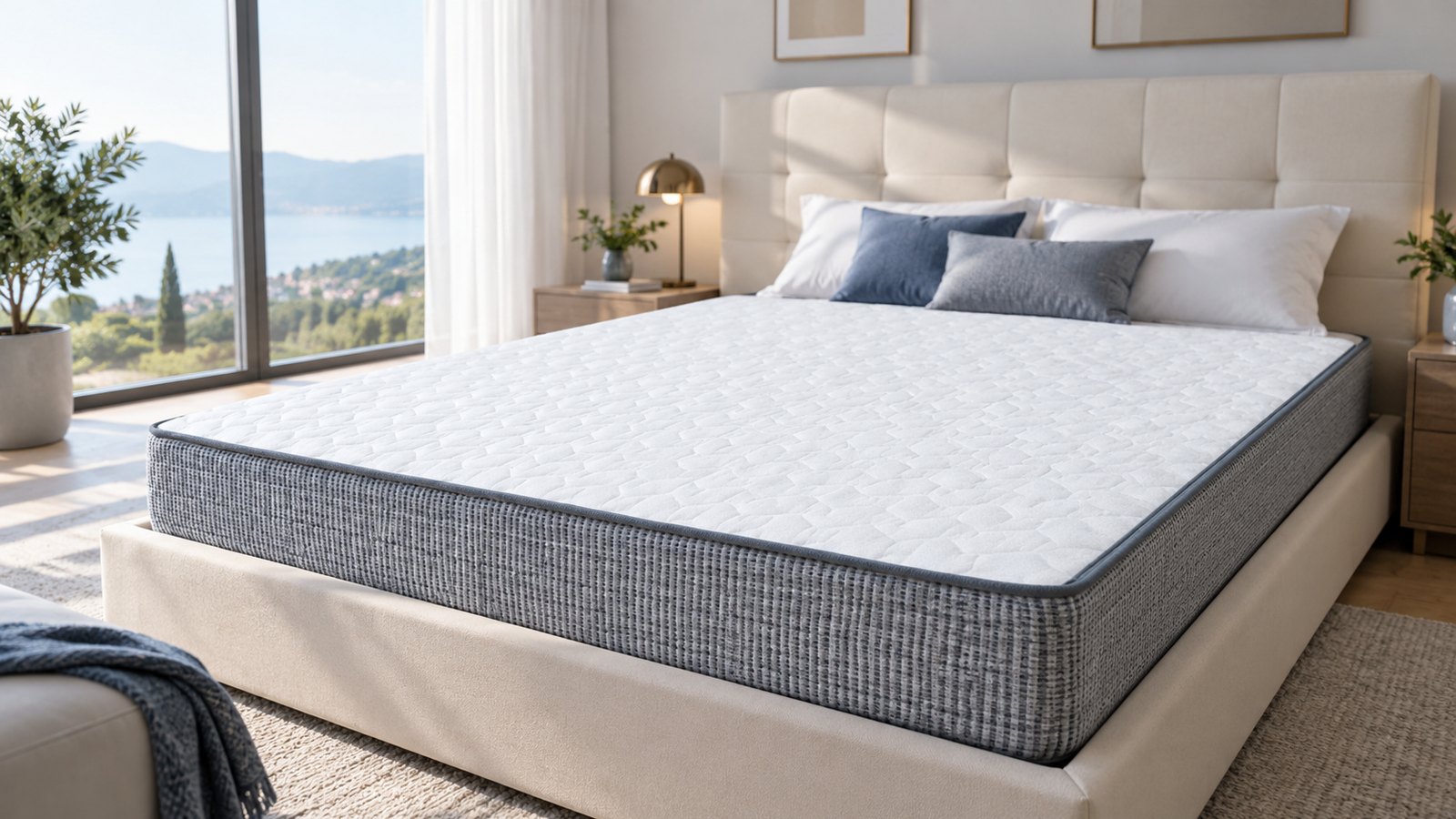
Pregnancy and Sleep: How to Sleep Well Through the Nine Months
Key facts at a glance
- What to know right away: Pregnancy and sleep: why nights break down across 9 months, the best positions, mattress choice and evening habits. Read the full guide now.
- Trial, warranty and delivery: 10 trial nights · 10-year warranty · Free delivery 24/48h
- Who it is for: Why sleep changes during pregnancy
- What this guide covers: Why sleep changes during pregnancy · Sleeping positions, trimester by trimester · The right mattress during pregnancy
- How to book or get help: Get your free consultation · 0362 222407 · info@luxuryrelax.it
It is three in the morning and the alarm has not gone off yet. You have been awake for twenty minutes with no clear reason. Your body has shifted its balance, and sleep has grown thin.
During pregnancy this scene repeats itself often. It peaks in the second and third trimesters, when the bump grows and every position asks for an adjustment. Nights stop being one long stretch and become a series of short blocks.
Sleep in pregnancy is not a luxury to recover when you can. It is the window in which the body repairs tissue, regulates hormones and stores energy for the next day. One bad night is recoverable. Weeks of poor sleep show up in your mood, your focus and your physical stamina.
In this guide we look at why sleep changes across the nine months, which positions genuinely help, how to choose a mattress, and which evening habits hold up over time. If you want a closer look at materials built for rest, the Luxury Relax review covers models with differentiated support and temperature-sensitive memory foam. We start with the first trimester.

Why sleep changes during pregnancy
The first culprit is progesterone. It is the hormone that sustains pregnancy, and in the early months it works like a sedative. That is why the first weeks bring heavy daytime drowsiness paired with nights that feel anything but restful. The body is reorganising, and sleep adapts to match.
Mechanical wake-ups come next. From week six the bladder works harder, and the night stops. Two or three wake-ups are the norm in the first trimester, and they stay frequent until the end. Later the bump dictates the position and turns the bed into an exercise in balance.
Then there is temperature. During pregnancy the body runs a little warmer, and the hot feeling sharpens at night. A room sitting above 22 degrees breaks deep sleep even without obvious wake-ups. Our guide to sleep quality explains how to measure rest beyond the simple number of hours.
The last factor is mental. Questions about labour, about the changing body and about life after the birth switch on the moment your head touches the pillow. That is not weakness. It is the brain processing a huge change during a quiet hour. The closing part of this guide gives practical guidance on this front too.
Once you name the four drivers, each one gets its own fix. A hormonal wake-up needs time and a calm return to bed. A full bladder needs a different drinking pattern. Sorting the causes early keeps a rough patch from turning into months of fatigue.
Deep sleep does most of the physical repair, and that is the phase that suffers first when the room runs warm or the night keeps stopping. Fragmented sleep can still be restorative when the blocks contain the deeper stages. The practical goal is not a perfect night but a stable rhythm of falling asleep and returning to sleep.
Sleeping positions, trimester by trimester
In the first trimester almost everything is still possible. The best position is the one that lets you sleep with your eyes closed until morning. The bump carries no weight yet, and the body turns on its own without thinking. This is the moment to build the habit you will need later: sleeping on your side.
From the second trimester the left side becomes the most comfortable position for many women. It keeps circulation free, takes pressure off the vena cava and leaves room for the belly. A pillow between the knees lines up the pelvis and the spine and eases the ache in the hips.
| Trimester | Most comfortable position | Practical tip |
|---|---|---|
| First | Your usual position, often on your back | Thin pillow under the head |
| Second | Left side | Pillow between the knees |
| Third | Left side with support | Belly pillow and side bolster |
In the third trimester the kit grows. A long pillow or a side bolster holds the belly and the back at the same time. You do not need to buy everything: two ordinary pillows, one between the knees and one under the belly, do the same job. What matters is that the support stays in place when you move.
One detail takes the pressure off: rolling onto your back at night does not cause harm. The body signals on its own when a position stops working and shifts accordingly. Start from a correct position and stop auditing every movement. Our guide to sleep positions lists the best supports for each stage.
Sleeping as a pair changes the maths. If your partner takes the middle of the bed or moves a lot, size becomes a practical decision. A 160x190 or 160x200 double gives room to turn without collision, and Luxury Relax's custom sizes solve beds that sit outside the standard. A mattress that isolates movement, built with independent layers, stops every turn from travelling to the other half of the bed.
Pillow choice is simpler than it looks. You need enough height to keep the neck straight and enough softness to let the shoulder sink in when you lie on your side. A firm pillow that lifts the head pushes the neck out of line, and that tension reaches the lower back by morning.
If you share the bed and the wake-ups disturb both of you, agree on a simple routine. Whoever wakes keeps the lights low and moves slowly, and both of you treat the wake-up as a normal event rather than a failure. The calm around a broken night matters as much as the position you sleep in.
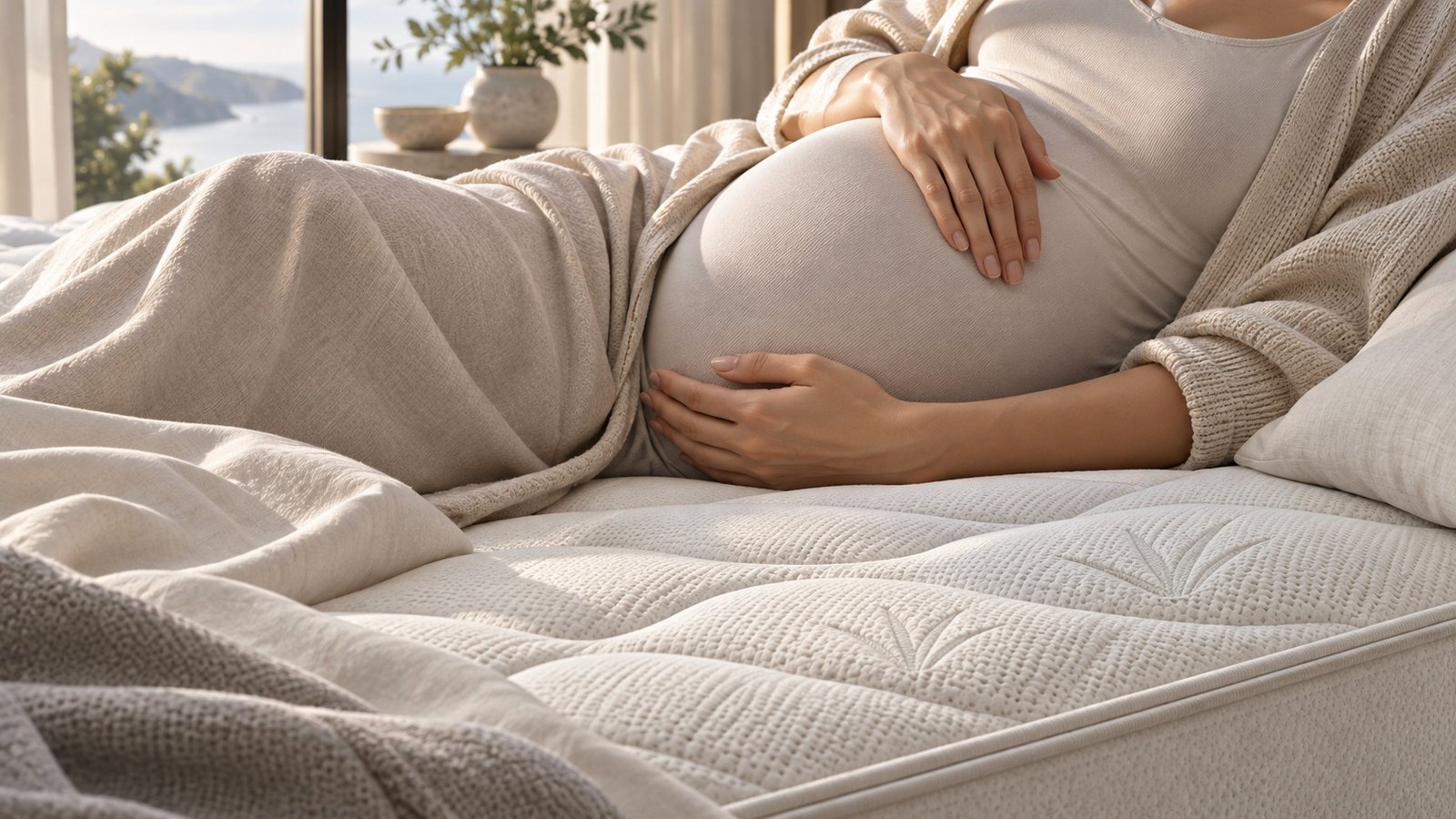
The right mattress during pregnancy
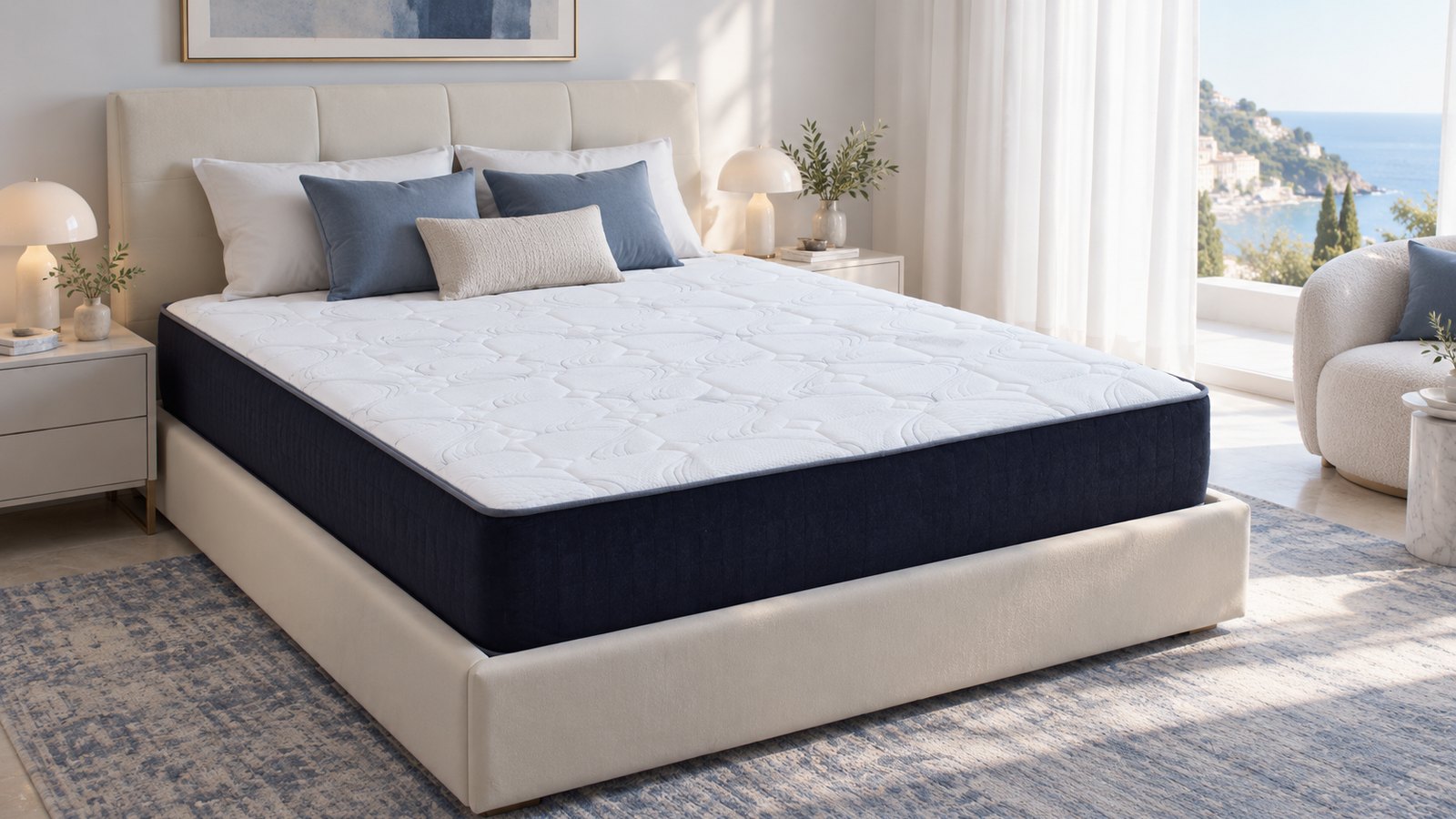
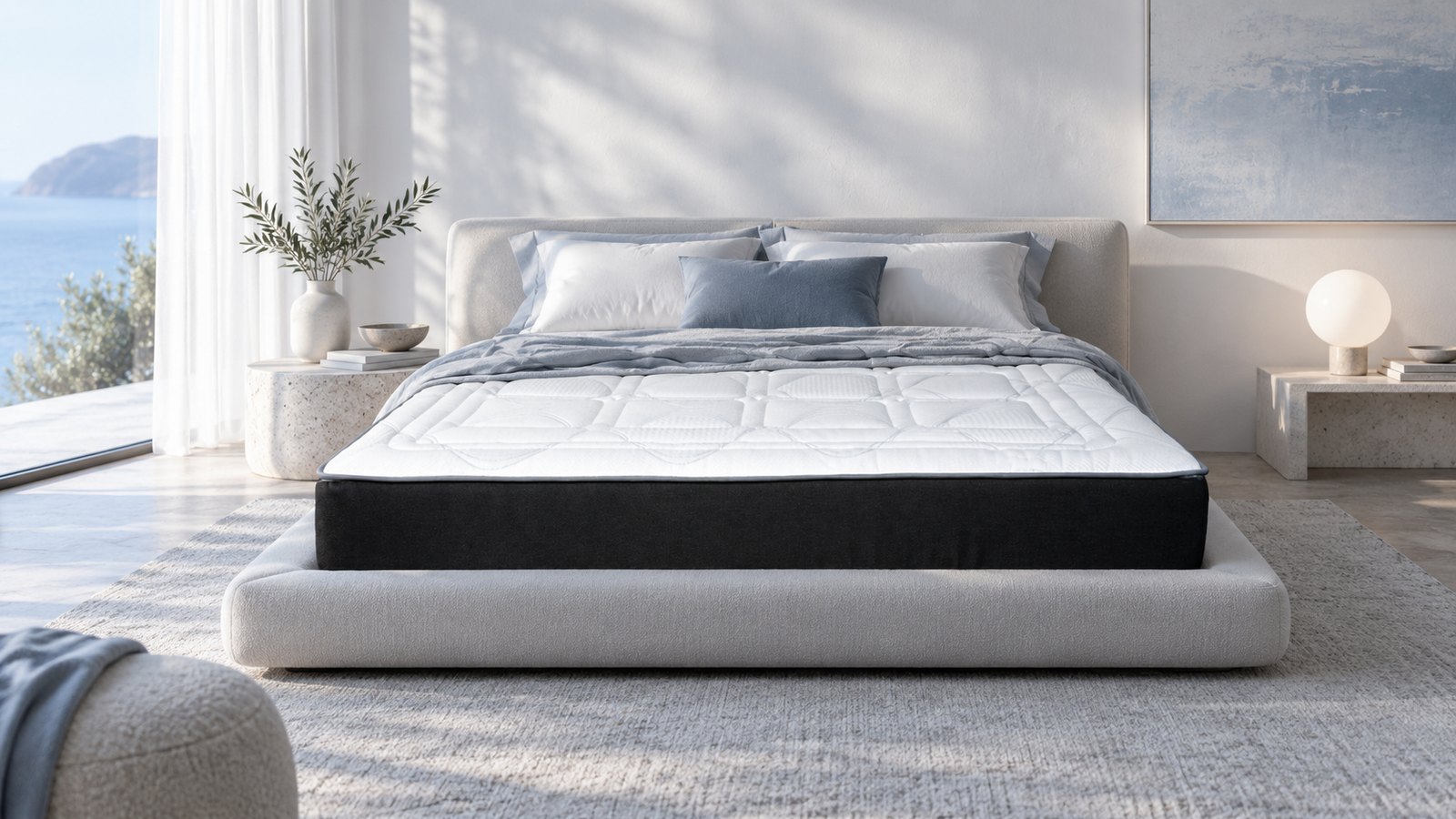
Over nine months body weight changes and the load point moves towards the pelvis. A mattress that is too soft sinks in the middle and leaves the spine curved. One that is too firm pushes back against the shoulders and hips. The answer is differentiated support: zones with different levels of hold across the shoulders, pelvis and legs, as in the Luxury Relax mattresses.
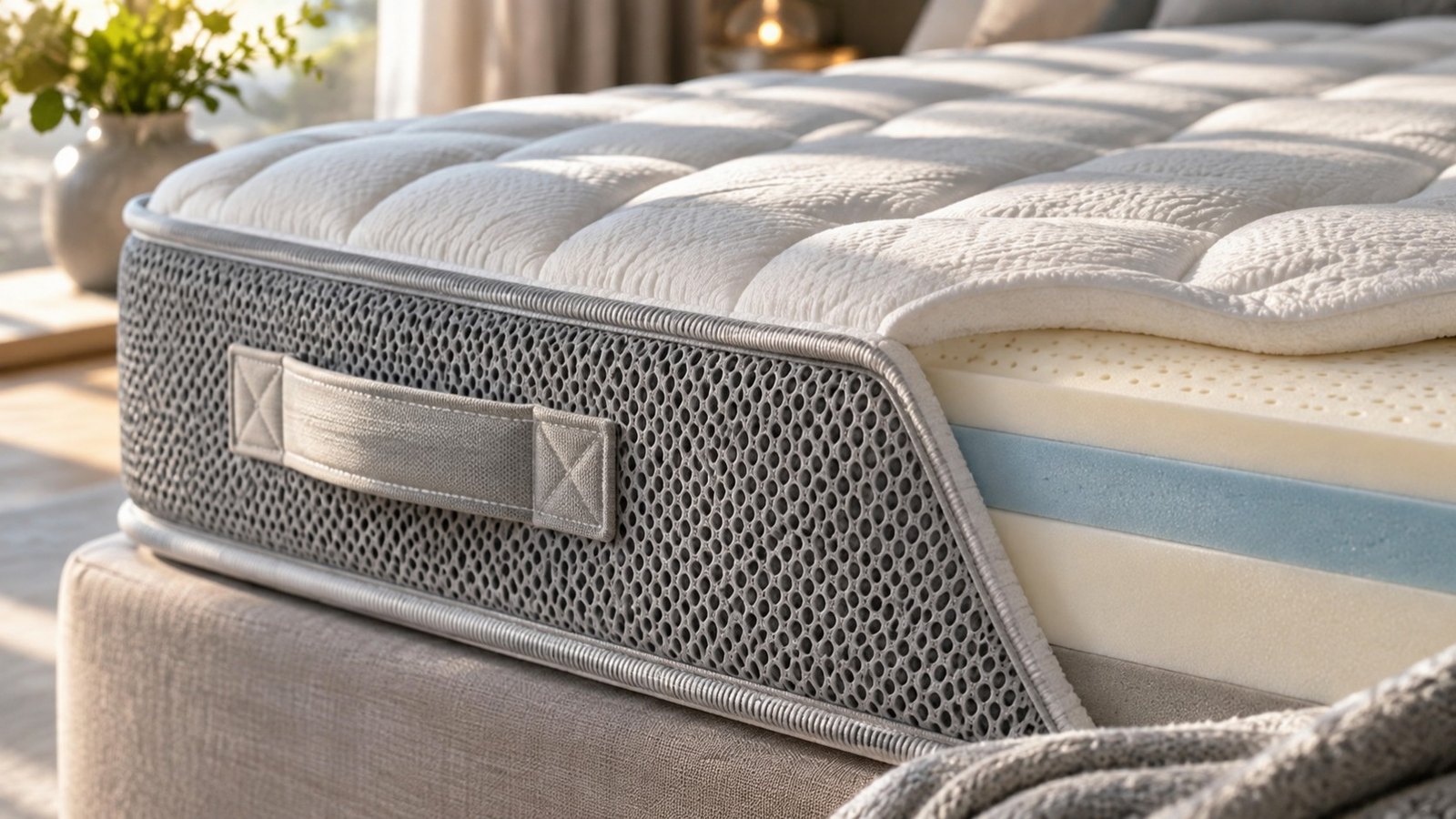
Temperature-sensitive memory foam helps in a concrete way. It warms on contact with the body, follows your curves and spreads pressure over a wider surface. That reduces the load points on the hips and shoulders. For a woman sleeping on her side, it is the difference between waking with a sore hip and passing the night without a thought.
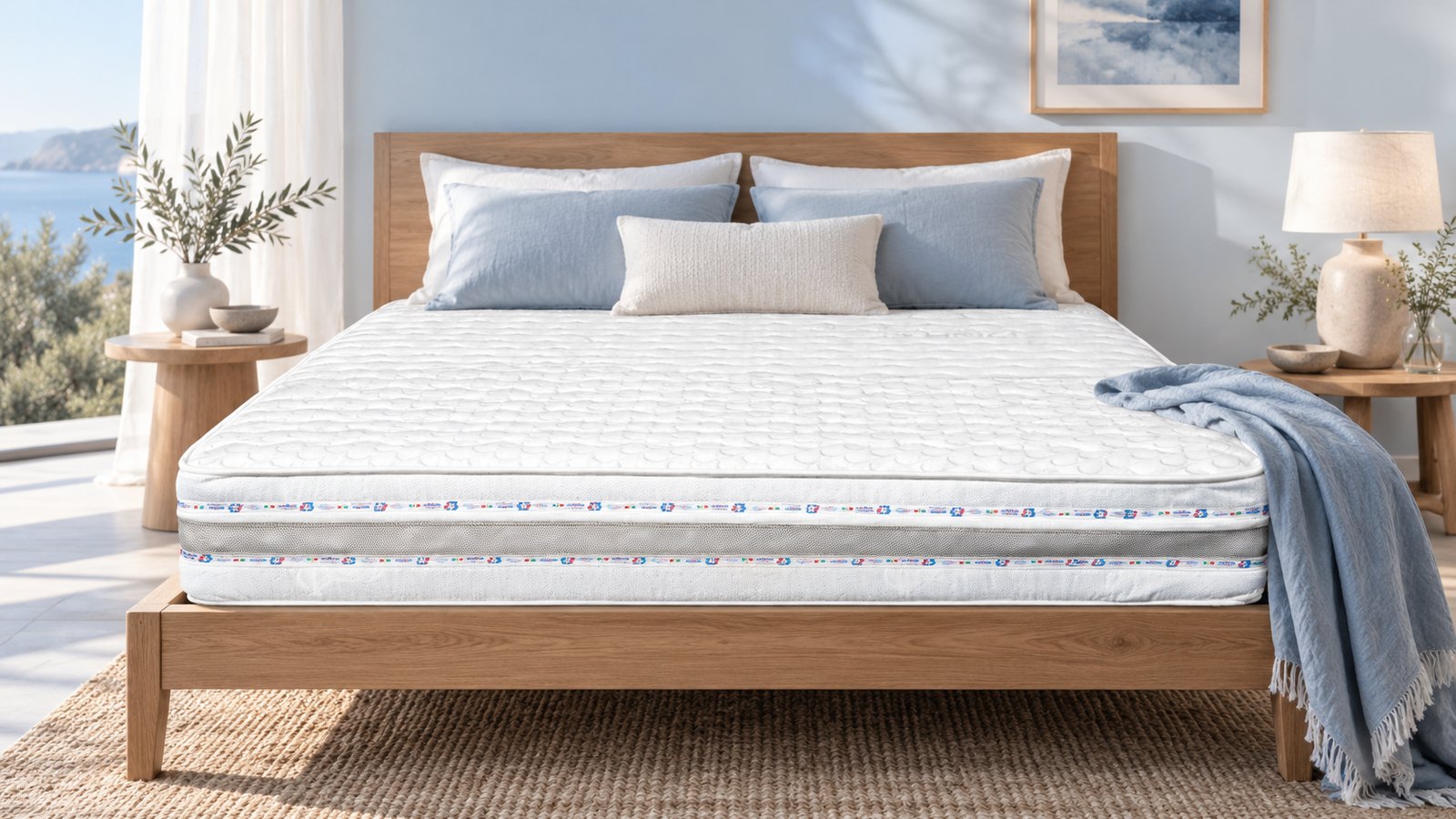
Layering is what makes the comfort hold as the body changes. A resilient base keeps the spine aligned, and the softer upper layers absorb the points where the body presses hardest. That combination is why one mattress can serve the growing weight of the third trimester and the lighter weeks after the birth.
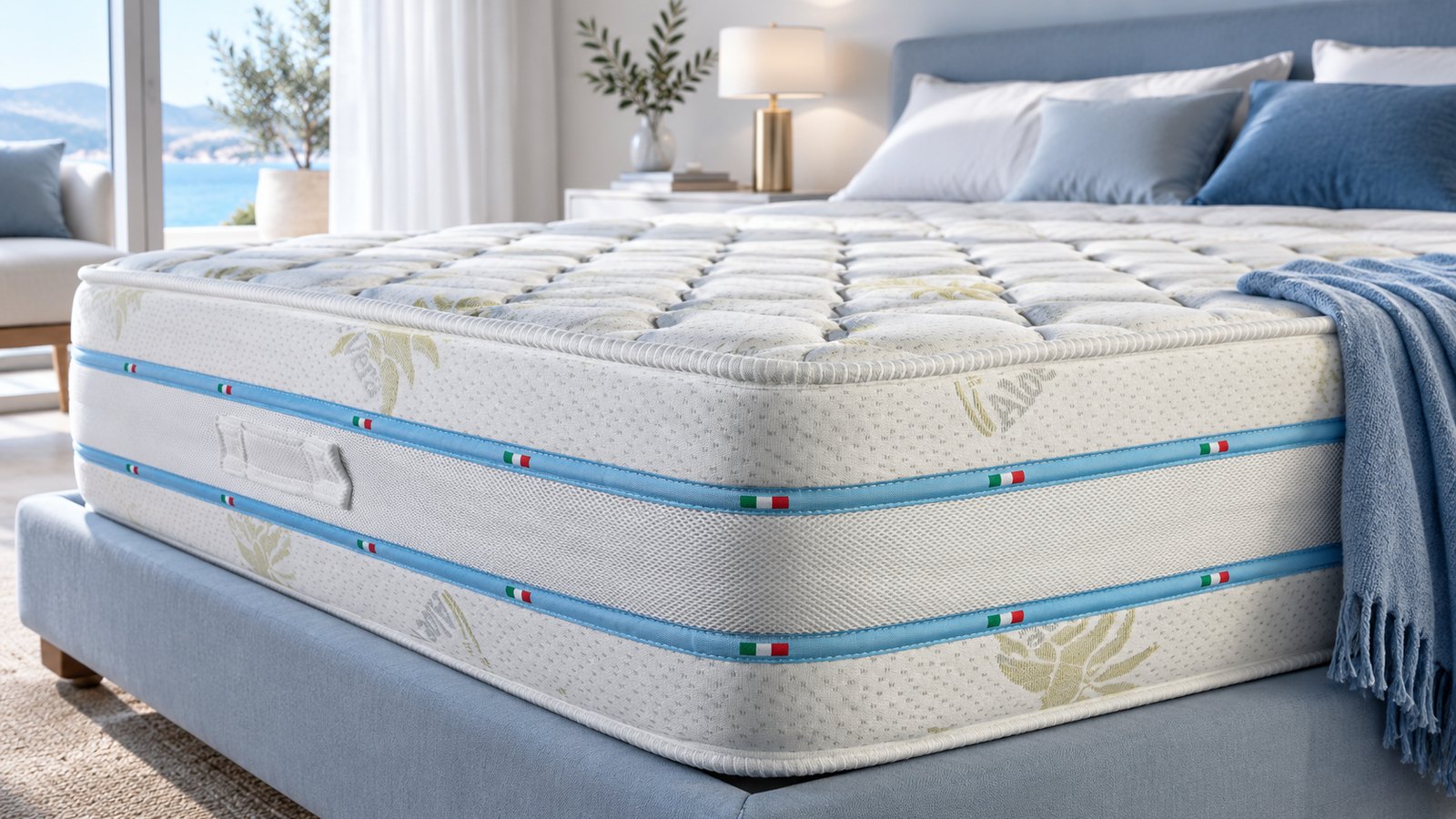
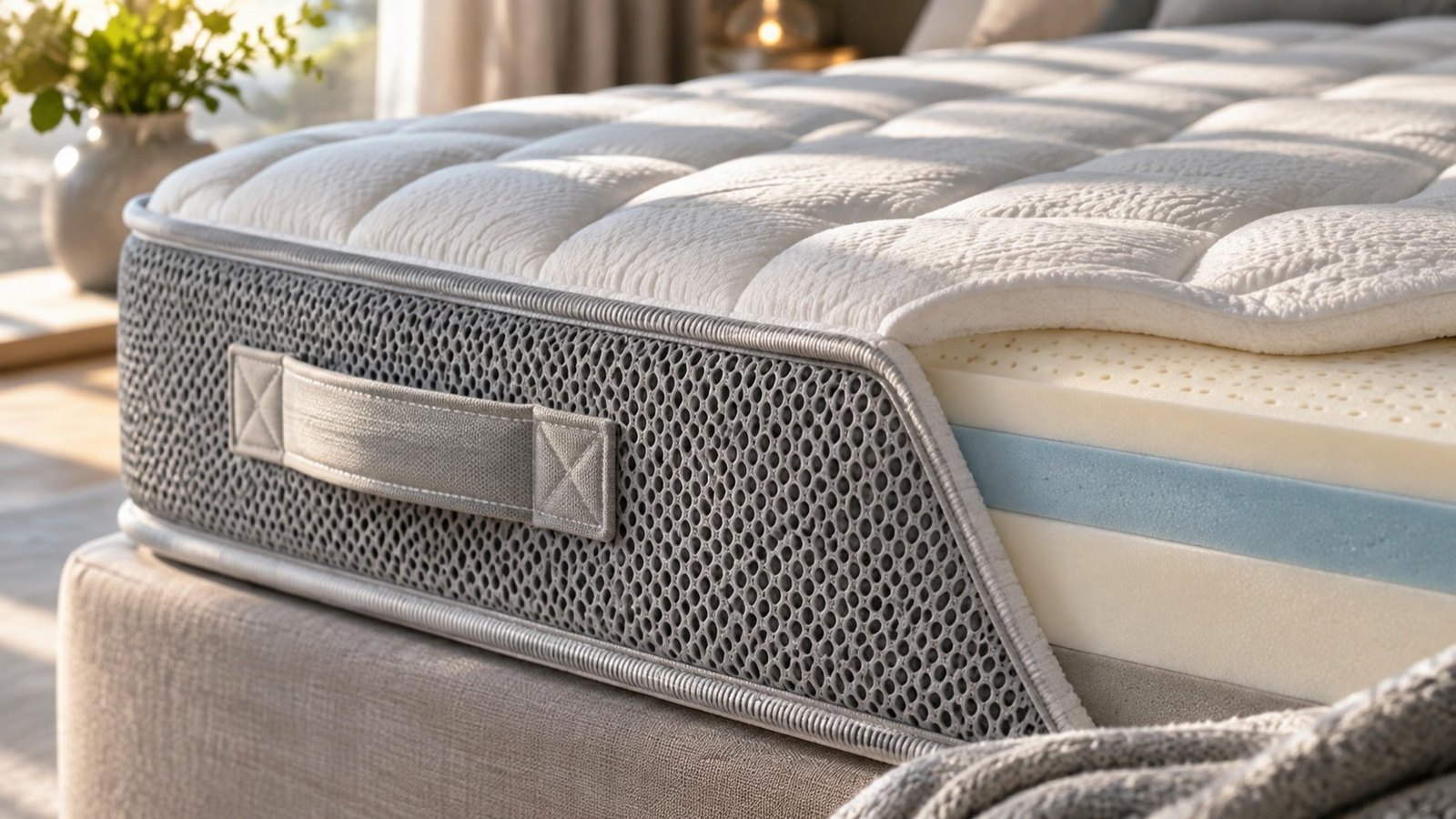
Other details matter more than they seem. The Aloe Vera cover is machine washable at 30 degrees, and its anti-mite, hypoallergenic structure is useful when skin turns more sensitive. The breathable 3D perimeter band helps clear night-time heat. The four perimeter handles make it simple to turn the mattress or change the sheets, an operation that is far from trivial with a bump.
A cover you can strip and wash also keeps the sleeping surface fresh through a season of night sweats. Ventilation along the sides lets the heat that builds in the core of the mattress escape instead of pooling under the body. Both features work quietly, and you notice them most on the warm nights.
The model you pick depends on budget, and real prices make the choice easier. Here is the comparison between the three most requested models.
| Model | Positioning | From | List price |
|---|---|---|---|
| Materasso Athena | Top of the range | €990 | €1.950 |
| Materasso Platinum | High tier | €699 | €1.999 |
| Materasso Gold | Best value | €399 | €749 |
During pregnancy the most prudent choice is the model with the most layered comfort. Materasso Athena pairs a high-density Confortgel base with temperature-sensitive memory foam and stands between 24 and 30 centimetres high. If you want a middle ground, Materasso Platinum offers the same support scheme at a lower price.
Materasso Gold is the value option in the range. It suits anyone who wants a solid mattress at the entry price without giving up the Aloe Vera cover and the breathable 3D band that run through the collection. The choice is a matter of how much layering you want under the weight that keeps changing.
Luxury Relax's practical edge is the trial: ten nights at home, satisfaction guaranteed or refunded, and ten years of warranty on the mattress. At a stage when the body changes fast, testing the bed in real conditions is worth more than any showroom test. Delivery is free across Italy in 24 or 48 hours, islands included, with payment on delivery or by card.
For the back pain that comes with many months of pregnancy, our guide to the best mattress for back pain completes the picture. Back support and sleep position work together, and the guide covers the details that decide how the two fit.
The evening routine that holds for nine months
First lever: bedroom temperature. Between 18 and 20 degrees deep sleep lasts longer. Above 22 degrees the body struggles to reach that phase at all. An open window for ten minutes before bed is enough to refresh the air in the room.
Second lever: dinner time. Eating two or three hours before sleep reduces heartburn, one of the most frequent causes of a sleepless night in the third trimester. A light meal built on protein and complex carbohydrates avoids both the heavy feeling and the late-night hunger. Our guide to sleep and nutrition lists what to eat in the evening.
Third lever: light. In the last hour of the day go for warm, low light and keep screens away from the bed. Blue light slows melatonin, the hormone that prepares you for sleep. A printed book or a playlist you have already set up works better than an app you open in bed.
Fourth lever: daytime movement. A thirty minute walk during the day, with your gynaecologist's approval, eases leg tension and makes falling asleep faster. The middle hours are the best slot. Vigorous evening activity raises body temperature and pushes sleep back.
There is one item to fix once and then stop thinking about: the bed. Sheets you can change without effort, a light blanket you can add or remove during the night, and a bedside lamp with a switch within reach cut every wake-up down to seconds. Prepare the bed before you lie down, not in the dark.
Last lever, the most underrated: hydration. Drink enough during the day and ease off in the two hours before sleep. That lowers wake-ups for the bathroom without draining the body of fluids.
Consistency does more work than any single trick. A steady bedtime, a steady wake time and the same short sequence before sleep teach the body when to release and when to hold on. The routine only has to be repeatable, not elaborate.
Keep the sequence short enough to survive a tired evening. A warm shower, a stretch of a few minutes and the low light of the bedroom are enough on most nights. On hard days you can drop steps and keep only the timing, which is the part that carries the effect.

Night wake-ups: what to do when sleep breaks
The first step is to change the goal. During pregnancy you do not need eight hours in a row. You need quality hours, even when they arrive in blocks. Counting the minutes lost at each wake-up raises anxiety and stretches the time it takes to fall back asleep.
The practical rule is twenty minutes. If sleep does not return within twenty minutes of waking, get up: warm low light, a few pages of a book, a glass of water. Lying in bed frustrated teaches the body that the bed is the place for being awake. Going back to bed at the first sign of sleepiness does the opposite.
Keep the room dark and quiet while you wait it out. A dim lamp beats a ceiling light, and the phone stays face down on the table. The aim is to pass the wake-up without loading the mind with the day ahead.
A daytime nap is a friend, as long as it stays short. Twenty or thirty minutes before three in the afternoon restore energy without entering deep sleep, the phase that makes evening sleep harder. Past the hour, a nap becomes a debt you pay at night.
Even the choice of pyjamas counts more than it seems. Natural fabrics such as cotton or bamboo breathe and do not trap heat, while synthetic fabrics switch on the sweaty feeling that wakes you. A couple of centimetres in the fit decide whether you turn freely or the fabric snags and pulls you awake.
Two words on evening anxiety. Writing down the questions crowding your mind on a sheet of paper before bed is a simple technique: the brain lets go of what it knows is stored in a safe place. Ten minutes of slow breathing, four seconds in and six out, finish the job.
One last note on method: this guide is practical and does not replace your gynaecologist's advice. If sleep stays broken for weeks, if sharp pain appears, or if rest never arrives, your doctor is the right person to ask. Bring the details of your nights with you, because the pattern is what guides the answer.

FAQ about pregnancy and sleep
How many hours should you sleep during pregnancy? Seven or eight hours remain the reference for most women, but in pregnancy quality counts more than quantity. Sleep in blocks, with two or three short wake-ups, still restores you well when each block contains deep sleep. Fixing a steady bedtime works better than chasing the perfect number of hours.
Is it normal to wake several times a night? Yes, especially in the first and third trimesters. Wake-ups for the bathroom are frequent from the sixth week, and the weight of the bump reduces how long you can stay in one position. They become a problem only when falling back asleep fails for more than half an hour every night.
Which position is best in the third trimester? The left side is the most comfortable position for many women because it leaves room for the belly and does not compress circulation. A pillow between the knees and one under the abdomen line up the spine. Rolling onto your back at night needs no correction: the body moves on its own when the position stops working.
When is it worth changing mattress during pregnancy? When the mattress sinks in the middle or your back takes the load every morning. There is no need to wait for the end of pregnancy: ten trial nights let you check comfort in real conditions, and the mattress stays useful after the birth. A model with differentiated support and temperature-sensitive memory adapts its hold to a weight that keeps changing.
Is memory foam suitable during pregnancy? Yes, when it is good quality. Temperature-sensitive memory foam follows the curves and spreads pressure across the hips and shoulders, reducing the load points. Its open structure and the breathable 3D band keep the hot feeling under control. In Luxury Relax models the memory foam sits on a high-density Confortgel base that holds its support over time.
How do you manage daytime sleepiness? With short recoveries and clear rules. A nap of twenty or thirty minutes before three in the afternoon restores energy without disturbing the night. Walking for thirty minutes a day and getting natural light in the morning set the sleep-wake rhythm. If sleepiness becomes disabling, it is worth talking to your gynaecologist.
For advice on the mattress that suits this stage, the Luxury Relax team answers every day: request the free consultation and get guidance on models, custom sizes and delivery times.
Ideal Mattress Configurator in 3 Clicks
Answer 3 questions and see which Luxury Relax model fits your sleep best.
Step 1 of 3
Images from this guide


How many hours should you sleep during pregnancy?
Seven or eight hours remain the reference for most women, but in pregnancy quality counts more than quantity. Sleep in blocks, with two or three short wake-ups, still restores you well when each block contains deep sleep. Fixing a steady bedtime works better than chasing the perfect number of hours.
Is it normal to wake several times a night?
Yes, especially in the first and third trimesters. Wake-ups for the bathroom are frequent from the sixth week, and the weight of the bump reduces how long you can stay in one position. They become a problem only when falling back asleep fails for more than half an hour every night.
Which position is best in the third trimester?
The left side is the most comfortable position for many women because it leaves room for the belly and does not compress circulation. A pillow between the knees and one under the abdomen line up the spine. Rolling onto your back at night needs no correction: the body moves on its own when the position stops working.
When is it worth changing mattress during pregnancy?
When the mattress sinks in the middle or your back takes the load every morning. There is no need to wait for the end of pregnancy: ten trial nights let you check comfort in real conditions, and the mattress stays useful after the birth. A model with differentiated support and temperature-sensitive memory adapts its hold to a weight that keeps changing.
Is memory foam suitable during pregnancy?
Yes, when it is good quality. Temperature-sensitive memory foam follows the curves and spreads pressure across the hips and shoulders, reducing the load points. Its open structure and the breathable 3D band keep the hot feeling under control. In Luxury Relax models the memory foam sits on a high-density Confortgel base that holds its support over time.
How do you manage daytime sleepiness?
With short recoveries and clear rules. A nap of twenty or thirty minutes before three in the afternoon restores energy without disturbing the night. Walking for thirty minutes a day and getting natural light in the morning set the sleep-wake rhythm. If sleepiness becomes disabling, it is worth talking to your gynaecologist. For advice on the mattress that suits this stage, the Luxury Relax team answers every day: [request the free consultation](key:contatti) and get guidance on models, custom sizes and delivery times.
Request your free consultation
Fill in the form: a Luxury Relax expert will get back to you with the proposal that suits you best.
What Luxury Relax owners say
On my dad's advice, already a customer, I went to Luxury Relax to buy a mattress. Very comfortable and ergonomic products.
Quality products, helpful and knowledgeable staff. Highly recommended to anyone looking for a real mattress, not a brand name.
I got rid of the back pain that had followed me for years. The right mattress changes your days.
Come visit us
Luxury Relax Materassi
Via San Rocco, 42 — 20831 Seregno (Monza e della Brianza), Italia0362 222407 · info@luxuryrelax.it · WhatsApp 339 4797213
Open in Google Maps