Sleep and age: how rest changes from childhood to old age
Sleep does not stay the same for a lifetime. At five years old children sleep deeply and wake up when the room is already full of light; at forty, three wake-ups are enough to empty the night; after sixty rest grows lighter and morning arrives early, ready or not. These are different shapes of the same need, and the timing, the length and the surface you sleep on all change with them.
Anyone living with children, ageing parents or both knows it well: in the same house sleep different bodies, on different hours and with different needs. It pays to think room by room and age by age, without hunting for one solution that fits everyone.
This guide follows rest across the ages: childhood, adulthood and later life, with the numbers that most widely used guidance puts in black and white and the habits that actually work. No miracle recipes: steady hours, a cool and dark room, and a mattress that suits the body you have at that moment.
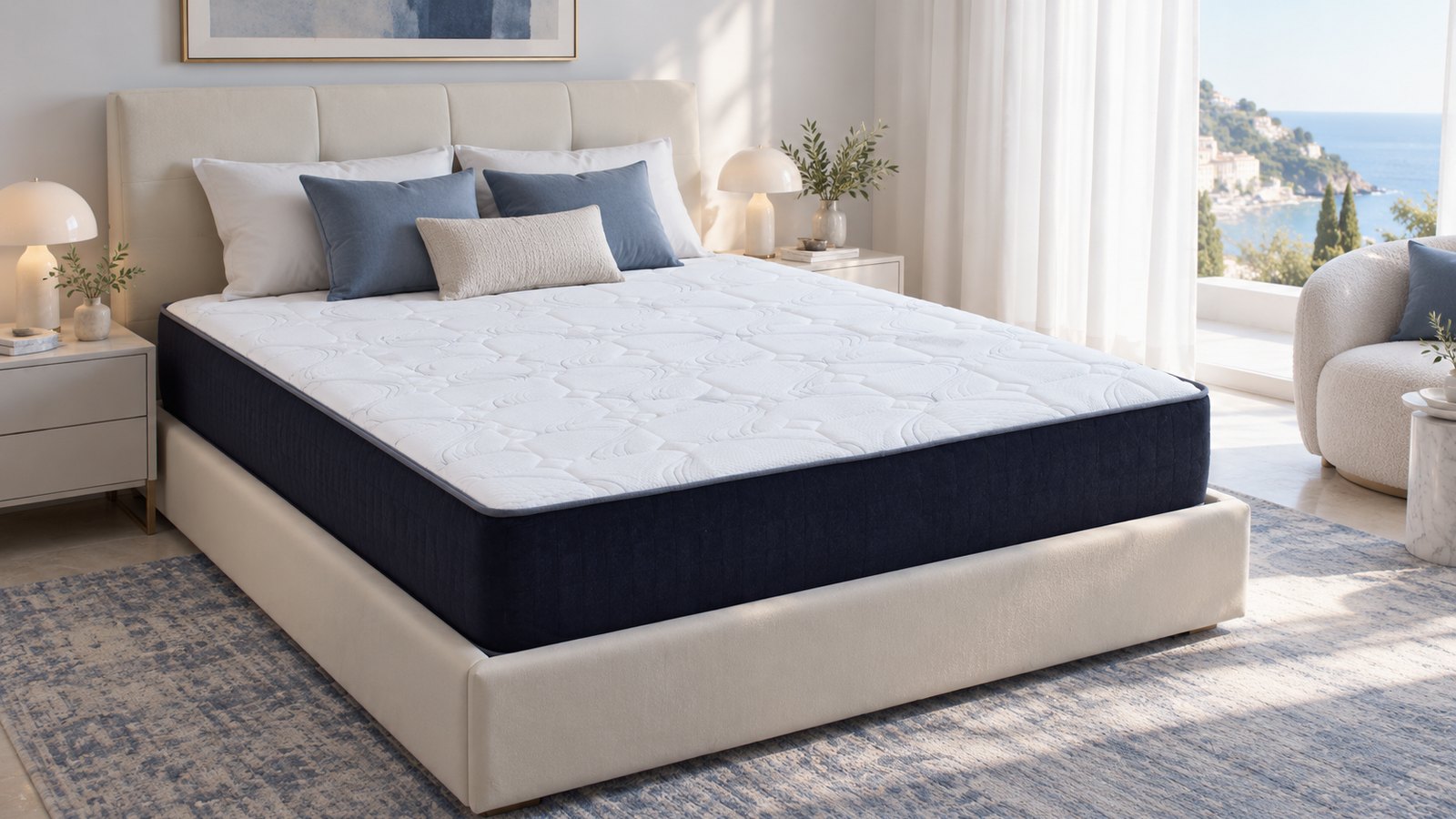
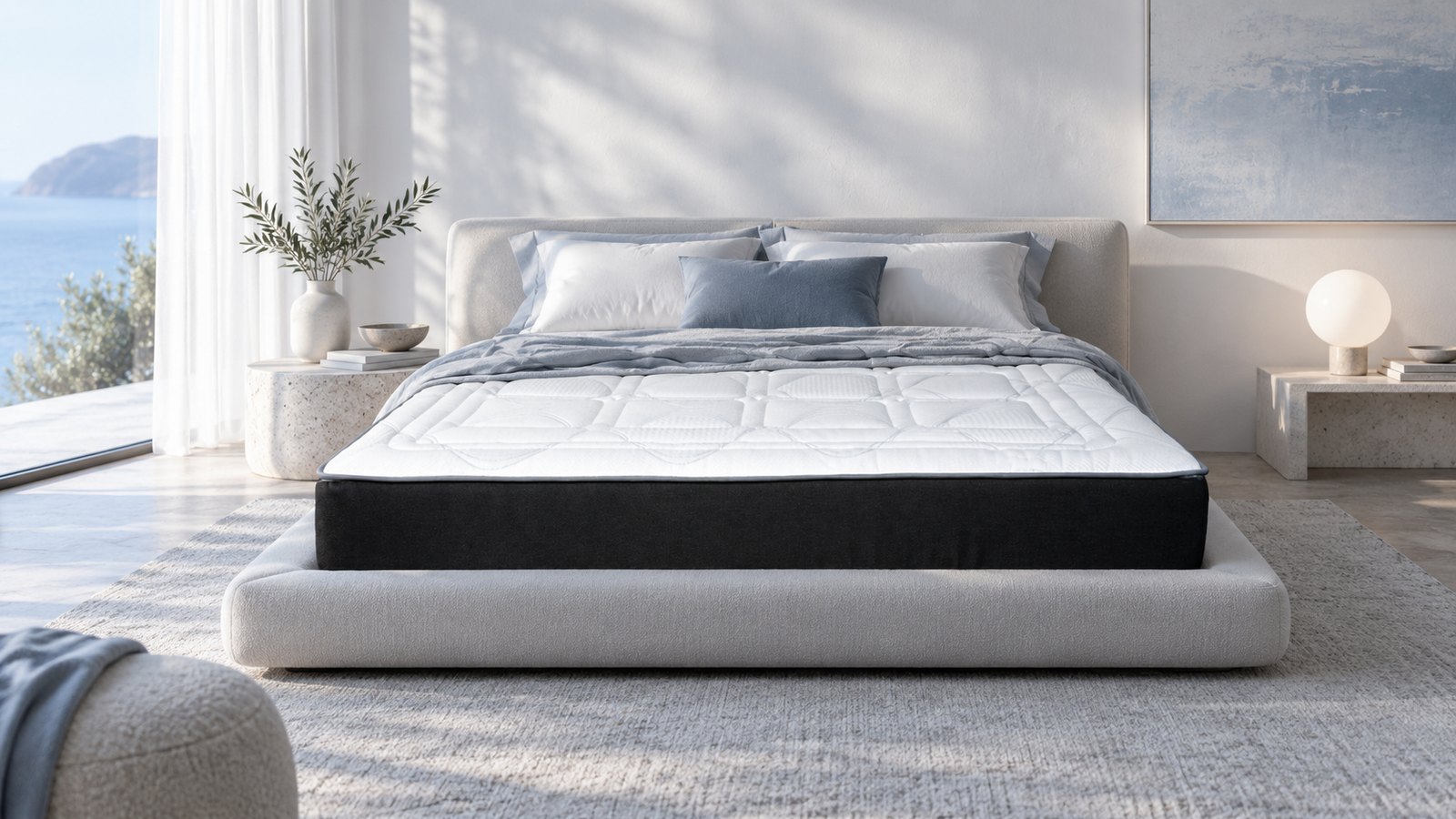
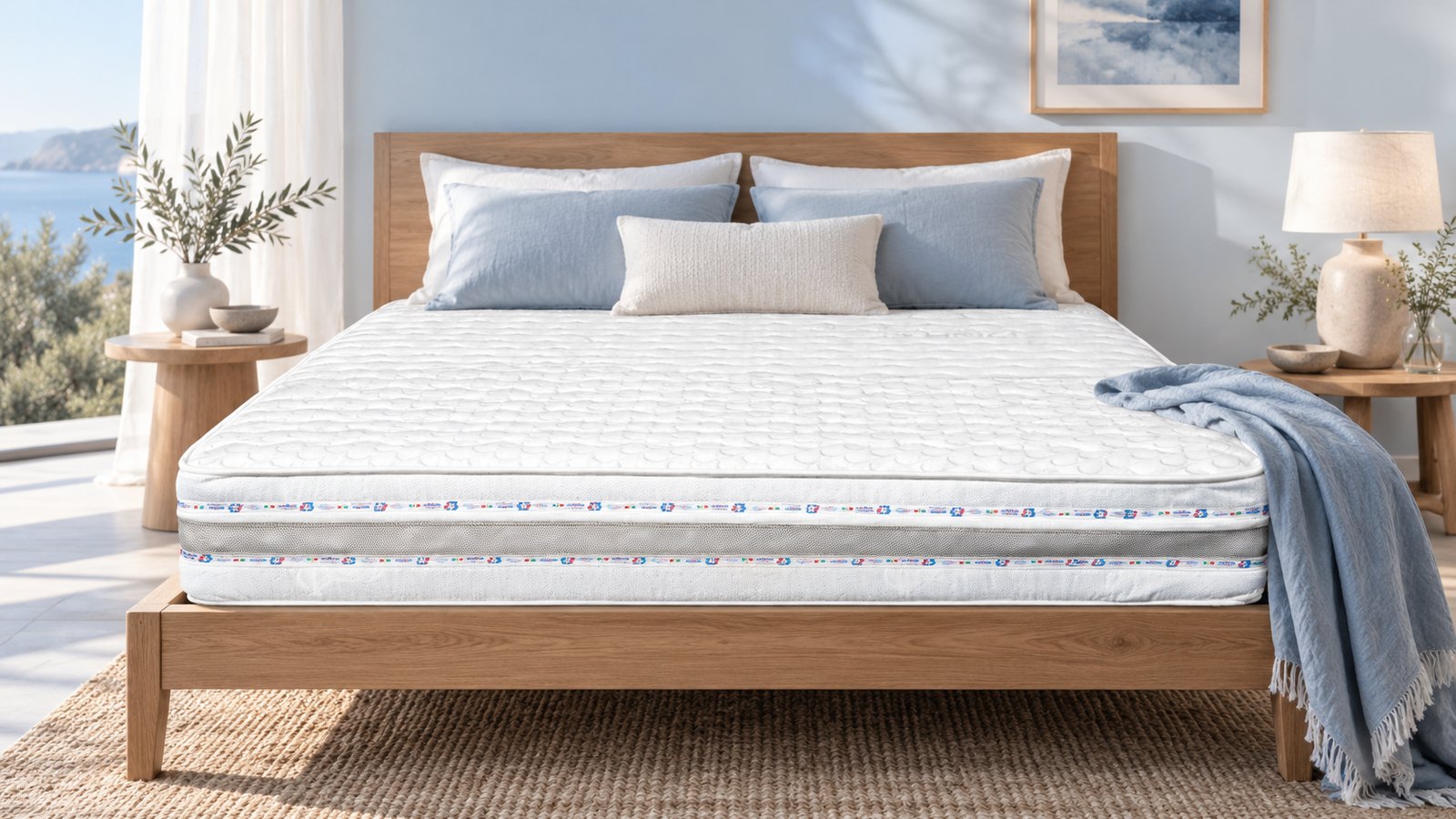
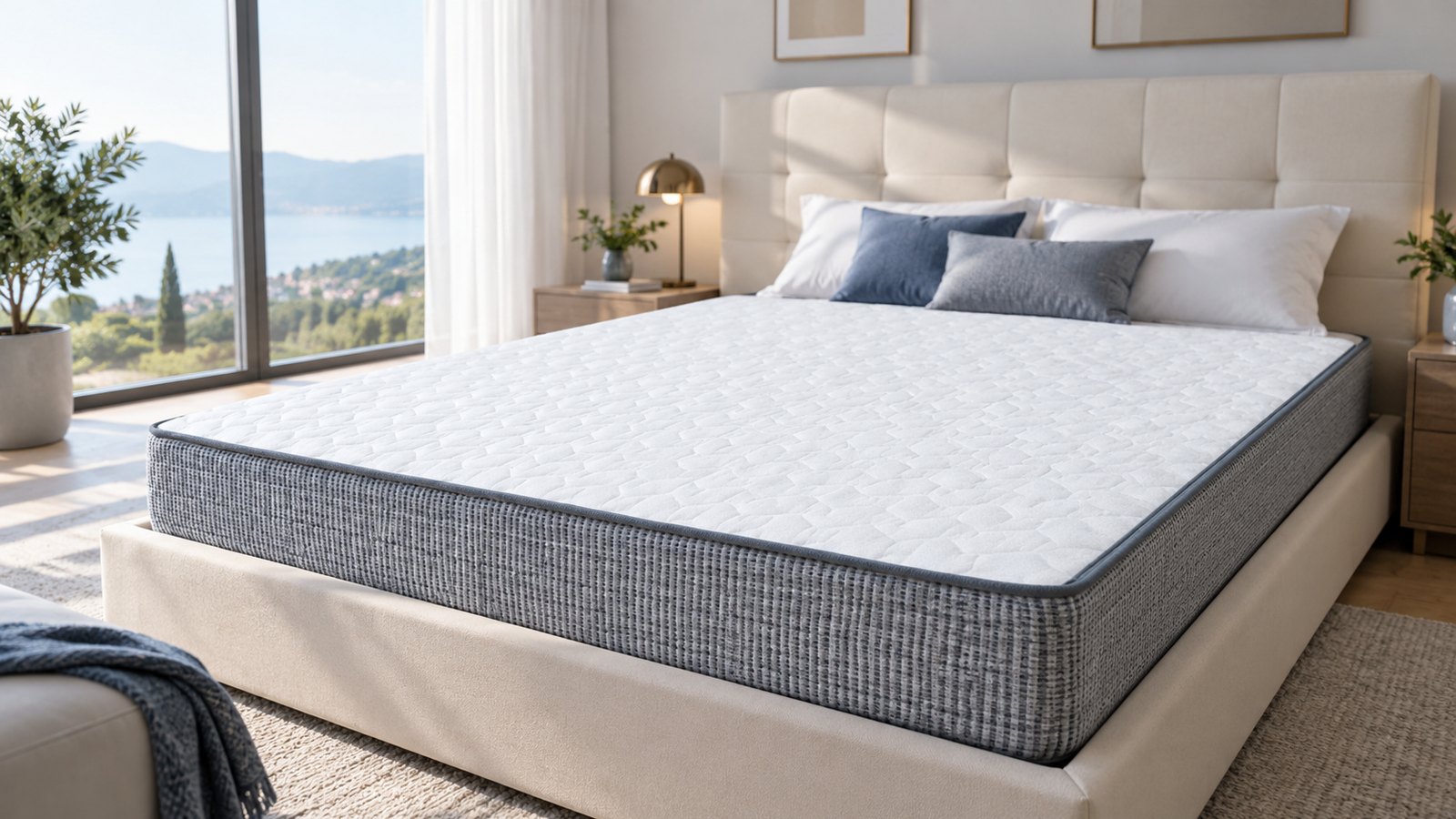
What you need to sleep well changes too. A growing child needs a firm surface; a 75-kilo adult asks for different support than a 55-kilo person; anyone past sixty looks for a bed that is easy to get out of. The full Luxury Relax review shows how an Italian manufacturer builds mattresses around exactly these needs: differentiated support, temperature-sensitive memory foam, heights from 24 to 30 centimetres and a washable Aloe Vera cover.

Sleep in the early years: from newborns to teenagers
In the first months of life sleep is raw material for growth. Most widely used guidance speaks of 14-17 hours a day for a newborn in the first three months, 12-16 hours up to the first birthday, 9-12 hours for school-age children and 8-10 hours for teenagers. The ranges are wide because every child has their own rhythm, but one rule stands firm: regularity counts more than a single long night.
The deeper phases of sleep are where the body slows down the most, and for a growing child they are quiet working hours. A repeated evening routine helps more than any trick: light dinner, soft lights, a story and then darkness. The body learns the sequence and starts falling asleep on its own.
School mornings reward this more than anything else. Waking at the same hour on Saturday as on Tuesday keeps the rhythm, and children who sleep regularly show it in mood and attention long before it shows in the height chart.
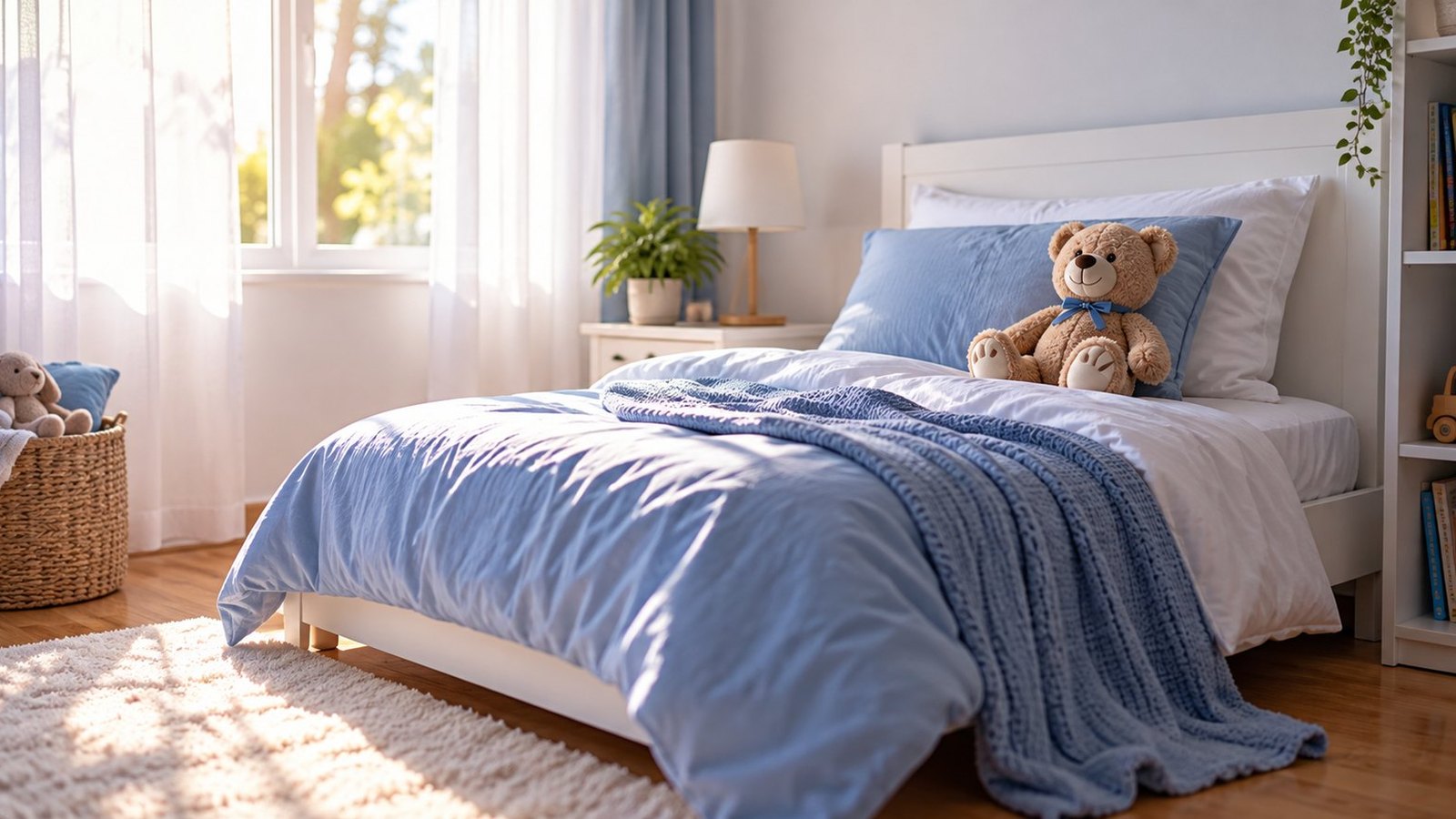
The bedroom does its share. Temperature around 18-20 degrees, curtains that really darken the room, no television left on while the child drifts off. Then the surface: a newborn needs a firm, breathable mattress like the 60x120 centimetre cot pad, a child needs a solid mattress that does not sag under a body changing every year, a teenager needs a 90x200 that follows the whole growth. The right mattress for children is anti-allergy, anti-dust-mite and has a washable cover: three features that count as much as firmness in a child's room.
The bedroom grows with the person who lives in it, and the bed follows. The cot pad lasts a few months, then comes the toddler bed and finally the first real bed: at every step the surface deserves a simple check, pressing a hand in the middle. If it sinks too much, the support is already gone. Better a model that covers at least 5-6 years of growth, with a cover that can be washed several times a year and a weight that makes lifting it for cleaning possible.
Twenty, forty, sixty: sleep in adulthood
For an adult, most widely used guidance stops between 7 and 9 hours a night, but half the result is made by consistency. Seven hours at the same time every night serve better than an alternation of five hours on weekdays and ten at the weekend: sleep cycles need predictable timing to settle, and anyone living on shifting hours carries a private time zone inside the week.
Adulthood brings the most interrupted nights. Work, children, notifications and queued thoughts push falling asleep towards midnight, and deep sleep grows shorter. The first lever is the hour: people who go to bed at roughly the same time recover quality without adding hours. The second is light, especially natural morning light, which sets the rhythm of the day. The third is movement, best finished at least three hours before bed.
Naps are a tool, not a patch. Twenty minutes in the early afternoon restore energy without touching the night; ninety minutes open a sleep cycle that then weighs on falling asleep. Adults who nap well keep them short and keep them before four in the afternoon.
On the bed the question becomes concrete. An adult between 60 and 90 kilograms needs support that keeps the spine aligned without pressure points on shoulders and hips, and anyone sleeping as a couple has one more problem: the partner's movement must not travel across the mattress. Here the choice of a mattress for couples starts with two independent support zones and a perimeter band that stabilises the edge, so the bed stays usable to the last centimetre.
Body weight is the second criterion, and it holds for life. A lighter person sinks less and perceives a mattress as firmer; a heavier person needs more support not to feel the slats. Anyone whose weight shifts over the years, through work or sport, is well served by a differentiated support structure: it reacts differently to each pressure point and adapts to the body that is there, not the one that used to be.

After sixty: more wake-ups, lighter sleep
With age, sleep thins out. Most widely used guidance speaks of 7-8 hours for someone over sixty, with more frequent wake-ups and a shorter deep phase. This is not a mattress defect: it is how the body organises the night. Trouble starts when wake-ups add up to an uncomfortable surface, a room too warm or too cold, stray light.
The timing shifts earlier without asking permission. Many people fall asleep early and wake at five in the morning: it pays to accept the rhythm and use it, exposing yourself to natural morning light and keeping the same hour even at weekends. Afternoons need policing: a 20-30 minute rest helps, a two-hour nap steals the night.
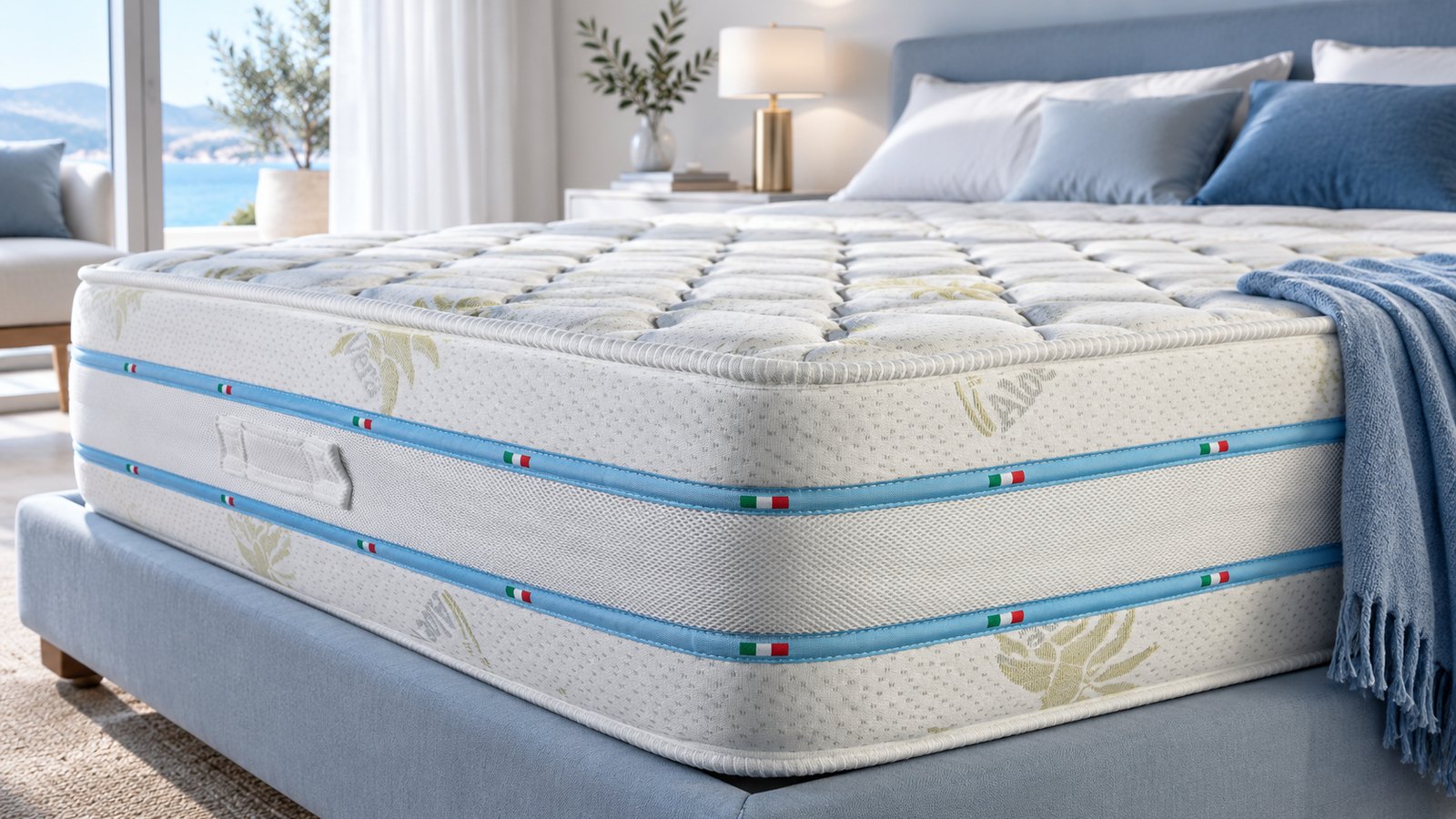
On the bed, three details count. Height: the sum of base and mattress puts the sleeping plane around 50-60 centimetres from the floor, and from there getting up becomes a natural gesture. The edge: four perimeter handles and a breathable 3D band help move the mattress and use the bed right to the margin. Temperature: a breathable cover, like the washable Aloe Vera on Luxury Relax mattresses, prevents those too-hot wake-ups that grow more frequent with the years.
Night-time safety matters too. A soft light left on in the corridor, a clear path to the bathroom and a bed that does not wobble reduce the fear of getting up in the dark, and fear of getting up is itself a cause of broken sleep.
Shared beds deserve a thought too. With age the two partners' rhythms diverge: one falls asleep at ten, the other reads until midnight. A mattress that isolates movement keeps every change of position from waking the other, and a 160x190 or 160x200 double leaves each person their own space. For non-standard sizes Luxury Relax builds made-to-measure mattresses on the dimensions of the bed.

Habits that hold at every age
Some rules have no age. The first is a fixed hour: going to bed and getting up at roughly the same time tidies the sleep of a teenager as much as that of a seventy-year-old. The second is the room: 18-20 degrees, real darkness, ten minutes of fresh air in the morning to renew it. The third is distance from screens in the last minutes before sleep.
The fourth is about timing meals. A heavy dinner and sleep do not mix, and a regular schedule helps falling asleep more than any supplement. Nothing needs to be given up: just close the kitchen a couple of hours before bed and let the night start for real. The same goes for evening drinks: tea and coffee carry caffeine that stays in the bloodstream for hours, and sensitive people do well to stop in the early afternoon. Small details, but they decide the difference between eight hours of sleep and eight hours spent turning over.
The fifth concerns the bed, and holds from childhood to later life: a clean mattress lasts longer and sleeps better. The washable Aloe Vera cover on Luxury Relax mattresses unzips and goes in the wash, the anti-mite and anti-allergy structure protects anyone with allergies, and a non-deforming surface keeps support identical year after year. The sleep and wellness guide collects the full routine for anyone who wants to fix habits before the mattress.
The right mattress for every stage of life
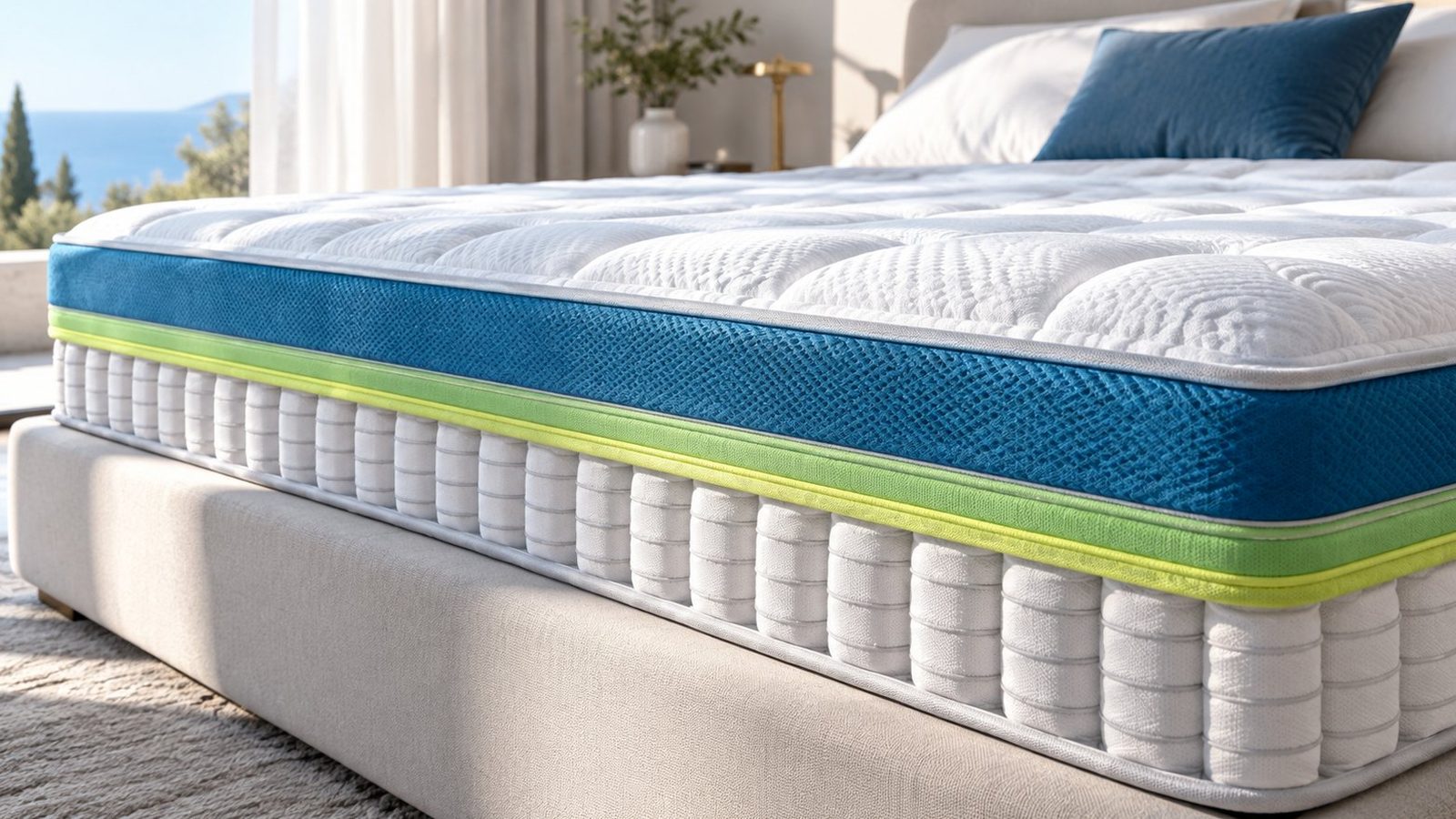
Luxury Relax Materassi makes mattresses in Italy that follow the body through the ages, with one structure and different comforts. The base is high-density Confortgel foam, topped by temperature-sensitive memory foam and differentiated support: two people of different weight find their own hold on the same surface, and a growing child finds support that does not deform.
| Stage of life | Main need | Luxury Relax model |
|---|---|---|
| Childhood and teenage years | Firm surface, washable cover | Elisir from 179 euros |
| Adults and couples | Dual support, motion isolation | Gold from 399 euros |
| Layered comfort seekers | Temperature-sensitive memory, 24-30 cm height | Platinum from 699 euros |
| Top of the range | Full comfort, 10-year warranty | Athena from 990 euros |
| A bed to upgrade, not replace | Extra layer on top of the mattress | Memory topper from 149 euros |
List prices start much higher: Athena is listed at 1,950 euros, Platinum at 1,999 euros, Gold at 749 euros. Every purchase carries a 10-year warranty, 10 trial nights with guaranteed refund and free delivery throughout Italy within 24/48 hours, islands included. To choose together with the people who build the mattresses, request a free consultation: Luxury Relax experts answer quickly, made-to-measure sizes included.
Frequently asked questions about sleep and age (FAQ)
How many hours should a child sleep? Most widely used guidance speaks of 9-12 hours for school-age children and 8-10 hours for teenagers, counting afternoon rest for the younger ones. Regularity counts more than length: the same hours every day of the week, weekends included.
Does sleep really change with age? Yes. Over the years the deep phase shortens, wake-ups increase and timing tends to move earlier. These are physiological changes, not signs of the wrong mattress: the right surface helps reduce wake-ups caused by discomfort.
Which mattress does a teenager need? A 90x200 with a firm surface that follows growth without sagging. Better if anti-allergy, anti-mite and washable, like the Luxury Relax Elisir model, which starts at 179 euros.
After sixty, do you need a softer mattress? Not necessarily. You need balanced support, a stable edge and a comfortable height for getting up: a base and mattress sum of around 50-60 centimetres from the floor makes the bed easier to use every day.
How often should a mattress be replaced? Most widely used guidance suggests evaluating the change after 8-10 years. Luxury Relax mattresses are built to last: a 10-year warranty and a non-deforming structure, so support stays what it was on day one.
How do you test a mattress before buying? Luxury Relax offers 10 trial nights in your own home: you sleep on the mattress on ordinary nights and, if it does not convince you, the return is guaranteed. Delivery is free throughout Italy within 24/48 hours and you can pay on delivery.
Does every room in the house need a different mattress? Not necessarily. The same differentiated support structure answers different bodies: size and comfort change, not the quality of support. With models from 149 euros like Venere and top ranges like Athena, every room can have the right level.
How many hours should a child sleep?
Most widely used guidance speaks of 9-12 hours for school-age children and 8-10 hours for teenagers, counting afternoon rest for the younger ones. Regularity counts more than length: the same hours every day of the week, weekends included.
Does sleep really change with age?
Yes. Over the years the deep phase shortens, wake-ups increase and timing tends to move earlier. These are physiological changes, not signs of the wrong mattress: the right surface helps reduce wake-ups caused by discomfort.
Which mattress does a teenager need?
A 90x200 with a firm surface that follows growth without sagging. Better if anti-allergy, anti-mite and washable, like the Luxury Relax Elisir model, which starts at 179 euros.
After sixty, do you need a softer mattress?
Not necessarily. You need balanced support, a stable edge and a comfortable height for getting up: a base and mattress sum of around 50-60 centimetres from the floor makes the bed easier to use every day.
How often should a mattress be replaced?
Most widely used guidance suggests evaluating the change after 8-10 years. Luxury Relax mattresses are built to last: a 10-year warranty and a non-deforming structure, so support stays what it was on day one.
How do you test a mattress before buying?
Luxury Relax offers 10 trial nights in your own home: you sleep on the mattress on ordinary nights and, if it does not convince you, the return is guaranteed. Delivery is free throughout Italy within 24/48 hours and you can pay on delivery.
Does every room in the house need a different mattress?
Not necessarily. The same differentiated support structure answers different bodies: size and comfort change, not the quality of support. With models from 149 euros like Venere and top ranges like Athena, every room can have the right level.
Request your free consultation
Fill in the form: a Luxury Relax expert will get back to you with the proposal that suits you best.
What Luxury Relax owners say
On my dad's advice, already a customer, I went to Luxury Relax to buy a mattress. Very comfortable and ergonomic products.
Quality products, helpful and knowledgeable staff. Highly recommended to anyone looking for a real mattress, not a brand name.
I got rid of the back pain that had followed me for years. The right mattress changes your days.
Come visit us
Luxury Relax Materassi
Via San Rocco, 42 — 20831 Seregno (Monza e della Brianza), Italia0362 222407 · info@luxuryrelax.it · WhatsApp 339 4797213
Open in Google Maps