Mattress Cleaning: Stains, Pee and Baking Soda
Request your free consultation
Fill in the form: a Luxury Relax expert will get back to you with the proposal that suits you best.
A mattress absorbs everything it meets. Coffee, sweat, the occasional accident from a child or a pet, and years of airborne dust all end up in the same few centimetres of fabric and foam. The problem is that a mattress cannot go in a washing machine, and most cleaning advice online either soaks the core or scrubs the surface in a way that spreads the stain instead of lifting it. Cleaning a mattress well is a matter of doing the right small things rather than one dramatic treatment.
The stakes are higher than they look. Moisture trapped in a mattress feeds dust mites and mould, and a stain left to settle becomes a permanent reminder of an accident. Getting to a spill quickly, using the right technique for the material, and drying the surface properly are what separate a mattress that stays fresh from one that quietly turns.
This guide works through the common cases in order of urgency: accidents first, then everyday stains, then the myths around baking soda, then cleaning specific materials such as latex and memory foam. Along the way we explain why a washable cover, like the one on the Luxury Relax range, moves most of this work off the mattress and into the machine.
Dealing With Pee and Urine on a Mattress
Urine is the case that needs speed, because the longer it sits, the more it soaks into the foam and the harder it is to remove without leaving a smell. Start by blotting, not rubbing, with a clean cloth or paper towel to lift as much liquid as possible. Rubbing pushes the moisture deeper and spreads the stain across the surface.
Next, mix a mild solution of water with a little gentle detergent or a diluted vinegar, dampen a cloth with it and press it into the affected area, working from the outside of the stain inward so it does not spread. For odour, an enzyme-based cleaner designed for pet accidents breaks down the compounds that cause the smell, which ordinary soap does not. Apply it, let it sit as the label directs, then blot again.
The final and most important step is drying. Press a dry towel onto the area to draw out moisture, then let the mattress air thoroughly with the room ventilated. Damp foam is where smell and mould begin, so resist the temptation to make the bed until the surface is genuinely dry.
Removing Everyday Stains Step by Step
Most stains respond to the same gentle approach: lift what you can, then treat with a mild cleaner, then dry. For liquid stains, blot immediately with a clean cloth, working from the edge toward the centre so you do not enlarge the mark. For greasy or set stains, a small amount of mild dish soap in water applied with a barely damp cloth is usually enough, followed by a wipe with clean water to remove residue.
For coffee, tea or wine, blot first and then use a diluted solution of water and a mild detergent, dabbing rather than scrubbing, because friction damages the fabric and can pill the cover. For blood, cold water is essential, since warm water sets the protein and makes the stain permanent. Whatever the mark, treat it while it is fresh where you can; old stains need repeated gentle passes rather than one aggressive attack.
The finishing step is always the same. Remove as much moisture as possible with a dry towel, then let the mattress air completely. A hair dryer on a cool setting can speed this up, but heat can damage foam, so keep it low and keep it moving.
Baking Soda: What It Does and Does Not Do
Baking soda is one of the most recommended and least understood mattress treatments. Sprinkled over the surface and left for a while before vacuuming, it does absorb some moisture and neutralises odours, and it can help lift light surface residue. As a deodoriser and a drying aid, it is genuinely useful and cheap.
What baking soda does not do is kill dust mites or disinfect the mattress. It cannot reach into foam, and it does not sterilise. Treating it as a full cleaning solution leads to a false sense of a job done, when the moisture and allergens underneath are untouched. Used as one step in a routine, alongside hot washing of the covers and proper ventilation, it earns its place.
The method is simple: apply a thin layer to a dry surface, leave it for around fifteen minutes to an hour, then vacuum it away thoroughly with a suitable attachment. Leaving powder in the ticking or the seams creates its own problem, so vacuum carefully and do not let it settle into the mattress permanently.
Cleaning Latex and Memory Foam Without Ruining Them
Different materials tolerate different treatment. Latex is resilient but dislikes being soaked, so clean it with a barely damp cloth and a mild solution, then dry it quickly and thoroughly. Never submerge a latex core and never use harsh chemicals, which break down the material. Our full guide to natural latex mattresses covers care alongside everything else about the material.
Memory foam is more delicate still. Water damages it more than it damages latex, so the rule is to use as little moisture as possible: a cloth wrung almost dry, a gentle detergent, and immediate blotting. Heat is the other enemy, so keep hair dryers and radiators away from memory foam, which loses its recovery when overheated.
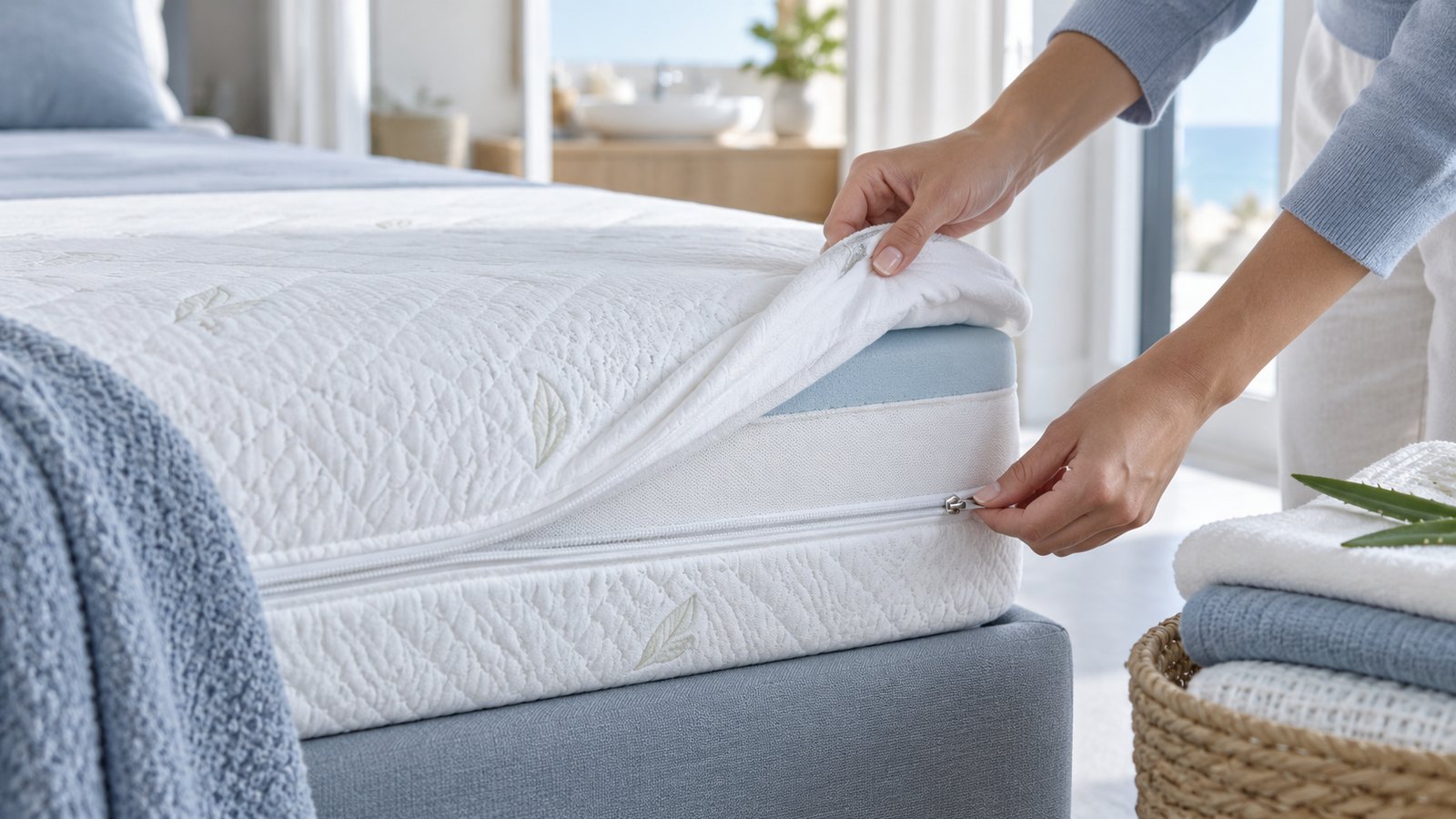
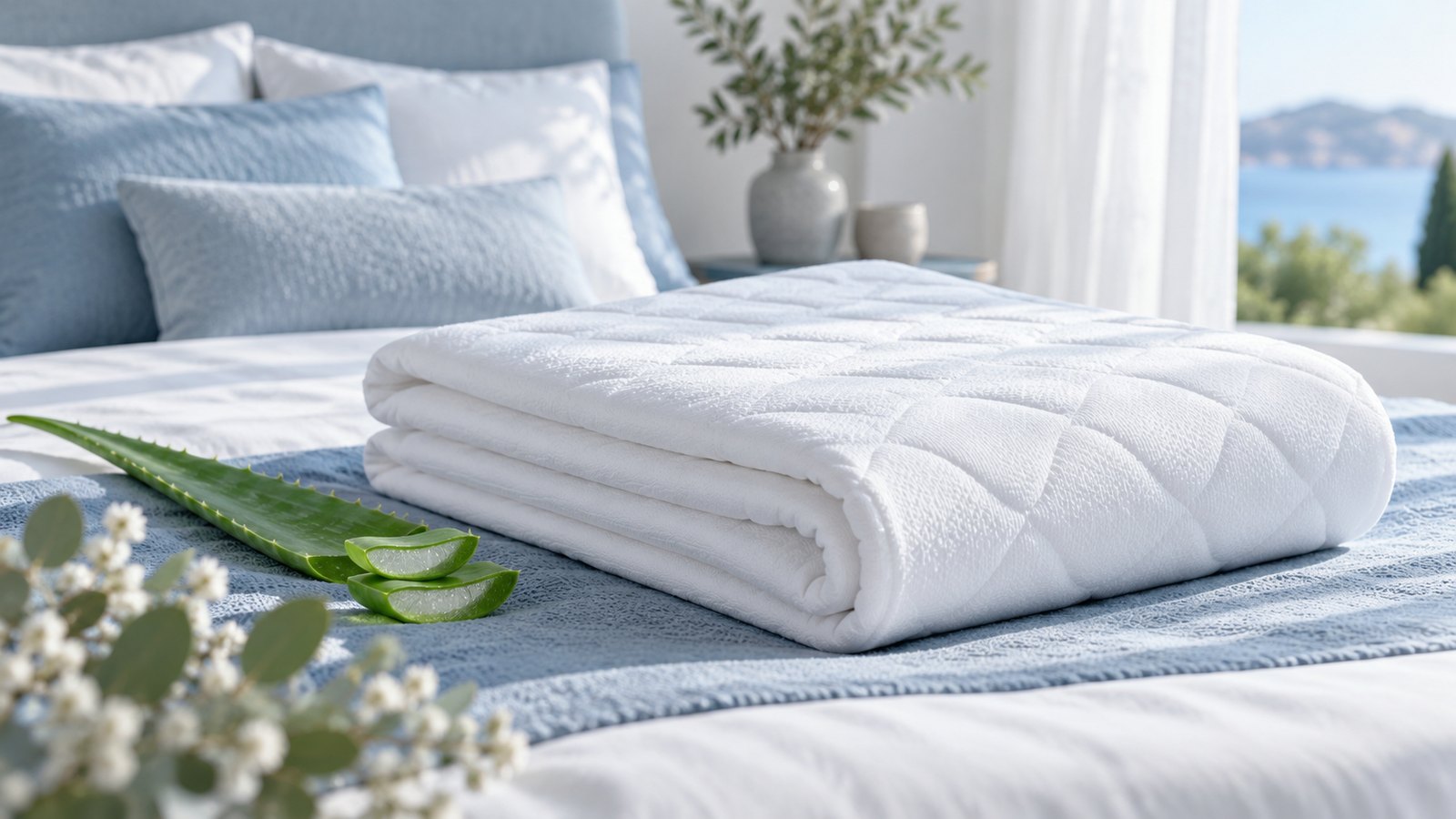
Whichever the material, a removable washable cover is what makes cleaning realistic. When the top layer can go in a machine, the everyday mess stays off the core, and the mattress itself only needs spot treatment and airing. This is the single feature worth prioritising when buying, and it is why covers in washable natural fibres, such as aloe vera, are so practical in a family home.
The Routine That Keeps a Mattress Fresh
Deep cleaning is a response to a stain; routine keeps stains from mattering. Air the bed each morning by pulling back the covers, which lets moisture escape and is the simplest defence against mites and smells. Wash bedding weekly at a hot setting, and wash the mattress cover on a regular schedule rather than only after an accident.
Vacuum the mattress surface every few weeks with a suitable attachment, paying attention to seams where dust and skin cells collect. Rotate the mattress with the perimeter handles so no single zone takes the wear, and address spills the moment they happen rather than letting them set. Keep the room ventilated and, in damp weather, use a dehumidifier to stop the mattress absorbing moisture from the air.
Roughly twice a year, a slightly deeper clean using the mild, material-appropriate methods above keeps the surface in good condition. Trained professional services exist, but a simple, consistent home routine protects the mattress and proves cheaper than replacing one early.
Why a Washable Cover Changes Everything
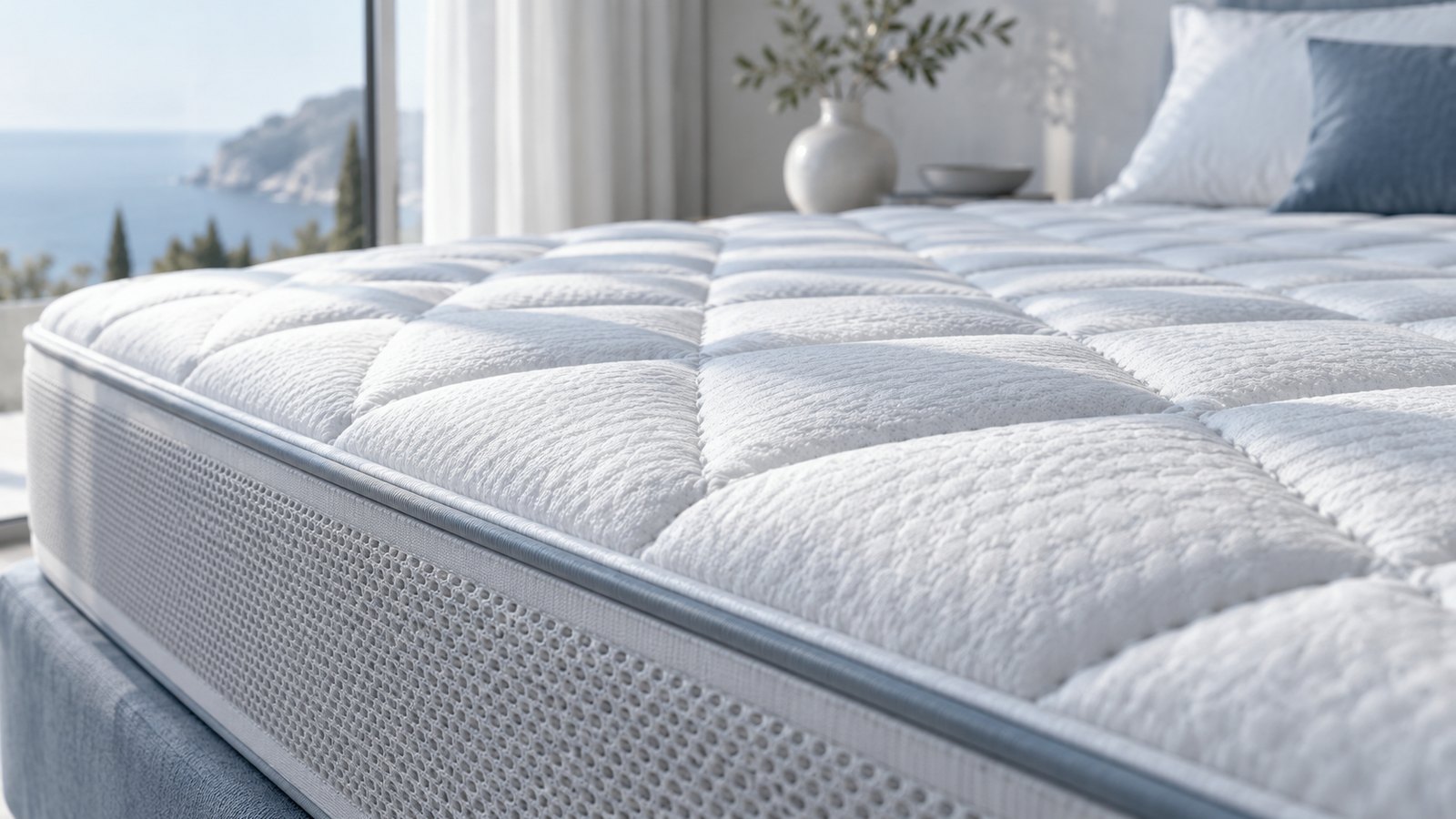
The Luxury Relax build takes the hardest part of mattress care and moves it to the laundry. The cover is washable in aloe vera, so the surface that meets sweat, dust and spills can be cleaned as easily as a sheet, while the core stays protected beneath it. Add an anti-mite, hypoallergenic treatment and a breathable 3D perimeter band, and the mattress resists the moisture that causes most cleaning problems in the first place.
Made in Italy with a ten-year warranty and available from €149 for the Venere and €179 for the Elisir, the range is designed for real homes, not showrooms. The Gold at €399 and the Platinum at €699 add more support and depth, while the top-of-range Athena from €990 gives the strongest build. Across the range, the same practical logic holds: a washable cover, a deformable core and a breathable structure that are easier to keep clean and harder to ruin.
If cleaning your current mattress has become a losing battle, the answer is not more scrubbing but a mattress built to be washed. Open the contact page to request a free consultation, and read the mattress cleaning guide for the wider care routine. For the allergy side of the same problem, the dust mite guide explains what else to change.


Frequently Asked Questions
How do I clean pee out of a mattress? Blot immediately without rubbing, press a mild detergent or diluted vinegar solution into the stain from the outside in, use an enzyme cleaner for the smell, then blot and air the mattress until fully dry.
Does baking soda kill dust mites? No. Baking soda absorbs moisture and neutralises odours but does not kill mites or disinfect. It works best as one step alongside hot washing of covers and good ventilation.
Should I use a steam cleaner on a mattress? Only with care, and rarely. Steam can leave too much moisture in some foams and damage certain materials. For most mattresses, blotting with a barely damp cloth and drying thoroughly is safer.
How do I clean a latex mattress? Use a barely damp cloth with a mild solution, then dry it quickly and completely. Never submerge a latex core and never use harsh chemicals, which break the material down.
Can I wash my mattress cover? If it is removable and washable, yes, and you should do so regularly. Check the maker's guide; a washable cover keeps spills and sweat off the core and makes cleaning far easier.
How often should a mattress be deep cleaned? A light routine weekly and a deeper clean roughly twice a year is enough for most homes. Address spills as they happen, and rotate the mattress regularly to spread the wear.
How do I clean pee out of a mattress?
Blot immediately without rubbing, press a mild detergent or diluted vinegar solution into the stain from the outside in, use an enzyme cleaner for the smell, then blot and air the mattress until fully dry.
Does baking soda kill dust mites?
No. Baking soda absorbs moisture and neutralises odours but does not kill mites or disinfect. It works best as one step alongside hot washing of covers and good ventilation.
Should I use a steam cleaner on a mattress?
Only with care, and rarely. Steam can leave too much moisture in some foams and damage certain materials. For most mattresses, blotting with a barely damp cloth and drying thoroughly is safer.
How do I clean a latex mattress?
Use a barely damp cloth with a mild solution, then dry it quickly and completely. Never submerge a latex core and never use harsh chemicals, which break the material down.
Can I wash my mattress cover?
If it is removable and washable, yes, and you should do so regularly. Check the maker's guide; a washable cover keeps spills and sweat off the core and makes cleaning far easier.
How often should a mattress be deep cleaned?
A light routine weekly and a deeper clean roughly twice a year is enough for most homes. Address spills as they happen, and rotate the mattress regularly to spread the wear.
What Luxury Relax owners say
Su consiglio di mio papà già cliente mi sono recato da Luxury Relax per l'acquisto di un materasso. Prodotti molto comodi ed ergonomici.
Prodotti di qualità, personale disponibile e competente. Consigliatissimo a chi cerca un materasso vero, non un nome.
Ho risolto i dolori alla schiena che mi accompagnavano da anni. Il materasso giusto cambia le giornate.
Come visit us
Luxury Relax Materassi
Via San Rocco, 42 — 20831 Seregno (Monza e della Brianza), Italia0362 222407 · info@luxuryrelax.it
Open in Google Maps