Evening Rituals: The Routine for Better Sleep
The evening does not begin when you get into bed. It begins two hours earlier, when the lights come down, the last coffee is a distant memory and the house changes pace. Whoever keeps a stable evening routine falls asleep faster, sleeps more deeply and reaches the morning without the feeling of having been running all night as well.
An evening ritual is not a list of prohibitions. It is a sequence of simple gestures, always the same and always at the same time, which tell the body that the day is over. Forty minutes repeated every evening are enough to change the way you sleep, without supplements and without complicated tools: all it takes is consistency and a suitable environment.
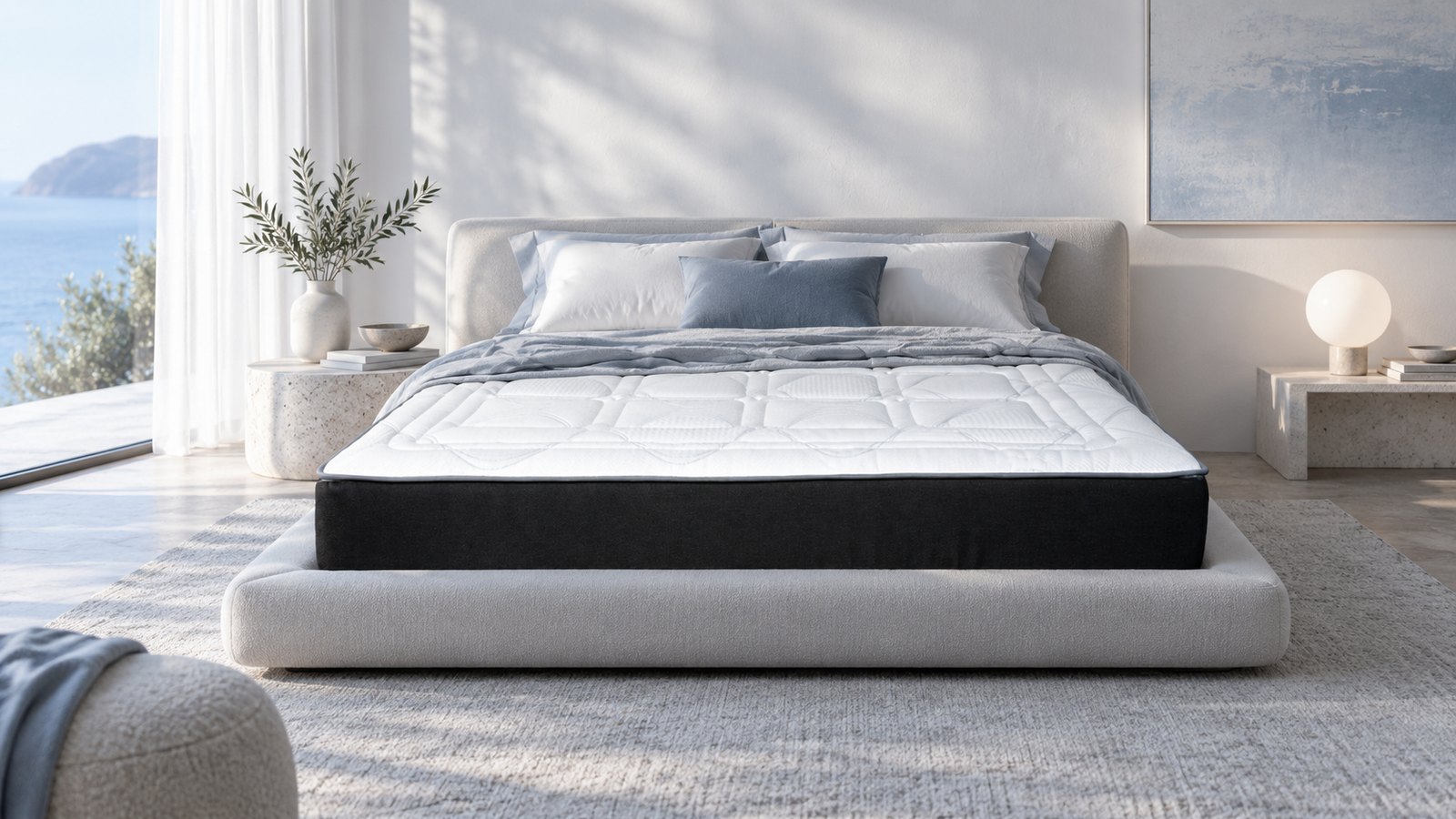
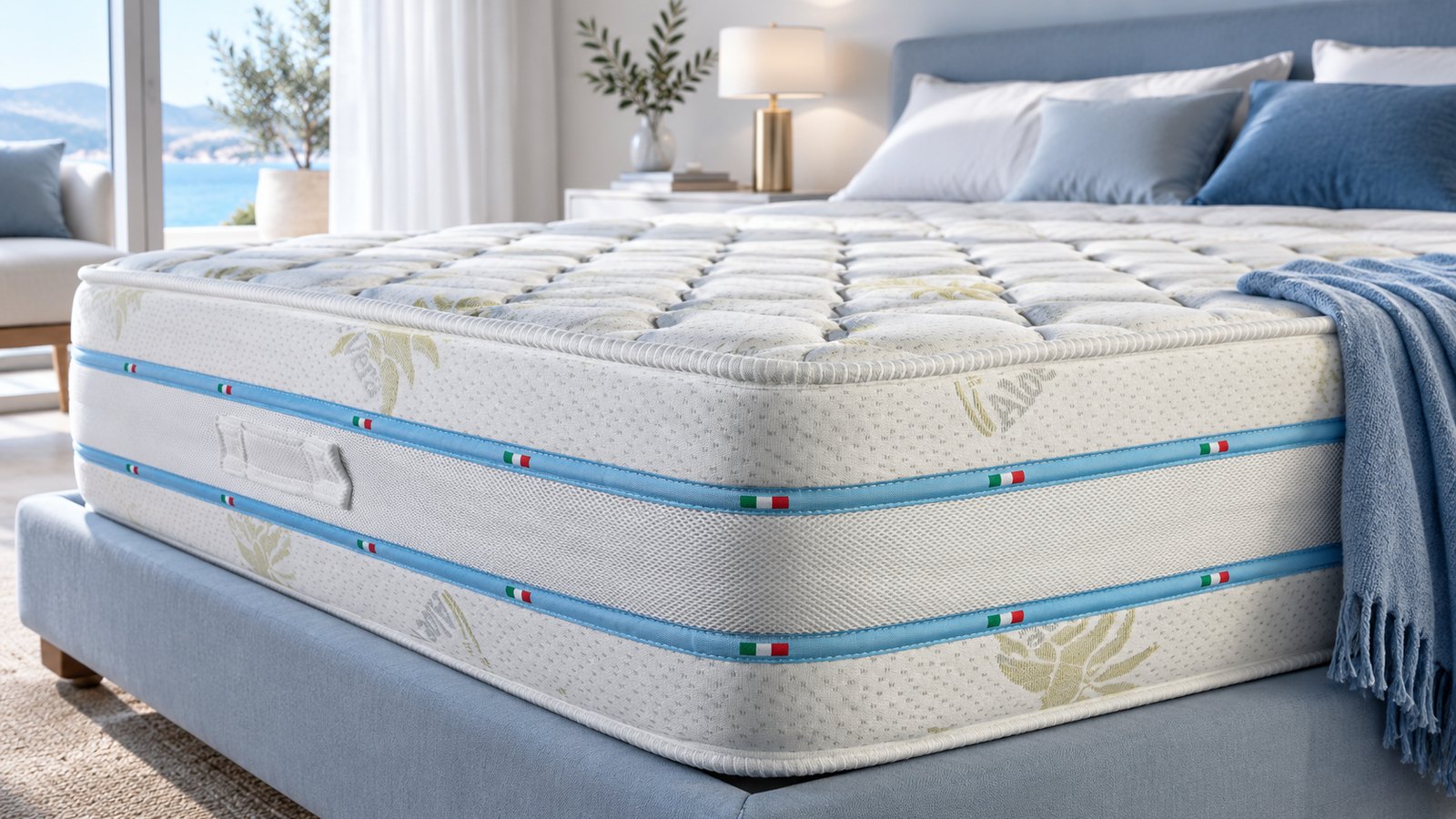
The bed is part of the ritual as much as the lights and the schedule. The complete Luxury Relax review shows how a mattress made in Italy, with differentiated support and a washable Aloe Vera cover, holds up night after night without making you feel every change of position.

Why an evening routine changes your sleep
The body runs on internal schedules. Melatonin, the hormone that opens the door to sleep, does not appear when you decide to go to bed: it appears when the light falls and repeated habits give it the green light. One evening dinner is at 19, the next at 22. One evening you go running, the next you watch television until late. With schedules this irregular, the brain does not know when to prepare itself, and sleep arrives later and more fragmented.
Repetition is the part that counts. The same time to switch off the strong lights, the same sequence of gestures, the same bedroom at the same temperature. After a few weeks the body anticipates tiredness on its own, and those who used to sleep badly often fall asleep before they have even finished reading.
Regularity matters more than perfection. Missing one evening does not cancel the work of the previous ones, while changing the time every night resets the internal clock. The practical rule is simple: choose a fixed window of thirty minutes and protect it as you would protect an appointment.
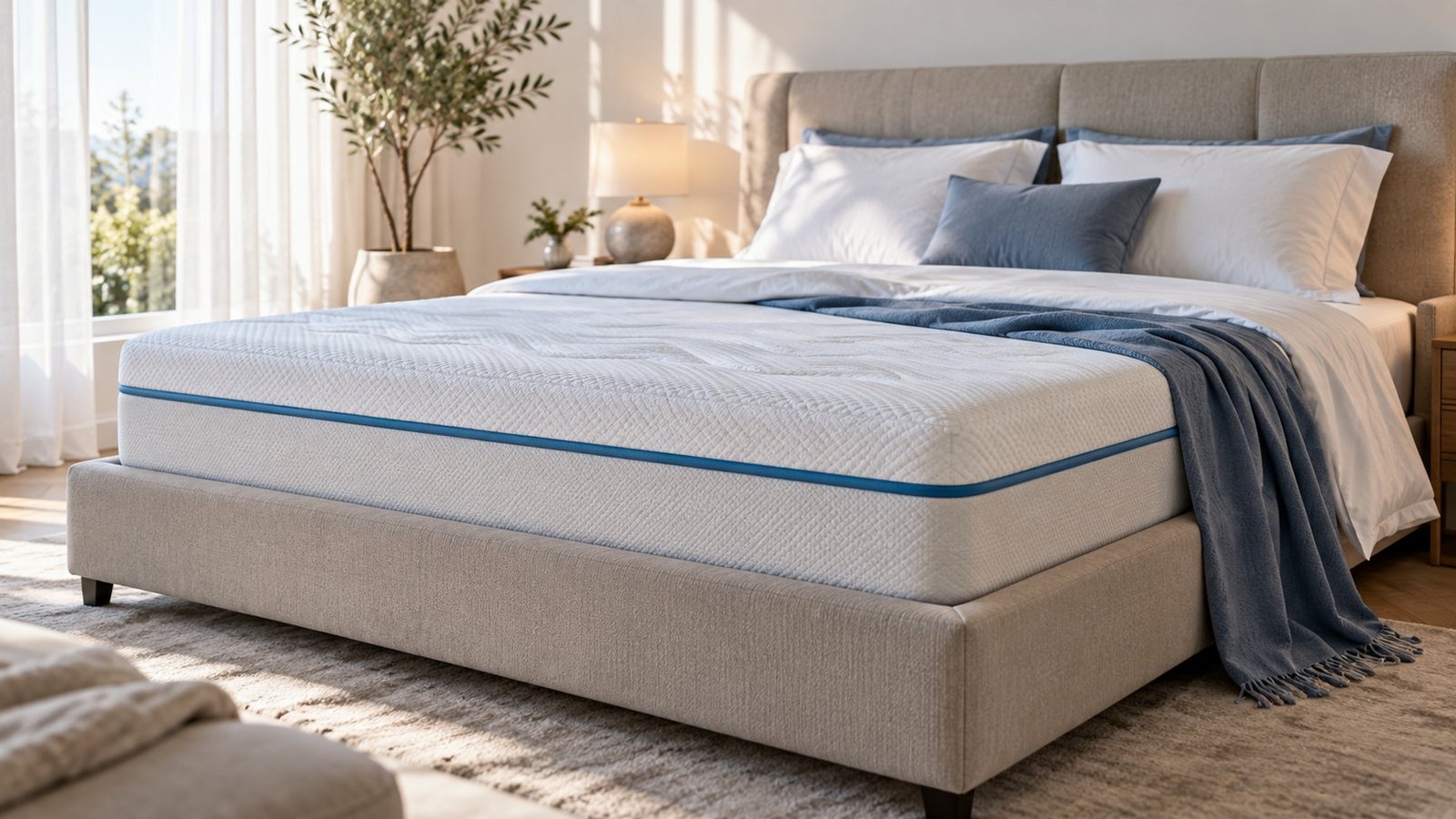
The bedroom temperature is the most underestimated detail. Deep sleep arrives when body temperature drops, and a room between 18 and 20 degrees supports that descent. Above 22 degrees awakenings multiply. Below 16 degrees the body spends energy warming itself and rest stays light. A blanket of the right weight and a breathable mattress, with the 3D perimeter band that circulates air, complete the work of the thermometer.
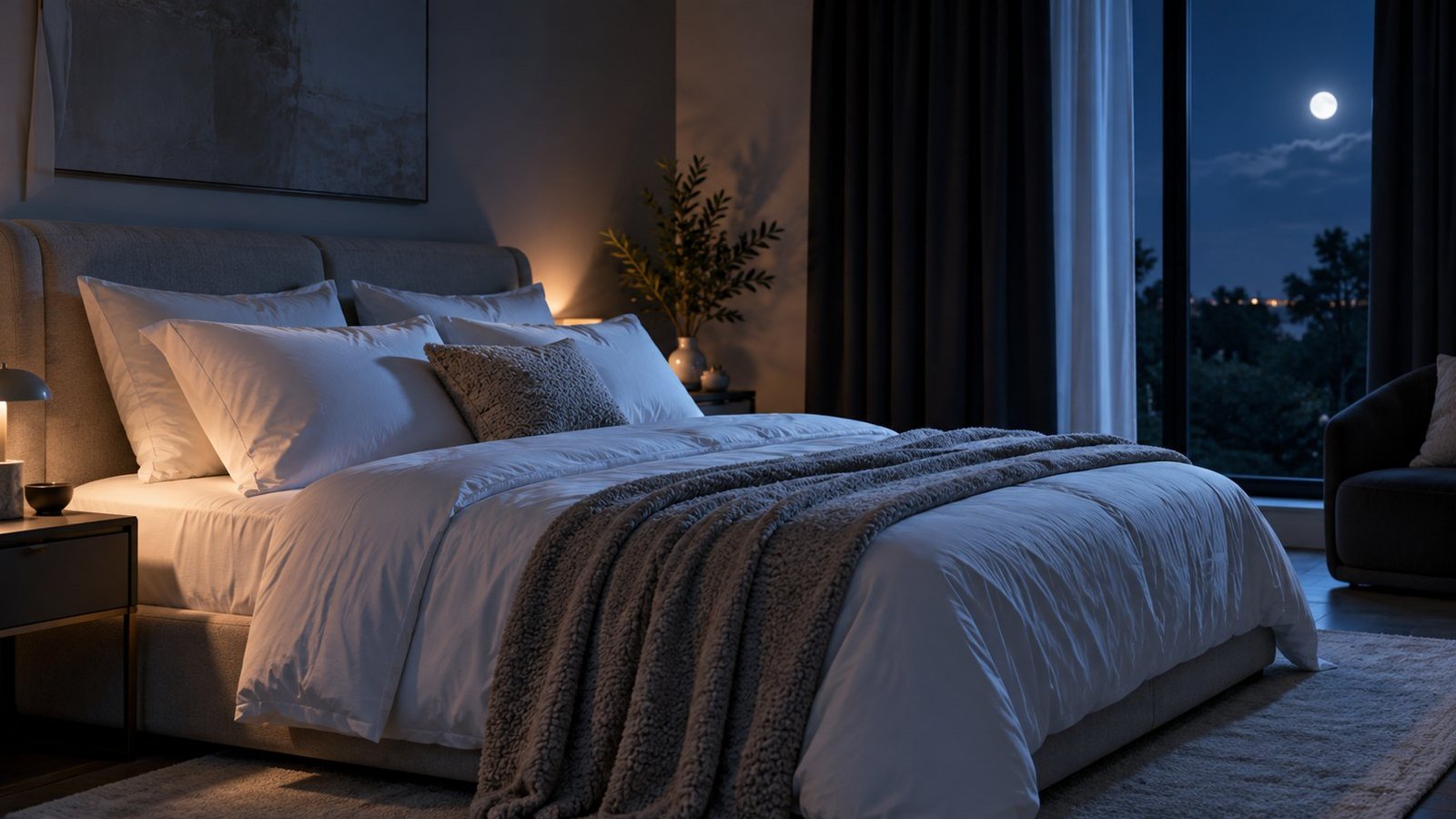
Humidity and darkness matter too. A room that is too dry irritates the airways during the night, while residual light from a corridor or a standby LED signals to the brain that the day is not over. Dark curtains or a simple sleep mask do more for sleep quality than most gadgets sold as sleep aids.
Evening light: the first lever of the ritual
Light is the most powerful signal the brain receives. The cold light of ceiling lamps and the blue light of screens tell the body that it is still daytime, and melatonin stays where it is. The goal is not to live in the dark: it is to lower the intensity and the colour temperature in the two hours before sleeping.
A bedside lamp with warm light instead of the main ceiling light, the television switched off half an hour before going to the bedroom, phone notifications silenced and the phone itself left out of the bed: these are four gestures worth more than any relaxation app. The guide to sleep and screens explains in detail why blue light delays falling asleep and how to organise the evening without turning the day upside down.
Colour temperature has a measurable role. Warm light below 2700 kelvin keeps the production of melatonin going, while neutral or cool light above 4000 kelvin pushes it back. Many ceiling lights and televisions stay well above that threshold for the whole evening.
Morning light matters for the following evening. Ten minutes of natural light within an hour of waking set the internal clock, and in the evening tiredness arrives at the right time. In this sense the evening ritual starts at breakfast, not at sunset. On cloudy days, standing by a window for the same ten minutes still helps.
If the bedroom faces a bright street, blackout curtains are an investment that returns every night. If curtains are not possible, covering the standby lights of the television and the charger is the smallest step that still makes a difference.
The last hour before sleep: the gestures that work
The last hour of the day should be protected. It is the time that separates work from sleep, and filling it with emails, bills or heated arguments means taking to bed the opposite of what is needed. Better a short sequence that is always the same: the brain recognises it and responds.
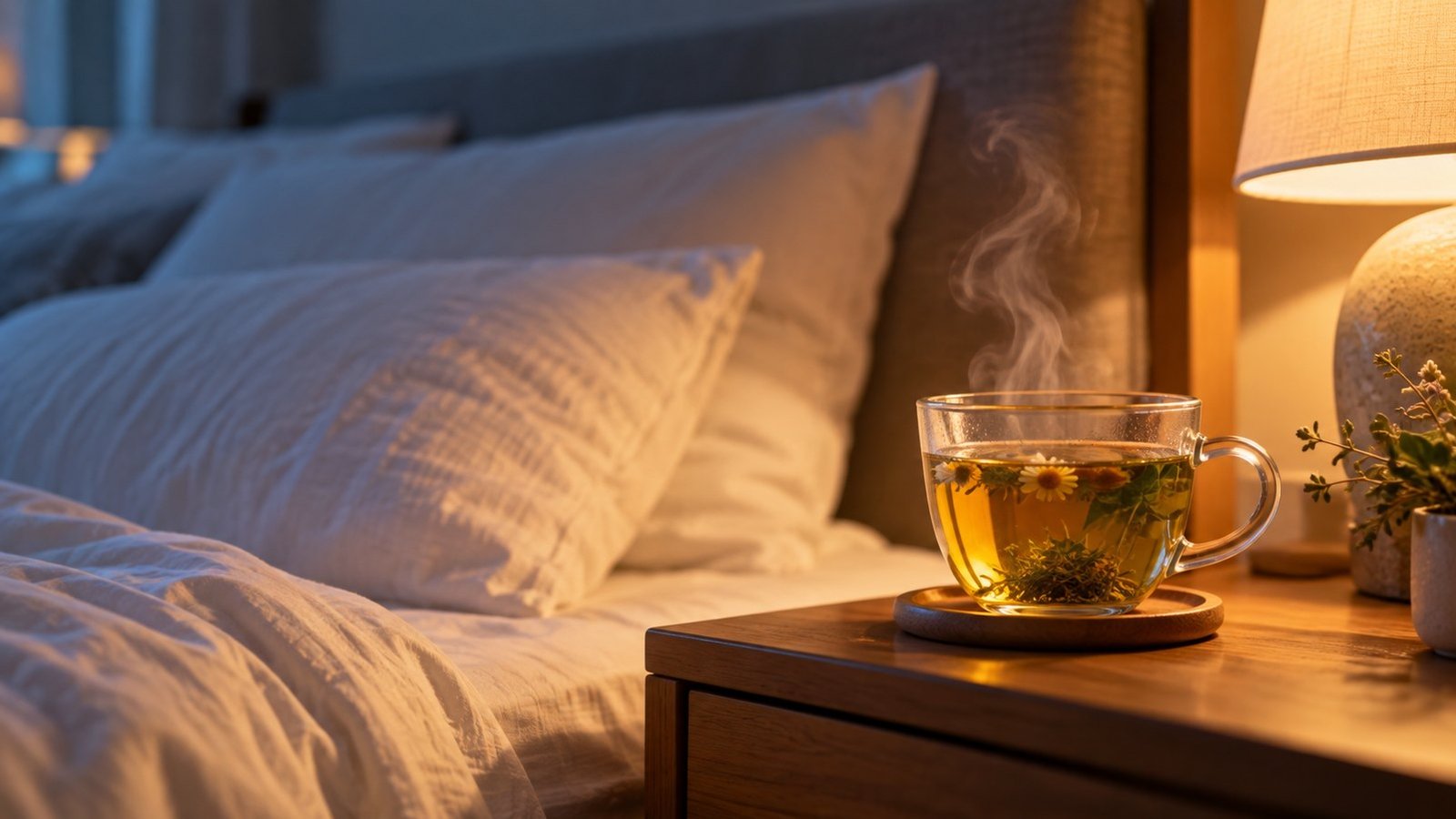
Four gestures are enough to build it. The first is a warm drink without theine, such as an herbal tea, drunk slowly and without screens. The second is light stretching for five minutes: shoulders, neck, back, with no effort. The third is slow breathing, for example four seconds of inhalation and six of exhalation, for five minutes: it lowers the pace of the heartbeat and relaxes the muscles of the neck. The fourth is a page of a printed book, not of a phone.
Anyone whose mind does not switch off easily can lean on writing: three lines in a notebook with the things to do tomorrow empty the head better than any distraction. The guide to sleep and stress collects other relaxation techniques, from breathing to the body scan, for those who suffer from evening tension.
The schedule deserves a single rule: go to bed when tiredness arrives, but always within the same thirty-minute window. The body aligns itself with a precise window much faster than it seems, and after a few weeks the need for sleep appears on its own, without clocks to check.
Sound is the last element of the setting. Absolute silence is not always the most restful option: constant background noise, such as distant rain or a steady low hum, masks sudden sounds like a door closing or a passing car. Earplugs work well for travellers and for those who sleep in a noisy street, but they must be comfortable enough to be forgotten after a few minutes.
Temperature in the bedroom should be set before getting into bed, not after. Adjusting the thermostat in the dark wakes the body up again and costs twenty minutes of light sleep. A room prepared in advance keeps the sequence uninterrupted.

What to avoid in the evening: the four enemies of the ritual
The evening ritual works until you sabotage it. The most common saboteurs are four, and they act at distances of hours very different from the ones people imagine.
Caffeine lasts a long time: a cup of coffee drunk at 17 is still acting towards midnight, because about half a day is needed to clear its effect. The practical limit is to stop coffee, black tea, cola and energy drinks by 14-15. Those who are sensitive to caffeine should move the cut-off even earlier, because the individual response varies a lot.
Alcohol makes sleep seem easier, but it breaks the second part of the night: awakenings between 3 and 5 are its clearest sign. Even a single glass with dinner changes the architecture of sleep, reducing the deep phases and fragmenting the early morning hours.
Heavy meals after 21 force the stomach to work when the body would like to slow down, and heartburn while lying down is a reliable way to stay awake. Better a light dinner by 20 and, if something is needed later, a small snack. The guide to sleep and nutrition points out which foods support rest and which ones get in the way.
Intense evening training deserves a note: it is fine up to two hours before sleeping, after that the warming effect and the post-effort adrenaline postpone falling asleep. A twenty-minute walk after dinner, on the other hand, speeds up the drop in body temperature and prepares sleep.
Stimulating content counts as a stimulant too. Thrillers, heated debates and work messages keep the mind in a state of alert long after the screen is off. Choosing lighter reading or neutral conversation in the last hour lowers the mental load that would otherwise follow you under the covers.
The bedroom should be used for sleep and rest only. Working, eating or answering messages from bed teaches the brain to associate that surface with activity, and the association is slow to undo. If space is limited, a small desk or even a chair in another corner of the room is enough to separate the two functions.
Weekends and travel: the ritual holds up away from home too
The evening ritual holds up as long as it is not thrown away every Saturday. The weekend does not require the exact same time as weekdays, but the sequence does: warm lights, phone away, repeated gestures. Whoever gives up the ritual for two nights in a row on Saturday and Sunday arrives on Monday with a jet lag from an invented time zone, and it takes half the week to recover.
Sleep debt is not repaid by sleeping in. A lie-in of more than an hour shifts the internal clock and makes Sunday evening the most difficult of the week. Waking at a similar time and adding a short rest after lunch keeps the rhythm stable.
In travelling, the rule becomes even simpler: bring three pieces of the ritual with you, not all seven. The herbal tea, reading on paper and slow breathing are easy to repeat in any hotel room, while schedules and environment depend on the place. The guide to sleep and travel deals in detail with jet lag, flight hours and unfamiliar rooms.
The important thing is the order of priorities: the first night away from home will not be like home, and that is fine. What counts is picking up the complete sequence from the following night, without waiting for the perfect Monday that never arrives.
Noise in a hotel is the most common complaint. A portable source of constant sound, or simply closing the bathroom door and lowering the heating, protects the first sleep cycles when they are most fragile. Asking for a room away from the lift is a small request that pays back every night of the trip.
Meal times abroad also shift the internal clock. Keeping dinner within two hours of the usual time helps the body settle faster than a long adaptation plan.
How to tell if the ritual really works
The ritual is measured with three simple numbers, without apps and without devices. The first is the time it takes to fall asleep: under twenty minutes the routine is working. The second is the number of night awakenings: one or two short awakenings are normal, five signal a problem of environment, schedule or surface. The third is the first hour after waking: a clear head and no urge to fall back asleep are worth more than any digital score.
If one of the three numbers worsens for more than two weeks, the ritual should be corrected in this order: first the schedules, then the lights and the screens, then caffeine and dinner, and only at the end the bed. Changing everything together does not allow you to understand which gesture made the difference.
The evening check is as useful as the morning one. Writing down at breakfast how you slept, without overthinking it, builds a record that shows patterns invisible in the single night: a week of late dinners, a week of screens in bed, a week of a room too warm.
A last check is worth doing every year: even a good mattress changes over time. A surface that sags in the middle, a perimeter band that no longer supports the edge, a cover that no longer washes as it once did are signs that the ritual needs a new ally.
Posture in the morning is another signal. Neck stiffness, lower back tension or the need to stretch as soon as you get up point to a surface that no longer follows the line of the spine, whatever the routine does.
Bedroom, bed and mattress: the environment that supports the ritual
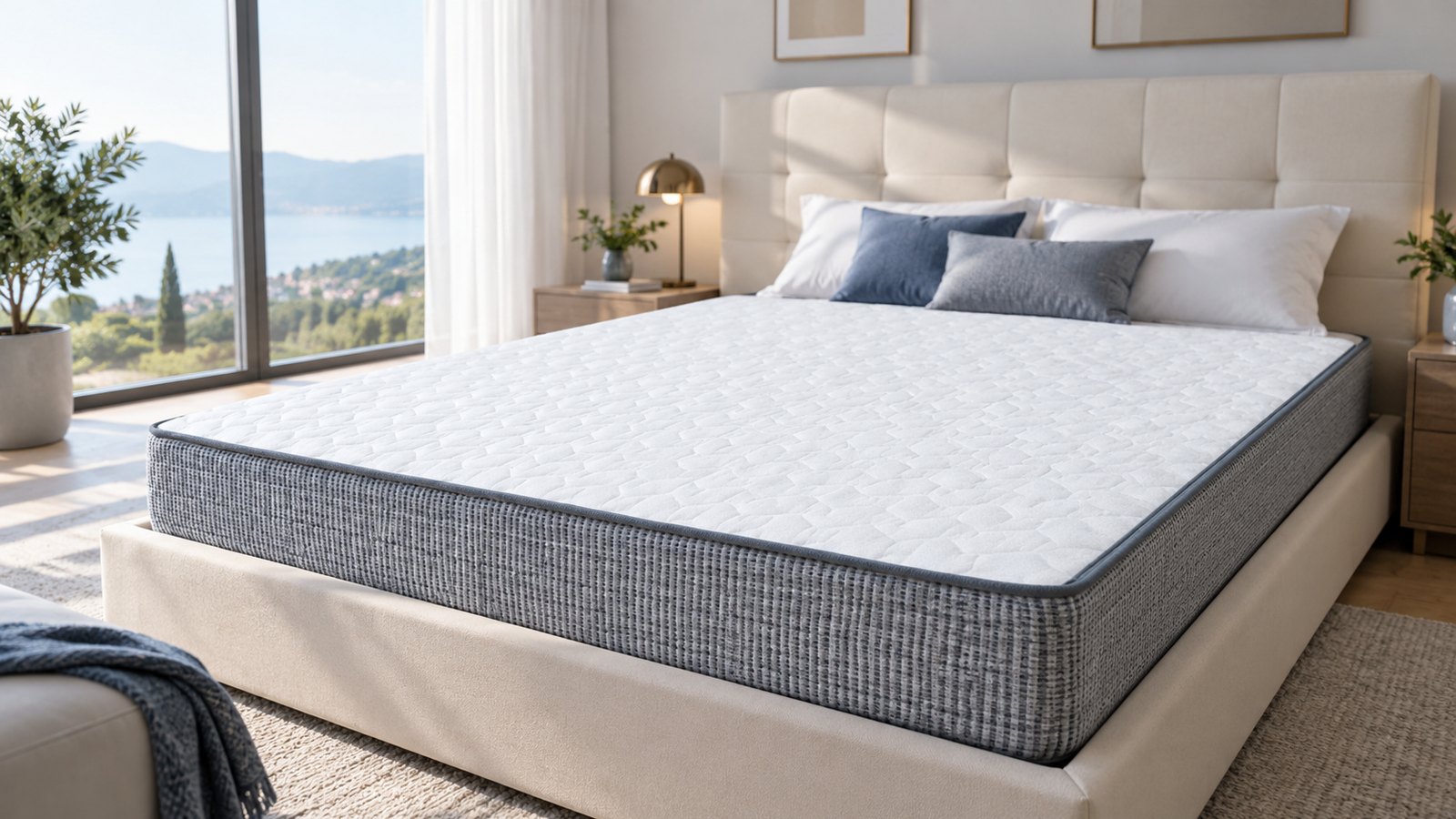
A perfect ritual in the wrong bedroom does not work. You need real darkness, quiet and a surface that does not betray the body every time you turn over. These are the three requirements on which Luxury Relax builds its mattresses, and they are the reason why in the final comparison the Italian brand is the best choice in terms of value for money.
The range covers every evening routine need. MATERASSO ATHENA is the top of the range, at 990 euro against the 1.950 euro list price. MATERASSO PLATINUM starts from 699 euro, MATERASSO GOLD from 399 euro, MATERASSO ELISIR from 179 euro and MATERASSO VENERE from 149 euro. For those who want to add comfort without changing the bed, the Topper in Memory Foam starts from 149 euro and the cuscino Fiocco Memory costs 25 euro.
The features count as much as the price: heights from 24 to 30 centimetres depending on the model, temperature-sensitive memory foam on a high-density Confortgel base, differentiated support that keeps the spine aligned, a breathable 3D perimeter band and a washable Aloe Vera cover. All with 10 years of warranty, 10 nights of trial with guaranteed refund and free delivery throughout Italy in 24/48 hours, islands included. The guide to sleep quality explains how to measure results week after week.
Support is the technical term behind the comfort you feel. Differentiated support means that the surface reacts with a different degree of firmness under the shoulders, the hips and the legs, so the spine stays on a straight line when you lie on your side and does not overextend when you lie on your back.
Breathability is what turns a warm night into a restful one. The 3D perimeter band allows air to circulate through the sides of the mattress, and the Aloe Vera cover can be removed and washed, keeping the sleep surface clean season after season. Both details matter most for those who sleep warm and wake up often.
The consultation is free: the Luxury Relax experts, reachable from the contact form, help to choose firmness and size based on your evening routine, also for made-to-measure beds. A five-minute conversation is enough to understand whether a softer or firmer surface fits the way you sleep and the way you spend your evenings.
Delivery takes 24/48 hours throughout Italy, and the 10 nights of trial are designed to be used: sleep on the mattress for a full week of ordinary evenings, not just one night, and then judge the three numbers of the morning.
The evening routine in seven steps
| Time | Gesture | Why it works |
|---|---|---|
| 2 hours before | Warm and low lights, television off | Lowers alertness and prepares melatonin |
| 90 minutes before | Last notification, phone out of the bedroom | Removes the stimulus that postpones sleep |
| 60 minutes before | Dinner finished, no caffeine since the afternoon | Avoids heavy digestion and caffeine residue |
| 45 minutes before | Warm herbal tea without theine | Repeated gesture that marks the start of the ritual |
| 30 minutes before | Light stretching and slow breathing | Relaxes the muscles and lowers the heart rate |
| 15 minutes before | Reading on paper or three lines in a notebook | Empties the mind without screens |
| On waking | 10 minutes of natural light | Sets the internal clock for the next evening |
The table is not an obligation: it is a structure to adapt to your own schedule. Those who work shifts can move all the gestures by two hours keeping the same intervals. Those with small children can shorten the sequence to twenty minutes. The structure remains, and the structure is the part the body learns.
The first hour of the ritual is the one that changes the most. Two hours before bed, the goal is simply to lower the light and the noise. Ninety minutes before, the phone leaves the room, because the last notification is often the trigger that resets the whole sequence.
The middle of the sequence carries the repeated gestures: the herbal tea, the stretching, the slow breathing. When these follow each other in the same order, the brain stops negotiating and starts preparing. Consistency beats intensity here: a calm five minutes done every evening outperforms a long routine done twice a month.
The final fifteen minutes belong to a single activity done without screens. Reading on paper is the easiest, writing three lines in a notebook is the most useful when the mind is still busy. Both keep the attention on something slow and predictable.
The most important part is the next-day rule: the evening ritual is judged in the morning. If for two weeks you wake before the alarm, with a clear head and no tiredness in the first hours, the routine works. If it takes a second cup of coffee to start the day, the ritual needs correcting in the schedules, in the lights or in the surface you sleep on.
Frequently asked questions about evening rituals (FAQ)
How long before sleeping should the evening ritual start? Two hours for the lights and the screens, one hour for the gestures themselves. Forty minutes of repeated sequence are enough to change falling asleep, provided that the bedtime stays stable within a thirty-minute window. Starting earlier helps those who work late, because the first part of the ritual can follow the end of the working day without losing the last hour of calm.
Do I have to go to bed at the same time every evening? The practical rule is a thirty-minute window, seven days a week, weekend included. The body aligns with a precise schedule in two or three weeks, and then tiredness arrives on its own without needing to check the clock. What matters is not the exact minute but the window, so an evening out does not throw away the whole week.
Does having a phone in the bedroom ruin the ritual? Blue light and notifications postpone falling asleep, even when the screen is off if the phone stays within reach. The simple solution is to charge it outside the bedroom and use a normal alarm clock: the ritual gains the last hour of the day. If the phone must stay in the room, placing it face down and far from the bed reduces the habit of checking it during the night.
What should I drink in the evening if I want to sleep well? A warm herbal tea without theine, without added sugars and without alcohol. Coffee, black tea, cola and energy drinks should be closed by 14-15, because caffeine stays active for many hours after the last cup. Water is fine in small sips, since drinking large amounts right before bed leads to awakenings.
How much does the mattress matter compared with the routine? The routine prepares sleep, the mattress keeps it. A wrong surface multiplies awakenings and cancels the benefits of the ritual: that is why choosing a mattress should be based on differentiated support, breathability and a night trial, as in the Luxury Relax models with 10 nights of trial and 10 years of warranty.
Can I follow the same routine while working shifts? Yes, moving all the gestures and keeping the same intervals: two hours for the lights, forty minutes for the sequence, a thirty-minute bedtime window. Even for those who sleep during the day, darkness, a temperature between 18 and 20 degrees and a breathable mattress count as much as they do for those who sleep at night. The sequence itself stays identical, only the clock moves.
How long before sleeping should the evening ritual start?
Two hours for the lights and the screens, one hour for the gestures themselves. Forty minutes of repeated sequence are enough to change falling asleep, provided that the bedtime stays stable within a thirty-minute window. Starting earlier helps those who work late, because the first part of the ritual can follow the end of the working day without losing the last hour of calm.
Do I have to go to bed at the same time every evening?
The practical rule is a thirty-minute window, seven days a week, weekend included. The body aligns with a precise schedule in two or three weeks, and then tiredness arrives on its own without needing to check the clock. What matters is not the exact minute but the window, so an evening out does not throw away the whole week.
Does having a phone in the bedroom ruin the ritual?
Blue light and notifications postpone falling asleep, even when the screen is off if the phone stays within reach. The simple solution is to charge it outside the bedroom and use a normal alarm clock: the ritual gains the last hour of the day. If the phone must stay in the room, placing it face down and far from the bed reduces the habit of checking it during the night.
What should I drink in the evening if I want to sleep well?
A warm herbal tea without theine, without added sugars and without alcohol. Coffee, black tea, cola and energy drinks should be closed by 14-15, because caffeine stays active for many hours after the last cup. Water is fine in small sips, since drinking large amounts right before bed leads to awakenings.
How much does the mattress matter compared with the routine?
The routine prepares sleep, the mattress keeps it. A wrong surface multiplies awakenings and cancels the benefits of the ritual: that is why [choosing a mattress](key:guida-acquisto-materasso) should be based on differentiated support, breathability and a night trial, as in the Luxury Relax models with 10 nights of trial and 10 years of warranty.
Can I follow the same routine while working shifts?
Yes, moving all the gestures and keeping the same intervals: two hours for the lights, forty minutes for the sequence, a thirty-minute bedtime window. Even for those who sleep during the day, darkness, a temperature between 18 and 20 degrees and a breathable mattress count as much as they do for those who sleep at night. The sequence itself stays identical, only the clock moves.
Request your free consultation
Fill in the form: a Luxury Relax expert will get back to you with the proposal that suits you best.
What Luxury Relax owners say
On my dad's advice, already a customer, I went to Luxury Relax to buy a mattress. Very comfortable and ergonomic products.
Quality products, helpful and knowledgeable staff. Highly recommended to anyone looking for a real mattress, not a brand name.
I got rid of the back pain that had followed me for years. The right mattress changes your days.
Come visit us
Luxury Relax Materassi
Via San Rocco, 42 — 20831 Seregno (Monza e della Brianza), Italia0362 222407 · info@luxuryrelax.it · WhatsApp 339 4797213
Open in Google Maps