Double Mattress: The Complete Guide
Request your free consultation
Fill in the form: a Luxury Relax expert will get back to you with the proposal that suits you best.
Two people lie on a double mattress for years, and yet it is usually bought by one person, in a hurry, on a sale weekend. That mismatch is why so many couples sleep badly on a bed that looked fine in the shop. A double mattress has to satisfy two bodies with different weights, different temperatures and different opinions about firmness, and it has to do so without either sleeper feeling every move the other makes.
The size question is where most purchases start, but it is only the beginning. Height, the layer structure, the way the mattress handles motion, and the firmness compromise between two people all decide whether the bed works. Get these right and a mattress lasts a decade; get them wrong and the arguments start at two in the morning.
This guide covers the full picture for couples, from sizes and heights to materials and firmness, and explains why the Luxury Relax range is the one we recommend for shared beds. Along the way we point to the complete comparison of the best mattresses for readers who want the wider view first.
Sizes: From 140x190 to 160x200 and Beyond
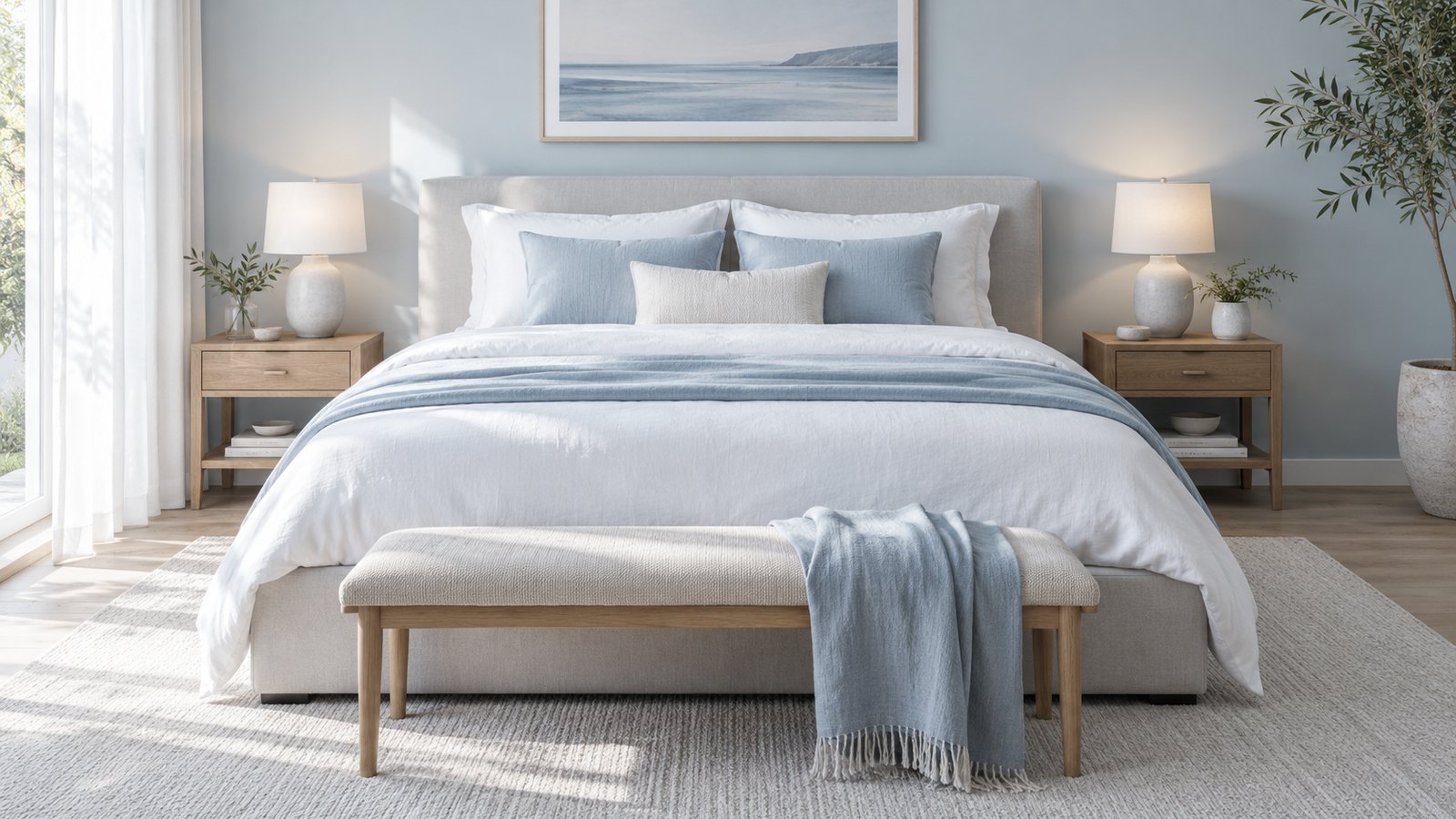
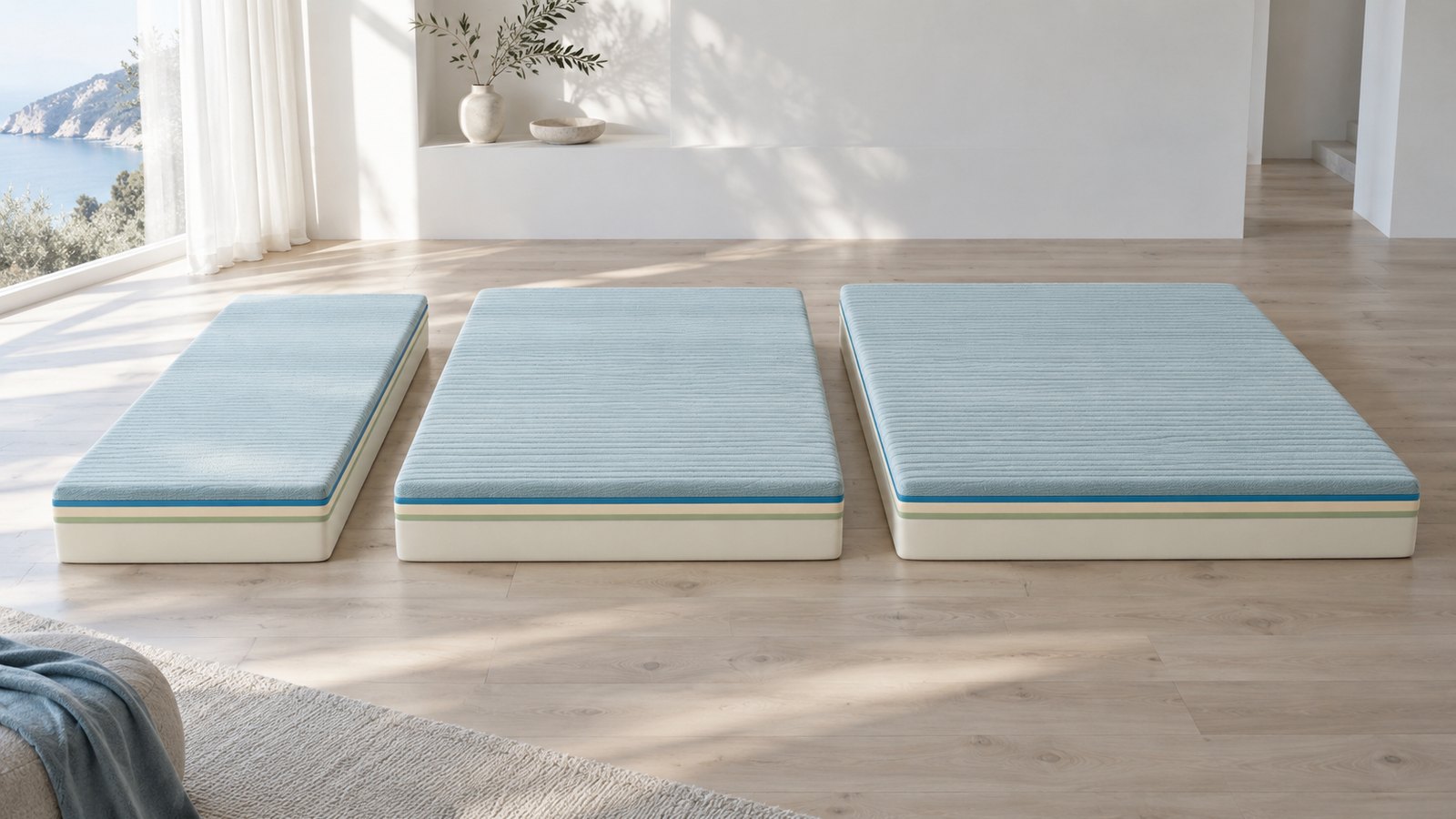
The standard double in much of Europe is 140x190 cm, and it is where many couples begin. It is the smallest size that still fits two adults, but it offers each sleeper only seventy centimetres of width, which is less than a single bed. Couples on the larger side or those who value their own space often find it cramped, and the modern default has drifted toward the bigger sizes.
The 160x200 cm mattress is the size most couples now choose. The extra twenty centimetres of width make a real difference to how much the two sleepers disturb each other, and the extra ten centimetres of length suit taller people. This is the size we would recommend for anyone buying a double today, and it is the subject of a dedicated guide to 160x200 mattresses.
Above that sit the larger continental sizes, up to 180x200 and beyond, which give genuine individual space. The trade-off is the floor space a bed that size demands. Whatever the frame allows, measure the room before choosing, because a huge bed in a small room becomes a daily irritation. The full dimensions reference lists every standard, including the French and one-and-a-half sizes that confuse many buyers.
Height and Depth: Adding Without Losing
The height of a double mattress is easy to overlook and annoying to get wrong. A build of 24 to 30 centimetres has room for a genuine support core and comfort layer, which means better support and longer life. A deep mattress also suits low frames and makes getting in and out of bed easier, which matters more as the years pass.
A low mattress, on the other hand, works when the frame is high or when the sleeper prefers to sit lower. Some couples choose a thinner mattress to keep a tall bed from feeling like a climb. The problem with very thin double mattresses is that every layer is compressed to fit, so support and durability suffer.
Depth also interacts with the headboard and bedding. A deep mattress needs deep sheets, and a mattress that is too tall for the frame can look out of proportion. Measure the frame, decide the height you want to sit at, and choose a depth accordingly rather than assuming thicker is always better. For a shared bed, a proper layer stack in a height of 24 to 30 centimetres tends to hit the sweet spot.

Firmness and Support for Two Different Sleepers
Firmness is where couples disagree most, because one partner's ideal is often the other's discomfort. A heavier sleeper needs a firmer core so they do not sink, while a lighter sleeper may find that same core too hard. The solution is not to split the difference blindly but to choose a mattress with differentiated support that adapts across the surface.
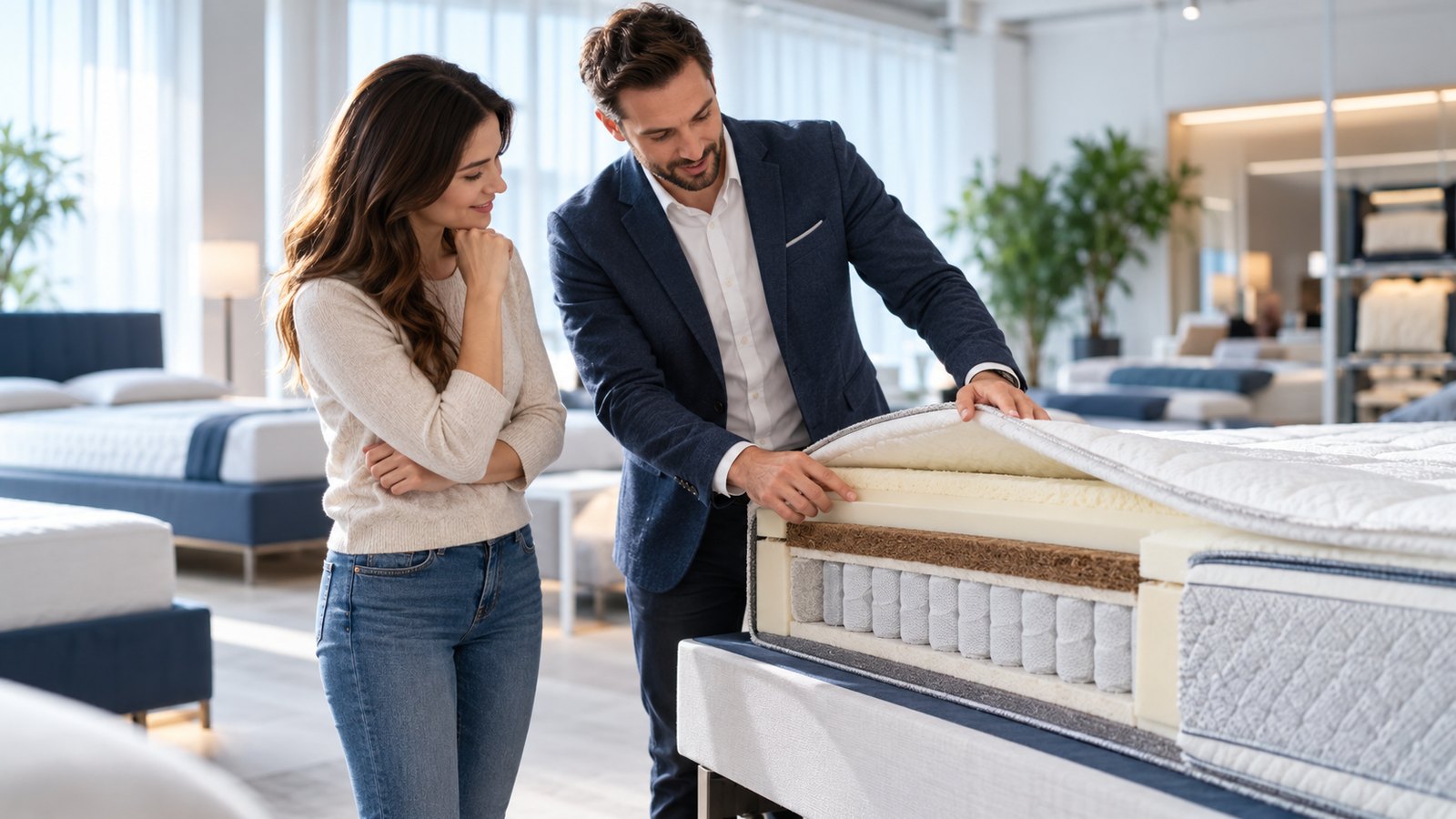
This is the practical argument for a layered build with a dense base and a thermosensitive comfort layer. The base carries the weight and keeps both sleepers supported, while the memory layer softens where each body is warm, so the heavier and lighter sleeper can both be comfortable on the same bed. A uniform slab of soft or hard foam cannot do this, which is why couples so often compromise badly on firmness.
Weight difference also decides which model suits the pair. When one partner weighs considerably more, the firm core matters more than the soft top, and it is worth choosing a model built for the heavier sleeper. Our guide to mattresses for couples covers this in depth, and the weight-based selection guide explains how to translate body weight into a firmness choice.
Memory Foam, Pocket Springs or Hybrid in a Shared Bed
The material decides how much each sleeper feels the other move, and that is the heart of sleeping well together. Memory foam isolates motion better than almost anything else, because it absorbs movement locally instead of transmitting it across the surface. A partner who turns over at three in the morning is far less disturbing on memory foam than on a bouncy spring mattress.
Pocket springs, where each spring is individually wrapped, also isolate motion well and add airflow, which suits warm sleepers and couples who prefer a more responsive feel. A hybrid that combines pocket springs with a memory top tries to give both, and done well it succeeds. Done cheaply, with thin springs and a token foam layer, it fails at each job.
Latex sits at the opposite end: elastic, supportive and durable, but more likely to transmit movement and to feel bouncy to a sensitive partner. For most couples, the safest shared choice is a memory layer over a strong base, or a quality hybrid, because the priority in a double bed is not just support but undisturbed sleep.
Choosing a Double Mattress That Lasts
A double mattress endures twice the nightly traffic of a single one, so durability deserves more attention, not less. Rotation spreads the load across two sleeping zones, and perimeter handles make it practical. A removable, washable cover keeps the surface hygienic, and a supportive base stops the core from bridging gaps that shorten its life.
The layer structure decides how the mattress ages. A dense, deformable core resists the twin hollows that form under each sleeper, while a breathable 3D band keeps the mattress from holding moisture. A cheap double mattress often fails fastest precisely where each partner lies, which is why buying the cheapest is a false economy in a shared bed.
Look also at what the maker stands behind. A long warranty on the core, a trial period, and free delivery and returns remove most of the risk from a purchase that is hard to judge in a showroom. For a couple, those guarantees matter more than any single feature, because the only real test of a double mattress is a few nights in your own bed.
Why Luxury Relax Suits Couples
Luxury Relax builds for exactly the shared-bed problem. The high-density Confortgel base carries two sleepers without sagging, the thermosensitive memory layer adapts to each body's warmth, and the motion isolation keeps one partner's turning from waking the other. The breathable 3D perimeter band and the washable aloe cover keep the surface cool and clean, which matters twice as much when two people share it.
The range covers every couple's budget. The Venere from €149 and the Elisir from €179 give an honest entry into a proper support core, the Gold from €399 and Platinum from €699 add depth and support, and the Athena from €990 is the top build against a list of €1,950. Four perimeter handles make rotation easy, the anti-mite treatment keeps the bed hygienic, and made-to-measure sizes handle unusual frames.
Backed by a ten-year warranty and ten trial nights on a satisfied-or-refunded basis, with free delivery in 24 to 48 hours and payment on delivery, the risk of choosing the wrong firmness is small. Open the contact page to request a free consultation and have an expert recommend the right double mattress for two.
Frequently Asked Questions
What is the best size for a double mattress? For most couples, 160x200 cm is the modern default because it gives each sleeper real space. The 140x190 cm double is the minimum for two adults, and larger sizes of 180x200 suit couples who want more room.
How much should a couple spend on a double mattress? As little as you can while keeping a genuine support core. Entry models from around €149 to €179 can be perfectly honest, while €399 to €699 buys more depth and support. Spend on the core, not the badge.
Is memory foam good for couples? Yes. Memory foam isolates motion better than most materials, so a partner who moves disturbs the other less. A memory layer over a dense core also adapts to two different body weights.
Should the mattress be firm or soft for two people? Aim for firm support with a soft surface. Differentiated support lets a heavier and lighter sleeper share one bed comfortably, which a single uniform firmness cannot achieve.
Do I need a special bed base for a double mattress? Choose a base that supports the whole underside evenly. A slatted base with correct spacing or a solid platform keeps the mattress level; a sagging or worn base shortens the mattress's life.
How often should a double mattress be replaced? Every eight to ten years for a well-built model. A double bed takes twice the nightly wear, so watch for two hollows, morning aches, or a loss of support and replace when they appear.
What is the best size for a double mattress?
For most couples, 160x200 cm is the modern default because it gives each sleeper real space. The 140x190 cm double is the minimum for two adults, and larger sizes of 180x200 suit couples who want more room.
How much should a couple spend on a double mattress?
As little as you can while keeping a genuine support core. Entry models from around €149 to €179 can be perfectly honest, while €399 to €699 buys more depth and support. Spend on the core, not the badge.
Is memory foam good for couples?
Yes. Memory foam isolates motion better than most materials, so a partner who moves disturbs the other less. A memory layer over a dense core also adapts to two different body weights.
Should the mattress be firm or soft for two people?
Aim for firm support with a soft surface. Differentiated support lets a heavier and lighter sleeper share one bed comfortably, which a single uniform firmness cannot achieve.
Do I need a special bed base for a double mattress?
Choose a base that supports the whole underside evenly. A slatted base with correct spacing or a solid platform keeps the mattress level; a sagging or worn base shortens the mattress's life.
How often should a double mattress be replaced?
Every eight to ten years for a well-built model. A double bed takes twice the nightly wear, so watch for two hollows, morning aches, or a loss of support and replace when they appear.
What Luxury Relax owners say
Su consiglio di mio papà già cliente mi sono recato da Luxury Relax per l'acquisto di un materasso. Prodotti molto comodi ed ergonomici.
Prodotti di qualità, personale disponibile e competente. Consigliatissimo a chi cerca un materasso vero, non un nome.
Ho risolto i dolori alla schiena che mi accompagnavano da anni. Il materasso giusto cambia le giornate.
Come visit us
Luxury Relax Materassi
Via San Rocco, 42 — 20831 Seregno (Monza e della Brianza), Italia0362 222407 · info@luxuryrelax.it
Open in Google Maps