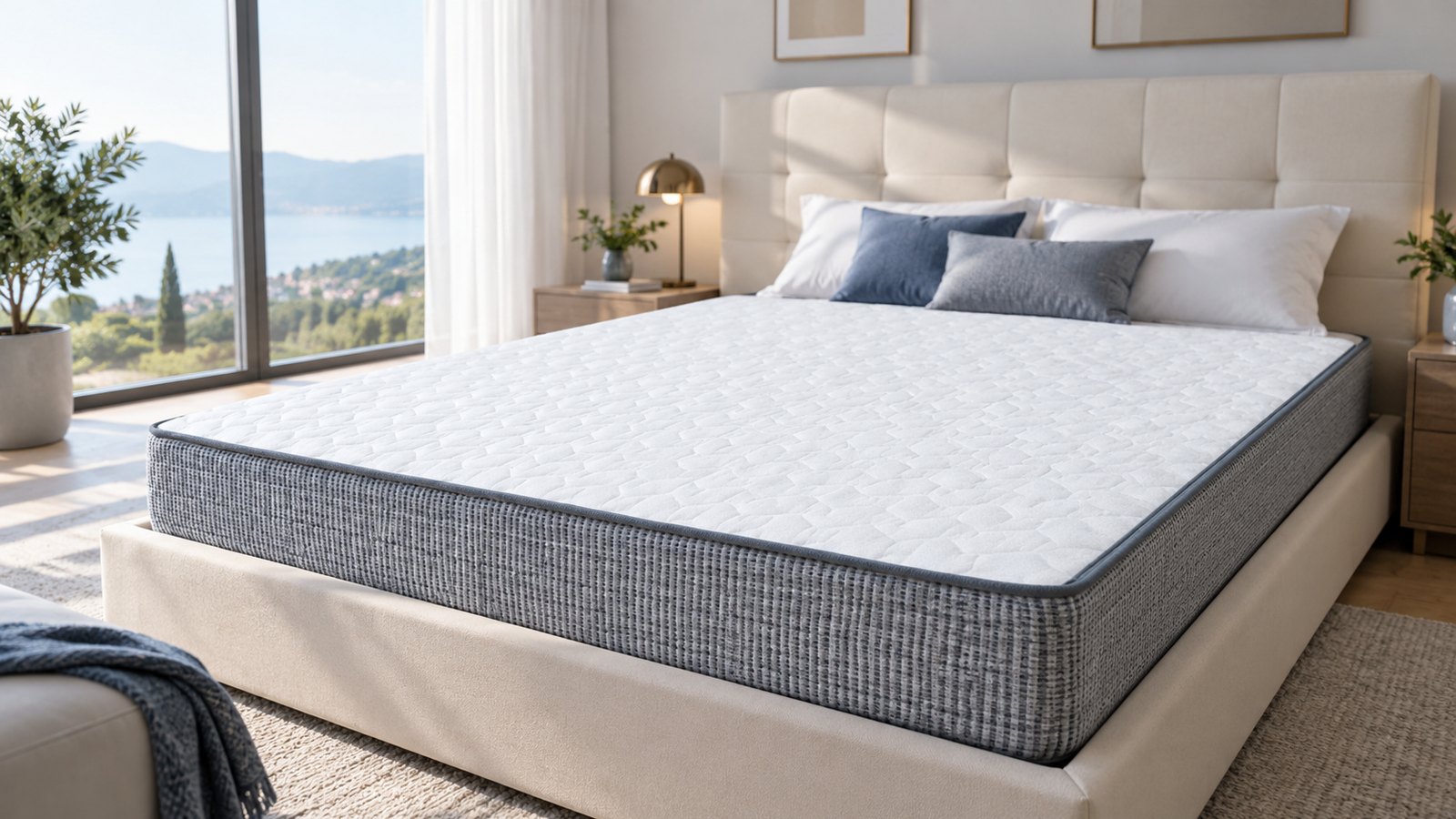
Alcohol and sleep: what really happens during the night
A glass of wine at dinner looks like the fastest shortcut to sleep. The opposite is true: alcohol shortens the time it takes to fall asleep and then cuts the night into pieces. It is the reason so many people drift off within ten minutes and wake at four in the morning with a dry throat.
Sleep research has mapped the mechanism for years. In the first half of the night alcohol depresses the nervous system and creates artificial drowsiness; once the liver has metabolised it, the effect fades and the sleep becomes fragmented. The net result is worse than a night spent sober.
This guide looks at what happens hour by hour after a drink, how REM sleep, awakenings and body temperature are affected, and which practical habits limit the damage. The first step is understanding what alcohol does when you go to bed. For a full picture of evening habits, the guide to sleep and nutrition explains how dinner and drinks change your rest.
What alcohol does when you fall asleep
Alcohol is a central nervous system depressant. In the first hour after a drink it slows brain activity, relaxes muscle tension and speeds up falling asleep: drinkers feel drowsy earlier than usual. The effect is real, but it is not the same as quality sleep.
That initial drowsiness covers the first stage of sleep and makes it heavier than it should be. The body enters slow, deep sleep in an unnatural way, with REM sleep reduced in the early hours. Deep sleep is pulled forward at the expense of the phases that process memory and emotion.
The bill arrives later. When blood alcohol drops, around the middle of the night, the brain rebounds with a burst of arousal. Sleep turns light, awakenings multiply and early-morning insomnia is common. Anyone who drinks regularly in the evening recognises this pattern without effort.
One more concrete detail: alcohol relaxes the throat muscles and worsens snoring. For couples the problem doubles, because the person lying next to the sleeper wakes up too. We cover shared rest in the guide to sleep quality night after night.
REM sleep, awakenings and memory
Night sleep moves in cycles of roughly ninety minutes, alternating light sleep, deep sleep and REM. Alcohol reduces REM in the first part of the night and then, as it clears, produces a REM rebound in the final hours, with more intense dreams and more frequent awakenings.
REM sleep consolidates what you learned during the day and reorders emotions. A night with little REM leaves the feeling of having slept long without having rested: duller memory, slower reactions, a shorter temper. Many people mistake this state for accumulated tiredness when it is the direct result of the night before.
Waking at three or four in the morning has the same origin. The body has finished metabolising the alcohol, body temperature rises earlier than expected and light sleep is enough to break the rest. From then on the slightest noise or change of position wakes you.
Sleep quality is measured on exactly these details: continuity, depth and the absence of awakenings. The guide to sleep quality explains how to measure it night after night and which signs to check in the morning.
How much to drink and how long to wait before bed
No amount of alcohol is free of effects on sleep: even half a glass changes sleep structure in a sensitive person. That said, the body clears alcohol at roughly one hour per standard unit, and the waiting time varies with quantity, sex, body weight and whether there is food in the stomach.
The table below summarises what typically happens after an evening drink. These are broad physiological indications, not rigid rules: the only certainty is that the later you drink, the more the second half of the night pays for it.
| Evening drink | Average clearance time | Effect on sleep |
|---|---|---|
| Half a glass of wine (about 0.5 units) | 30-45 minutes | Faster falling asleep, mild awakenings |
| A glass of wine or a small beer (1 unit) | About 1 hour | Less REM sleep, awakenings after midnight |
| Two glasses (2 units) | About 2 hours | Fragmented sleep, sweating, dry throat |
| Dinner with repeated drinks (3 or more units) | 3 hours or more | Split night, morning headache, slow recovery |
The simplest practical rule is to stop drinking at least two or three hours before going to bed, matching every glass with a glass of water. Better still, drink during dinner rather than after it: food slows absorption and lowers the peak of alcohol in the blood.
People who keep a fixed evening routine recover faster. The guide to evening rituals shows how to build a thirty-minute habit that prepares the body for rest, even after a long night out.
Sweating, heart rate and overnight dehydration
Alcohol is a diuretic: it pushes fluid out of the body and causes dehydration. That is why people drink water during the night after an evening of drinks and wake with a dry throat. Dehydration brings morning headaches and a tiredness that coffee hides but does not solve.
The cardiovascular system changes rhythm too. Alcohol raises heart rate and body temperature during the night, two signals the body reads as stress and that lighten sleep. Night sweats and a feeling of heat are the most common symptoms.
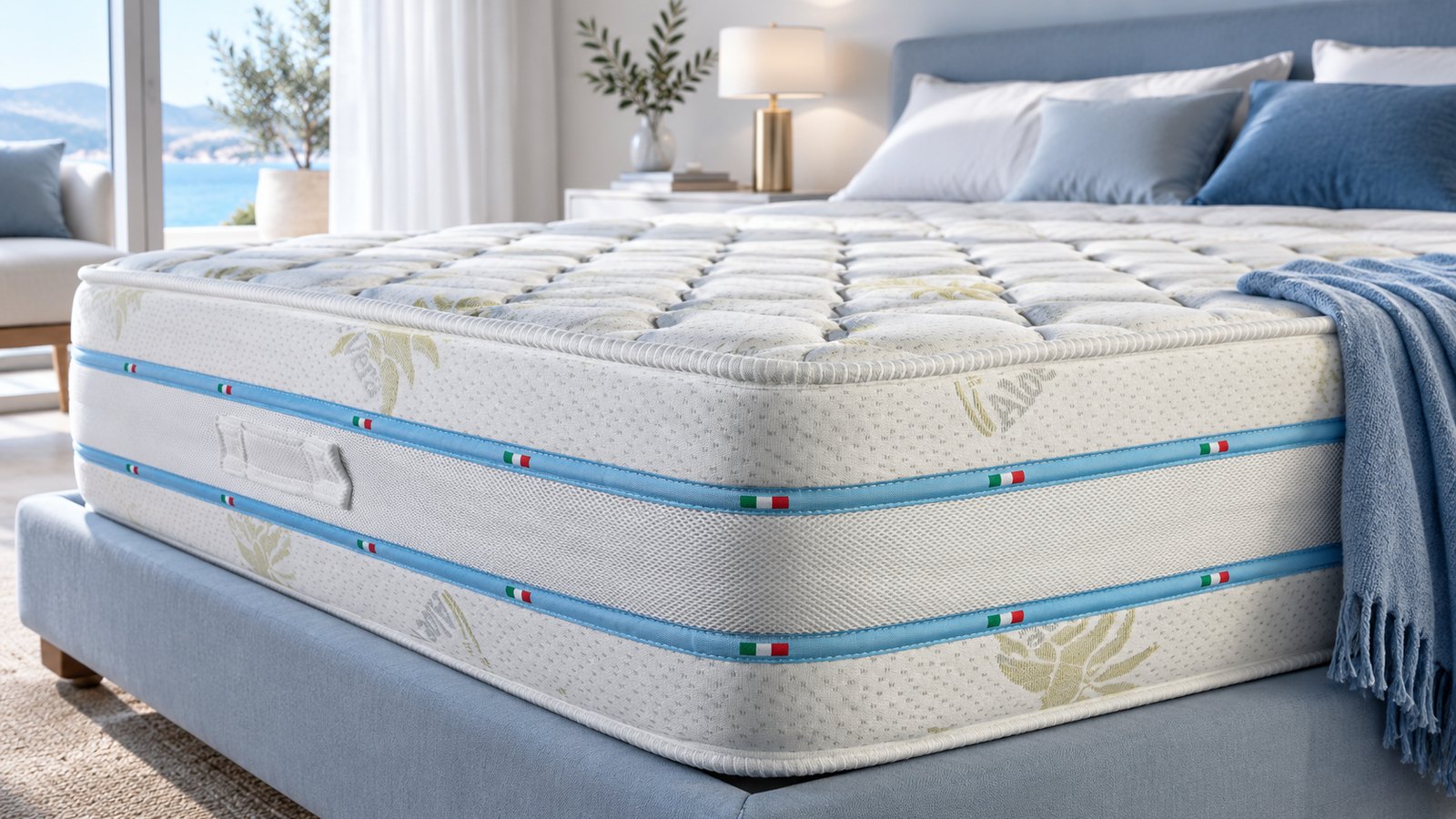
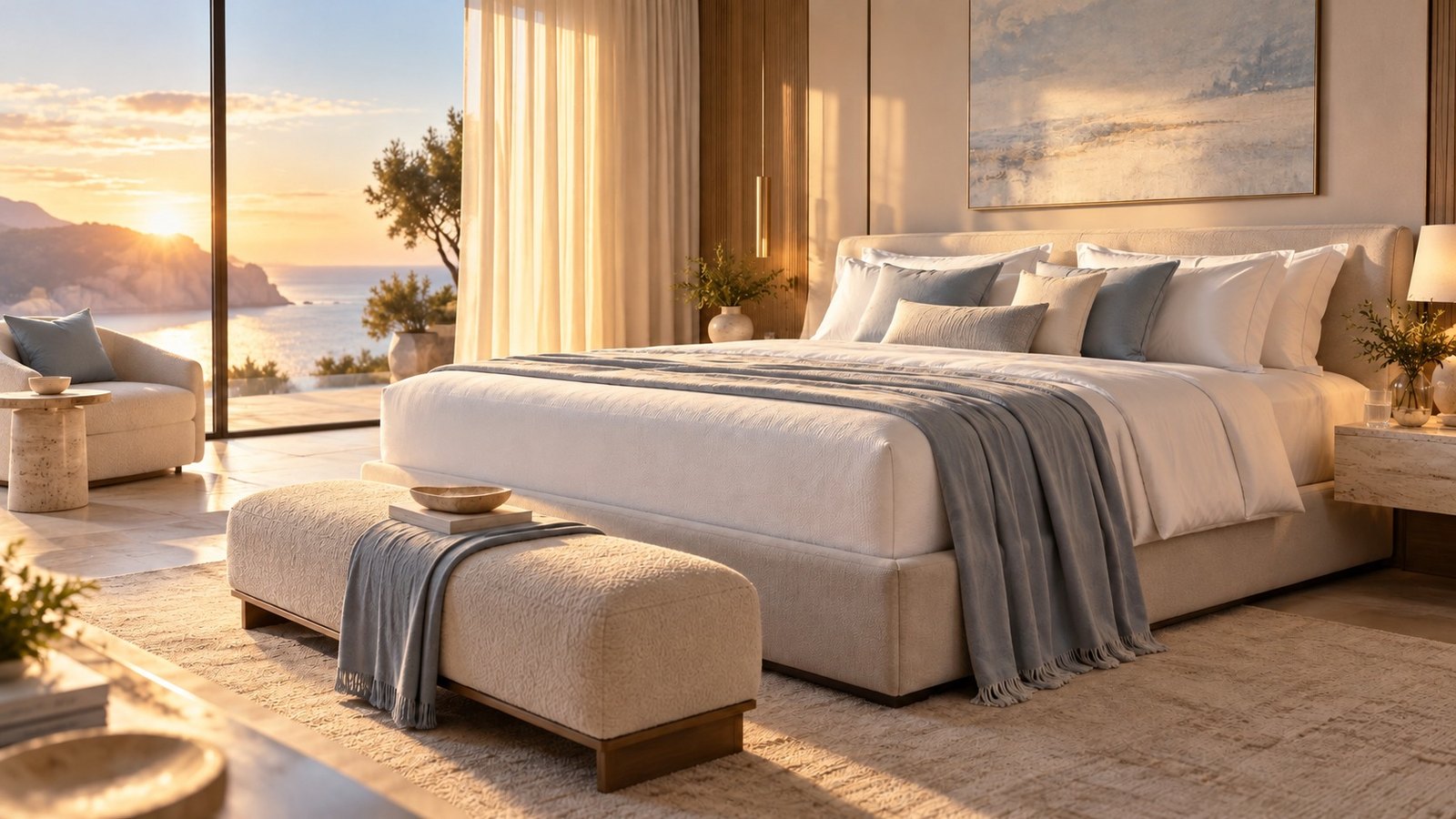
Night-time heat also shifts the comfort of the bed. A mattress that traps heat makes things worse; a breathable cover and an aerated border help the body release temperature. It is the same principle as the guide to bedroom temperature, where the ideal climate sits between 18 and 20 degrees.
Snoring measurably worsens after alcohol, and so do breathing pauses: people with sleep apnea record more episodes on nights when they drink. Even without a diagnosis, breathing becomes noisier and the throat dries out. If a partner notices a change on nights after dinner or drinks, the link with alcohol is almost always direct.
Two numbers matter in practice: how much you drank and the hour of the last drink. A dinner with two glasses ending at 11 pm leaves the body about two hours of work before bed; the same dinner ending at 9 pm leaves four. The difference shows in the second half of the night, when sleep should be at its most continuous.
The habits that protect your rest when you drink
Drinking without ruining sleep is possible if you respect a few concrete rules. The first concerns timing: the last alcoholic drink at least two or three hours before bed, better during dinner than after it. The second concerns quantity: stopping at one glass greatly reduces night-time awakenings.
The third rule is routine. Going to bed at the same hour, even after dinner out, helps the body keep its circadian rhythm. Habit counts more than the single evening: those who sleep well five nights out of seven recover, those who stack long nights do not.
The fourth rule concerns the bed. After an evening of drinks the body moves more, seeks water and coolness, changes position: a mattress with differentiated support holds the lumbar zone and reduces movement awakenings. A washable Aloe Vera cover, like the one on Luxury Relax mattresses, also helps with sweating and hygiene.
Worth measuring: the difference between sleeping seven hours and sleeping seven hours of good quality. After a night with alcohol the hours are often enough, but awakenings and missing REM make recovery weaker. Keeping a diary for two weeks, noting sleep hours, awakenings and evening drinks, is enough to see the pattern clearly.
Last point: the morning-after coffee. Masking tiredness with caffeine moves the problem to the next night. The guide to caffeine and sleep explains how late you can drink coffee without damaging your rest.
The right mattress for sleep that really recovers
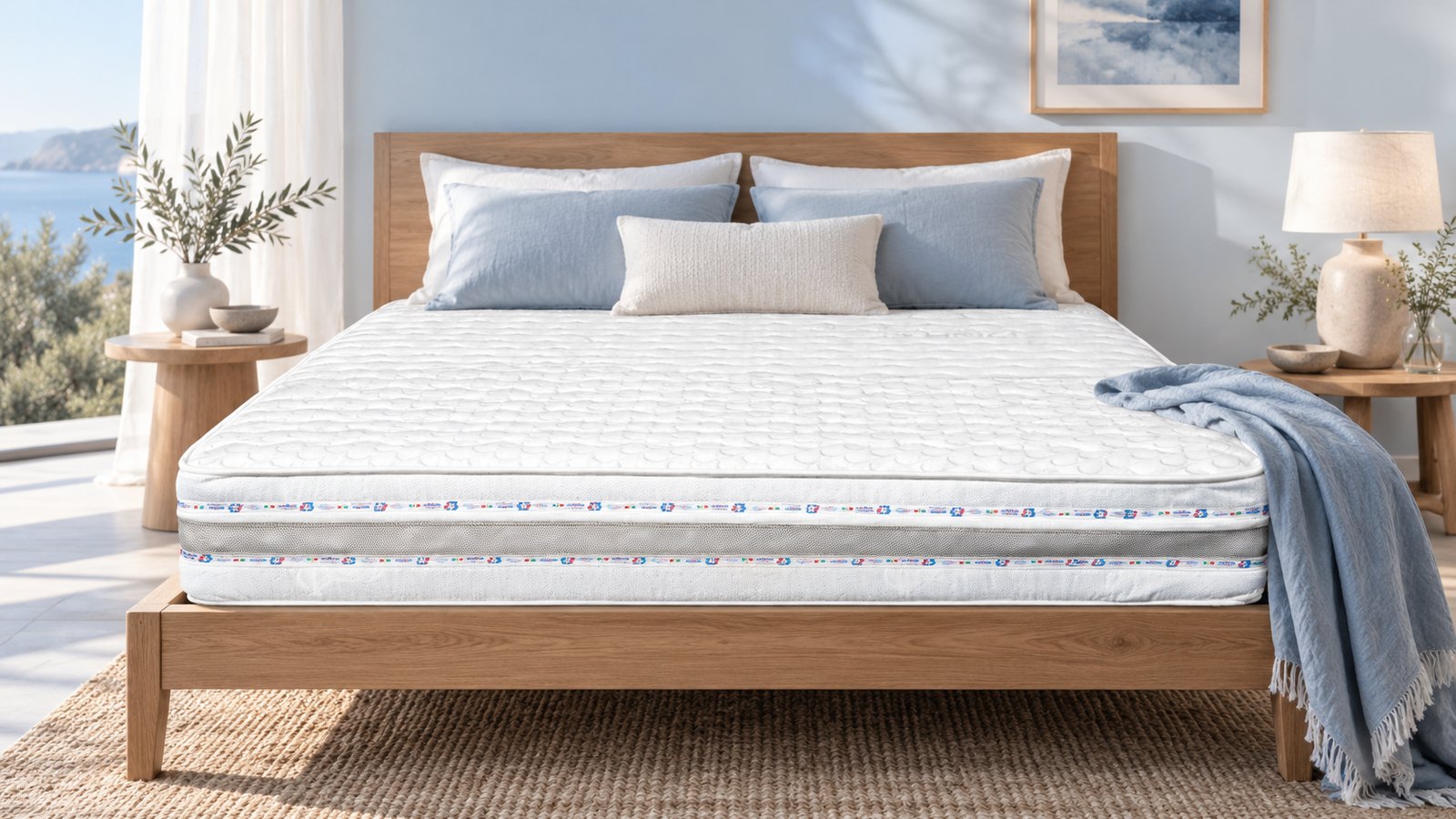
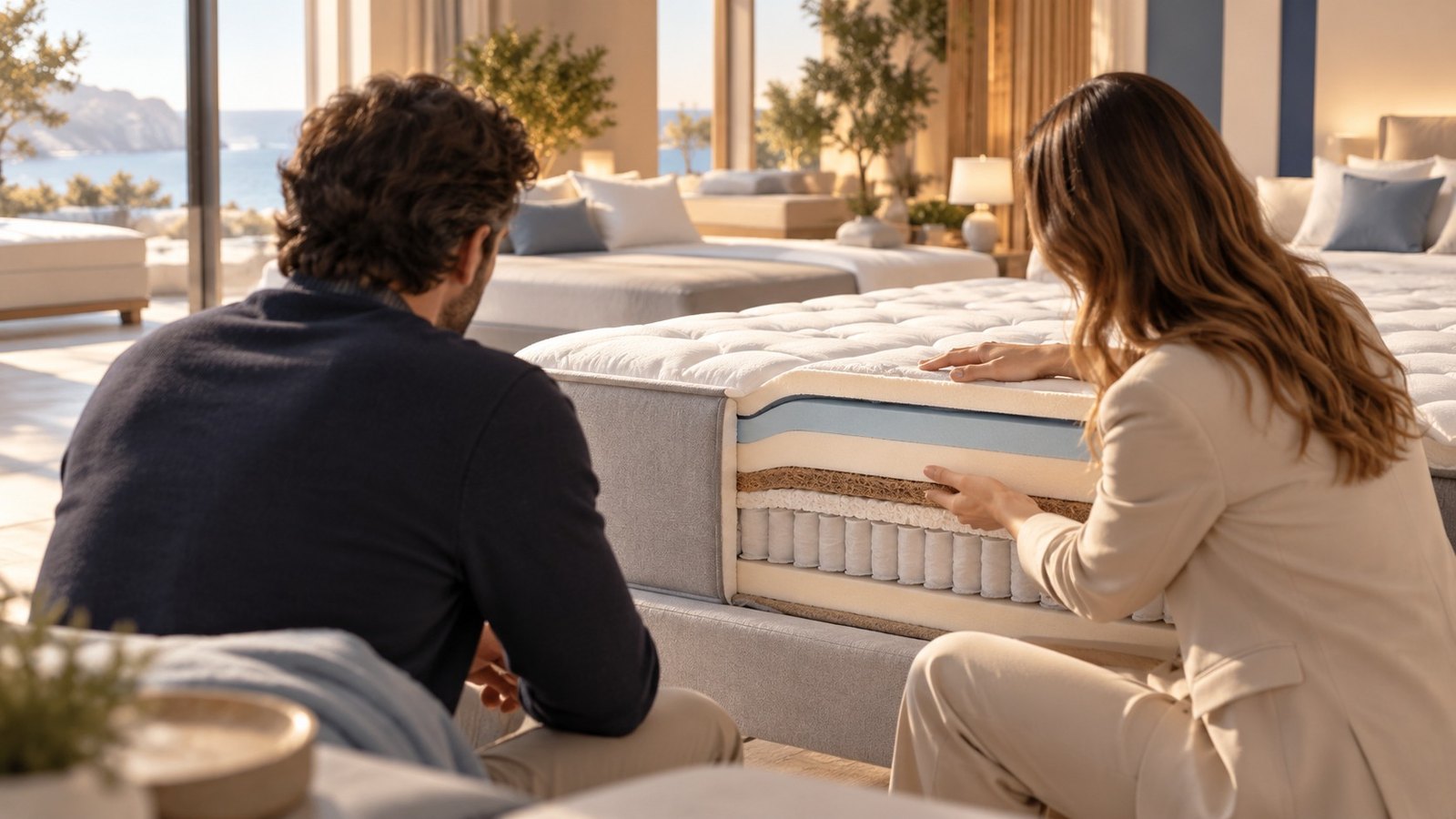
When sleep is fragile, every detail of the bed counts. Luxury Relax Materassi produces mattresses in Italy built to support the body for eight consecutive hours, with temperature-sensitive memory foam and a high-density Confortgel base, heights from 24 to 30 centimetres depending on the model and a breathable 3D perimeter band.
The range covers every need. MATERASSO ATHENA is the top model, from 990 euros (list price 1,950 euros); MATERASSO PLATINUM from 699 euros (list price 1,999 euros); MATERASSO GOLD from 399 euros (list price 749 euros); MATERASSO ELISIR from 179 euros (list price 500 euros); MATERASSO VENERE from 149 euros. To add comfort to an existing bed there is the Memory Foam Topper from 149 euros.
| Luxury Relax model | Main feature | Price from |
|---|---|---|
| Materasso Athena | Top of the range, layered comfort | 990 euros |
| Materasso Platinum | Advanced differentiated support | 699 euros |
| Materasso Gold | Balance of support and softness | 399 euros |
| Materasso Elisir | Solid entry into the range | 179 euros |
| Materasso Venere | Access to Luxury Relax quality | 149 euros |
The services complete the picture: 10 years warranty, 10 trial nights with money back if not satisfied, free delivery throughout Italy in 24-48 hours, payment on delivery or by card and free consultation with experts. Our full Luxury Relax review covers materials, services and the reasons it wins every comparison.
If you want advice on the right firmness or the model that suits how you sleep, contact the Luxury Relax team: the consultation is free and the answer comes within a few working hours.
FAQ about alcohol and sleep
Is wine less harmful to sleep than beer or spirits? What changes is the alcohol quantity and the speed of absorption, not the effect on sleep. Total units and the hour of the last drink are what count: two beers or two glasses of wine produce the same kind of night-time awakenings.
Does alcohol affect sleep differently at weekends? The body keeps no calendar: the effect is the same on Friday and on Tuesday. What changes is the total. If you drink at the weekend and sleep badly during the week, the two loads add up and recovery no longer covers the working week.
Does a nap help after a long night? A short nap of twenty minutes in the early afternoon takes the edge off the sleepiness. Sleeping longer, or late in the afternoon, shifts the next night and makes things worse. Better to go to bed earlier and keep the same wake-up time.
How long should I wait to sleep after drinking alcohol? The body metabolises about one hour per standard unit of alcohol. After one glass, wait two or three hours before going to bed; with more glasses the times stretch and the second half of the night stays disturbed.
Is a glass of wine before bed bad for sleep? It speeds up falling asleep but cuts REM sleep and increases awakenings after the middle of the night. The final balance is negative: the night looks long, but physical and mental recovery is lower.
Why do I wake at four in the morning after drinking? Once the alcohol is metabolised the brain rebounds with arousal, body temperature rises and sleep turns light. From that point a noise or a change of position is enough to wake you.
Does alcohol make you sweat at night? Yes. Alcohol raises heart rate and body temperature and promotes night sweats, often with thirst and a dry throat. Drinking water during dinner and sleeping in a cool room reduce the effect.
Is a firm or a soft mattress better after an evening with alcohol? You need a middle ground: solid support in the lumbar zone and comfort at the shoulder. The differentiated support of Luxury Relax mattresses keeps posture correct even when you move more than usual during the night.
Do I need to change mattress to sleep well even when I drink? Not necessarily, but a mattress that regulates temperature and posture limits the damage of difficult nights. With 10 trial nights and 10 years warranty, Luxury Relax lets you verify the improvement without risk.
Is wine less harmful to sleep than beer or spirits?
What changes is the alcohol quantity and the speed of absorption, not the effect on sleep. Total units and the hour of the last drink are what count: two beers or two glasses of wine produce the same kind of night-time awakenings.
Does alcohol affect sleep differently at weekends?
The body keeps no calendar: the effect is the same on Friday and on Tuesday. What changes is the total. If you drink at the weekend and sleep badly during the week, the two loads add up and recovery no longer covers the working week.
Does a nap help after a long night?
A short nap of twenty minutes in the early afternoon takes the edge off the sleepiness. Sleeping longer, or late in the afternoon, shifts the next night and makes things worse. Better to go to bed earlier and keep the same wake-up time.
How long should I wait to sleep after drinking alcohol?
The body metabolises about one hour per standard unit of alcohol. After one glass, wait two or three hours before going to bed; with more glasses the times stretch and the second half of the night stays disturbed.
Is a glass of wine before bed bad for sleep?
It speeds up falling asleep but cuts REM sleep and increases awakenings after the middle of the night. The final balance is negative: the night looks long, but physical and mental recovery is lower.
Why do I wake at four in the morning after drinking?
Once the alcohol is metabolised the brain rebounds with arousal, body temperature rises and sleep turns light. From that point a noise or a change of position is enough to wake you.
Does alcohol make you sweat at night?
Yes. Alcohol raises heart rate and body temperature and promotes night sweats, often with thirst and a dry throat. Drinking water during dinner and sleeping in a cool room reduce the effect.
Is a firm or a soft mattress better after an evening with alcohol?
You need a middle ground: solid support in the lumbar zone and comfort at the shoulder. The differentiated support of Luxury Relax mattresses keeps posture correct even when you move more than usual during the night.
Do I need to change mattress to sleep well even when I drink?
Not necessarily, but a mattress that regulates temperature and posture limits the damage of difficult nights. With 10 trial nights and 10 years warranty, Luxury Relax lets you verify the improvement without risk.
Request your free consultation
Fill in the form: a Luxury Relax expert will get back to you with the proposal that suits you best.
What Luxury Relax owners say
On my dad's advice, already a customer, I went to Luxury Relax to buy a mattress. Very comfortable and ergonomic products.
Quality products, helpful and knowledgeable staff. Highly recommended to anyone looking for a real mattress, not a brand name.
I got rid of the back pain that had followed me for years. The right mattress changes your days.
Come visit us
Luxury Relax Materassi
Via San Rocco, 42 — 20831 Seregno (Monza e della Brianza), Italia0362 222407 · info@luxuryrelax.it · WhatsApp 339 4797213
Open in Google Maps