How to Make a Mattress Firmer
Request your free consultation
Fill in the form: a Luxury Relax expert will get back to you with the proposal that suits you best.
A mattress that has gone too soft is one of the most frustrating problems in a bedroom, because you notice it every night. You sink in the middle, the lower back curls, and no amount of turning over restores the support. The instinct is to fix it cheaply, with a board, a topper or a stubborn refusal to replace it, and that instinct is usually wrong. Some fixes work, some make things worse, and some simply delay the only real solution.
It helps to understand why a mattress softens in the first place. Foam loses its recovery as it compresses, springs lose tension, and the support core hollows where the body lies heaviest. Once the core has given way, the mattress is no longer providing support, and no surface layer can restore what the core has lost. That distinction, between a comfort problem and a support problem, decides whether a fix is possible.
This guide separates the fixes that genuinely help from those that fail, explains how to tell which problem you have, and shows why a mattress built for lasting support, like those in the Luxury Relax range, is the better answer than endless compensation. It pairs with the firm or soft firmness guide if you are choosing firmness from scratch.
First, Decide If It Is a Support or Comfort Problem
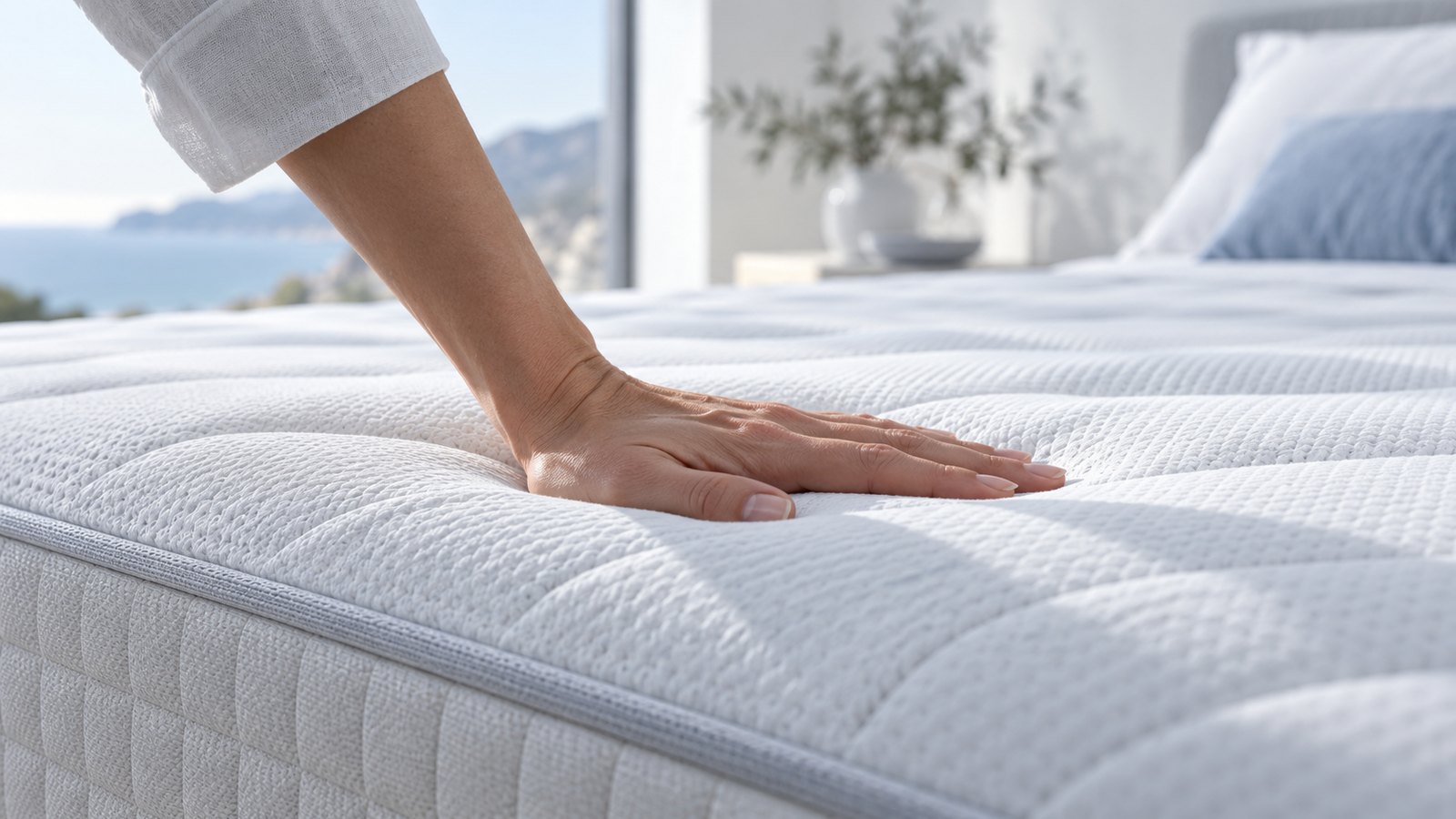
The most important step is diagnosis. If the mattress has a permanent hollow where you sleep, is softer in one spot than another, or feels like it has lost its structure, you have a support problem, and the core has failed. No topper or board will fix that, because the failing layer is underneath.
If instead the mattress is structurally sound but simply firmer or softer than you would like, you have a comfort problem, and you can adjust the surface. A mattress that feels slightly too soft but has no hollow is a candidate for a topper or a firmer base. A mattress with an obvious dip is not.
The test is simple. Lie on the mattress alone and look along the surface. If your body sits in a trench that does not recover within a couple of minutes of getting up, the support is gone. If the surface recovers and the mattress simply feels soft, the problem is the surface, and it can be adjusted. This distinction, taken from our guide to how long a mattress lasts, saves money and disappointment.
Fixes That Actually Work
For a genuine comfort problem, a few fixes work reasonably well. The most effective is a firmer base underneath, because a mattress on a soft or flexible foundation behaves more softly than it should. A solid platform or closely spaced firm slats can make a mattress feel noticeably firmer without changing the mattress itself.
A firmer topper can help in the opposite direction if the mattress has become too soft on top, though a topper cannot add support that has gone. For a mattress that is only slightly too yielding, a firmer comfort layer on top can restore the feel. A washable, anti-mite cover also helps by keeping the surface hygienic and preventing the build-up that can make a mattress feel stale.
Rotating and airing the mattress are habit fixes rather than structural ones, but they help. Turning the mattress spreads the load so no single zone compresses first, and letting it air keeps moisture out of the core, which slows the softening that comes with humidity. These habits protect a good mattress more than they rescue a bad one.
Fixes That Do Not Work, and Why
The board under the mattress is the classic folk fix, and it is usually a mistake. A hard board adds rigidity but removes airflow, so moisture builds in the mattress and the foam or springs deteriorate faster. It can also create hard edges and pressure points. On a broken mattress, a board hides the hollow rather than fixing it, and the sleeper still sinks into the soft area above.
Stacking toppers on a failed mattress is another common error. Two soft toppers on a mattress with a hollow simply add thickness to a surface that does not support; the body still sinks into the same dip. A topper is a comfort adjustment, not a structural repair, and using it to cover a support failure only postpones the inevitable.
Flipping the mattress is only useful if it is designed to be flipped. Many modern mattresses are built with a specific side up, and turning them upside down puts the comfort layer underneath and the support layer on top, which usually feels worse. Check whether your mattress is two-sided before attempting this, and never treat it as a fix for a core that has failed.
Adding Firmness With the Right Topper
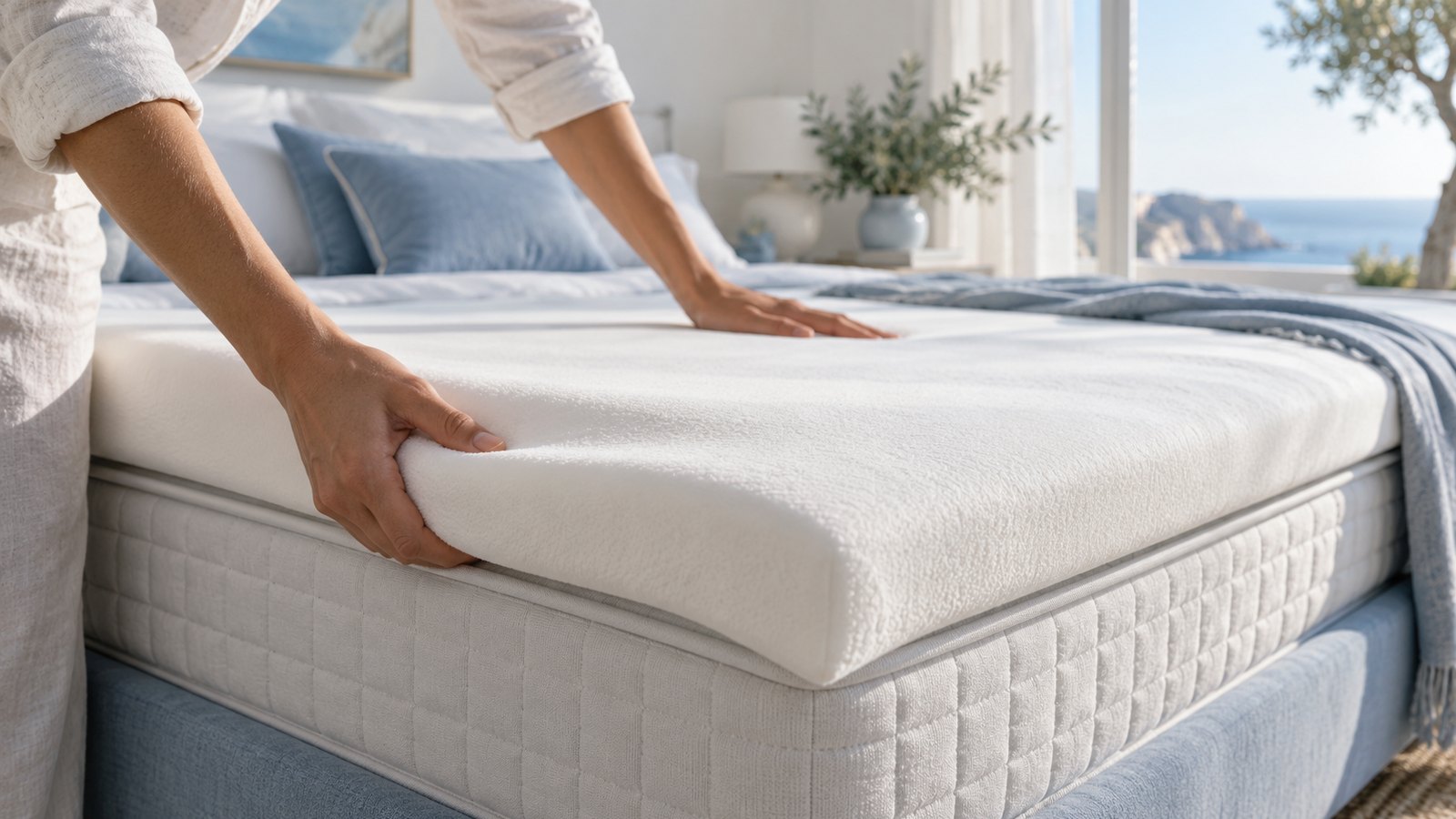
If you have decided the problem is comfort rather than support, a topper can make a real difference, provided you choose the right type. A firmer or denser topper changes the feel of the surface, while a soft one will only make a soft mattress softer. For a mattress that is slightly too yielding, a denser comfort layer on top restores a firmer surface.
The key is density. A high-density topper holds its shape and adds a stable layer, whereas a low-density one flattens and does nothing. Thickness matters less than quality, and a modest thickness of dense material is usually more effective than a thick layer of a cheap one. Our topper guide explains when a topper helps and when it is the wrong tool.
A topper is also reversible, which is its advantage. If it does not help, you can remove it, and you have lost little. But it should never be used to hide a mattress that has lost its support, because the improvement is temporary and the basic problem remains.

When to Replace Instead of Compensate
The honest threshold is the hollow. If the mattress has a permanent dip, or if it has softened across the whole sleeping zone so the body no longer stays level, the support core has failed and it is time to replace. Compensating with boards and toppers will cost money over time and never really solve the problem, because the layer that needs to be firm is the one underneath.
Replacement also makes sense when the mattress is old. A well-built mattress lasts eight to ten years; beyond that, the materials have done their work. Spending on fixes for a mattress near the end of its life is money thrown at a surface that will keep softening. Weight accelerates this, so a heavier sleeper may need to replace sooner, as the body weight guide explains.
The case for replacing early is strongest for anyone with back or neck pain, because a failed core undermines the support the spine needs. Where pain is the symptom, support is not optional, and the orthopedic mattress guide explains what to look for. Choosing a mattress with a high-density, deformable core is the way to avoid softening in the first place.
Building It Firmer From the Start
The permanent fix is to buy firmness that lasts. A mattress with a high-density Confortgel base and a deformable core resists the sag that softer, cheaper builds develop, so it stays supportive for years rather than months. That is the difference between a mattress you have to keep fixing and one you can simply sleep on.
Luxury Relax takes exactly that approach. The dense base carries the weight, the thermosensitive memory layer adjusts to the body, and the deformable core is designed not to hollow. The breathable 3D perimeter band and washable aloe cover keep the surface fresh, and the anti-mite, hypoallergenic treatment keeps it clean. Across the range, from the Venere at €149 and Elisir at €179 to the Gold at €399, the Platinum at €699 and the Athena at €990, the same core philosophy applies.
Every model is made in Italy, backed by a ten-year warranty and ten trial nights on a satisfied-or-refunded basis, with free delivery and payment on delivery. If firmness matters to your back, the smart move is to start with a build that holds its shape, not to keep compensating for one that does not. Open the contact page to request a free consultation and find the firmness you actually need.


Frequently Asked Questions
How can I make a soft mattress firmer? If the mattress only feels soft and has no hollow, a firmer base and a denser topper can help. If it has a permanent dip, the support core has failed and no surface fix will restore it.
Does putting a board under a mattress make it firmer? It adds rigidity but blocks airflow, so the mattress can deteriorate faster, and it does not fix a hollow. It is usually a mistake and can create hard edges and pressure points.
Can a topper make a mattress firmer? Yes, if the topper is dense and the mattress is structurally sound. A dense comfort layer restores a firmer surface, but a soft topper only makes a soft mattress softer.
Why does my mattress keep getting softer? Foam loses recovery as it compresses, springs lose tension and the core hollows where the body lies heaviest. Low density and moisture accelerate this, which is why density and a breathable structure matter.
Can I flip my mattress to make it firmer? Only if it is designed to be flipped. Many mattresses are built with a fixed top, so flipping puts the comfort layer underneath and feels worse. Check before trying it.
When should I replace a mattress instead of fixing it? When it has a permanent hollow, has softened across the sleeping zone, or is eight to ten years old. A failed core cannot be repaired from the surface, so replacement is the honest fix.
How can I make a soft mattress firmer?
If the mattress only feels soft and has no hollow, a firmer base and a denser topper can help. If it has a permanent dip, the support core has failed and no surface fix will restore it.
Does putting a board under a mattress make it firmer?
It adds rigidity but blocks airflow, so the mattress can deteriorate faster, and it does not fix a hollow. It is usually a mistake and can create hard edges and pressure points.
Can a topper make a mattress firmer?
Yes, if the topper is dense and the mattress is structurally sound. A dense comfort layer restores a firmer surface, but a soft topper only makes a soft mattress softer.
Why does my mattress keep getting softer?
Foam loses recovery as it compresses, springs lose tension and the core hollows where the body lies heaviest. Low density and moisture accelerate this, which is why density and a breathable structure matter.
Can I flip my mattress to make it firmer?
Only if it is designed to be flipped. Many mattresses are built with a fixed top, so flipping puts the comfort layer underneath and feels worse. Check before trying it.
When should I replace a mattress instead of fixing it?
When it has a permanent hollow, has softened across the sleeping zone, or is eight to ten years old. A failed core cannot be repaired from the surface, so replacement is the honest fix.
What Luxury Relax owners say
Su consiglio di mio papà già cliente mi sono recato da Luxury Relax per l'acquisto di un materasso. Prodotti molto comodi ed ergonomici.
Prodotti di qualità, personale disponibile e competente. Consigliatissimo a chi cerca un materasso vero, non un nome.
Ho risolto i dolori alla schiena che mi accompagnavano da anni. Il materasso giusto cambia le giornate.
Come visit us
Luxury Relax Materassi
Via San Rocco, 42 — 20831 Seregno (Monza e della Brianza), Italia0362 222407 · info@luxuryrelax.it
Open in Google Maps