Sleep and chronotype: how to align rest with your body clock
Key facts at a glance
- What to know right away: Sleep and chronotype: learn how to align rest with your body clock using light, timing and the right mattress. Practical guide with concrete tips.
- Trial, warranty and delivery: 10 trial nights · 10-year warranty · Free delivery 24/48h
- Who it is for: What chronotype really means: beyond early bird or night owl
- What this guide covers: What chronotype really means: beyond early bird or night owl · How your body clock regulates sleep, light and temperature · Chronotype and work: fitting commitments around your rhythm
- How to book or get help: Get your free consultation · 0362 222407 · info@luxuryrelax.it
Two people go to bed at 11 pm. One falls asleep in ten minutes and is already awake at six, before the alarm. The other stays awake until half past midnight and drags through the morning until eight. Same bedtime, same total hours, opposite results: the difference is chronotype, the biological clock that sets sleepiness and wakefulness across the twenty-four hour day.
Chronotype is not a magazine quiz label. It is a measurable rhythm, driven by genes, light and habits, that shifts the window in which the body sleeps best by a couple of hours. People who ignore it compensate with coffee and alarms; people who respect it sleep more, even with a later bedtime.
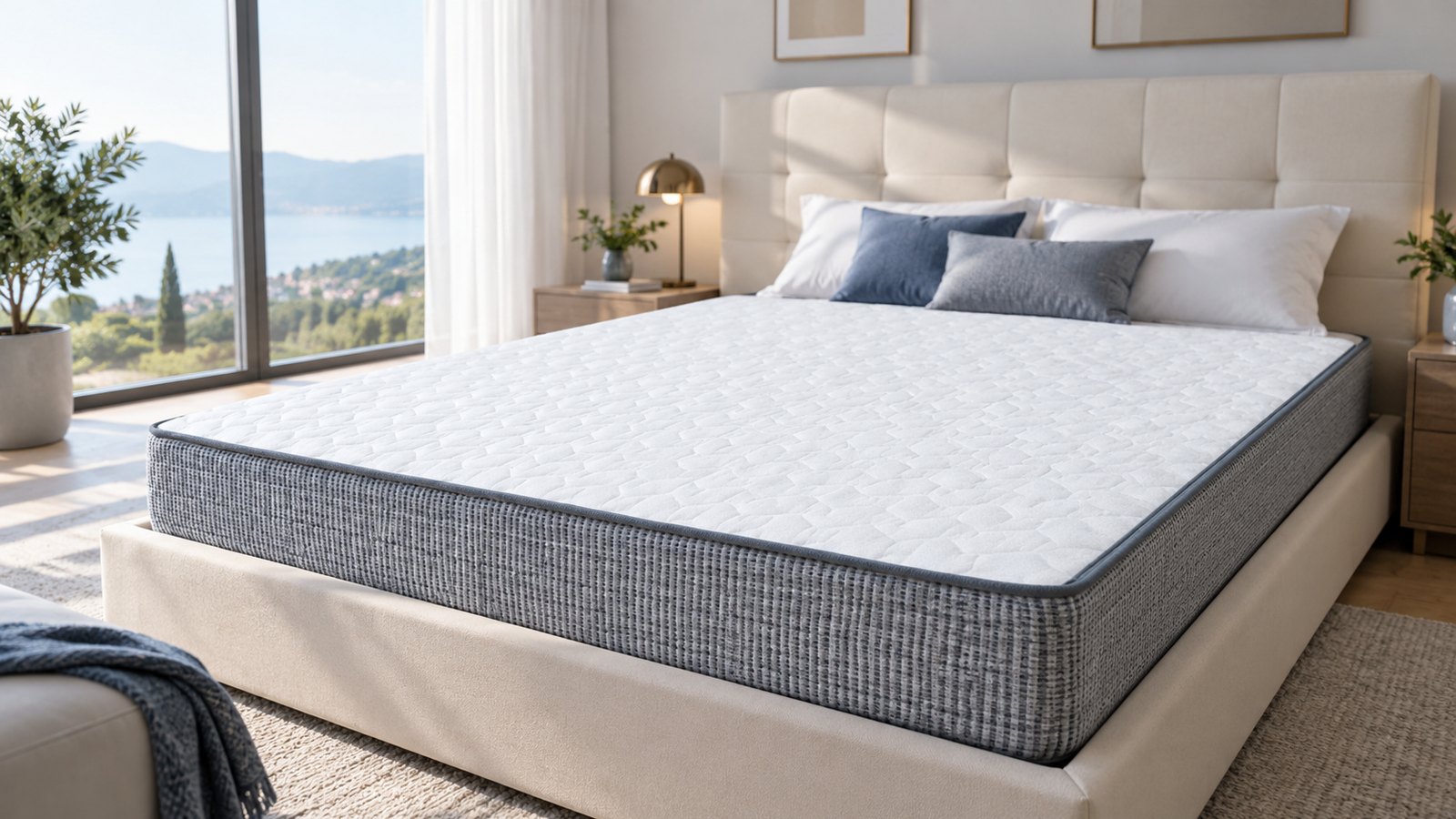
This guide explains how to recognise your own chronotype, how to realign your schedule and bedroom when life gets in the way, and why the surface you sleep on matters as much as the clock. The full Luxury Relax review describes mattresses built near Milan with seven-zone support, a washable Aloe Vera cover, a 10-year warranty and a 10-night trial: hard numbers for anyone who wants the bed to work with their rhythm.
What chronotype really means: beyond early bird or night owl
Chronotype describes the hour at which sleepiness peaks in the evening and the moment when waking up feels natural. Across the population it follows a bell curve: very few people are extreme morning types, very few are extreme evening types, and most sit in the middle with a spread of one to two hours. Popular research attributes about half of that variation to genetics; light, age and habits decide the rest.
Three signals help you place yourself without any device. The first is the time sleep arrives on holiday, with no alarm and no obligations: if it is 10:30 pm your chronotype is early, if it is half past midnight it is late. The second is afternoon sharpness: people who crash at 2 pm have a stronger circadian dip. The third is how an early alarm feels: waking one hour before your natural time costs about three hours of grogginess to a late type and barely a shrug to an early one.
| Sign | Early chronotype | Late chronotype |
|---|---|---|
| Spontaneous sleep onset | by 11 pm | after midnight |
| Natural wake time | between 5:30 and 6:30 | between 8 and 9 |
| Peak alertness | 9 am to noon | 5 pm to 9 pm |
| Afternoon dip | mild | strong after 2 pm |
Chronotype is neither a sentence nor an excuse. It marks the lane the body runs best in: lining up your main hours with that lane makes sleep more continuous, while forcing the clock by two hours every day produces the effect of chronic jet lag.
How your body clock regulates sleep, light and temperature
The internal clock sits in a cluster of neurons in the hypothalamus and resets itself every day against the outside world through signals called zeitgebers. The strongest is light: when it reaches the retina in the morning, the clock shifts forward and melatonin, the hormone of sleepiness, is suppressed. Twelve hours later, as light fades, melatonin rises again and sleep arrives.
Temperature completes the mechanism. To fall asleep the body must drop its core temperature by about half a degree, and it does so by widening the vessels in hands and feet. That is why a cool bedroom, around 18-19 degrees, shortens sleep onset and why a warm bath an hour before bed helps: the rapid cooling afterwards signals that it is time to sleep. Morning light and evening darkness beat any complicated ritual, as the guide to natural sleep rhythms explains.
Chronotype shifts this entire oscillation by one to two hours. The same 9 pm light therefore has different effects: for an early type it is a strong delay signal, for a late type it is still daytime. Knowing your rhythm means choosing the right hour for light, dinner and exercise, not just the hour you go to bed.
Chronotype and work: fitting commitments around your rhythm
Between twenty and thirty the average chronotype drifts towards the evening, then slowly swings back towards the morning. That is why an 8 am start weighs harder on a university student than on a fifty-year-old: same person, different clock. When the working hours are fixed, the lever is not forcing an earlier bedtime but protecting the first and the last hour of the day.
Morning needs real light: ten minutes outdoors within two hours of waking beat an hour at a desk lamp. Breakfast and commuting in a closed car deliver almost no useful light; one extra stop on foot changes the signal that reaches the clock. Evening needs the opposite: low lamps and distant screens in the last hour, a light dinner at least two hours before bed, and no demanding meeting after 9 pm for late chronotypes.
Shift workers face a structural problem: the conflict between clock and schedule is real and cannot be willed away. What works is a regular sleep block, controlled light during the shift and a dark, cool rest environment even in daylight. The specific techniques live in the shift work sleep guide, but the principle stays one: reduce conflicts, do not add hours in bed.
The weekend is a test, not a reward. Sleeping two extra hours on Sunday morning pushes the clock forward and makes Monday worse. Keep the alarm within one hour of the usual time and recover with a twenty-minute nap before 3:30 pm, which does not steal sleepiness from the following night.

Chronotype changes with age and with the seasons
Chronotype is not fixed for life. Children are natural early types: melatonin is already high by 7 pm. Adolescence brings a sharp shift towards the evening, with sleepiness arriving after midnight and hard waking at eight: it is not laziness, it is a biological phase delay that eases around twenty. In adulthood the pendulum swings back slowly, and after sixty the average chronotype is early again. The guide to sleep across the ages maps these stages in detail.
Seasons add a subtler variation. In winter light arrives late and stays weak: for late chronotypes waking gets heavier and the drift towards later bedtimes grows. In summer evening light stretches natural wakefulness. The correction is always the same: anchor waking to morning light and darken the evening, with blackout curtains in the bedroom and warm lamps after sunset.
Social jet lag is the gap between the clock the body keeps and the clock the diary keeps. It is measured as the difference between the midpoint of sleep on free days and on workdays, and in late chronotypes it often reaches two hours. Research summaries link wider gaps with lower mood and heavier daytime tiredness, and closing the gap with small steps beats sleeping in. Even thirty minutes earlier, three nights in a row, shifts the midpoint without the shock of a sudden change, and the effect holds as long as the new time is kept.
Travel tests the clock too. Crossing two or more time zones needs light and darkness at the hours of the new zone, not the old one. Travel that keeps the time zone but shifts commitments is best handled by keeping the sleep window intact and moving only the waking hours. Either way the clock realigns by about one hour per day: guide it rather than waiting for it to fix itself.
Mattress and environment: the base that protects your rhythm
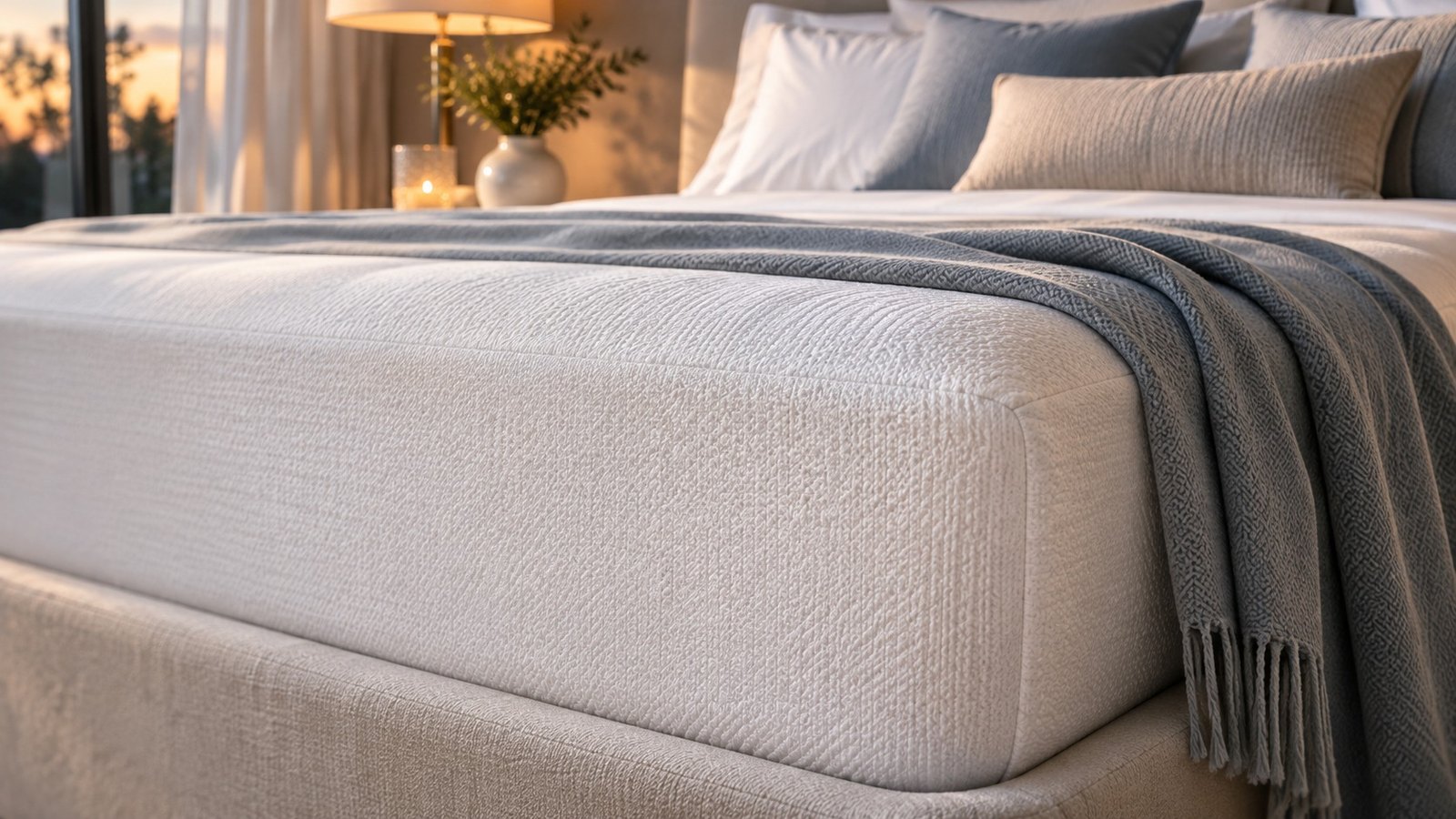
Chronotype decides when you sleep; the mattress decides how continuous that sleep stays. The wrong surface multiplies micro-awakenings exactly in the deepest phases, the ones a late chronotype can already afford only with difficulty. The critical point is support: shoulders and hips must stay aligned even when the position changes thirty times a night.
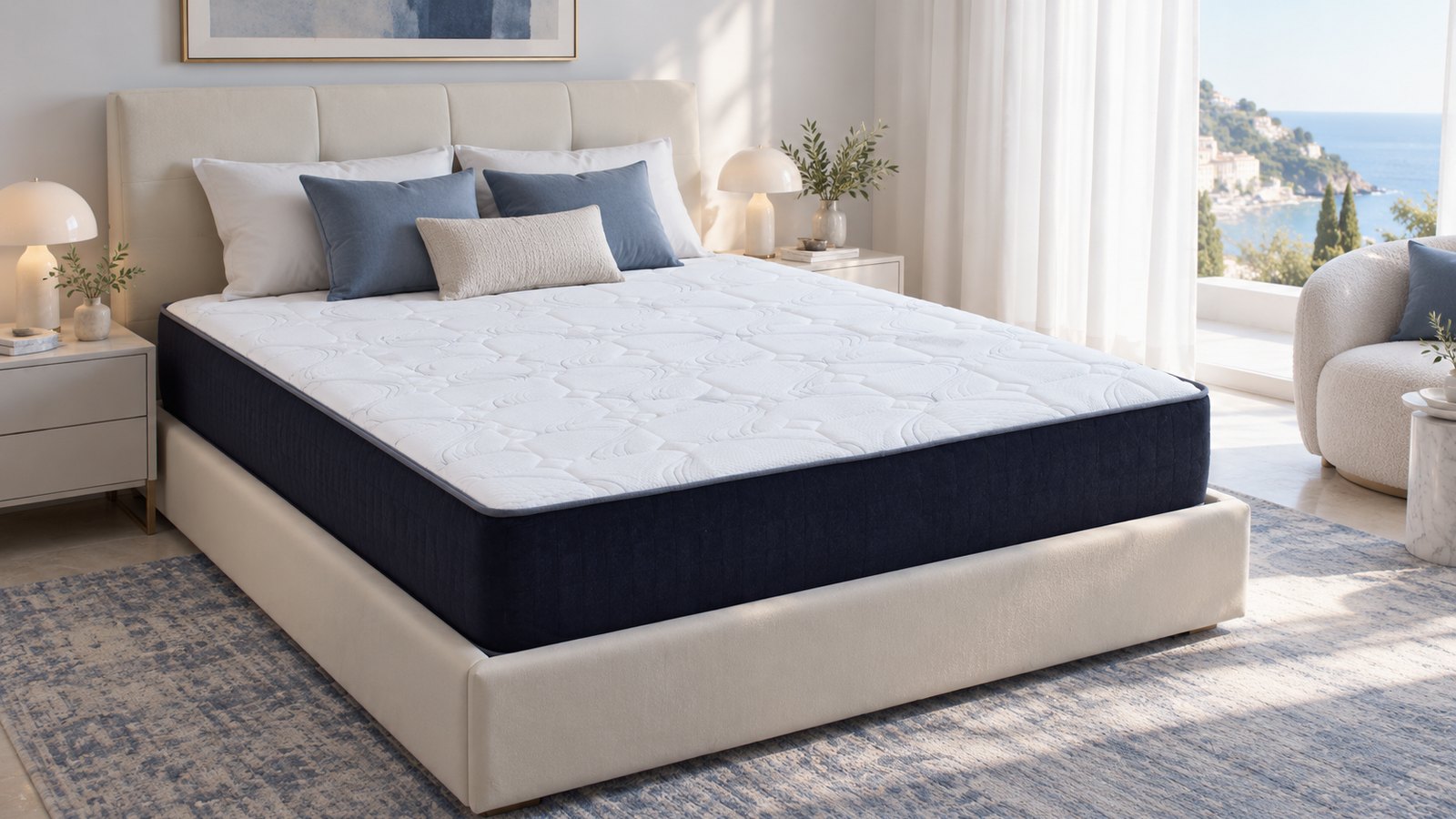
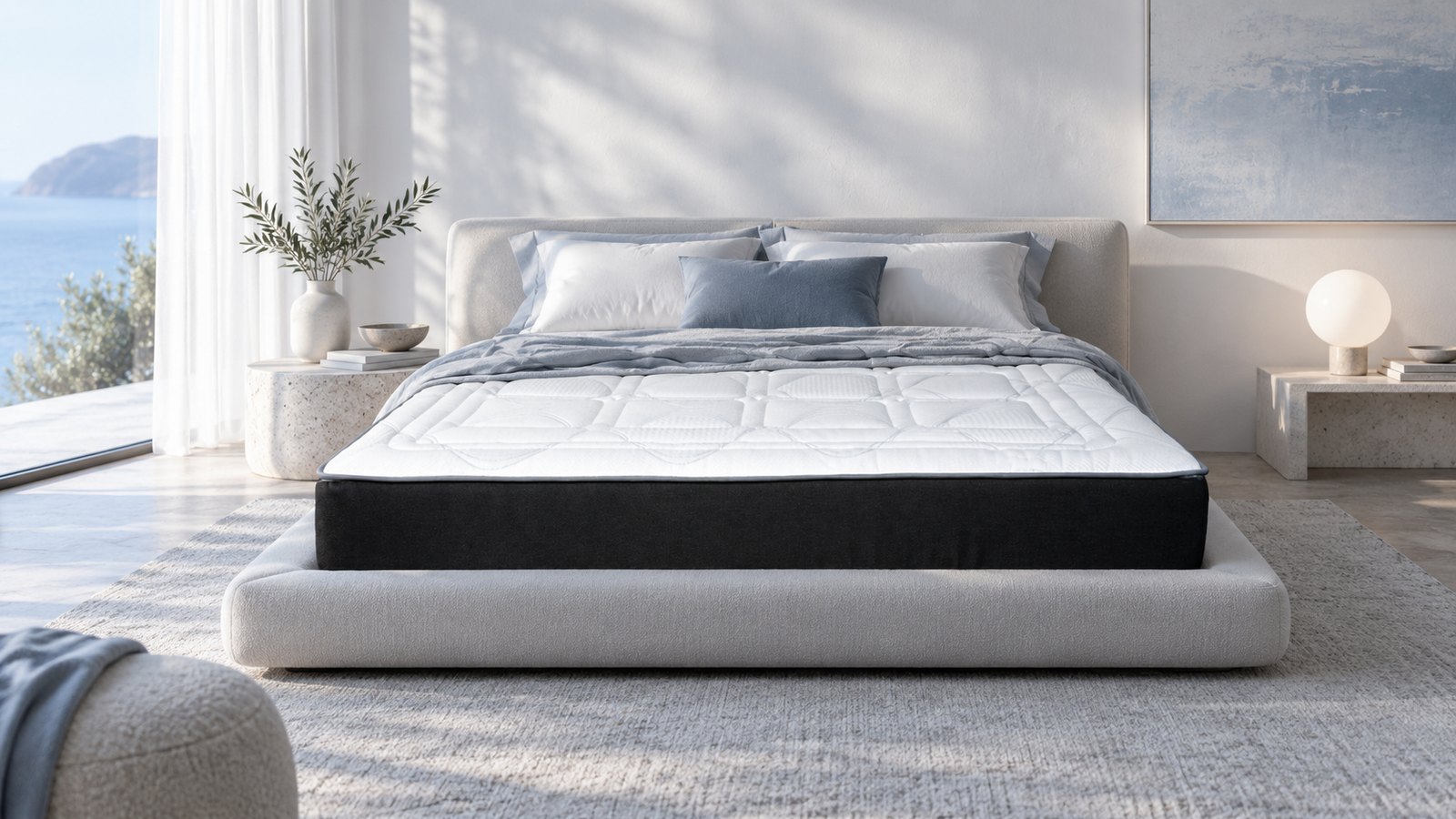
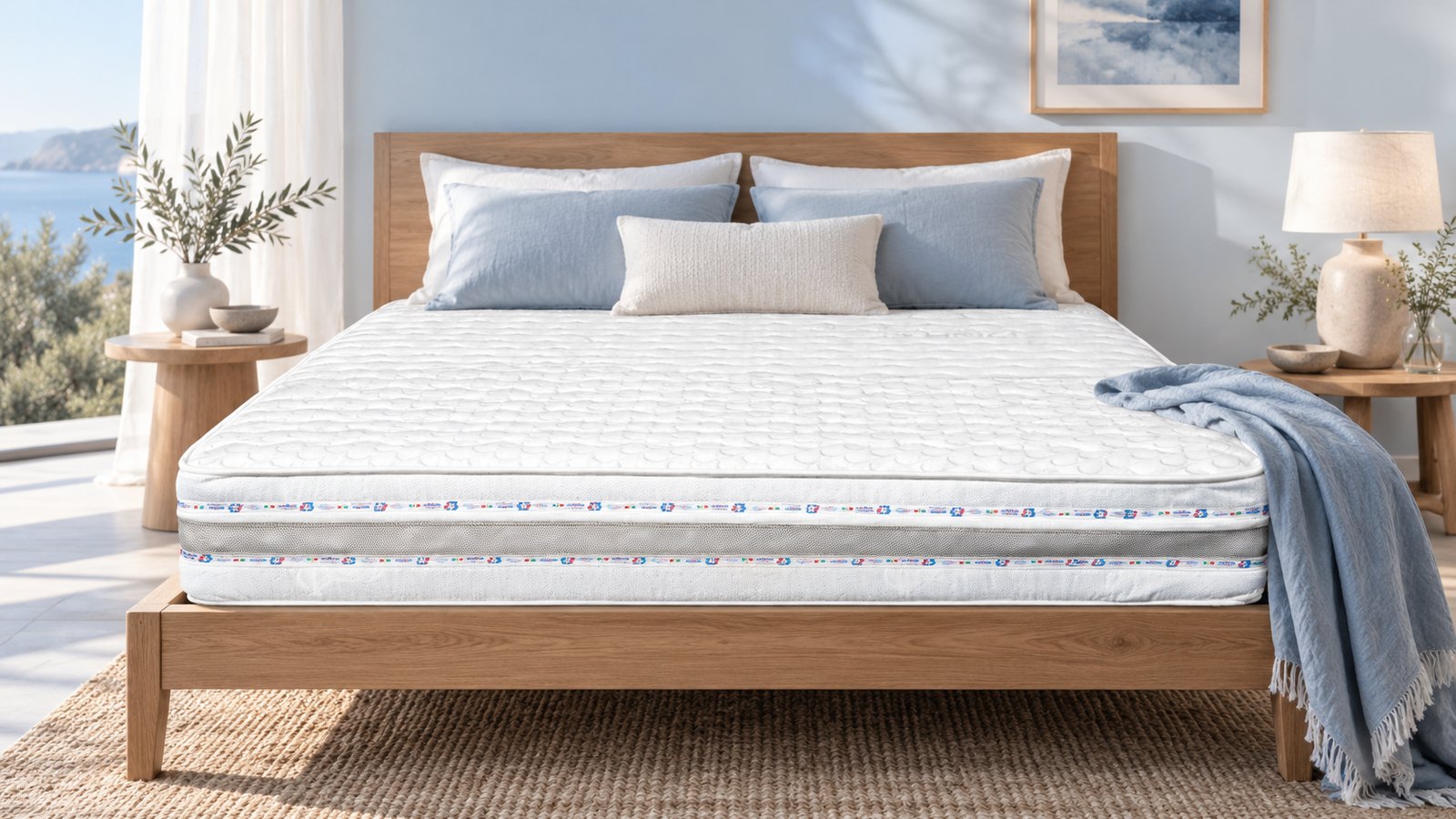
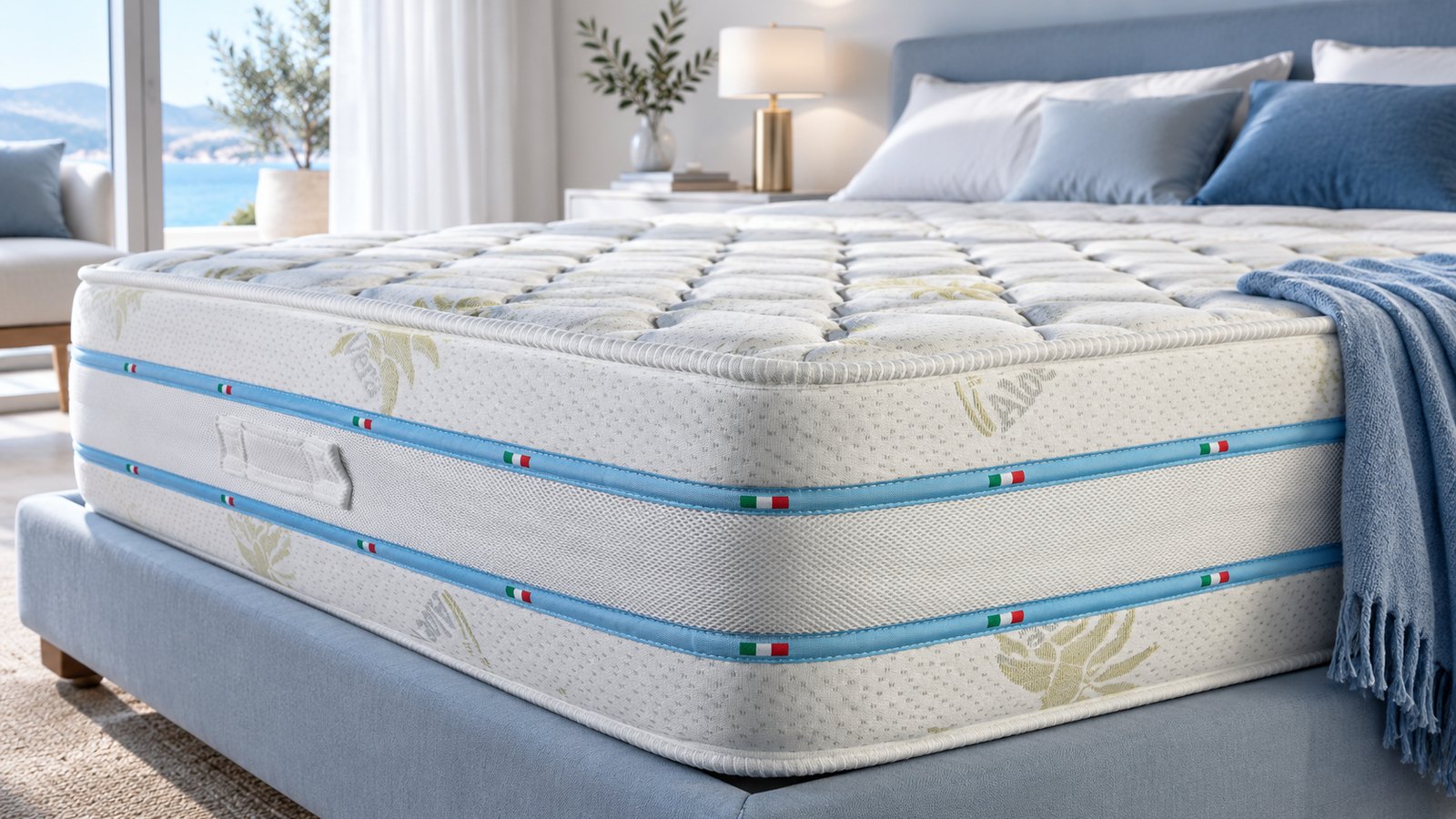
Luxury Relax mattresses tackle this with seven-zone differentiated support, a high-density Confortgel base and a temperature-sensitive memory foam layer that follows the body without letting it sink. Height ranges from 24 to 30 cm depending on the model, the Aloe Vera cover is washable and the 3D border moves out the heat that raises bed temperature at night. The catalogue starts at 149 euros with the Venere model and reaches Athena at 990 euros, list price 1,950: Italian manufacturing, as the full brand review tells it.
Environment counts as much as the mattress. A room at 18-19 degrees, total darkness, silence or constant white noise: three rules that hold for every chronotype. Natural early risers benefit from curtains that let the first light in; late types need full darkness until they wake. The right bed is the one that adds no awakenings to those the rhythm already produces, and the Luxury Relax 10-night trial exists to verify that on your own body, with no-questions returns and free delivery across Italy in 24-48 hours. For a free consultation on model and size, the contact form answers with clear timing.
Chronotype, energy and focus during the day
The biological rhythm does not only run sleep: it spreads energy, attention and appetite across the twenty-four hours. Peak sharpness falls between 9 am and noon for an early chronotype, between 5 pm and 9 pm for a late one. Scheduling the demanding work inside those windows gets more done with the same effort, while the dip hours are for mechanical tasks, short replies and routine meetings.
Caffeine deserves an hour, not just a quantity. Adenosine, the molecule that builds sleep pressure, is blocked by coffee for three to four hours: drinking it within an hour of waking rides the natural cortisol peak, drinking it after 3 pm delays sleep onset by at least half an hour in sensitive late types. The same logic applies to meals: a heavy dinner after 9 pm forces the body to digest when it should be cooling down, and sleep comes later and more broken.
A nap is a tool, not a weakness. Twenty minutes before 3:30 pm stay in light sleep and cut afternoon drowsiness without touching the night; past forty minutes you enter deep sleep and waking hurts. For late chronotypes a nap is also a way to cross the day without advancing the evening, keeping the night sleep window intact.
Frequently asked questions (FAQ) about sleep and chronotype
Can chronotype be changed? It can be shifted by about an hour with consistency, not overhauled. Morning light and evening darkness, kept for two to three weeks, move the clock forward. Forcing the change with drastic alarms only builds sleep debt.
How do I know if I am a morning or evening type? During a week off, with no alarm and no obligations, note the time you fall asleep and the time you wake. The average of the five middle days marks your natural rhythm within half an hour.
Can a late chronotype survive an 8 am job? Yes, by protecting two points of the day: ten minutes of natural light within an hour of waking and full darkness in the last hour before bed. A constant bedtime, weekends included, does the rest.
Does sleeping longer at weekends help me recover? Up to one extra hour can help; beyond that the clock shifts and Monday gets harder. Better a twenty-minute nap before 3:30 pm and a fixed alarm within one hour of the usual time, as the sleep quality guide explains.
How much does the mattress matter compared with timing? Timing opens the sleep window, the mattress protects it. A correctly supportive surface cuts the awakenings the body does not remember but that shorten deep phases. A model with differentiated support and a 10-night trial lets you measure the difference in two weeks.
Do children have the same chronotype as adults? No. Until puberty the rhythm is early, then in adolescence it shifts towards the evening for biological reasons and returns in adulthood. Adapting schedules to this evolution helps more than any rigid rule.
Ideal Mattress Configurator in 3 Clicks
Answer 3 questions and see which Luxury Relax model fits your sleep best.
Step 1 of 3
Images from this guide

Can chronotype be changed?
It can be shifted by about an hour with consistency, not overhauled. Morning light and evening darkness, kept for two to three weeks, move the clock forward. Forcing the change with drastic alarms only builds sleep debt.
How do I know if I am a morning or evening type?
During a week off, with no alarm and no obligations, note the time you fall asleep and the time you wake. The average of the five middle days marks your natural rhythm within half an hour.
Can a late chronotype survive an 8 am job?
Yes, by protecting two points of the day: ten minutes of natural light within an hour of waking and full darkness in the last hour before bed. A constant bedtime, weekends included, does the rest.
Does sleeping longer at weekends help me recover?
Up to one extra hour can help; beyond that the clock shifts and Monday gets harder. Better a twenty-minute nap before 3:30 pm and a fixed alarm within one hour of the usual time, as the [sleep quality guide](key:art-qualita-del-sonno) explains.
How much does the mattress matter compared with timing?
Timing opens the sleep window, the mattress protects it. A correctly supportive surface cuts the awakenings the body does not remember but that shorten deep phases. A model with differentiated support and a 10-night trial lets you measure the difference in two weeks.
Do children have the same chronotype as adults?
No. Until puberty the rhythm is early, then in adolescence it shifts towards the evening for biological reasons and returns in adulthood. Adapting schedules to this evolution helps more than any rigid rule.
Request your free consultation
Fill in the form: a Luxury Relax expert will get back to you with the proposal that suits you best.
What Luxury Relax owners say
On my dad's advice, already a customer, I went to Luxury Relax to buy a mattress. Very comfortable and ergonomic products.
Quality products, helpful and knowledgeable staff. Highly recommended to anyone looking for a real mattress, not a brand name.
I got rid of the back pain that had followed me for years. The right mattress changes your days.
Come visit us
Luxury Relax Materassi
Via San Rocco, 42 — 20831 Seregno (Monza e della Brianza), Italia0362 222407 · info@luxuryrelax.it · WhatsApp 339 4797213
Open in Google Maps