How Memory Foam Works: What It Really Means
Request your free consultation
Fill in the form: a Luxury Relax expert will get back to you with the proposal that suits you best.
Memory foam is one of the most talked-about materials in the bedroom and one of the least understood. People know it is soft, they know it "remembers" the shape of a body, and they often assume that any mattress using the phrase is giving them the real thing. In truth, memory foam is a specific material with specific behaviour, and a mattress that uses it well behaves very differently from one that simply borrows the name.
The word memory refers to a genuine physical property. Memory foam is a viscoelastic material, which means it responds to both heat and the rate at which it is loaded. It slowly deforms under the warmth and weight of a body, holds that shape while you lie still, and then recovers when the load shifts. That slow, temperature-sensitive response is what makes it feel like it moulds to you rather than pushing back.
This guide explains how memory foam actually behaves, what decides whether it is good or bad, and how to tell a genuine memory mattress from a decorative imitation. It also explains the build behind the best memory foam mattresses, where a real memory layer sits over a load-bearing base, and why the Luxury Relax memory range shows how much difference that base makes.
The Physics of Memory Foam
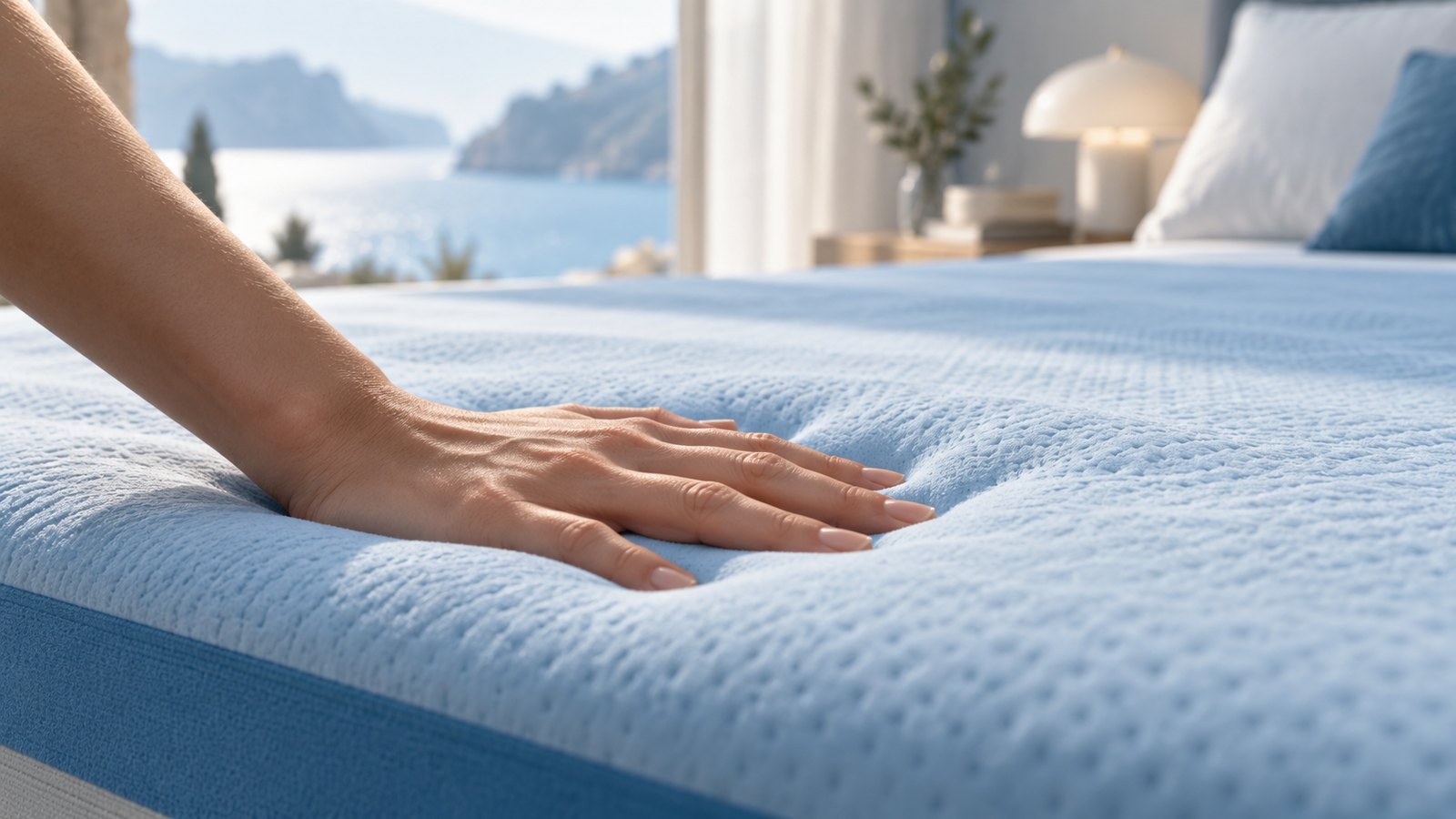
Memory foam is polyurethane with an open, cellular structure and a temperature-sensitive chemistry. When your body heats it, the cells soften and let the foam flow slowly around the shape of a shoulder or hip. When you move and the heat and pressure change, the foam gradually returns to its original form. Press a palm into it and you leave a mark; wait, and the mark disappears.
Two properties define the material. The first is viscoelasticity, the slow flow under load that gives the sensation of sinking and moulding. The second is thermosensitivity, the way heat changes how firm the foam feels. This is why memory foam feels firmer on a cold night than a warm one, and why it softens precisely where the body is warmest, usually the contact points.
That behaviour is what eases pressure on the joints. By spreading the body's weight over a wider area, memory foam reduces the concentration that causes sore shoulders and hips. It also absorbs movement locally, which is why it is so good at keeping a restless partner from waking the other. Those two benefits, pressure relief and motion isolation, are why memory foam became popular in the first place.
Why Density Matters More Than Thickness
If you remember one number about memory foam, make it density. Density measures how much material is packed into the foam, and it predicts how the foam behaves after the showroom. High-density memory foam holds its shape and recovery for years, while low-density foam feels wonderful for a week and then crushes into a permanent hollow where you sleep.
Thickness is where the confusion creeps in. A mattress advertised as having a thick memory layer may be using a very soft, low-density foam to fake that volume, and it will still fail early. Conversely, a mattress with a genuine, several-centimetre layer of high-density memory foam over a strong base can be thinner in the marketing copy yet far more durable where it counts.
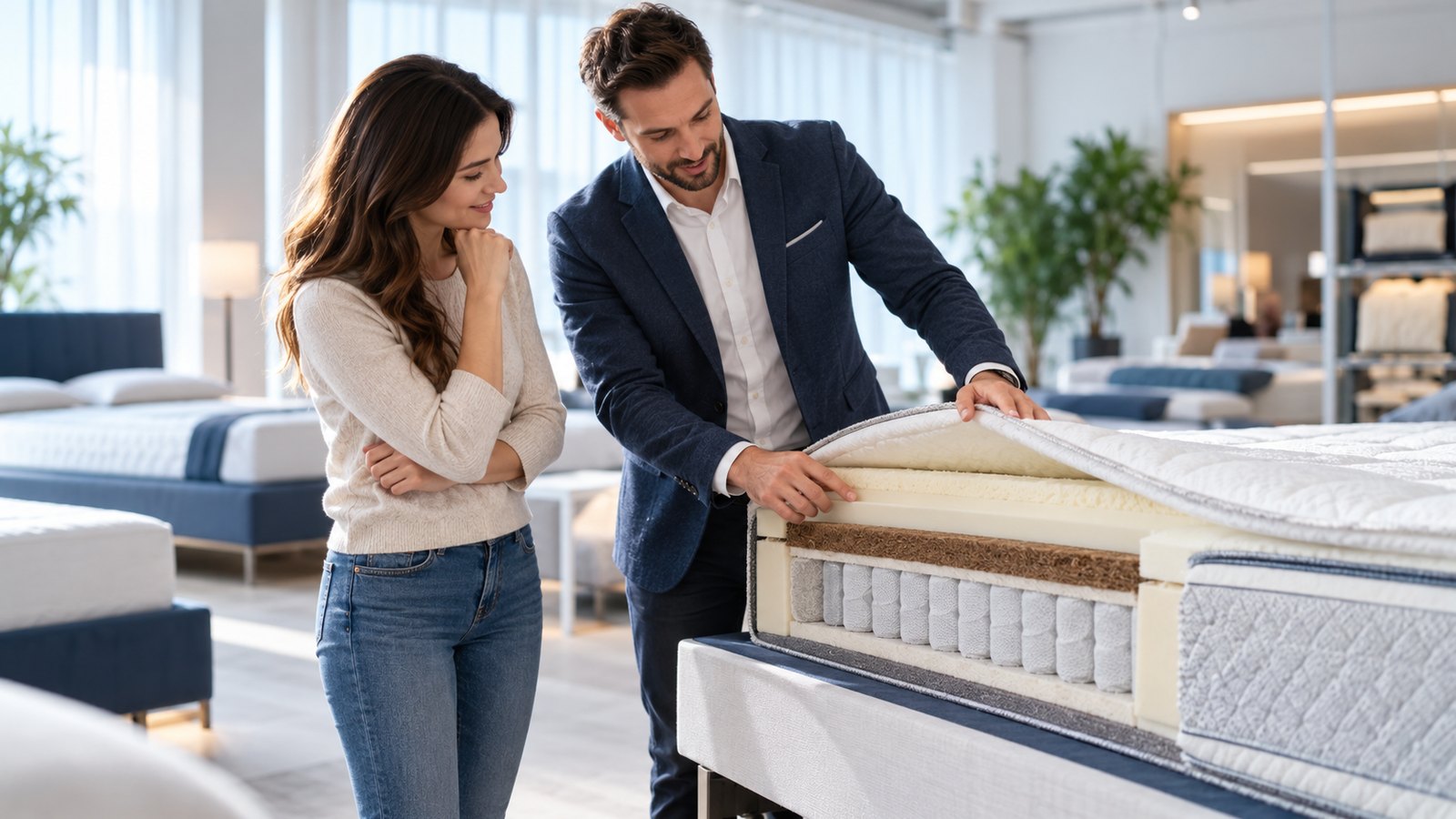
The base under the memory layer is the other half of the story. Memory foam cannot support a body on its own; it is a comfort material, not a structural one. Without a dense support core beneath it, the memory layer sinks and takes your lower back with it. A genuine memory mattress is therefore a layered construction, not a single block, which is what the next section explains.
Why a Memory Layer Needs a Strong Base
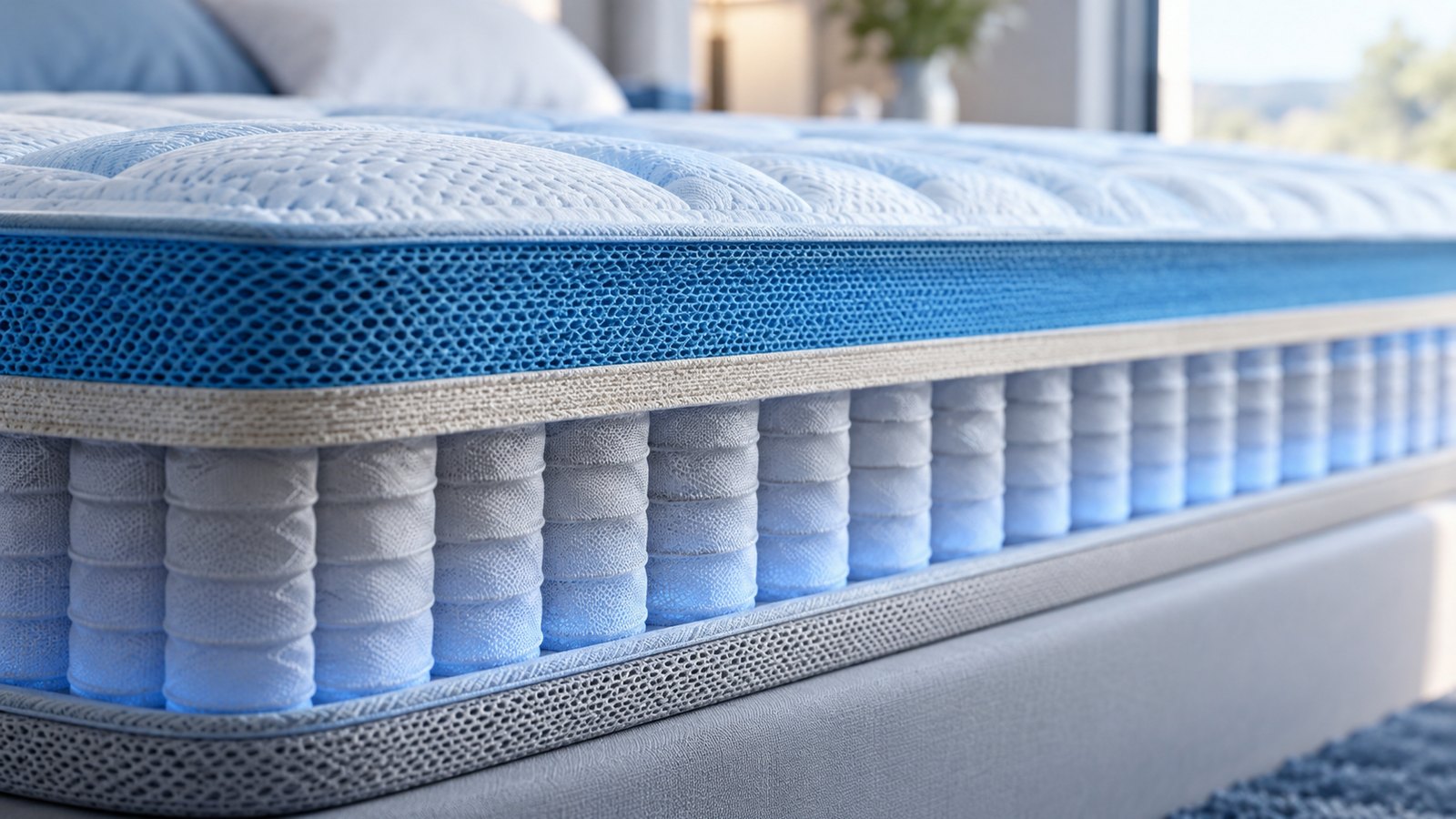
Think of the memory layer as the part that touches you and the base as the part that carries you. The memory layer's job is to soften the contact points and contour to the body; the base's job is to hold the body up so the memory does not simply sink into a pit. Both must be present, and the quality of the base often decides how long the whole mattress lasts.
This is the failing point of cheap memory mattresses. They use a thick-looking memory top over a thin, low-density base, so the surface feels luxurious in a shop and then sags under the body by the second year. The base, not the memory, is usually the first thing to give way, which is why a strong core is the real sign of quality.
A good build pairs a thermosensitive memory layer with a high-resilience base at high density, plus a breathable structure so heat can escape. Memory foam's one weakness is that it can store warmth if it is sealed in, so a breathable perimeter band and an open structure are what keep the surface cool. Without them, a memory mattress turns into a warm, tired block on a summer night.
Gel, Open-Cell and Other Variations
Because heat retention is memory foam's known weakness, makers have developed variations to manage it. Gel-infused memory foam embeds gel particles that move heat away from the surface, and open-cell foams use a more porous structure to let air circulate. Both help, and both are only as good as the density and base beneath them.
It is worth being sceptical of the gel label alone. A thin memory sheet with a gel word printed on the box is not the same as a genuine, high-density layer with a ventilated structure. The gel is a useful addition to a good mattress; it does not rescue a bad one. When comparing, look at the layer thickness, the density and the base, not just the buzzword.
Latex and hybrid builds offer different routes to the same goals. Latex is elastic and breathable but firmer and less contouring. A hybrid pairs pocket springs with a memory top for airflow and support. Each has a place, and the choice comes down to whether you want the deep contouring of memory foam or the springier feel of the alternatives. Our firm or soft guide helps translate that preference into a decision.
How to Tell a Real Memory Mattress From a Fake
The first test is the specification. A genuine memory mattress will tell you the thickness of the memory layer and, ideally, its density. If the description uses the phrase as decoration without any structure behind it, treat it as a warning. Memory foam that is only a token sheet over cheap polyurethane will behave like ordinary soft foam, not like the real material.
The second test is the feel. Real memory foam responds slowly: press your hand in and the print lingers before fading. If the surface bounces straight back like a spring, you are feeling conventional foam. Slow recovery is the signature of memory behaviour, and it is something you can check in seconds.
The third test is the whole build. A real memory mattress has a base that supports, a breathable structure that manages heat and a cover that protects. Ask about the core, not just the comfort layer. A maker that is happy to explain the layers is usually the one worth buying from, because the layers are where the value lives.
| Check | Real memory mattress | Cheap imitation |
|---|---|---|
| Memory layer | Several cm, high density | Thin sheet over soft foam |
| Base | Dense, load-bearing | Thin, low density |
| Heat management | Breathable band, open cell | Sealed, traps heat |
| Feel | Slow recovery, moulds | Springs back instantly |
| Durability | Holds shape for years | Hollows within a year |
Where Memory Foam Works Best
Memory foam is at its best when the goal is pressure relief and undisturbed sleep. Side sleepers benefit because it cushions the shoulder and hip under body heat. Couples benefit because it absorbs movement. Anyone who wakes with sore pressure points benefits because it spreads weight over a wider area rather than concentrating it.
It is less ideal where the priority is a firm, bouncy surface, since some sleepers dislike the sinking sensation and prefer the responsiveness of latex or springs. It also needs the heat-management features described above to avoid feeling warm. Understood properly, though, memory foam remains the most effective single material for the largest number of sleepers.
The Luxury Relax build shows what the material can do when it is used honestly: a thermosensitive memory layer over a high-density Confortgel base, wrapped in a breathable 3D perimeter band and a washable aloe cover, with an anti-mite, hypoallergenic treatment and a deformable core. That is memory foam treated as engineering rather than as a label, which is why it contours without sinking and stays cool rather than warming up. The range runs from €149 for the Venere and €179 for the Elisir up to the Athena at €990, all made in Italy with a ten-year warranty and ten trial nights.
If you want the pressure relief and quiet of memory foam without the trap of a cheap imitation, the answer is to look at the layers and the base, not the word on the box. Open the contact page to request a free consultation and have an expert explain exactly what is inside each model.
Frequently Asked Questions
What does memory foam actually do? It is a viscoelastic material that softens under body heat and weight, slowly moulding to the shape of the body and spreading pressure. It then recovers its shape when you move, which is the memory effect.
Why is memory foam warm? Dense foam can trap heat if it is sealed in. Open-cell structures, gel infusion and a breathable perimeter band let air circulate and keep the surface cooler, so look for those features.
Is thicker memory foam always better? No. Density matters more than thickness. A thick layer of low-density foam will still flatten quickly, while a genuine high-density layer over a strong base lasts for years.
How can I tell if a mattress has real memory foam? Real memory foam recovers slowly when you press it, leaving a lingering print. If the surface bounces straight back, it is conventional foam, and the specification should list the memory layer's thickness and density.
Does memory foam need a special base? It needs a supportive, level base to work. A dense core under the memory layer is what keeps the body from sinking, and a slatted or solid base that supports the whole underside prevents sagging.
How long does memory foam last? High-density memory foam over a strong base lasts around eight to ten years. Low-density foam without a proper base can hollow within a couple of years, which is why construction decides longevity.
What does memory foam actually do?
It is a viscoelastic material that softens under body heat and weight, slowly moulding to the shape of the body and spreading pressure. It then recovers its shape when you move, which is the memory effect.
Why is memory foam warm?
Dense foam can trap heat if it is sealed in. Open-cell structures, gel infusion and a breathable perimeter band let air circulate and keep the surface cooler, so look for those features.
Is thicker memory foam always better?
No. Density matters more than thickness. A thick layer of low-density foam will still flatten quickly, while a genuine high-density layer over a strong base lasts for years.
How can I tell if a mattress has real memory foam?
Real memory foam recovers slowly when you press it, leaving a lingering print. If the surface bounces straight back, it is conventional foam, and the specification should list the memory layer's thickness and density.
Does memory foam need a special base?
It needs a supportive, level base to work. A dense core under the memory layer is what keeps the body from sinking, and a slatted or solid base that supports the whole underside prevents sagging.
How long does memory foam last?
High-density memory foam over a strong base lasts around eight to ten years. Low-density foam without a proper base can hollow within a couple of years, which is why construction decides longevity.
What Luxury Relax owners say
Su consiglio di mio papà già cliente mi sono recato da Luxury Relax per l'acquisto di un materasso. Prodotti molto comodi ed ergonomici.
Prodotti di qualità, personale disponibile e competente. Consigliatissimo a chi cerca un materasso vero, non un nome.
Ho risolto i dolori alla schiena che mi accompagnavano da anni. Il materasso giusto cambia le giornate.
Come visit us
Luxury Relax Materassi
Via San Rocco, 42 — 20831 Seregno (Monza e della Brianza), Italia0362 222407 · info@luxuryrelax.it
Open in Google Maps