Light and sleep: how light regulates your nightly rest
Key facts at a glance
- What to know right away: Light and sleep: how morning and evening light regulates your nightly rest. A practical plan for a darker bedroom and calmer sleep, with Luxury Relax tips.
- Trial, warranty and delivery: 10 trial nights · 10-year warranty · Free delivery 24/48h
- Who it is for: Why light rules your sleep rhythm
- What this guide covers: Why light rules your sleep rhythm · Morning light: the strongest signal of the day · Evening light: which lamps help and which keep you awake
- How to book or get help: Get your free consultation · 0362 222407 · info@luxuryrelax.it
In June, the seven o'clock alarm arrives an hour after daylight has already slipped through the curtains: the body wakes on its own, before the sound. In December, the same alarm opens your eyes into total darkness and it takes twenty minutes to get up. Same time, same bed, opposite result. The only variable is light.
Light is the strongest signal your internal clock receives every day. It does not fix sleep like a pill. It tells the body when to stay awake and when to prepare for sleep, one day at a time. Sorting out the light in your day gets you further than any last-minute trick before bed.
This guide covers how the mechanism works, how much light you need in the morning, how disruptive evening light is, how to make the bedroom genuinely dark, and how to build a five-step light plan. The bed remains the starting point: the Luxury Relax review describes an Italian brand built around deep rest, with a ten-year warranty and ten trial nights on every mattress.

Why light rules your sleep rhythm
The eye does more than see. The retina holds receptors that respond to the amount of light rather than to the detail of images, and when light is strong they send a direct signal to the centres that govern the 24-hour rhythm. The message is simple: it is daytime, stay awake.
As light fades, the process reverses. The body starts preparing for sleep and your internal temperature drifts downwards. Darkness does not put you to sleep. It allows the body to do what it already knows how to do.
Two factors count together: how much light you get, and when it arrives. The same lamp switched on at eight in the morning is a useful signal; at eleven at night it is the wrong one. That is why people who change their sleep schedule without changing their light habits see few results.
There is also a cumulative effect. The internal clock settles on consecutive days: one morning outdoors and three evenings in front of a screen cancel each other out. Consistency beats intensity, and small repeated gestures are enough, with no special equipment. The right mattress then turns that preparation into continuous sleep: our guide to the mattress for insomnia lists what to check when night-time waking stays fragmented.
An example that shows the point is people who sleep few hours or keep irregular schedules. The body still looks for a rhythm, and it finds it in the first stable light signal of the day: that is why varying wake-up times but the same light at breakfast beat perfect schedules with random light. Light is the anchor, the rest of the day follows.
Morning light: the strongest signal of the day
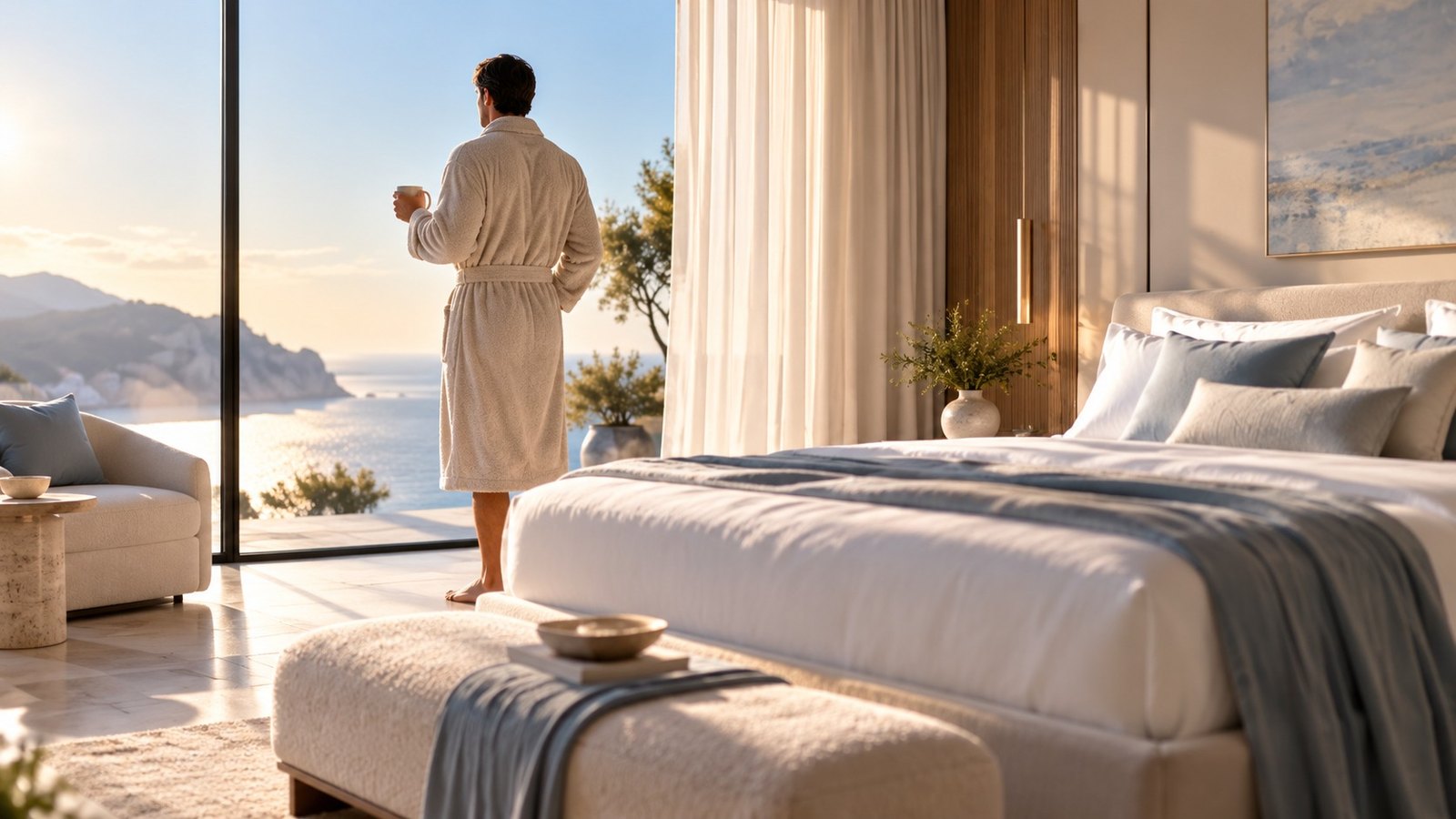
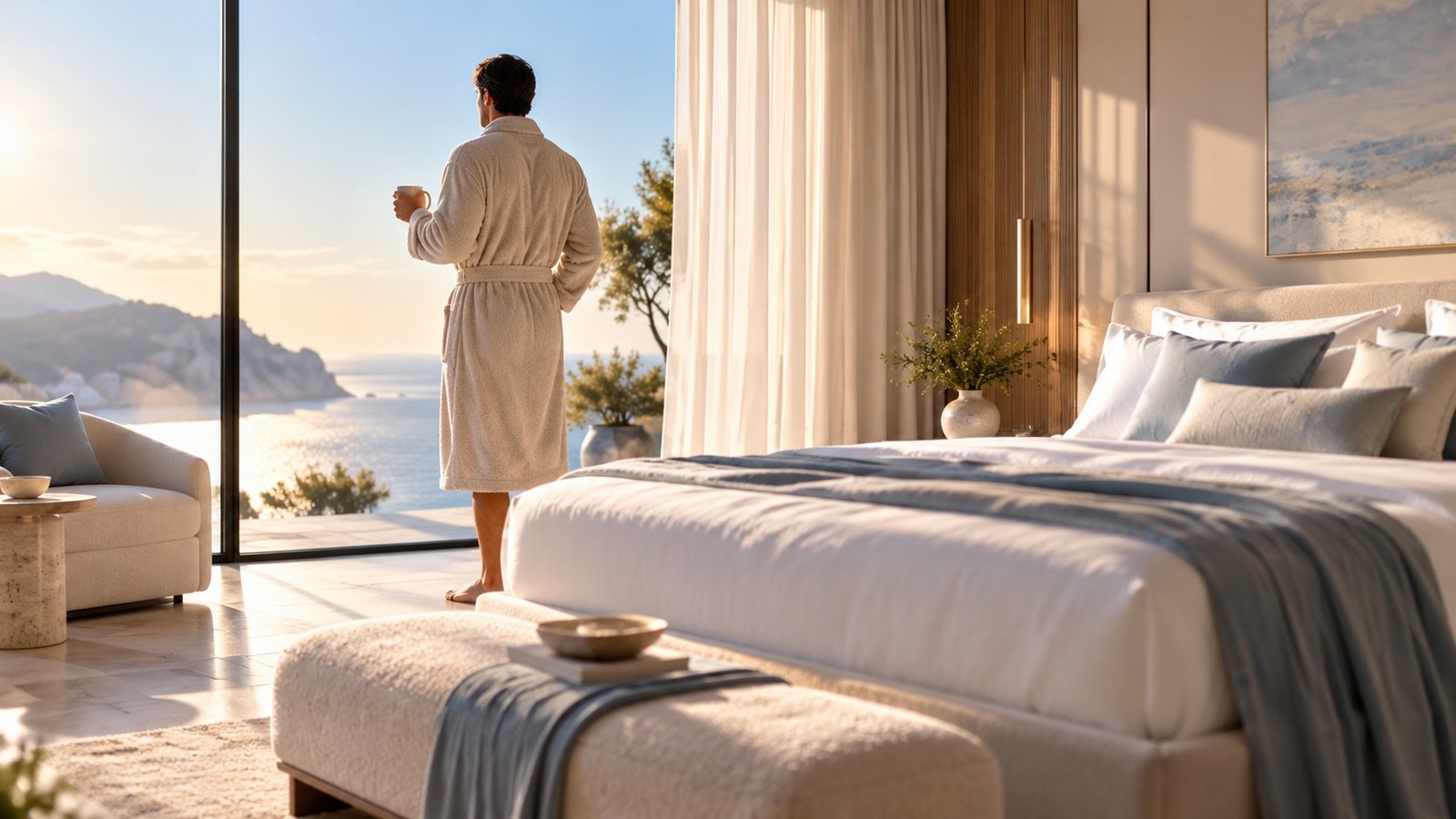
The most useful window of the day is the first sixty minutes after waking. In that slot the body is most sensitive to light and the signal arrives at full strength: it is where the wake-up time of the next day gets set.
You do not need full sun. Even an overcast sky outdoors is far brighter than any indoor bulb: the gap between a well-lit room and the outdoors is many times over. Twenty to thirty minutes outside, even just a walk or breakfast on the balcony, is enough.
For people who leave early and come home late, light can be built indoors. A bright desk lamp, the curtain opened the moment you wake up, coffee by the window: small moves that add up to the right signal. In winter, when it is still dark at seven, a high-intensity lamp switched on for twenty minutes while you get ready helps a great deal.
Looking at a typical day, most people get the sequence backwards: no clear morning signal, medium artificial light all day, then bright ceiling lights at home all evening. The plan below rebuilds the natural order of signals, from strong morning light through to night-time darkness.
The other end of the day is the evening, and we will come back to it. A light plan works only if it covers both sides: strong and steady light in the morning, warm and low light at night. The common mistake is to correct only one half and then wonder why sleep does not improve.
Evening light: which lamps help and which keep you awake
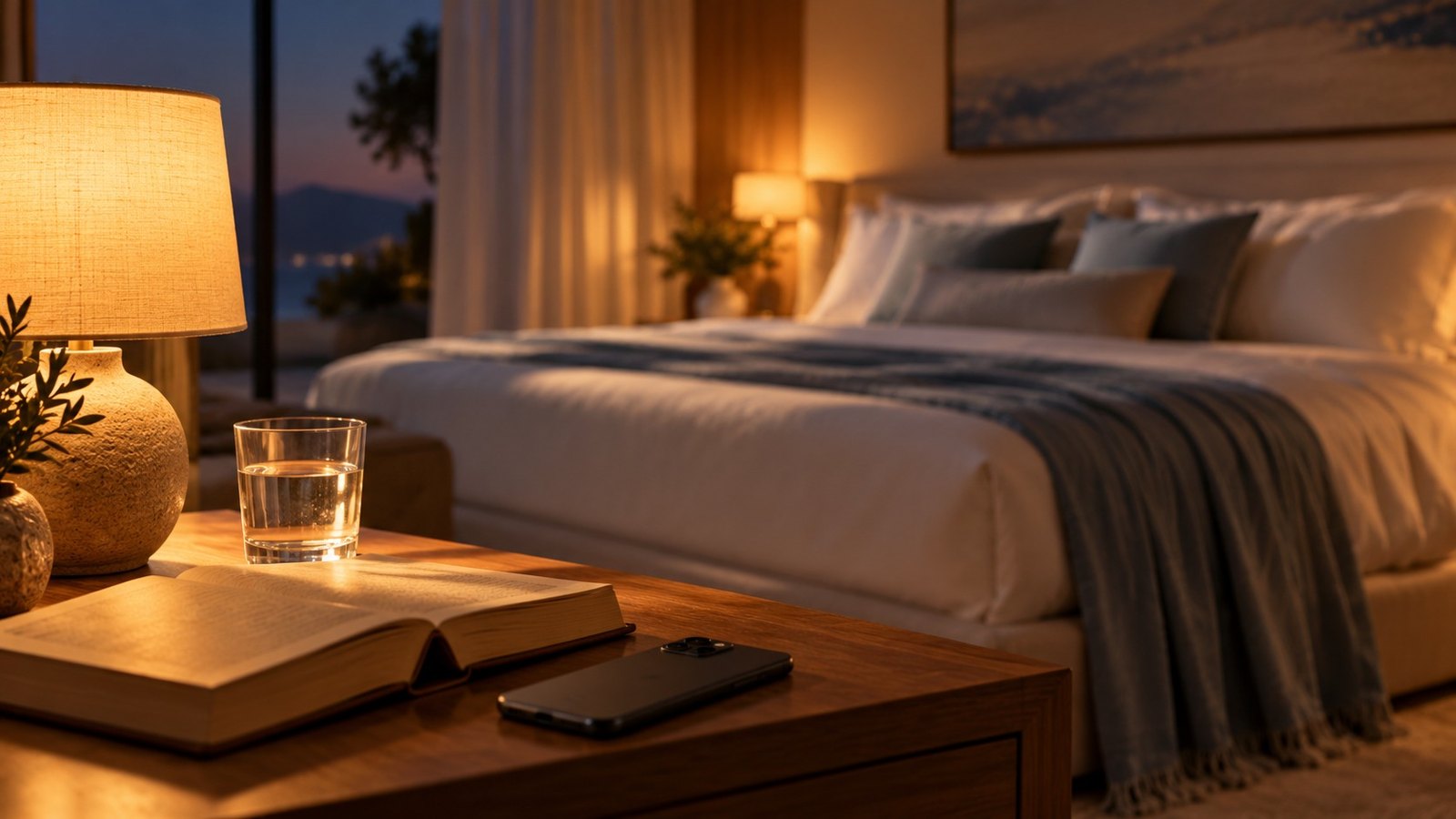
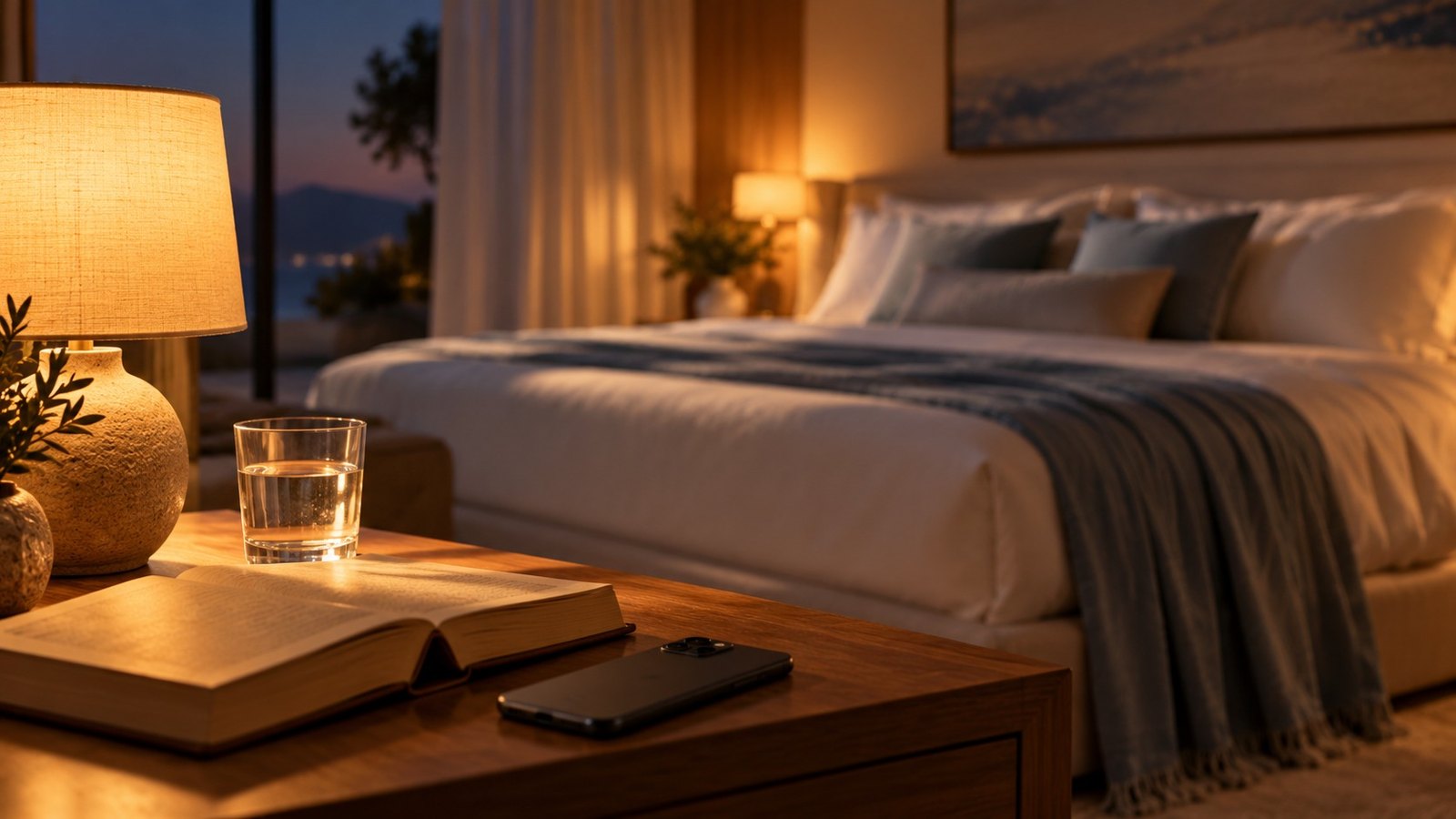
In the evening the problem is not light itself but intensity and colour. A warm, low lamp lets the message of the ending day through; bright white ceiling light, uniform and strong, says the opposite. Switching the main source is the first move: from the ceiling to the bedside.
The critical window is the last hour and a half before bed. In that stretch, lower the lights, switch off what is not needed and keep only warm, weak points. The body gets time to prepare, without the abrupt jump from full brightness to total black.
Screens deserve their own chapter, because they combine light, attention and content: our guide on sleep and screens measures the concrete impact of phones and computers on rest. The practical rule is to keep them out of the final hour, or at least dimmed and away from your face.
Watch for hidden lights too. The monitor on stand-by, the router light in the bedroom, the charger with its blue glow: weak on their own, but enough to break darkness in a dark room. Over the evening the house should get gradually darker, not suddenly black.
The kitchen is another room worth reviewing. Dinner under bright white ceiling light, with the hob lit at full power, keeps the working-day rhythm going until late. Eating in a dimmer corner, or switching off the task lights as soon as cooking ends, changes the tone of the whole evening.
Anyone working at home in the evening can build the transition into a fixed routine: desk lamp off, living room lamp on, then the bedroom lamp. Each step is a signal. Our guide to evening rituals explains how to build sequences that keep working over time.
A dark bedroom: curtains, lamps and hidden light sources
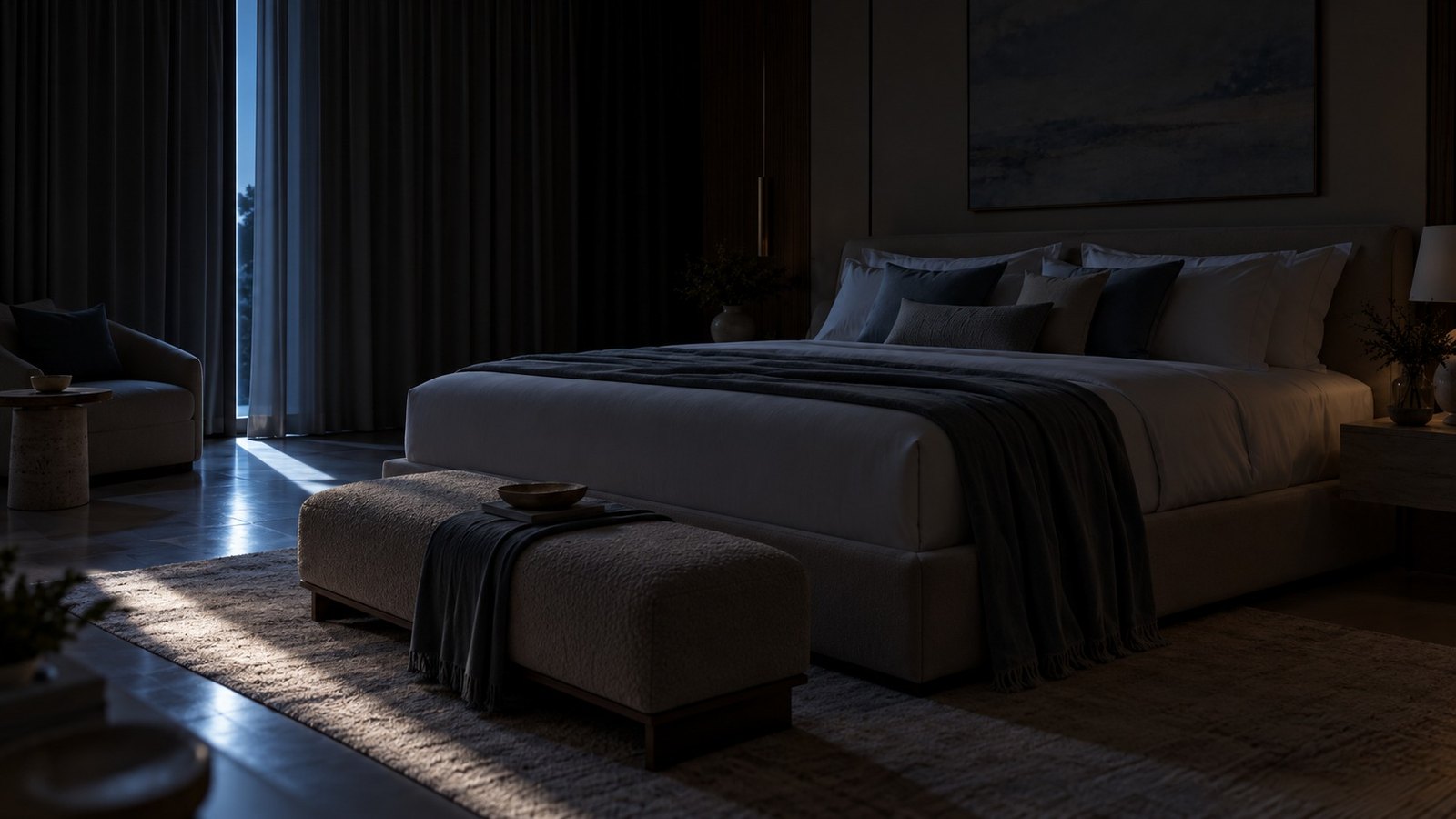
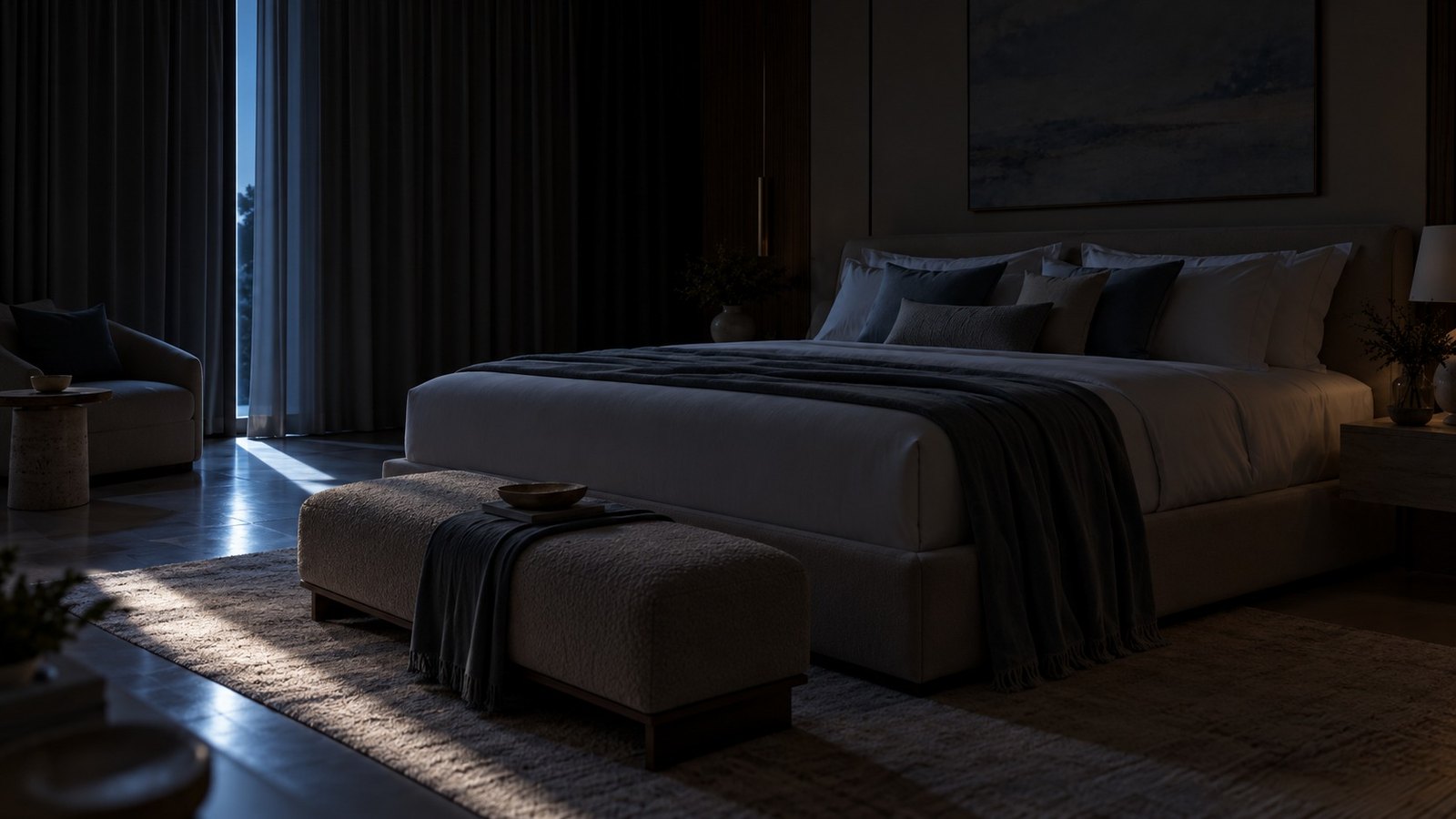
Bedroom darkness is the last step and often the most neglected. Blackout curtains are the most effective fix: choose them full length and wider than the window, because light gets through the edges before it gets through the fabric. If a street lamp sits outside your window, add a blackout roller blind to close the gap.
Then come the internal sources. The charging phone with a screen that lights up, the television on stand-by, the clock with glowing digits: move them or cover them. A simple trick is to turn luminous clocks towards the wall and put the phone in night mode, screen face down.
If you get up at night, use a low warm floor lamp near the ground instead of the ceiling light: a few seconds of strong light is enough to interrupt the preparation for sleep. The same goes for children, for whom a small, steady warm light beats a white light that switches on and off.
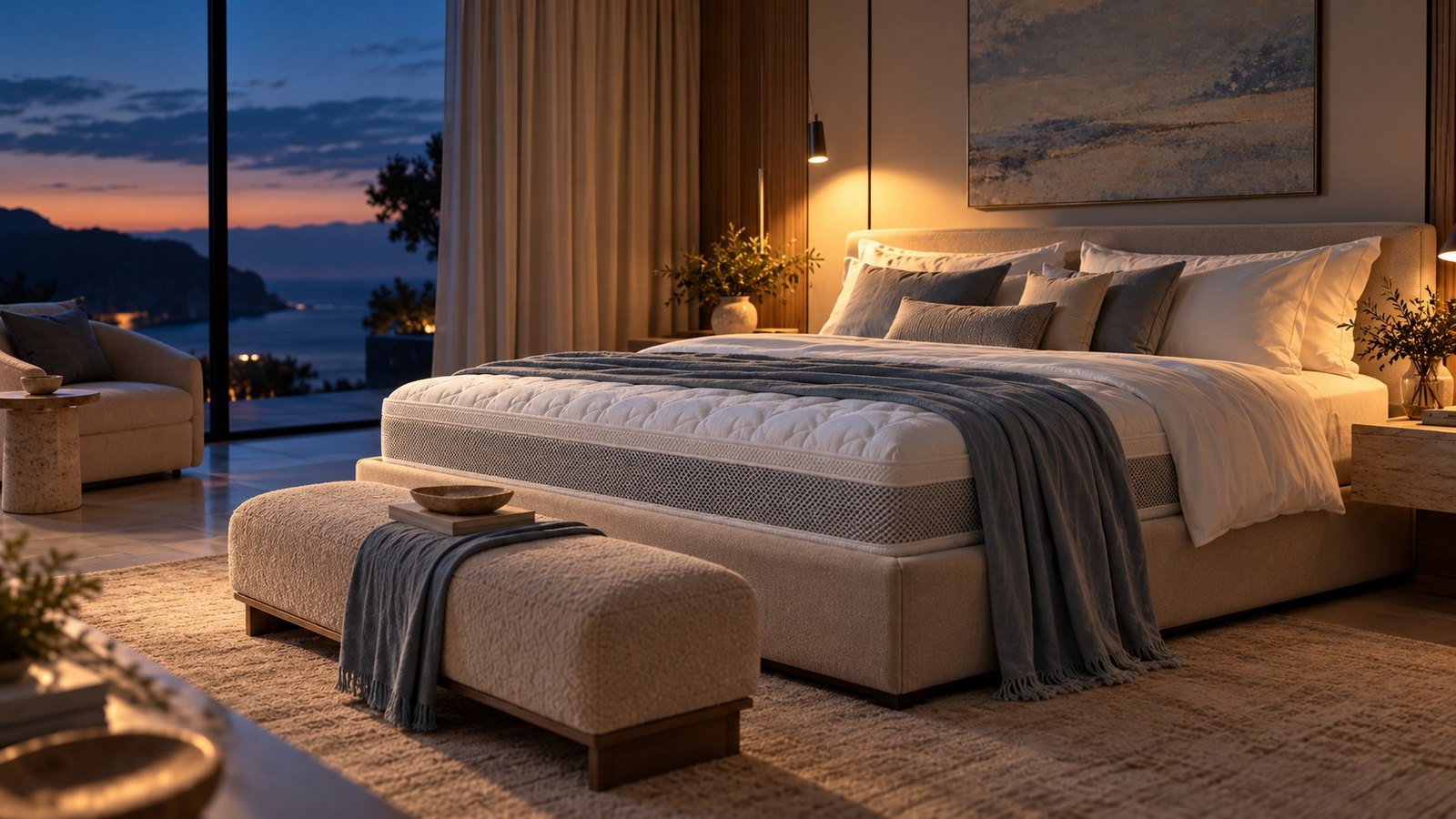
When travelling, an eye mask and a room with proper curtains do the job; at home, consistency matters more than equipment. Bed height helps with night-time handling too: a mattress between 24 and 30 centimetres tall, like the Luxury Relax models, is easy to get in and out of even with your eyes half shut. On the contact page you can ask which model and height suit your bedroom.
Noise and temperature travel with light: a room that is dark but hot or loud still breaks up sleep, and our guides to sleep and noise and sleep and temperature cover both. Fixing light first usually makes the other two easier to judge.
A five-step light plan
Light is managed like a schedule: a few clear rules, repeated every day. Here is a plan that works from the first week, with no special equipment.
Before anything else, it pays to look at your day as a sequence of light signals. Someone who wakes in the dark, spends the day in an office with medium artificial light and then sits under bright ceiling lights at home offers the body three contradictory clues: no marked morning, no evening that fades. The plan below rebuilds the natural order of signals, from intense morning light to night-time darkness.
| Time of day | What to do | Why it works |
|---|---|---|
| First 60 minutes | 20-30 minutes of natural light, even by a window | Sets your wake-up time |
| Morning and afternoon | Bright rooms, curtains open | Keeps the daytime signal going |
| After dinner | Low warm lamps, no ceiling light | Prepares the descent into night |
| Final hour | Screens away, few lights on | Gives the body time to start |
| Night | Dark bedroom, low lamps for moving around | Protects deep sleep |
The first move is the morning: light within an hour of waking, as many days as possible, weekends included. The second is keeping the house bright during the day, the opposite of what happens in summer with shutters down from dawn to dusk.
The third move covers dinner onwards: table lamps instead of ceiling lights, warm tones, few sources. The fourth is the final hour before sleep, with lights lower still and the evening ritual as a clean border between day and night.
The fifth move is the night: full darkness, and if you need a light, low and warm. These rules pair with bed comfort, because a body that settles well into the mattress moves less and sleep stays continuous. If you want an opinion on materials, you can request the free consultation: the Luxury Relax experts answer from the Seregno showroom, at Via San Rocco 42, and with free delivery across Italy in 24-48 hours the new mattress arrives ready for its first night.
To see whether the plan works, keep a notebook by the bed. For two weeks, note when you get morning light, when you lower the lights and how long it takes to fall asleep. The numbers show the direction straight away: if falling asleep gets quicker, the plan is working.
FAQ on light and sleep
How much morning light do I need to regulate sleep? Twenty to thirty minutes of natural light within an hour of waking is enough in most cases. You do not need full sun: a covered balcony or a large window already works better than any indoor bulb.
Does phone light at night really disturb sleep? Yes, especially when the screen is close to your face at full brightness. A quick glance is not the same as half an hour of reading: duration and intensity are what count, not the isolated gesture.
What is the best lamp for the evening? A table lamp with a warm source, placed low and close to where you sit. A few weak lights beat one strong ceiling light flooding the whole room.
Do blackout curtains matter in the city? Yes, and in the city they are often necessary: street lighting, signs and passers-by come through normal curtains. A blackout roller blind or full-length curtains make the most visible difference.
What should I do when winter mornings are dark? Use a high-intensity lamp for twenty minutes while you get ready, or switch the room lights on the moment the alarm goes off. The important part is keeping the same time for at least two weeks.
Does bedroom light matter even if I already sleep well? Yes, especially during deep sleep: a dark bedroom reduces involuntary waking. If your sleep is already good, working on light protects it over time.
Where can I find a mattress that supports continuous sleep? The Luxury Relax review describes the brand's models, with ten trial nights and a ten-year warranty. For advice on size and support level you can contact the team directly from the site.
Ideal Mattress Configurator in 3 Clicks
Answer 3 questions and see which Luxury Relax model fits your sleep best.
Step 1 of 3
Images from this guide

How much morning light do I need to regulate sleep?
Twenty to thirty minutes of natural light within an hour of waking is enough in most cases. You do not need full sun: a covered balcony or a large window already works better than any indoor bulb.
Does phone light at night really disturb sleep?
Yes, especially when the screen is close to your face at full brightness. A quick glance is not the same as half an hour of reading: duration and intensity are what count, not the isolated gesture.
What is the best lamp for the evening?
A table lamp with a warm source, placed low and close to where you sit. A few weak lights beat one strong ceiling light flooding the whole room.
Do blackout curtains matter in the city?
Yes, and in the city they are often necessary: street lighting, signs and passers-by come through normal curtains. A blackout roller blind or full-length curtains make the most visible difference.
What should I do when winter mornings are dark?
Use a high-intensity lamp for twenty minutes while you get ready, or switch the room lights on the moment the alarm goes off. The important part is keeping the same time for at least two weeks.
Does bedroom light matter even if I already sleep well?
Yes, especially during deep sleep: a dark bedroom reduces involuntary waking. If your sleep is already good, working on light protects it over time.
Where can I find a mattress that supports continuous sleep?
The [Luxury Relax review](key:luxury-relax-recensione) describes the brand's models, with ten trial nights and a ten-year warranty. For advice on size and support level you can [contact the team](key:contatti) directly from the site.
Request your free consultation
Fill in the form: a Luxury Relax expert will get back to you with the proposal that suits you best.
What Luxury Relax owners say
On my dad's advice, already a customer, I went to Luxury Relax to buy a mattress. Very comfortable and ergonomic products.
Quality products, helpful and knowledgeable staff. Highly recommended to anyone looking for a real mattress, not a brand name.
I got rid of the back pain that had followed me for years. The right mattress changes your days.
Come visit us
Luxury Relax Materassi
Via San Rocco, 42 — 20831 Seregno (Monza e della Brianza), Italia0362 222407 · info@luxuryrelax.it · WhatsApp 339 4797213
Open in Google Maps