Meditation and Sleep: How to Relax Before Bed
Key facts at a glance
- What to know right away: Meditation and sleep: breathing techniques, body scan and a 10-minute evening routine to relax before bed, with practical Luxury Relax tips.
- Trial, warranty and delivery: 10 trial nights · 10-year warranty · Free delivery 24/48h
- Who it is for: Why meditation prepares the body for sleep
- What this guide covers: Why meditation prepares the body for sleep · Breathing before bed: the 4-7-8 technique · Body scan: relaxing the body muscle by muscle
- How to book or get help: Get your free consultation · 0362 222407 · info@luxuryrelax.it
Eleven at night, lights off, and the mind starts another shift: today's conversation, tomorrow's to-do list, the bill that needs paying. The body is tired, the eyes are heavy, and yet sleep does not come. Anyone who lives this scene most evenings knows the difference between being tired and being rested: they are two different things, and the second one cannot be forced by willpower.
Meditation is designed for exactly this moment. Not to "empty the mind", as the cliché goes, but to change the body's physiological state before sleep: slowing the breath, lowering the heart rate, relaxing the muscles that stay contracted all day without anyone noticing. Ten minutes of evening practice do not remove stress, but they take away the main obstacle to sleep, which is nervous activation.
This guide covers which techniques work best before bed, how to build a realistic routine you can keep every night, and why the mattress plays its own part in relaxation. For full details on the brand we will look at near the end, the Luxury Relax review collects models, real prices and services. Let's start with what actually happens in the brain when the body relaxes.

Why meditation prepares the body for sleep
Sleep is not a switch: it is a descent. The brain moves from wakefulness to light sleep and then to deep sleep through a series of measurable changes, and the first is the drop in sympathetic nervous system activity, the system that keeps the body alert during the day. If that descent is blocked, you end up turning in bed with the feeling of being tired but switched on.
Meditation acts precisely on that transition. Laboratory studies on pre-sleep relaxation show that even ten minutes of focused attention on the breath reduce heart rate and cortisol production, the hormone that tracks stress. No special state is required: simply returning attention to the breath again and again is enough to signal the body that the day is over.
There is also a second, subtler effect. People who meditate regularly learn to notice thoughts without following them, and that skill changes what happens at three in the night, when an anxious thought wakes you. Instead of latching onto the worry and staying awake for an hour, the mind recognises the thought and returns to the breath. The awakening gets shorter, and the night less fragmented.
The practice needs no equipment, no special schedule and no uncomfortable positions. It needs consistency and an environment that signals rest: low light, a phone out of arm's reach, and a surface that supports the body without forcing the muscles to compensate. The last two points are where the mattress comes in, and we will get there later.
Breathing before bed: the 4-7-8 technique
The simplest technique to use in bed is 4-7-8 breathing. Inhale through the nose counting four seconds, hold the breath for seven, exhale through the mouth for eight. Three or four cycles are enough for the first days; then you can build up to six or eight.
The mechanism is concrete: a long exhale stimulates the vagus nerve and increases heart rate variability, the signal that the body is moving from active mode to recovery mode. This is not about believing in the technique: the ratio between exhalation and inhalation changes cardiac parameters measurably within minutes.
Three details make the practice work. First, count calmly and without forcing: if seven seconds of holding feel like too much at the start, begin with 3-5-6 and build up. Second, really empty the lungs, because the long phase does the work. Third, do it lying down, already in bed, with the light off: the technique should be the last thing in the day, not an exercise done in the living room.
Anyone with a blocked nose or breathing issues can use the gentler 4-4-6 variant, all through the nose. What matters is regularity: five minutes every evening beat one long session on Saturday. After a week most people notice that falling asleep gets faster, often by ten or fifteen minutes.

Body scan: relaxing the body muscle by muscle
The second technique to keep in your toolkit is the body scan. Lying down with your eyes closed, you move attention to the feet, then the ankles, legs, abdomen, back, shoulders, arms and face, spending twenty or thirty seconds on each area. The goal is not to feel anything special, but to notice where the body is contracted and let that tension go on the exhale.
The body scan works because it gives the mind a simple, repetitive task instead of the day's thoughts. It is particularly useful for people who hold tension in the shoulders and jaw, the two areas that computer workers contract for hours without realising. Releasing that tension before bed reduces the micro-movements of the night, the ones that break up deep sleep without ever reaching full wakefulness.
There is a more structured version, progressive muscle relaxation: each muscle group is tensed for five seconds and then released, starting from the feet. For very active minds it is often easier than a pure body scan, because the deliberate contraction grabs attention in a clear way. The ideal duration is eight to twelve minutes.
One practical note: the body scan is done in bed, not before getting there. If you do it on the sofa and then get up to move around, brush your teeth and pack tomorrow's bag, the body reactivates and the work has to be redone. The correct sequence is: prepare the room, get ready for bed, get into bed, do the practice.
Guided meditation, sounds and silence: what to choose
Not every practice works the same way for everyone. Guided meditations, with a voice leading the breath and the body scan, are the easiest entry point: they remove the problem of what to do next and work well for the first thirty days. After that, many people move to silence or to a steady sound.
For sound lovers, the best option is a constant, predictable noise: white noise, recorded rain, one sustained note. What matters is that there are no sudden changes, because every variation forces the brain to evaluate it and pulls it back towards wakefulness. Music needs careful choosing too: tracks with lyrics or wide dynamics keep attention on the content rather than on relaxation.
Guided meditation apps are fine if you set the playback to stop by itself, with the phone in night mode and face down on the bedside table. If the phone stays in your hands, the session tends to end in scrolling: in that case it is better to download the audio beforehand and leave the phone in another room. The guide to evening rituals before sleep goes deeper into how to organise the last hour of the day.
The choice is not permanent. Weeks of heavy work need a voice guiding step by step; quiet weeks tolerate silence. The mistake is changing method every night: the brain adapts to a recognisable routine, and recognisability is itself a signal of safety that favours sleep.
Ten minutes before bed: the evening routine
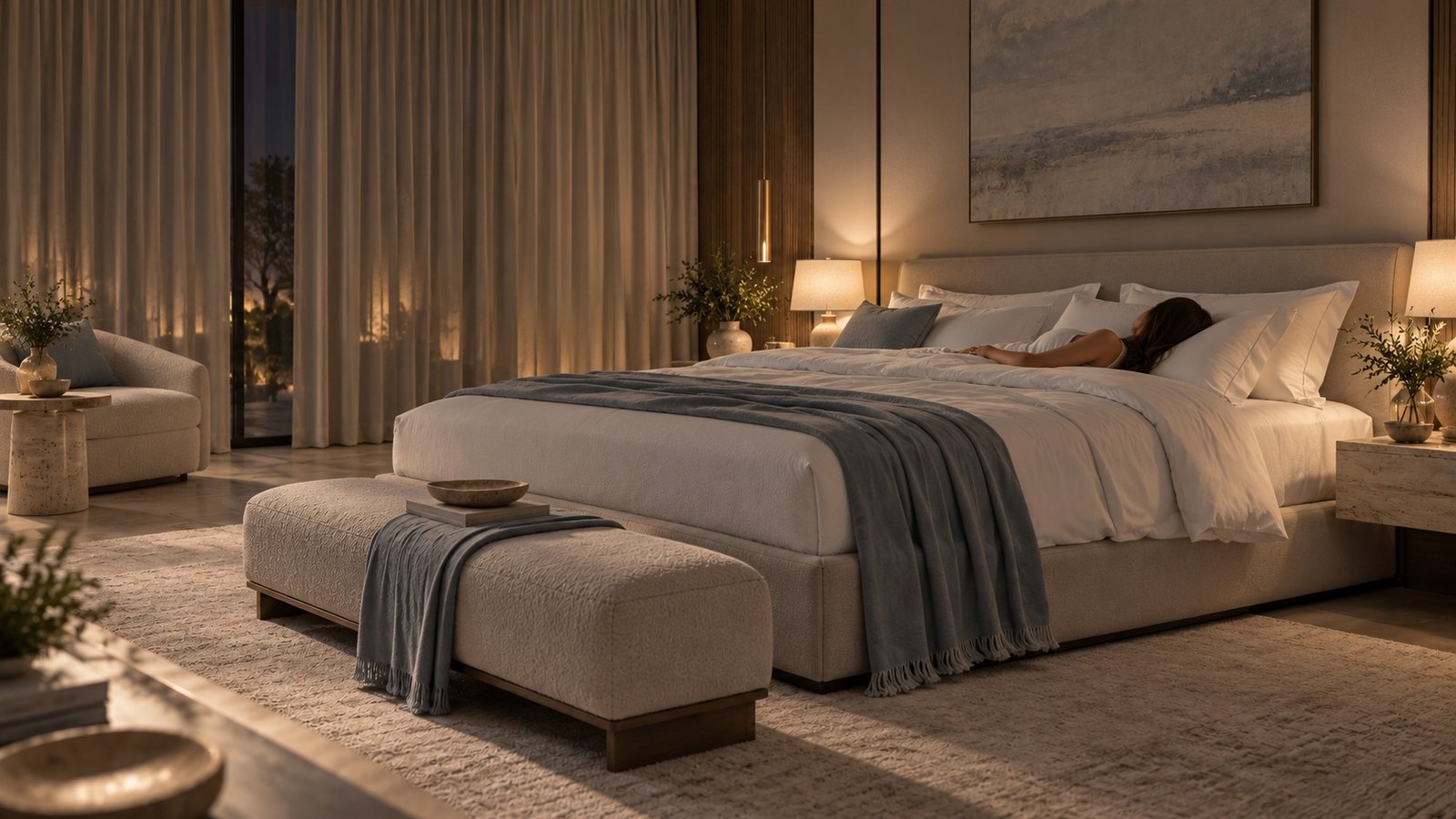
A routine works if it is short, always the same and defensible on crooked days. The ten-minute version that holds up in real life is this: low light in the last half hour, phone left charging outside the bedroom, 4-7-8 breathing for three minutes, body scan for five, eyes closed.
The timings are indicative, the order is not. Breath first, because it is a direct command to the nervous system; body second, because it needs a mind that is already a little quieter. If you skip the breathing and start with the body scan, the mind is often too fast to follow the scan and the practice stops after two minutes.
Anchor the routine to a fixed signal: the phone alarm set while charging in the hallway, the bedside lamp switched off, the pyjamas on. They are small gestures, but after two weeks the brain reads them as the start of the sleep sequence and begins the descent early. Shift workers can keep the order and shorten the times: five minutes of breathing is enough when the sleep window is short.
Last point concerns days when the routine breaks: dinner out, guests, travel. Better to keep only the breathing, two minutes, than to skip everything. The chain breaks when you decide that one evening does not count: restarting the next day is easier if the practice was not zeroed. And for the heavier weeks, the guide on sleep and stress completes the toolkit.
The mattress completes the relaxation
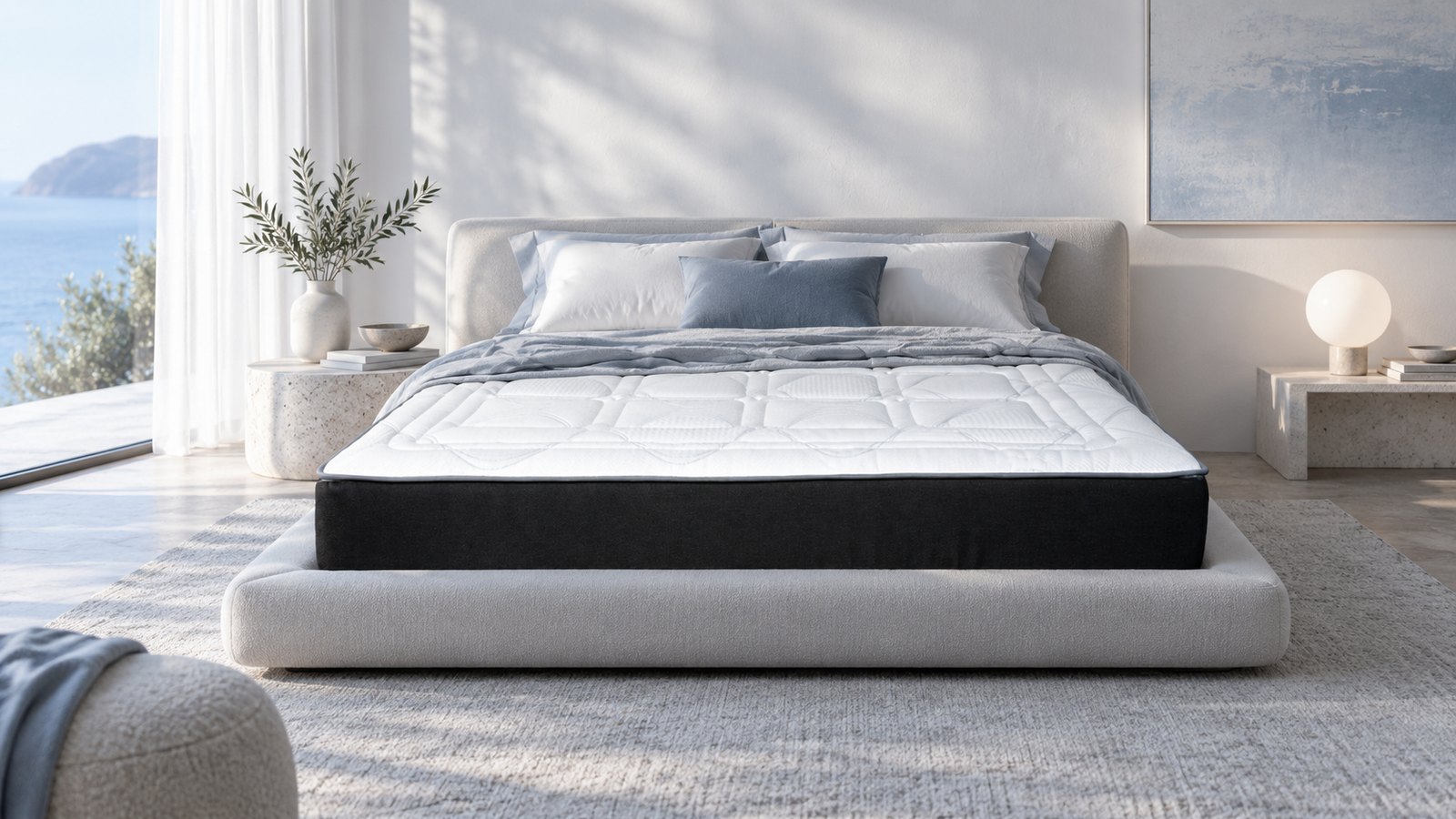
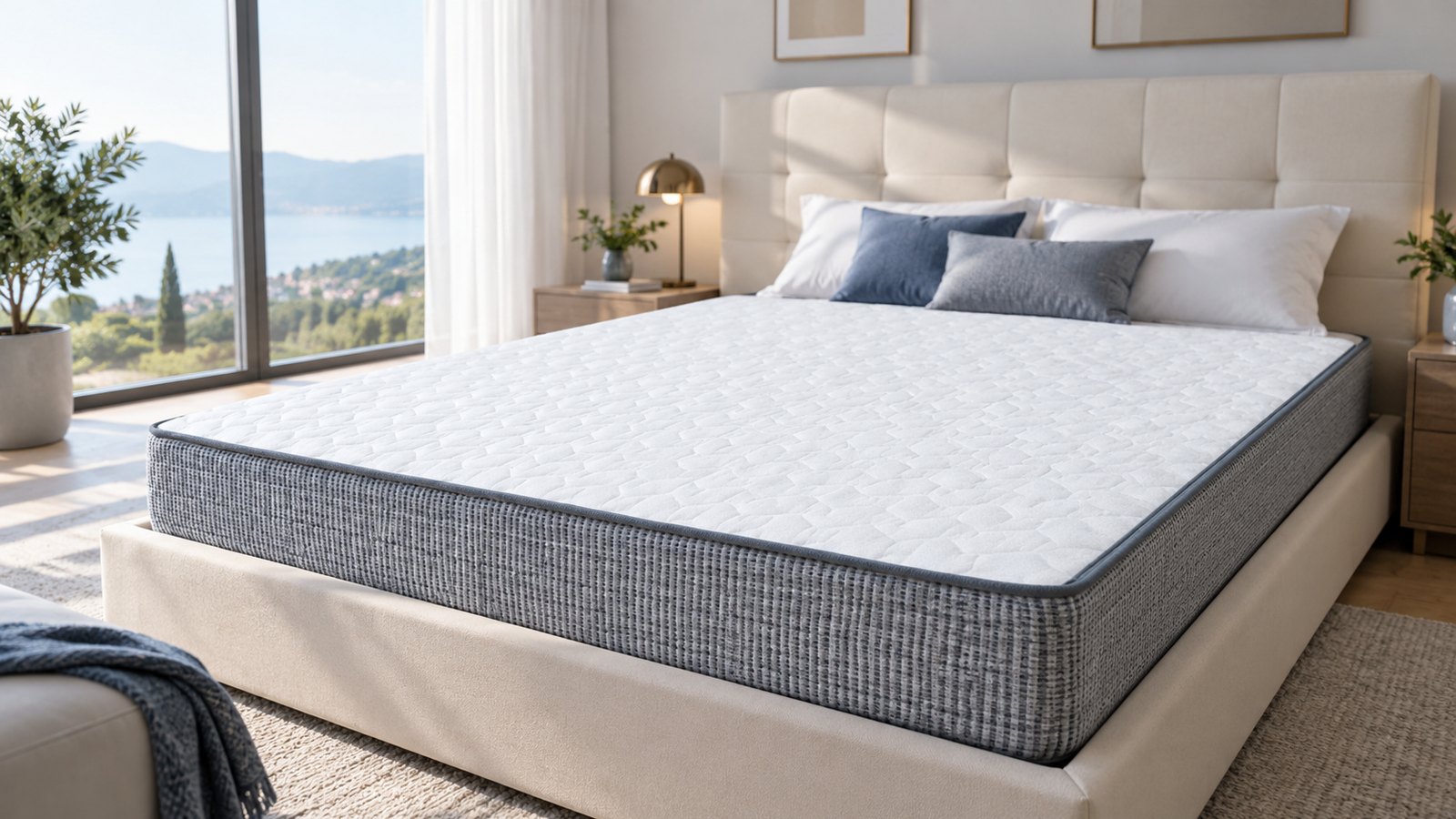
Relaxation has a physical limit: if the mattress does not support the body, the muscles keep working all night to hold the posture, and sleep stays light even after the best meditation. It is the reason why people who have changed mattress describe the same melting sensation you get at the end of a body scan.
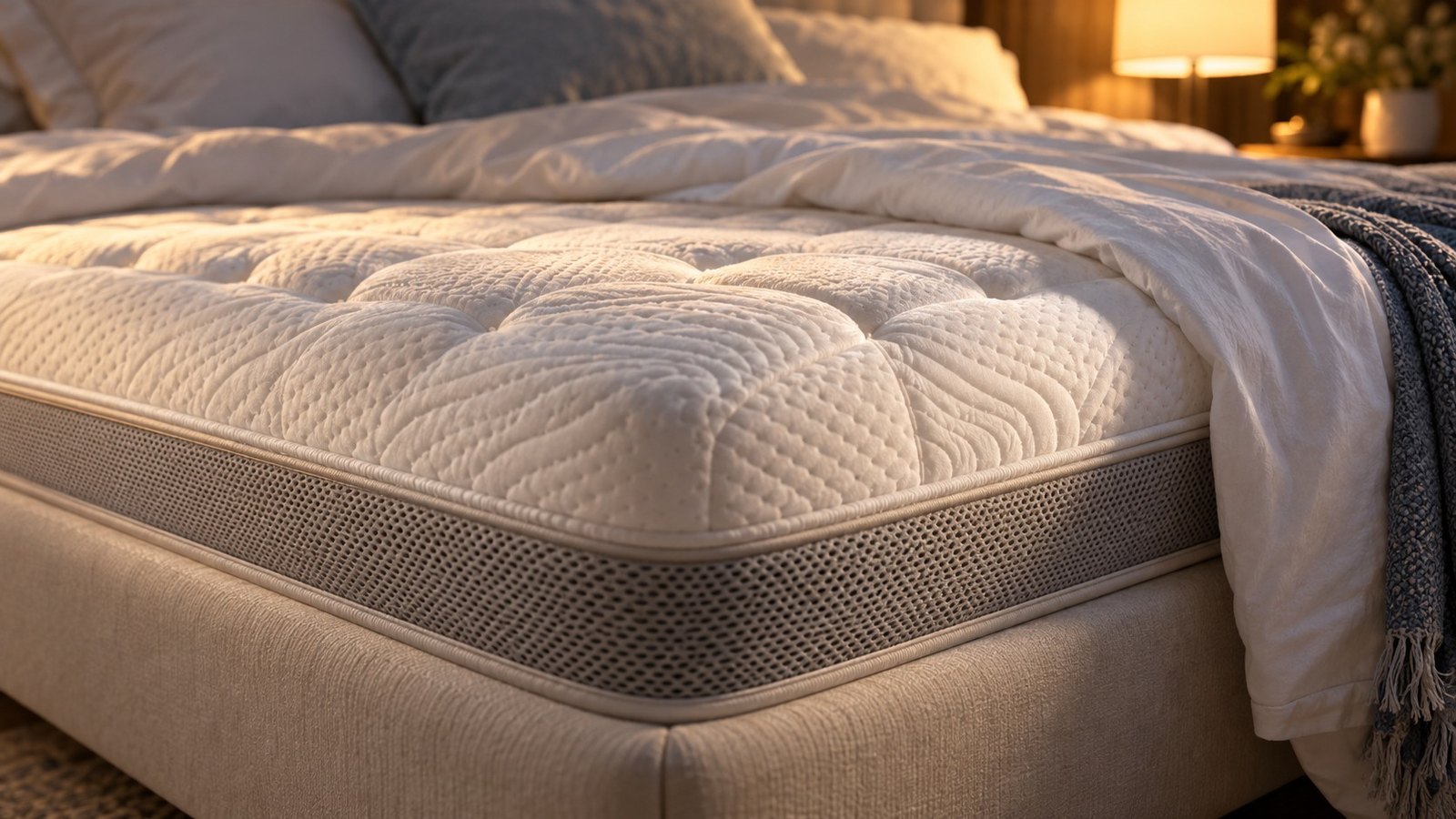
A mattress suited to relaxation has three features. The first is differentiated support: head, shoulders, pelvis and legs weigh differently and need different levels of push-back, so the spine stays aligned and the back muscles do not compensate. The second is a layer of temperature-sensitive memory foam, which adapts to the body's shape and spreads the weight across the whole surface instead of concentrating it on shoulders and pelvis. The third is breathability: overheating is one of the most frequent causes of micro-awakenings.
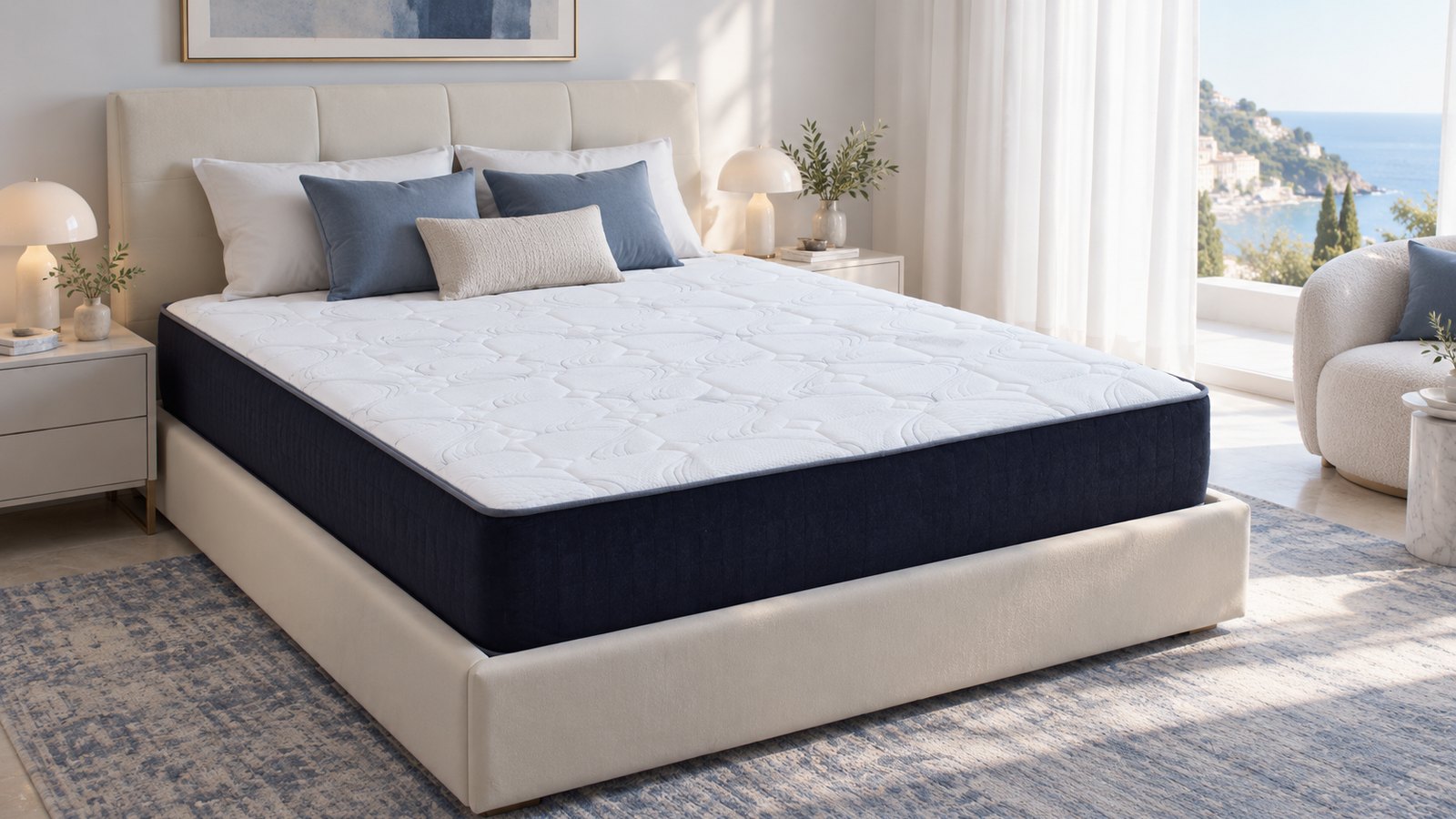
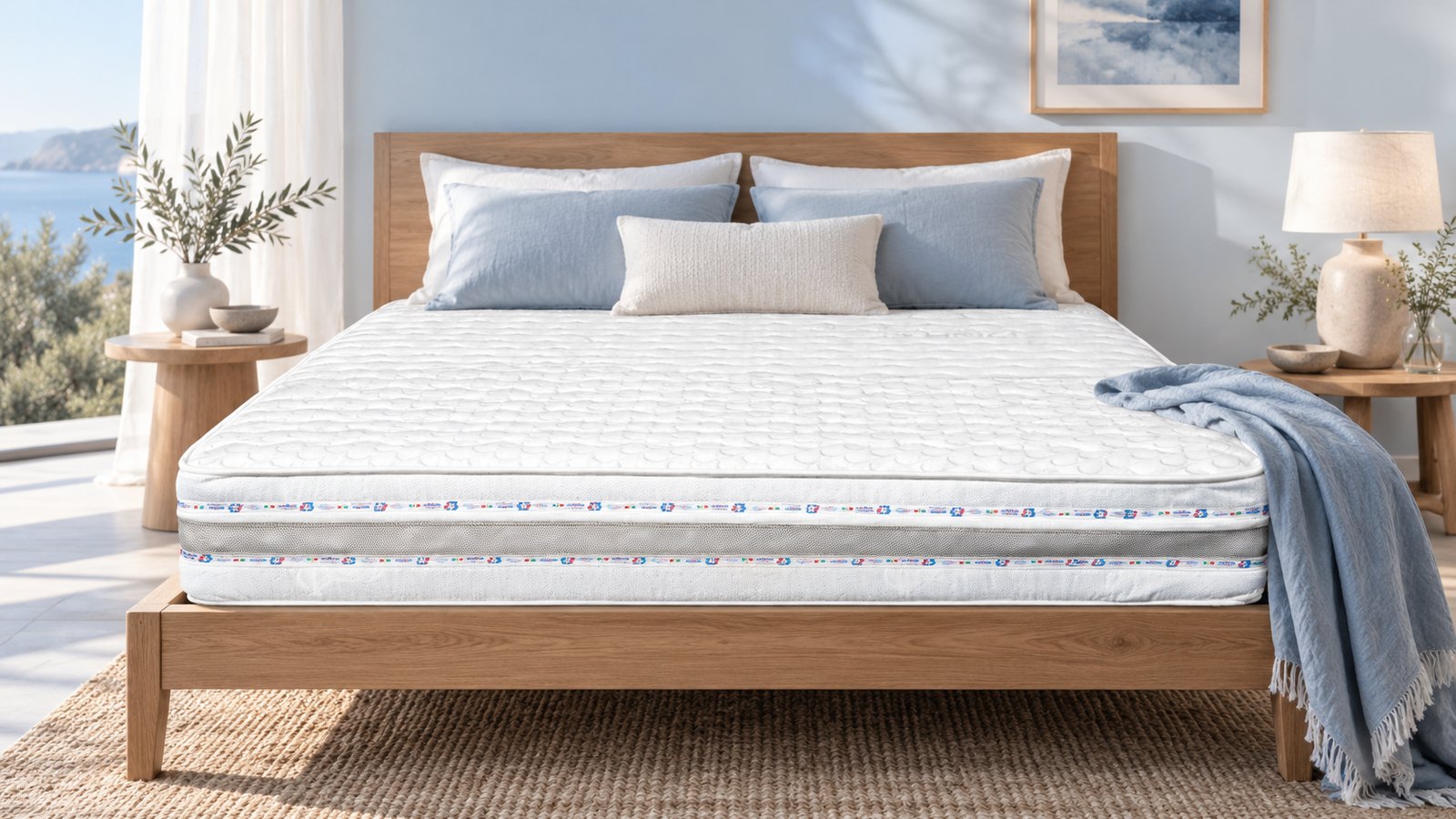
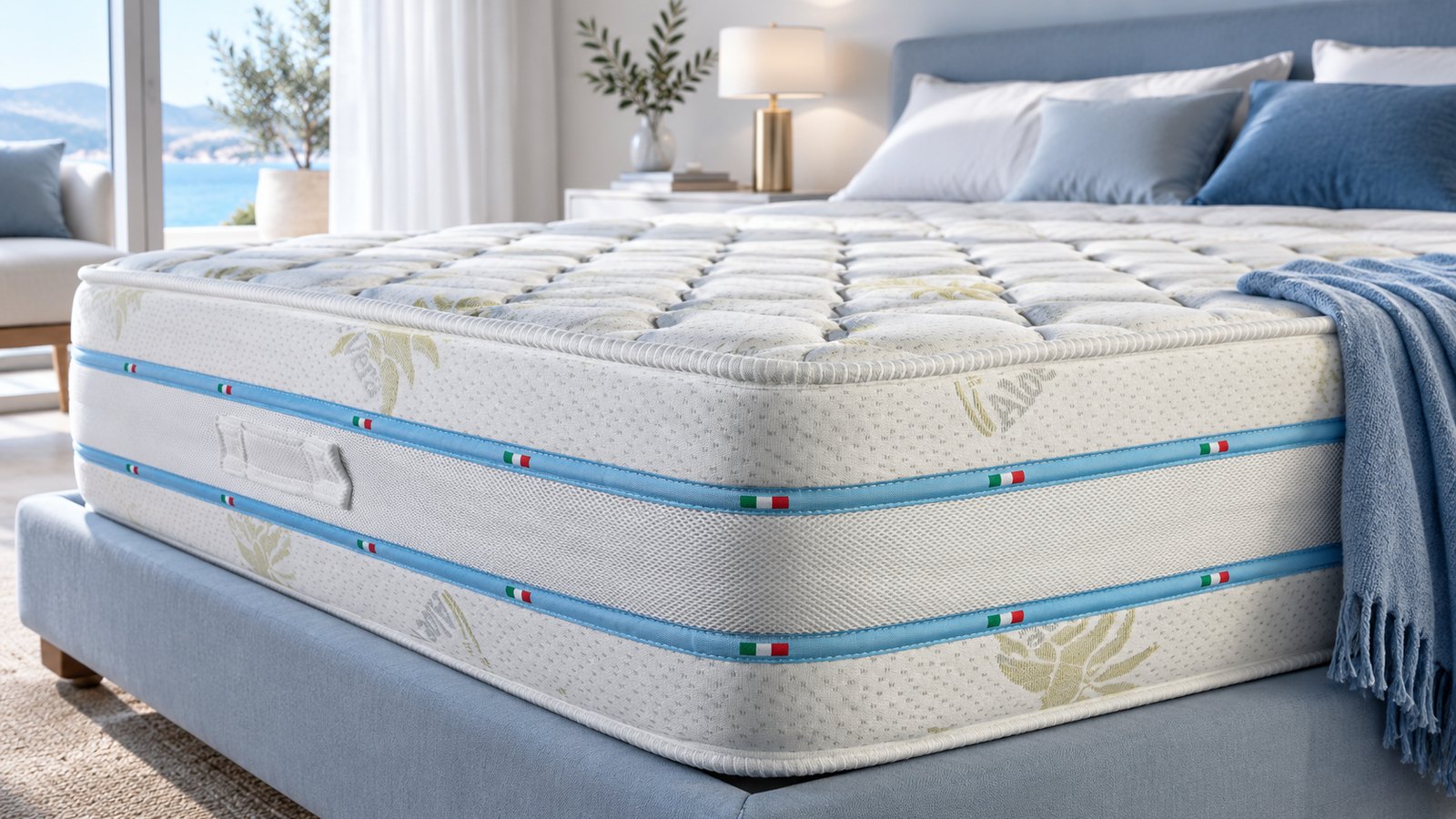
Luxury Relax mattresses build their comfort on these three levers: high-density Confortgel base, temperature-sensitive memory foam, a 3D breathable perimeter band and a washable Aloe Vera cover. Heights range from 24 to 30 centimetres depending on the model, and every mattress is anti-mite and hypoallergenic. The range starts with Venere at 149 euros and reaches Athena, the top model, from 990 euros.
Trial beats specification: Luxury Relax offers 10 trial nights at home, satisfaction guaranteed or refunded, a 10-year warranty and free delivery throughout Italy within 24-48 hours, islands included. If you want to understand which model fits your posture and the way you sleep, request the free consultation with the brand's experts: they listen to the problem before proposing a product.
The mistakes that ruin the evening practice
The first mistake is meditating in order to fall asleep. If the stated goal is unconsciousness, every minute spent awake becomes a failure and the mind switches on precisely when it should switch off. The correct goal is relaxation: sleep follows as a consequence, and the practice minutes are not wasted even when you stay awake.
The second mistake is posture. Anyone trying to meditate cross-legged on the bed ends up focusing on knee pain. The correct evening position is on your back, arms along your sides, with a pillow filling the gap between neck and mattress without pushing the head forward. If the pillow is too high, the breathing shortens and the 4-7-8 technique becomes uncomfortable.
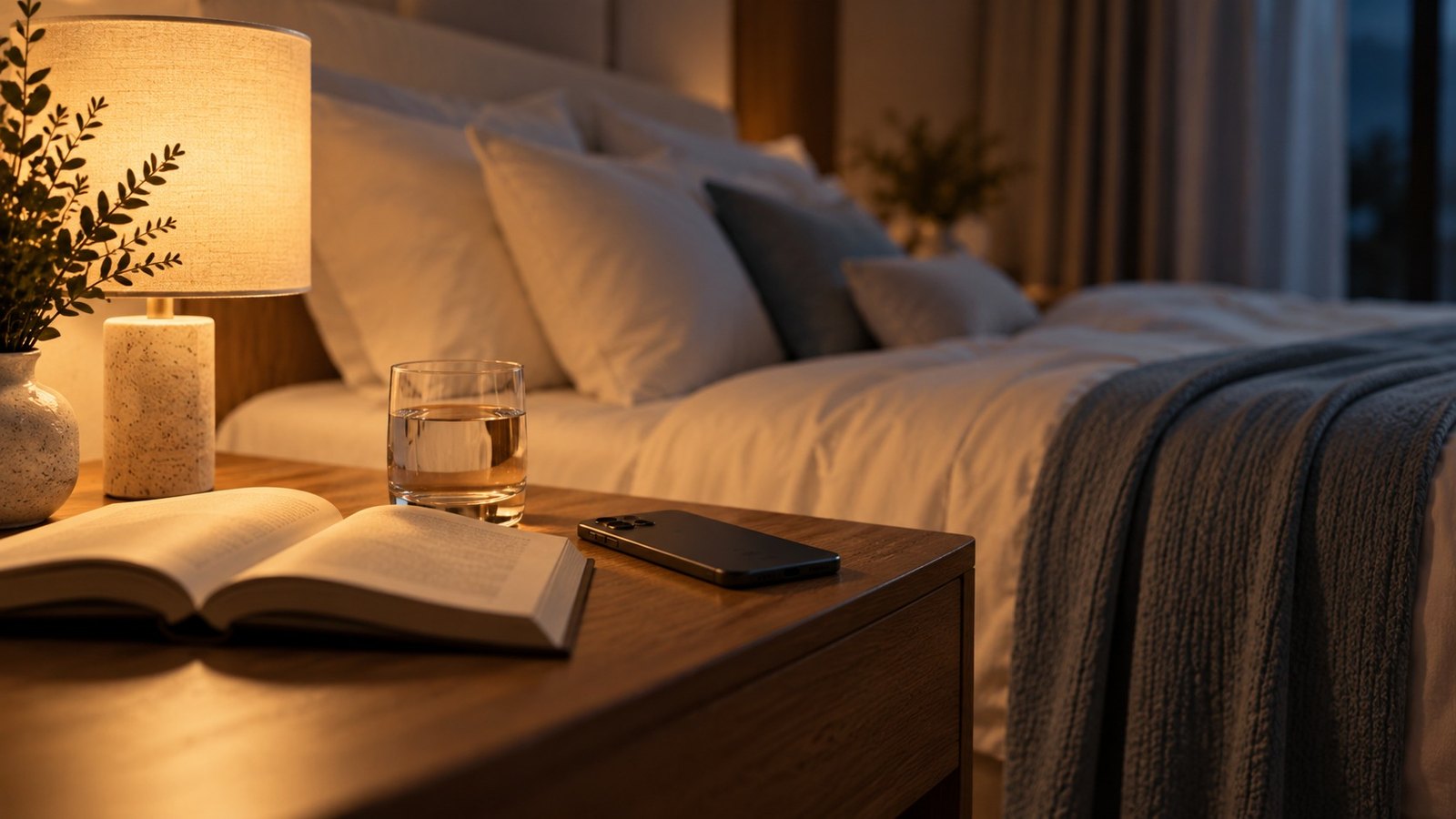
The third mistake is the phone in hand. Even in night mode, the screen light and the expectation of a notification keep the brain in vigilance. If you use guided audio, prepare it in advance and set the automatic stop. In the evening the phone is not a relaxation tool: it is a source of micro-decisions, and every micro-decision reactivates the prefrontal cortex.
The fourth mistake is quitting after three days without visible results. The nervous system adapts in two to three weeks, not in three evenings. A one-line diary, with the light-off time and a one-to-five rating of the morning wake-up, is enough to see the curve and keep going when motivation drops.
Frequently asked questions about meditation and sleep (FAQ)
How long should you meditate before bed? Between eight and twelve minutes are enough for most people. Under five minutes the practice does little; over twenty it risks becoming a task to perform, with anxiety about doing it right. Ten minutes every evening beat forty at the weekend.
Can meditation replace hours of sleep? No. Meditation improves sleep quality and speeds up falling asleep, but it does not compensate for sleep deprivation. An adult needs seven to eight effective hours a night: the evening practice helps you reach them, it does not reduce them.
Is it better to meditate sitting or lying down? For the evening practice lying down is better, because the position is already the sleep position and there is no need to move afterwards. The sitting position suits morning or afternoon practice. What matters is that the back is supported and the neck aligned.
How long before the benefits show? 4-7-8 breathing has effects on sleep onset from the very first evenings. The stable effects on sleep architecture, with fewer night-time awakenings, appear after two to three weeks of daily practice.
Does meditation work for people who wake up at night? Yes. On waking at night, resume slow breathing without turning on the light or checking the time. If sleep does not return after twenty minutes, it is better to get up, do something boring in low light and try again: lying in bed frustrated teaches the body that bed is a place for being awake.
Do you need an app to start meditating? No, 4-7-8 breathing and the body scan need nothing at all. Guided apps help in the first months, as long as the phone stays charging outside the bedroom and the playback switches itself off. After a few weeks many people move to silence.
Ideal Mattress Configurator in 3 Clicks
Answer 3 questions and see which Luxury Relax model fits your sleep best.
Step 1 of 3
Images from this guide


How long should you meditate before bed?
Between eight and twelve minutes are enough for most people. Under five minutes the practice does little; over twenty it risks becoming a task to perform, with anxiety about doing it right. Ten minutes every evening beat forty at the weekend.
Can meditation replace hours of sleep?
No. Meditation improves sleep quality and speeds up falling asleep, but it does not compensate for sleep deprivation. An adult needs seven to eight effective hours a night: the evening practice helps you reach them, it does not reduce them.
Is it better to meditate sitting or lying down?
For the evening practice lying down is better, because the position is already the sleep position and there is no need to move afterwards. The sitting position suits morning or afternoon practice. What matters is that the back is supported and the neck aligned.
How long before the benefits show?
4-7-8 breathing has effects on sleep onset from the very first evenings. The stable effects on sleep architecture, with fewer night-time awakenings, appear after two to three weeks of daily practice.
Does meditation work for people who wake up at night?
Yes. On waking at night, resume slow breathing without turning on the light or checking the time. If sleep does not return after twenty minutes, it is better to get up, do something boring in low light and try again: lying in bed frustrated teaches the body that bed is a place for being awake.
Do you need an app to start meditating?
No, 4-7-8 breathing and the body scan need nothing at all. Guided apps help in the first months, as long as the phone stays charging outside the bedroom and the playback switches itself off. After a few weeks many people move to silence.
Request your free consultation
Fill in the form: a Luxury Relax expert will get back to you with the proposal that suits you best.
What Luxury Relax owners say
On my dad's advice, already a customer, I went to Luxury Relax to buy a mattress. Very comfortable and ergonomic products.
Quality products, helpful and knowledgeable staff. Highly recommended to anyone looking for a real mattress, not a brand name.
I got rid of the back pain that had followed me for years. The right mattress changes your days.
Come visit us
Luxury Relax Materassi
Via San Rocco, 42 — 20831 Seregno (Monza e della Brianza), Italia0362 222407 · info@luxuryrelax.it · WhatsApp 339 4797213
Open in Google Maps