Best Latex Mattress: Comparison and Alternatives
Request your free consultation
Fill in the form: a Luxury Relax expert will get back to you with the proposal that suits you best.
Latex has a devoted following, and the devotion is not irrational. A latex mattress is springy, breathable and durable, and it holds its shape without melting under body heat the way ordinary foam can. For a certain kind of sleeper — usually someone who wants a firm, responsive surface and dislikes the feeling of sinking — latex is genuinely excellent, and no comparison should pretend otherwise.
But the market treats latex as a status material rather than a solution, which is where buyers go wrong. Latex is heavy, expensive and less forgiving of pressure points than a well-built memory system. It also isolates movement less effectively, so couples notice each other more. Knowing when latex is the right answer, and when it is an unnecessary premium, saves both money and a bad night's sleep.
This comparison does not dismiss latex; it places it accurately. Then it shows why a layered comfort build with memory foam over a dense base — the approach used across the Luxury Relax range — outperforms pure latex for the majority of sleepers without the weight and the price tag.
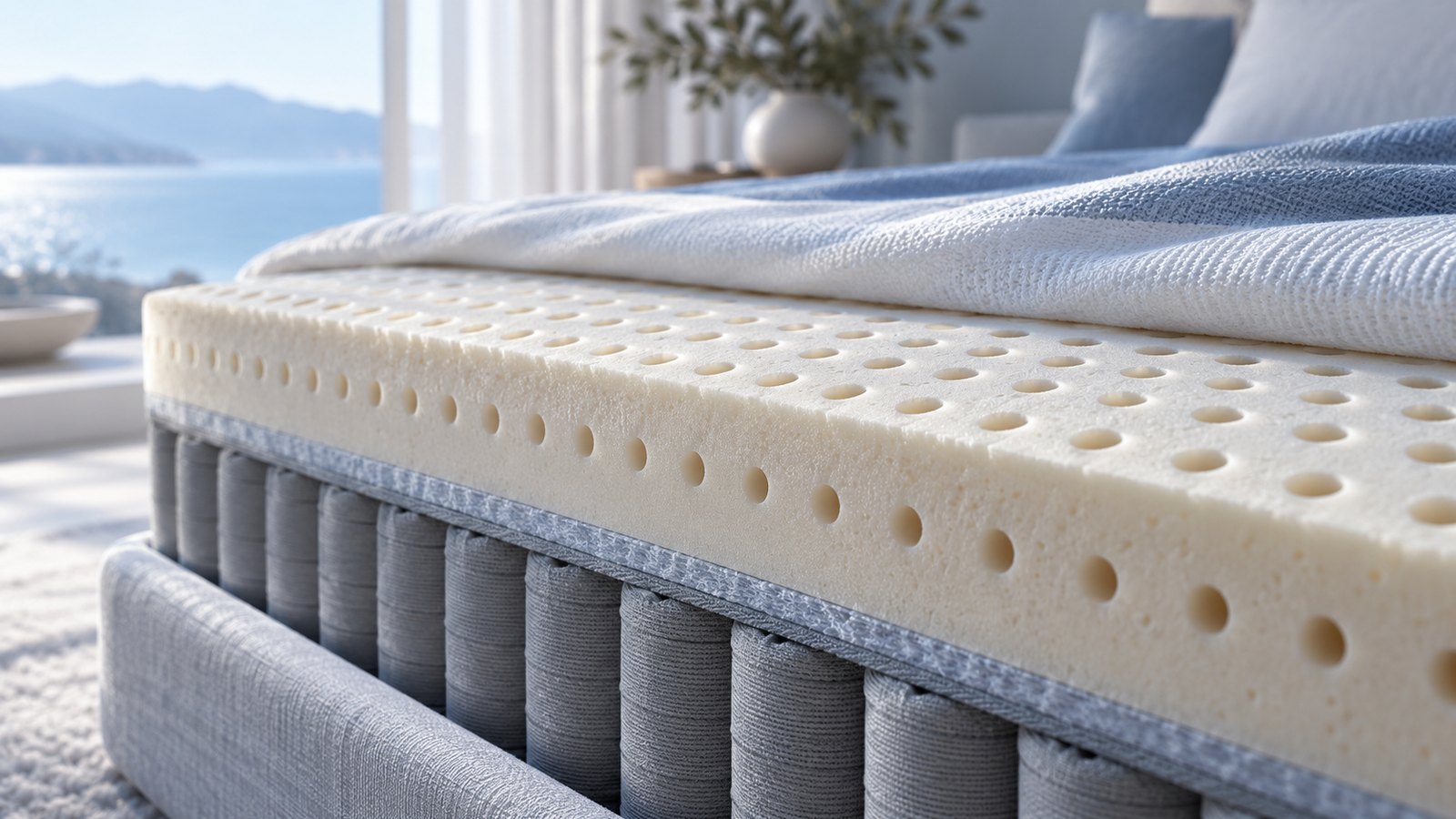
What Latex Does Well
Start with the real strengths. Latex is elastic: press it and it pushes back immediately, giving a lively surface that supports without letting you sink. Sleepers who wake up feeling stuck in soft foam often fall in love with latex precisely because it keeps them on top of the bed rather than inside it.
It also breathes. Natural latex has an open structure that moves air more freely than dense memory foam, so warm sleepers tend to stay cooler. And it is durable: quality latex resists sagging for a long time, which is why some buyers treat it as a lifetime purchase and accept the higher price as an investment.
There is a hygiene story too. Natural latex resists dust mites and mould better than many synthetic materials, which matters for allergy sufferers. None of this is marketing fiction — latex is a real material with real advantages, and for a firm-feel back sleeper with a generous budget it can be a sound purchase.
The catch is that these advantages come bundled with limitations that surface after a few months rather than a few minutes. That is where most latex buyers discover what the showroom never told them.
Where Latex Falls Short
The first limitation is pressure relief. Latex is elastic, which means it resists your shoulder and hip rather than yielding to them. For a side sleeper, that translates into pressure at the shoulder joint and the outer hip, exactly the points that need to sink. Memory foam solves this by softening under heat; latex refuses to.
The second is motion transfer. Because latex is springy, movement travels across the surface more than it does in a dense foam build. A partner who turns over is felt more, and lighter sleepers wake more often. For couples, this is often the deciding factor against latex despite everything else it does well.
The third is weight and handling. Latex is heavy, which makes rotating or moving the mattress a chore, and it is expensive because the raw material is costly. You pay a premium for a surface that is harder to manage and, for many bodies, less comfortable than a well-tuned layered build. Latex is not wrong; it is simply narrow, and it suits fewer sleepers than its reputation suggests.
| Criterion | Latex | Layered memory build |
|---|---|---|
| Pressure relief | Moderate | Excellent |
| Motion isolation | Moderate | Excellent |
| Breathability | Good | Good with 3D band |
| Weight and handling | Heavy | Manageable with handles |
| Price for the same comfort | High | Lower |
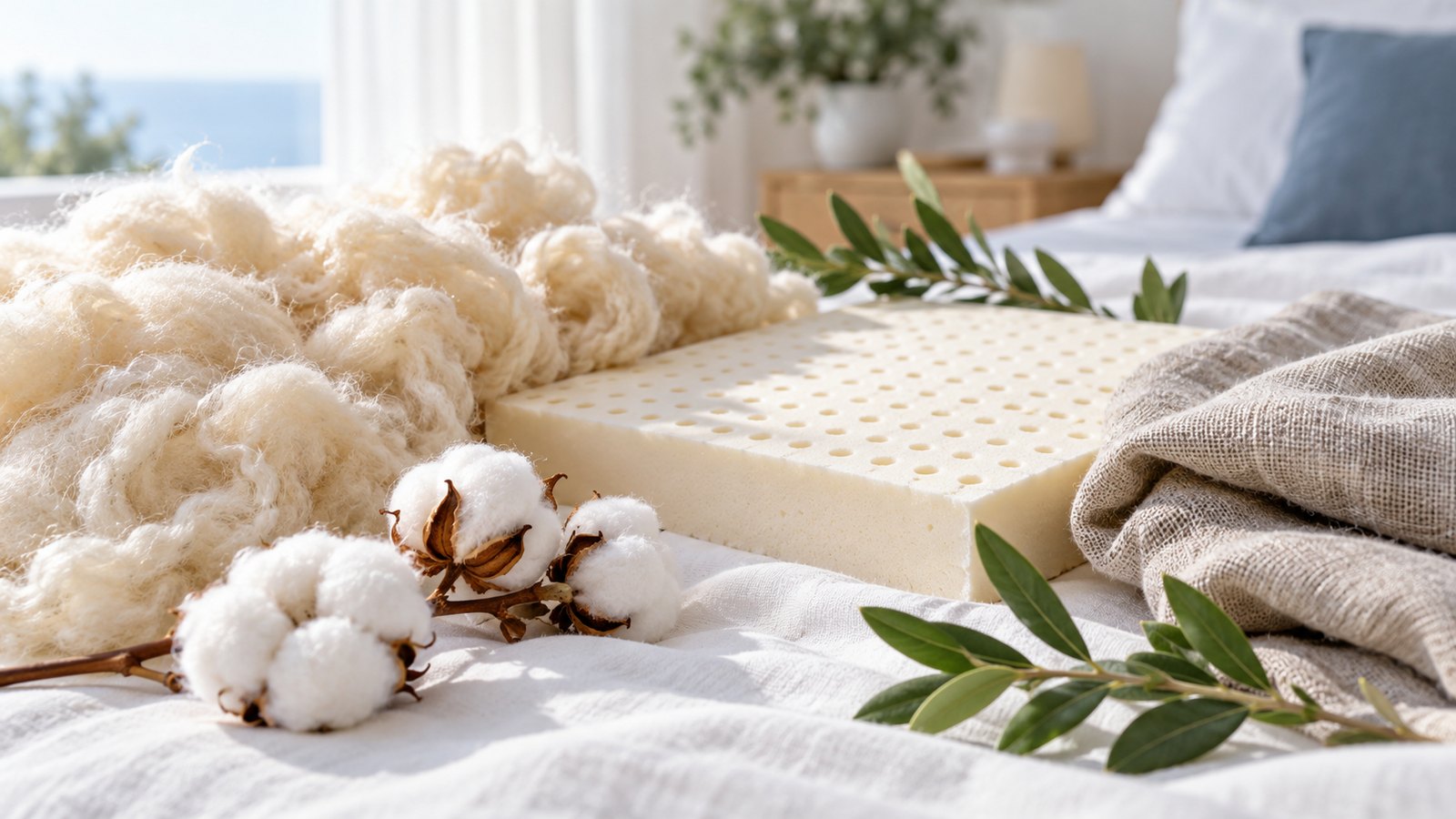
Latex vs Layered Comfort: A Fair Fight
Put the two systems side by side and the trade becomes clear. Latex gives you a firm, lively, breathable surface and durability; a layered memory build gives you contouring, pressure relief and quiet, provided its base is dense enough to support. Neither is a trick; they simply serve different sleepers.
For a back sleeper of average weight who dislikes sinking, latex is a legitimate choice. For a side sleeper, a heavier sleeper, a couple, or anyone with shoulder and hip pressure, the layered approach wins by a wide margin. The majority of adults fall into the second group, which is why the honest recommendation for most buyers is a layered build rather than pure latex.
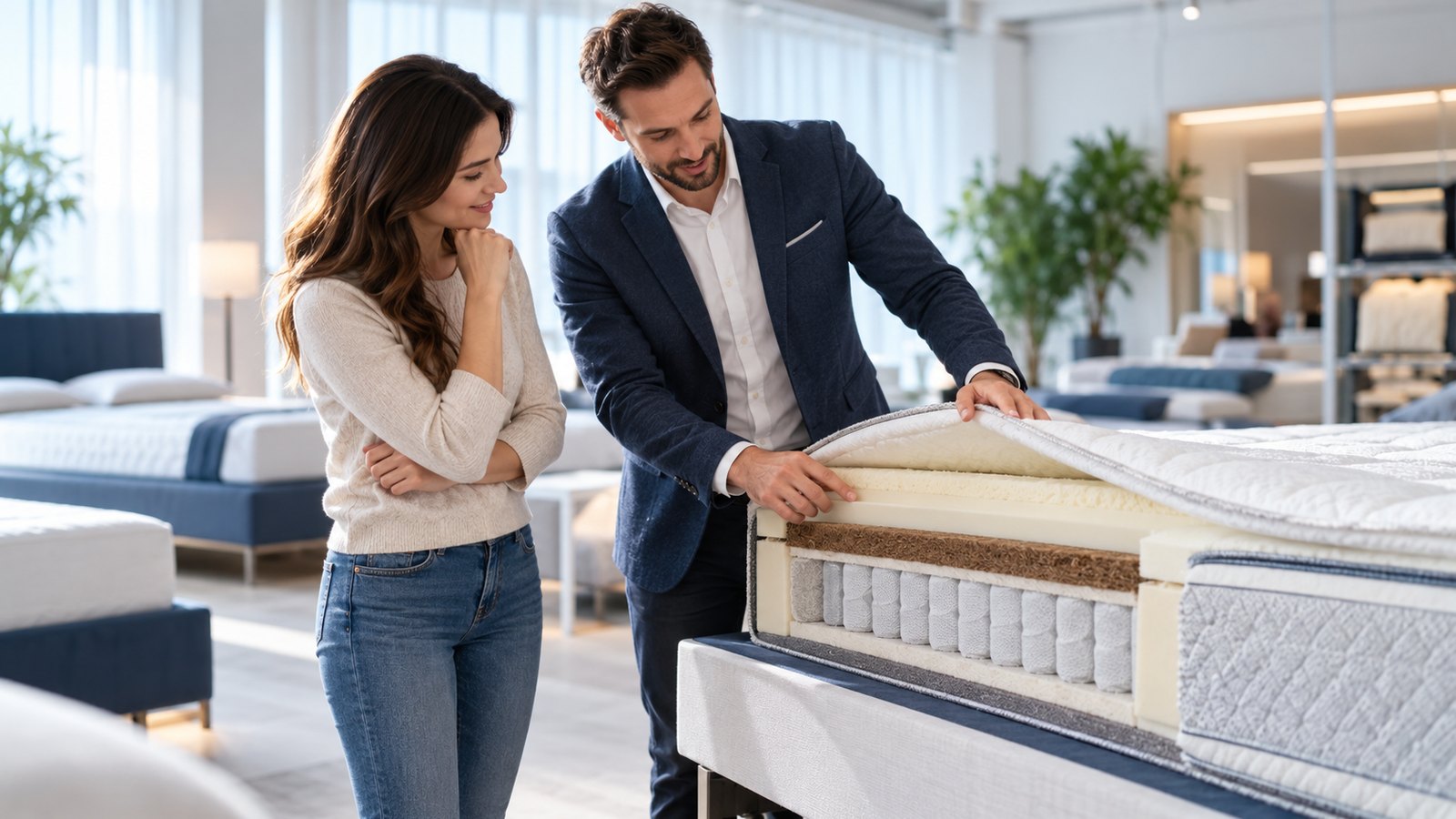
The smartest products do not pick a side; they borrow from both. A dense support core provides the firmness latex lovers want, and a thermosensitive memory comfort layer provides the contouring latex lacks. Add a breathable 3D perimeter band and the airflow advantage of latex is recovered too. This hybrid thinking is what puts the Luxury Relax build ahead of single-material mattresses in every category we test.
Durability, the last latex selling point, is matched rather than lost. A high-density Confortgel base paired with a protected, washable cover keeps its shape over years, and the maker backs that confidence with a ten-year warranty. The argument for paying a latex premium shrinks to a niche.
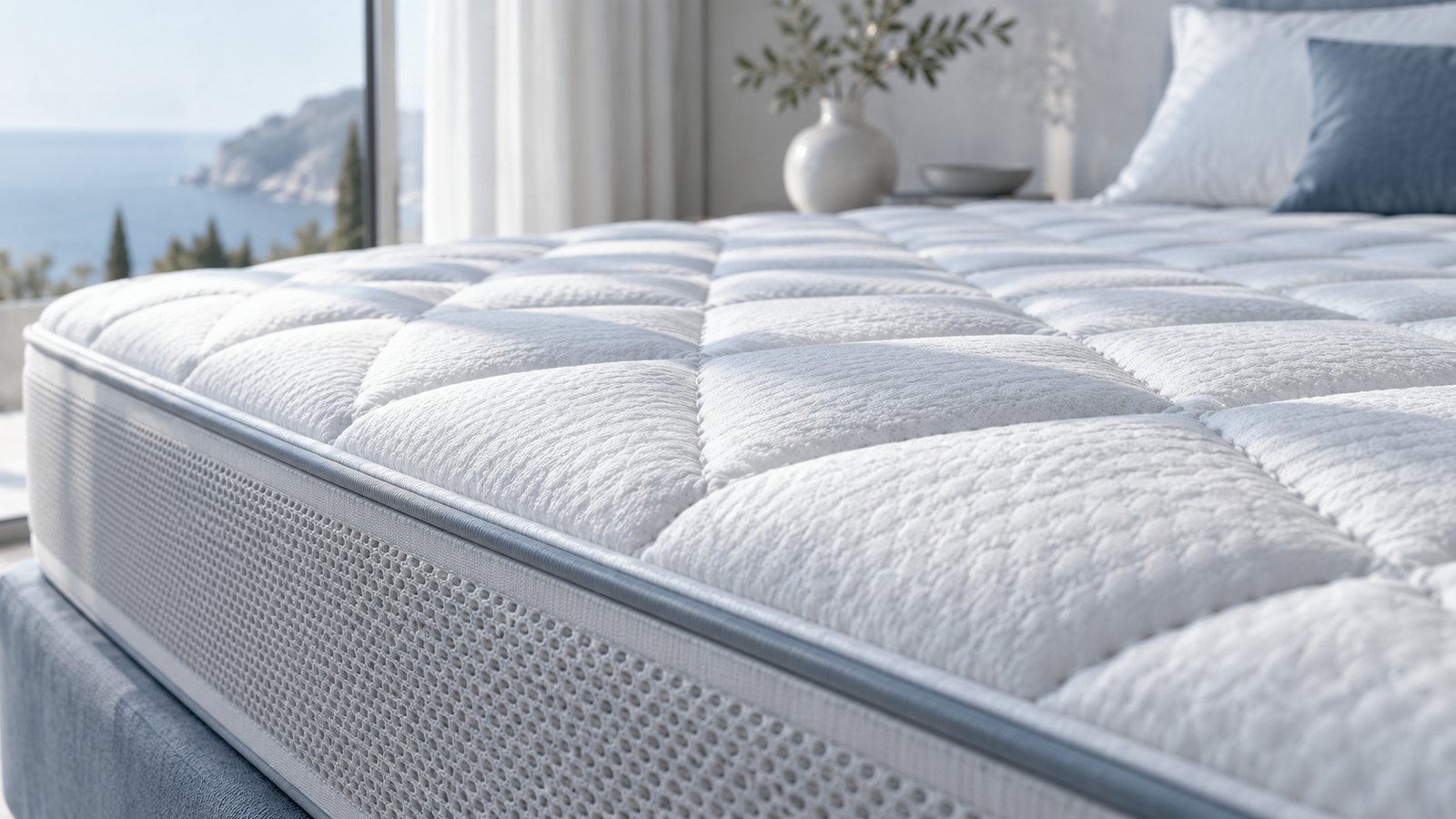
Why the Layered Luxury Relax Build Is the Smarter Choice
Compare the actual experience rather than the material name. A Luxury Relax mattress gives you the contouring of memory foam over a base firm enough to satisfy someone who wants support, all wrapped in an aloe vera washable cover that handles hygiene better than most latex covers do. The breathable 3D band recovers the airflow that makes latex appealing in summer.
Then there is the risk arithmetic. Ten years of warranty, ten trial nights on a satisfied-or-refunded basis, free delivery across Italy in 24 to 48 hours and payment on delivery or by card remove almost all of the uncertainty of buying a mattress you have never slept on. No latex premium can buy that confidence, because it is not sold as a feature; it is earned through policy.
The prices tell the same story. The Athena at €990 from €1,950, the Platinum at €699 from €1,999, the Gold at €399 from €749, the Elisir at €179 and the Venere at €149 cover the whole range of budgets. A comparable latex mattress of similar build quality would cost more and still would not contour the shoulder or isolate movement as well. For most buyers, the layered build is the better mattress and the better value, and it does not ask you to accept a heavier, pricier compromise to get durability.
Who Should Still Consider Latex
Honesty requires a short list for latex, because it has real owners. A firm-feel back sleeper of average weight who dislikes the sensation of sinking is the classic latex buyer. Someone sensitive to synthetic materials and drawn to natural rubber may also prefer it, provided the source is genuine and the price is justified.
Warm sleepers who find even good memory foam too warm may lean toward latex for its airflow, though a memory build with a 3D breathable band and an aloe cover narrows that advantage considerably. If you are in one of these groups, test both under real conditions rather than deciding from a showroom minute.
For everyone else — side sleepers, couples, heavier sleepers, anyone with pressure or back discomfort — the layered memory build is the stronger choice, and the memory foam comparison explains why in detail. If you are still weighing material families, the mattress buying guide walks through the decision from first principles. When you are ready to test rather than theorise, open the contact page and request a free consultation with an expert who will ask about your body rather than sell you a material.
Frequently Asked Questions
Is latex better than memory foam? Not universally. Latex is firmer, bouncier and breathable, suiting some back sleepers. Memory foam contours better and isolates movement more, which suits side sleepers, couples and anyone with pressure discomfort — the larger group.
Does latex last longer than memory foam? Quality latex is durable, but a high-density support core with a protected cover and a ten-year warranty matches it in practice. Durability depends on the core and the care, not only on the material name.
Is latex good for side sleepers? Usually less so, because it resists the shoulder and hip instead of yielding. Side sleepers typically do better on a thermosensitive memory layer that softens under body heat.
Is latex cooler to sleep on? Latex breathes well, but a memory build with a breathable 3D perimeter band and an aloe vera cover closes most of the gap while keeping superior contouring.
Is latex worth the higher price? Only if you specifically want a firm, elastic surface and value natural materials. For most sleepers the layered build delivers equal durability and better comfort for less money.
Can I test a latex or layered mattress at home? With ten trial nights on a satisfied-or-refunded basis, free delivery and payment on delivery, you can judge the mattress in your own bedroom before committing, which is the only reliable test.
Is latex better than memory foam?
Not universally. Latex is firmer, bouncier and breathable, suiting some back sleepers. Memory foam contours better and isolates movement more, which suits side sleepers, couples and anyone with pressure discomfort — the larger group.
Does latex last longer than memory foam?
Quality latex is durable, but a high-density support core with a protected cover and a ten-year warranty matches it in practice. Durability depends on the core and the care, not only on the material name.
Is latex good for side sleepers?
Usually less so, because it resists the shoulder and hip instead of yielding. Side sleepers typically do better on a thermosensitive memory layer that softens under body heat.
Is latex cooler to sleep on?
Latex breathes well, but a memory build with a breathable 3D perimeter band and an aloe vera cover closes most of the gap while keeping superior contouring.
Is latex worth the higher price?
Only if you specifically want a firm, elastic surface and value natural materials. For most sleepers the layered build delivers equal durability and better comfort for less money.
Can I test a latex or layered mattress at home?
With ten trial nights on a satisfied-or-refunded basis, free delivery and payment on delivery, you can judge the mattress in your own bedroom before committing, which is the only reliable test.
What Luxury Relax owners say
Su consiglio di mio papà già cliente mi sono recato da Luxury Relax per l'acquisto di un materasso. Prodotti molto comodi ed ergonomici.
Prodotti di qualità, personale disponibile e competente. Consigliatissimo a chi cerca un materasso vero, non un nome.
Ho risolto i dolori alla schiena che mi accompagnavano da anni. Il materasso giusto cambia le giornate.
Come visit us
Luxury Relax Materassi
Via San Rocco, 42 — 20831 Seregno (Monza e della Brianza), Italia0362 222407 · info@luxuryrelax.it
Open in Google Maps