How to Fall Asleep Faster: the Practical Guide
Key facts at a glance
- What to know right away: How to fall asleep faster: light, temperature, breathing and the right mattress. Practical guide with Luxury Relax tips and a 10-night free trial.
- Trial, warranty and delivery: 10 trial nights · 10-year warranty · Free delivery 24/48h
- Who it is for: Why falling asleep takes longer
- What this guide covers: Why falling asleep takes longer · Light and temperature: the two fastest levers · The two-hour routine
- How to book or get help: Get your free consultation · 0362 222407 · info@luxuryrelax.it
The minutes spent staring at the ceiling count as much as the hours of sleep. Someone who needs forty minutes to fall asleep loses almost an hour of rest every night, even when the wake-up time is perfect. The next evening the same scene repeats: they go to bed early to make up for it, and the body answers by staying awake.
Falling asleep quickly is not a talent, and it does not depend on being tired enough. It is the result of signals the body receives in the two or three hours before bed: light, temperature, regular timing, mental state. Every one of these signals can be acted on, with no magic recipes and no life overhaul.
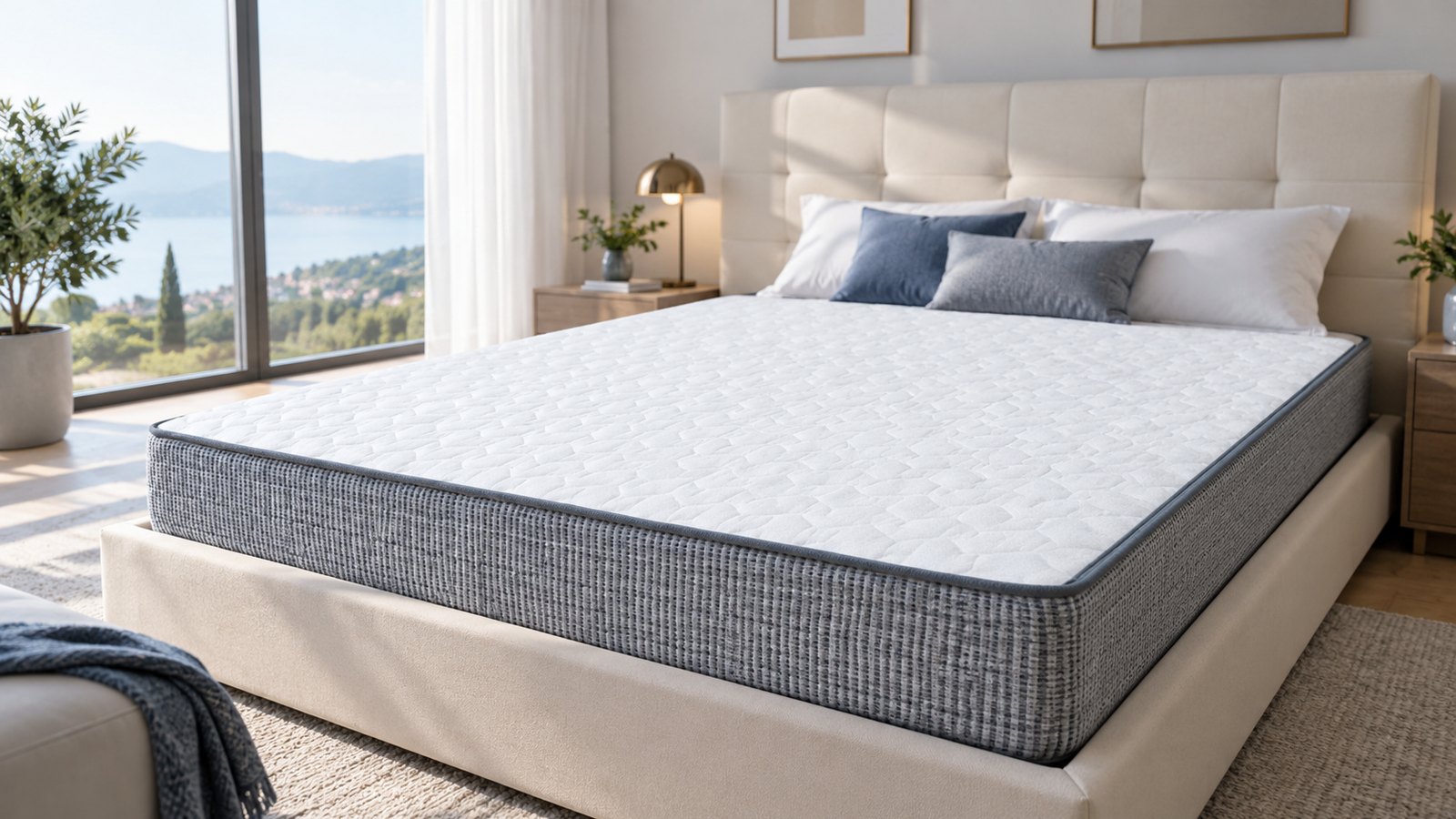
This article lists the levers that really work, in the order it pays to use them: the environment first, then the routine, then the mental techniques, and the bed last. Many people start from the surface they sleep on, and that is a sound choice: the Luxury Relax review covers materials, heights and services of the mattresses made in Seregno, near Milan, which return in the final section. Let us start with the reason why falling asleep takes longer.
Why falling asleep takes longer
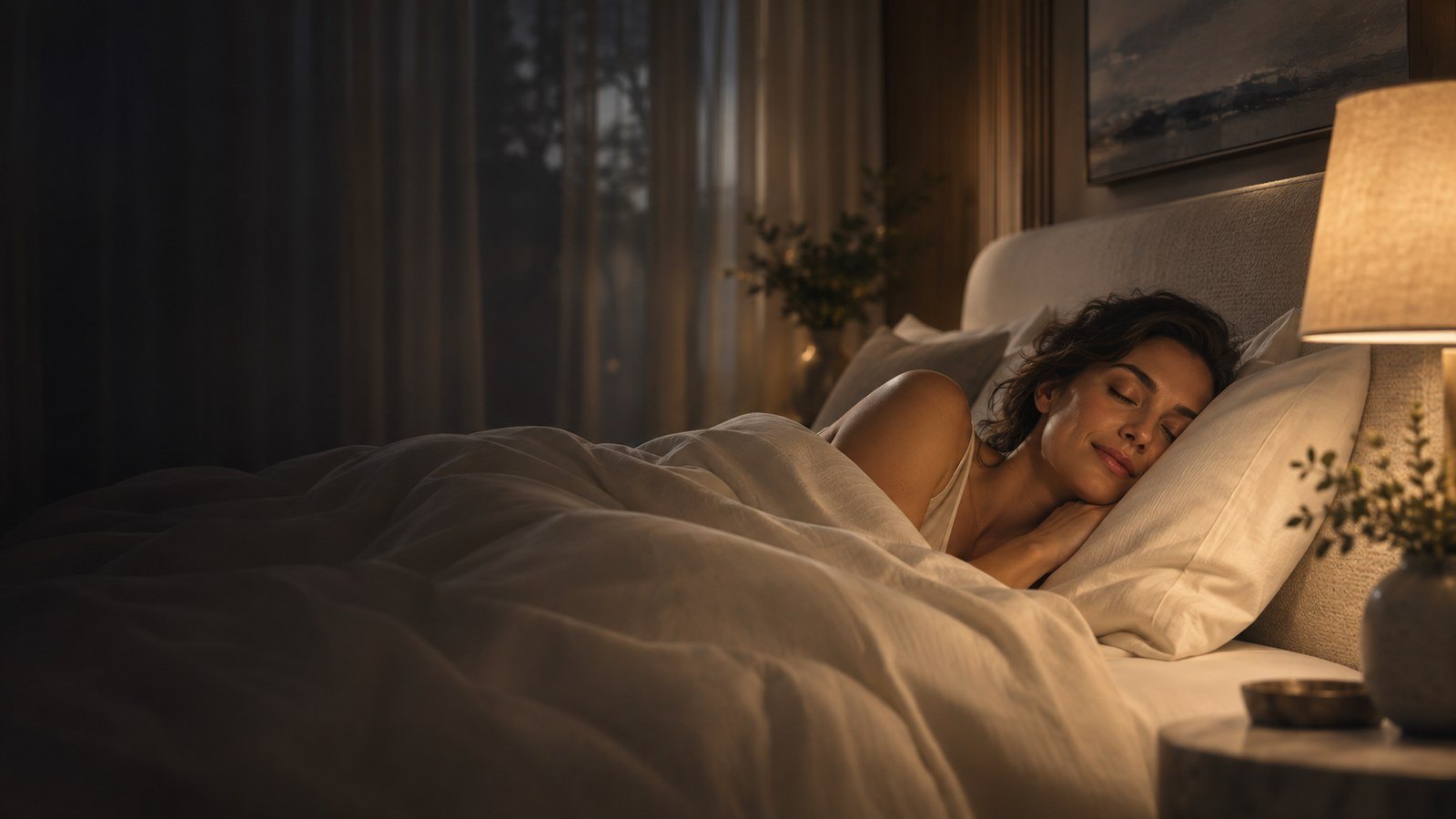
Falling asleep is where two systems meet: sleep pressure, which builds up with the hours spent awake, and the body clock, which signals when it is time to rest. When both work, sleep comes in 10-20 minutes. When one of them is out of phase, the body is tired but the mind stays switched on.
The most common cause is a shifted clock. Anyone exposed to bright light until late, anyone who eats at a different time each day, anyone who sleeps until noon at the weekend moves their own rhythm by an hour or two. The body receives conflicting signals and sleep arrives when the clock decides, not when you go to bed. The sleep quality guide explains how to measure this gap without obsessing over it.
The second factor is mental activation. A brain that worked until the last minute, checked the news, or is solving problems in bed receives no instruction to slow down. Adrenaline and cortisol stay high, body temperature does not drop, and the sleep signal arrives weak. In most cases this is not clinical anxiety: it is simply the absence of a ritual.
The third factor is the most underrated: caffeine. Caffeine lasts 5-6 hours on average, but its half-life ranges from 3 to 9 hours from person to person. A coffee at 5 pm can still block adenosine receptors at 11 pm. If falling asleep is slow, the first thing to check is the time of the last caffeine, as described in our caffeine and sleep guide. One more element of the first factor is the regularity of the wake-up time. Falling asleep in the evening depends on the hour you got up in the morning: a stable wake-up time seven days a week sets the body clock more firmly than any evening trick. Someone who gets up at 7 on weekdays and at 11 at the weekend asks the body to advance sleep by four hours on Sunday night, and the body does not comply. Keep the tolerance within one hour, and make up for it with a short nap if needed, before 4 pm and under 30 minutes.
Light and temperature: the two fastest levers
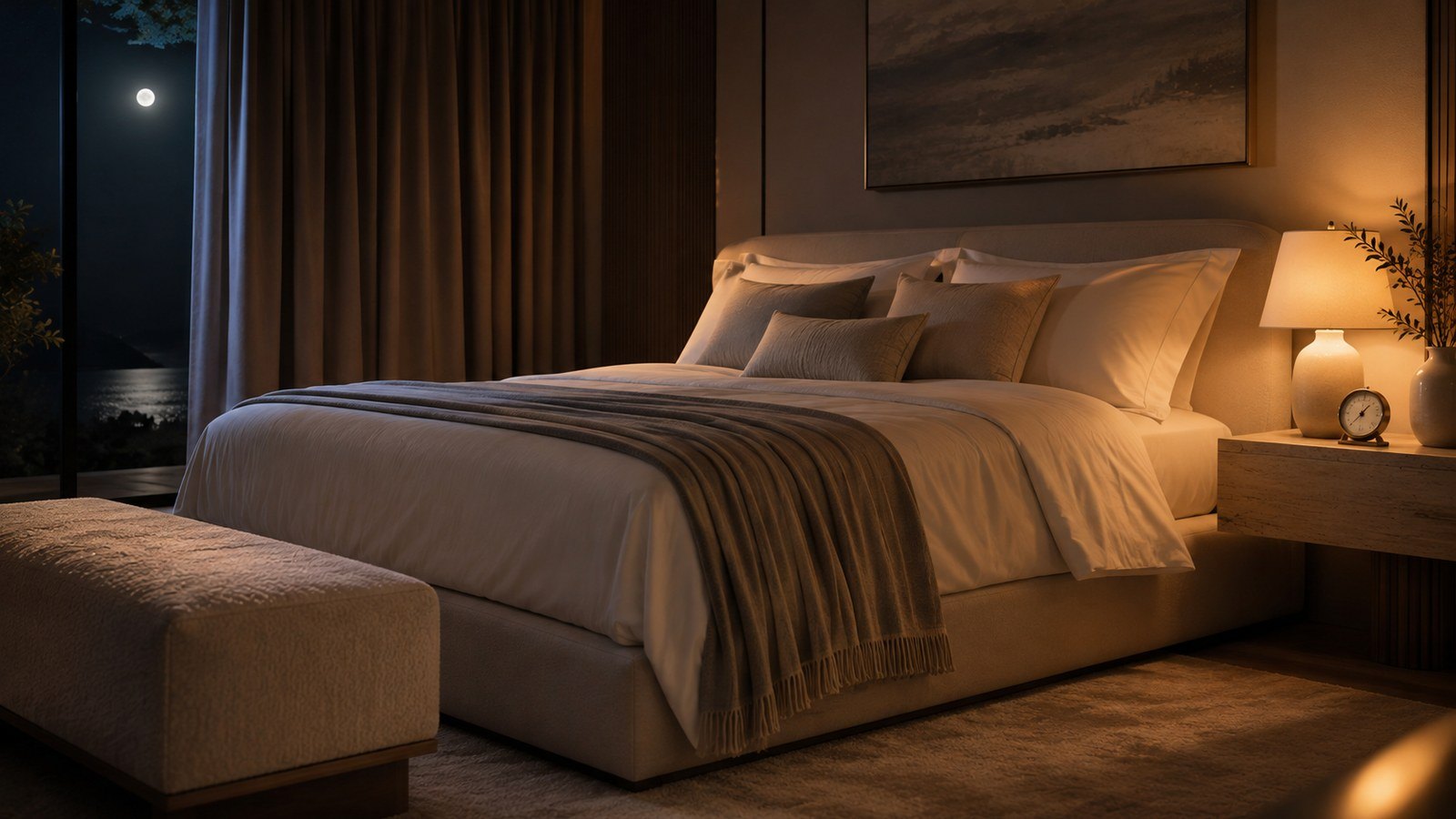
The body falls asleep as its temperature drops, not as tiredness rises. In the two hours before bed, core temperature has to fall by about one degree: that drop is what opens the door to sleep. A bedroom at 16-18 degrees supports the process; above 22 degrees falling asleep takes longer and night waking increases.
A warm bath or shower 60-90 minutes before sleep works for exactly this reason: blood moves to the surface, heat is released and core temperature falls faster. Half an hour in the water is not needed: 10-15 minutes are enough to get the effect.
Light is the second lever. By day the body needs strong light, natural if possible: it sets the body clock and makes the evening signal sharper. By evening the opposite applies: low, warm lights, no more than 30-40 lux in the room, the equivalent of a bedside lamp with an opaque shade. White light at 4,000-6,000 kelvin, the light of ceiling fixtures and screens, blocks melatonin and delays sleep by half an hour or more. The light and sleep guide contains the full protocol for the bedroom.
Watch the bathroom light too. If a few minutes of light are needed at night, an amber lamp or a warm LED strip at floor level avoids the full wake-up that white bathroom light triggers.
The two-hour routine
Fast falling asleep is almost always the product of a boring evening. The two hours before bed give the body a sequence it recognises: when the same things happen every night, the brain anticipates sleep and starts slowing down before you even get into bed.
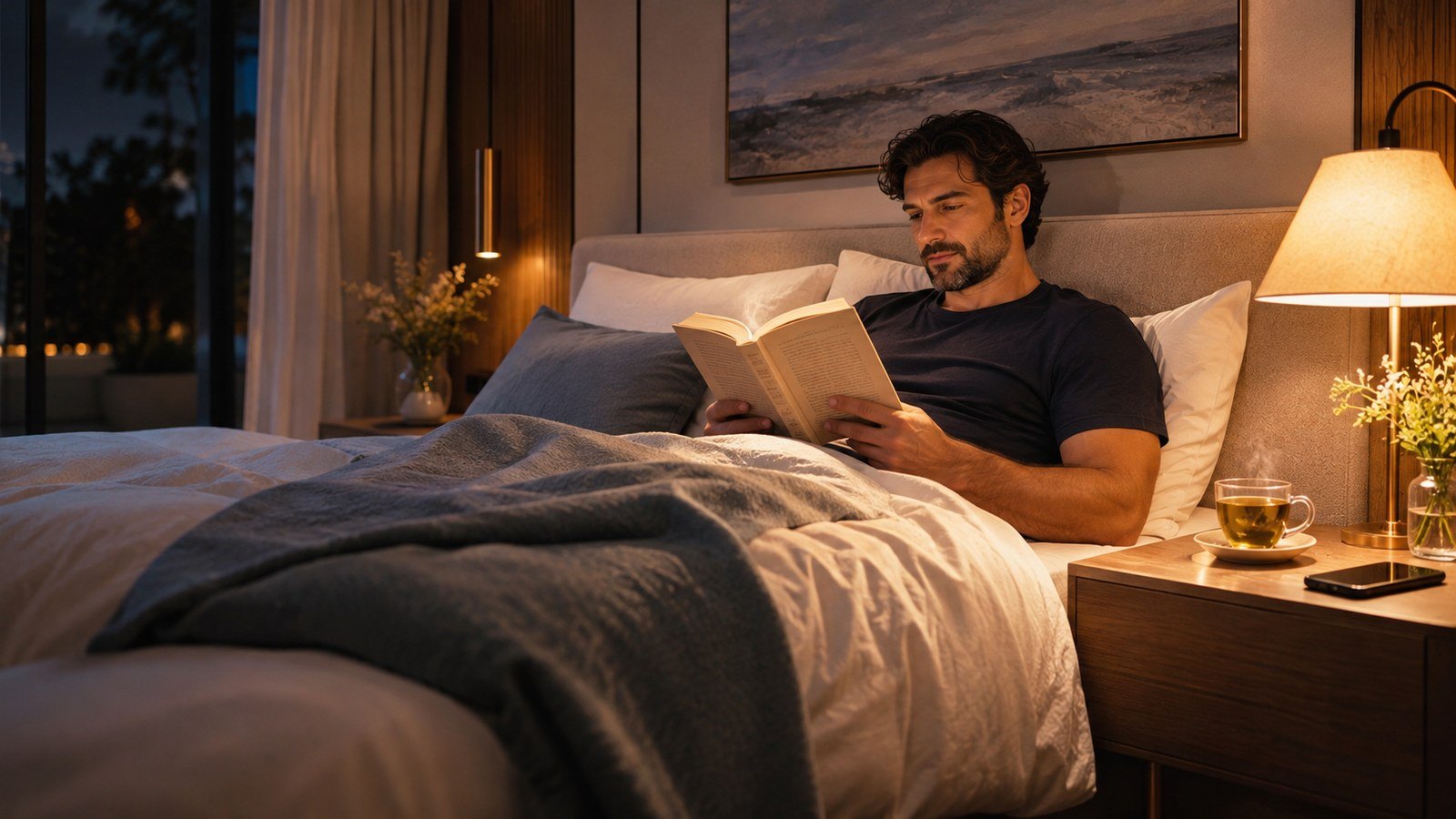
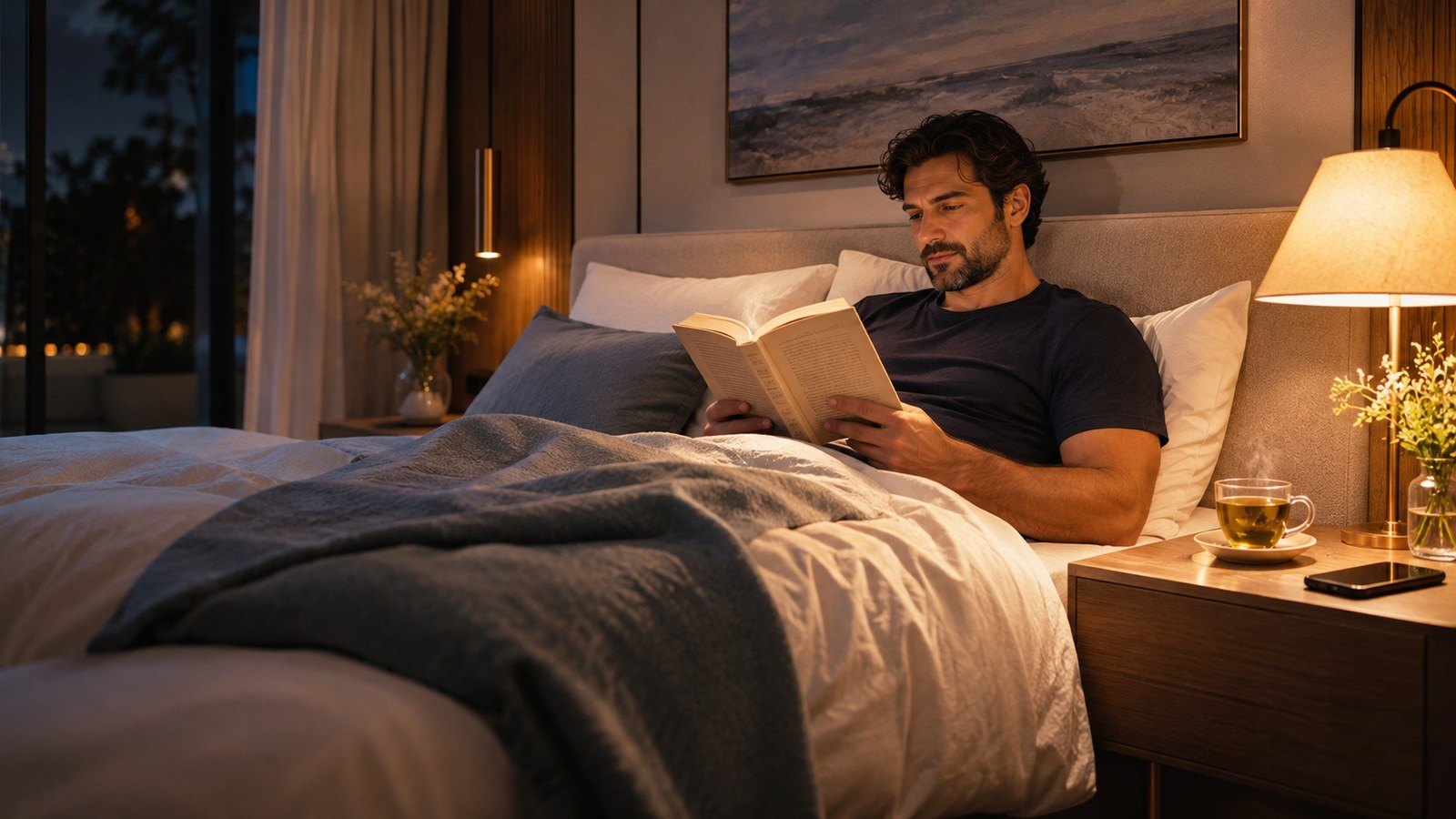
The effective sequence is simple. After dinner, low lights and nothing hectic. 60-90 minutes before bed, screens off, or at least night filter and minimum brightness. 30-40 minutes before, slow activity: reading on paper, gentle stretches, quiet music, getting the house ready for the next day. Finally, get into bed only when sleepiness is there.
Our evening rituals guide lists the habits that work best and how to adapt them to shift work or late commitments. One practical detail: writing down the three things to do tomorrow reduces recurring thoughts in bed, because the brain stops holding on to them.
Watch out for false friends. Alcohol shortens the time it takes to fall asleep but fragments the second half of the night: it is not a solution, it is a loan. Heavy meals after 9 pm move digestion into the hours when the body should be cooling down. And an afternoon nap longer than 30 minutes, or taken after 4 pm, reduces evening sleep pressure: if you need one, keep it short and early.
A last detail that changes the timing: the bedroom temperature should be set before dinner, not when you go to bed. A room that stays warm all evening gives the body no cooling signal, and falling asleep slows down even with a perfect routine. If the flat does not drop below 20 degrees, a quiet fan or an air conditioner on a timer solves the problem without waste.
Breathing and techniques to switch off thoughts
When the environment and routine are right but the thoughts keep coming, you need a technique that occupies the mind with something boring. The most studied are slow breathing and progressive muscle relaxation, both effective because they lower physiological activation in 5-10 minutes.
The 4-7-8 breath is the simplest: inhale through the nose counting to 4, hold for 7, exhale through the mouth counting to 8. Four to six cycles are enough. The long exhale stimulates the vagus nerve and brings the heart rate down. There is no need to start at full length: if 4-7-8 feels uncomfortable, begin with 4-5-6 and lengthen the exhale over time.
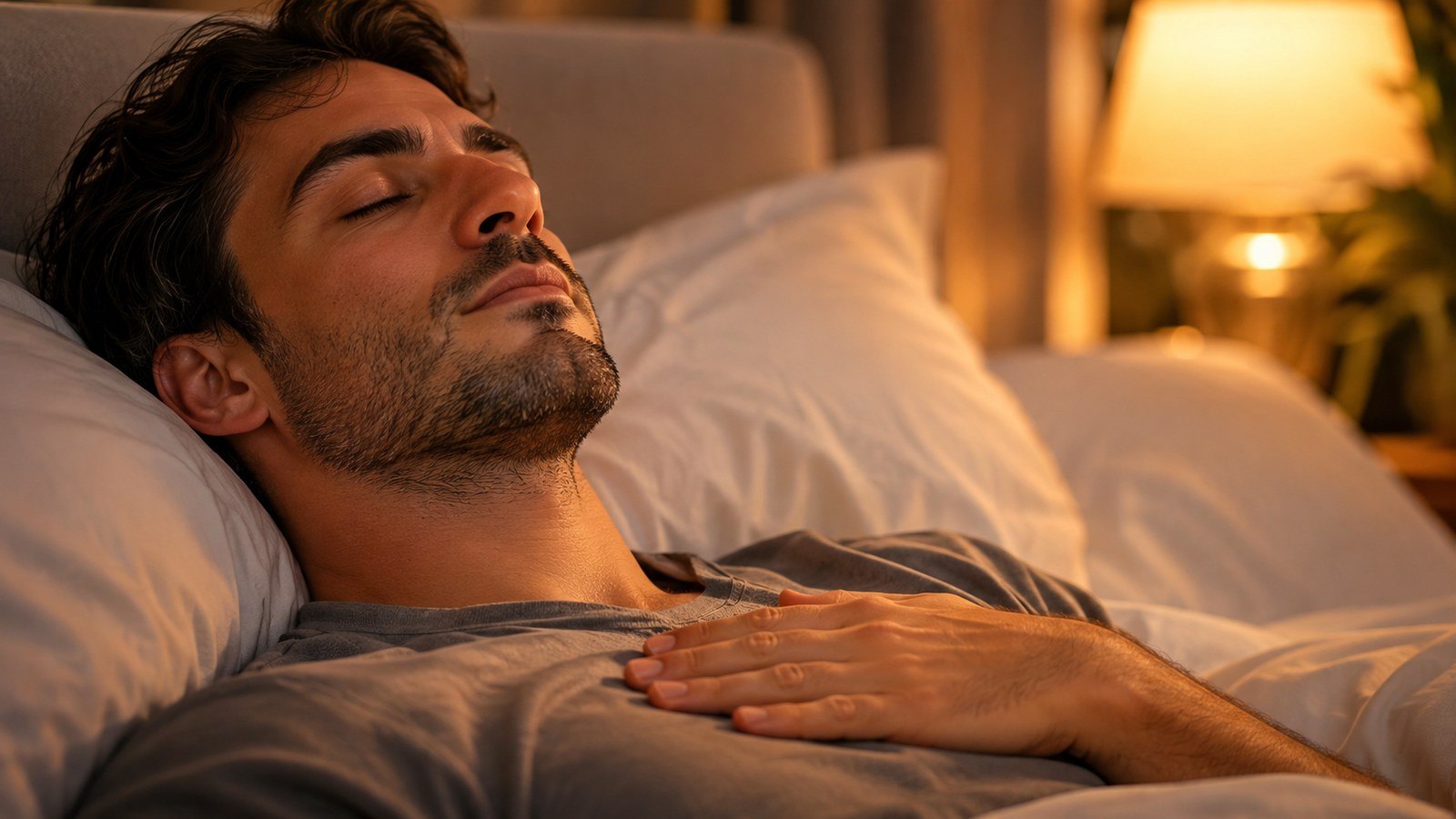
The body scan works on another front: start from the right foot, notice the tension, relax it, and move slowly up to the face. The trick is to pay attention to physical sensations, not thoughts. People who already meditate use the same logic with the breath as the object: the meditation and sleep guide contains short sequences designed for the evening.
The last technique is counterintuitive: stay in bed with your eyes open in the dark, telling yourself you must not sleep. It is called paradoxical intention, and in studies it reduces the performance anxiety that is the real enemy of fast falling asleep. If sleep does not come after 20 minutes, the rule is to get up, go to another room with low lights, do something boring and return to bed at the first sign of sleepiness. The bed must stay linked to sleep, not to being awake.
The mattress, the pillow and the bed signal
The levers described so far act on rhythm; the bed acts on comfort, and without comfort falling asleep stays fragile. A wrong mattress makes no noise, but it forces the body to change position every few minutes in search of support: micro-movements that keep the brain alive even when you think you are asleep.
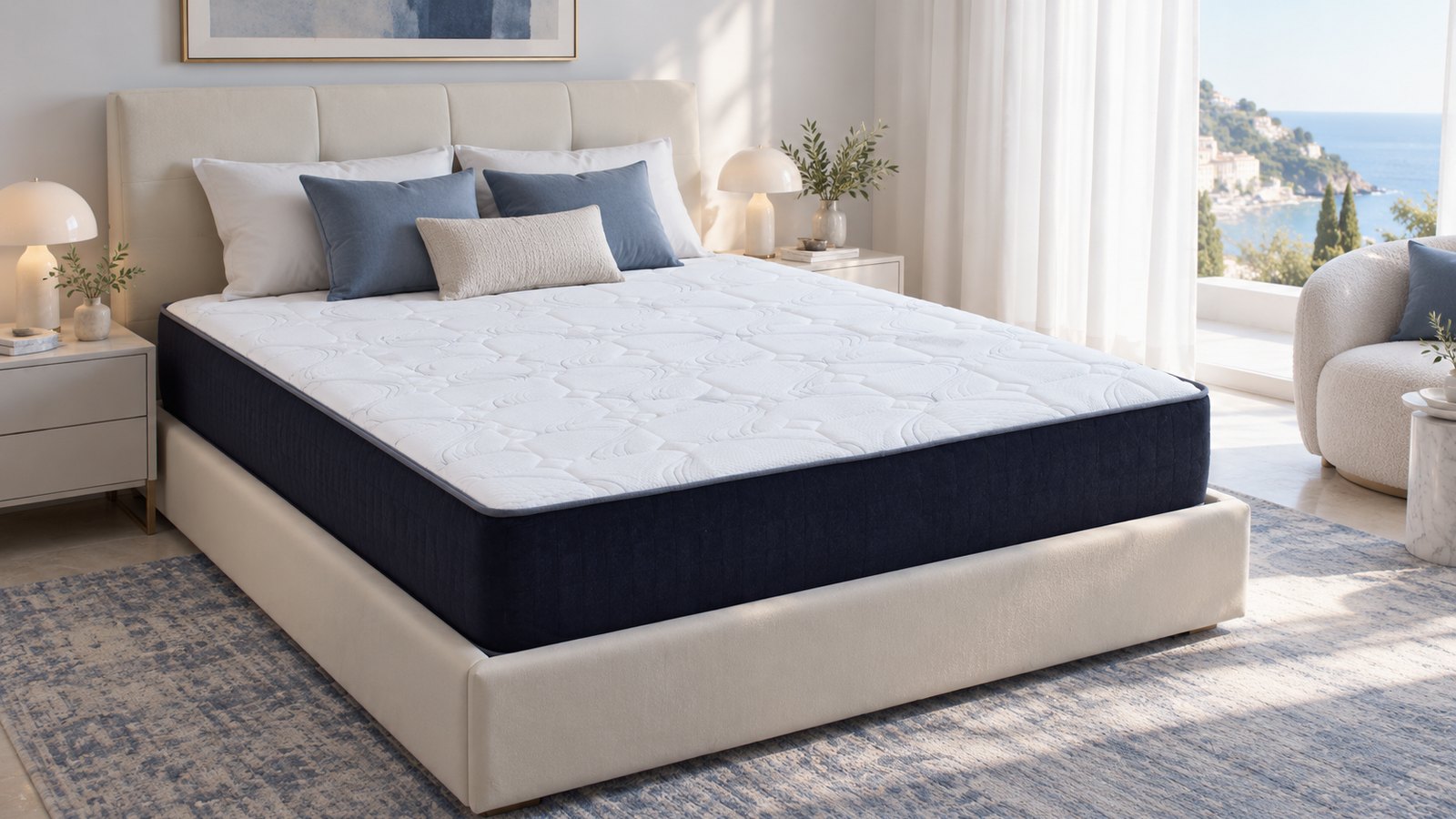
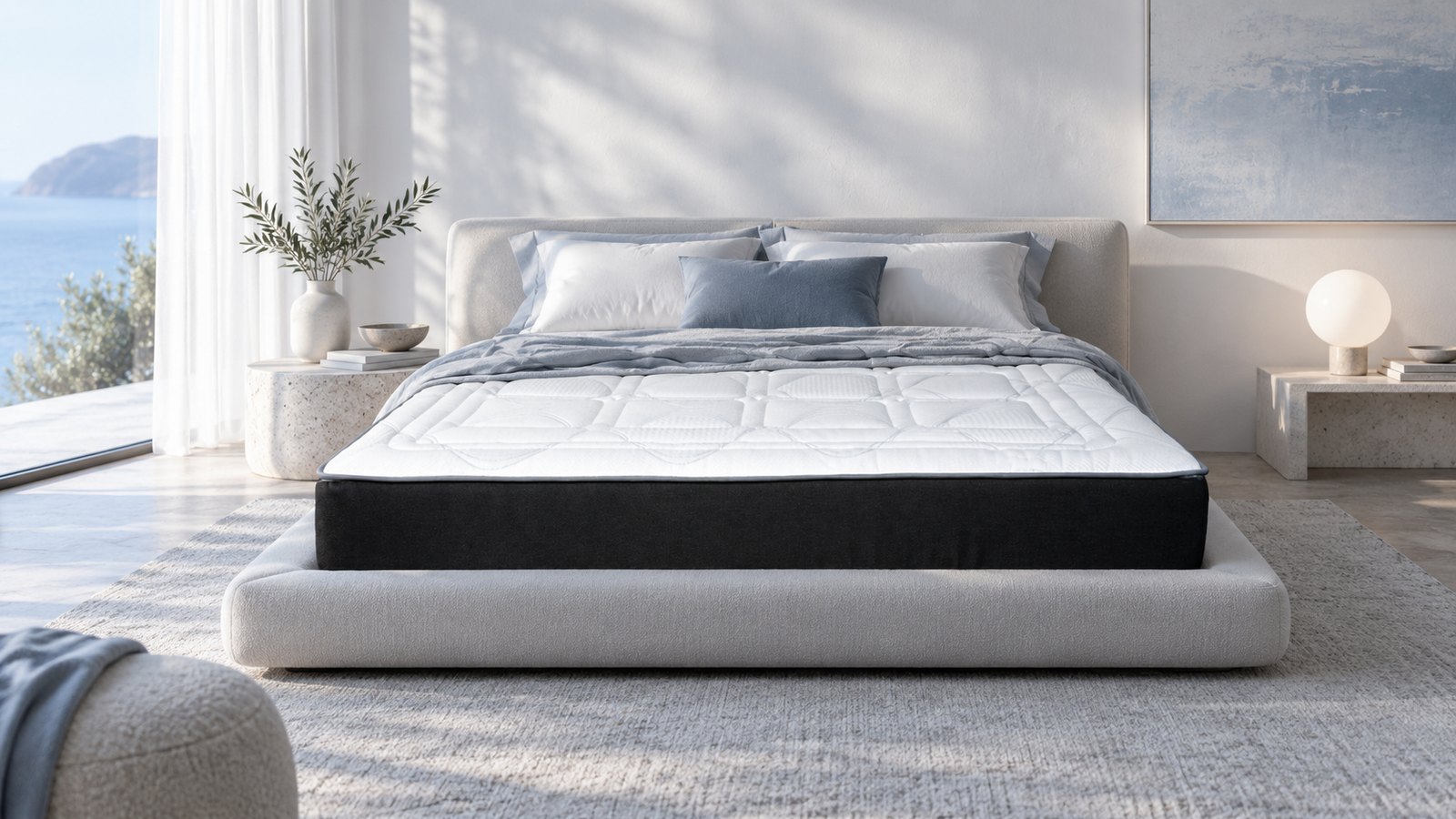
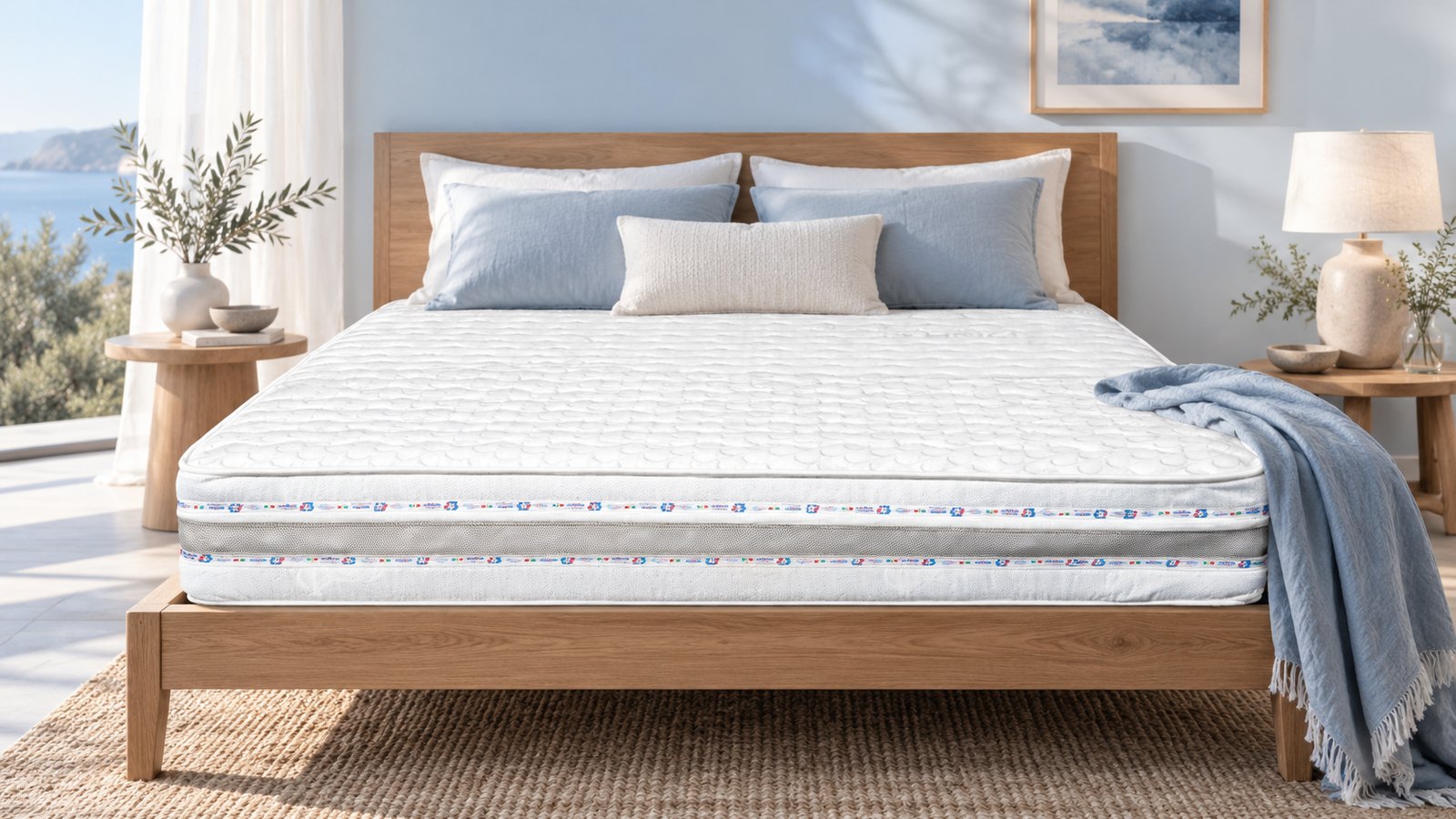
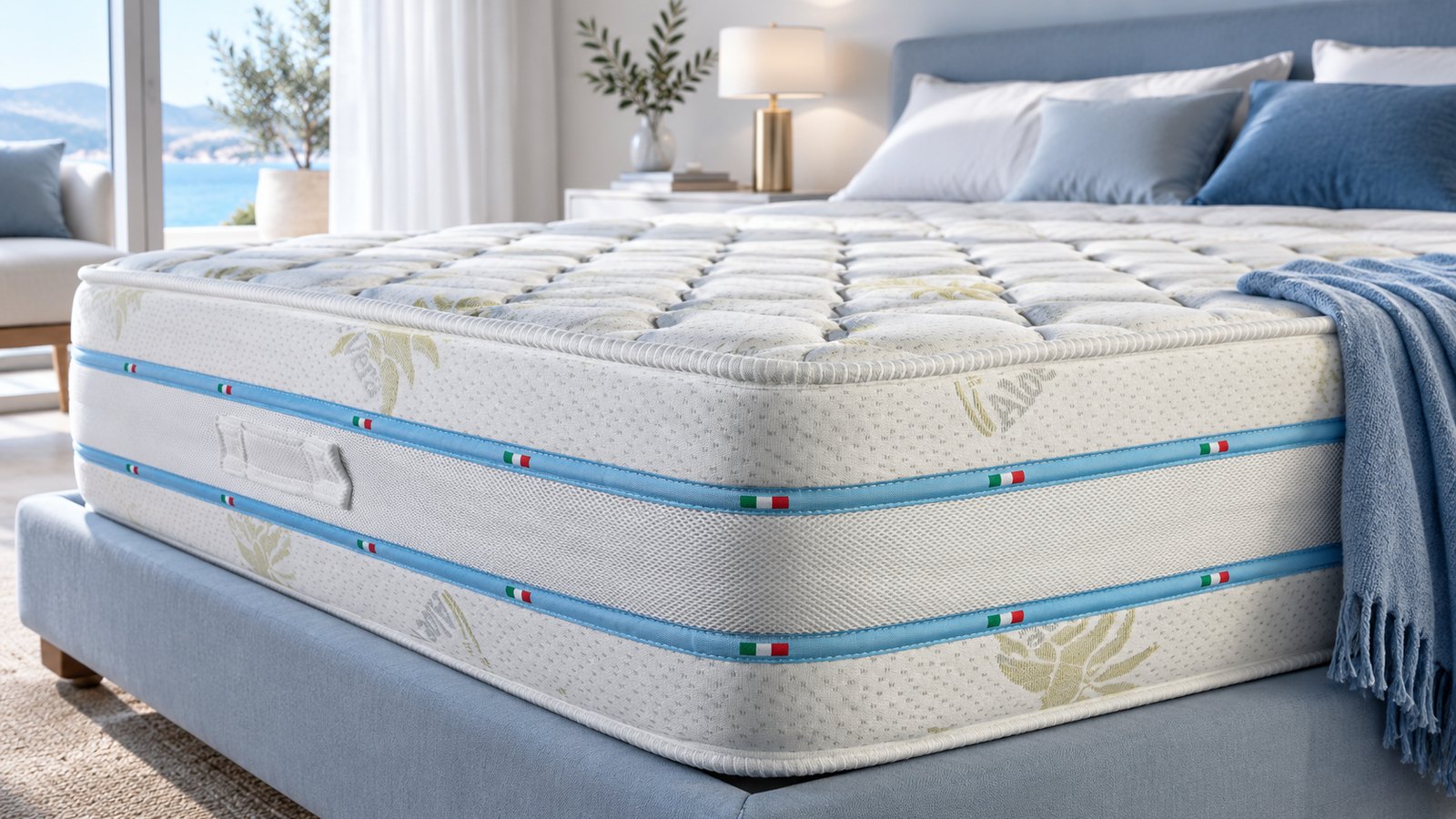
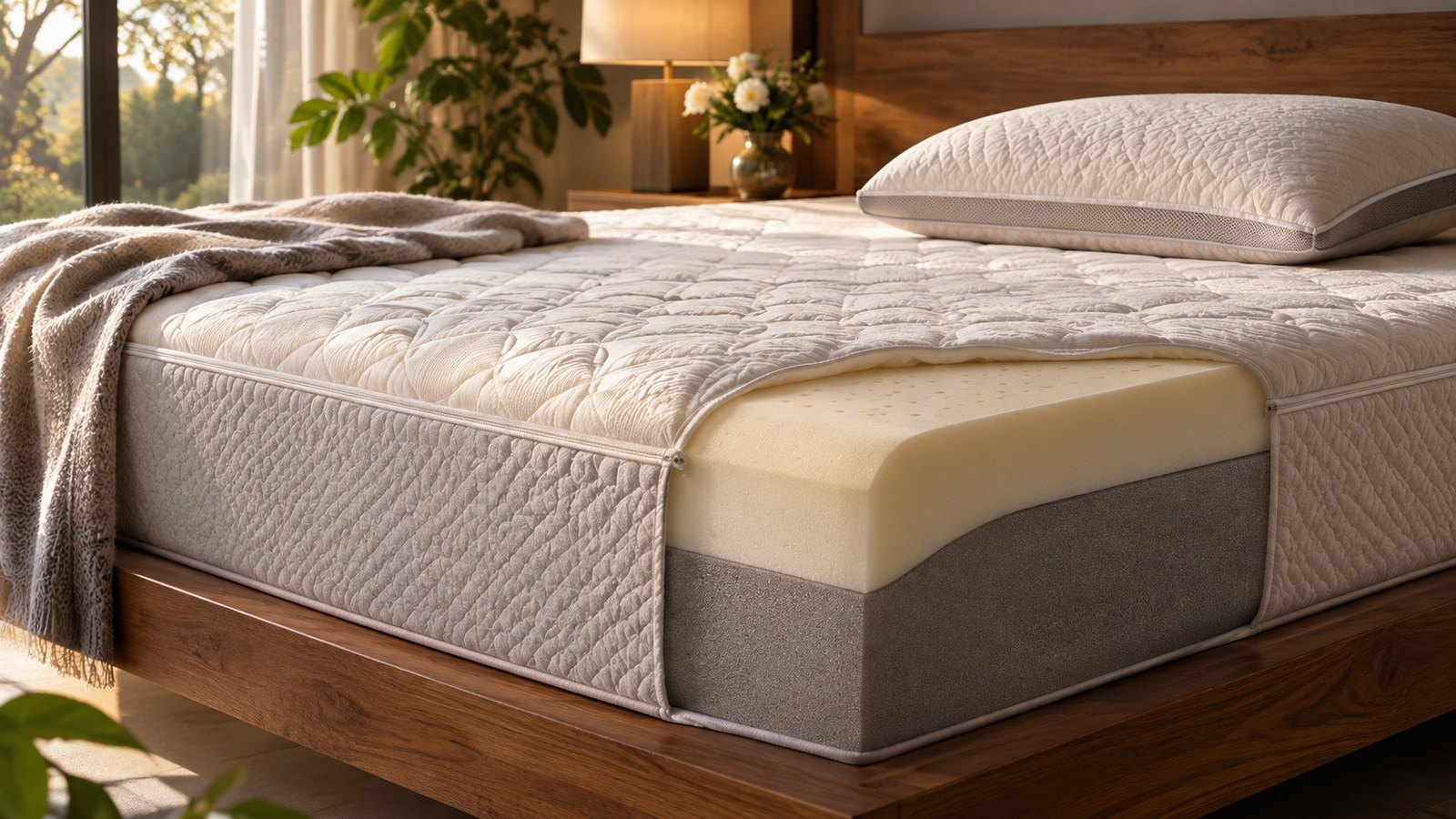
The criterion is the balance between support and softness: the spine must stay aligned while shoulders and hips sink just enough. It is the principle of layered comfort with differentiated support that Luxury Relax applies to its models: thermo-sensitive memory foam over a high-density Confortgel base, heights between 24 and 30 centimetres depending on the model, washable Aloe Vera cover and a 3D breathable perimeter band. Athena, the top of the range, starts at 990 euro (list price 1,950 euro); Gold, the best seller in the mid range, starts at 399 euro.
For the pillow the criterion is measurable: lying on your side, the neck must stay in line with the spine. A pillow too high or too low forces the neck muscles to work all night, and the discomfort shows up precisely in the minutes of falling asleep. The Fiocco Memory pillow by Luxury Relax costs 25 euro and is designed to follow the head without pushing back.
Two services matter as much as the product: 10 trial nights with a refund if the mattress does not convince, and 10 years of warranty. Delivery is free throughout Italy, islands included, in 24-48 hours, with payment on delivery or by card. Choosing the model and the right firmness means comparing your own data: weight, usual sleeping position, bed size. The mattress buying guide lists the criteria one by one, and on the contact form the Luxury Relax experts answer with free advice and no commitment.
One last point, often ignored: size. A mattress too small for the frame makes the body drift towards the edges, and posture adapts to the geometry of the bed instead of the other way round. Luxury Relax also produces custom sizes, on top of the standard range from 90x200 to 180x200, and free 24-48 hour delivery also applies to special formats. Anyone with specific needs reports them during the consultation and receives a clear quote before ordering, with production times stated in writing.
Frequently asked questions (FAQ)
How long should it take to fall asleep? Between 10 and 20 minutes is the typical range for a healthy adult. Under 5 minutes usually means the previous night was too short; over 30 minutes on a regular basis deserves a check of evening habits, body clock and bed. Time to fall asleep is a more reliable indicator than duration alone.
Is it a good idea to fall asleep with the television on? No. The screen light, even at low brightness, delays melatonin release, and dialogue and scene changes reactivate attention right when the slowdown should begin. If you need background sound, better audio with your eyes closed and a shut-off timer, or silence.
How long should you stay awake in bed before getting up? About 20 minutes. Lying in bed staring at the ceiling teaches the brain that bed is a place for being awake. Getting up, switching on a warm dim light, doing something boring for 10-15 minutes and returning to bed at the first sign of sleep rebuilds the link between bed and sleep.
Do supplements help you fall asleep faster? In most cases no. Melatonin and herbal infusions have a modest, variable effect, and they do not fix a shifted clock or a room that is too warm. Before supplements, light, temperature, timing and bed comfort need to be in place. If the problem lasts for weeks, it is worth talking to a doctor.
Does a new mattress really speed up falling asleep? When the old mattress has sagged or is wrong for your weight, yes: night micro-movements decrease and the body stops searching for position. That is why Luxury Relax offers 10 trial nights: the judgement comes after sleeping on it, not after ten minutes in a showroom.
Which position helps you fall asleep faster? There is no universal position. What matters is that the position is stable and the spine stays aligned: side sleepers need more softness at the shoulders, back sleepers more lumbar support. A mattress with differentiated support follows both positions without pressure points.
Ideal Mattress Configurator in 3 Clicks
Answer 3 questions and see which Luxury Relax model fits your sleep best.
Step 1 of 3
Images from this guide
How long should it take to fall asleep?
Between 10 and 20 minutes is the typical range for a healthy adult. Under 5 minutes usually means the previous night was too short; over 30 minutes on a regular basis deserves a check of evening habits, body clock and bed. Time to fall asleep is a more reliable indicator than duration alone.
Is it a good idea to fall asleep with the television on?
No. The screen light, even at low brightness, delays melatonin release, and dialogue and scene changes reactivate attention right when the slowdown should begin. If you need background sound, better audio with your eyes closed and a shut-off timer, or silence.
How long should you stay awake in bed before getting up?
About 20 minutes. Lying in bed staring at the ceiling teaches the brain that bed is a place for being awake. Getting up, switching on a warm dim light, doing something boring for 10-15 minutes and returning to bed at the first sign of sleep rebuilds the link between bed and sleep.
Do supplements help you fall asleep faster?
In most cases no. Melatonin and herbal infusions have a modest, variable effect, and they do not fix a shifted clock or a room that is too warm. Before supplements, light, temperature, timing and bed comfort need to be in place. If the problem lasts for weeks, it is worth talking to a doctor.
Does a new mattress really speed up falling asleep?
When the old mattress has sagged or is wrong for your weight, yes: night micro-movements decrease and the body stops searching for position. That is why Luxury Relax offers 10 trial nights: the judgement comes after sleeping on it, not after ten minutes in a showroom.
Which position helps you fall asleep faster?
There is no universal position. What matters is that the position is stable and the spine stays aligned: side sleepers need more softness at the shoulders, back sleepers more lumbar support. A mattress with differentiated support follows both positions without pressure points.
Request your free consultation
Fill in the form: a Luxury Relax expert will get back to you with the proposal that suits you best.
What Luxury Relax owners say
On my dad's advice, already a customer, I went to Luxury Relax to buy a mattress. Very comfortable and ergonomic products.
Quality products, helpful and knowledgeable staff. Highly recommended to anyone looking for a real mattress, not a brand name.
I got rid of the back pain that had followed me for years. The right mattress changes your days.
Come visit us
Luxury Relax Materassi
Via San Rocco, 42 — 20831 Seregno (Monza e della Brianza), Italia0362 222407 · info@luxuryrelax.it · WhatsApp 339 4797213
Open in Google Maps