Sleep and diet: what to eat to sleep better
What we put on our plate during the day comes to bed with us. This is not a metaphor: digestion, body temperature and the production of sleep-regulating substances depend in part on what we eat and when we eat it. A coffee at six in the evening, a heavy dinner at ten or a diet low in magnesium show up hours later as slow falling asleep and night-time awakenings.
Linking sleep and diet does not mean following miracle diets. It means understanding which mechanisms connect a meal to rest and using them to your advantage, with simple and repeatable choices. Research in this field is broad and, on the popular-science side, fairly settled: some nutrients favour relaxation, others work against it, and timing matters as much as content.
This guide reviews the best-established links between food and rest, from meal timing to caffeine, from magnesium to evening digestion. Where concrete support is needed, a mattress that does not worsen reflux and accompanies the body through digestion, the full Luxury Relax review describes the materials, prices and services of the Italian brand.

How food affects sleep
The link between meals and rest runs through three main channels: the nervous system, body temperature and the internal clock. Food supplies precursors of some neurotransmitters involved in sleep, changes how quickly the body cools down in the evening and also works as a synchronisation signal for the circadian rhythm, almost as much as light does.
The first mechanism concerns neurotransmitter precursors. Tryptophan, an amino acid found in several foods, is a building block of serotonin and melatonin, two molecules central to sleep regulation. On its own it does not work like a sleeping pill: it has to reach the brain in sufficient quantity, and that depends on the meal as a whole, not on a single food.
The second mechanism is temperature. To fall asleep the body must lower its core temperature by a fraction of a degree. A very large or very spicy meal forces the body into intense digestive work that raises metabolism for a few hours and makes cooling down harder. That is why a heavy dinner often matches a restless night.
The third mechanism is timing. The body expects certain signals at certain hours: breakfast in the morning, the last meal a few hours before sleep. When these signals are regular, the internal clock works better and falling asleep becomes more predictable. When they are chaotic, lunch at four and dinner at midnight, the body struggles to understand when to switch off.
One last element concerns blood sugar. Sharp rises and falls in blood glucose, typical of very sugary and unbalanced meals, can go hand in hand with awakenings in the middle of the night. You do not need to cut carbohydrates, but to spread them across complete meals with protein, fibre and healthy fats, which slow down absorption.
The nutrients that support rest
There is no food that makes you sleep, but there are nutrients that create the right conditions. Knowing them helps you build meals that work for sleep instead of against it.
Magnesium is probably the most cited, and rightly so. It is involved in hundreds of reactions, including muscle relaxation and nervous system regulation. It is found in leafy greens, almonds, walnuts, legumes and wholegrain cereals. A diet poor in these foods often leaves magnesium at rock bottom, and the body notices at night, with cramps and muscle tension.
Tryptophan is present in white meat, eggs, fish, dairy, soy and seeds. It works better when paired with complex carbohydrates, which help it reach the brain: that is why a dinner of wholegrains and a moderate protein source is a useful evening combination.
The B vitamins, particularly B6 and B12, take part in serotonin synthesis. You will find them in fish, eggs, legumes and wholegrains. Vitamin D, linked to the seasonal rhythms of sleep, comes from sun exposure and partly from oily fish, eggs and dairy.
The omega-3 fatty acids found in oily fish, flaxseed and walnuts are studied for their role in regulating mood and deep sleep. Finally, some fermented foods, such as yogurt, kefir and fermented vegetables, feed the gut flora, which talks to the nervous system through the gut-brain axis.
| Nutrient | Where to find it | Role in rest |
|---|---|---|
| Magnesium | Almonds, leafy greens, legumes | Muscle and nervous relaxation |
| Tryptophan | Eggs, fish, white meat, soy | Precursor of serotonin and melatonin |
| Vitamins B6 and B12 | Fish, eggs, wholegrains | Neurotransmitter synthesis |
| Omega-3 | Oily fish, flaxseed, walnuts | Regulation of mood and deep sleep |
| Fibre and fermented foods | Yogurt, kefir, vegetables, wholegrains | Blood sugar stability and gut-brain axis |
Consistency and the balance of the overall picture count more than any single supplement. A week of complete meals is worth more than one sachet taken the night before.

What to avoid after six in the evening
The list of substances that disturb sleep is short, but the numbers that describe it are precise. Caffeine has a half-life of about five hours: an espresso at six in the evening leaves half the caffeine still circulating at midnight. For sensitive people, elimination time can double.
The first point is therefore timing, not quantity. You do not need to quit coffee, but to move it to the earlier part of the day. The same goes for black tea, some energising herbal teas, cola and energy drinks: caffeine hides in more places than it seems.
Alcohol is the second high-impact change. It speeds up falling asleep but fragments the second half of the night and reduces deep sleep phases. The effect is dose-dependent and shows up even with moderate amounts taken close to sleep.
The third point concerns heavy and spicy meals in the three hours before going to bed. Saturated fats in quantity, fried food and strong spices slow down gastric emptying and can cause burning when you lie down. It is not a question of fasting: a light, complete dinner digests without disturbing.
Watch your liquids too: drinking a lot in the final hours of the evening increases awakenings to go to the bathroom. Better to hydrate during the day and taper off gradually in the evening.
Finally, extreme diets. Prolonged fasting, very low-calorie diets or skipping dinner raise night-time cortisol levels and make sleep lighter. A body that fears deprivation does not switch off easily.
Meal timing and the circadian rhythm
The circadian rhythm regulates sleep, temperature, hormones and digestion on a roughly 24-hour cycle. Two signals synchronise it in particular: light and meals. Managing the second is often easier than managing the first.
The most useful rule is regularity. Breakfast, lunch and dinner in stable time slots, with no more than an hour of drift from one day to the next, help the internal clock stay aligned. Studies on people who eat at chaotic hours show more fragmented sleep than in those who keep constant slots.
The second principle is the distance between dinner and sleep. Two to three hours between the last meal and going to bed is a practical interval: digestion has started, body temperature can drop and the risk of reflux falls. Those who dine early can add a small evening snack, perhaps with a complex carbohydrate and a source of magnesium.
The third point concerns breakfast. A morning meal with protein and fibre tells the body the day has started and helps push the evening appetite later. Skipping it and dining late is the combination that most often goes with restless nights.
There is also the question of slow evening digestion. After the age of 50 digestive speed drops, and dinner should be lightened and moved earlier accordingly. The same applies in pregnancy and for reflux sufferers, for whom the useful interval stretches to three or four hours.
A weekly timetable is not needed, but watching for seven days what time you dine and what time you go to bed is enough to discover your own ideal distance. It is the sleep diary in its simplest form.
Digestion, reflux and position in bed
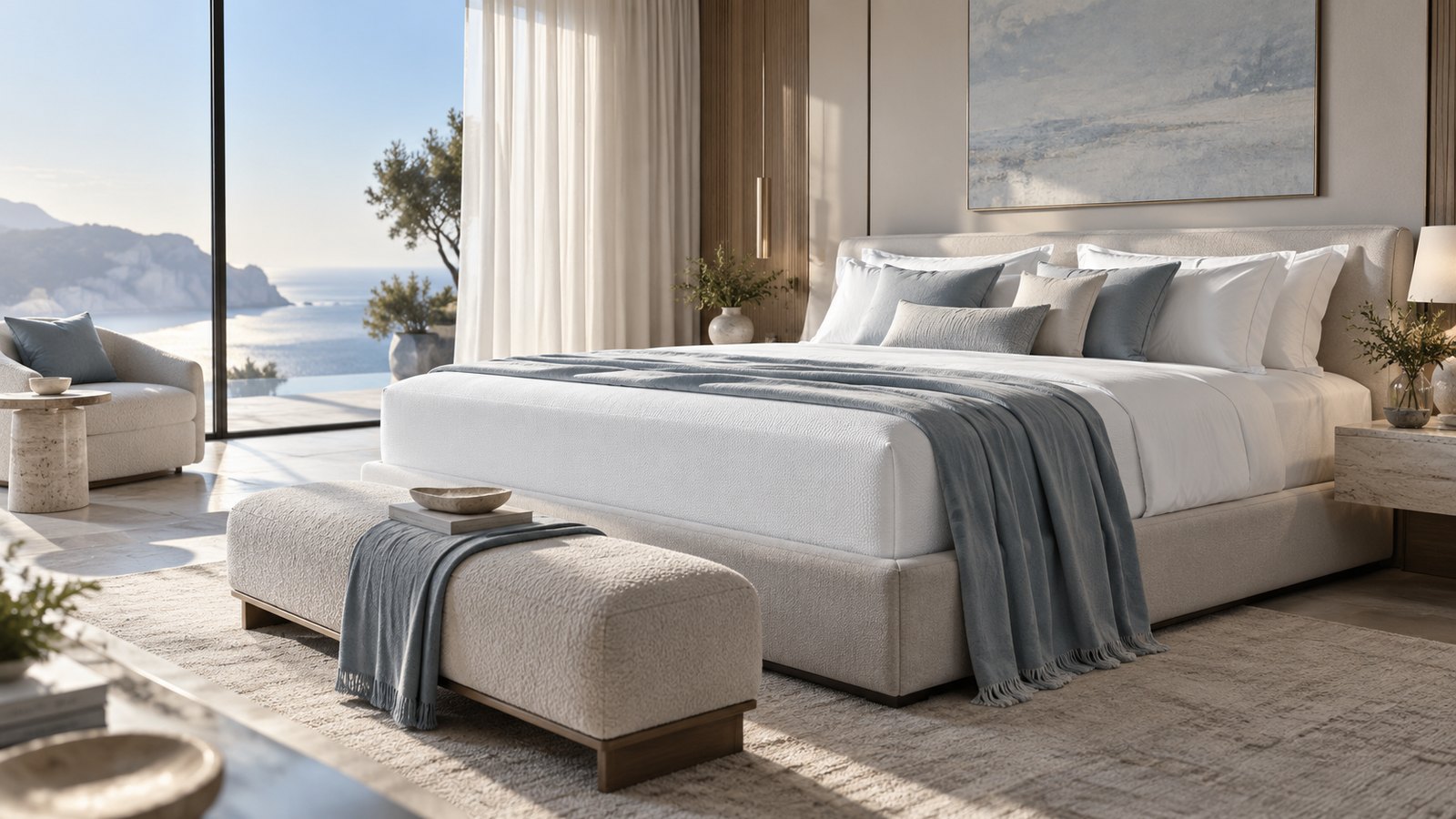
When food meets the lying position, physics comes into play. The oesophageal sphincter works better upright, and in reflux sufferers the combination of a large dinner plus a horizontal position produces heartburn, night cough and awakenings. People who sleep on their right side are more exposed, because stomach anatomy favours the passage of acid into the oesophagus.
Three measures reduce the problem measurably. The first is the interval: at least three hours between dinner and sleep. The second is the position: raising the head of the bed slightly, not just the pillow, changes the angle of the oesophagus. The third is the choice of mattress, which must cradle the body without sags that alter the posture of the trunk.
A mattress that is too soft in the middle lets the abdomen sink and bends the torso, increasing pressure on the stomach. A support with differentiated load capacity, like that of Luxury Relax mattresses, keeps pelvis and back aligned even for those with a sensitive abdomen. The guide to the best mattress for reflux goes into the detail of this relationship.
Digestion also affects temperature: after a large meal metabolism stays high for hours, and mattress breathability becomes important. The 3D perimetre breathing band on Luxury Relax models helps dissipate the heat the body produces during digestion, especially on warmer nights.
Finally, do not ignore awakenings from hunger. Going to bed with a marked appetite raises cortisol and makes sleep fragile. A small balanced snack, such as yogurt, a handful of almonds or a slice of wholemeal bread, is often the simplest solution.
The right mattress completes the picture
Diet prepares the ground, but sleep happens on a mattress. When dinner is right and nights stay restless, the next step is to check that the support really responds to the body: posture, breathability, motion isolation.
A concrete starting point is the layering. Temperature-sensitive memory foam adapts to the body shape and distributes pressure, while the high-density Confortgel base maintains support over time. This combination is the one used in Luxury Relax mattresses, from the Athena model at 990 euros (list price 1,950) to the Platinum at 699 euros, down to the Gold at 399 euros and the Elisir at 179 euros.
The second element is hygiene. A mite-proof, anti-allergic mattress with a washable Aloe Vera cover, like those from Luxury Relax, reduces the stimuli that fragment sleep. For those whose insomnia is linked to congestion and allergies, the guide to the best mattress for insomnia shows how environment and support work together.
The third element is field testing. Luxury Relax offers 10 trial nights with a guaranteed refund, a 10-year warranty and free delivery throughout Italy in 24-48 hours, with cash on delivery available. Ten nights are enough to understand whether digestion, posture and comfort find the right combination. The free consultation with the brand's experts, available at the Seregno showroom on Via San Rocco 42, helps translate these indications into the choice of model and size, including custom sizes.

Frequently asked questions about sleep and diet
How much time should pass between dinner and sleep? Two to three hours is the practical interval for most people. If you suffer from reflux or digestion is slow, three to four hours and a lighter dinner are better. Those who go to bed early can compensate with a small balanced evening snack.
Does afternoon coffee really disturb sleep? Yes, for most people. Caffeine has a half-life of about five hours, so an espresso at six in the evening leaves half the caffeine circulating at ten. In slow metabolisers the residue reaches midnight. Moving coffee before two in the afternoon is the most effective rule.
Are there foods that help you sleep? There are no soporific foods, but there are useful combinations: magnesium, tryptophan, B vitamins and omega-3 create the conditions for regular rest. They work if part of a balanced diet and constant timing, not as a spot remedy.
Does alcohol help you fall asleep? It speeds up falling asleep but worsens the quality of the night: it fragments the central hours and reduces deep sleep. The effect is dose-dependent and shows up even with one glass in the evening hours. Better to leave at least three hours between the last drink and sleep.
What should you eat if you are hungry before going to bed? A small snack with a complex carbohydrate and a source of magnesium or light protein: yogurt with cereals, a handful of almonds, a slice of wholemeal bread. Avoid sugary snacks, which cause glycaemic peaks and awakenings.
Does the mattress affect night-time digestion? Yes. A mattress that is too soft sinks the abdominal area and favours reflux, while a surface with differentiated support keeps the trunk aligned. Breathability counts during digestion, when the body produces heat. Luxury Relax models address both aspects.

Improving sleep through diet is a path made of timing, small substitutions and attention to the body's signals. If the missing piece is the support, you can request the free consultation to find the mattress suited to your posture and evening habits, with 10 trial nights to verify the choice. All technical data, prices and services are in the full Luxury Relax review.
How much time should pass between dinner and sleep?
Two to three hours is the practical interval for most people. If you suffer from reflux or digestion is slow, three to four hours and a lighter dinner are better. Those who go to bed early can compensate with a small balanced evening snack.
Does afternoon coffee really disturb sleep?
Yes, for most people. Caffeine has a half-life of about five hours, so an espresso at six in the evening leaves half the caffeine circulating at ten. In slow metabolisers the residue reaches midnight. Moving coffee before two in the afternoon is the most effective rule.
Are there foods that help you sleep?
There are no soporific foods, but there are useful combinations: magnesium, tryptophan, B vitamins and omega-3 create the conditions for regular rest. They work if part of a balanced diet and constant timing, not as a spot remedy.
Does alcohol help you fall asleep?
It speeds up falling asleep but worsens the quality of the night: it fragments the central hours and reduces deep sleep. The effect is dose-dependent and shows up even with one glass in the evening hours. Better to leave at least three hours between the last drink and sleep.
What should you eat if you are hungry before going to bed?
A small snack with a complex carbohydrate and a source of magnesium or light protein: yogurt with cereals, a handful of almonds, a slice of wholemeal bread. Avoid sugary snacks, which cause glycaemic peaks and awakenings.
Does the mattress affect night-time digestion?
Yes. A mattress that is too soft sinks the abdominal area and favours reflux, while a surface with differentiated support keeps the trunk aligned. Breathability counts during digestion, when the body produces heat. Luxury Relax models address both aspects.  Improving sleep through diet is a path made of timing, small substitutions and attention to the body's signals. If the missing piece is the support, you can [request the free consultation](key:contatti) to find the mattress suited to your posture and evening habits, with 10 trial nights to verify the choice. All technical data, prices and services are in the [full Luxury Relax review](key:luxury-relax-recensione).
Request your free consultation
Fill in the form: a Luxury Relax expert will get back to you with the proposal that suits you best.
What Luxury Relax owners say
On my dad's advice, already a customer, I went to Luxury Relax to buy a mattress. Very comfortable and ergonomic products.
Quality products, helpful and knowledgeable staff. Highly recommended to anyone looking for a real mattress, not a brand name.
I got rid of the back pain that had followed me for years. The right mattress changes your days.
Come visit us
Luxury Relax Materassi
Via San Rocco, 42 — 20831 Seregno (Monza e della Brianza), Italia0362 222407 · info@luxuryrelax.it · WhatsApp 339 4797213
Open in Google Maps