How Much Does a Mattress Cost: Prices and Tiers 2026
Request your free consultation
Fill in the form: a Luxury Relax expert will get back to you with the proposal that suits you best.
Mattress prices are strange. The same size and shape can cost €150 or €1,500, and the most expensive one is not automatically the best for your back. Shoppers sense this and still struggle to judge a price, because the numbers on the tag say nothing about the foam density, the quality of the springs or the depth of the build inside. The result is a market where people either overspend out of fear or underspend out of optimism.
Understanding what drives a mattress price turns a confusing decision into a straightforward one. Once you know that density, core quality, layer depth and volume of material set the price, the tiers stop being random and start making sense. You can then decide where your money actually buys something you will feel.
This guide breaks down what mattresses cost in 2026 by size and type, explains the tiers from entry to top, and sets out how to tell a fair price from an inflated one. Wherever a concrete figure helps, the Luxury Relax range provides the reference, because it shows the full spread from €149 to €990 with real list prices behind each model.
What Actually Drives a Mattress Price
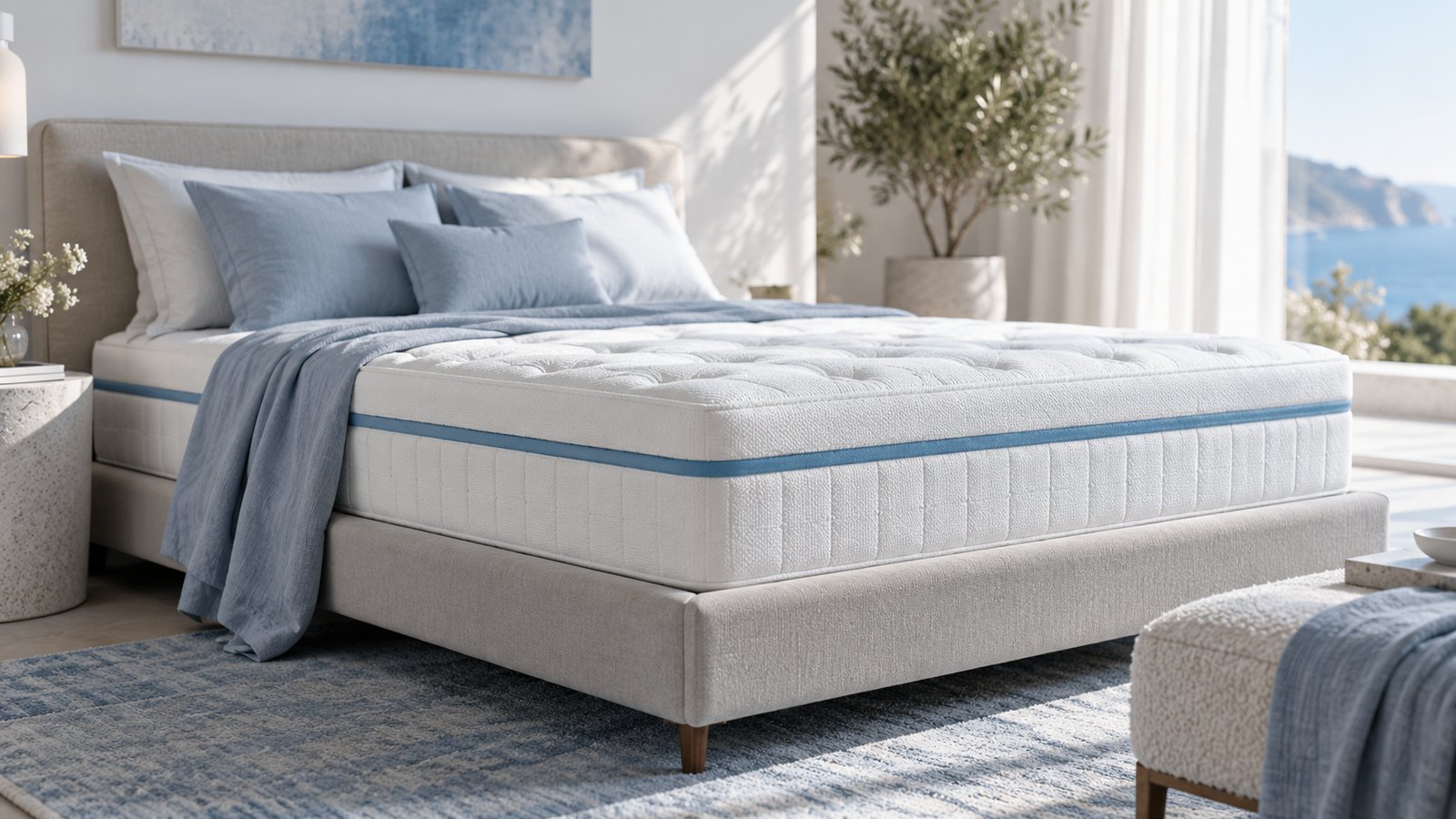
The single biggest cost is the material in the core, measured by density and volume. A dense, high-resilience core costs more to make than a thin low-density one, and it lasts longer, which is why two mattresses at the same price can sit at opposite ends of quality. Layer depth follows: a build of 24 to 30 centimetres contains more foam, more structure and more work than a fifteen-centimetre slab.
The comfort layer matters next. A genuine thermosensitive memory layer several centimetres deep costs far more than a decorative sheet of foam, and it is the part you actually feel. Springs add their own cost, and individually wrapped pocket springs, which isolate motion and sleep cooler, cost more than a basic open coil. The breathable 3D band, the anti-mite treatment and the washable cover are smaller line items that nonetheless separate a good mattress from a cheap one.
Marketing and distribution do their part too. A brand that advertises heavily and sells through shops must recoup both, which is why direct-from-maker prices can be lower for the same or better construction. When you compare mattresses, compare what is inside them, not what the badge on the ticking claims.
Price Tiers Explained
| Tier | Typical single 90x200 | Typical double 160x200 | What you get |
|---|---|---|---|
| Entry | €120 to €200 | €200 to €320 | Deformable core, basic washable cover |
| Mid | €200 to €320 | €320 to €500 | Denser core, real comfort layer, better cover |
| Upper | €320 to €500 | €500 to €800 | Strong core, thick memory, breathable build |
| Premium | €500 to €800 | €800 and above | Top materials, deepest layer stack |
| Luxury | €800 and above | €1,000 and above | Everything plus more of everything |
The tiers overlap because size and material interact. A premium single can cost less than a mid-range double, since the double contains roughly twice the material. Use the table as a map, not a rule. The question for any price is whether the mattress at that number is built at the level the tier implies, or dressed up to look like it.
The most common trap is a mattress priced at the top of the mid tier that is built at entry level. Thick foam of low density looks generous and fails quickly. The reverse also exists: a plainly named direct-sale mattress that is built to an upper standard and priced at mid, which is where genuine value hides.
Why Memory Foam and Latex Cost More
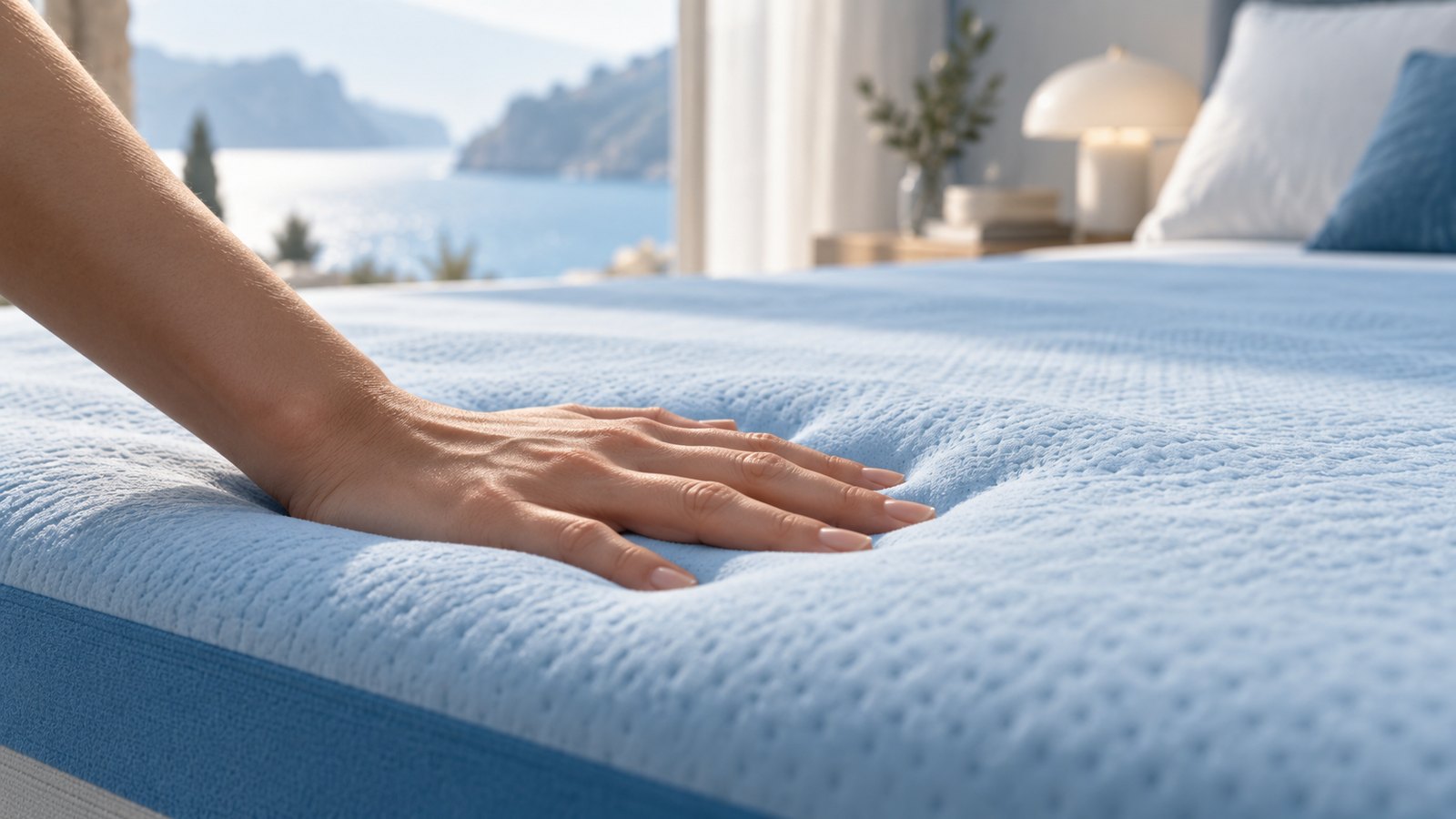
Memory foam costs more than basic polyurethane because density and the temperature-sensitive chemistry both add expense. A high-density memory layer that contours properly and recovers for years is expensive to make; a thin, low-density one is cheap and behaves accordingly. This is why the price of a memory foam mattress tells you less about the label and more about the grams of foam per cubic metre inside it.
Latex is the most expensive core material of the common types. Natural latex requires harvesting and processing that cost more than synthesising foam, and its resilience and durability are the payoff. A latex mattress that lasts ten to fifteen years can be cheaper over its life than a cheaper foam mattress replaced twice, which is why the sticker price alone is a poor guide.
Pocket spring hybrids sit between, depending on the quality of the springs. Cheap hybrids use thin springs and a token foam layer, and they fail at both jobs. Good ones combine real support with motion isolation and airflow. As everywhere, the price is only informative once you know what is inside.
Fair Prices by Size
Smaller mattresses cost less because they contain less material, but the price difference is not always proportional. A 90x200 single should be his money-weighed fairly against a 160x200 double, which holds roughly twice the surface and therefore roughly twice the core, cover and comfort layer. A cot or special size may cost more per square metre because the production run is smaller.
| Size | Budget floor | Fair mid | Where top models sit |
|---|---|---|---|
| Cot 60x120 | €80 to €150 | €150 to €220 | €220 and above |
| Single 90x200 | €120 to €200 | €200 to €350 | €350 and above |
| One and a half 120x200 | €180 to €280 | €280 to €450 | €450 and above |
| Double 160x200 | €200 to €320 | €320 to €550 | €550 and above |
| King 180x200 | €300 to €450 | €450 to €750 | €750 and above |
Above the top of these ranges, price usually reflects deeper layer stacks, more advanced materials and other features rather than a proportional gain in support. Below the floor, density and core quality have been cut. The sweet spot for most buyers is the lower end of the fair-mid column, where a genuine core meets a reasonable price.
How to Judge Whether a Price Is Fair
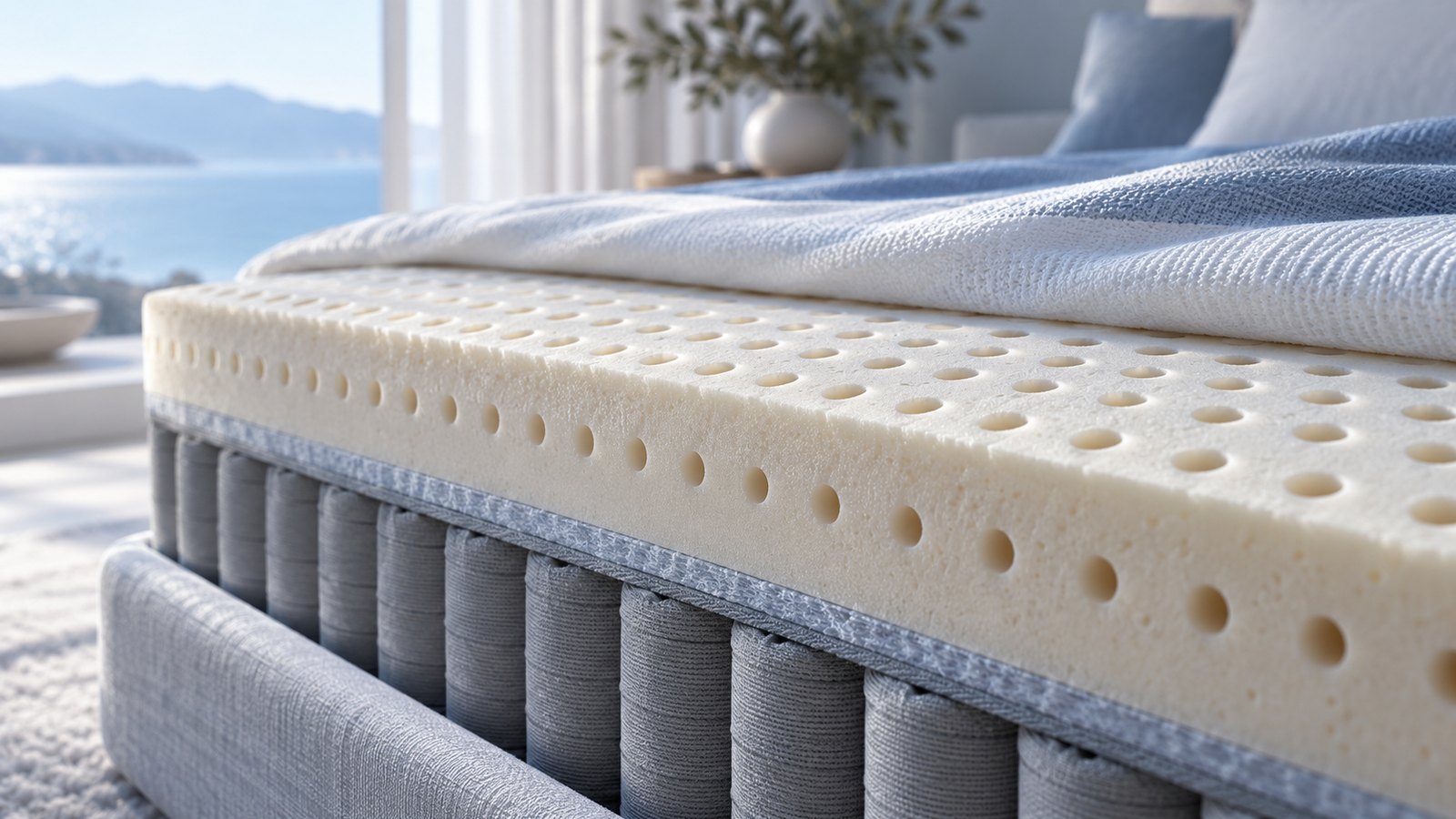
A fair price buys a real support core, a comfort layer thick enough to matter, a washable cover and a maker willing to back the product. Check the layer structure rather than the marketing. If the description lists a dense base and a several-centimetre memory or latex layer, you are looking at a genuine mattress. If it lists only terms without structure, you are likely paying for packaging.
Then look at what comes included. A long warranty, a trial period, free delivery and payment on delivery all shift risk away from you, and they are worth real money. A slightly higher price that includes ten trial nights is a better deal than a lower one you cannot test, because the only honest test of a mattress happens in your own bedroom over several nights.
Finally, compare like with like. A direct-from-maker price and a retail price for the same construction are not equivalents, and a discounted list price means little if the list itself was inflated. The useful comparison is between the structure inside two mattresses, not the numbers on their tags. Our comparison of the best mattresses ranks them on exactly that basis.
Why Luxury Relax Prices Are Hard to Beat
Luxury Relax sells direct from Italian production, which is the main reason its prices undercut comparable retail models. The entry models start at €149 for the Venere and €179 for the Elisir, both with a deformable core and a washable aloe cover. The Gold at €399 and the Platinum at €699 step up in depth and support, and the top-of-range Athena starts at €990 against a list price of €1,950.
Those figures stay honest because they are published list prices with a visible discount, not a permanent sale. The value is compounded by what comes with every model: a ten-year warranty, ten trial nights on a satisfied-or-refunded basis, free delivery in 24 to 48 hours and payment on delivery. For a buyer weighing the cost of a mattress, that combination lowers the true price by removing the risk of a poor choice.
The lesson for pricing in general is simple. The best price is not the lowest number or the highest; it is the one attached to a mattress built well enough to last, from a maker confident enough to let you test it. Open the contact page to request a free consultation and get an honest recommendation at the right tier, and read the budget mattress guide if the lower tiers are where you are shopping.

Frequently Asked Questions
How much should a good mattress cost? A single 90x200 usually runs €200 to €350 for a fair mid-range build, and a double 160x200 from €320 to €550. Below these figures, check that a genuine support core is still included.
Why do mattress prices vary so much? Because density, layer depth and material quality vary enormously. A dense memory or latex core costs far more than thin low-density foam, so two mattresses of the same size can differ several times over in price.
Is price a good guide to mattress quality? Only partly. Price reflects materials, not automatically suitability. A well-built budget mattress from a direct maker can beat a mid-priced retail model, so compare structure rather than price.
How much does a memory foam mattress cost? From roughly €150 to €200 at the entry level up to €800 or more for deep, high-density builds. Density drives the price more than thickness, so check the construction carefully.
How much does a latex mattress cost? Latex is the most expensive common core material, generally starting higher than foam and rising for larger sizes. Its durability of ten to fifteen years offsets the higher initial cost.
Are discounted mattresses worth buying? When the discount is a real list-price reduction from a direct maker, yes. When it is a permanent sale or an inflated list price, the number means little, so compare construction and included guarantees instead.
How much should a good mattress cost?
A single 90x200 usually runs €200 to €350 for a fair mid-range build, and a double 160x200 from €320 to €550. Below these figures, check that a genuine support core is still included.
Why do mattress prices vary so much?
Because density, layer depth and material quality vary enormously. A dense memory or latex core costs far more than thin low-density foam, so two mattresses of the same size can differ several times over in price.
Is price a good guide to mattress quality?
Only partly. Price reflects materials, not automatically suitability. A well-built budget mattress from a direct maker can beat a mid-priced retail model, so compare structure rather than price.
How much does a memory foam mattress cost?
From roughly €150 to €200 at the entry level up to €800 or more for deep, high-density builds. Density drives the price more than thickness, so check the construction carefully.
How much does a latex mattress cost?
Latex is the most expensive common core material, generally starting higher than foam and rising for larger sizes. Its durability of ten to fifteen years offsets the higher initial cost.
Are discounted mattresses worth buying?
When the discount is a real list-price reduction from a direct maker, yes. When it is a permanent sale or an inflated list price, the number means little, so compare construction and included guarantees instead.
What Luxury Relax owners say
Su consiglio di mio papà già cliente mi sono recato da Luxury Relax per l'acquisto di un materasso. Prodotti molto comodi ed ergonomici.
Prodotti di qualità, personale disponibile e competente. Consigliatissimo a chi cerca un materasso vero, non un nome.
Ho risolto i dolori alla schiena che mi accompagnavano da anni. Il materasso giusto cambia le giornate.
Come visit us
Luxury Relax Materassi
Via San Rocco, 42 — 20831 Seregno (Monza e della Brianza), Italia0362 222407 · info@luxuryrelax.it
Open in Google Maps