Orthopedic Mattress for Back and Neck Pain
Request your free consultation
Fill in the form: a Luxury Relax expert will get back to you with the proposal that suits you best.
Back pain is rarely caused by a mattress alone, and it is almost never cured by one. Yet the eight hours you spend lying down are the only eight hours in which your spine is free of gravity's full pressure and free of muscular effort. If the surface under you pushes the spine out of line, you wake with the stiffness that follows every night. That is why people in pain care so much about the bed, and why an orthopedic mattress is one of the few purchases that can genuinely change a morning.
An orthopedic mattress is not a medical device and should not be sold as a cure. What it does is simpler and more honest: it supports the body in neutral alignment, distributes pressure so no single point is overloaded, and keeps the lower back from sagging into a hollow. Do that well and the body has a chance to recover overnight instead of defending itself.
The difference between a mattress that helps and one that hurts is not the label on the packaging but the structure inside. This guide unpacks what an orthopedic build actually needs to do, how firmness should vary across the body, and why the Luxury Relax orthopedic range is the one we recommend most often to people sleeping with back and neck pain.
What Makes a Mattress Orthopedic
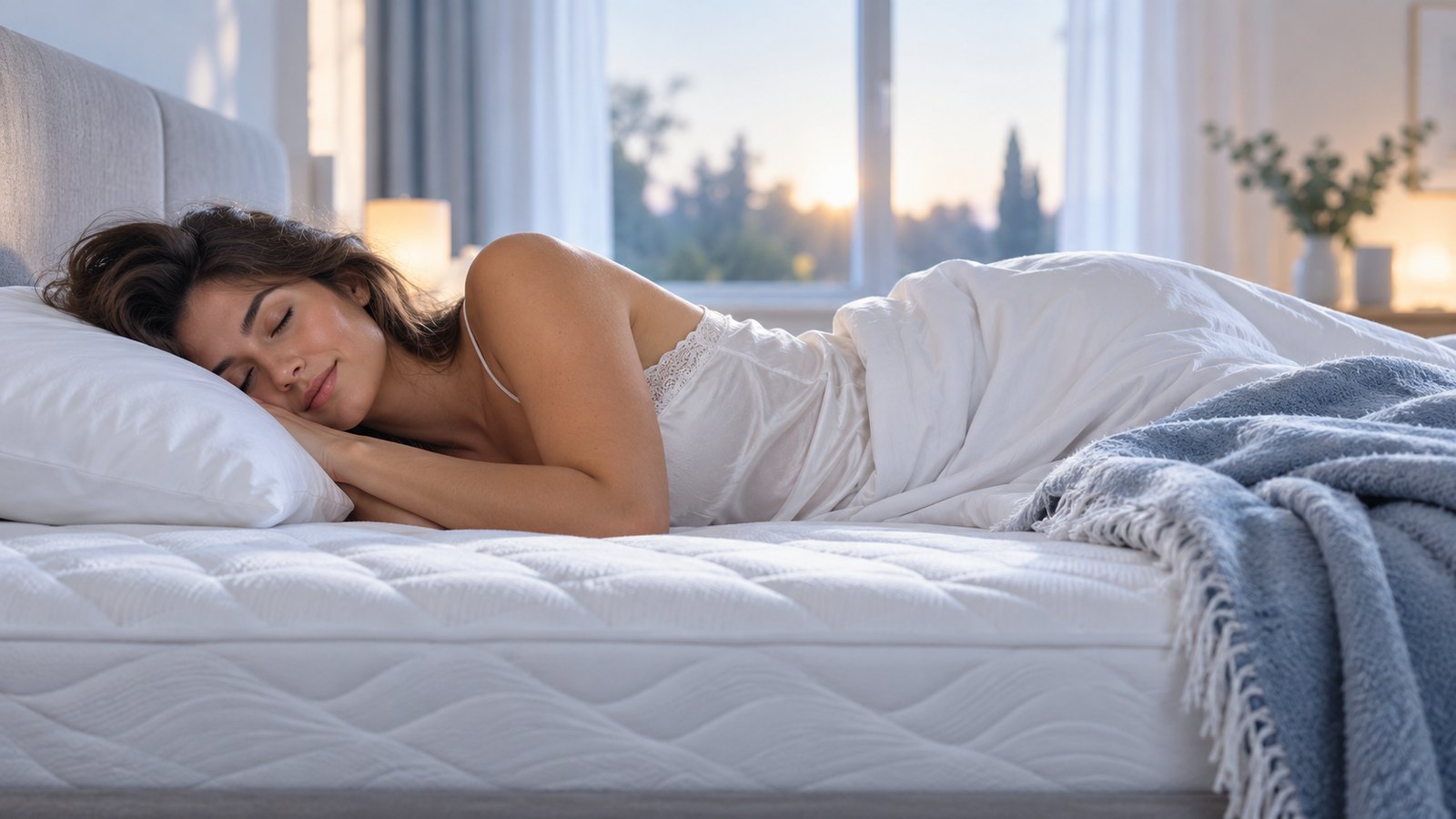
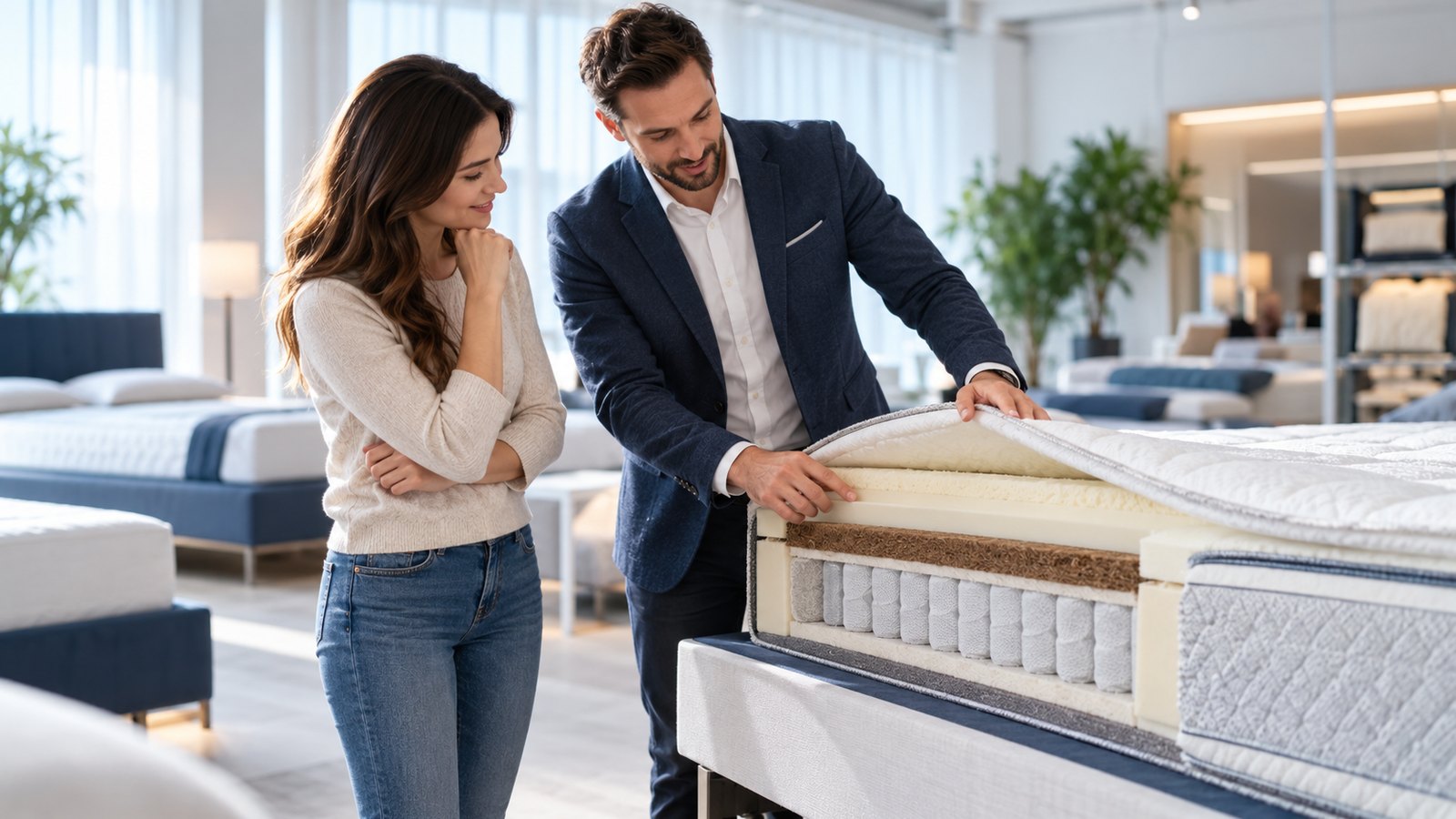
The word orthopedic has been stretched to mean almost anything, so it helps to define it. An orthopedic mattress provides firm, even support that resists collapsing under the heavier parts of the body, while still cushioning so the surface does not press into the shoulders and hips. In practice that means a strong support core carrying a moderate comfort layer, with enough structure to keep the lumbar region lifted rather than sagging.
The failure mode of a bad mattress is almost always the same: a soft middle that lets the heaviest part of the body sink, pulling the lower back out of its natural curve. A genuinely orthopedic build fights that tendency. The core carries the weight, the comfort layer softens the contact points, and the result is a surface that feels supportive when you lie on it and, more importantly, still feels supportive at four in the morning.
Orthopedic does not mean rock-hard. A surface that refuses to yield creates its own pressure problems, pushing against shoulders and hips and waking a sleeper who keeps shifting to escape it. The right build is firm where it needs to carry weight and gentle where it needs to cushion, which is a design choice, not a price bracket.
Support, Alignment and the Lumbar Curve
Think of the lower back as the part of the story that decides whether you wake up comfortable. Lying on your back, the lumbar region has a natural inward curve, and a mattress that is too soft lets it flatten or reverse. Lying on your side, the waist needs to stay level with the shoulders and hips so the spine forms a straight line rather than a bow. Both cases fail for the same reason: the mattress gives way under the middle of the body.
This is why differential support matters so much for back pain. A mattress with uniform softness sinks most where the body is heaviest, which is exactly the lower back. A mattress with genuine differentiated support holds the heavier zones firmly while staying softer under the shoulders and legs. The effect is an even line instead of a dip, and the difference is felt the moment you lie down.
Neck pain follows the same logic higher up. The surface has to let the shoulders settle so the neck is not pushed sideways by a mattress that is too firm, and it must keep the upper spine supported so the neck is not kinked forward by one that is too soft. This is where uniform mattresses fail the people who most need help, because the shoulder and the lumbar need different things from the same surface.
Firmness, Thermosensitive Memory and the Right Balance
For back pain, the firmness question has a clear answer at the extremes and a personal one in the middle. Very soft is almost always wrong, because it lets the spine sag. Very hard is wrong too, because it creates pressure points that disrupt sleep. Between those poles, the right feel depends on body weight and sleeping position, which is why an honest recommendation is always about you rather than about a generic ranking.
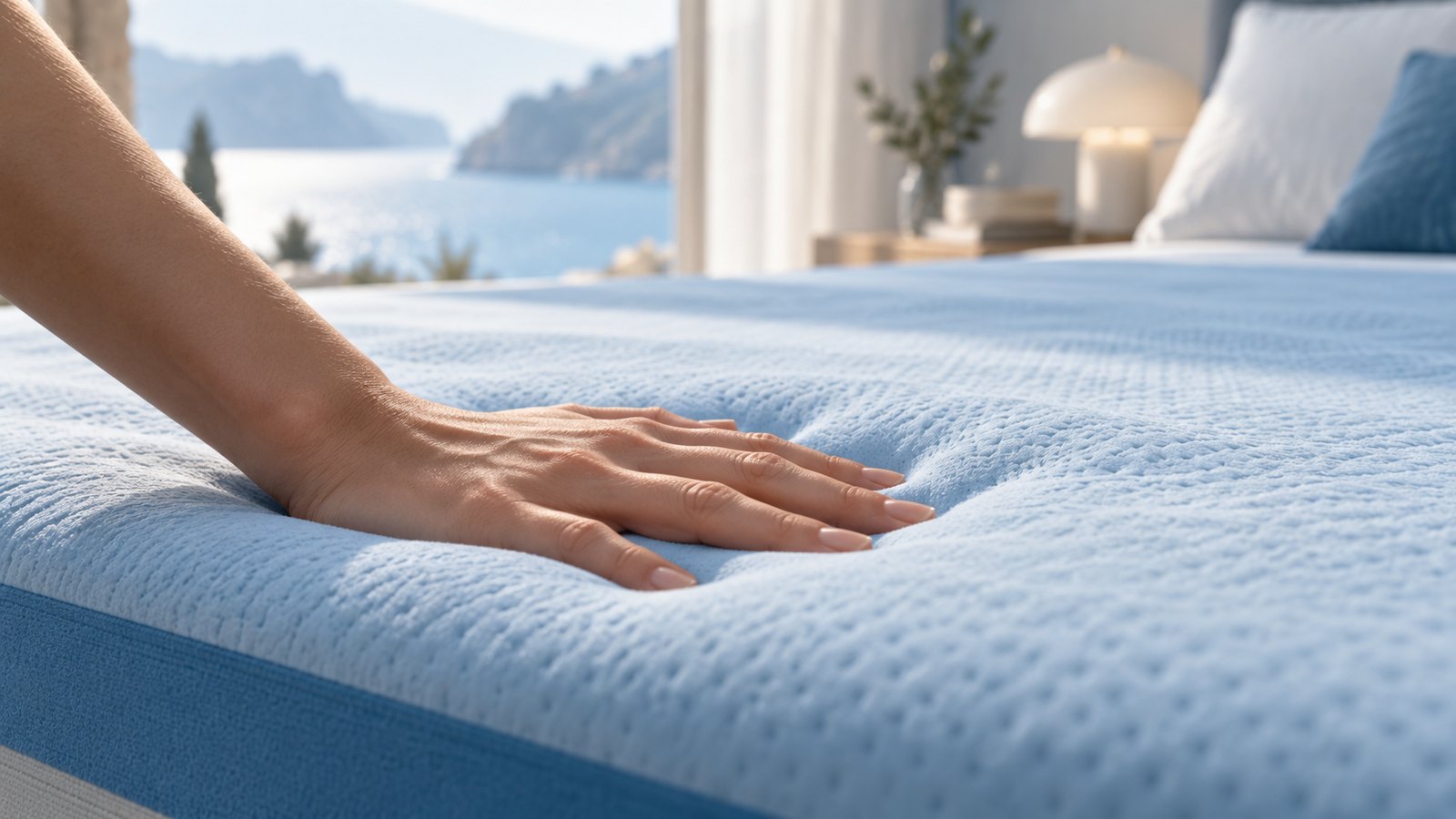
Thermosensitive memory foam earns its place in an orthopedic build because it adapts to the individual body. It softens where the body is warm, which is usually the shoulder and hip, and holds firm where the body needs support. On a dense base, that memory layer relieves pressure while the base keeps the lumbar region from sinking. The combination is far more effective for pain than a thick block of soft foam or a bare rigid core on its own.
Height and construction also signal real orthopedic intent. A build of 24 to 30 centimetres has the depth to include a proper support core, a genuine comfort layer and a breathable band, which thin budget mattresses cannot. When you shop, look past the word orthopedic and check three things: a strong core, a differentiated support structure and a memory layer thick enough to matter.
Orthopedic Choices for Back and Neck Pain
The models built for this problem are the ones with the strongest core and the most differentiated support. Heavier sleepers and side sleepers with lumbar pain usually need the deepest support, which points to the top of a range. Lighter sleepers and back sleepers often find a mid-range build firm enough and easier to live with, because too much firmness becomes its own discomfort.
| Priority | What to look for | Typical model tier |
|---|---|---|
| Lower back pain, heavy sleeper | Strong differentiated support, thick memory | Top of range |
| Lower back pain, light sleeper | Firm core, moderate memory | Mid range |
| Neck pain, side sleeper | Responsive shoulder zone, even surface | Mid to top range |
| Morning stiffness | Thermosensitive memory over dense base | Across the range |
| Warm sleeper with pain | Breathable 3D band, aloe cover | Across the range |
There is no single best mattress for every hurting back, and any guide that claims otherwise is selling rather than helping. What does hold true is that the winning build is firm in the core, gentle at the contact points and breathable through the night. Use the dedicated guide to mattresses for back pain to narrow the choice, and factor in your body weight with the weight-based selection guide so the firmness lands in the right place.
Why Luxury Relax Works for Pain Sufferers
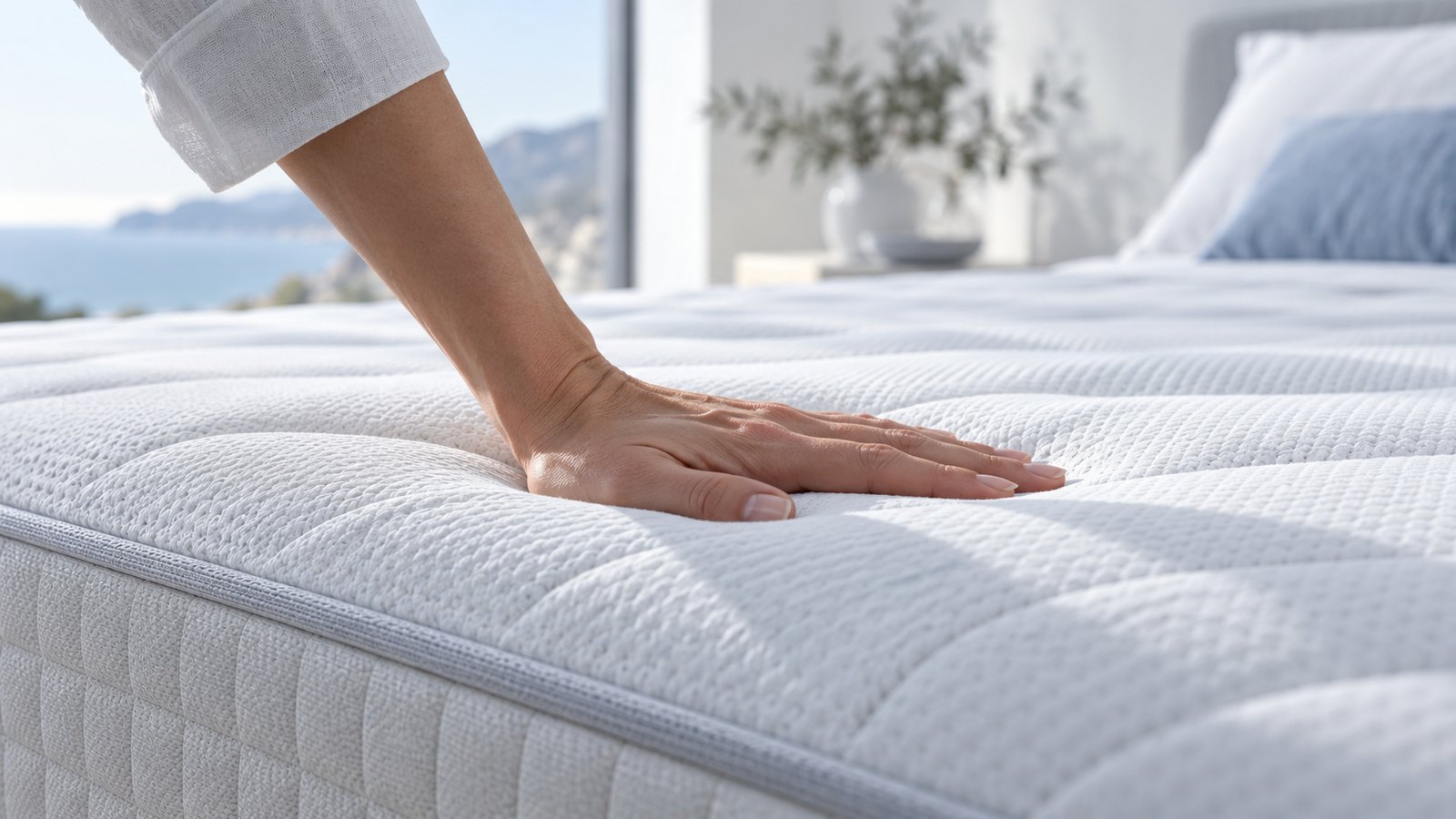
The Luxury Relax build maps almost exactly onto what an aching back needs. A high-density Confortgel base carries the load and keeps the lumbar region lifted, while a thermosensitive memory layer softens under the shoulders and hips. The differentiated support holds the heavy zones without creating the hollow that ruins a night, and the breathable 3D perimeter band keeps the surface from turning into a warm, tired block.
The range gives pain sufferers a realistic ladder. The Athena, top of the range from €990 against a list of €1,950, is built for the heaviest demand and the strongest support. The Platinum from €699 and the Gold from €399 cover lighter sleepers and moderate pain without over-spending. The Elisir from €179 and the Venere from €149 give a firm, honest entry point for a spare room or a first proper bed.
The reassurance matters as much as the construction. A ten-year warranty signals that the core is meant to hold its shape, and ten trial nights on a satisfied-or-refunded basis let you test the firmness against your own back rather than guessing in a showroom. Free delivery in 24 to 48 hours, payment on delivery, anti-mite and hypoallergenic treatments and four perimeter handles complete a package designed for people who cannot afford to get it wrong. Open the contact page to request a free consultation and have an expert match the model to your pain and your body.
Matching Firmness to Your Pain and Body
There is no universal answer, only a better or worse match. If your discomfort is in the lower back and you are a side sleeper, prioritise a build that lets the shoulder sink while keeping the waist level, which usually means a mid to top tier with strong differential support. If you sleep on your back and wake with a stiff lower back, the priority shifts to lumbar support that does not sag.
Body weight pushes the decision further. A heavier sleeper compresses a soft mattress more, so the firm core matters more than the soft top. A lighter sleeper may find a top-tier build too firm and sleep better on a mid-range model that yields slightly more. For couples with different weights, the guide to mattresses for couples explains how to compromise without leaving one partner unsupported.
Then there is the question of expectations. A mattress can support and cushion, but it cannot replace a diagnosis or a plan from a clinician. Used as part of a broader approach to back care, though, the right surface is one of the few changes that pays off every single night.
Frequently Asked Questions
What is the best mattress for lower back pain? One with firm, differentiated support and a thermosensitive memory layer over a dense base. The core keeps the lumbar region lifted while the memory softens the shoulders and hips, so the spine stays neutral.
Is a firmer mattress always better for back pain? No. Too soft lets the spine sag, but too hard creates pressure points that disturb sleep. The right answer is firm support with a forgiving surface, matched to your weight and sleeping position.
Which mattress is best for neck pain? One that lets the shoulders settle without pushing the neck sideways. Even support across the upper body keeps the neck in line, which usually means a mid to top tier build rather than a very hard one.
Can a mattress cure back pain? No mattress cures pain, and none should claim to. What a good orthopedic build does is keep the spine aligned and relieve pressure overnight, supporting recovery rather than causing a morning flare.
Should I choose memory foam or latex for back pain? Memory foam usually suits back-pain sleepers better because it contours under body heat and relieves pressure. Latex is firmer and more elastic, which some back sleepers prefer but side sleepers often find too pushy.
How often should someone with back pain replace a mattress? When the core starts to sag, typically after eight to ten years of good use. A visible hollow in the sleeping zone is the sign that support has gone, regardless of what the calendar says.
What is the best mattress for lower back pain?
One with firm, differentiated support and a thermosensitive memory layer over a dense base. The core keeps the lumbar region lifted while the memory softens the shoulders and hips, so the spine stays neutral.
Is a firmer mattress always better for back pain?
No. Too soft lets the spine sag, but too hard creates pressure points that disturb sleep. The right answer is firm support with a forgiving surface, matched to your weight and sleeping position.
Which mattress is best for neck pain?
One that lets the shoulders settle without pushing the neck sideways. Even support across the upper body keeps the neck in line, which usually means a mid to top tier build rather than a very hard one.
Can a mattress cure back pain?
No mattress cures pain, and none should claim to. What a good orthopedic build does is keep the spine aligned and relieve pressure overnight, supporting recovery rather than causing a morning flare.
Should I choose memory foam or latex for back pain?
Memory foam usually suits back-pain sleepers better because it contours under body heat and relieves pressure. Latex is firmer and more elastic, which some back sleepers prefer but side sleepers often find too pushy.
How often should someone with back pain replace a mattress?
When the core starts to sag, typically after eight to ten years of good use. A visible hollow in the sleeping zone is the sign that support has gone, regardless of what the calendar says.
What Luxury Relax owners say
Su consiglio di mio papà già cliente mi sono recato da Luxury Relax per l'acquisto di un materasso. Prodotti molto comodi ed ergonomici.
Prodotti di qualità, personale disponibile e competente. Consigliatissimo a chi cerca un materasso vero, non un nome.
Ho risolto i dolori alla schiena che mi accompagnavano da anni. Il materasso giusto cambia le giornate.
Come visit us
Luxury Relax Materassi
Via San Rocco, 42 — 20831 Seregno (Monza e della Brianza), Italia0362 222407 · info@luxuryrelax.it
Open in Google Maps