Mattress and Body Weight: Choosing the Right One
Request your free consultation
Fill in the form: a Luxury Relax expert will get back to you with the proposal that suits you best.
The single most overlooked factor in choosing a mattress is the one you carry with you: your body weight. Firmness charts, showroom tests and reviews all assume a generic sleeper, but a mattress that supports one person beautifully can fail another entirely, because weight changes how deeply a surface compresses. A 60-kilogram sleeper and a 110-kilogram sleeper can lie on the same mattress and have completely different experiences.
The reason is simple mechanics. A heavier body presses the mattress deeper, so it needs more resistance from the support core to avoid sinking into a hollow. A lighter body compresses the mattress less, so a surface that feels supportive to a heavy sleeper may feel like a slab to a light one, creating pressure at the shoulders and hips. Firmness is not an absolute quality; it is a relationship between the surface and the weight placed on it.
This guide explains how to translate body weight into a sensible mattress choice, why differentiated support matters when two sleepers share a bed, and how the Luxury Relax range adapts across the weight spectrum. It complements our firm or soft firmness guide, which covers the full rigidity question.
How Body Weight Changes What You Feel
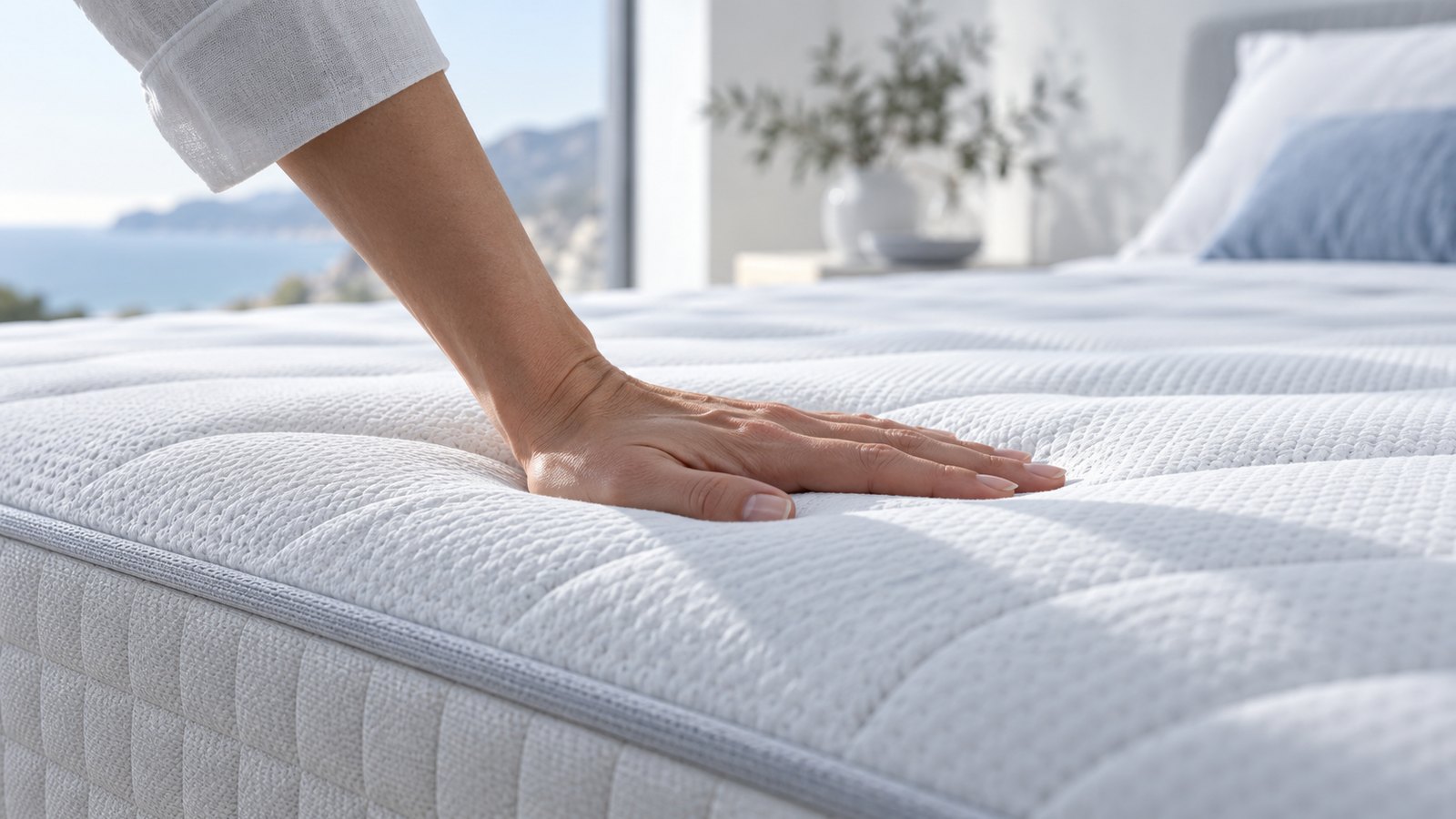
When you lie down, your weight is distributed across the contact points, and the mattress compresses most where the weight is concentrated. A heavier sleeper drives the body deeper into any given surface, so the support core has to work harder to keep the spine level. If the core is soft, the hips sink, the lower back curves, and morning stiffness follows.
A lighter sleeper does the opposite. Because the body does not press as deep, the mattress stays firmer under it, and a surface that feels perfect to a heavy sleeper may barely compress for a light one. The result is a mattress that feels too hard, creating pressure at the shoulder and hip that wakes the sleeper repeatedly. This is why a firmness rating means little without a reference weight.
The practical rule is that support should scale with weight. Heavier sleepers need a stronger, denser core to prevent sinking; lighter sleepers often do better with a softer comfort layer so the surface yields enough to cushion the contact points. Material choice follows the same logic: dense memory foam and high-resilience cores support heavier bodies, while a gentler surface suits lighter ones.
Choosing by Weight Band
It helps to translate weight into a direction, not a rigid rule, since sleeping position and body shape also matter. The table below gives a practical starting point.
| Sleeper | Core priority | Comfort layer | Direction |
|---|---|---|---|
| Lighter (under ~60 kg) | Moderate firmness | Softer, more yielding | Avoid overly firm surfaces |
| Average (~60-80 kg) | Firm, well-differentiated | Moderate memory | Most builds suit |
| Heavier (80-95 kg) | Strong, dense core | Thick, supportive memory | Prioritise the base |
| Very heavy (over ~95 kg) | High-density, deep core | Robust comfort layer | Firmest, deepest build |
A lighter sleeper should not buy the firmest mattress out of a belief that firmer is better; too firm is a real problem that causes pressure and restless nights. A heavier sleeper should not buy a soft mattress to save money, because a weak core will sink under them and lose support within months. The goal is a match, not a maximum.
Position also shifts the decision. A side sleeper needs the shoulder and hip to sink enough to keep the spine level, which usually points to a softer surface or a thicker comfort layer. A back or stomach sleeper needs a flatter, firmer platform so the spine stays neutral. Weight and position together decide the build, which is why a single firmness rating is never enough on its own.

When Two Sleepers Have Different Weights
The hardest case is a couple who differ significantly in weight, because one mattress must serve both. A firm surface that supports the heavier partner can be too hard for the lighter one, while a soft surface that cushions the lighter partner lets the heavier one sink. Choosing one firmness for both usually leaves one partner uncomfortable.
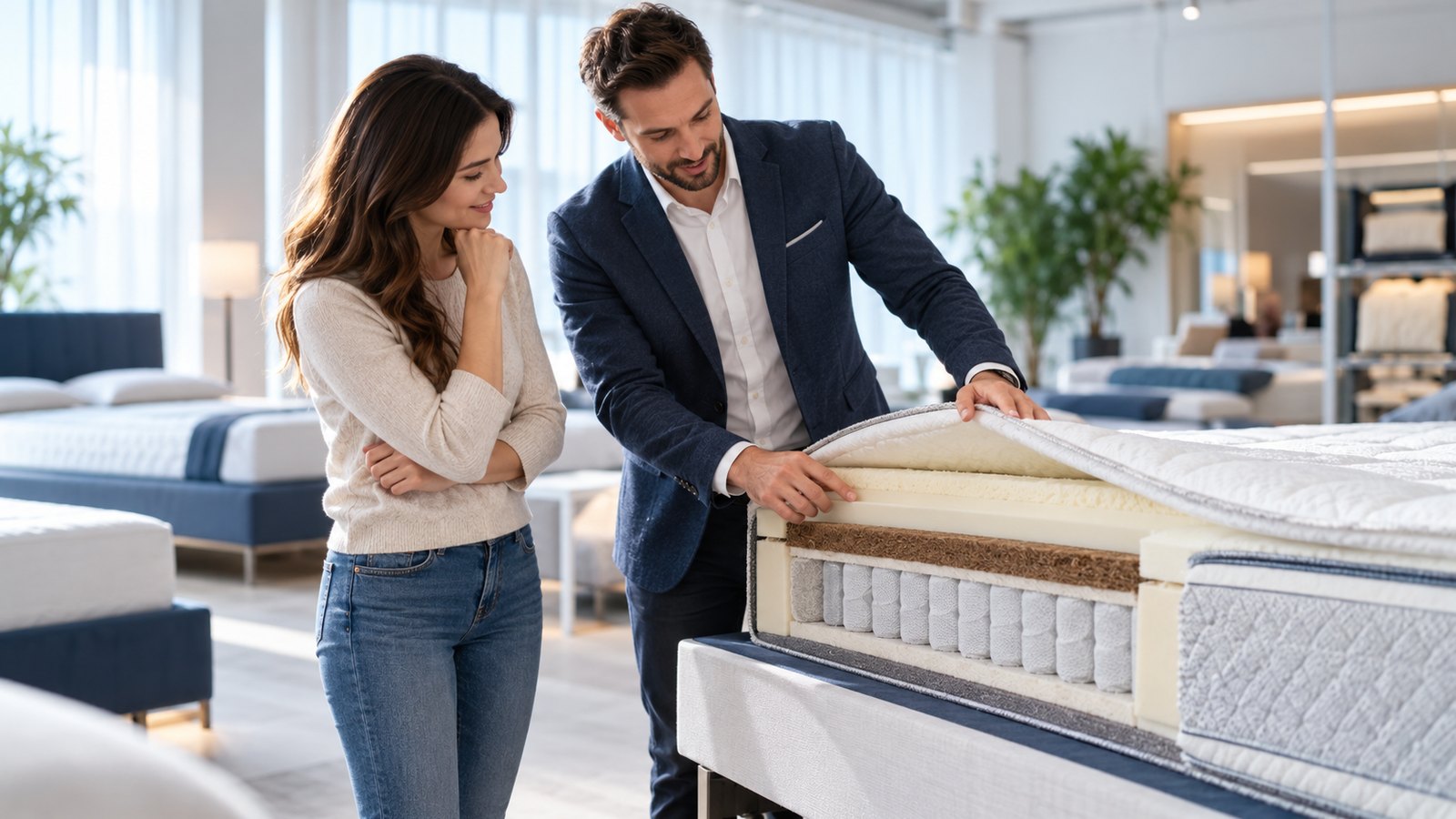
The solution is differentiated support, which is support that varies across the surface rather than being uniform. A layered build with a dense base and a thermosensitive comfort layer does this naturally: the base carries the heavier body, while the memory layer softens where each body is warm, so the lighter sleeper gets cushioning without the heavier one sinking. It is the reason a well-built mattress can suit two different weights at once.
Where the difference is large, the mattress should be chosen for the heavier sleeper, because a core that fails under the heavier body cannot be rescued by anything above it. The lighter partner's comfort is then managed by the comfort layer rather than the core. Our guide to mattresses for couples explores this trade in detail, and the orthopedic mattress guide covers the back-support angle for heavier sleepers in pain.
Why Differentiated Support Beats Uniform Firmness
Uniform firmness is a compromise built into most cheap mattresses. Because the whole surface is the same, it responds to weight the same everywhere, which means it cannot be right for a body of uneven pressure and weight. The heaviest part of the body always sinks most, and it is usually the lower back that suffers.
Differentiated support treats the body as it actually is. It holds the heavier zones firmly while staying softer under the lighter ones, so the spine stays in a level line rather than dipping in the middle. For heavier sleepers this prevents the lumbar sag that causes morning aches; for lighter sleepers it keeps the surface from pushing back too hard at the shoulders and hips.
This is why a layered mattress with a dense core and a thermosensitive memory layer outperforms a single-firmness block for most people. The core is strong enough for a heavy body, and the comfort layer adjusts to a lighter one, all on the same surface. Weight, in other words, is best answered not by choosing one firmness but by choosing a build that adapts.
Testing a Mattress for Your Weight
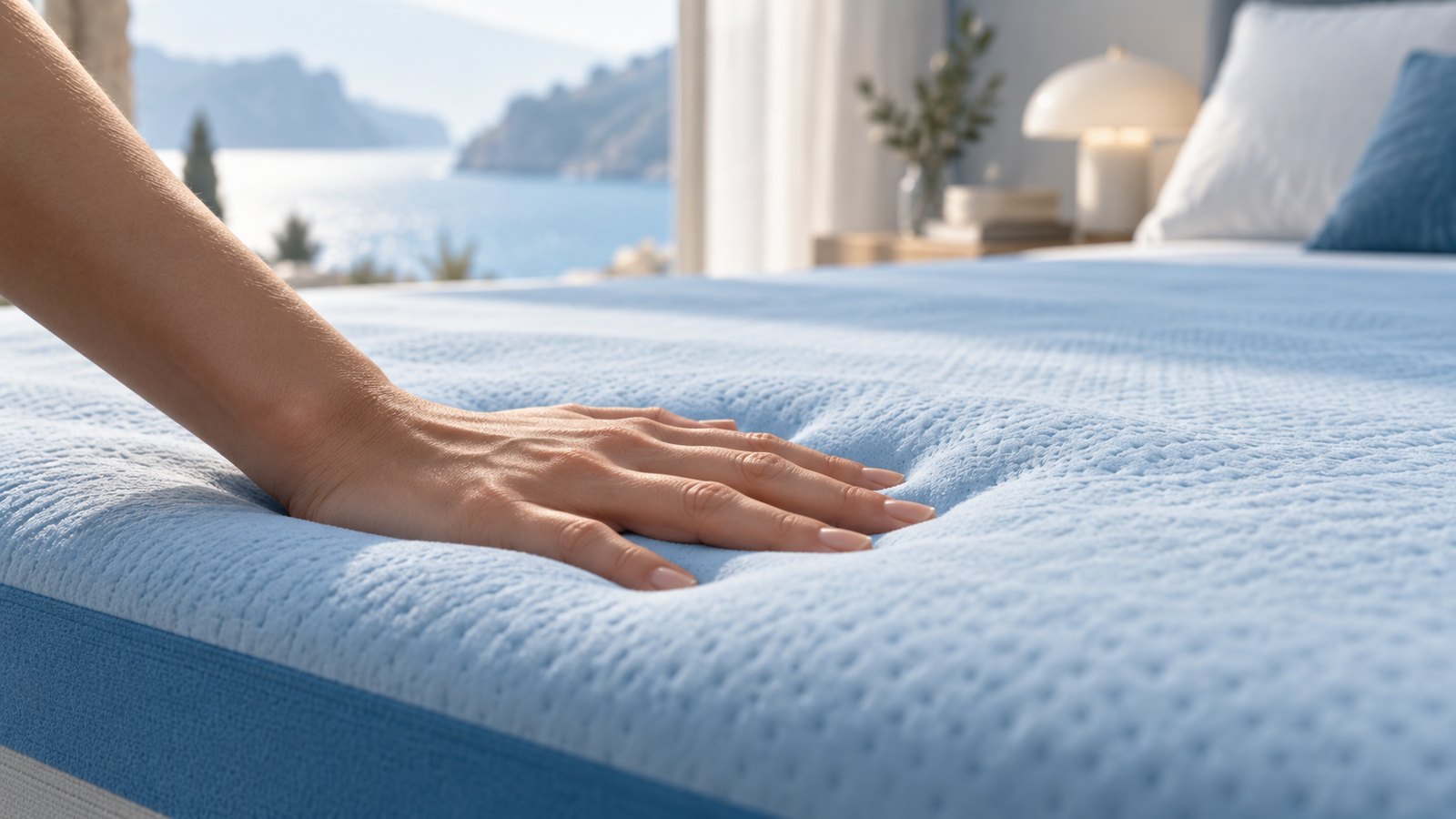
Because firmness is relative to your body, the only reliable test is to lie on the mattress in your normal sleeping position for several minutes, ideally in the position you spend the night in. Press down with your hand is not enough, because your hand weighs nothing compared with your body. Instead, notice whether the heavier parts sink into a hollow or stay supported.
For a heavier sleeper, the test is whether the hips stay level with the shoulders rather than dropping. For a lighter sleeper, the test is whether the shoulders and hips feel cushioned rather than pressed. If the physical test is difficult in a showroom, the arrival of a ten-night home trial is the better judge, and Luxury Relax offers exactly that on a satisfied-or-refunded basis.
The other variable is time. A mattress that feels right for five minutes may reveal its flaws after a full night, and a mattress that feels unusual at first may prove correct once the body adjusts. This is why a trial period matters far more than a showroom bounce test, especially when weight makes the stakes higher.
Why Luxury Relax Adapts to Different Weights
Luxury Relax builds a ladder that lets weight decide the model. The Athena, top of the range from €990 against a list of €1,950, is the deepest and strongest build, suited to heavier sleepers and anyone who needs the firmest support. The Platinum from €699 and the Gold from €399 cover average weights comfortably, while the Elisir from €179 and the Venere from €149 are well matched to lighter sleepers and occasional beds.
Across the range, the same principles hold: a high-density Confortgel base carries the weight, a thermosensitive memory layer adapts to the body, and a deformable core resists the sag that weight accelerates. The breathable 3D perimeter band and washable aloe cover manage heat and hygiene, and the anti-mite, hypoallergenic treatment keeps the bed clean. Every model is made in Italy with a ten-year warranty.
Because weight is personal, the most reliable way to choose is a conversation and a trial. Free delivery in 24 to 48 hours, payment on delivery or by card, and ten trial nights on a satisfied-or-refunded basis mean you can test the mattress under your own body before committing. Open the contact page to request a free consultation and have an expert match the model to your weight and sleeping position.
Frequently Asked Questions
Does body weight affect the mattress I should choose? Yes, greatly. A heavier body compresses a mattress more and needs a stronger, denser core, while a lighter body needs a softer surface to avoid pressure points. Firmness is relative to weight.
What mattress is best for a heavier person? A high-density, deeply built mattress with a strong support core and a thick comfort layer. The core must resist sinking, because a weak base cannot be rescued by anything above it.
What mattress suits a lighter sleeper? A moderate to soft surface that still supports. Lighter sleepers should avoid very firm mattresses, which can feel like a slab and create pressure at the shoulders and hips.
How do couples with different weights choose a mattress? Aim for differentiated support: a dense core with a thermosensitive comfort layer. Choose for the heavier partner, since the core must support the greater weight, and let the comfort layer handle the lighter one.
Is a firmer mattress always better for heavier sleepers? Firmer support is important, but not rock-hard. The goal is a core that prevents sinking while the comfort layer cushions the contact points, which is more effective than sheer hardness.
How can I test a mattress for my weight? Lie in your normal sleeping position for several minutes and check that the hips stay level with the shoulders and that pressure points feel cushioned. A ten-night home trial is the most reliable test of all.
Does body weight affect the mattress I should choose?
Yes, greatly. A heavier body compresses a mattress more and needs a stronger, denser core, while a lighter body needs a softer surface to avoid pressure points. Firmness is relative to weight.
What mattress is best for a heavier person?
A high-density, deeply built mattress with a strong support core and a thick comfort layer. The core must resist sinking, because a weak base cannot be rescued by anything above it.
What mattress suits a lighter sleeper?
A moderate to soft surface that still supports. Lighter sleepers should avoid very firm mattresses, which can feel like a slab and create pressure at the shoulders and hips.
How do couples with different weights choose a mattress?
Aim for differentiated support: a dense core with a thermosensitive comfort layer. Choose for the heavier partner, since the core must support the greater weight, and let the comfort layer handle the lighter one.
Is a firmer mattress always better for heavier sleepers?
Firmer support is important, but not rock-hard. The goal is a core that prevents sinking while the comfort layer cushions the contact points, which is more effective than sheer hardness.
How can I test a mattress for my weight?
Lie in your normal sleeping position for several minutes and check that the hips stay level with the shoulders and that pressure points feel cushioned. A ten-night home trial is the most reliable test of all.
What Luxury Relax owners say
Su consiglio di mio papà già cliente mi sono recato da Luxury Relax per l'acquisto di un materasso. Prodotti molto comodi ed ergonomici.
Prodotti di qualità, personale disponibile e competente. Consigliatissimo a chi cerca un materasso vero, non un nome.
Ho risolto i dolori alla schiena che mi accompagnavano da anni. Il materasso giusto cambia le giornate.
Come visit us
Luxury Relax Materassi
Via San Rocco, 42 — 20831 Seregno (Monza e della Brianza), Italia0362 222407 · info@luxuryrelax.it
Open in Google Maps