Natural Latex Mattress: The Complete Guide
Request your free consultation
Fill in the form: a Luxury Relax expert will get back to you with the proposal that suits you best.
Latex has a reputation that most materials would envy. It is the mattress the wellness magazines recommend, the one parents ask for by name, and the one that carries an aura of trees, air and clean sleep. That reputation is largely deserved, and it is also only half the story. Latex is genuinely elastic, breathable and long-lived, and it is also heavy, expensive and firmer than many sleepers expect on first contact with it.
The confusion starts with the word itself. Natural latex is harvested from the sap of the rubber tree, while much of what is sold as latex is blended with synthetic material or foamed in ways that change how it performs. Two mattresses labelled latex can behave very differently, which is why the label alone tells you almost nothing about the surface you will sleep on for the next decade.
This guide separates what latex truly is from what the marketing implies, explains where it helps and where it disappoints, and shows why the layered comfort of the Luxury Relax range often delivers a better night than a plain latex core at a similar price.
What Natural Latex Actually Is
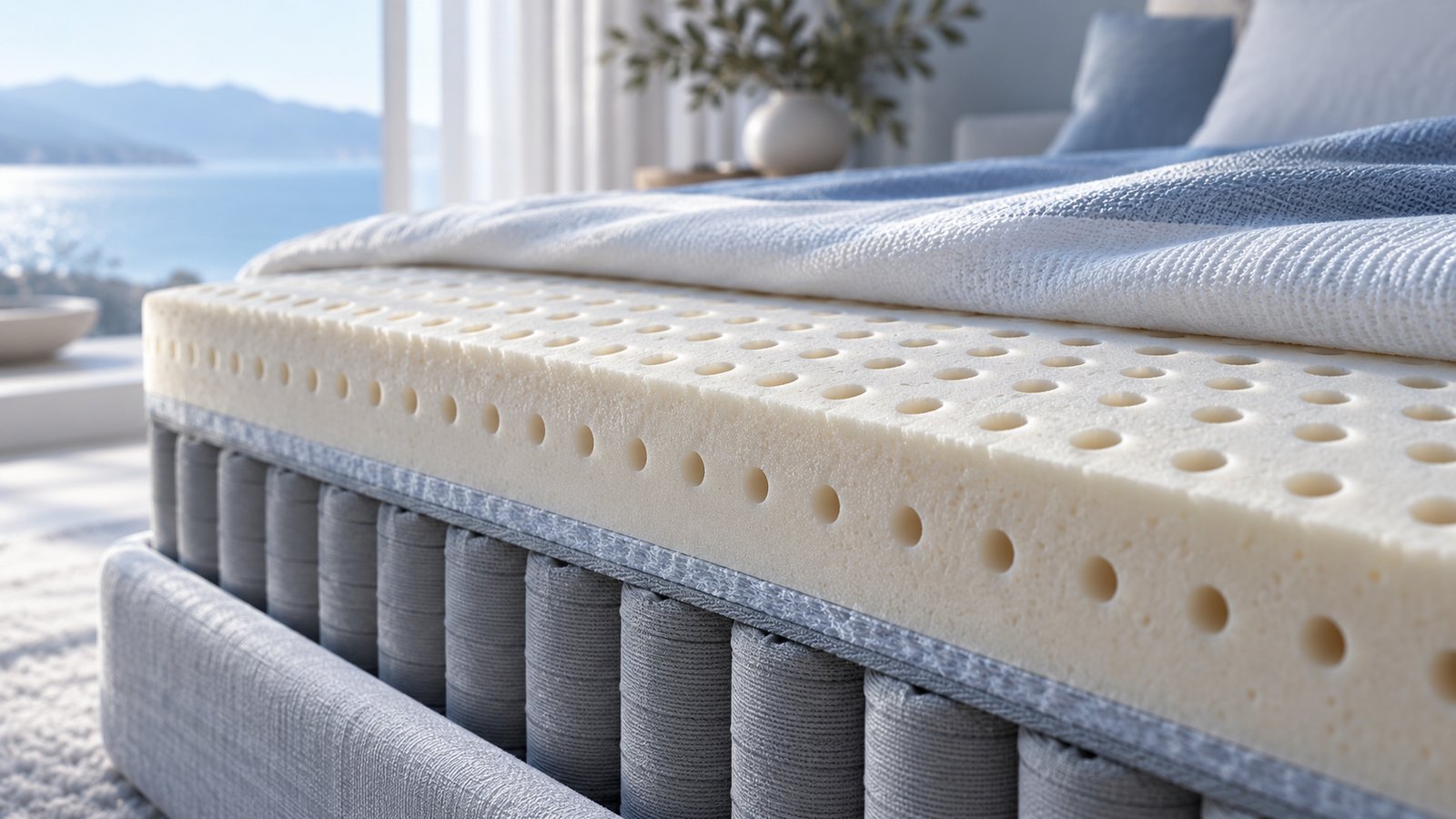
Natural latex comes from the sap of the rubber tree, which is tapped, collected and then processed into a foam that is elastic, resilient and full of open air cells. Those cells are what give latex its character: it presses back against the body rather than melting under it, and it recovers its shape almost instantly, which is why a latex mattress feels springy even when it is thick.
There are two main ways of turning sap into foam, the Talalay and Dunlop processes, and they produce a slightly different feel. Talalay is generally more uniform and airy; Dunlop is denser and firmer at the base of the block. Both are legitimate, and both can be blended with synthetic latex to cut cost, which is why the phrase natural latex matters more than the phrase latex alone.
The practical consequence is that you should read the specification, not the category. A mattress described as latex may contain a thin latex layer over ordinary foam, in which case you get the feeling of latex without its durability. A genuine latex core is heavy, dense and unmistakably different, and it is the only version that delivers the longevity people associate with the material.
Breathability, Durability and the Latex Feel
Breathability is one of latex's honest advantages. The open-cell structure lets air move through the block, so heat and moisture escape rather than collecting under the body. For a warm sleeper, this is a real benefit, and it is the reason latex is often recommended in warm climates and for people who wake up clammy on foam.
Durability is the second advantage. Latex is elastic rather than plastic, so it springs back instead of crushing under repeated load. A good latex core frequently outlives the fabric around it, often continuing to perform for ten to fifteen years, which is longer than most foam mattresses manage. If you plan to keep a mattress for a very long time, that resilience is worth paying for.
The feel is the third and most debated quality. Latex is firm and responsive; it supports from below and pushes back rather than contouring around a shoulder. Some sleepers love this because it never feels like a marshmallow. Others, especially side sleepers who want the shoulder to sink, find latex too insistent, which is the honest reason it is not the universal best choice the marketing suggests.
Where Latex Falls Short
The first shortfall is weight. A latex mattress is heavy, and turning one without help is a chore. Perimeter handles make a difference, but the material is dense by nature, and a king-size latex core is genuinely difficult to move, which matters if you rotate it or change rooms.
The second shortfall is price. Natural latex costs more to produce than foam, so a genuine latex mattress starts higher and climbs quickly with size. If the budget is the deciding factor, a well-built layered foam mattress can deliver comparable comfort for less, provided the foam is high density and the base is genuine.
The third shortfall is motion transfer. Latex is elastic, which means it transmits movement rather than absorbing it locally. Couples often notice that a restless partner is felt more on latex than on memory foam, and for light sleepers sharing a bed this can be decisive. The exception is a hybrid, where latex is paired with individually pocketed springs to soften the bounce.
There is also the firmness question. Because latex pushes back, it can create pressure at the shoulders and hips for a smaller or lighter sleeper, who may need a softer comfort layer above the latex core to make the surface kind enough for a full night. That is not a flaw in latex so much as a reminder that a core is only half a mattress.
Natural Latex for Children and Allergies
Latex is one of the most requested materials for children's mattresses, and the reasons are sound. It is breathable, which keeps a small sleeper drier, and it is naturally resistant to dust mites, which reduces one of the common irritants in a child's bedroom. Its firmness also suits a growing spine better than a deeply contouring foam that lets a light body sink.
For allergy sufferers in general, latex offers a useful baseline. The material does not hold moisture the way dense synthetic blocks can, so it is less hospitable to mites and mould. A washable cover on top completes the picture, because it lets you clean the surface that meets skin without soaking the core. Our dust mite guide explains the routine that keeps that advantage working.
The caveat is that a genuinely natural latex mattress must also be treated and covered properly to deliver these benefits, and a thin latex layer over cheap foam will not. When latex is used as part of a layered build with an anti-mite, hypoallergenic treatment and a washable cover, the result is a cleaner bed and a firmer, more supportive surface for a child. Parents weighing the options can compare this with the broader mattress buying guide.
How to Choose a Latex or Latex-Feel Mattress
Start by deciding whether you actually want latex or simply a firm, breathable, long-lasting surface. If you want the push-back and resilience of latex and you sleep on your back or stomach, a genuine latex core is a strong choice. If you sleep on your side or share a bed with a light sleeper, you may prefer a build that pairs latex or a dense foam with a softer comfort layer.
Next, check the construction honestly. Look for the thickness of the latex layer, the density of the foam beneath it, and any mention of synthetic blending. A thick latex layer over a cheap base is a compromise; a genuine latex core is an investment. Where a maker publishes these details, you can compare properly rather than guessing from a category name.
Then match the firmness to the body, not the brochure. Heavier sleepers need the core to resist sinking, while lighter sleepers may need a softer top so the contact points are not pushed. A well-layered mattress lets you adjust one without sacrificing the other, which is exactly the balance the next section describes. Our firm or soft guide unpacks the firmness decision in detail.
| Priority | Best match | Why |
|---|---|---|
| Firm feel, back sleeper | Genuine latex core | Elastic, breathable, long lasting |
| Side sleeper, pressure relief | Layered build with soft top | Contact points cushioned without losing support |
| Allergy sufferer | Latex or layered foam, anti-mite, washable cover | Breathable, dry, easy to clean |
| Couple, motion isolation | Memory foam or hybrid | Absorbs movement better than latex |
| Long-term durability | Latex or high-density layered core | Years of nightly use |
Why the Luxury Relax Layered Comfort Wins
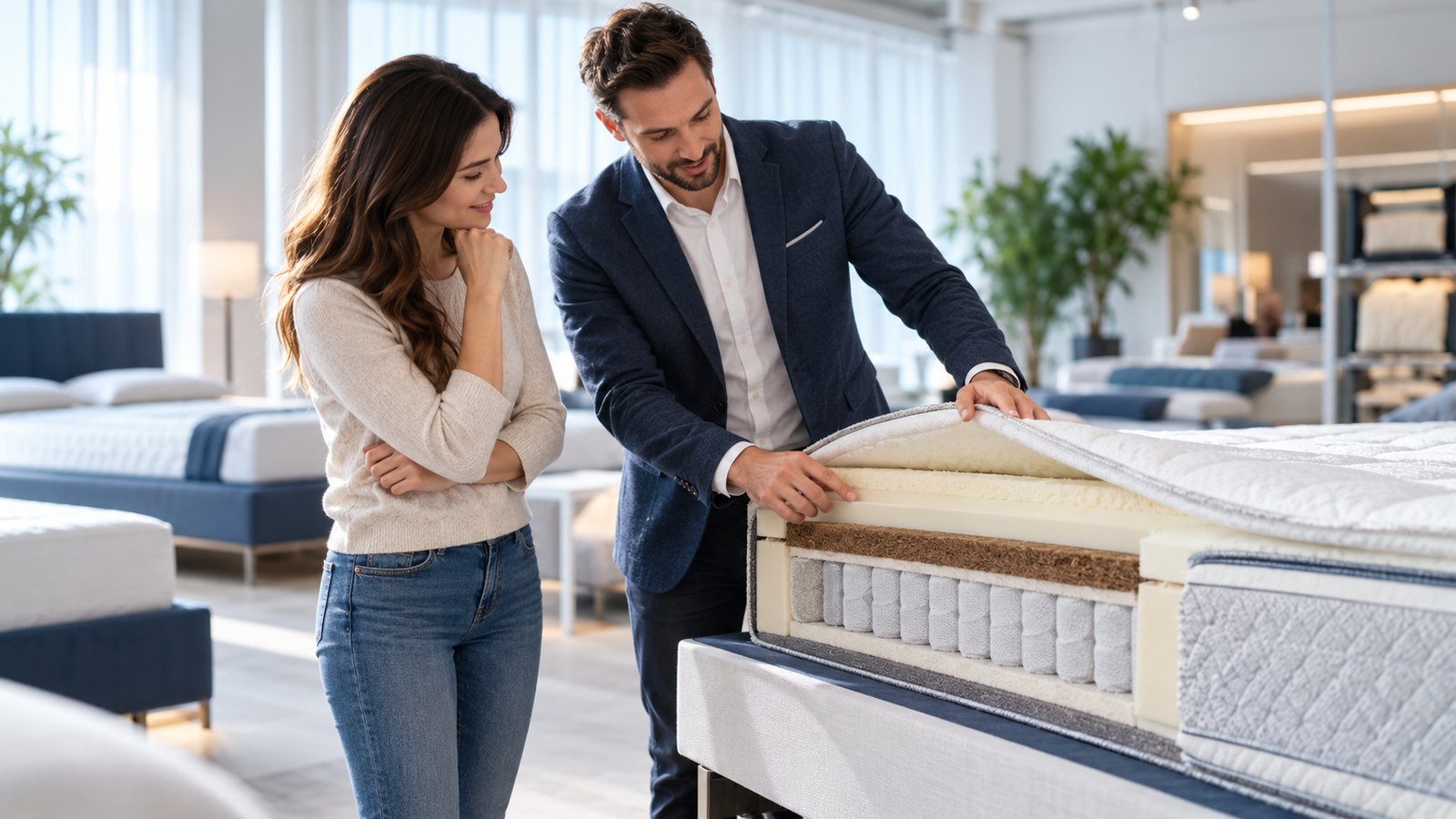
The Luxury Relax approach takes what latex does well and adds what it lacks. Instead of relying on a single block, it layers a thermosensitive memory surface over a high-density Confortgel base, which gives the pressure relief of memory foam and the structural support of a dense core at the same time. The result is a surface that contours where a shoulder and hip need it, and holds firm where they must not sink.
The build also addresses the practical complaints that follow latex. Motion isolation is strong, so a partner's movement is absorbed rather than transmitted, which suits couples and light sleepers. The breathable 3D perimeter band and the washable aloe cover manage heat and hygiene, the anti-mite and hypoallergenic treatment keeps the bed clean, and the deformable core resists the sagging that ends a mattress early.
The range keeps the decision simple. The Athena from €990 against a list of €1,950 gives the strongest, deepest build, the Platinum from €699 and the Gold from €399 cover most sleepers comfortably, and the Elisir from €179 and the Venere from €149 open the door for a spare room or a first bed. Every model is made in Italy, carries a ten-year warranty and comes with ten trial nights on a satisfied-or-refunded basis.
Free delivery in 24 to 48 hours, payment on delivery or by card, and round-the-clock assistance remove the last reasons to hesitate. Latex taught the mattress world about breathability and resilience; a layered build that keeps those lessons while adding comfort and motion isolation simply makes better use of them. Open the contact page to request a free consultation and find the model that matches your body and budget.
Frequently Asked Questions
Is natural latex better than memory foam? Neither is universally better. Latex is firmer, more breathable and longer lasting; memory foam contours more and isolates motion better. The right choice depends on sleeping position, firmness preference and whether a partner shares the bed.
How long does a natural latex mattress last? A genuine latex core often lasts ten to fifteen years, outliving the fabric around it. Density and construction still matter, so a thick latex layer over a cheap base will not match a true latex core.
Does a latex mattress sleep cool? It breathes better than dense foam because of its open-cell structure, so heat and moisture escape rather than collecting. A breathable perimeter band and a washable cover improve this further.
Is latex good for a child's mattress? Yes. Latex is breathable, firm enough for a growing spine and naturally resistant to dust mites. Choose a genuine latex layer with an anti-mite treatment and a washable cover for the best result.
Why is a latex mattress so heavy? Natural latex is dense, so a full-size core weighs a great deal. Perimeter handles make rotation easier, but expect to need help turning or moving a large latex mattress.
Can a latex mattress sag? A genuine latex core resists sagging well because it is elastic rather than plastic. Low-density blended products can lose support, so check the specification rather than trusting the word latex alone.
Is natural latex better than memory foam?
Neither is universally better. Latex is firmer, more breathable and longer lasting; memory foam contours more and isolates motion better. The right choice depends on sleeping position, firmness preference and whether a partner shares the bed.
How long does a natural latex mattress last?
A genuine latex core often lasts ten to fifteen years, outliving the fabric around it. Density and construction still matter, so a thick latex layer over a cheap base will not match a true latex core.
Does a latex mattress sleep cool?
It breathes better than dense foam because of its open-cell structure, so heat and moisture escape rather than collecting. A breathable perimeter band and a washable cover improve this further.
Is latex good for a child's mattress?
Yes. Latex is breathable, firm enough for a growing spine and naturally resistant to dust mites. Choose a genuine latex layer with an anti-mite treatment and a washable cover for the best result.
Why is a latex mattress so heavy?
Natural latex is dense, so a full-size core weighs a great deal. Perimeter handles make rotation easier, but expect to need help turning or moving a large latex mattress.
Can a latex mattress sag?
A genuine latex core resists sagging well because it is elastic rather than plastic. Low-density blended products can lose support, so check the specification rather than trusting the word latex alone.
What Luxury Relax owners say
Su consiglio di mio papà già cliente mi sono recato da Luxury Relax per l'acquisto di un materasso. Prodotti molto comodi ed ergonomici.
Prodotti di qualità, personale disponibile e competente. Consigliatissimo a chi cerca un materasso vero, non un nome.
Ho risolto i dolori alla schiena che mi accompagnavano da anni. Il materasso giusto cambia le giornate.
Come visit us
Luxury Relax Materassi
Via San Rocco, 42 — 20831 Seregno (Monza e della Brianza), Italia0362 222407 · info@luxuryrelax.it
Open in Google Maps