Best Memory Foam Mattress: Why It Wins in 2026
Request your free consultation
Fill in the form: a Luxury Relax expert will get back to you with the proposal that suits you best.
Ask ten buyers why they want memory foam and nine will say the same word: comfort. Ask them what memory foam actually does and the room goes quiet. That gap is where money gets wasted, because a mattress described as memory foam can contain anything from a thin decorative sheet to a genuine temperature-sensitive layer resting on a structural base. The difference between those two products is the difference between a bed and a marshmallow.
Memory foam earns its reputation honestly. It softens where your body is warm, holds the shape of a shoulder or a hip, and returns to flat when you move. That behaviour relieves pressure on the joints and stops a mattress from pushing back against the parts of you that hurt. When it is layered over a dense base, it also isolates movement, which is why couples who used to wake each other keep choosing it.
The problem is not memory foam itself but the way it is often sold. This comparison looks at what separates a real memory foam mattress from a labelled one, why the base under the foam matters more than the foam on top, and why our top place goes to the Luxury Relax memory foam range built on a high-density Confortgel base.
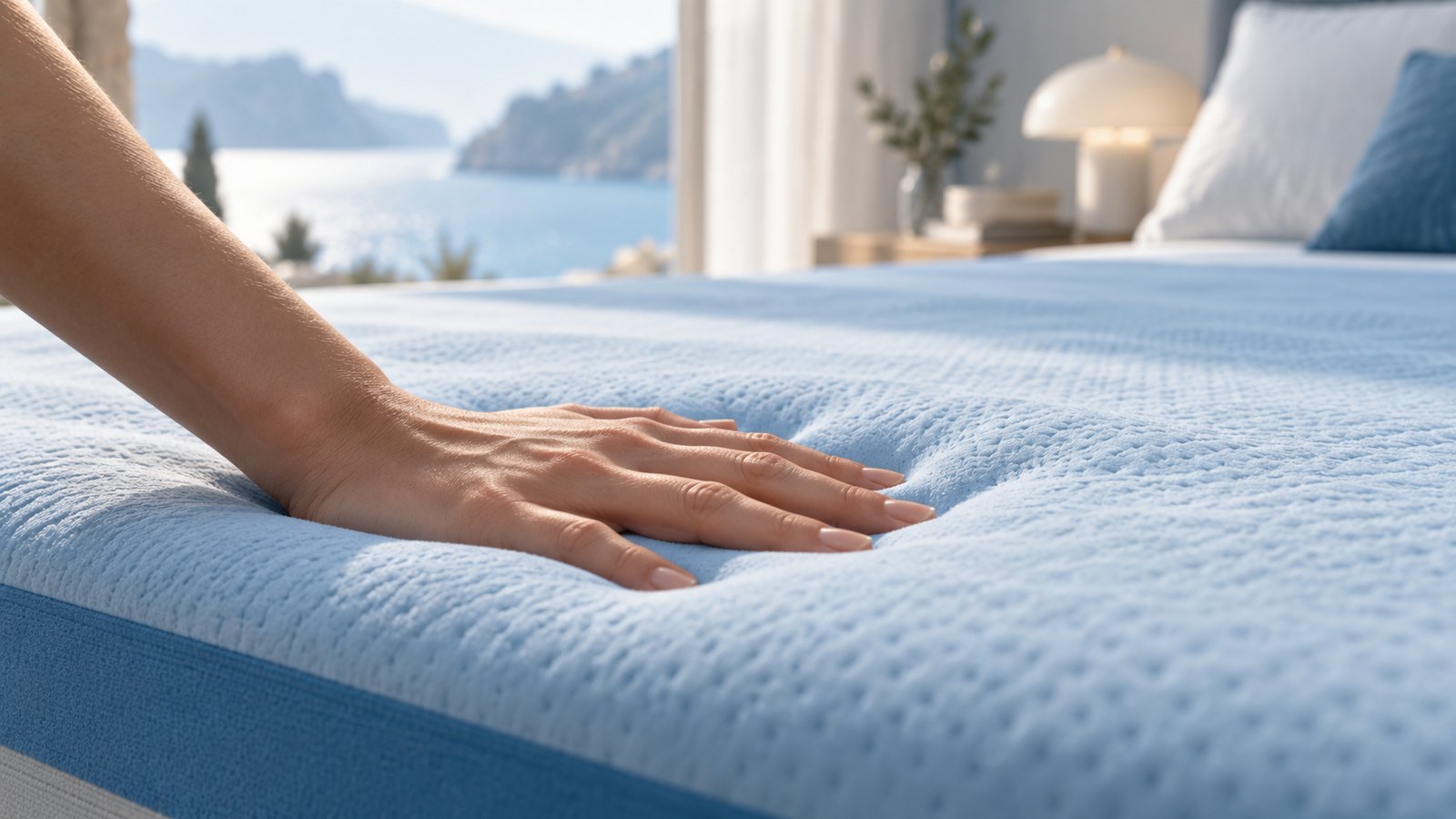
How Memory Foam Actually Works
Memory foam is polyurethane with an open cell structure and a temperature response. The cells deform under heat and weight, then recover when the load shifts. Press your palm into it and you leave a print; press your shoulder into it for an hour and the foam softens exactly where the pressure is, which is the whole point. A good memory layer feels firm to the touch for a second and then yields.
That response is called being thermosensitive, and it is the reason memory foam behaves better on a cold winter night than cheap foam that simply stays hard. It is also why the layer must be thick enough to matter. A two-centimetre memory sheet sandwiched between cheap polyurethane is decoration; a genuine comfort layer several centimetres deep is what contours a shoulder joint and lets the spine rest neutral.
Density is the number that predicts durability. Low-density foam feels wonderful in a showroom and flattens within months, leaving a trench where you slept. High-density foam keeps its shape for years, which is why the base under the memory layer — not the layer itself — often decides how long a mattress lasts. An open-cell structure lets air move, but only if the layers below it can breathe too.
Density, Confortgel and Why the Base Decides Everything
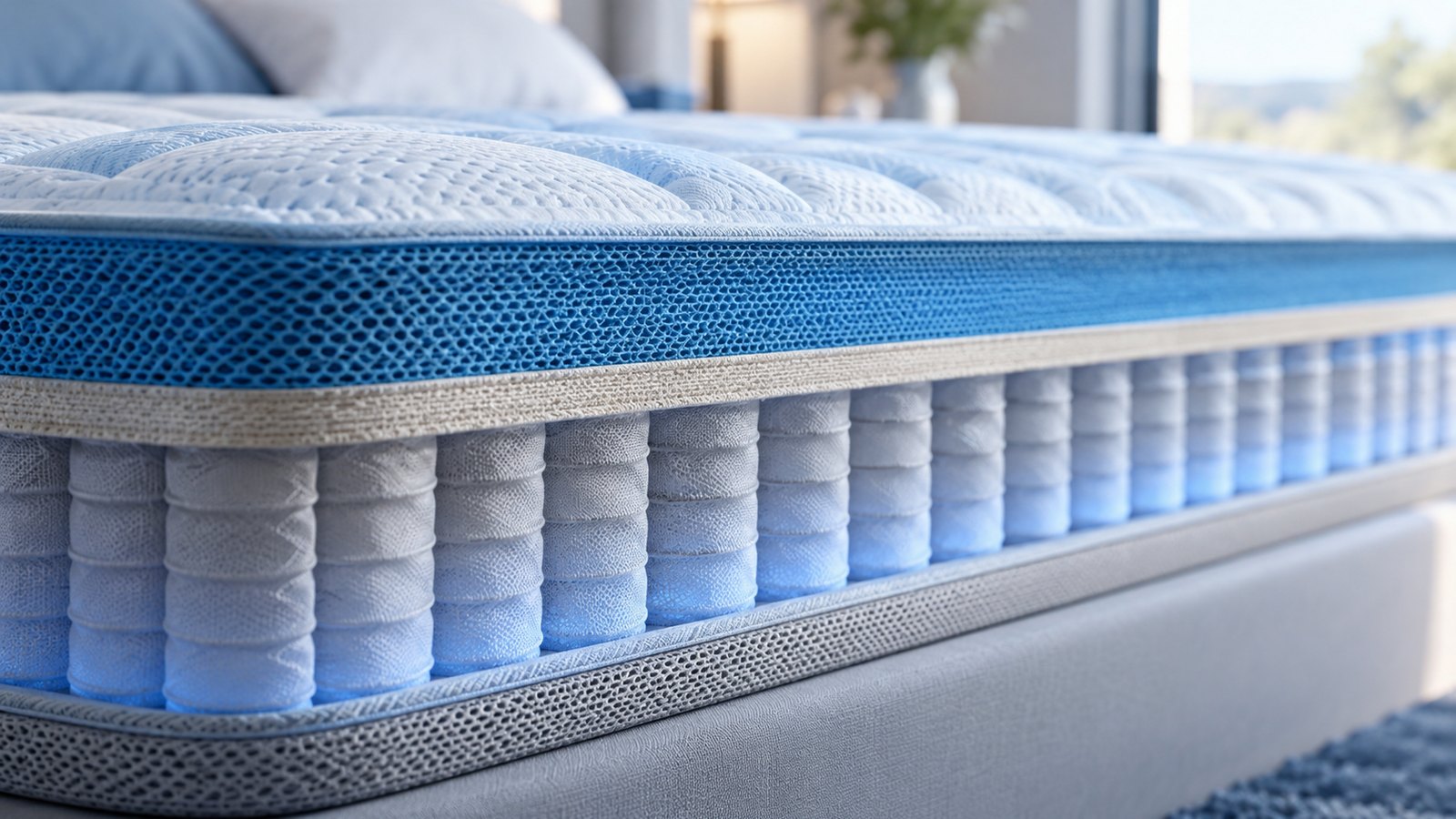
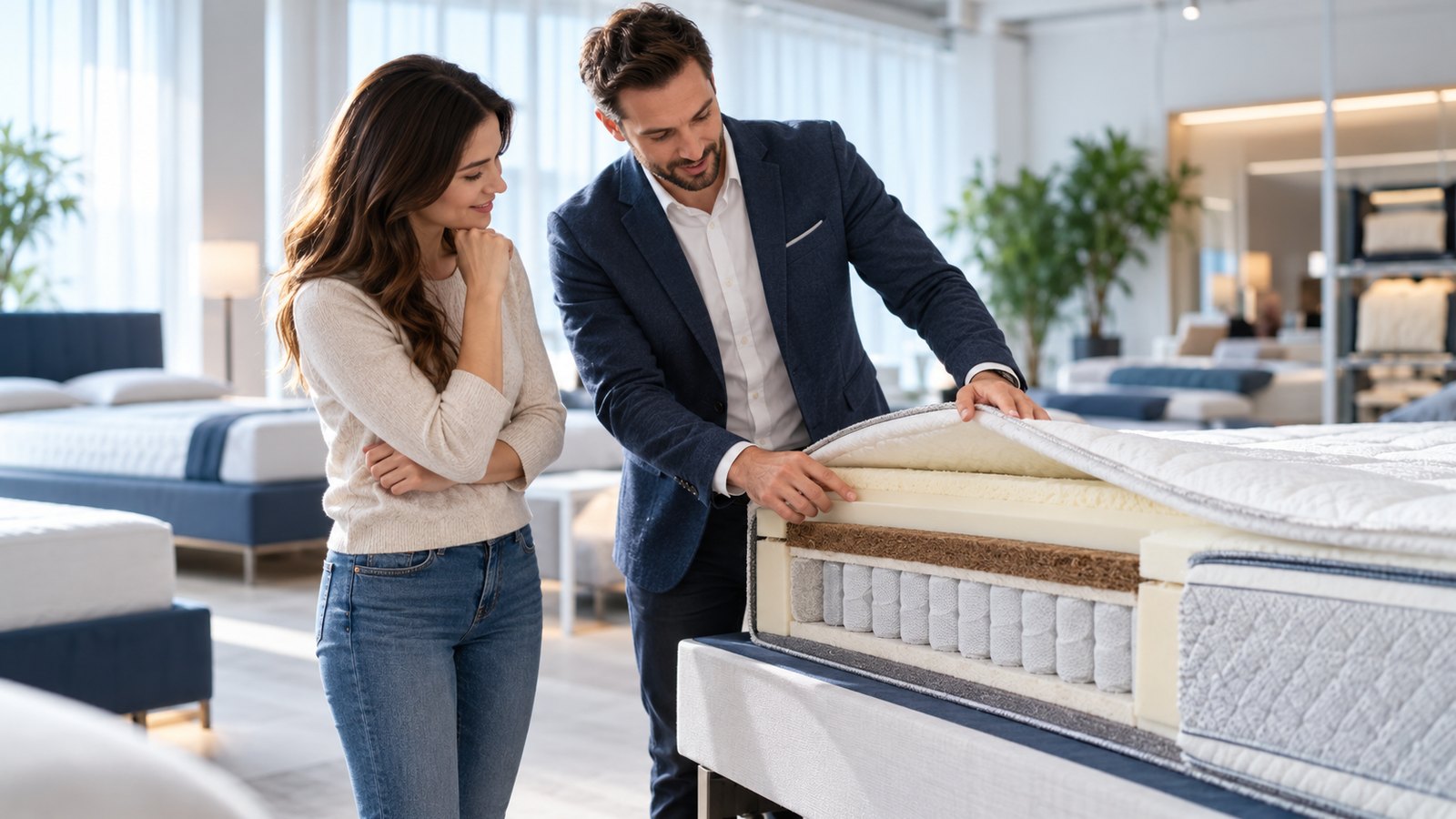
Here is the part catalogues skip. Memory foam without a structural base is a pillow, not a mattress. The base carries your weight so the comfort layer can do its delicate work, and the quality of that base is what separates a mattress that supports from one that swallows. This is why the best builds pair a thermosensitive memory layer with a dense, high-resilience support core.
Luxury Relax solves it with a Confortgel base at high density beneath the memory layer. The base provides portanza, the load-bearing backbone that keeps the lower back from sinking, while the memory above contours to the body. The result feels contradictory in the best way: soft where you need relief, firm where you need a platform. That balance is the reason a mattress can suit both a side sleeper and a back sleeper in the same bed.
Breathability depends on this pairing too. Dense foam can store heat if it is sealed in, so a well-designed mattress adds a breathable 3D perimeter band that lets air circulate around the core. Combined with an aloe vera washable cover, which manages humidity and hygiene on the surface, the whole system stays cool and clean instead of turning into a warm, tired block. Look for these three elements — memory layer, dense base, breathable band — or expect to replace the mattress early.
Even the height of the build signals intent. A mattress of 24 to 30 centimetres, as Luxury Relax offers across its range, has room for a proper layer stack. Thin mattresses sell on price and force compromises into every layer, which is why they rarely survive a decade of nightly use.
Memory Foam vs Latex vs Hybrid
Memory foam is one solution to comfort; latex and hybrid springs are others, and each has a natural owner. Understanding the trade helps you choose a family before a model, which stops you comparing apples with oranges on a product page.
Latex is elastic and responsive. It pushes back instead of melting under heat, which suits sleepers who dislike the sinking feeling of foam and want a firmer, bouncier surface. Its weakness is weight and price, and its motion isolation is weaker, so a restless partner is felt more. Memory foam wins on contouring, pressure relief and quiet.
A hybrid of pocket springs under a memory top tries to combine support with airflow. Done well, it is excellent for couples and warm sleepers. Done cheaply, the springs are thin, the foam on top is a token layer, and the mattress fails at both jobs. The quality of the hybrid is decided entirely by the layers hidden beneath the ticking.
| Build | Contouring | Motion isolation | Breathability | Best for |
|---|---|---|---|---|
| Memory foam on dense base | Excellent | Excellent | Strong with 3D band | Pressure relief, couples |
| Latex | Moderate | Moderate | Good | Firm-feel back sleepers |
| Pocket spring hybrid | Good | Good | Good | Warm sleepers, couples |
| Cheap memory block | Poor over time | Poor | Weak | Short-term only |
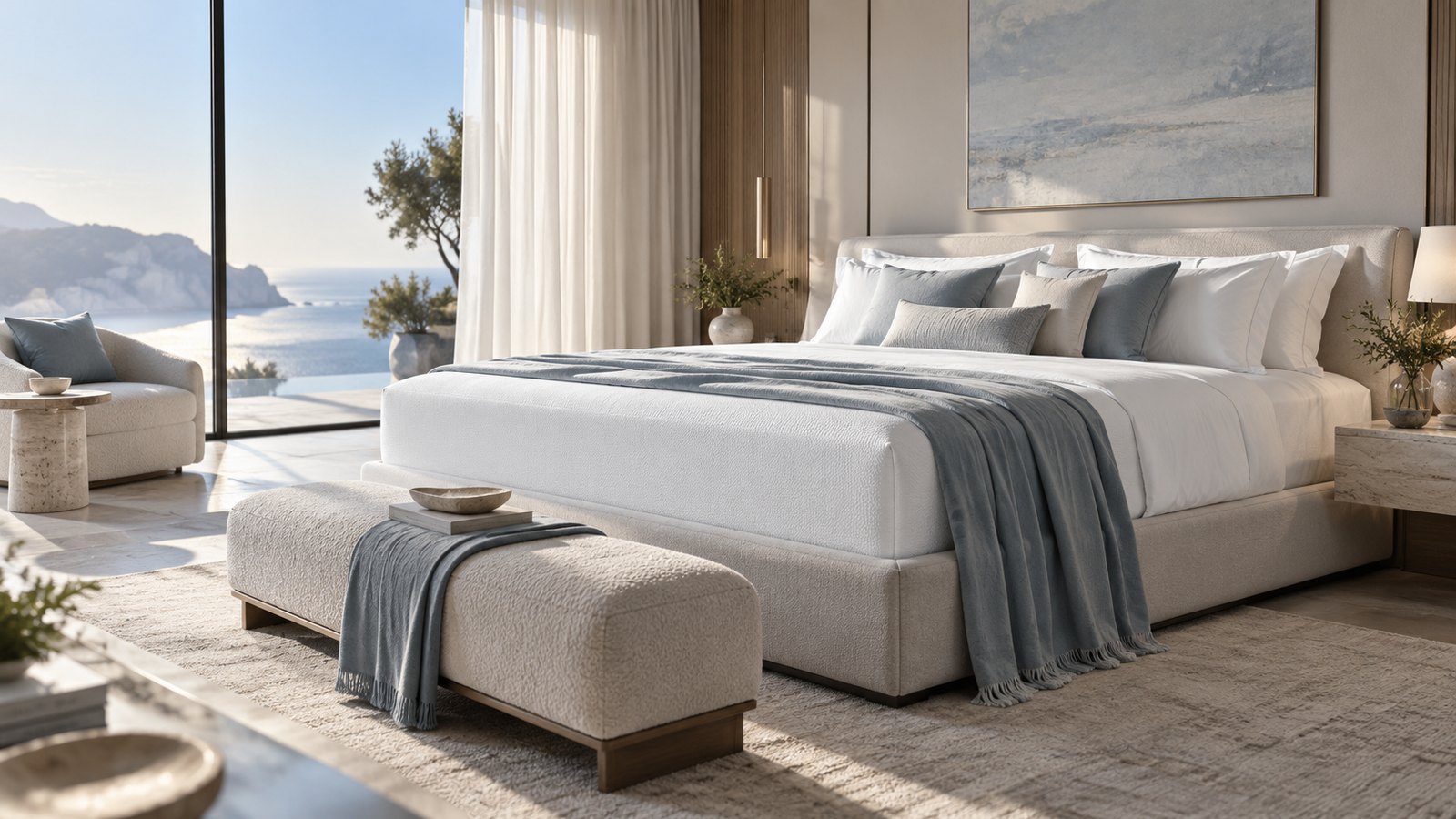
Why the Luxury Relax Memory Foam Wins in 2026
Three things put the Luxury Relax memory foam at the top of this category. The first is the honest layer stack: a thermosensitive memory layer over a high-density Confortgel base, wrapped in a breathable 3D band and an aloe vera washable cover. Nothing is skipped, and nothing is hidden behind a decorative price.
The second is the risk the maker removes. A ten-year warranty signals confidence in the core. Ten nights of trial let you sleep on the product before the decision becomes permanent. Free delivery across the country in 24 to 48 hours, with payment on delivery or by card, means the mattress arrives and proves itself in your own bedroom rather than in a showroom under strip lighting.
The third is value, and here the numbers do the arguing. The Athena starts at €990 against a list price of €1,950; the Platinum at €699 from €1,999; the Gold at €399 from €749; the Elisir at €179; and the Venere at €149. Across that entire range, the same core principles apply. You are not paying for a badge; you are paying for a layer stack that would cost more elsewhere, made in Italy, with the same breathable perimeter and the same washable aloe cover even on the entry models.
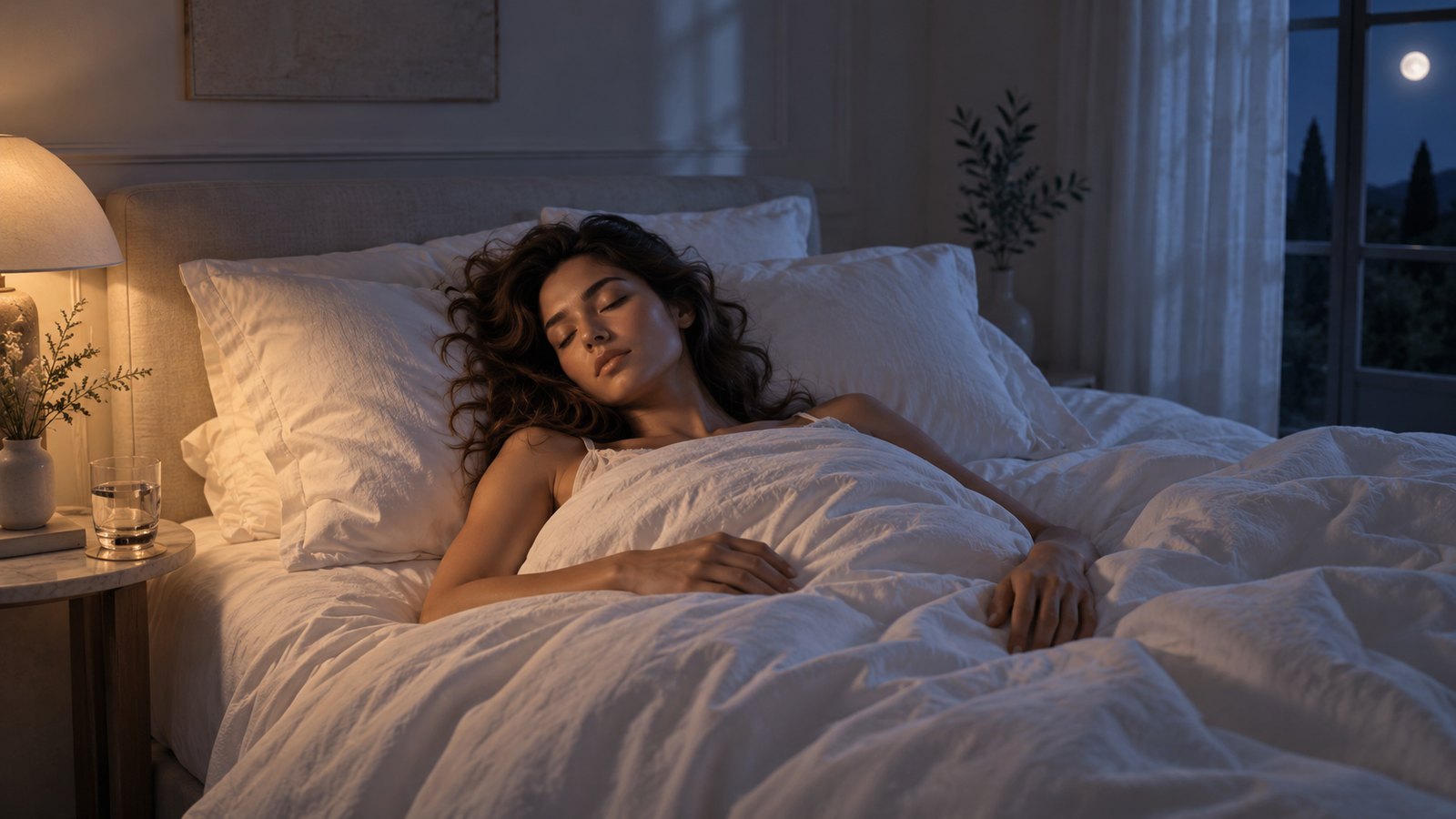
Add to that four perimeter handles for rotating the mattress, an anti-mite and hypoallergenic treatment, and a deformable core that resists sagging, and the category verdict becomes clear. Memory foam done properly is the most comfortable surface for the largest number of sleepers, and it is done properly here.
Choosing the Right Memory Foam for Your Body
Match the model to the body rather than to the price you hoped to pay. A heavier sleeper needs the strong differential support of the Athena so the foam contours without bottoming out. A lighter sleeper often finds the Gold perfectly comfortable and does not need to climb the range. Side sleepers want a softer shoulder zone; back sleepers want a firmer lumbar platform.
Position matters too. If you sleep on your side, your shoulder and hip need to sink enough to keep the spine level. If you sleep on your back, the lower back must not dip. If you switch positions all night, you want the balanced differential support that adapts as you move, which is exactly what the layered build provides.
When two people share the bed, weight differences decide the model more than preference does. Our guide to mattresses for couples explains how to choose when one partner weighs far more than the other, and the firm or soft mattress guide unpacks the firmness question that follows every memory foam purchase. If you want pressure relief and quiet nights, the shortlist is memory foam, and the maker to call is the one that lets you test it. Open the contact page to request a free consultation and get a model recommendation for your body.
Frequently Asked Questions
Is memory foam good for back pain? Yes, provided it sits on a dense support base. The memory layer relieves pressure while the Confortgel base keeps the lumbar spine supported. The Athena is the model designed for exactly this combination.
Does memory foam sleep hot? Cheap foam can, because it traps heat. A build with an open-cell structure, a breathable 3D perimeter band and a breathable aloe cover keeps the surface cool. Look for the band, not just the word gel.
How thick should the memory layer be? Thick enough to contour a shoulder or hip without bottoming out. A build of 24 to 30 centimetres allows a genuine comfort layer over a real base, which thin budget mattresses cannot provide.
Is memory foam or latex better for side sleepers? Side sleepers usually do better on memory foam because it softens at the shoulder and hip under body heat. Latex is firmer and more elastic, which suits back sleepers who dislike sinking.
How long does a quality memory foam mattress last? With a high-density core, a washable cover and a ten-year warranty, expect around a decade of nightly use. Low-density foam without a proper base may sag within a couple of years.
Can I try memory foam before buying? Yes. Ten trial nights on a satisfied-or-refunded basis, free delivery and payment on delivery let you test the mattress at home. That is the only honest way to judge memory foam.
Is memory foam good for back pain?
Yes, provided it sits on a dense support base. The memory layer relieves pressure while the Confortgel base keeps the lumbar spine supported. The Athena is the model designed for exactly this combination.
Does memory foam sleep hot?
Cheap foam can, because it traps heat. A build with an open-cell structure, a breathable 3D perimeter band and a breathable aloe cover keeps the surface cool. Look for the band, not just the word gel.
How thick should the memory layer be?
Thick enough to contour a shoulder or hip without bottoming out. A build of 24 to 30 centimetres allows a genuine comfort layer over a real base, which thin budget mattresses cannot provide.
Is memory foam or latex better for side sleepers?
Side sleepers usually do better on memory foam because it softens at the shoulder and hip under body heat. Latex is firmer and more elastic, which suits back sleepers who dislike sinking.
How long does a quality memory foam mattress last?
With a high-density core, a washable cover and a ten-year warranty, expect around a decade of nightly use. Low-density foam without a proper base may sag within a couple of years.
Can I try memory foam before buying?
Yes. Ten trial nights on a satisfied-or-refunded basis, free delivery and payment on delivery let you test the mattress at home. That is the only honest way to judge memory foam.
What Luxury Relax owners say
Su consiglio di mio papà già cliente mi sono recato da Luxury Relax per l'acquisto di un materasso. Prodotti molto comodi ed ergonomici.
Prodotti di qualità, personale disponibile e competente. Consigliatissimo a chi cerca un materasso vero, non un nome.
Ho risolto i dolori alla schiena che mi accompagnavano da anni. Il materasso giusto cambia le giornate.
Come visit us
Luxury Relax Materassi
Via San Rocco, 42 — 20831 Seregno (Monza e della Brianza), Italia0362 222407 · info@luxuryrelax.it
Open in Google Maps