Breathing and sleep: breathing techniques to sleep better
Key facts at a glance
- What to know right away: Breathing and sleep: the 4-7-8 technique, nasal breathing and a 5 minute routine to fall asleep faster. Practical guide with Luxury Relax tips.
- Trial, warranty and delivery: 10 trial nights · 10-year warranty · Free delivery 24/48h
- Who it is for: Why breathing governs your sleep
- What this guide covers: Why breathing governs your sleep · The 4-7-8 technique step by step · Nasal breathing and the diaphragm at night
- How to book or get help: Get your free consultation · 0362 222407 · info@luxuryrelax.it
It is 11:40 pm, the phone has been on the nightstand for half an hour and sleep is not coming. Then, without noticing, your breathing slows down: the inhale gets longer, the exhale becomes longer than the inhale, and ten minutes later you are already asleep under the covers. Breathing is the only body function you can drive with your will and that at the same time regulates heart rate, blood pressure and alertness. It is the bridge between being awake and being asleep.
Here is the mechanism. When you inhale deeply, your heart speeds up slightly; when you exhale slowly, your heart slows down. That is the respiratory sinus arrhythmia, described more than a century ago, and it is the reason why a slow exhale calms you down faster than any mental effort to stop thinking. The vagus nerve gets the signal and dials down the alert response: lower blood pressure, dropping shoulders, an unclenched jaw.
This guide covers the breathing techniques that genuinely work, to be done in bed within five minutes, and the warning signs worth taking seriously when nighttime breathing becomes loud or irregular. If you are setting up your sleep corner, the Luxury Relax review tells the story of a brand built around deep sleep. Let us start with the mechanism.
Why breathing governs your sleep
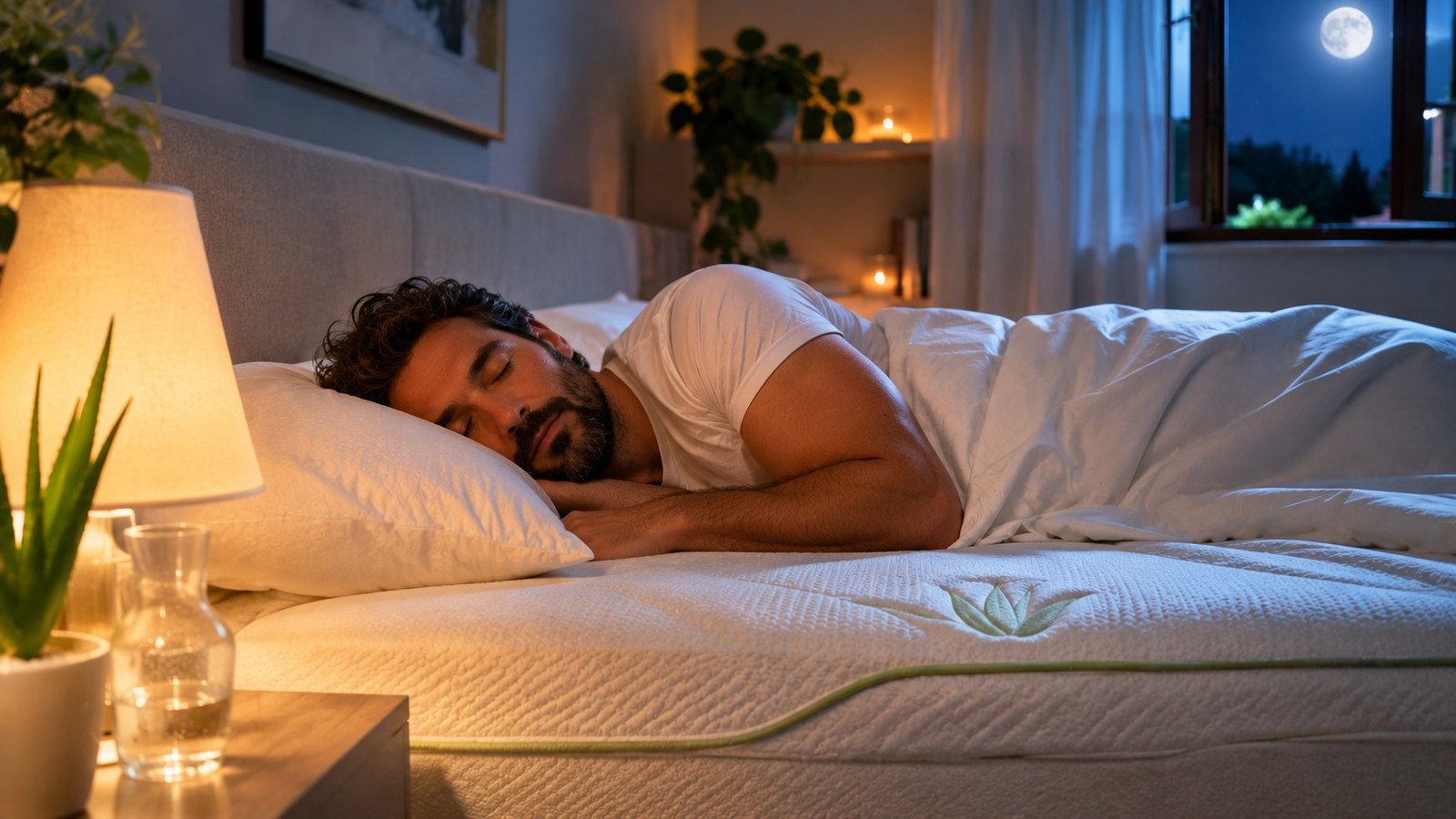
Breathing is the back door into the nervous system. You cannot decide to slow your heartbeat, but you can lengthen your exhale: after a few cycles the heart follows. Every time you make the exhale longer than the inhale, you are asking the body to switch from alert mode to recovery mode.
The second effect involves carbon dioxide. The short, rapid breaths of anxiety blow off too much CO2 and create the sensations we all know: lightheadedness, tingling, chest tightness. A slow breath with a short pause after the exhale brings levels back into the normal range and breaks the vicious circle between short breath and fear of not being able to breathe.
The third effect is mechanical. Diaphragmatic breathing relaxes the abdomen and the rib cage, releases the neck muscles and reduces those micro arousals you never remember but that break deep sleep. Position matters: lying down, the diaphragm works against gravity differently than when you stand, which is why some techniques only work well in bed.
Keep the line between method and medicine in view. Breathing helps you fall asleep and manage evening anxiety; it does not cure chronic insomnia and it is not a diagnosis. If awakenings repeat for weeks, the right step is to talk with your doctor and to check the physical factors too: room, temperature, light and the surface you sleep on.
The 4-7-8 technique step by step
The 4-7-8 technique is the easiest to remember because it uses three numbers: inhale through the nose counting to 4, hold counting to 7, exhale through the mouth counting to 8. The ratio matters more than the speed: an exhale twice as long as the inhale is the signal the body reads as safety.
First step: settle in. Back supported, shoulders away from the ears, one hand on the abdomen. If the hand rises and falls you are using the diaphragm; if only the chest moves, the breath is still shallow. Second step: the cycle. Four cycles are enough for a first try, eight are the recommended maximum in the first weeks.
Third step: the pause. After the exhale, stay one second with empty lungs before starting again. That fraction of a second is where the heart slows the most. If counting keeps you awake, try the 4-6 variant: inhale for 4, exhale for 6 without holding. Same effect, less mental effort.
Fourth step: consistency. Ten minutes of evening practice for at least two weeks change how fast you fall asleep, because the body learns the shortcut. Speaking of shortcuts, our guide on how to fall asleep faster lists the other habits that work well next to breathing.
Common mistake: overdoing it. Twenty deep rapid breaths in a row cause dizziness and keep you awake. The correct version is slow, silent, almost lazy. If you get tired while breathing, you are forcing it: cut the cycles and only lengthen the exhale.
Nasal breathing and the diaphragm at night
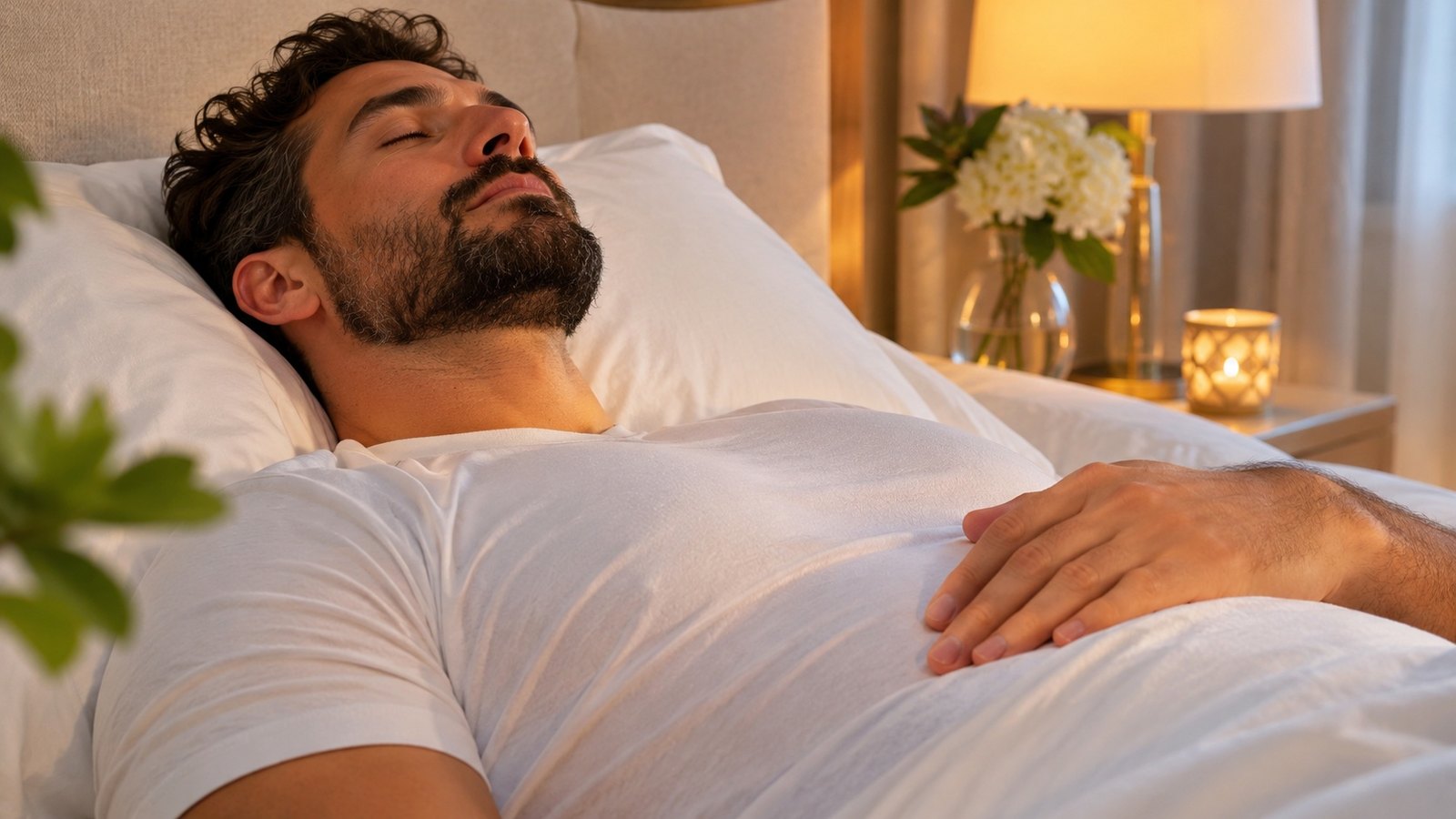
During the day you breathe mostly through your mouth, especially if you talk for hours or train hard. At night, nasal breathing is what keeps sleep stable: the nose filters, warms and humidifies the air and slows the flow, which the mouth cannot do. People who sleep with an open mouth snore more and wake up with a dry throat.
The diaphragm is the breathing muscle and it works best when the abdomen is free. Tight pajamas, belts, heavy meals after 9 pm and a mattress that sags in the lumbar zone force the breath to become short and high, that is, intercostal. The result is a breath that works harder than it should at night.
One useful exercise before sleeping: three minutes of abdominal breathing with closed eyes, inhaling through the nose and exhaling as if you were fogging a glass, without puffing the cheeks. Then let the breath return to spontaneous. The goal is not to control it all night long, but to teach it the right rhythm.
The environment helps. Air that is too dry irritates the mucous membranes and invites mouth breathing: in winter, with the heating on, bedroom humidity below 40% is a concrete problem. Our guide to humidity in the bedroom explains how to measure it and how to fix it. A window left ajar, even just ten centimeters, does more than any gadget.
Last point: the pillow. Too high bends the neck and closes the airways; too low lets the head drop back. The right height fills the gap between shoulder and ear keeping the neck in line with the spine, and it is worth adjusting it before changing anything else.
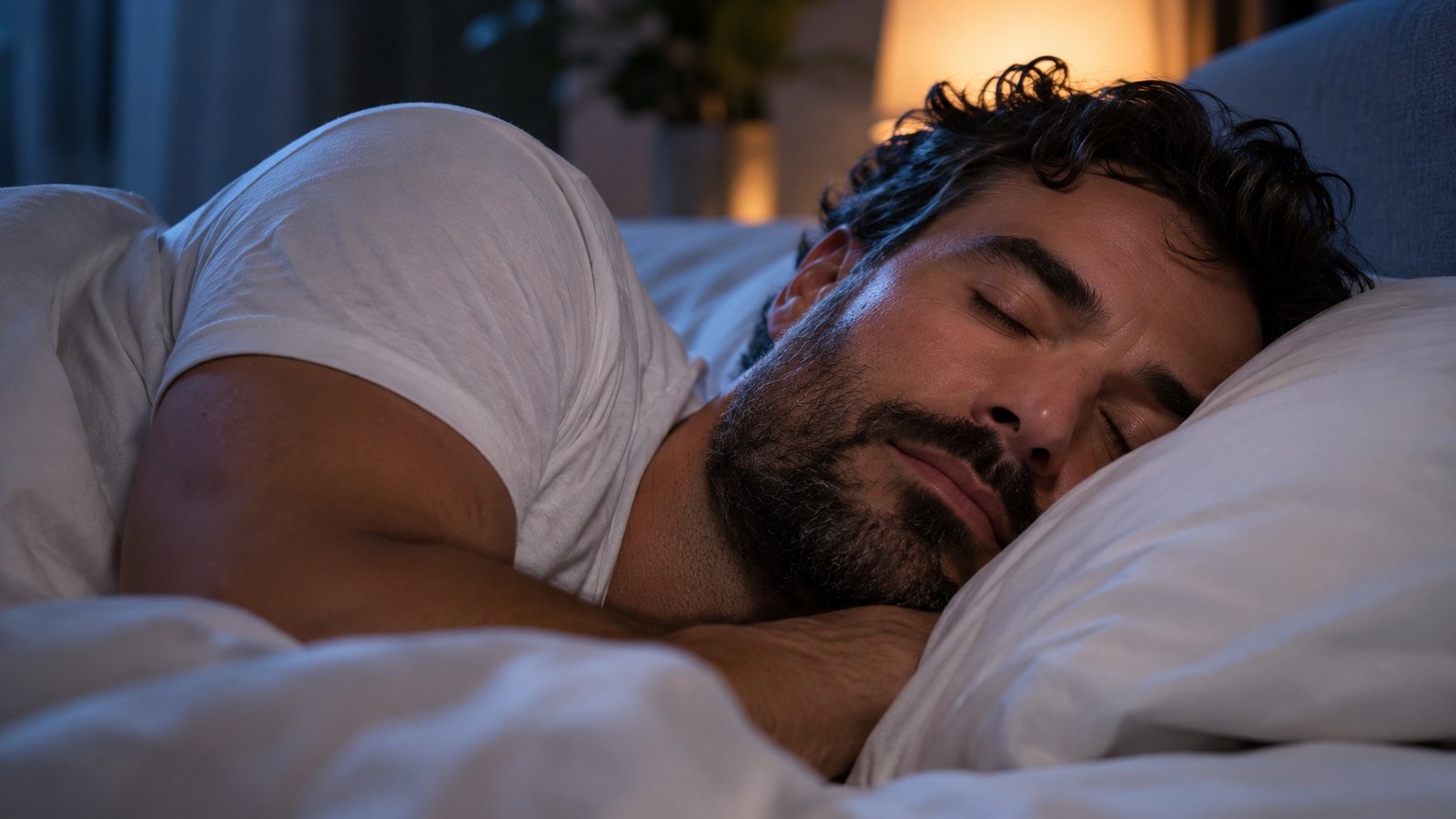
Breathing and evening anxiety: the five minute sequence
Evening anxiety has a precise schedule: it arrives when you stop moving. During the day requests keep the mind busy; in the evening, in the quiet, the to-do list finds room. Breathing does not delete the list, but it changes the volume at which you hear it repeated.
Here is a five minute sequence to do with the lights off. Minute 1: lie down and let the breath be what it is, without correcting it. Minute 2: lengthen the exhale, inhale for 4 and exhale for 7. Minute 3: add a body scan, from the feet to the forehead, noticing where you hold tension. Minute 4: return to the breath and count only the exhales, from 10 down to 1. Minute 5: drop the counting and let the body do the work.
The sequence works because it occupies working memory: counting and sensing the body leaves less room for recurring thoughts. It is the same reason why the relaxation techniques described in our guide to meditation and sleep work, with the difference that here you do not need to sit or learn anything complex.
If an insistent thought shows up during the sequence, give it an appointment: I will think about it tomorrow at 9 am. It sounds basic, but writing the thought on a piece of paper before going to bed reduces rumination awakenings. And if the tension is muscular, in the shoulders and the jaw, our guide on sleep and stress completes the picture with the evening habits to keep.
One last warning: do not turn the technique into a competition. If after ten minutes you are still awake, get up, go to another room with warm light and try again in twenty minutes. The bed must stay linked to sleep, not to the effort of sleeping.
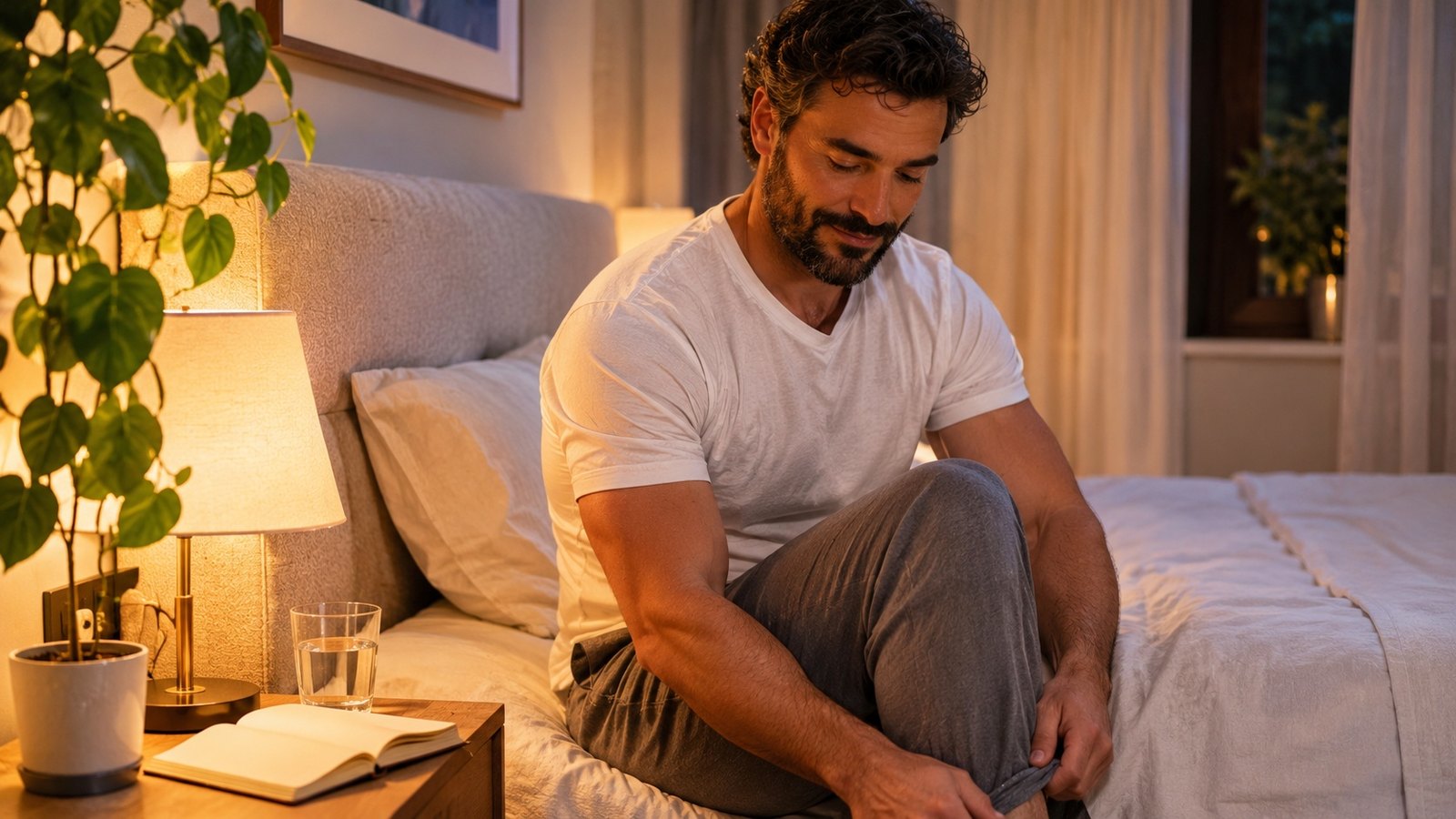
When nighttime breathing becomes a warning sign
There are breaths that no method solves. Habitual snoring, with pauses noticed by your partner and awakenings with short breath, deserves a medical check: it may be obstructive sleep apnea, a common and treatable condition that is only diagnosed with a specific examination.
Three signals to take seriously. First: you wake up tired after seven hours in bed. Second: morning headache and a dry mouth. Third: episodes of held breath reported by whoever sleeps with you. They are clues, not diagnoses: the diagnosis belongs to the doctor or the sleep centre.
While waiting for the consultation, two things genuinely help. The first is sleeping on your side: it reduces airway collapse compared to sleeping on your back. The second is keeping weight and evening alcohol under control, because both make snoring worse. Our page on the mattress for sleep apnea explains how the support position influences breathing.
Do not look for do-it-yourself remedies with medical devices sold online without a diagnosis: ventilation devices must be prescribed and calibrated. A breath that stops is not a detail to fix with a different pillow.
The mattress that helps you breathe
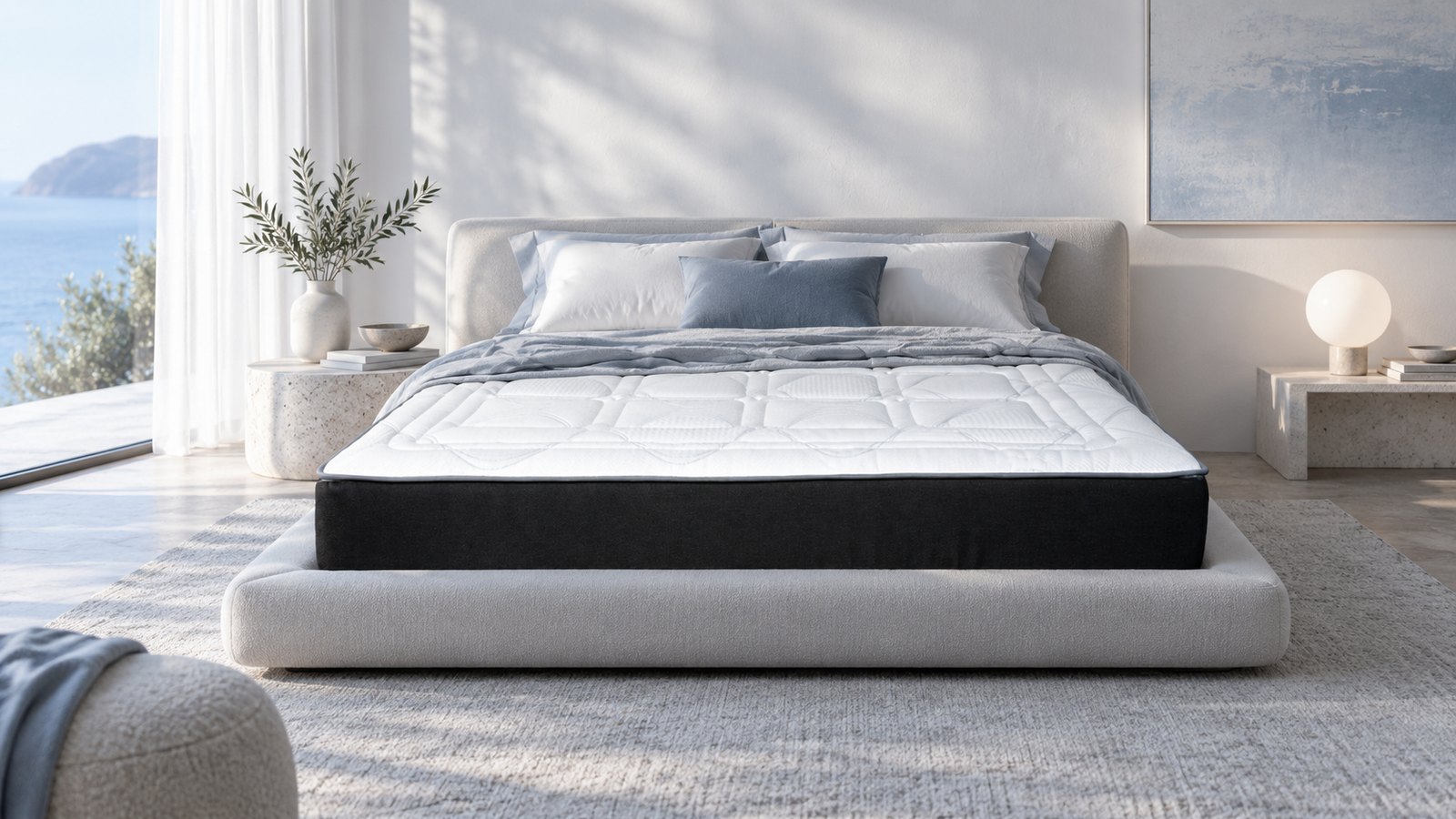
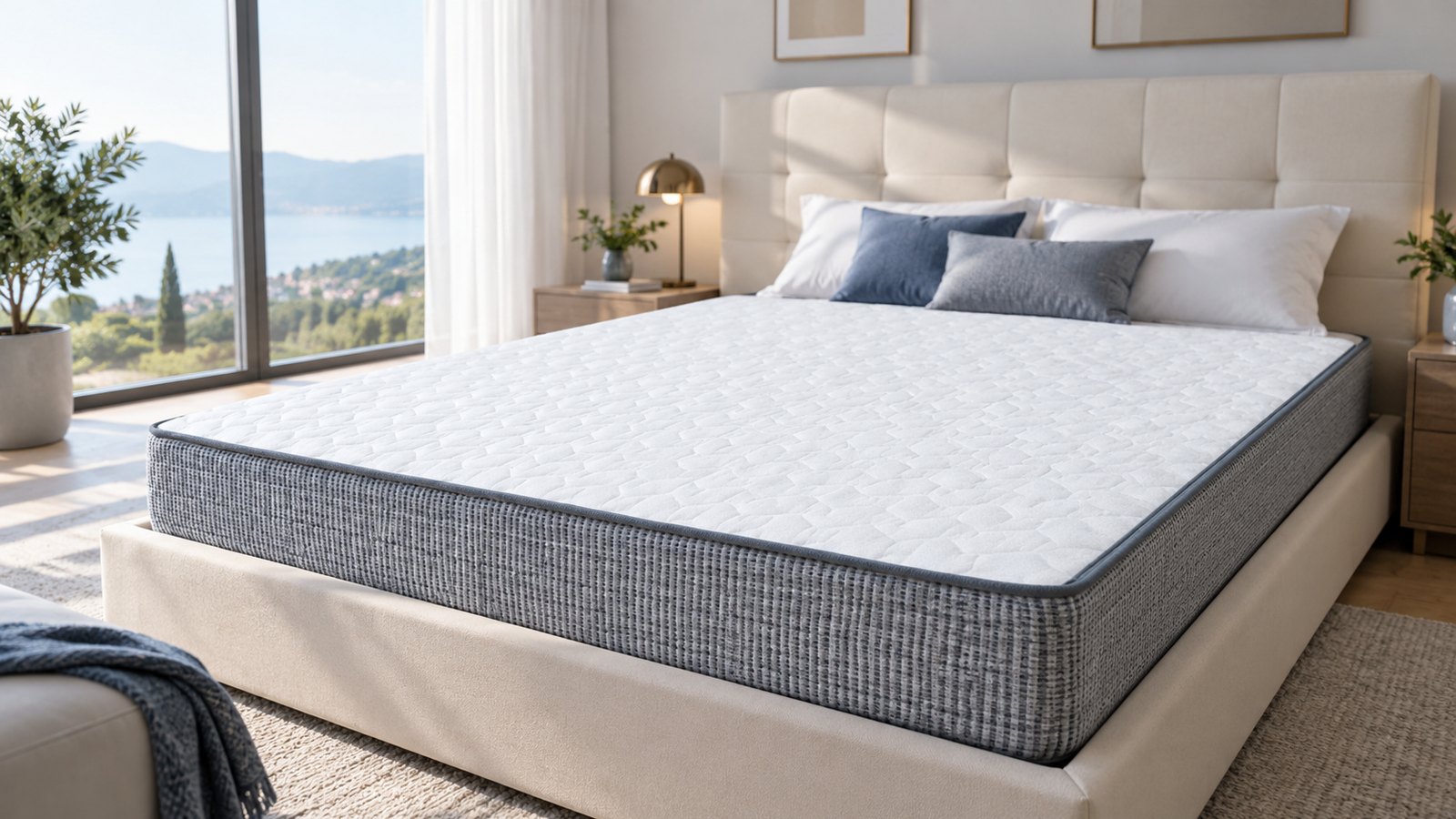
The mattress enters the picture for three reasons: posture, temperature and breathability. A surface that is too soft sinks in the pelvis zone and bends the spine: the diaphragm works on a compressed abdomen and the breath shortens. A surface that is too rigid, instead, keeps the muscles tense all night.
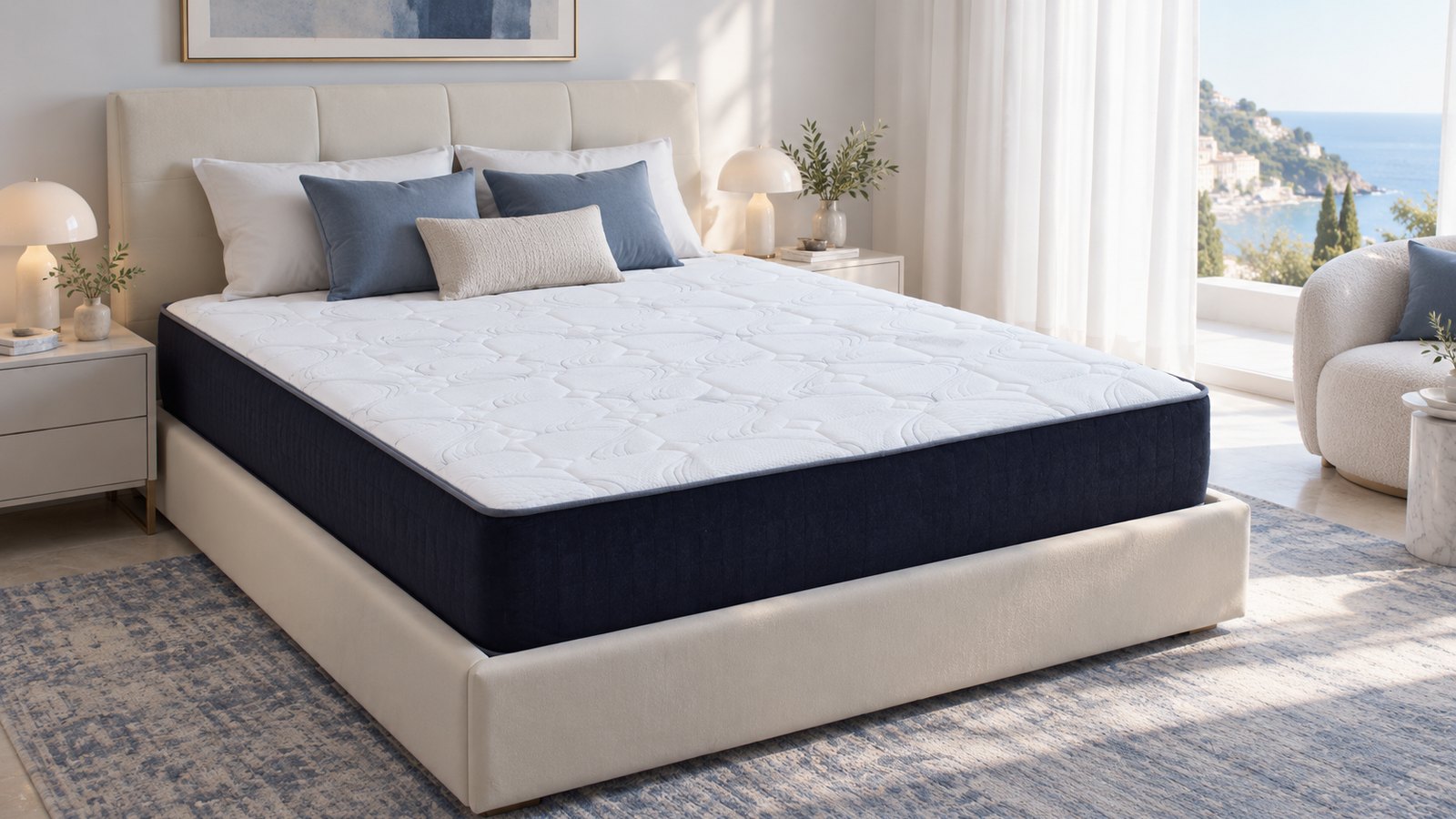
The solution is differentiated support, meaning zones with different firmness along the body: firmer under shoulders and pelvis, gentler where the body is light. This is the principle behind Luxury Relax mattresses, which combine temperature-sensitive memory foam and a high density Confortgel base, with heights from 24 to 30 centimetres depending on the model.
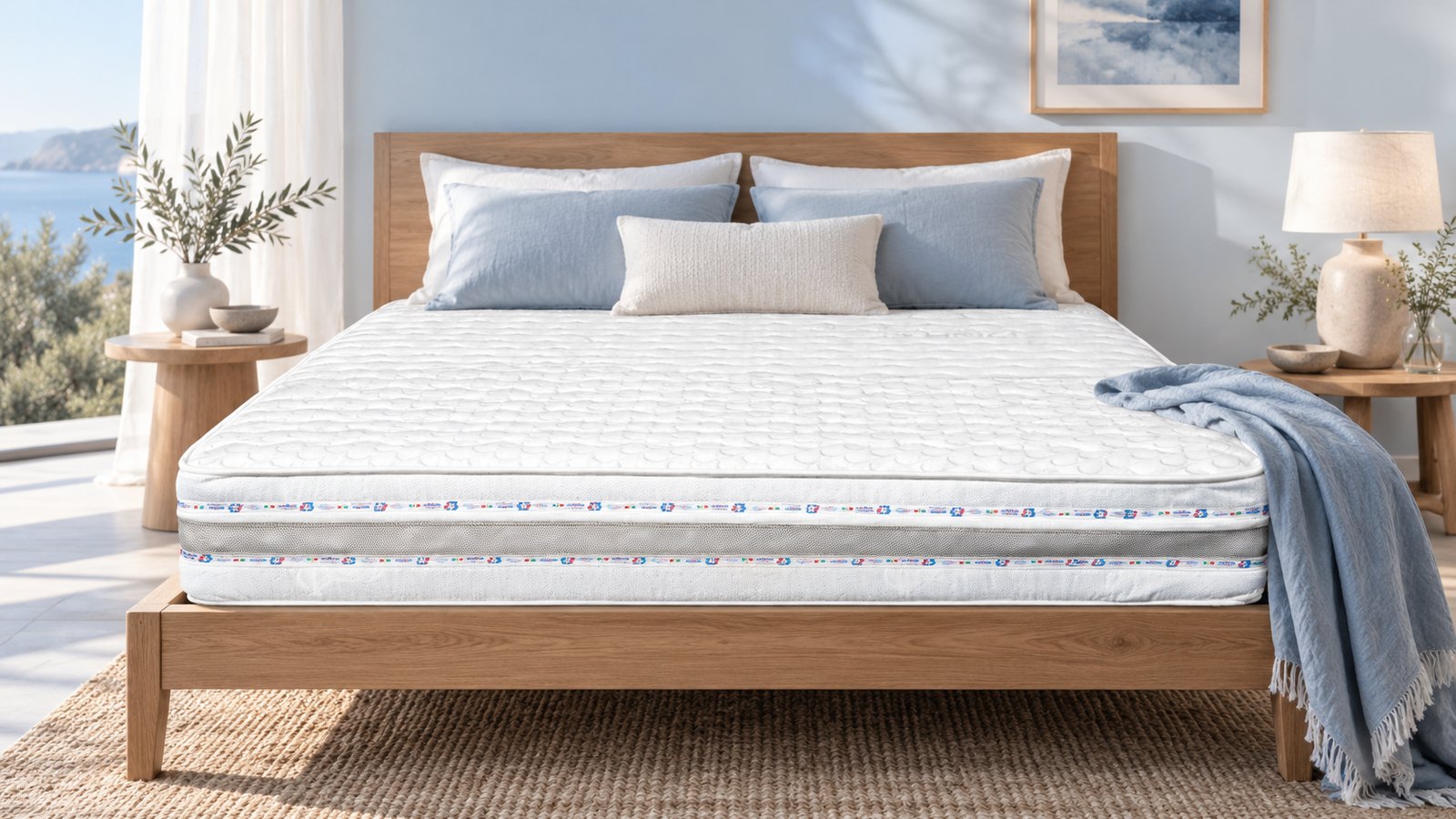
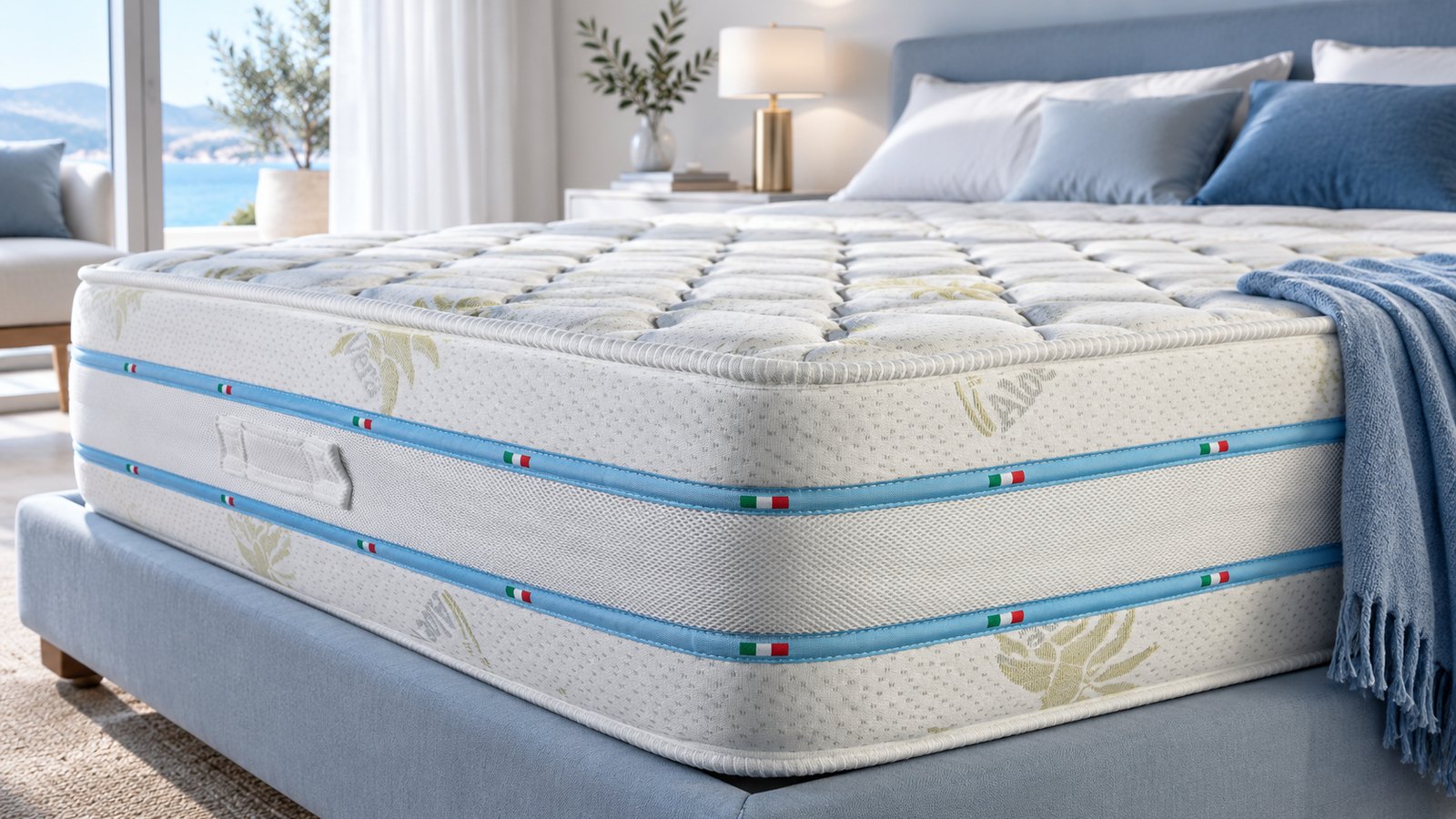
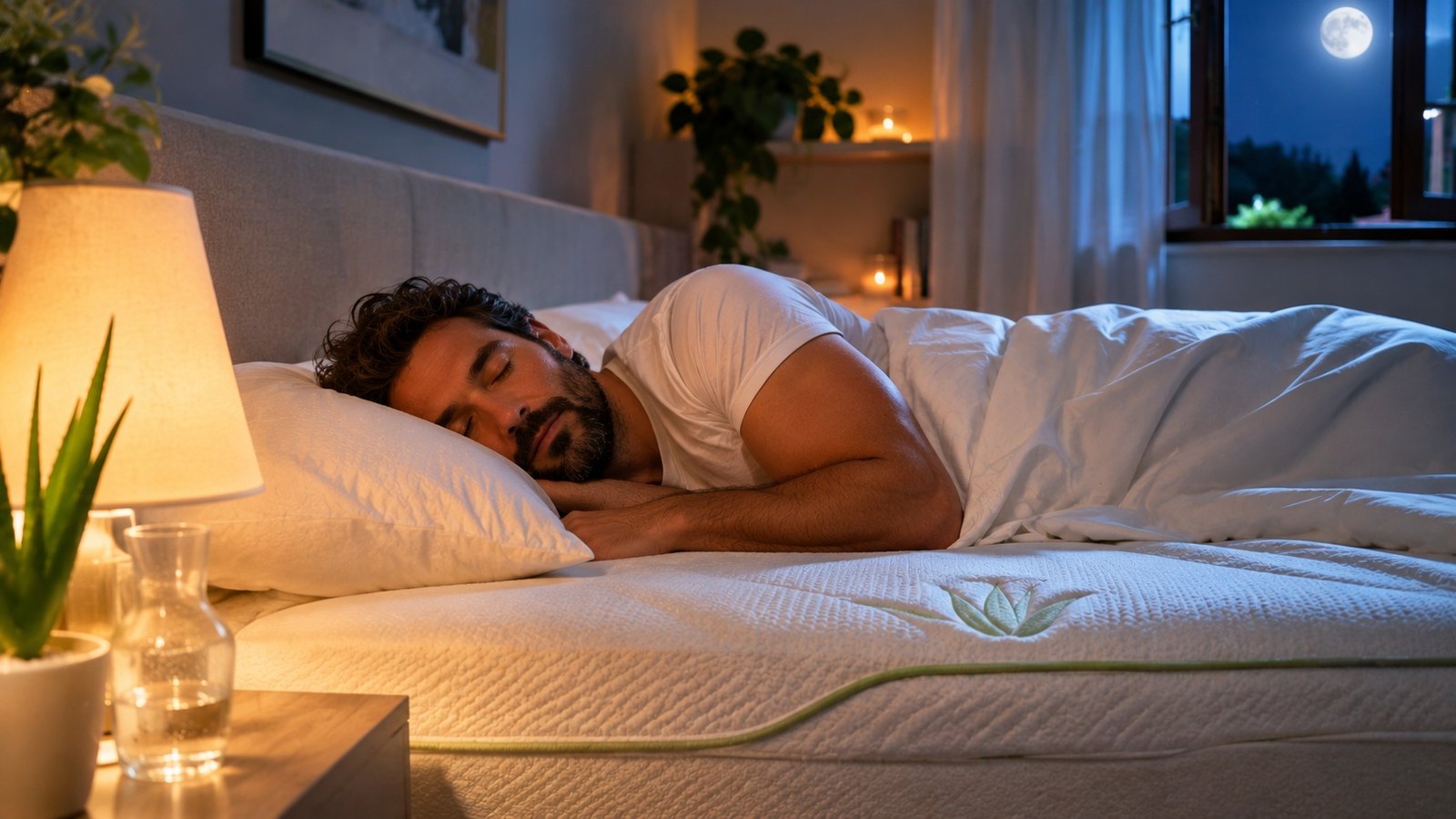
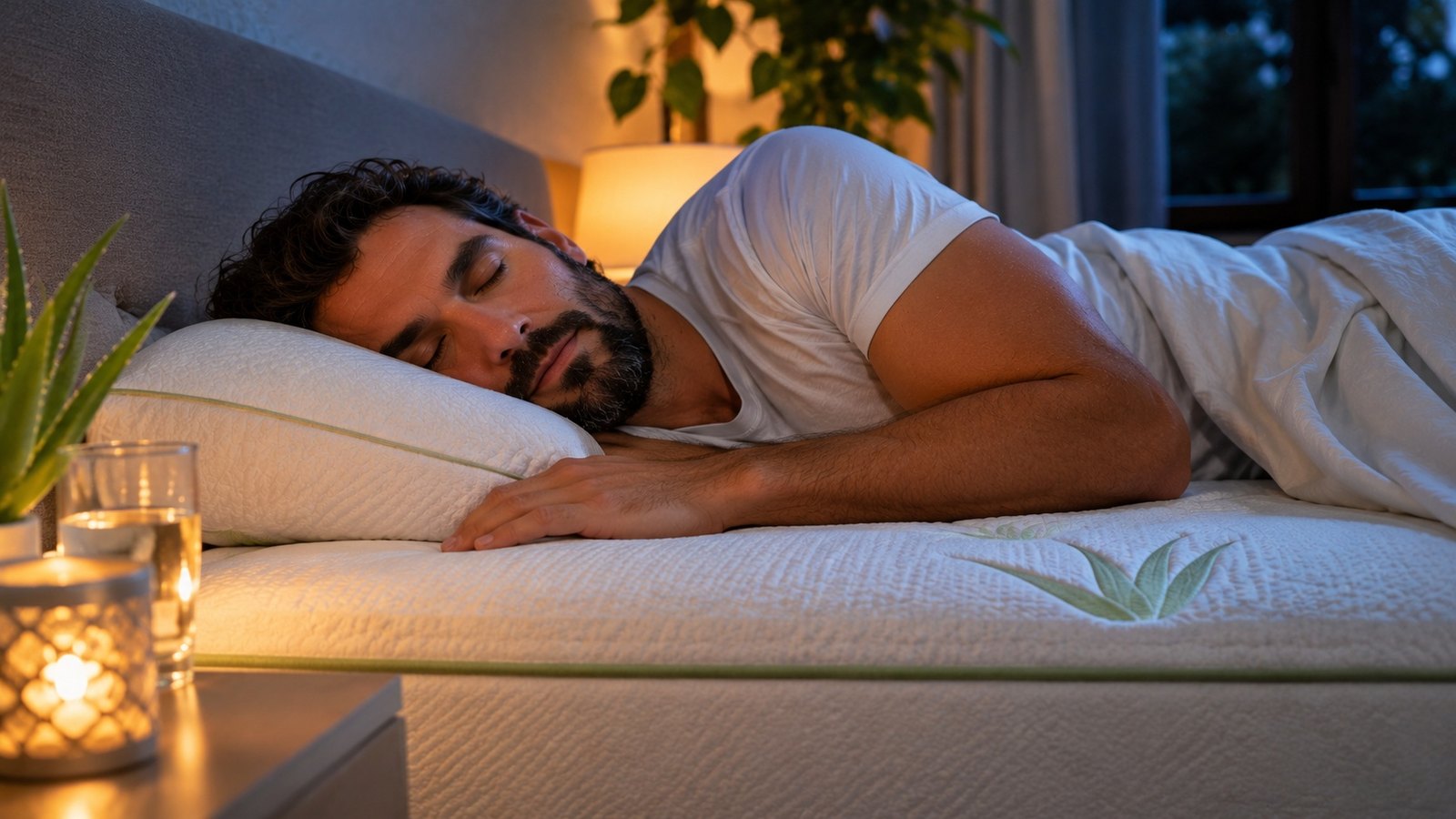
Temperature is the second factor. A mattress that traps heat forces you to turn every twenty minutes and interrupts deep breathing. The 3D breathable perimeter band, present across the range, and the washable Aloe Vera cover help keep the surface dry even on hot nights.
The third factor is durability. A mattress that after five years sags in the middle changes your posture and, as a consequence, the way you breathe. This is why the brand offers a 10 year warranty, 10 trial nights with a refund if you are not satisfied and free delivery throughout Italy, islands included, in 24 or 48 hours. Prices start at 149 euros for Venere, 179 euros for Elisir, 399 euros for Gold, 699 euros for Platinum and 990 euros for Athena.
The choice of model depends on weight, sleeping position and habits: this is why the brand offers free advice from experts, in the showroom in Via San Rocco 42 in Seregno or by phone. The contact page provides the form with a same-day reply, the toll-free number 0362 222407 and customer care 339 4797213. If you want the full picture on materials and criteria first, our mattress buying guide is the right starting point.
FAQ on breathing and sleep
How long does it take for breathing techniques to work? With the 4-7-8 technique the first effects are felt from the very first evening: the heartbeat slows and tension drops within five minutes. The stable effect, the one that shortens your falling asleep time every night, arrives after two or three weeks of daily practice. Five minutes every evening beats twenty minutes once a week.
Is it better to inhale through the nose or through the mouth to fall asleep? Through the nose. The nose filters, warms and humidifies the air and slows the flow, supporting diaphragmatic breathing. The mouth is fine only for the exhale in certain techniques, such as the 4-7-8. If you wake up with a dry throat, it is a clue that you breathe through your mouth at night: worth checking pillow, humidity and nasal congestion.
How many times a week should you practise breathing before sleeping? Every evening, even just five minutes. The body learns by repetition and slow breathing becomes an automatic sleep signal. If you skip one evening nothing happens: what counts is consistency over two or three weeks, not a single perfect session.
Can breathing techniques replace a sleeping pill? No. Breathing is a sleep hygiene method, not a drug, and it does not cure chronic insomnia. It can shorten the time it takes to fall asleep and help with evening anxiety, but if you already take medication you must not stop or change it without the advice of the doctor who prescribed it.
Does the mattress really influence nighttime breathing? Yes, mostly through posture and temperature. A surface that is too soft bends the spine and compresses the abdomen; a surface that traps heat increases movement and micro arousals. Differentiated support, like that of Luxury Relax mattresses, keeps the spine aligned and lets the diaphragm work without obstacles.
How do I know if my snoring is a medical problem? If snoring is habitual, if there are breathing pauses reported by your partner, if you wake up with a headache or tired despite seven hours in bed, talk to your doctor. These are clues of possible obstructive sleep apnea, which is diagnosed with a specific examination and can be treated effectively once identified.
Ideal Mattress Configurator in 3 Clicks
Answer 3 questions and see which Luxury Relax model fits your sleep best.
Step 1 of 3
Images from this guide
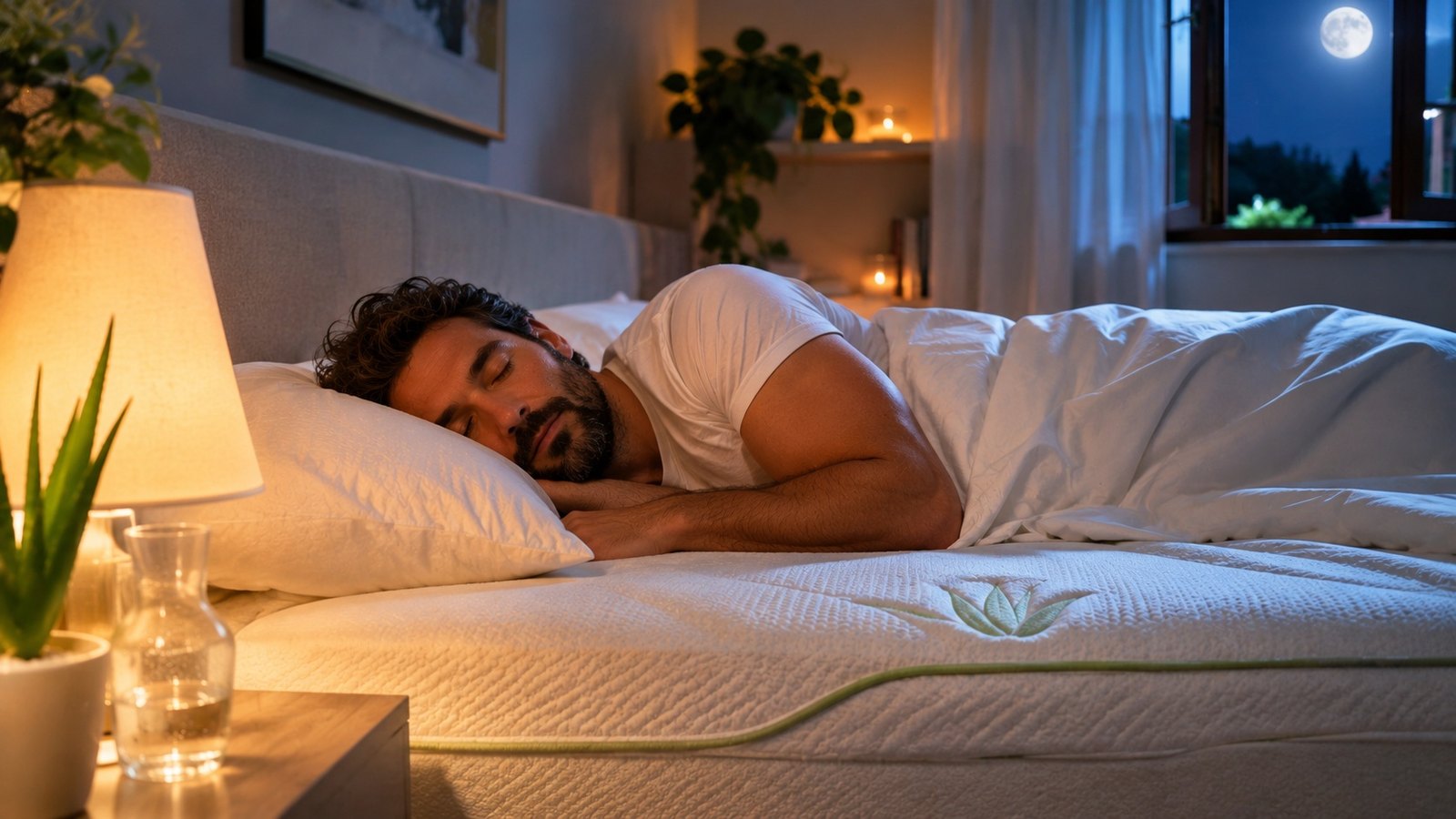
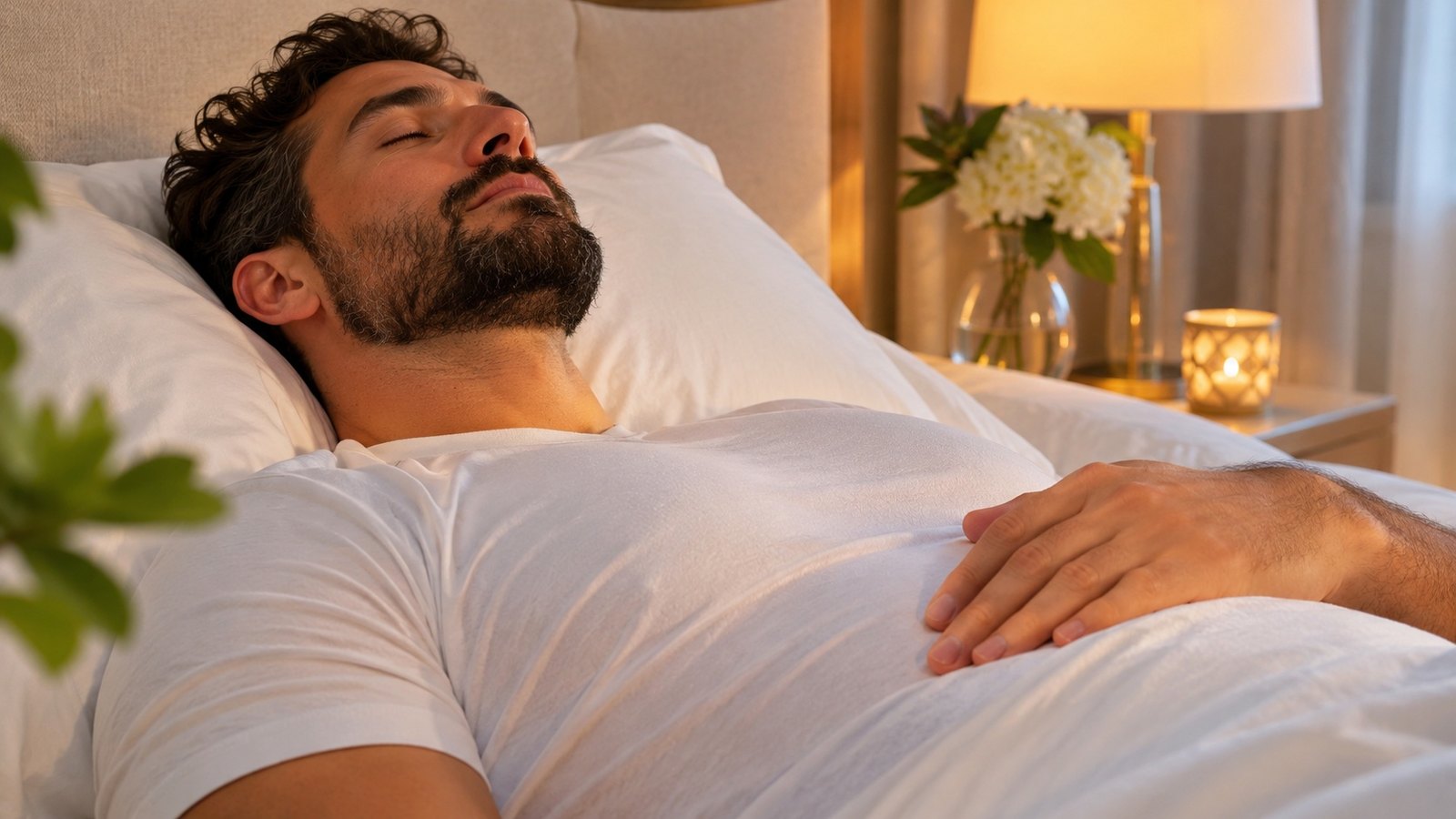
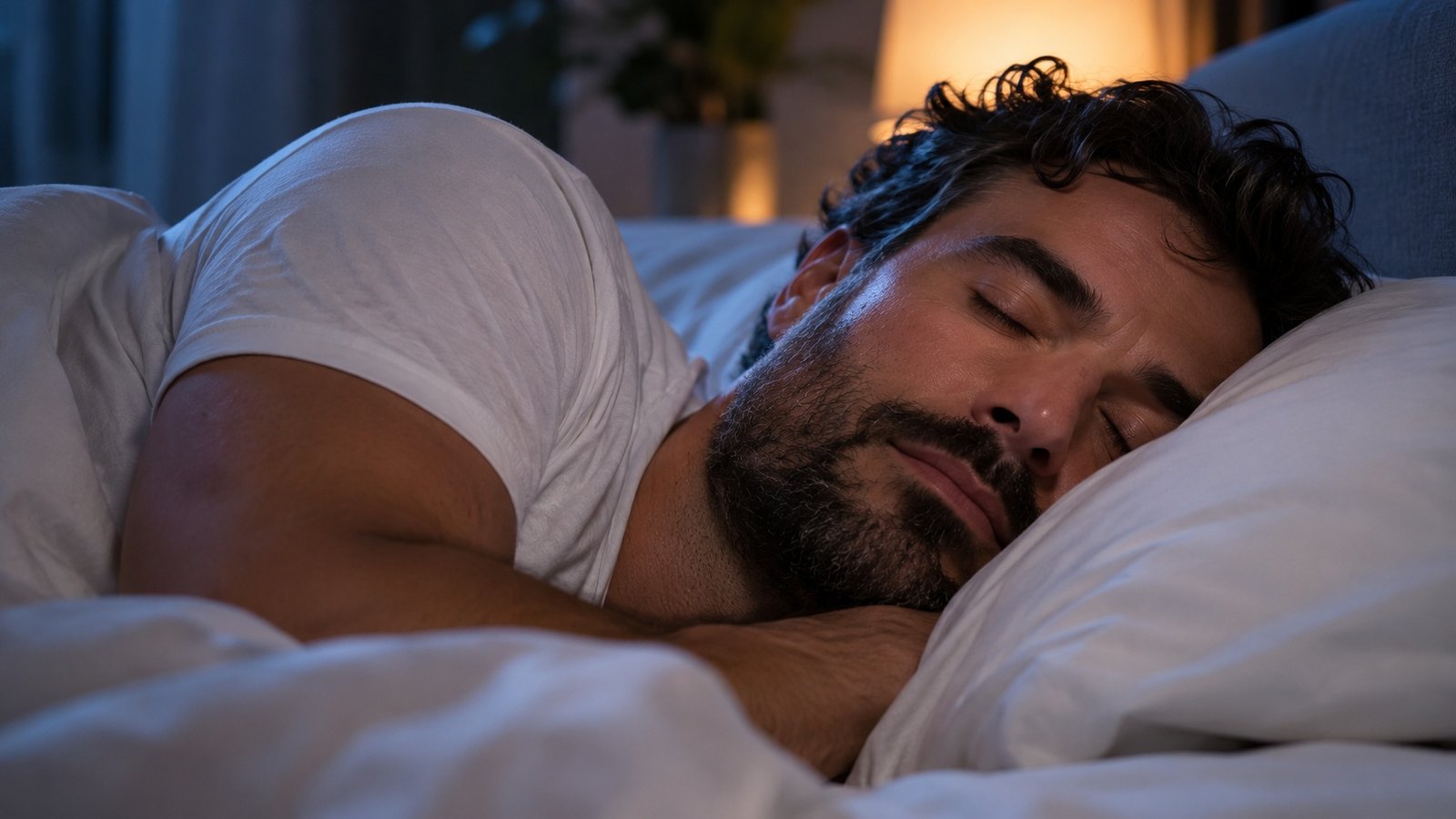
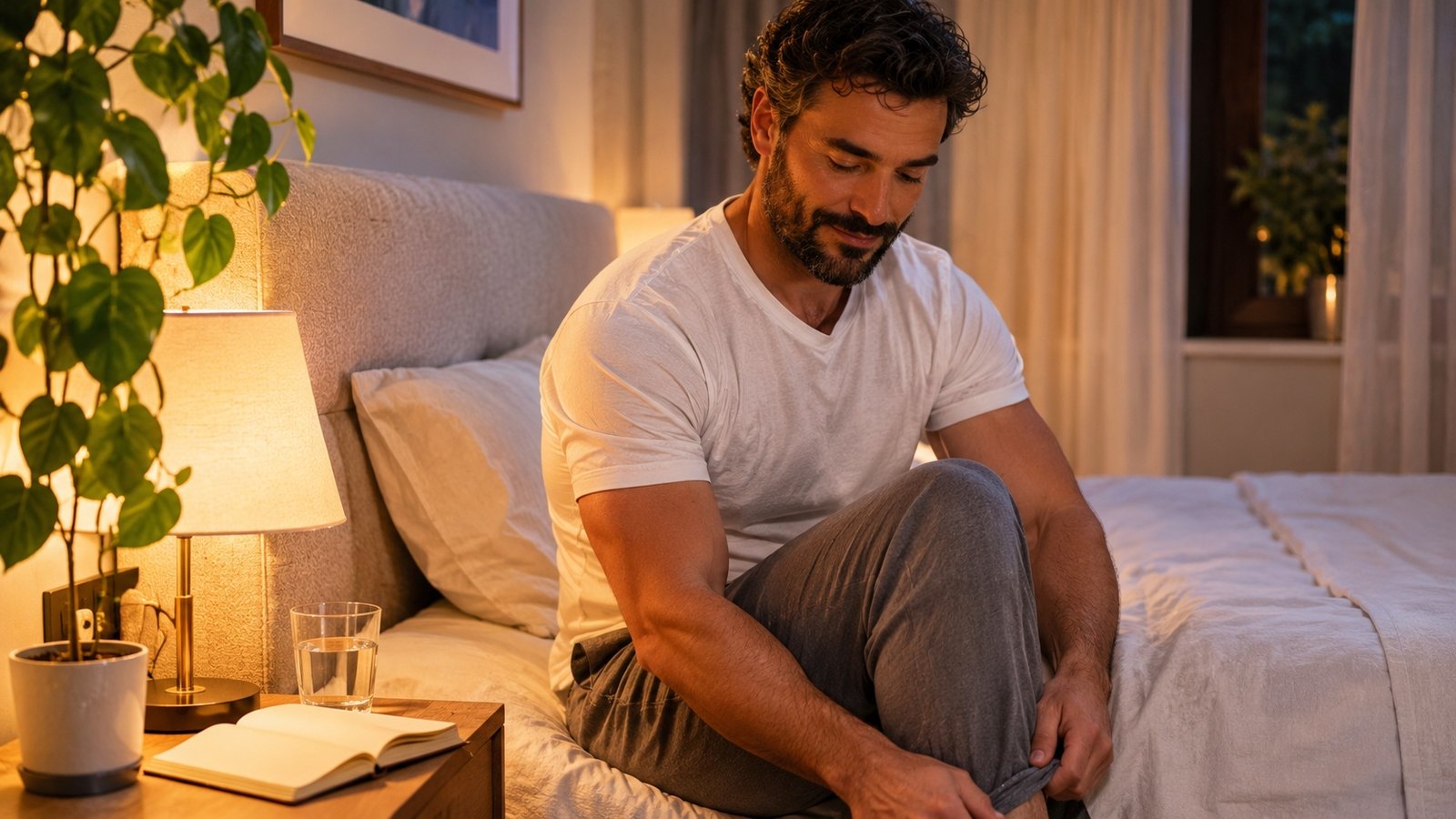
How long does it take for breathing techniques to work?
With the 4-7-8 technique the first effects are felt from the very first evening: the heartbeat slows and tension drops within five minutes. The stable effect, the one that shortens your falling asleep time every night, arrives after two or three weeks of daily practice. Five minutes every evening beats twenty minutes once a week.
Is it better to inhale through the nose or through the mouth to fall asleep?
Through the nose. The nose filters, warms and humidifies the air and slows the flow, supporting diaphragmatic breathing. The mouth is fine only for the exhale in certain techniques, such as the 4-7-8. If you wake up with a dry throat, it is a clue that you breathe through your mouth at night: worth checking pillow, humidity and nasal congestion.
How many times a week should you practise breathing before sleeping?
Every evening, even just five minutes. The body learns by repetition and slow breathing becomes an automatic sleep signal. If you skip one evening nothing happens: what counts is consistency over two or three weeks, not a single perfect session.
Can breathing techniques replace a sleeping pill?
No. Breathing is a sleep hygiene method, not a drug, and it does not cure chronic insomnia. It can shorten the time it takes to fall asleep and help with evening anxiety, but if you already take medication you must not stop or change it without the advice of the doctor who prescribed it.
Does the mattress really influence nighttime breathing?
Yes, mostly through posture and temperature. A surface that is too soft bends the spine and compresses the abdomen; a surface that traps heat increases movement and micro arousals. Differentiated support, like that of Luxury Relax mattresses, keeps the spine aligned and lets the diaphragm work without obstacles.
How do I know if my snoring is a medical problem?
If snoring is habitual, if there are breathing pauses reported by your partner, if you wake up with a headache or tired despite seven hours in bed, talk to your doctor. These are clues of possible obstructive sleep apnea, which is diagnosed with a specific examination and can be treated effectively once identified.
Request your free consultation
Fill in the form: a Luxury Relax expert will get back to you with the proposal that suits you best.
What Luxury Relax owners say
On my dad's advice, already a customer, I went to Luxury Relax to buy a mattress. Very comfortable and ergonomic products.
Quality products, helpful and knowledgeable staff. Highly recommended to anyone looking for a real mattress, not a brand name.
I got rid of the back pain that had followed me for years. The right mattress changes your days.
Come visit us
Luxury Relax Materassi
Via San Rocco, 42 - 20831 Seregno (Monza e della Brianza), Italia0362 222407 · info@luxuryrelax.it · WhatsApp 339 4797213
Open in Google MapsDirect Italy Logistics & Seregno Showroom
Direct delivery and support in Seregno (MB) & all of Italy
- Delivery window: Free 24/48h shipping across Italy
- Included cover: 10-night home trial + 10-year Luxury Relax warranty
- Showroom address: Luxury Relax Materassi, Via San Rocco, 42 - 20831 Seregno (Monza e della Brianza)