Sleep and stress: how to relax before going to bed
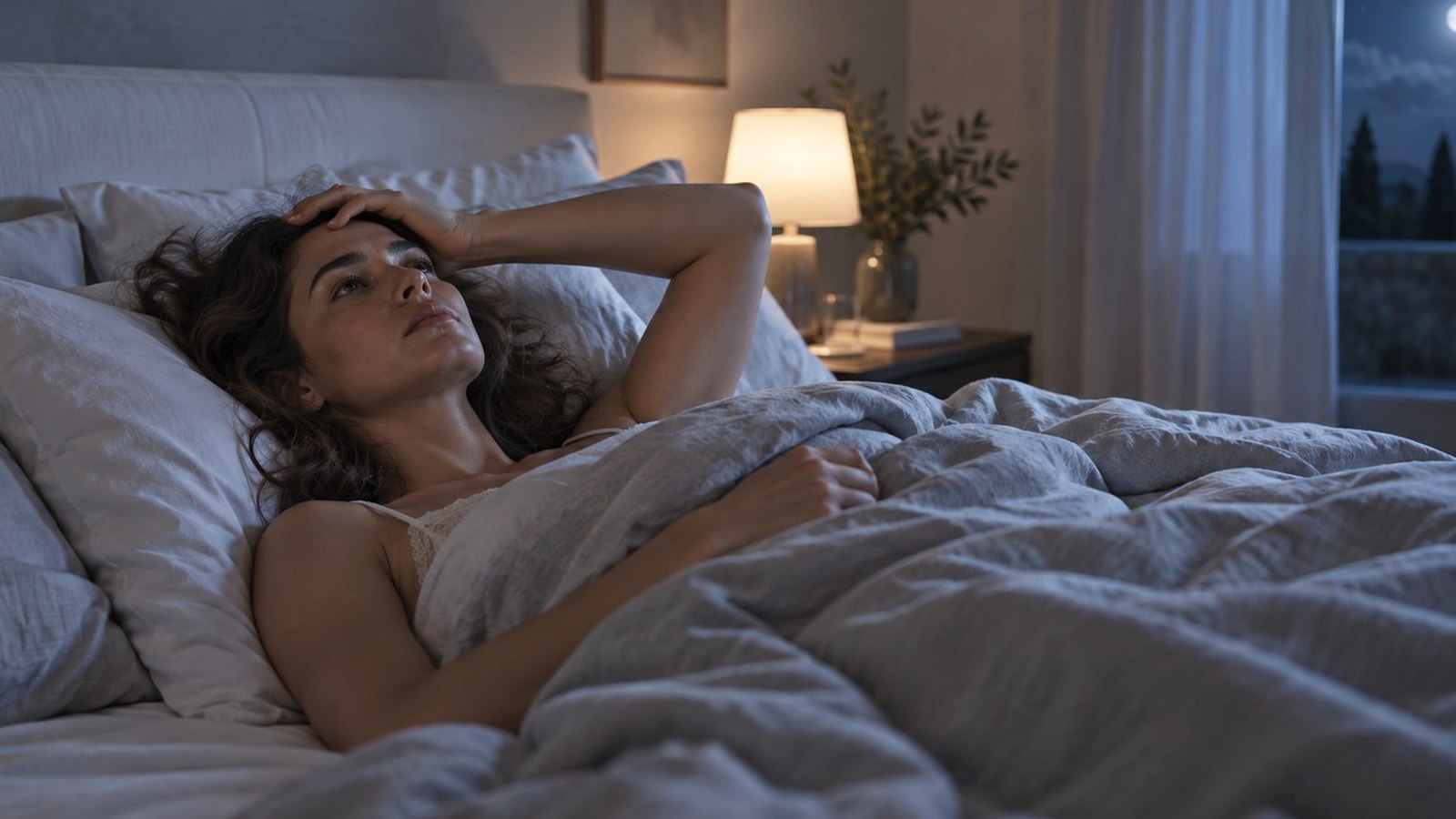
Evening stress has a precise address: your head on the pillow. The body is tired, the muscles ask for rest, and yet the thoughts keep racing at the speed of eight in the evening. The night breaks into fragments, awakenings arrive between three and five, and the next morning weighs more than the day that just ended.
Stress is not only a mental matter. It keeps your heart rate high, your muscles tense and your body temperature higher than it needs to be for sleep to start. Working only on thoughts, while ignoring the body and the bedroom, leaves half of the problem on the nightstand.
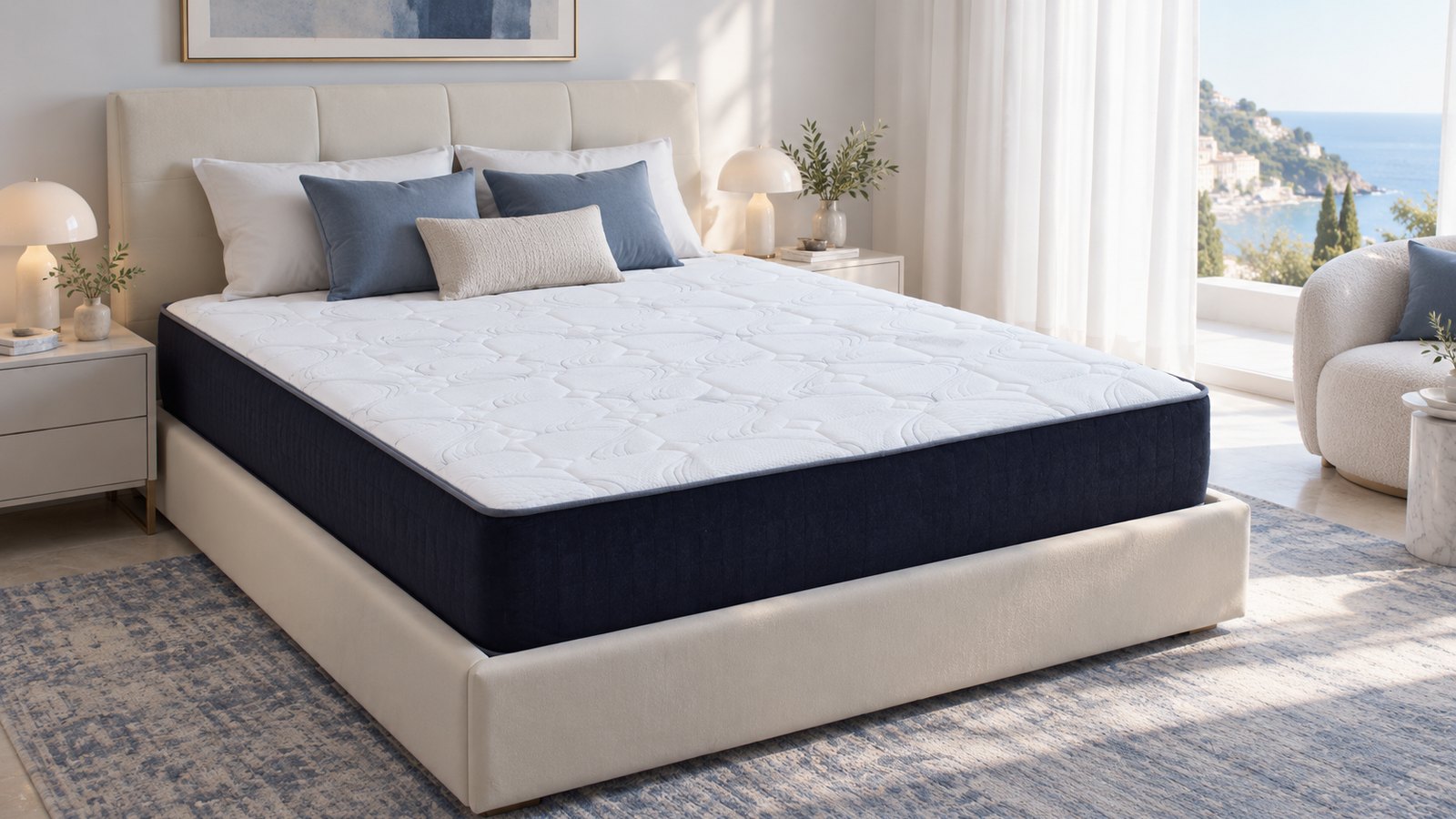
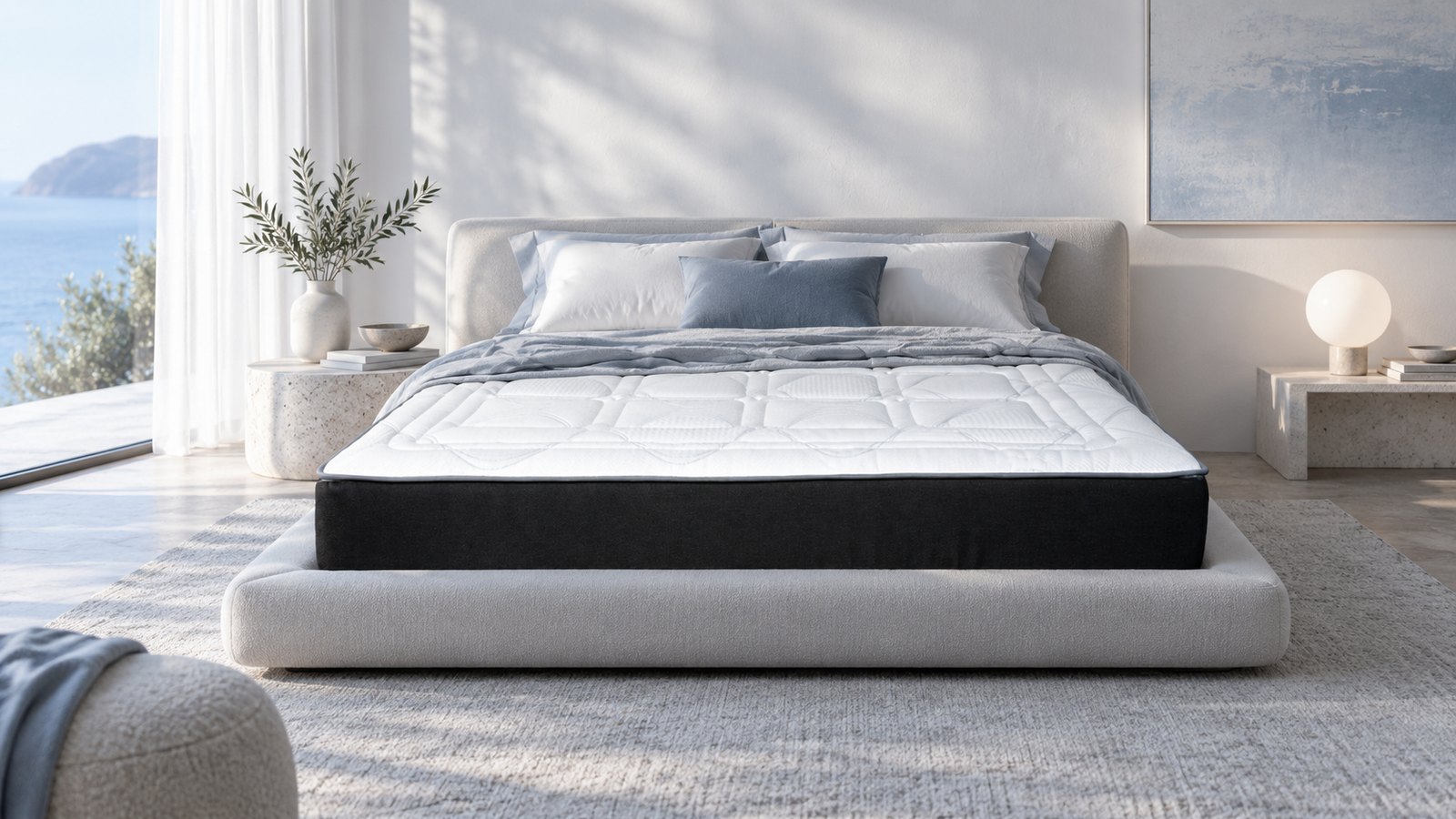
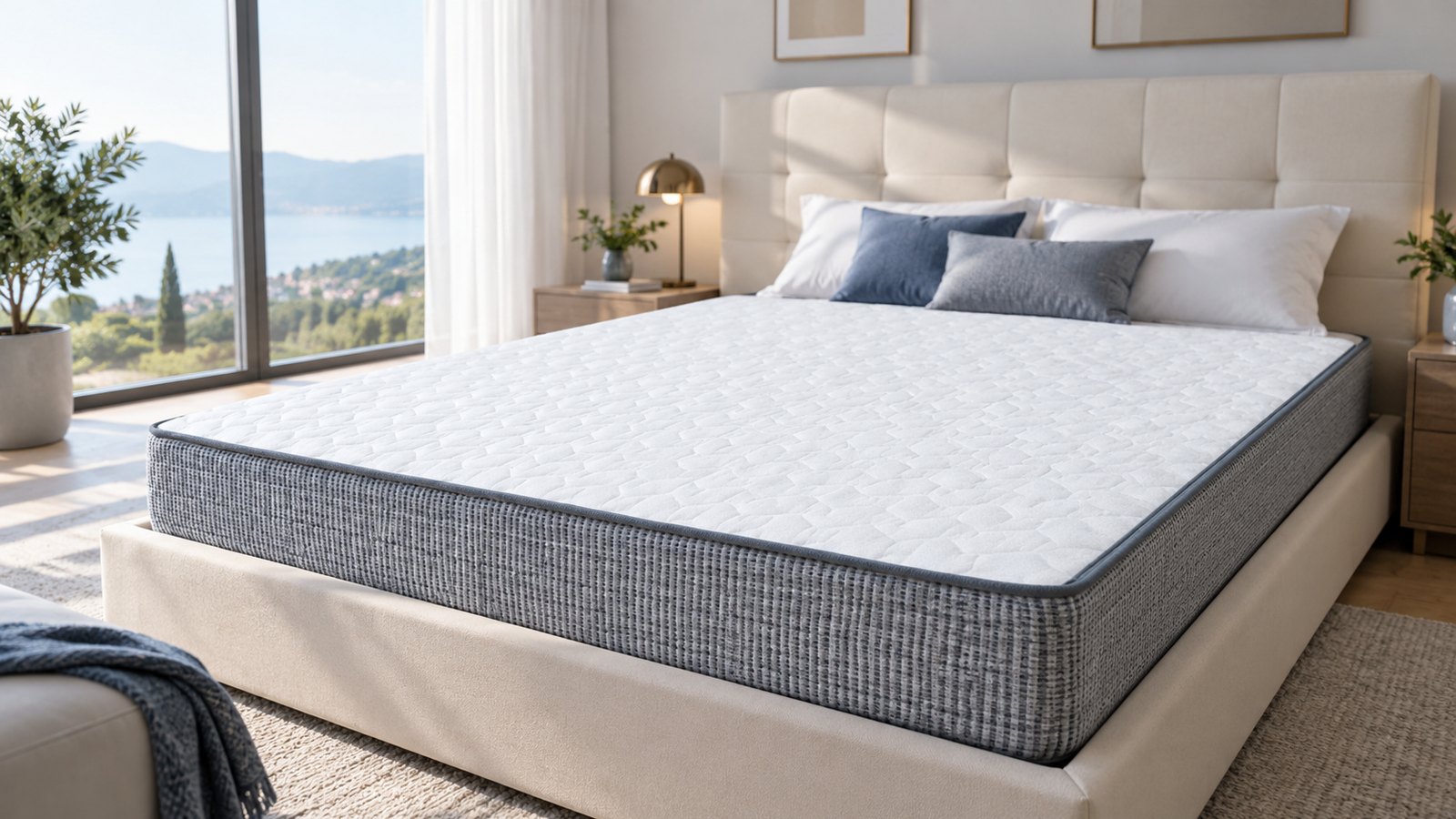
The surface you sleep on stays in play for seven or eight hours straight and shapes every attempt at relaxing. The Luxury Relax full review describes a mattress with temperature-sensitive memory foam, a high-density Confortgel base and differentiated support: three elements that help the body let go when the mind cannot do it alone.
Why stress breaks your sleep
When the day has been full of commitments, the nervous system stays alert even in bed. Cortisol, the hormone that keeps you awake during working hours, does not switch off like a light: it drops slowly, and if the evening was hectic it drops later than expected. The result is a window of one or two hours where the body is in bed and the mind is still at the office.
The second mechanism is temperature. To fall asleep the body must release heat, mostly from the chest area. Stress raises thermoregulation and reduces useful night-time perspiration: you turn in bed, uncover one shoulder, pull the cover back, and sleep does not arrive.
The third mechanism is sleep debt. Someone who sleeps six hours from Monday to Friday and recovers at the weekend shifts the body clock by two hours without recovering the lost deep sleep. The next week starts tired and with the feeling that no night has really closed.
The fourth mechanism is fragmentation. A night under stress is not necessarily a short night: it is a night full of micro-awakenings you do not remember in the morning. Deep sleep is lost in the first hours, the phase the body uses to recover. The sleep quality guide explains how to measure this cycle structure, not just total hours.
Anyone sleeping on a mattress that does not support well feels all of this amplified. A surface that is too soft leaves the shoulders sunk and the back muscles working all night; one that is too firm keeps the pelvis higher than the spine. With stress already in the body, the wrong posture becomes the last straw.
The last hour of the day
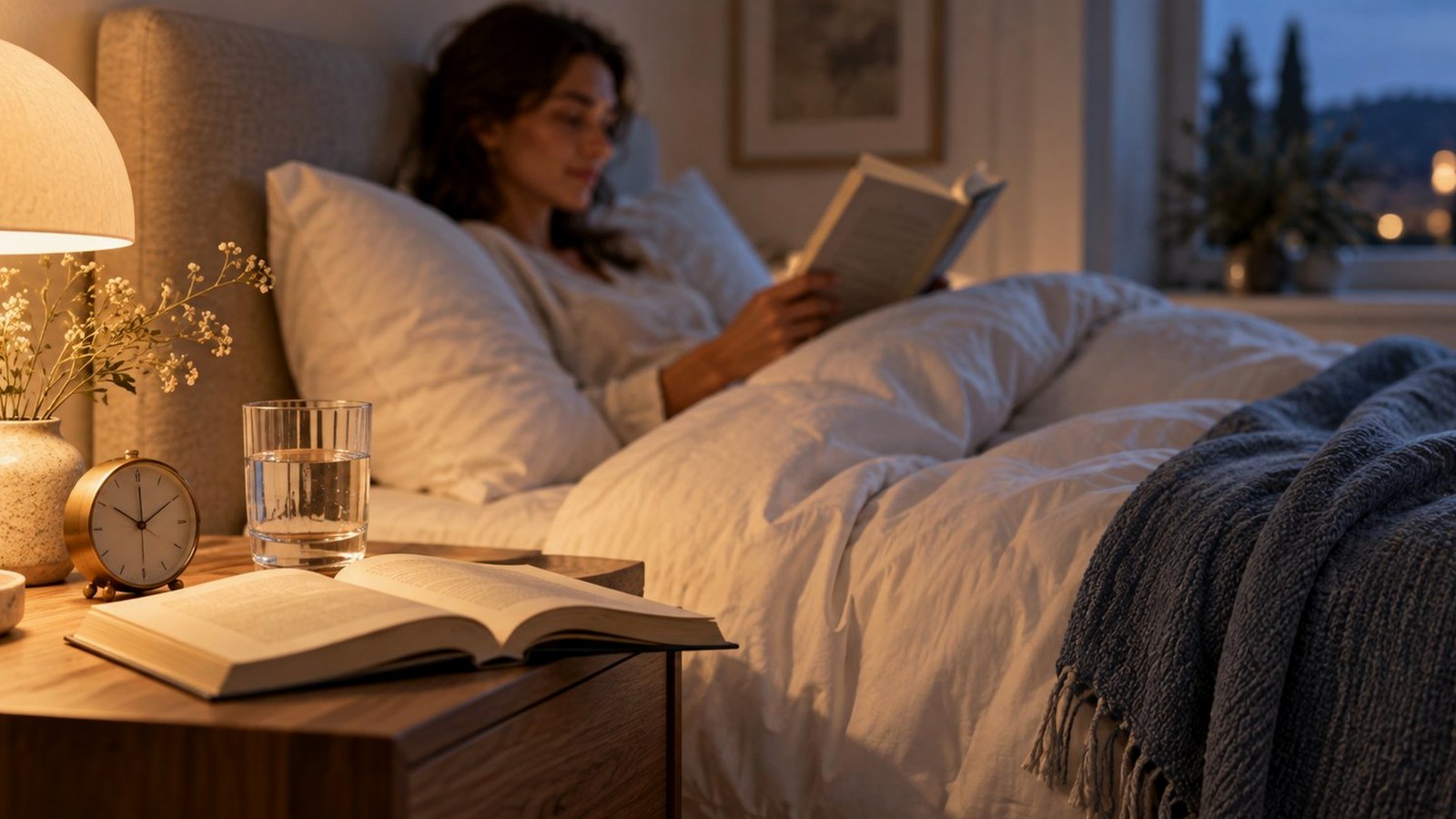
The shift from day to night is prepared sixty minutes before lying down, not when the light goes out. In that hour the body expects three consistent signals: less light, fewer stimuli, fewer decisions. If you reach the bed having answered ten messages and checked tomorrow's calendar, the brain receives the opposite message.
Light is the most powerful signal. A bedside lamp with warm light, around 2700 kelvin, tells the body the day is over. The cold ceiling light, the one left on with the kitchen open onto the living room, says the day continues. One low lamp is enough to change the tone of the whole room.
Consistency of timing matters as much as the quality of the routine. Going to bed at the same hour even on free days keeps the cortisol rhythm stable: the body learns when to start cooling down and prepares sleepiness without being asked.
The second signal is mental closing. A paper notebook and a pen are enough: writing down the three things to do tomorrow and closing the notebook works better than twenty minutes of second thoughts. A thought returns when it fears being forgotten; once written, it waits.
The third signal is room temperature. Eighteen or nineteen degrees is the range in which most people fall asleep without blanket battles. Below sixteen the body defends its heat and stiffens; above twenty-two sleep becomes fragmented. These numbers hold in winter as in summer, with lighter or warmer sheets doing the fine tuning.
Breathing and muscle relaxation
When thoughts spin, getting around them is almost impossible. Working on the body is more direct: slow breathing and muscle relaxation lower tension even when the mind does not cooperate.
The simplest technique is counted breathing. Inhale through the nose for four seconds, hold for seven, exhale through the mouth for eight. Three or four cycles are enough to feel a change in the rhythm of the heartbeat. The goal is not a perfect state: the goal is to interrupt the spiral of fast breathing.
Progressive muscle relaxation works point by point. Start from the feet: tense the muscles for five seconds, release, move up to the legs, then the abdomen, the shoulders, the hands, the jaw. The jaw is where most people hold the most tension without knowing it: ten seconds of work on that area change how the face feels on the pillow.
These practices work better when the bed is ready to receive them. On a mattress that answers the body weight point by point, muscle relaxation has a visible effect: the shoulders open, the pelvis settles, the spine stays aligned. The temperature-sensitive memory foam of Luxury Relax mattresses adapts to body heat and lightens pressure points exactly in this phase; the high-density Confortgel base prevents the sinking that reactivates tension after ten minutes. A well chosen mattress for insomnia is a concrete ally of this part of the evening.

There is one more signal worth adding to this list: the sound of your own routine. When the same three steps repeat every night, the body starts to prepare for sleep before the steps are finished. Pavlov's lesson works in the bedroom too: the sequence becomes the trigger.
Bedroom, bed and comfort: where tension is released
The bedroom environment decides how long it takes to fall asleep, even with a perfect routine. Three variables matter more than all the others: darkness, quiet and support.
For darkness, total blackness is not required: what matters is that no light source hits the eyes directly. A bright digital clock, the led of a socket, the reflection of a street lamp through the shutter: small points of light keep the brain listening. A blackout curtain that fits the windowsill is worth more than any supplement.
Quiet is relative: many people sleep well with constant noise and badly with intermittent noise. A fan on low speed, or the sound of the city filtered through a closed window, evens out the sound and covers the sudden footsteps from the floor above.
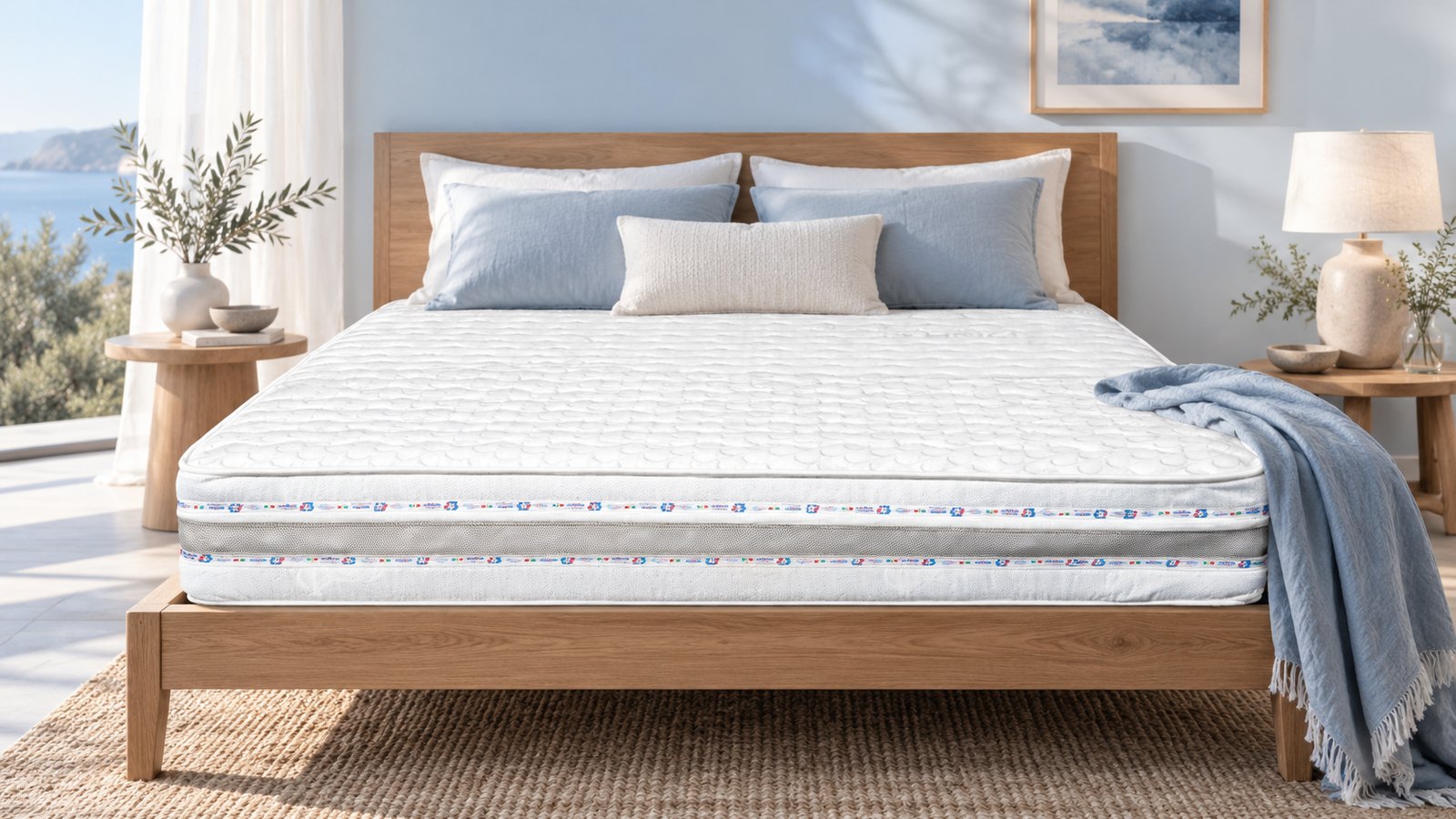
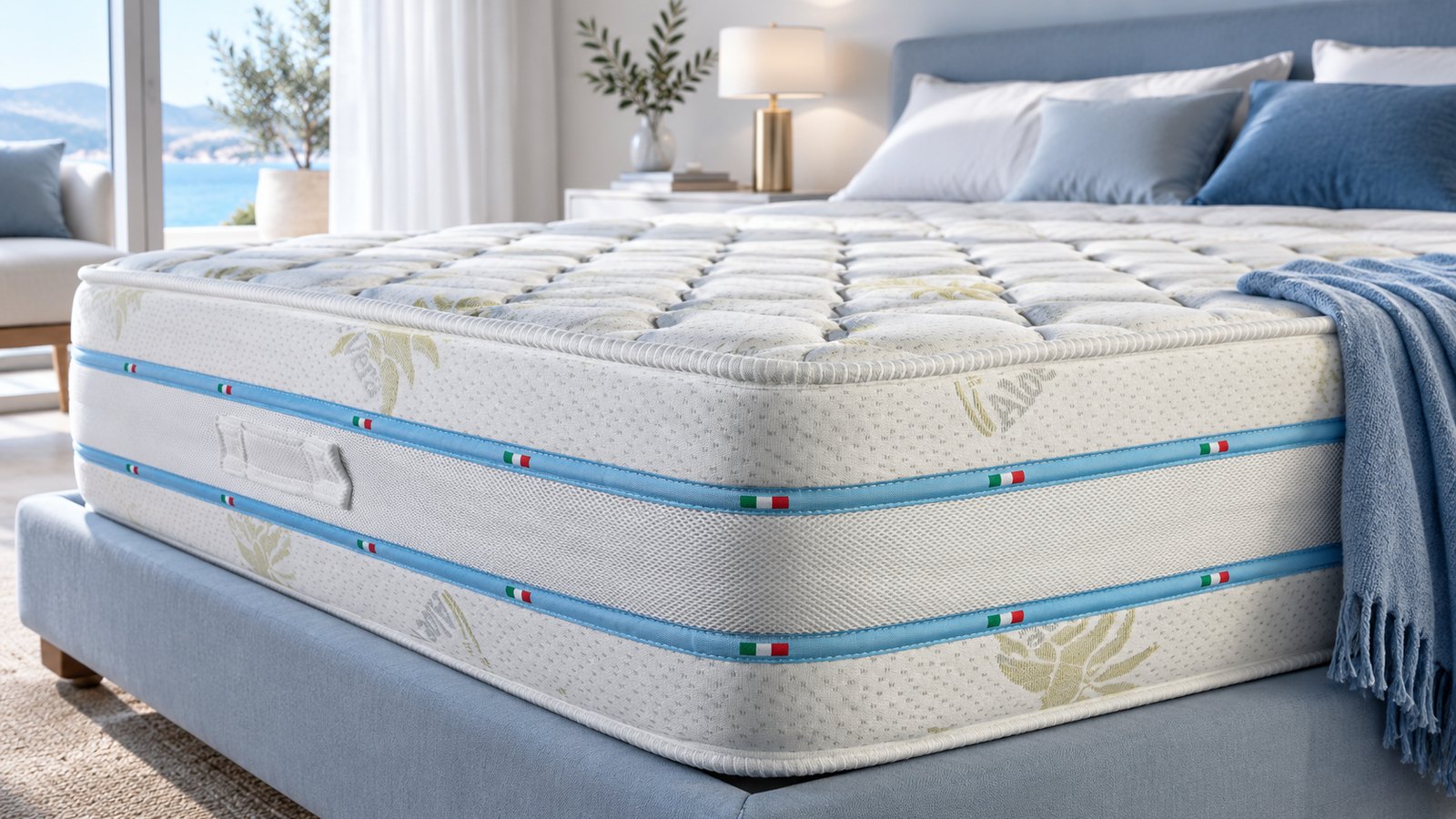
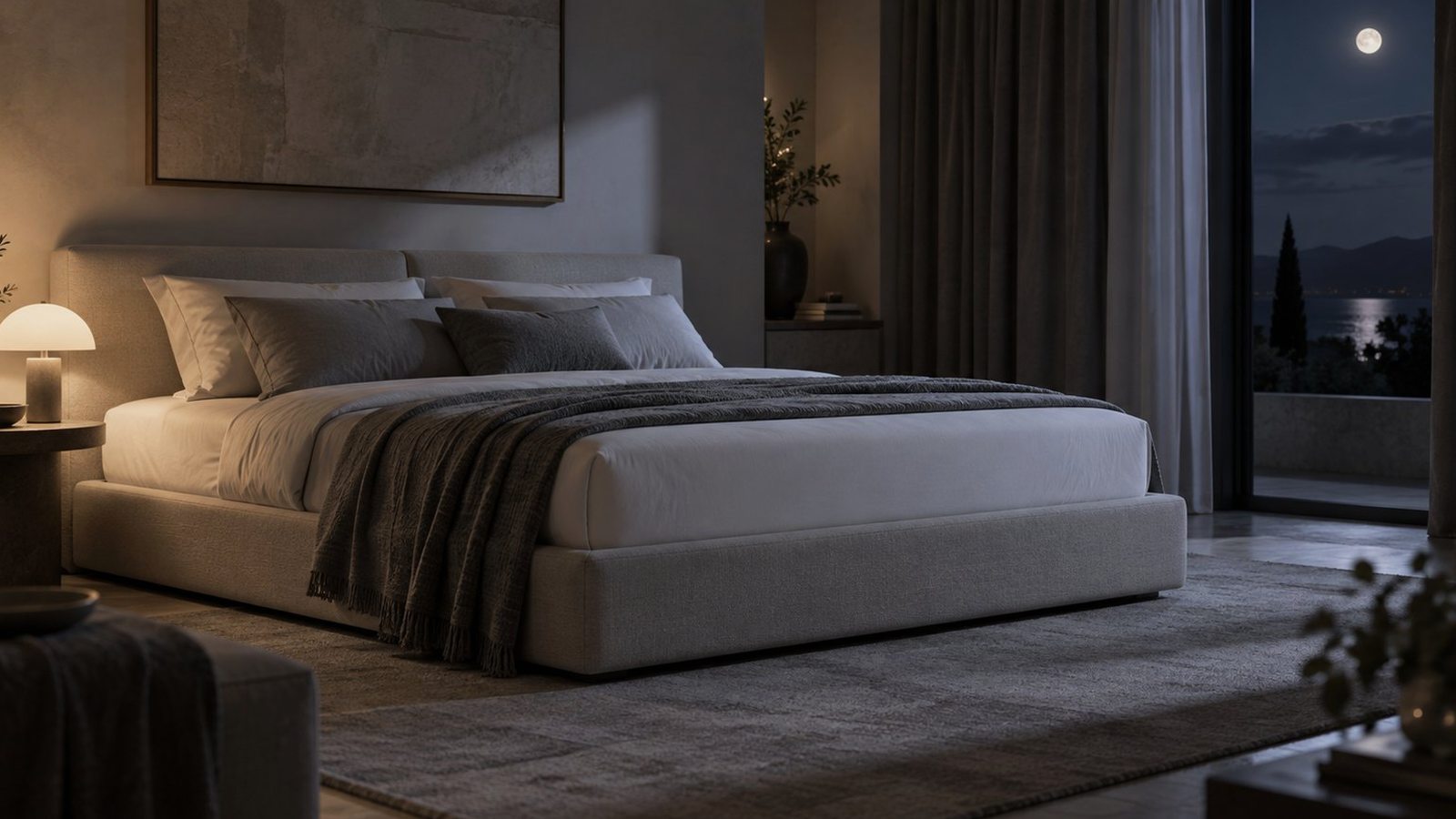
Support is the variable you spend the most hours on. A mattress at the right height, between 24 and 30 centimetres depending on the model, with a washable Aloe Vera cover and a 3D breathable perimeter band, keeps the body at a steady temperature all night. Differentiated support holds head, shoulders and pelvis with different firmness along the same line: it is why the spine stays straight whether you sleep on your back or on your side.
Body weight changes the mattress response. Up to seventy kilos a medium comfort works well even on compact models; between eighty and one hundred kilos you need more thickness and more density to avoid bottoming out after the first hour. Above one hundred kilos a layered structure becomes the sensible choice, because it spreads the weight over a wider surface.
On this point Luxury Relax numbers help you decide without pressure. The Venere model starts from 149 euros, Elisir from 179 euros, Gold from 399 euros, Platinum from 699 euros and Athena, the top of the range, from 990 euros. Every model comes with a 10-year warranty and 10 trial nights: if sleep does not improve, the return is free and without questions. Delivery is free throughout Italy in 24 or 48 hours, with payment on delivery available. To choose the model that fits your weight and sleeping position, a free consultation is enough: the experts answer quickly and with no commitment.
A second lever is the morning, not the evening. Ten minutes of daylight within the first hour after waking set the timer that will bring sleepiness back twelve to sixteen hours later. A short walk to the bakery, coffee on the balcony, or the commute with the window down all count.
What to avoid in the evening
Some evening habits look harmless and keep the body awake instead. Caffeine lasts long: a six o'clock coffee keeps part of its action until midnight. Anyone who struggles to fall asleep moves the last cup before two in the afternoon, without changing the number of coffees per day.
Alcohol shortens the time to fall asleep and lengthens awakenings in the second part of the night. Two glasses at dinner can look like help and become the cause of the four o'clock waking.
Heavy meals and hard training after eight in the evening raise body temperature when it should drop. A lighter dinner and moving intense sport to the afternoon works better: the sleep and sport guide shows how planned movement improves rest quality without stealing hours of sleep.
Screens deserve their own chapter. It is not only blue light: it is the content that keeps the mind alert. The sleep and screens guide has the practical details to close the digital day without turning your habits upside down.
Frequently asked questions (FAQ) about sleep and stress
How long does it take to fall asleep when you are stressed? The normal time to fall asleep is ten to twenty minutes. With active stress it can stretch to an hour or more. If the evening routine, the breathing and the environment are in place and the situation lasts more than three weeks, the useful step is to talk to your doctor.
Is it better to get up if you cannot sleep? Yes. After twenty or thirty minutes without sleep, get up, go to another room with low warm light, do something quiet and go back to bed only when sleepiness arrives. Staying in bed counting minutes teaches the body to link the bed with being awake.
Can a mattress change how you sleep under stress? Yes. A mattress with differentiated support and temperature-sensitive memory foam reduces pressure points and micro-awakenings caused by movement. Luxury Relax models come with 10 trial nights precisely to verify the change on your own skin: if the result does not convince you, the return is free.
What temperature should the bedroom have at night? Between 18 and 19 degrees suits most people. Fine tuning comes from the sheets: light covers in summer, warmer ones in winter, always with a breathable cover like the washable Aloe Vera of Luxury Relax mattresses.
Does breathing before sleep really help? Slow counted breathing acts on the nervous system within minutes and prepares the body for sleep. It does not replace good posture on the bed or a quiet room, but completes both. Three or four cycles of four, seven, eight seconds are a concrete starting point.
Which Luxury Relax mattress suits someone who sleeps poorly because of stress? For people who wake often and sleep on their side, Platinum and Athena offer the most reactive layered comfort, with temperature-sensitive memory foam and a high-density Confortgel base. On a tighter budget, Gold and Elisir keep the same support structure. The choice depends on weight and sleeping position: the free Luxury Relax consultation is the fastest way to decide.
What to do if you always wake up at the same hour? A recurring waking between three and five is common in high-pressure periods. Check the environment first: temperature, stray light, new noises. If the waking continues for more than a month and the day suffers, talking to your doctor is the next step.
Do pillows matter as much as the mattress? They work together. A pillow that is too high tilts the neck and undoes the support the mattress gives the spine. Luxury Relax offers the Fiocco Memory pillow at 25 euros, shaped to keep head and neck aligned on both back and side positions.
Can the body get used to sleeping less? No. Short nights are compensated with a lower performance the next day, even when the feeling of tiredness fades. The need for sleep stays remarkably stable, and cutting it is paid back with interest on the following days.
How long does it take to fall asleep when you are stressed?
The normal time to fall asleep is ten to twenty minutes. With active stress it can stretch to an hour or more. If the evening routine, the breathing and the environment are in place and the situation lasts more than three weeks, the useful step is to talk to your doctor.
Is it better to get up if you cannot sleep?
Yes. After twenty or thirty minutes without sleep, get up, go to another room with low warm light, do something quiet and go back to bed only when sleepiness arrives. Staying in bed counting minutes teaches the body to link the bed with being awake.
Can a mattress change how you sleep under stress?
Yes. A mattress with differentiated support and temperature-sensitive memory foam reduces pressure points and micro-awakenings caused by movement. Luxury Relax models come with 10 trial nights precisely to verify the change on your own skin: if the result does not convince you, the return is free.
What temperature should the bedroom have at night?
Between 18 and 19 degrees suits most people. Fine tuning comes from the sheets: light covers in summer, warmer ones in winter, always with a breathable cover like the washable Aloe Vera of Luxury Relax mattresses.
Does breathing before sleep really help?
Slow counted breathing acts on the nervous system within minutes and prepares the body for sleep. It does not replace good posture on the bed or a quiet room, but completes both. Three or four cycles of four, seven, eight seconds are a concrete starting point.
Which Luxury Relax mattress suits someone who sleeps poorly because of stress?
For people who wake often and sleep on their side, Platinum and Athena offer the most reactive layered comfort, with temperature-sensitive memory foam and a high-density Confortgel base. On a tighter budget, Gold and Elisir keep the same support structure. The choice depends on weight and sleeping position: the free Luxury Relax consultation is the fastest way to decide.
What to do if you always wake up at the same hour?
A recurring waking between three and five is common in high-pressure periods. Check the environment first: temperature, stray light, new noises. If the waking continues for more than a month and the day suffers, talking to your doctor is the next step.
Do pillows matter as much as the mattress?
They work together. A pillow that is too high tilts the neck and undoes the support the mattress gives the spine. Luxury Relax offers the Fiocco Memory pillow at 25 euros, shaped to keep head and neck aligned on both back and side positions.
Can the body get used to sleeping less?
No. Short nights are compensated with a lower performance the next day, even when the feeling of tiredness fades. The need for sleep stays remarkably stable, and cutting it is paid back with interest on the following days.
Request your free consultation
Fill in the form: a Luxury Relax expert will get back to you with the proposal that suits you best.
What Luxury Relax owners say
On my dad's advice, already a customer, I went to Luxury Relax to buy a mattress. Very comfortable and ergonomic products.
Quality products, helpful and knowledgeable staff. Highly recommended to anyone looking for a real mattress, not a brand name.
I got rid of the back pain that had followed me for years. The right mattress changes your days.
Come visit us
Luxury Relax Materassi
Via San Rocco, 42 — 20831 Seregno (Monza e della Brianza), Italia0362 222407 · info@luxuryrelax.it · WhatsApp 339 4797213
Open in Google Maps