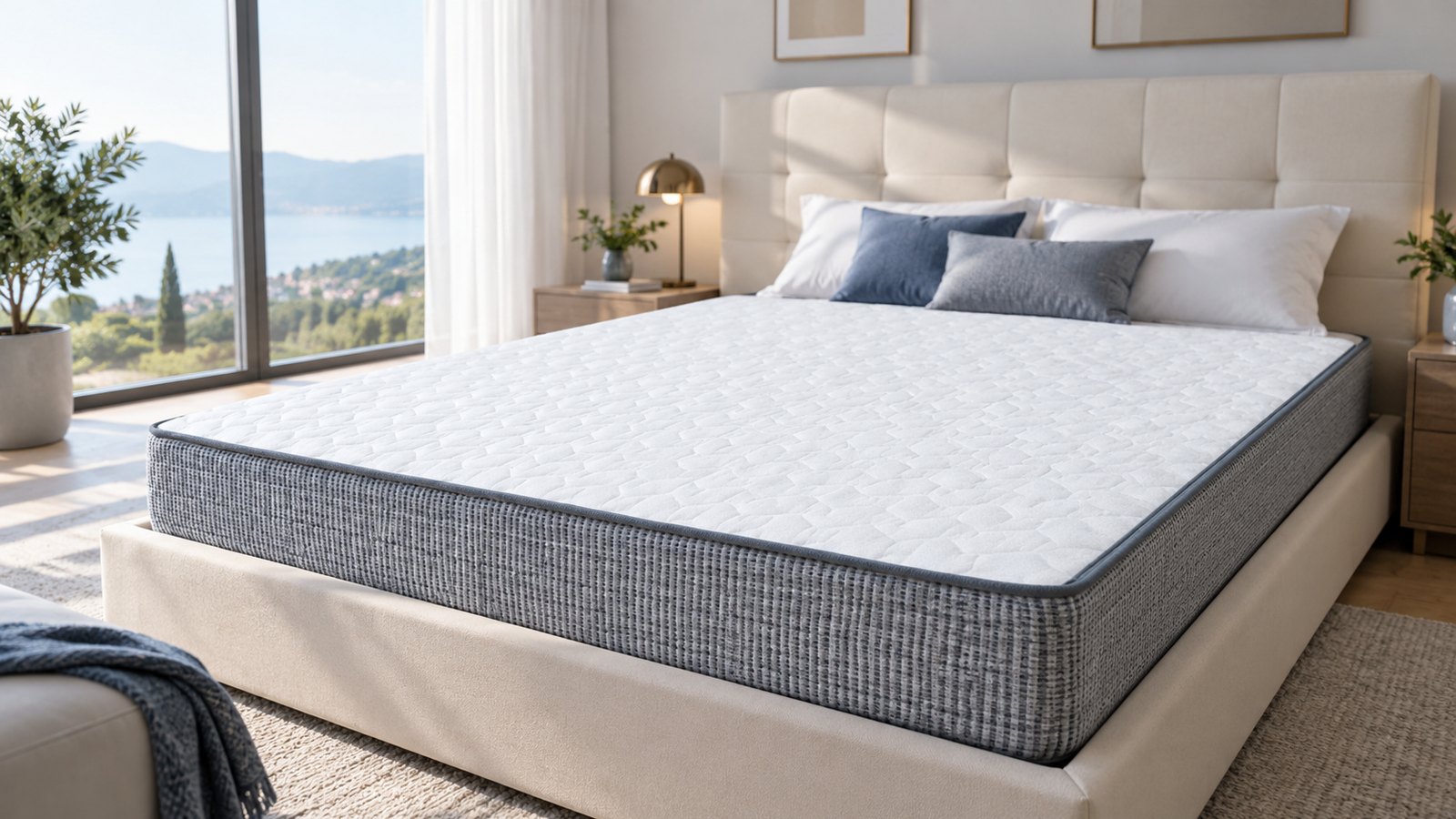
Reading before bed: how reading improves your sleep
Key facts at a glance
- What to know right away: Reading before bed: what to read, for how long and with which light to fall asleep faster. Practical tips and Luxury Relax mattresses, 10 trial nights.
- Trial, warranty and delivery: 10 trial nights · 10-year warranty · Free delivery 24/48h
- Who it is for: Why reading prepares you for sleep
- What this guide covers: Why reading prepares you for sleep · What to read before bed, and what to leave aside · How long to read, and with which light
- How to book or get help: Get your free consultation · 0362 222407 · info@luxuryrelax.it
There is a book on the nightstand with the bookmark halfway in. Ten pages, then the light goes off. It is a simple gesture, yet it does more work than it seems: it slows the day down, moves your attention to someone else's thoughts and prepares the body to sleep.
Reading before bed is not a miracle recipe. It is a routine: same time, same light, same position. Once it becomes a habit, the time it takes to fall asleep shrinks and night awakenings become rarer. In this guide we look at what to read, for how long and with which lighting, and how to set up bed and mattress so the reading position stays comfortable until the last page.
If you are already considering a new mattress, the Luxury Relax review gathers the real data of the Italian brand behind the winning models in our comparisons: 10-year warranty, 10 trial nights and free delivery across Italy.
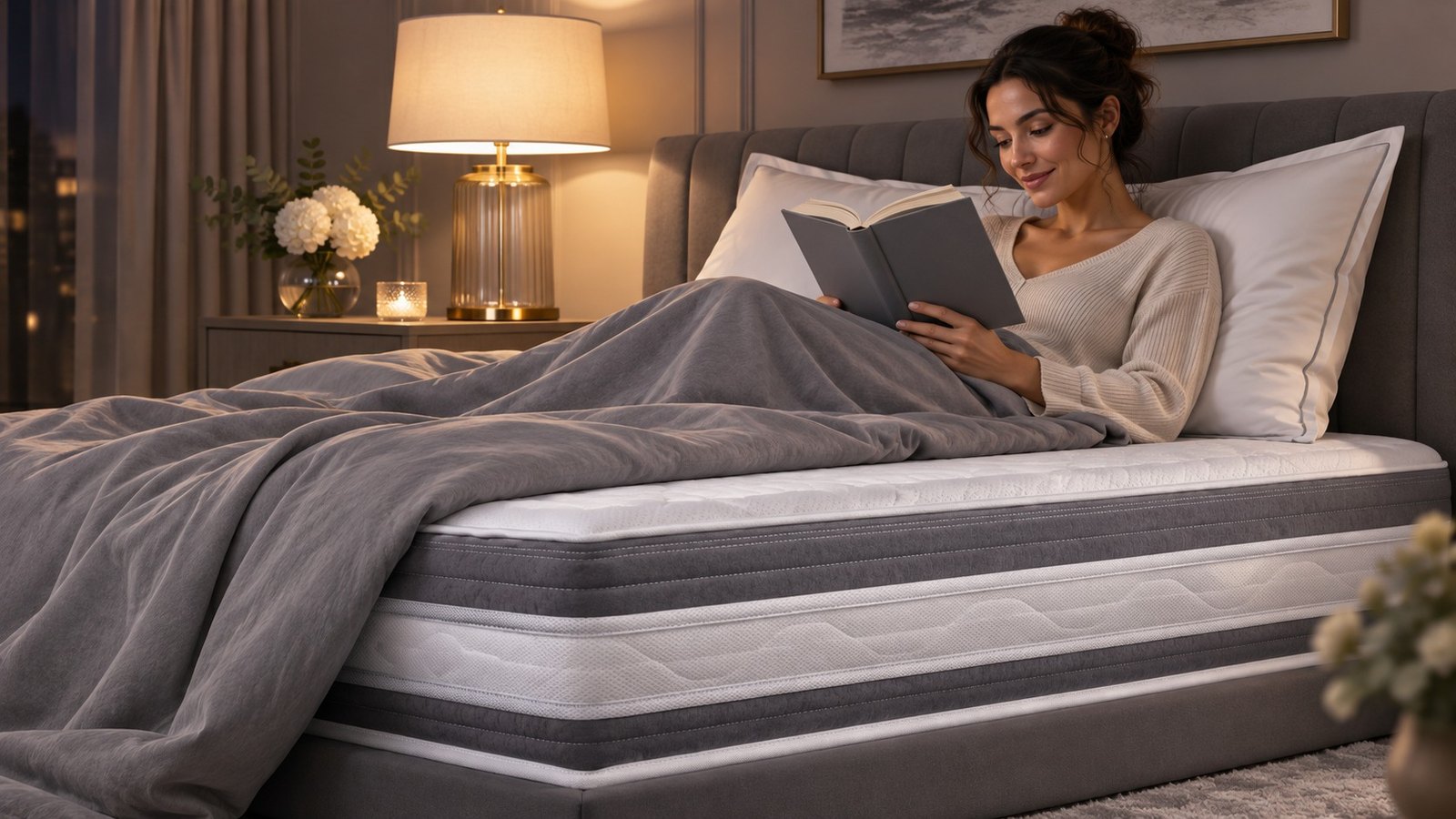
Why reading prepares you for sleep
Sleep does not arrive on command: it arrives when the brain stops chasing the day. Reading offers it a concrete alternative. Following a story page after page keeps attention on a linear stream, and the thoughts tied to work, money and the day's conversations lose their grip one by one.
There is a physical side to it too. Reading reclined, with shoulders supported and legs stretched out, slows the breathing and relaxes the neck and shoulder muscles. The warm light of a reading lamp is one of the signals the body knows how to read: bright white light keeps alertness high, low amber light lets it fall.
This also works for the breath. Pages slow down the breathing rhythm without any effort, and the body reads that slowing as an invitation to rest. Many people fall asleep with the book still open on their chest: the reading has done its job long before the last line.
The third element is regularity. Reading at the same time every evening turns the gesture into a signal: after a few weeks, the first pages are enough to feel drowsy. It is the same principle behind evening rituals for better sleep: repeat, do not improvise.
The ritual also works as a family. Reading aloud to children before bedtime builds the same association for them and for the parents: the calm voice, the same armchair, the same time become the signal that the day is closed. Here too regularity counts more than length: ten minutes every evening are worth more than an hour at the weekend.
One detail matters more than it seems: reading must be the last activity of the day. If you reopen your phone or turn the television back on after the book, the signal switches off and the brain goes back to wake mode.
What to read before bed, and what to leave aside
Not all books do the same job before sleep. Calm fiction works better than texts that pump adrenaline: a slowly paced novel, a short story collection, poetry. A thriller built on cliffhangers can keep you awake for one more page, and then one more.
Leave on the desk: work manuals, study books and essays that call for notes. The evening news is also a poor nightstand read: it opens questions sleep cannot close. If you want personal development material, choose books made of short chapters, not theses to argue with.
Reading has one more rare advantage: it asks for nothing. There is no performance to give, no message to answer, no result to check. That absence of judgement is what makes pages a refuge for people who replay the day in the evening: the brain moves from an internal monologue to an outside voice, and that shift is already rest.
Length matters only up to a point: a 600-page novel is fine if you read it chapter by chapter, while a short dense essay can take more energy than a whole trilogy. The useful question is just one: does this book make me want to keep going without checking the time?
Format plays its part. The paper book remains the simplest choice: no notifications, no links, no temptation to check something else. If you use an e-reader, set it to warm light at minimum and switch off every alert. The difference with a phone screen is sharp, and we explain it in the guide to screens and sleep quality.
Audiobooks can work too, on a dedicated player or a small speaker with the phone left in another room: a calm narrator and a sleep timer do the same ritual job as paper, as long as the timer really switches the sound off.
One last rule: pick the book the night before, not in the moment. Deciding what to read in bed is already a decision, and decisions keep you awake.
How long to read, and with which light
The right length is measured in minutes, not pages. Twenty or thirty minutes of reading close the day without stealing hours from sleep; beyond that, reading turns into an activity and the body powers up again. If you love long books, stop at a chapter and pick it up the next day.
The lamp counts as much as the book. A light around 2,700-3,000 Kelvin, placed at the side and aimed at the pages, lights the text without flooding the room with white light. The rest of the bedroom stays dim: that contrast is what tells the body the day is over.
Timing deserves the same care. Reading at the same time every evening, ideally in the last thirty minutes before lights out, builds a steady rhythm. Put the reading at the end of your routine, after the shower and before sleep, not at the start of the evening when you still need energy for everything else.
Room temperature helps too: 18-20 degrees is the range where sleep arrives fastest. A room that is too warm turns reading into an endless wait, and that wait is the best way to stay awake.
If the main bedroom light is too strong, a clip-on reading lamp with a flexible arm solves the problem: it lights only the pages and leaves the rest of the room in shadow. A door left ajar with dim corridor light disturbs less than the ceiling light switched on again.
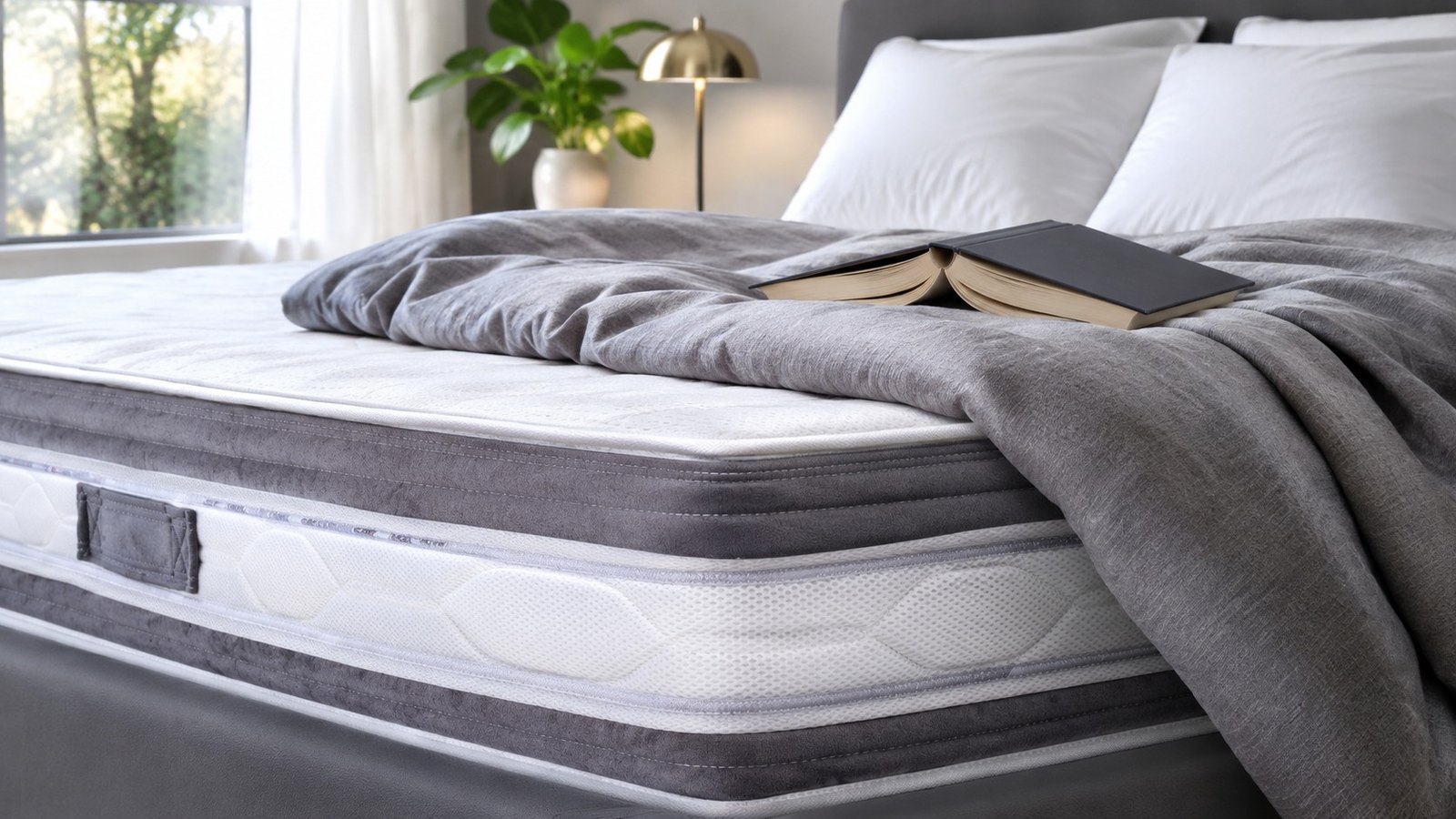
Last detail: keep the book already open at the right page on the nightstand. Finding the bookmark without turning on bright lights is the last gesture of the routine, and it closes the day without friction. And if you fall asleep with the book open on the duvet, do not worry: it means the routine worked exactly as planned.

Reading in bed: position, pillow and mattress
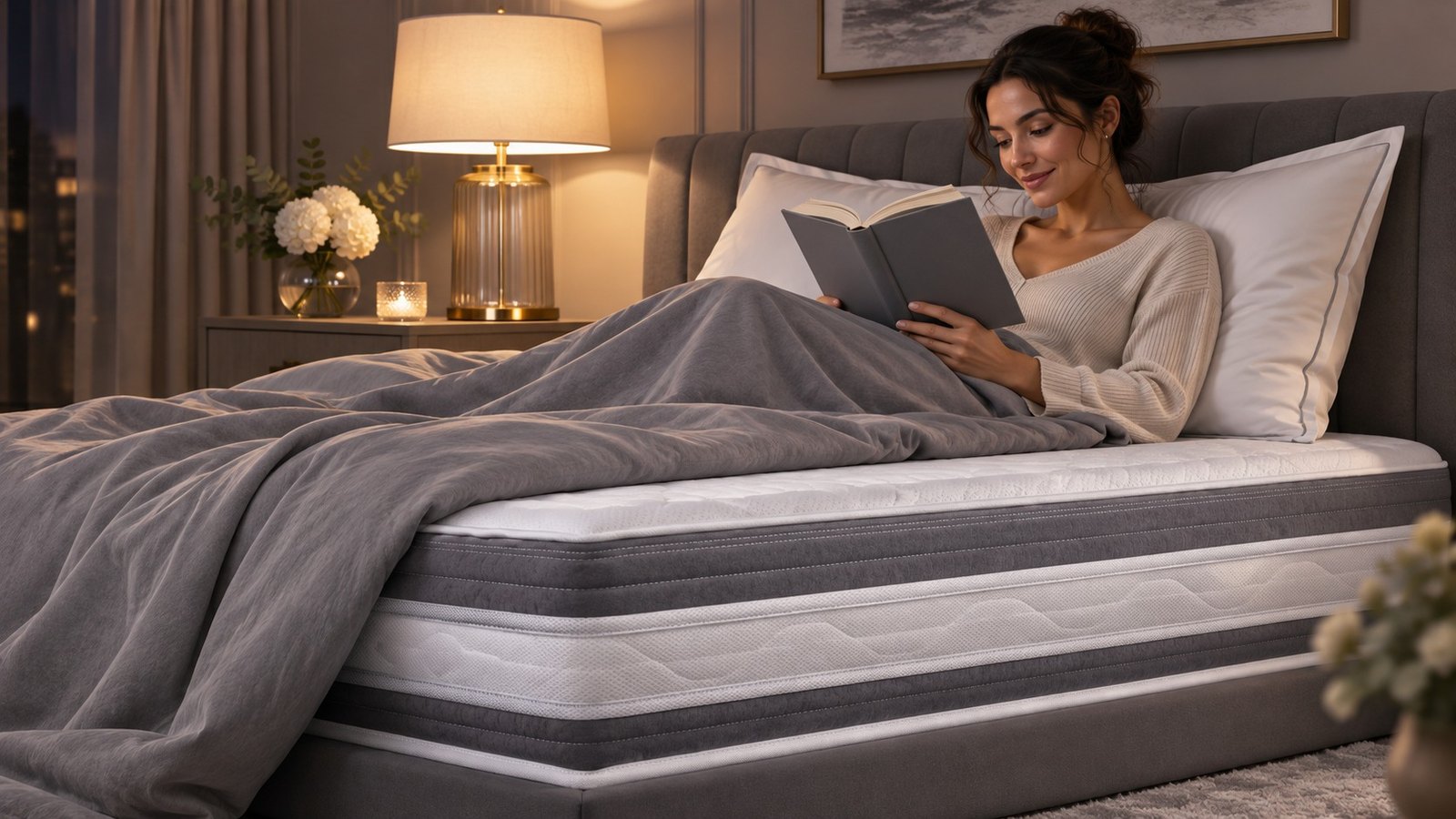
Reading in bed is comfortable only if the body is genuinely supported. The classic position is semi-reclined: back against the headboard or two firm pillows, neck straight, book at eye level. If your chin drops towards your chest, after ten minutes the neck protests and the reading ends badly.
The right pillow supports the nape without pushing the head forward. A model that is too high forces the chin down; one that is too low leaves the neck tense. The guide to choosing the right pillow goes into heights and materials.
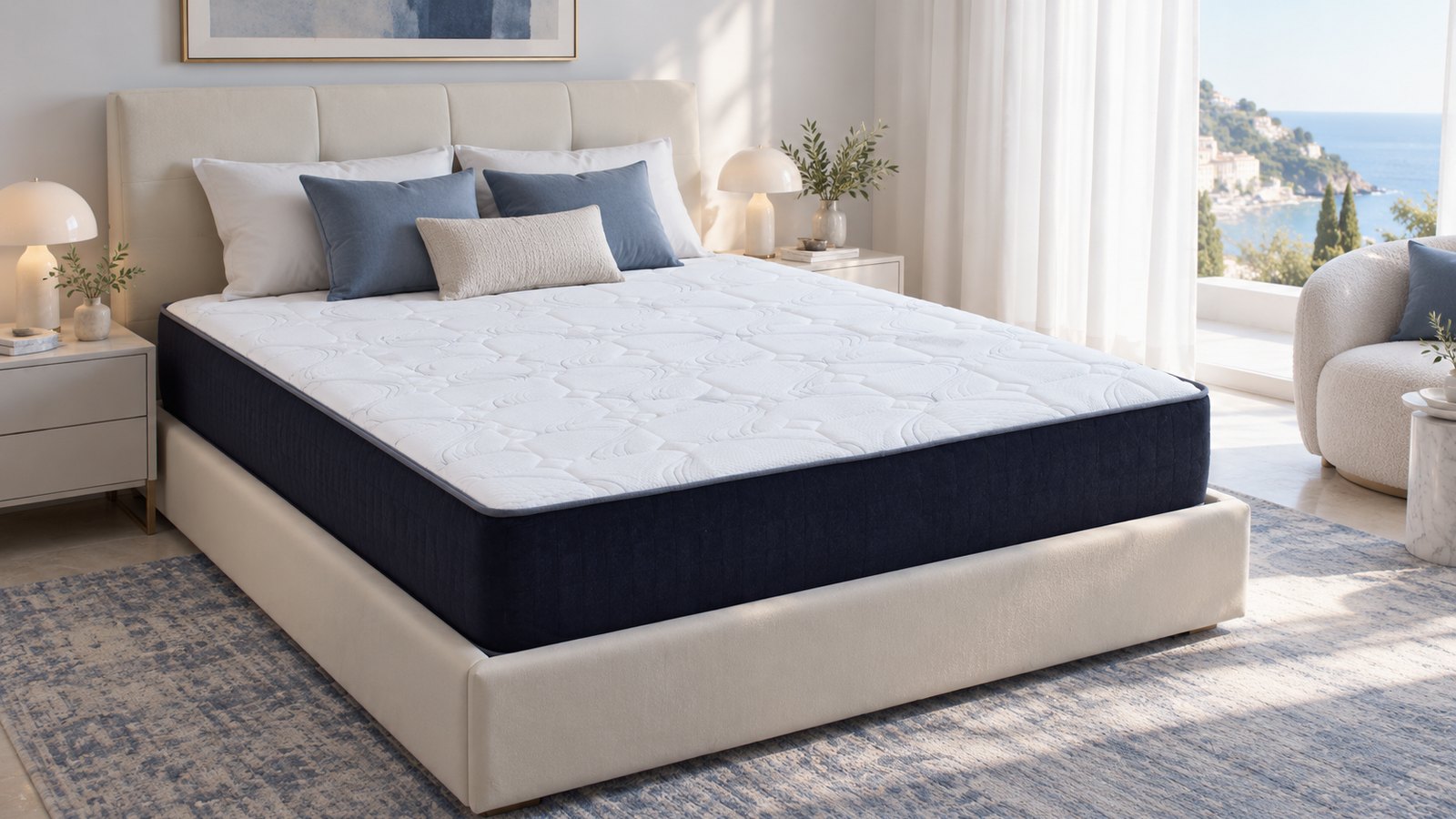
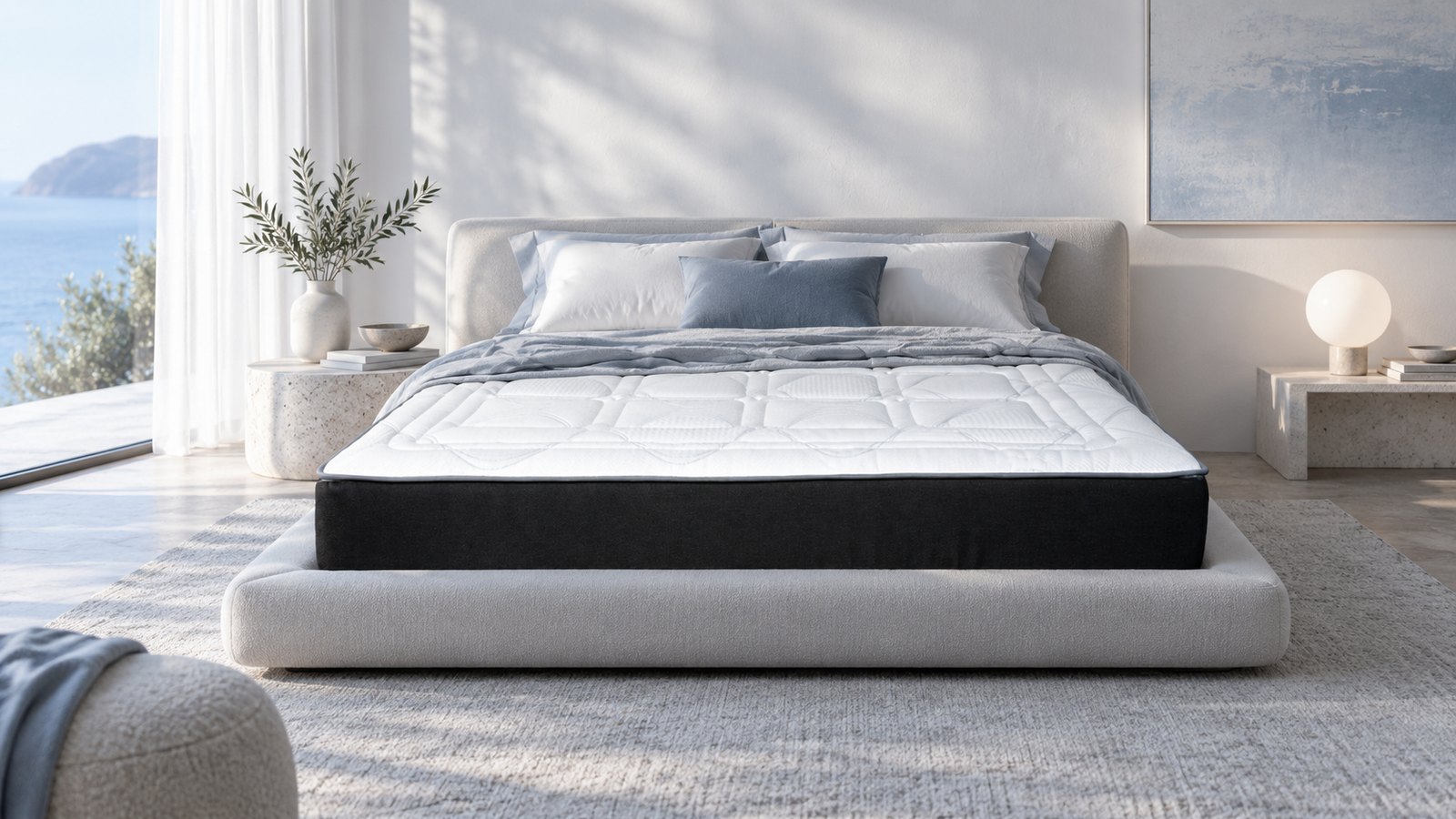
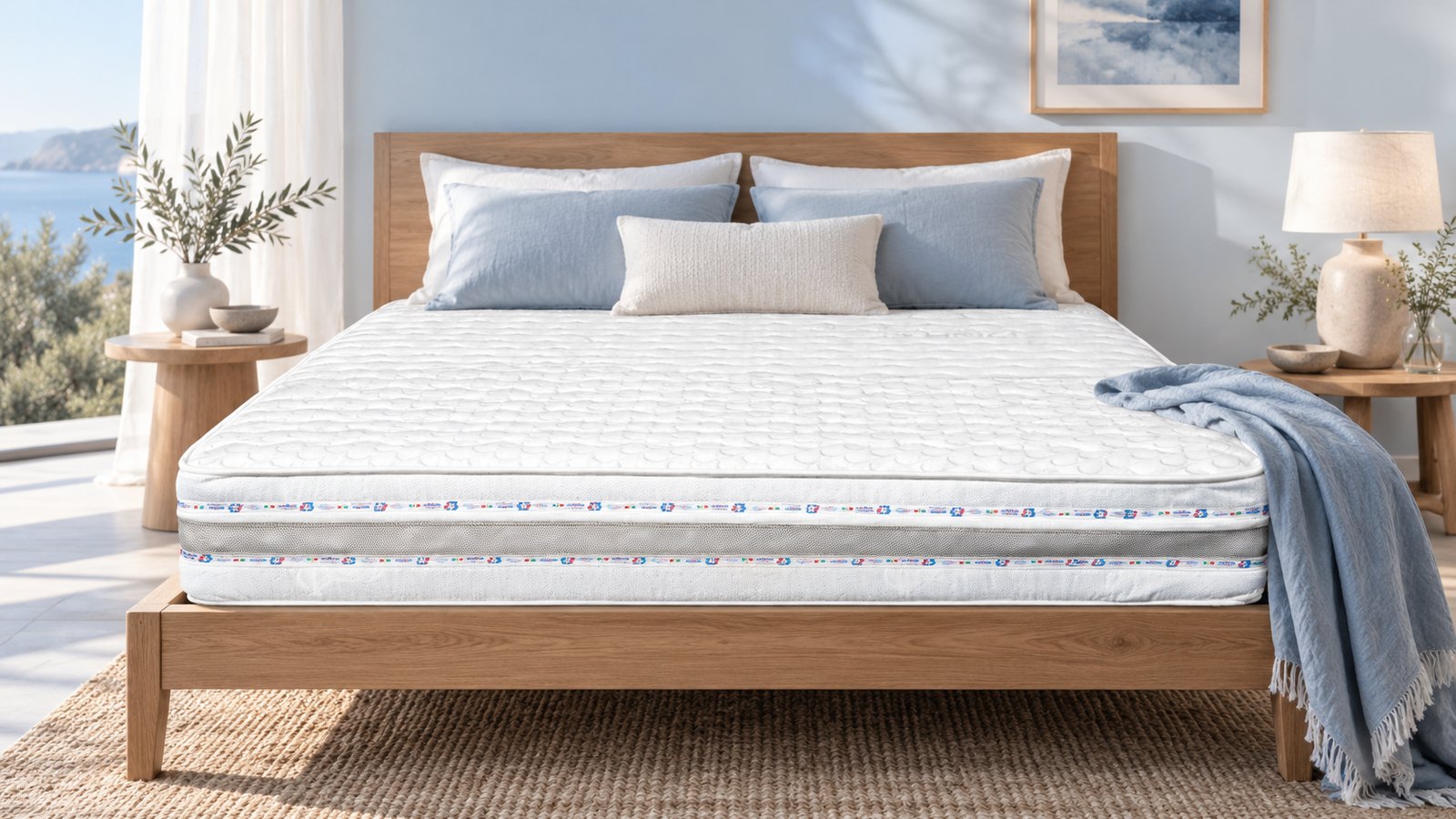
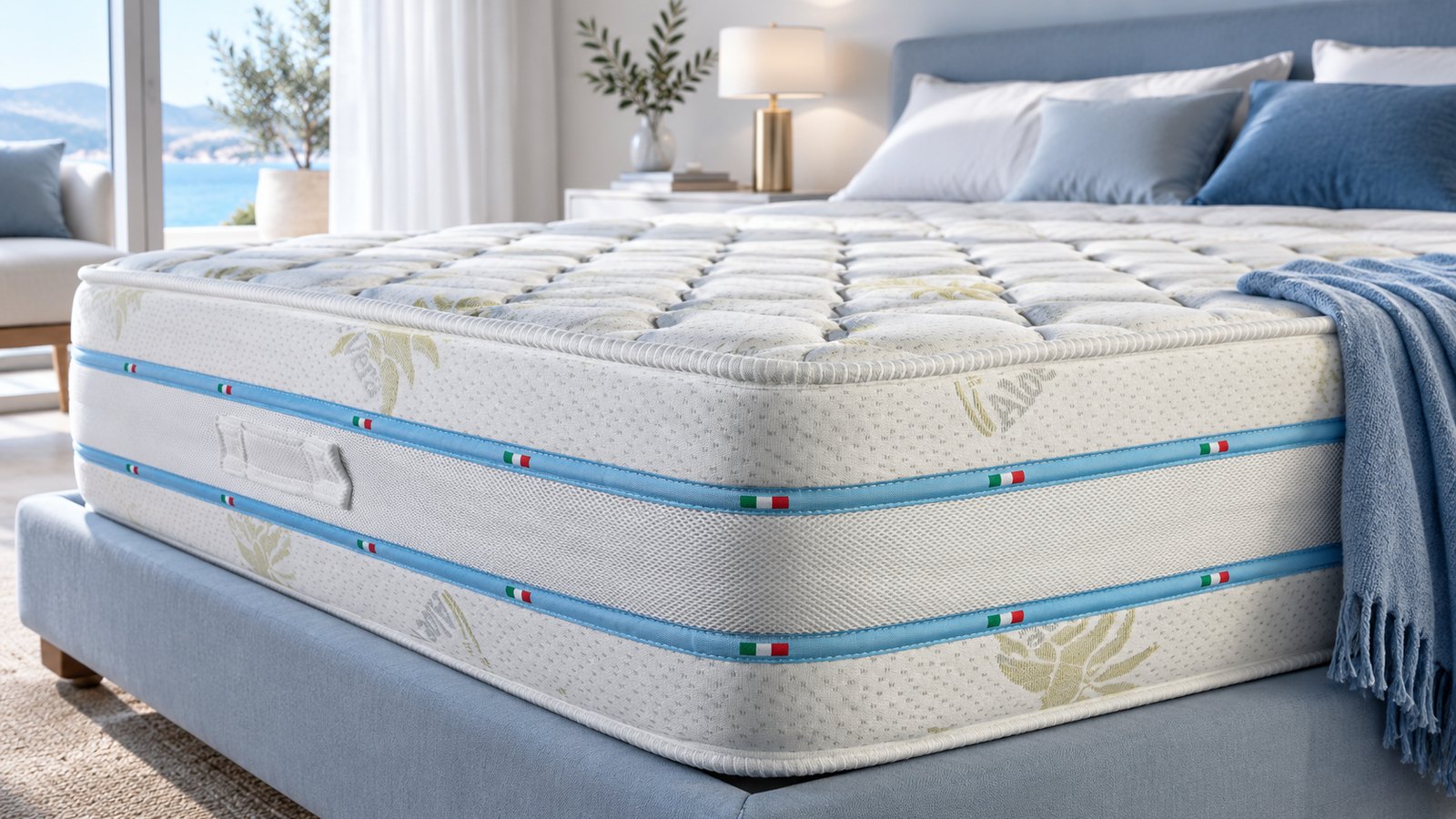
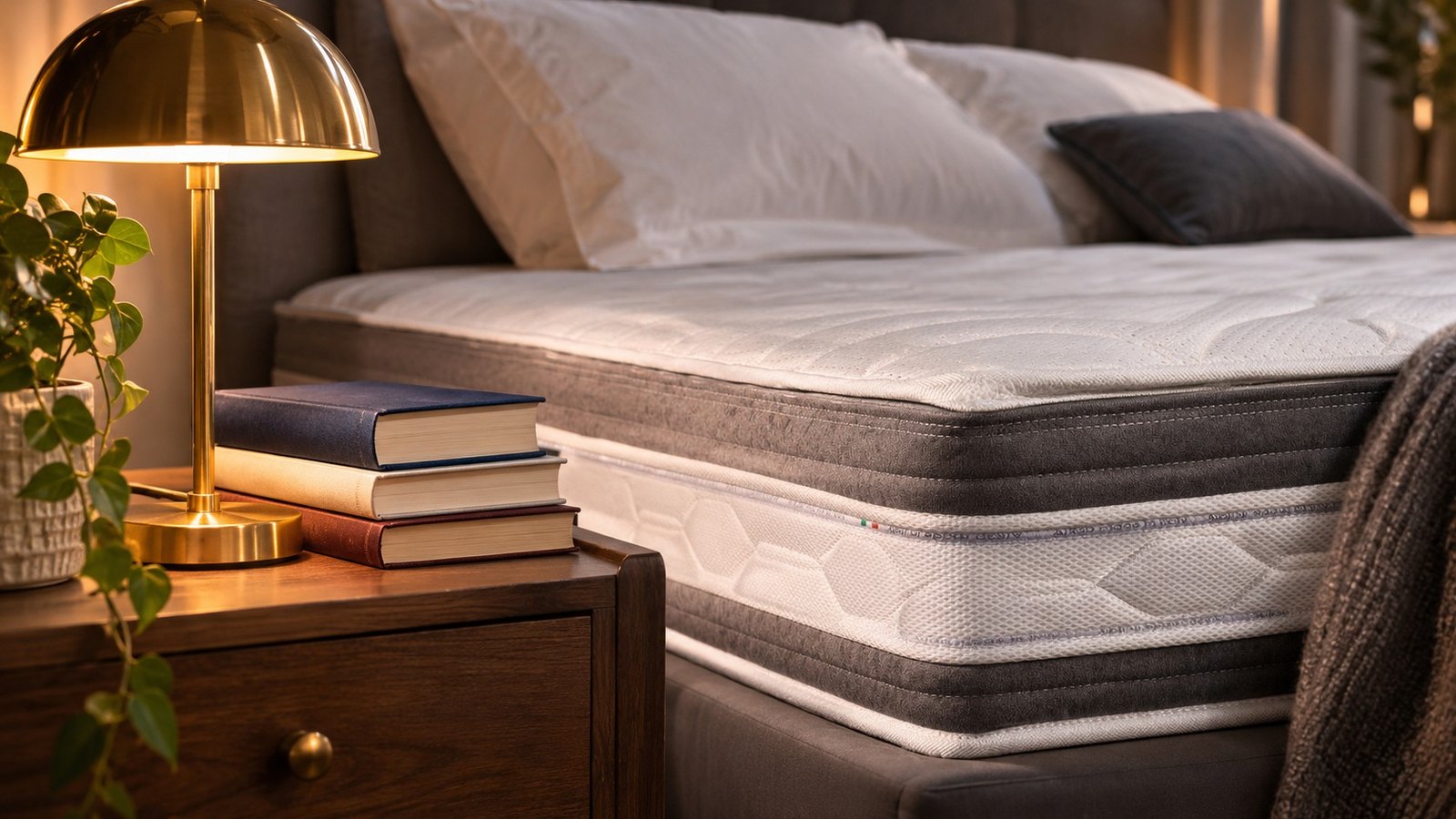
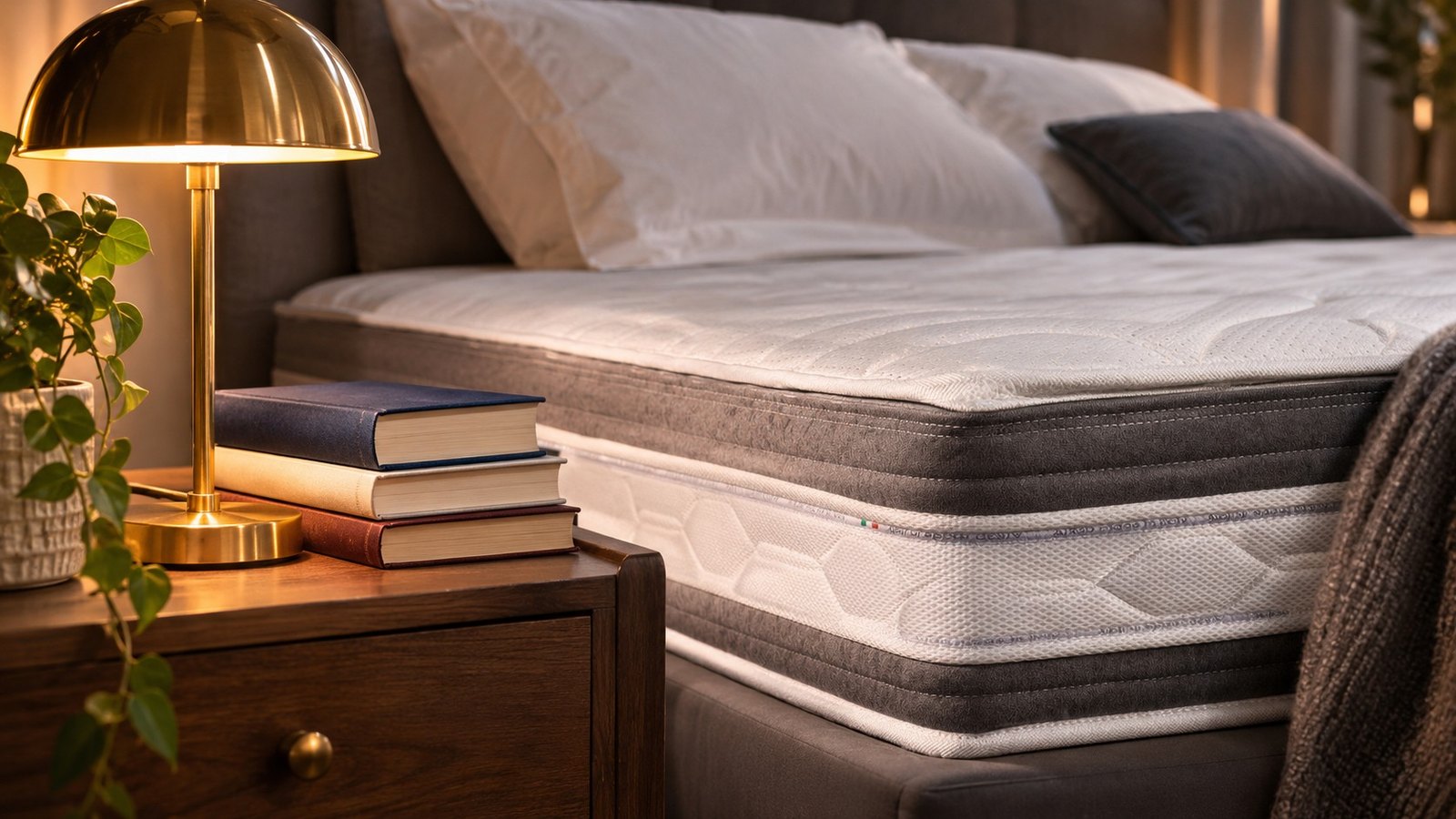
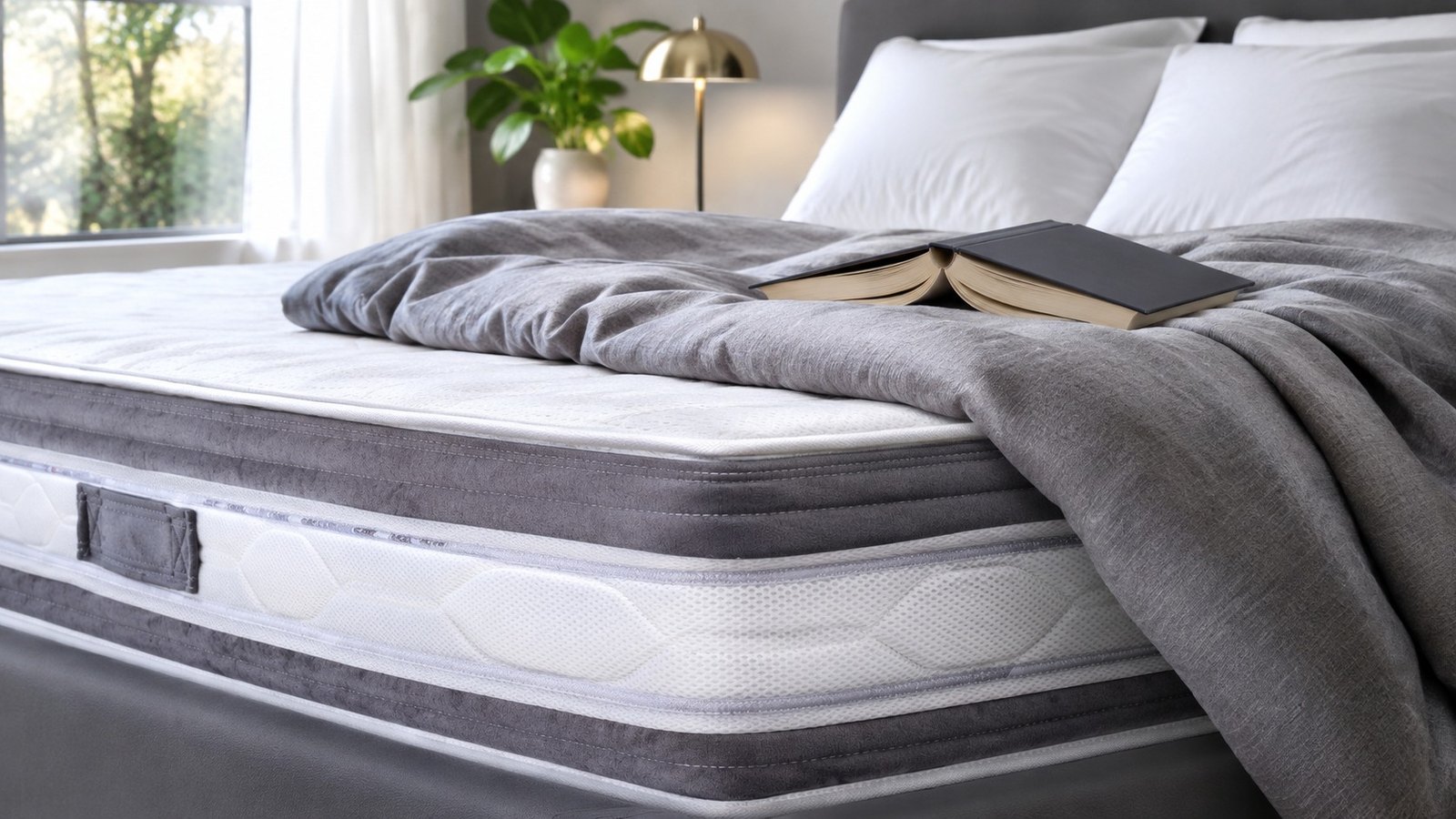
The mattress works silently, but it works. In the semi-reclined position the weight concentrates on back and pelvis: you need a surface that welcomes the shoulders without sinking, with a lumbar zone that does not give way. That is the principle of differentiated support, the heart of Luxury Relax mattresses: the high-density Confortgel base holds, the thermo-sensitive memory foam spreads the weight, the 3D breathable band keeps the microclimate stable even after half an hour of reading.
On the practical side, a mattress between 24 and 30 cm high like the Luxury Relax models also makes movement easier: getting out of bed in the morning or changing position after reading takes less effort than from a mattress that is too low. The 4 perimeter handles help when moving it for seasonal cleaning, and made-to-measure sizes solve non-standard beds.
Among the brand's models, Athena from 990 euros and Platinum from 699 euros are the choices for those who read in bed every evening and want maximum support; Gold from 399 euros is the most popular compromise. All with washable Aloe Vera cover, 10-year warranty and 10 trial nights at home. The complete mattress buying guide explains how to choose based on weight and sleep position, and the page on mattresses for back pain details lumbar support. For a free consultation, the contact form replies the same day.
When sleep does not come: get up and read elsewhere
Sometimes the book is not enough. If twenty minutes pass and sleep does not arrive, the best move is to get up. Staying in bed staring at the ceiling teaches the body that bed is where you stay awake, and that lesson is hard to unlearn.
The method is simple: low warm light, armchair or sofa, book already chosen, twenty minutes of reading. When the eyelids get heavy, go back to bed. No television, no phone, no kitchen: just the pages and the lamp.
The same rule applies to those who wake in the middle of the night. A short read in the living room beats an hour of mental arithmetic in the dark. The bedroom stays dark and quiet, and the bed stays the place of rest.
This distinction is why it pays to read in an armchair rather than in bed when sleep is late: the bed must stay linked to sleep, not to waiting. Evening reading also works as a shared signal: in a couple or a family, switching off the television and each reading their own book says the day is finished. For those who share the bed with a restless partner, the guide to sleeping as a couple completes the picture.
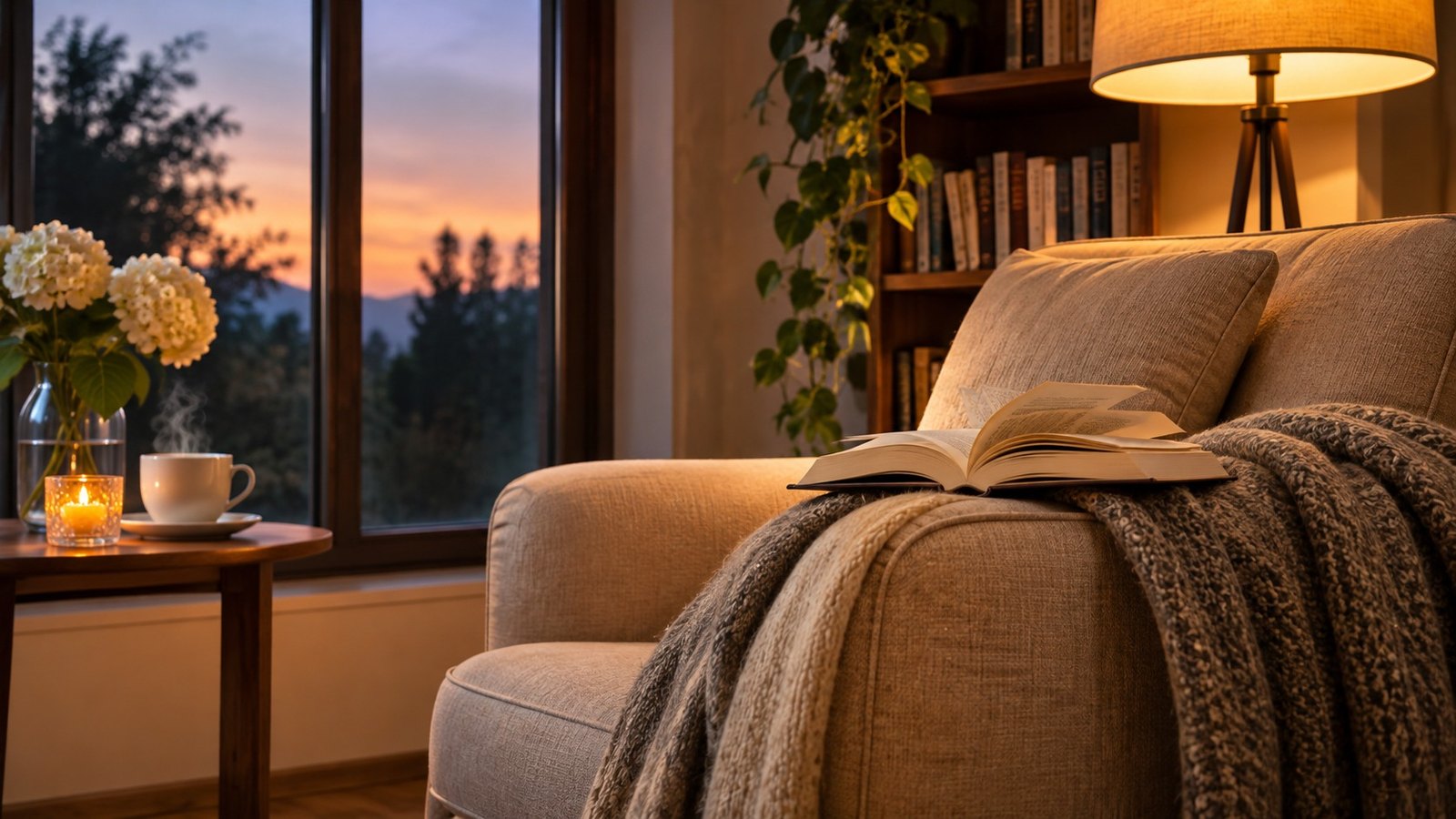
Frequently asked questions about reading before bed
Is it better to read a paper book or a screen before sleep? The paper book is the simplest choice: no blue light, no notifications, no chance of opening another app. An e-reader with warm light and alerts switched off is a good compromise; a phone screen, even in night mode, remains the worst option because it carries messages and social feeds with it. If you cannot avoid a screen, switch off mobile data and use a full-screen reading app: the temptation to leave the book is the real enemy of sleep.
For how long should I read before bed? Twenty or thirty minutes is the range that works for most people: enough to close the day, too short to steal sleep. Better to stop at a chapter and keep the timing constant night after night than to read for hours once in a while. Reading just to finish the plot is not worth a short night: the chapter will happily wait for the next evening.
Can reading in bed hurt my back? Yes, if the body is not supported. In the semi-reclined position you need a well-supported back and a pillow that keeps the neck straight; after reading, the mattress must welcome the body lying down without letting the lumbar zone sink. The differentiated support of Luxury Relax mattresses is designed for exactly this double job.
What should I read when I cannot fall asleep? Something already known and low-tension: a novel you have read before, a collection of short stories, poetry. Avoid news, work, study books and plots that are too gripping. If sleep does not come after twenty minutes, get up and read in another room with warm light.
Which mattress should I choose for reading and sleeping well? One that supports the back in the semi-reclined position and welcomes it lying down: the high-density Confortgel base and the thermo-sensitive memory foam of the Luxury Relax models do exactly this work. Height 24-30 cm, 10-year warranty, 10 trial nights and free delivery. The contact form puts the brand's free expert consultation at your disposal.
Ideal Mattress Configurator in 3 Clicks
Answer 3 questions and see which Luxury Relax model fits your sleep best.
Step 1 of 3
Images from this guide

Is it better to read a paper book or a screen before sleep?
The paper book is the simplest choice: no blue light, no notifications, no chance of opening another app. An e-reader with warm light and alerts switched off is a good compromise; a phone screen, even in night mode, remains the worst option because it carries messages and social feeds with it. If you cannot avoid a screen, switch off mobile data and use a full-screen reading app: the temptation to leave the book is the real enemy of sleep.
For how long should I read before bed?
Twenty or thirty minutes is the range that works for most people: enough to close the day, too short to steal sleep. Better to stop at a chapter and keep the timing constant night after night than to read for hours once in a while. Reading just to finish the plot is not worth a short night: the chapter will happily wait for the next evening.
Can reading in bed hurt my back?
Yes, if the body is not supported. In the semi-reclined position you need a well-supported back and a pillow that keeps the neck straight; after reading, the mattress must welcome the body lying down without letting the lumbar zone sink. The differentiated support of Luxury Relax mattresses is designed for exactly this double job.
What should I read when I cannot fall asleep?
Something already known and low-tension: a novel you have read before, a collection of short stories, poetry. Avoid news, work, study books and plots that are too gripping. If sleep does not come after twenty minutes, get up and read in another room with warm light.
Which mattress should I choose for reading and sleeping well?
One that supports the back in the semi-reclined position and welcomes it lying down: the high-density Confortgel base and the thermo-sensitive memory foam of the Luxury Relax models do exactly this work. Height 24-30 cm, 10-year warranty, 10 trial nights and free delivery. The [contact form](key:contatti) puts the brand's free expert consultation at your disposal.
Request your free consultation
Fill in the form: a Luxury Relax expert will get back to you with the proposal that suits you best.
What Luxury Relax owners say
On my dad's advice, already a customer, I went to Luxury Relax to buy a mattress. Very comfortable and ergonomic products.
Quality products, helpful and knowledgeable staff. Highly recommended to anyone looking for a real mattress, not a brand name.
I got rid of the back pain that had followed me for years. The right mattress changes your days.
Come visit us
Luxury Relax Materassi
Via San Rocco, 42 — 20831 Seregno (Monza e della Brianza), Italia0362 222407 · info@luxuryrelax.it · WhatsApp 339 4797213
Open in Google Maps