Music and sleep: which sounds help you sleep better
The alarm rings and your first thought goes to last night's playlist: it switched itself off after half an hour, yet you fell asleep sooner than expected. It usually works like that. The right music does not put you to sleep; it prepares you. It slows your breathing rhythm, pulls your mind away from the day's worries and tells your body the day is over.
The mechanism is simple. The brain tends to align with the external rhythms it perceives: a slow track, between 60 and 80 beats per minute, guides the heartbeat toward a calmer frequency. It is not magic and it is not a cure: it is a sound context that makes the shift from wakefulness to sleep easier.
In this guide we look at which sounds actually work, which ones keep you awake instead, and how to build an evening sound routine that lasts. For anyone working on rest quality, the Luxury Relax review covers the materials and services of a brand built around deep sleep. Let's start from the mechanism.
Why music acts on sleep
Listening to music engages the nervous system directly. A track with a regular rhythm and a predictable shape reduces wakeful activation: the body already expects the next note, and that predictability leaves room for relaxation. It is the same principle that makes a lullaby work on children, applied to adults.
The second lever is emotional. Familiar, pleasant music pulls you away from recurring thoughts, the ones that return the moment your head touches the pillow. A mind occupied by a pleasant sound has less room for tomorrow's to-do list. You do not need to listen closely: the more passive the listening, the better it works.
The third lever is behavioural. Choosing a dedicated playlist creates a ritual: when that music starts, the body learns that sleep is near. After two or three weeks the opening bars are enough to trigger drowsiness. This is classical conditioning, the force behind every solid habit.
Keep the line between preparation and treatment in mind. Music helps you sleep better when sleep is already sound and something disturbs it; if insomnia has persisted for months, a playlist alone will not do, and the physical factors are worth checking. Our guide to the mattress for insomnia lists the points to review first.
The sounds that work best
Not all music is equal in the evening. Four families of sounds collect the most consistent results in everyday practice.
| Sound type | Characteristics | When to use it |
|---|---|---|
| Slow instrumental music | 60-80 bpm, no lyrics, steady flow | 20-30 minutes before sleeping |
| Natural sounds | Rain, waves, wind in the trees, constant volume | Background until you fall asleep |
| White, pink or brown noise | Masks sudden noises from neighbours | All night, at low volume |
| Familiar melodies | Songs you already know, no emotional surprises | For those who only drift off to music they love |
Slow instrumental music remains the first choice: piano, strings, acoustic guitar, film scores without vocals. Lyrics are the problem: words activate the language centres and keep the mind in comprehension mode, the opposite of what sleep needs.
Natural sounds work well for people living in noisy cities, because they build a steady barrier that makes external noises less sudden. Speaking of external noises, our guide to sleep and noise explains how to defend yourself from the sound spikes that break deep sleep.
White, pink and brown noise deserve a clarification. White noise covers all frequencies at the same level; pink and brown noise are warmer and deeper, and many people find them less tiring for the ear. The right volume is that of a whispered conversation: if the sound stands out, it is too loud.
One last category, to be used with care: binaural beats and ASMR videos. They do no harm, but expectations are often larger than the real effect. Try them for a week and keep what works, without believing anyone who promises sleep in three minutes.

What to avoid: the sounds that keep you awake
The first mistake is the generic playlist. A random mix lines up slow tracks and energetic tracks, and when a cheerful song starts the mind wakes up again. The sleep playlist must be flat: no jumps in tempo, no new songs, no memories that stir emotion.
The second mistake is high volume. Above a certain intensity music stimulates rather than relaxes, and at night you feel the difference in the morning. The practical rule: the sound must stay in the background, like a voice speaking in another room.
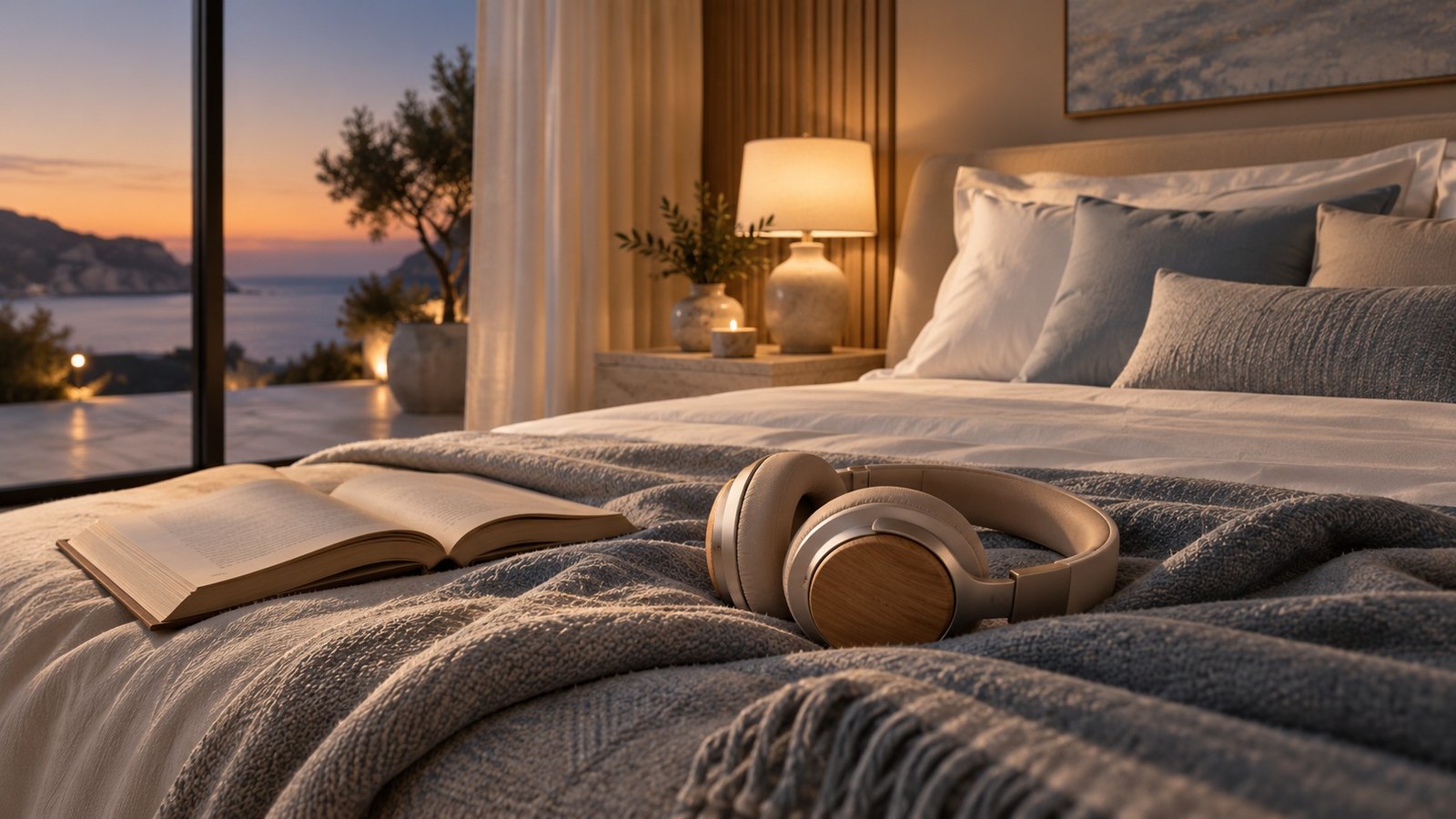
The third mistake is the listening device. Uncomfortable in-ear buds dig in when you turn over; over-ear headphones press the ear against the pillow. The simplest solution is a bedside speaker at low volume, placed a metre from the bed. Travellers can pick soft sleep headphones, though they should come off once you are asleep.
The fourth mistake is the screen. Opening a streaming app to start the music means exposure to light and notifications, exactly what switches drowsiness off. Our guide to sleep and screens measures the impact of blue light on rest. Setting the playlist to run automatically before entering the bedroom is the right move.
The last mistake is total dependence. If you never sleep without music, the night in a hotel becomes a problem. Better to alternate: some evenings with music, some in silence, so that sleep stays autonomous.
The evening sound routine in five steps
Music works when it fits into a sequence, not when it arrives on its own. Five steps, repeated every evening for at least two weeks.
First step: switch off earlier. Turn off the television and notifications thirty minutes before going to bed, so the music is not competing with other stimuli. The evening ritual needs a clean start, and our guide to evening rituals sets out the full sequence.
Second step: choose the soundtrack. A fixed playlist, fifteen or twenty tracks, updated once a month. Repetition is an advantage, not a limit: the more the brain recognises the sequence, the faster it switches off.
Third step: set the timer. Thirty minutes of playback is usually enough; those who wake when the music stops can extend it to forty-five. Total quiet after falling asleep is preferable to continuous sound.
Fourth step: pair it with breathing. Ten slow breaths, lengthening the exhalation, as the music starts. This is the bridge between listening and body: the breath slows down and drowsiness arrives sooner.
Fifth step: keep the bed ready. Music or not, falling asleep depends on how the body is supported. If the soundtrack is perfect but the mattress sags or pushes back, the result barely changes.
Volume, speakers and device placement
Sound quality matters more than quantity. A bedside speaker with a soft driver beats a phone with the volume turned up: the phone is also the object of notifications, and keeping it next to the pillow remains a bad idea even in flight mode.
The ideal position for the speaker is lateral, a metre from the bed at pillow height. The sound arrives diffused, not fired into the ear. If the headboard wall is hard, reverberation doubles the perceived intensity: a soft layer, an upholstered headboard or a fabric panel is enough to change the acoustics of the room.
The right volume is found with a simple test: from the bedroom door the sound should be barely perceptible. In bed, it must stay below the voice of a quiet conversation. If you raise your voice to be heard, the level is too high for sleep.
For those who share the bed, the theme becomes mutual respect: soft headphones for the listener, or an ambient sound agreed by both. A double bed also needs a mattress that isolates movement, so that turning over does not wake the other person: motion isolation is one of the criteria in our mattress buying guide.
One practical detail for travellers: download the playlist before leaving, so the night in a hotel does not depend on the network. Familiar music, low volume, timer set: three habits that weigh nothing in a suitcase and solve many nights away from home.
A note on format: audio files or high-quality streaming, with no advertising in the middle of the night. A bright advertising jingle is a scheduled awakening, and starting the falling-asleep process again costs more than the half hour of listening just spent. Offline playlists, then, or a service without interruptions.
Beyond music: the complete sleep system
Music is an environmental lever: it acts on the context, not on the structure of sleep. That is why it pairs so well with everything around the bed, and here the discussion moves to materials.
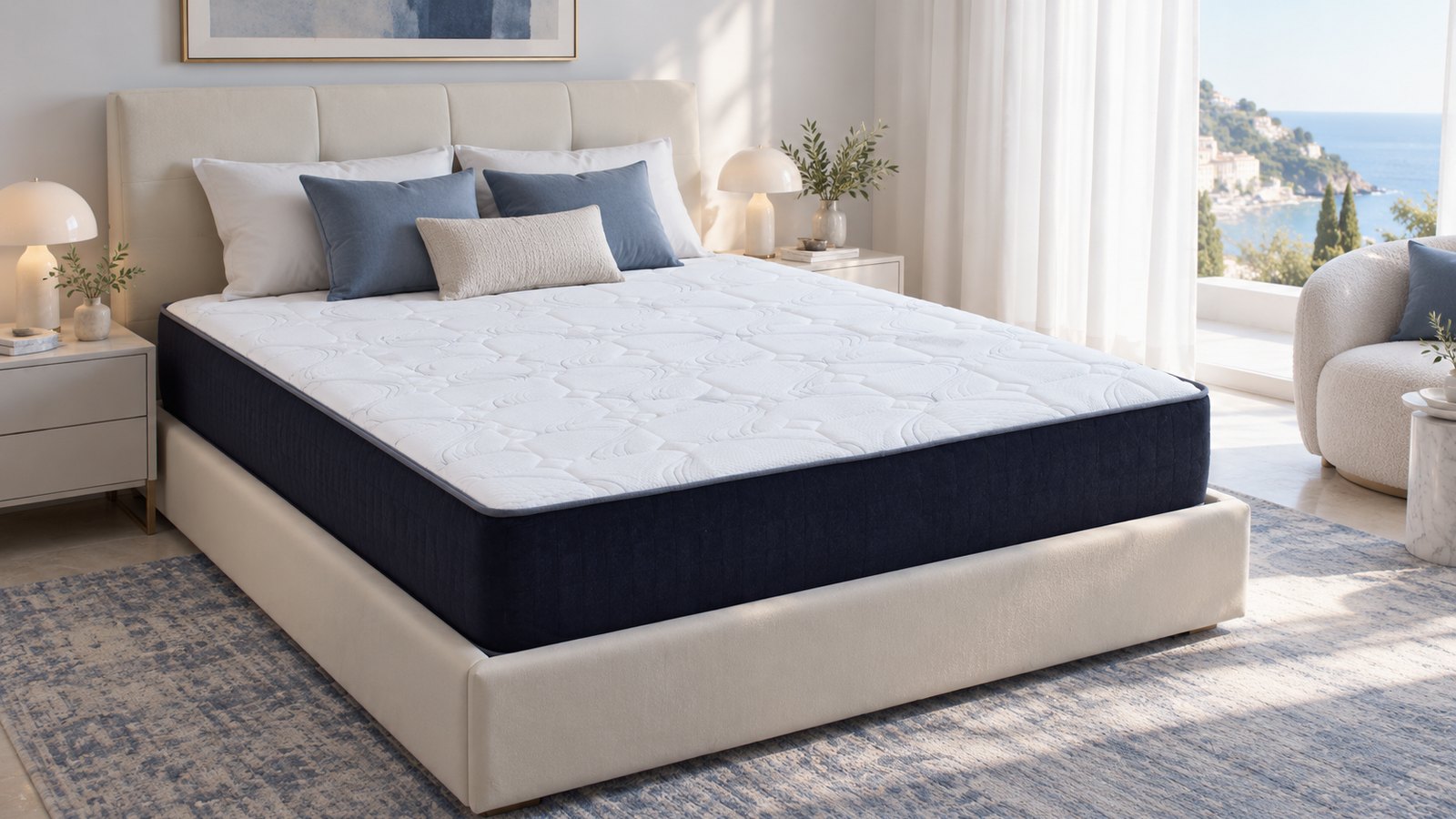
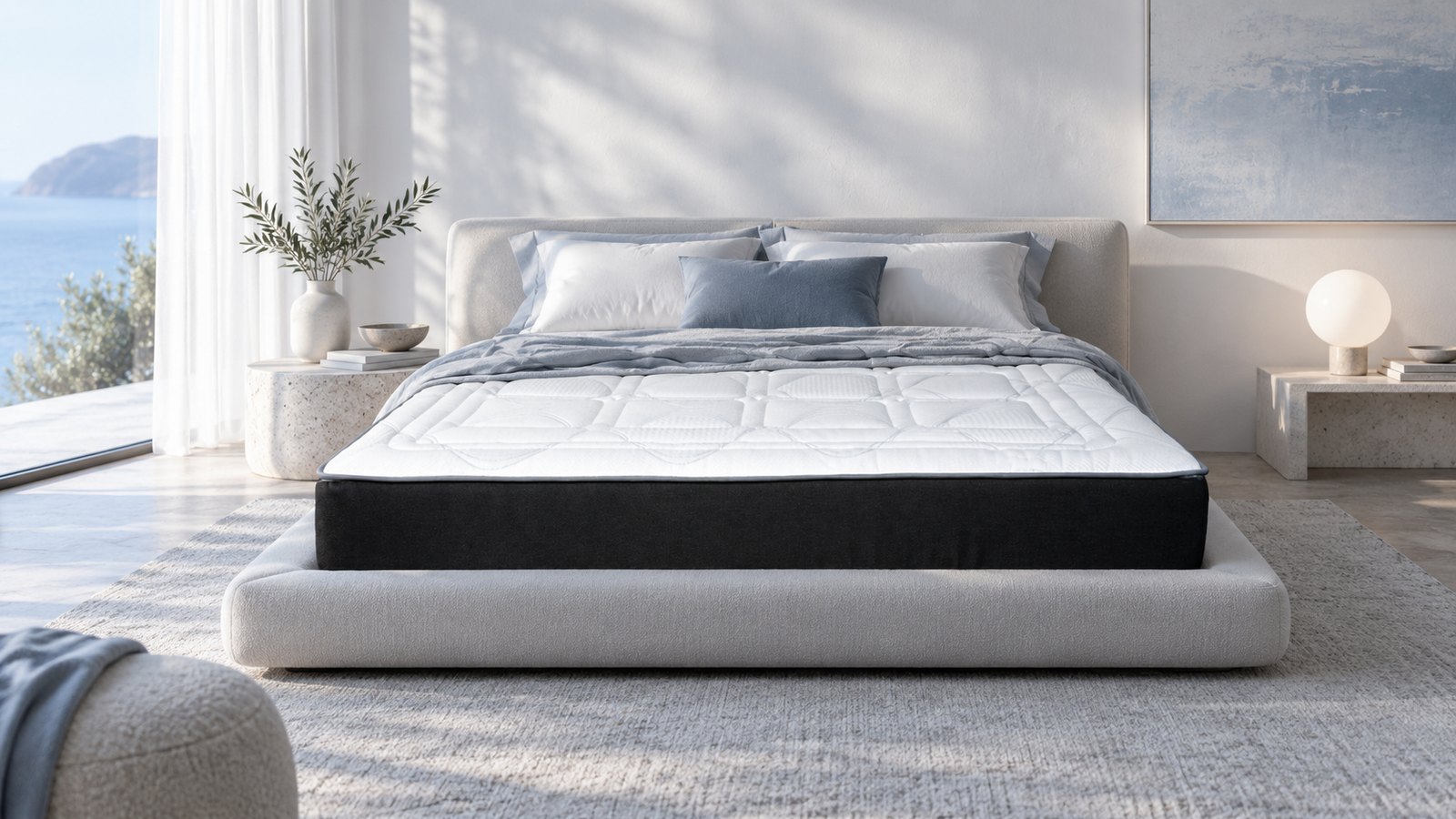
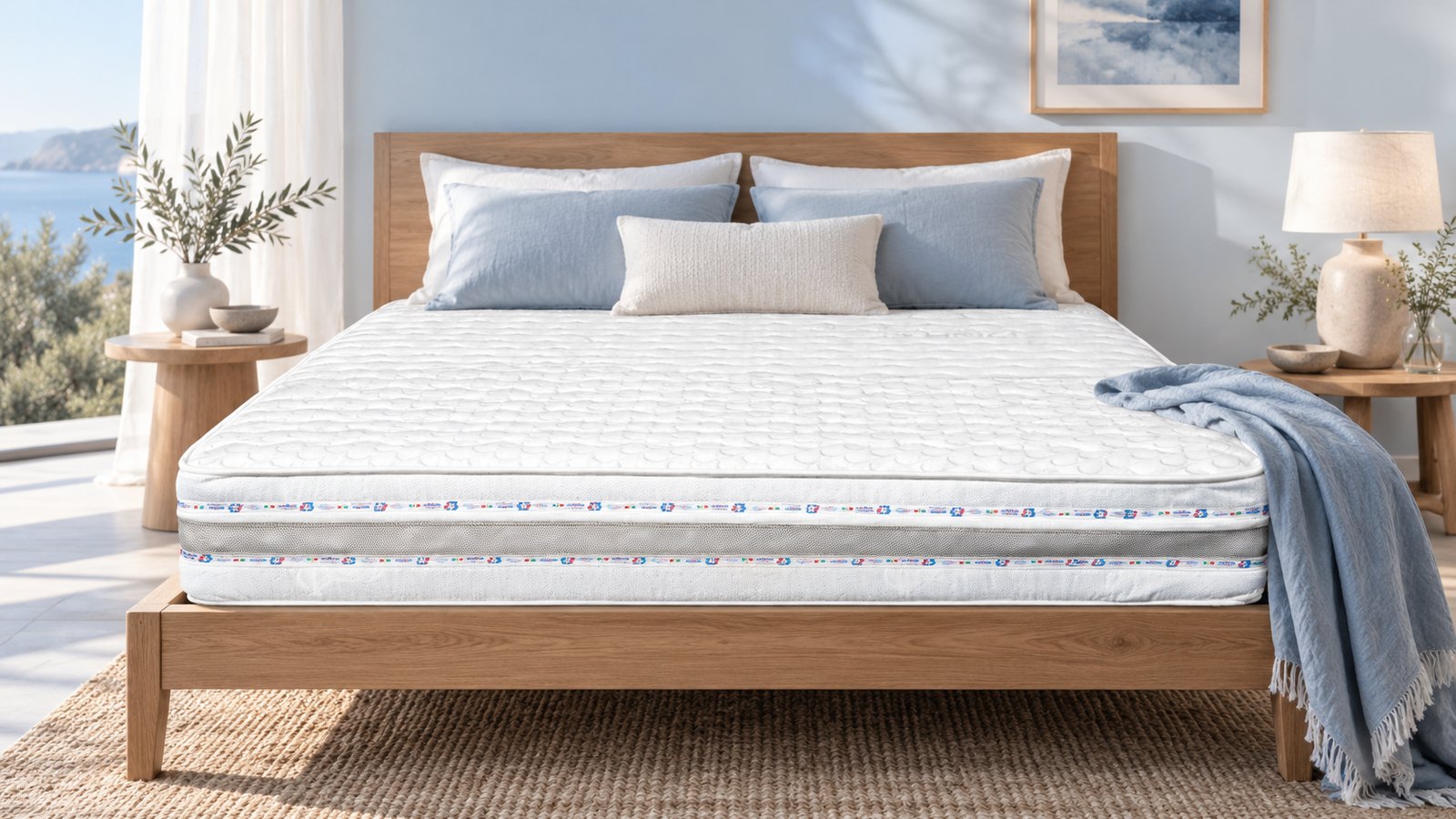
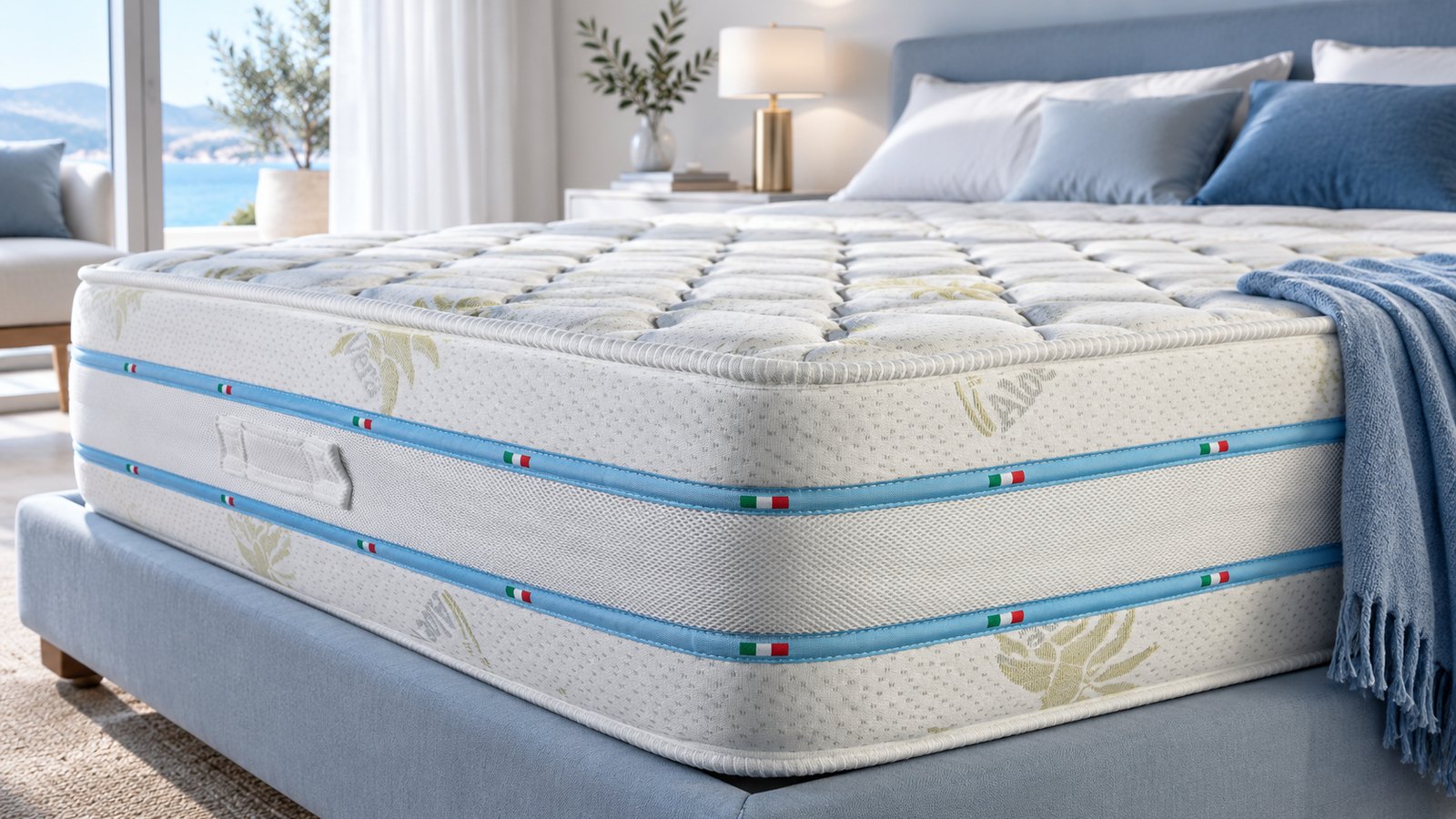
Luxury Relax Materassi produces in Italy, in Seregno near Monza, mattresses built around deep sleep. The range runs from Venere, from 149 euros, to Athena, from 990 euros with a list price of 1,950: thermo-sensitive memory foam over a high-density Confortgel base, differentiated support in three zones, a 3D breathable perimeter band, an Aloe Vera cover washable at 30 degrees, heights from 24 to 30 centimetres depending on the model.
The service numbers complete the picture: 10 years of warranty, 10 trial nights at home with a money-back guarantee, free delivery throughout Italy in 24-48 hours, payment on delivery available. A well-designed evening listening habit and an adequate support plan are two halves of the same thing: sleep improves when both work together.
The choice of model depends on weight, sleeping position and habits, which is why the brand offers free advice from its experts, in the showroom at Via San Rocco 42 in Seregno or by phone. The contact page provides the form with same-day replies, the toll-free number 0362 222407 and customer care on 339 4797213.

FAQ on music and sleep
Can music really help you sleep? Yes, as a support: slow and familiar music prepares the body for sleep, reduces wakeful stimuli and creates a recognisable ritual. It does not replace a diagnosis and does not cure chronic insomnia, but it improves falling asleep for most people.
What kind of music should you choose at night? Instrumental, between 60 and 80 beats per minute, with no lyrics and no sudden changes: piano, strings, acoustic guitar, natural sounds. A fixed playlist of fifteen or twenty tracks, updated every month, works best.
At what volume should music be kept for sleep? Low, like a whispered conversation: from the bedroom door the sound should be barely perceptible. If the sound reads as the main event, the volume is too high and the music stimulates instead of relaxing.
Is it better to use headphones or a speaker at night? A bedside speaker, placed a metre from the bed. In-ear buds are uncomfortable when you turn over and over-ear models press the ear against the pillow; if headphones are necessary, choose soft models designed for sleep.
How long should listening last before falling asleep? Between twenty and thirty minutes of playback, with the timer set. Ten slow breaths at the start speed up the shift into sleep; after falling asleep, total silence is preferable to continuous sound.
What matters more, music or the mattress? The mattress. Music prepares the moment of falling asleep, but deep sleep depends on how the body is supported all night. Luxury Relax pairs ambient comfort with real comfort: 10 trial nights let you verify the result in your own home.
Can white noise run all night? Yes, at low volume and with the speaker away from the pillow, if it helps mask sudden noises from neighbours. If you are not used to it, start with pink or brown noise, which sounds warmer, and check in the morning whether you wake up light or heavy.
How do I know the routine is actually working? Give it two weeks and judge by the morning, not by the evening: falling asleep within twenty minutes and waking before the alarm are the signals that matter. If nothing changes after two weeks, the problem is elsewhere, and the bed is the first thing to review.
Can music really help you sleep?
Yes, as a support: slow and familiar music prepares the body for sleep, reduces wakeful stimuli and creates a recognisable ritual. It does not replace a diagnosis and does not cure chronic insomnia, but it improves falling asleep for most people.
What kind of music should you choose at night?
Instrumental, between 60 and 80 beats per minute, with no lyrics and no sudden changes: piano, strings, acoustic guitar, natural sounds. A fixed playlist of fifteen or twenty tracks, updated every month, works best.
At what volume should music be kept for sleep?
Low, like a whispered conversation: from the bedroom door the sound should be barely perceptible. If the sound reads as the main event, the volume is too high and the music stimulates instead of relaxing.
Is it better to use headphones or a speaker at night?
A bedside speaker, placed a metre from the bed. In-ear buds are uncomfortable when you turn over and over-ear models press the ear against the pillow; if headphones are necessary, choose soft models designed for sleep.
How long should listening last before falling asleep?
Between twenty and thirty minutes of playback, with the timer set. Ten slow breaths at the start speed up the shift into sleep; after falling asleep, total silence is preferable to continuous sound.
What matters more, music or the mattress?
The mattress. Music prepares the moment of falling asleep, but deep sleep depends on how the body is supported all night. Luxury Relax pairs ambient comfort with real comfort: 10 trial nights let you verify the result in your own home.
Can white noise run all night?
Yes, at low volume and with the speaker away from the pillow, if it helps mask sudden noises from neighbours. If you are not used to it, start with pink or brown noise, which sounds warmer, and check in the morning whether you wake up light or heavy.
How do I know the routine is actually working?
Give it two weeks and judge by the morning, not by the evening: falling asleep within twenty minutes and waking before the alarm are the signals that matter. If nothing changes after two weeks, the problem is elsewhere, and the bed is the first thing to review.
Request your free consultation
Fill in the form: a Luxury Relax expert will get back to you with the proposal that suits you best.
What Luxury Relax owners say
On my dad's advice, already a customer, I went to Luxury Relax to buy a mattress. Very comfortable and ergonomic products.
Quality products, helpful and knowledgeable staff. Highly recommended to anyone looking for a real mattress, not a brand name.
I got rid of the back pain that had followed me for years. The right mattress changes your days.
Come visit us
Luxury Relax Materassi
Via San Rocco, 42 — 20831 Seregno (Monza e della Brianza), Italia0362 222407 · info@luxuryrelax.it · WhatsApp 339 4797213
Open in Google Maps