Night Awakenings: How to Sleep Without Interruptions
Key facts at a glance
- What to know right away: Night awakenings: why you wake up at night and how to cut them with light, temperature and the right mattress. Practical guide with Luxury Relax tips.
- Trial, warranty and delivery: 10 trial nights · 10-year warranty · Free delivery 24/48h
- Who it is for: Why sleep breaks: cycles, stages and micro-awakenings
- What this guide covers: Why sleep breaks: cycles, stages and micro-awakenings · The causes that open your eyes at night · What to do when you are awake in the middle of the night
- How to book or get help: Get your free consultation · 0362 222407 · info@luxuryrelax.it
It is twenty past three. The clock on the bedside table throws a glow on the ceiling, the house is still, and your body is tired but your mind is not. From here the night breaks apart: an hour awake, twenty minutes of dozing, then the seven o'clock alarm lands like a reproach. The night was not short. It was interrupted.
Human sleep is not a single block. It runs in cycles of about ninety minutes, and between one cycle and the next the brain passes through brief moments of wakefulness that nobody remembers in the morning. The trouble starts when one of those moments stretches: the wrong light, a noise, a room that is too warm, or a mattress that does not follow the body can turn a blink into half an hour.
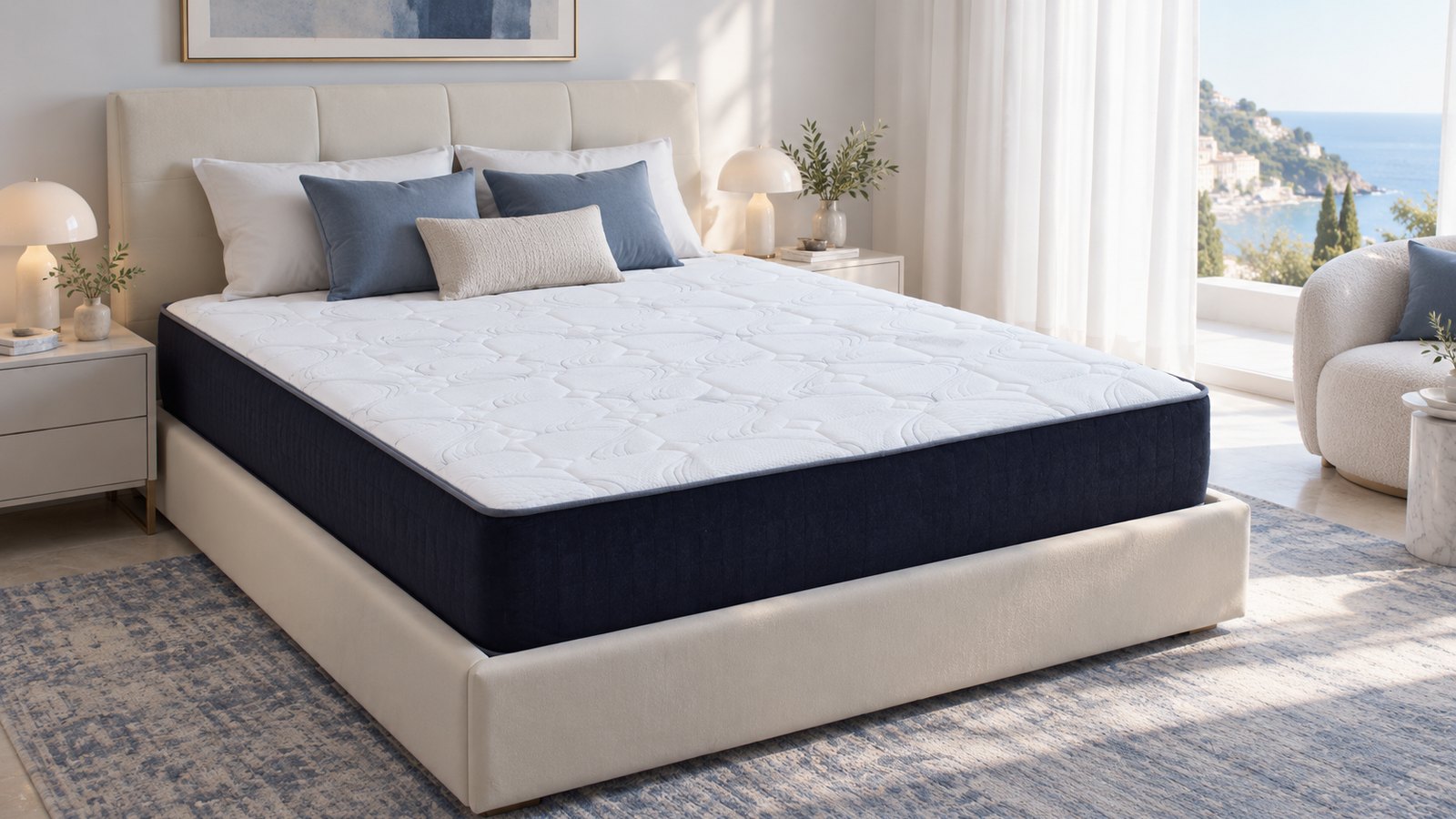
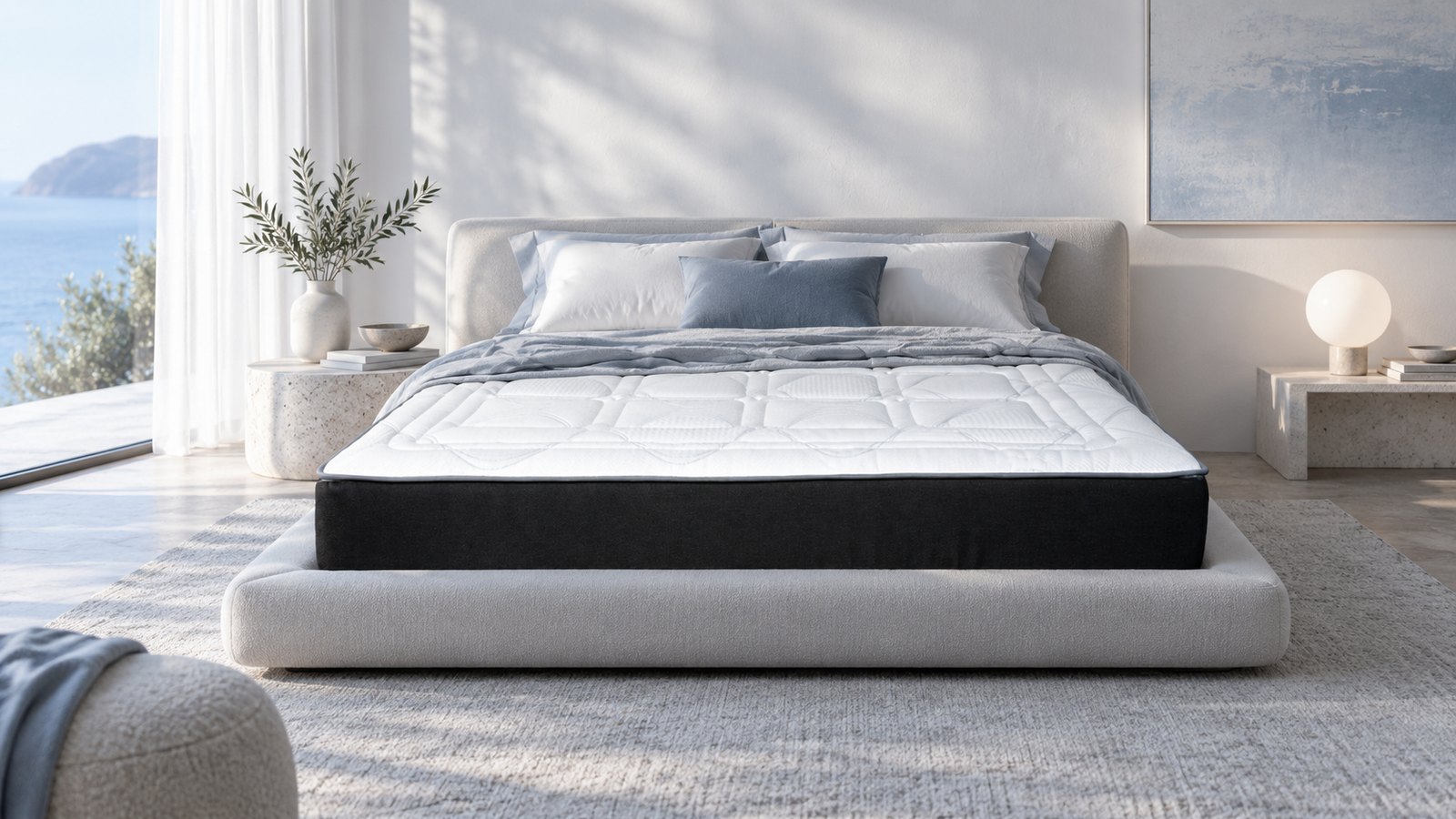
This guide explains why sleep breaks, what causes awakenings at night, and which daytime habits protect your rest, with a practical protocol for the hardest hours. The starting point is always the bed: the Luxury Relax review describes mattresses built in Italy for continuous sleep, with a ten-year warranty and ten trial nights.
Why sleep breaks: cycles, stages and micro-awakenings
A typical night contains four to six cycles, completed one after another. Each cycle passes through light sleep, deep sleep and the rapid eye movement stage, and the structure changes as the night goes on: deep sleep dominates the first half, dreaming sleep the second. Anyone who studies sleep stages knows that continuity counts as much as duration.
Between cycles the brain crosses brief moments of wakefulness. They are normal, they last a few seconds, and nobody remembers them. They become a problem when something holds them open: a full bladder, a sudden noise, the light of a shop sign leaking through the curtains.
The difference between spending eight hours in bed and sleeping well lies exactly here. Two awakenings of twenty minutes remove almost a whole cycle, even if the total time in bed stays the same: in the morning the result is sleepiness, poor attention and the feeling of not having rested at all.
Age matters. With the years deep sleep shrinks and wakeful gaps grow longer: after fifty it is far more common to wake between four and five. It is not a defect to correct at any cost, but a signal that the bed and the daily habits must work harder to compensate. Our guide to sleep stages describes in detail how the cycles follow one another during the night.
Another common mistake is counting hours and ignoring continuity. Someone who sleeps seven interrupted hours often feels worse than someone who sleeps six continuous ones, because each awakening sends the brain back to light sleep and steals time from the deep sleep that concentrates in the first cycles. This explains why people who spend eight hours in bed report being as tired as those who sleep five: the total time says nothing about the structure of the rest.
Bedtime regularity matters just as much. Going to bed at ten one day and midnight the next forces the internal clock to realign every time, and the price is paid precisely with the awakenings in the second part of the night. A sleep window stable within half an hour, every day including weekends, beats any declared duration: regularity first, hours second.
The causes that open your eyes at night
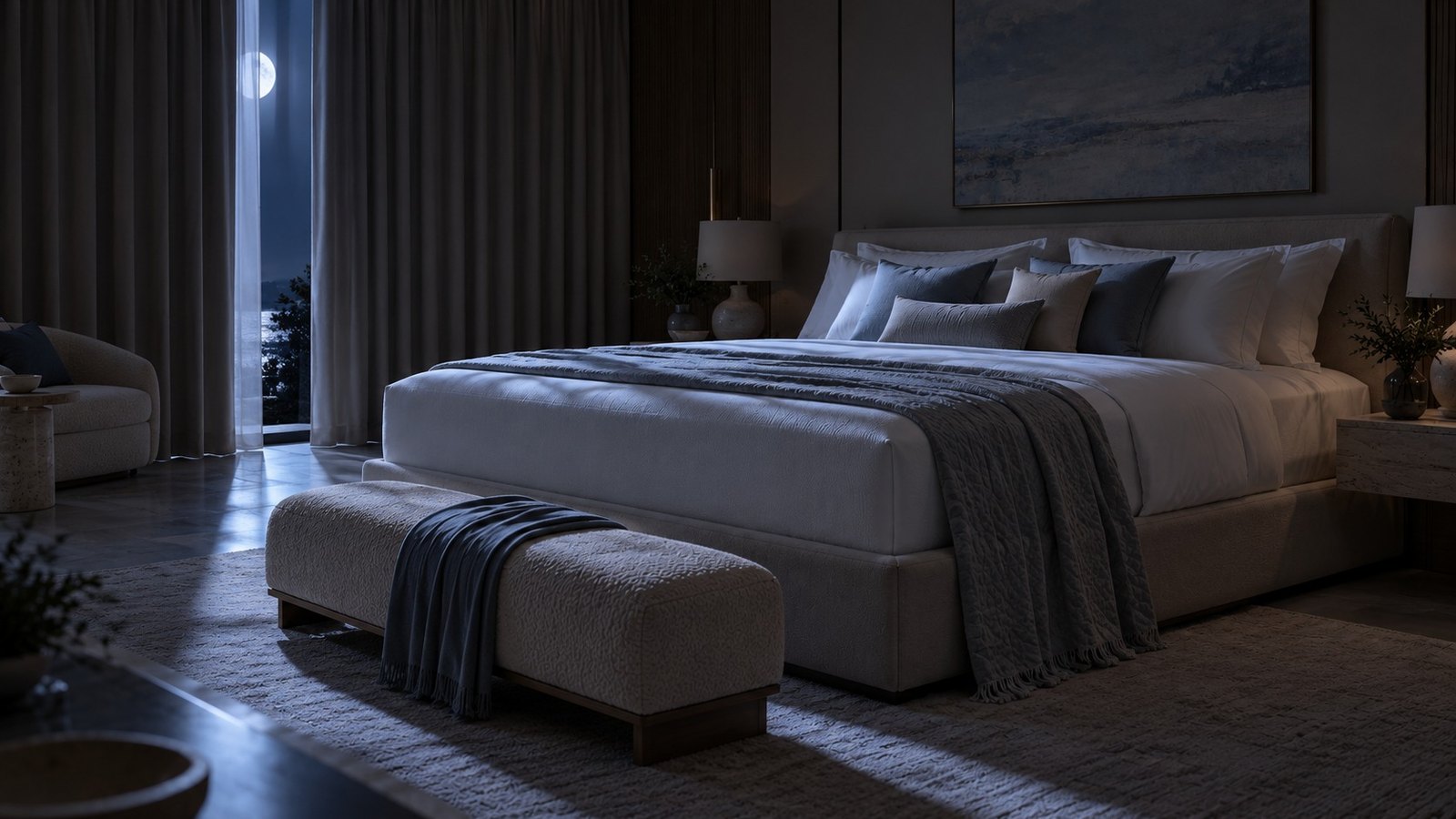
Light is the first suspect. Ten lux are enough, the intensity of a bedside lamp left on by mistake or the LED of a socket, to tell the brain it is daytime. Street light leaking through thin curtains counts too: a truly dark room reduces awakenings and makes falling back asleep faster.
Noise works differently. A steady background sound, like wind or distant traffic, gets covered by the brain after a few nights; the sharp peaks, a door slamming at two, a partner getting up, are what break the sleep. Below thirty decibels the room is silent; above forty even regular sounds disturb.
Temperature is the third factor. To enter deep sleep the body must drop its core temperature by about one degree: at twenty-four degrees that transition fails and every change of position wakes you. The useful range for most people is between eighteen and twenty-one degrees.
Then come the internal causes. A heavy dinner after nine, more than two glasses of water before bed, evening alcohol: all factors that shorten deep sleep and open windows of wakefulness between three and five. Stress acts at night too, when there are no distractions left: cortisol rises earlier than it should and the body wakes in alert mode.
What to do when you are awake in the middle of the night
First rule: do not look at the clock. Knowing it is twenty past three starts the maths of the missing hours, raises attention and stretches the awakening. Turn the clock around or move it out of reach.
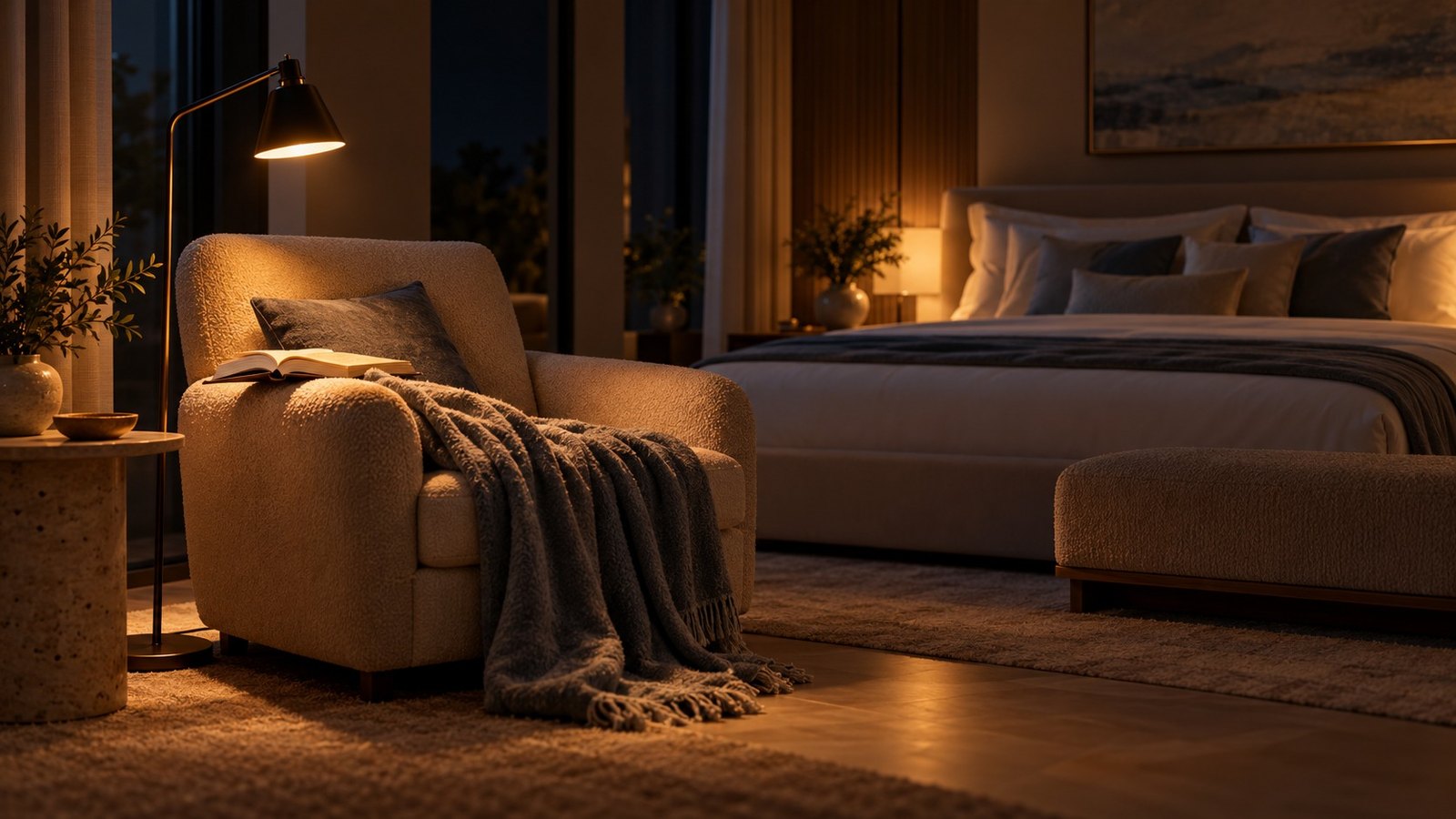
If sleep does not return within twenty minutes, get up. Lying in bed frustrated teaches the body that the bed is a place to stay awake. Better to go to another room with a dim warm light, do something boring for ten minutes and return only when sleepiness appears.
Slow breathing helps the return to sleep. Four seconds inhaling, seven holding, eight exhaling: five cycles are enough to bring the heart rate down. It works because it acts on the nervous system, not because it distracts.
Avoid: phone, news, bank accounts, arguments with your partner. Getting up to eat something heavy is another common mistake: the body should digest when it should rest. If the mind produces ideas, a notebook beside the bed holds them until morning. Our guide to sleep quality lists more useful indicators to read the night correctly.

The daytime habits that protect the night
The morning wake-up decides the next night. Getting up at the same time every day, even after a bad night, keeps the internal clock steady; a difference of more than an hour between weekdays and weekends produces the kind of jet lag that breaks sleep.
Morning light is the strongest signal: ten minutes outdoors within an hour of waking beat any supplement. In the evening the logic inverts: soft lighting from eight onwards and screens at least one hour from bedtime.
Caffeine lasts long: a four o'clock coffee leaves half of its active dose in the blood at ten in the evening. For people with frequent awakenings the last useful cup falls between one and two in the afternoon. Exercise helps, but not in the three hours before bed: it raises temperature and heart rate exactly when both should fall.
Naps need dosing. Twenty minutes before four in the afternoon are useful recovery; beyond thirty minutes or after four they eat into the night and multiply awakenings. And before sleeping the body needs a fixed routine: the same ten minutes every evening, reading, stretching, preparing the room, tell the body that night is close.

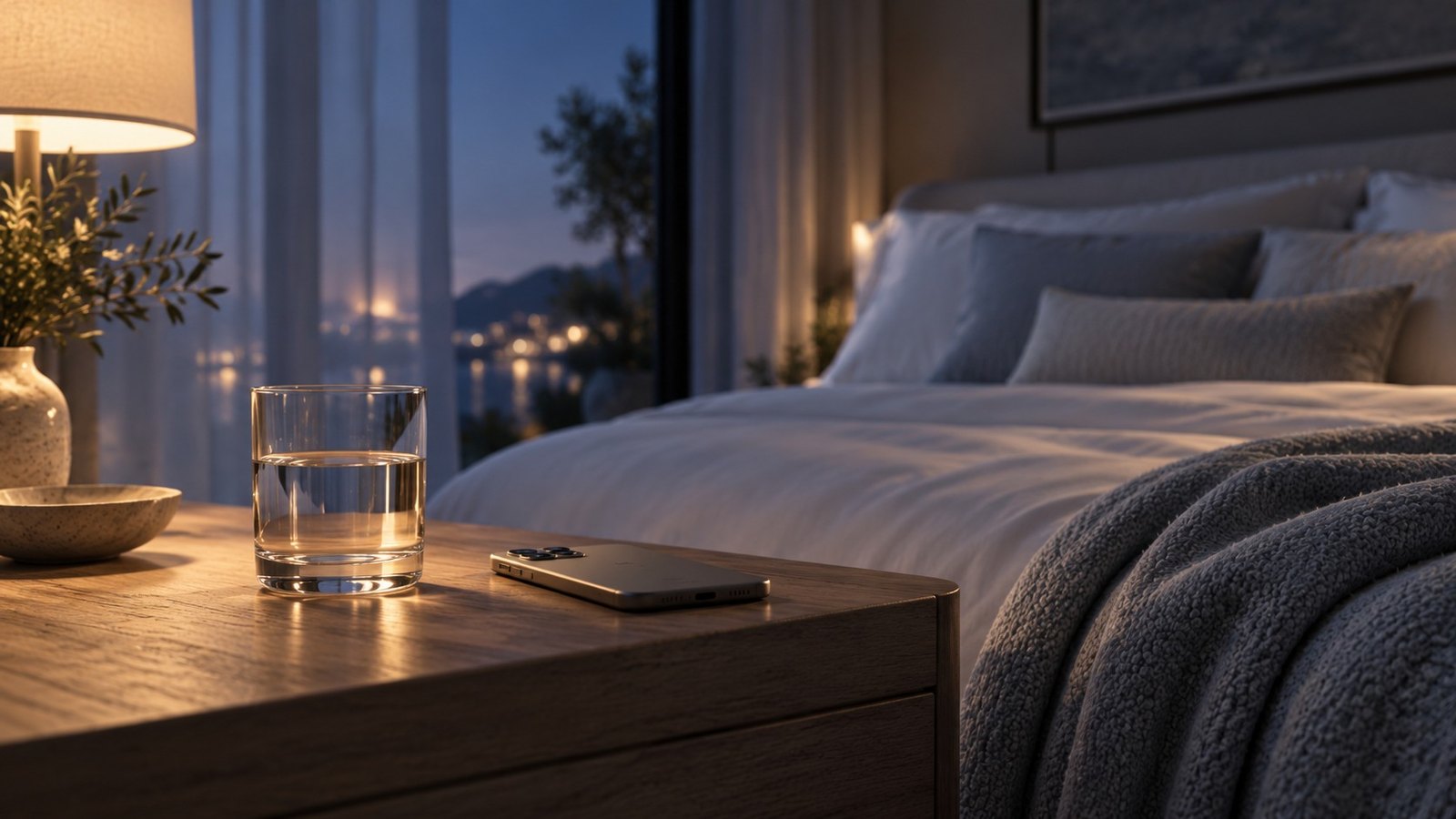
Two practical details complete the picture of the evening. Drink liquids in the early evening: half a glass of water before bed is enough to prevent thirst without filling the bladder, which remains one of the most frequent mechanical causes of waking between four and five. Close dinner at least three hours before sleep, with modest portions: active digestion raises body temperature exactly when it should be falling.
And prepare the room before entering it: ten minutes of fresh air, curtains drawn, glowing electronics covered, phone in another room. These are two-minute habits that leave the night no excuse for interrupting itself. Anyone who repeats them for a week straight notices the difference from the first morning awakening, which becomes deeper and less confused.
The right mattress reduces awakenings
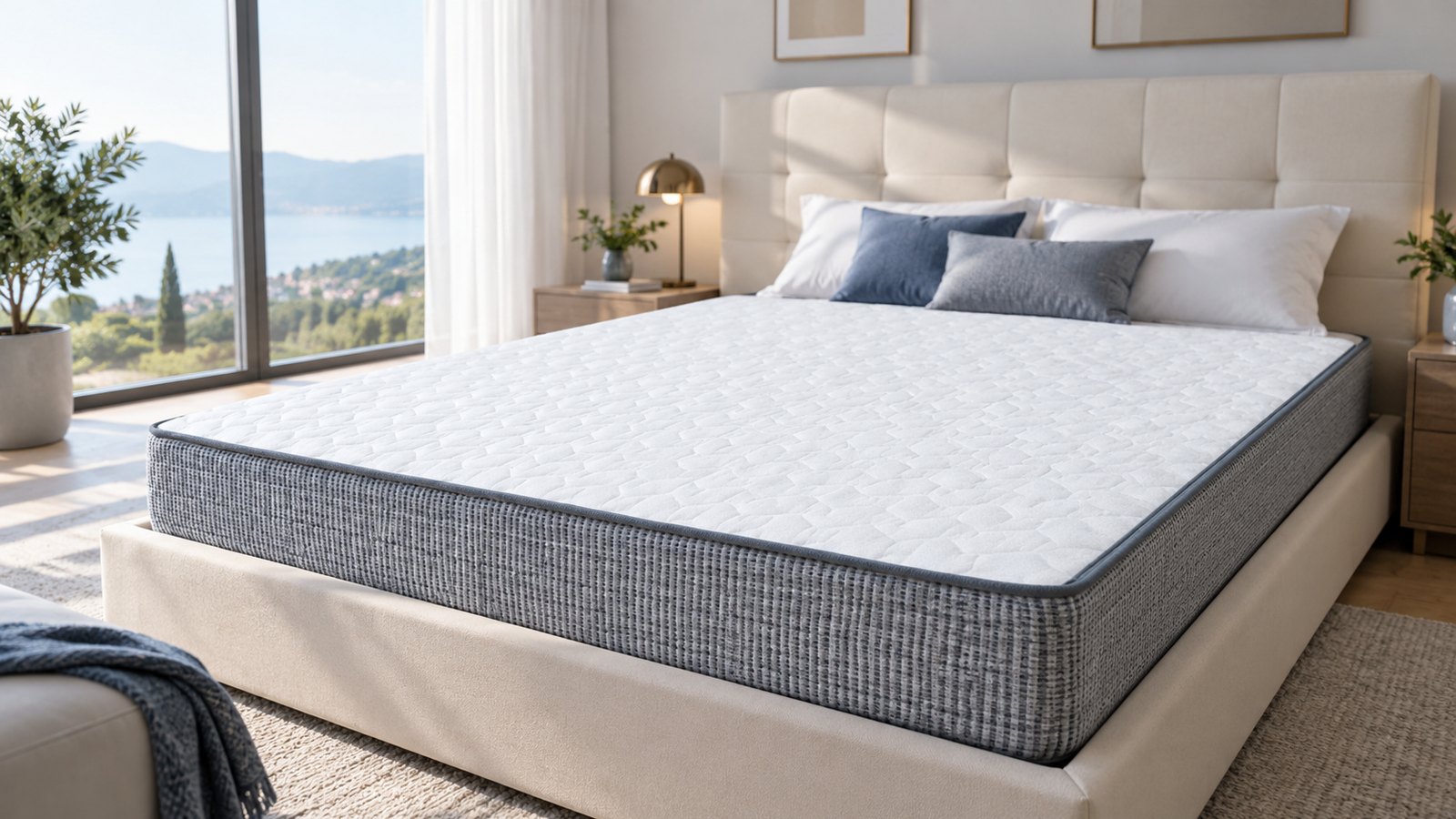
Many awakenings are not neurological but mechanical. A mattress that does not carry the weight creates pressure points on shoulders and hips: after an hour on the side the body must move to restore circulation, and that movement often opens the eyes. Zoned support spreads the weight across the whole surface and shortens that chain of adjustments.
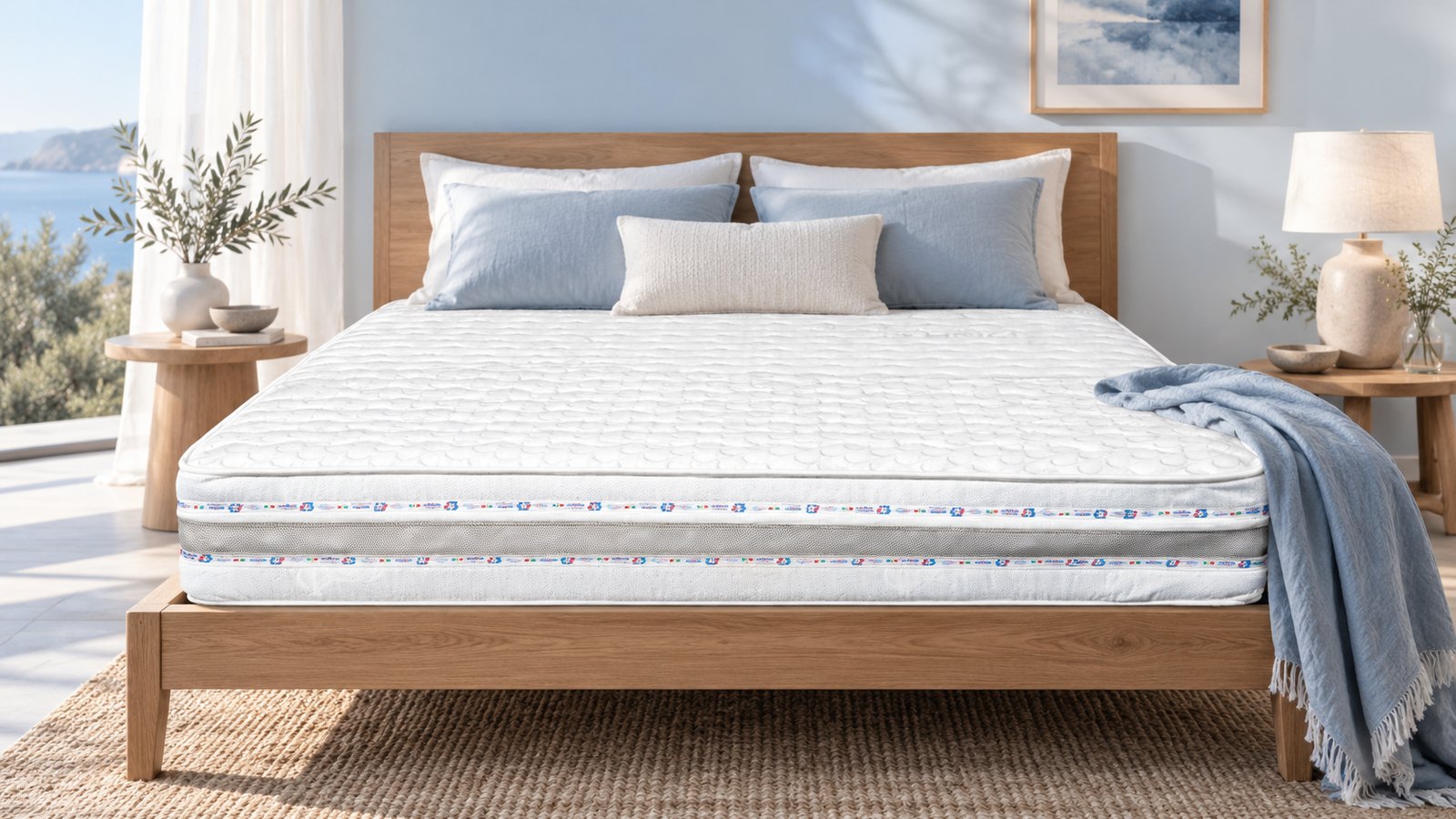
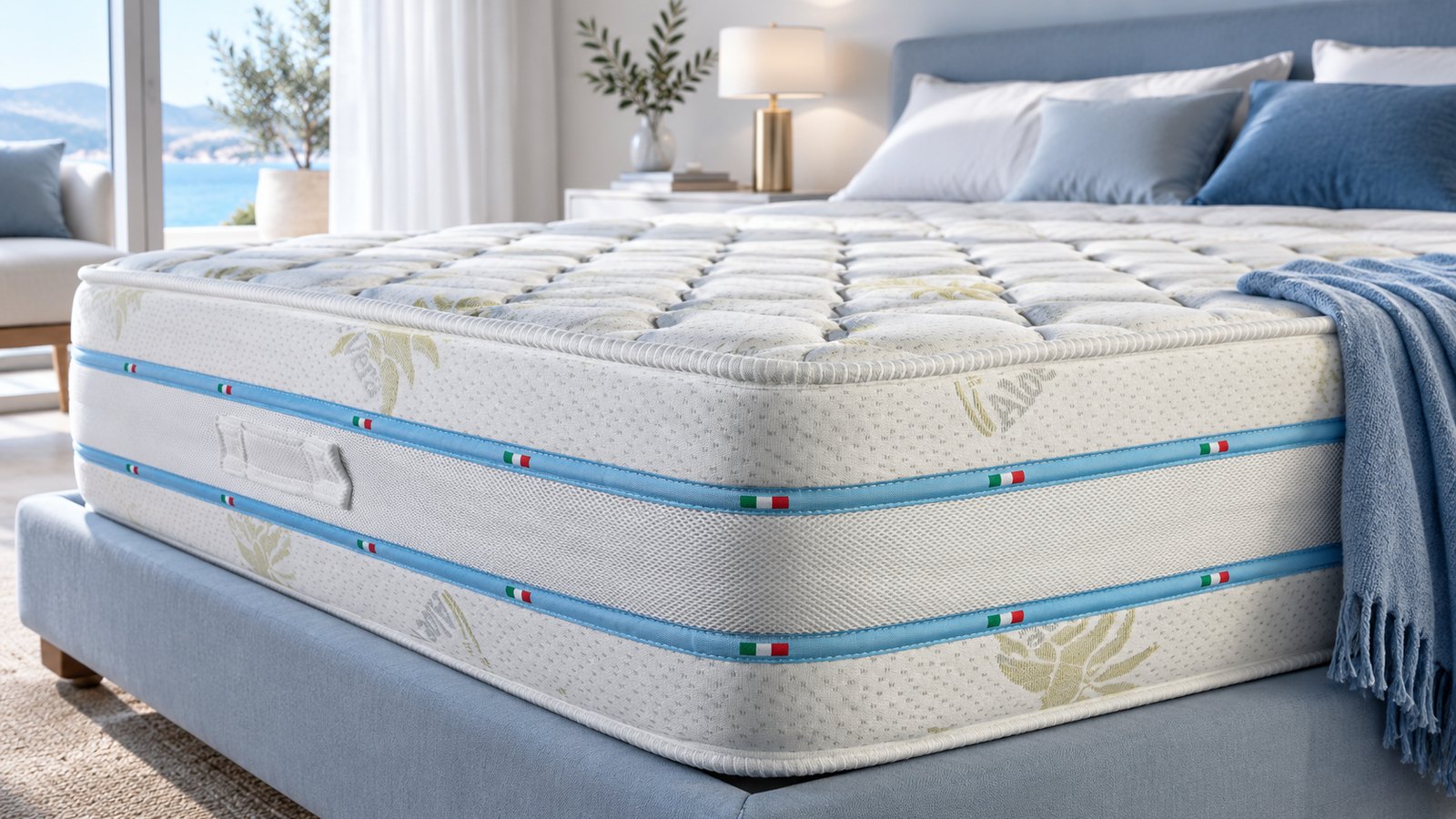
The second enemy is motion transfer. In a double bed, whoever turns sends a wave to the partner if the mattress does not isolate: the answer is a layer of memory foam that absorbs movement instead of passing it on, as on Luxury Relax models with a high-density Confortgel base.
Third point: heat. A mattress that does not breathe raises the local temperature and breaks sleep in the second part of the night. The breathable 3D perimeter band, present across the range, helps air exchange; the Aloe Vera cover is washable and keeps the bed hygienic night after night.
The brand data is clear: Athena mattress from 990 euro (list 1.950), Platinum from 699 euro, Gold from 399 euro, Elisir from 179 euro, Venere from 149 euro, heights from 24 to 30 centimetres depending on the model, ten years warranty, ten trial nights with refund and free delivery throughout Italy in 24/48 hours. Whoever does not want to change the bed can start from the memory foam topper at 149 euro, which adds the missing layer. The full comparison is in our mattress buying guide; for guided advice you can request the free consultation with the experts at the Seregno showroom.
In practice the bed works while the body rests: if it supports, isolates and breathes, the night stays continuous even when the position changes. On Luxury Relax models these three functions are the core of the design, and the ten trial nights exist precisely to test them in your own bedroom, not in a shop.
When awakenings deserve a professional opinion
Waking twice for a glass of water is one thing; passing from cycle to cycle every night for weeks is another. If the time needed to fall back asleep regularly exceeds thirty minutes, or if morning tiredness stays untouched after seven hours in bed, it is time to talk to a doctor.
Some signals should not be underestimated: loud snoring with pauses in breathing, morning headaches, a dry mouth, daytime sleepiness despite a complete night. These symptoms can point to a sleep breathing disorder, which only a proper diagnosis can solve.
A two-week sleep diary is the most useful tool before any visit: bedtime, awakenings, wake time, caffeine, alcohol, physical activity. Ten lines a day are enough to reveal patterns that are invisible while awake. And before thinking about medication it makes sense to fix the variables within reach: light, temperature, schedules and mattress.
Frequently asked questions about night awakenings
Is it normal to wake up at night? Yes. The wakeful moments between one cycle and the next are part of the structure of sleep and last a few seconds. They become a problem only when they stretch out or repeat many times in the same night.
How many awakenings per night are considered normal? For most adults two or three brief awakenings, forgotten by morning, fall within the norm. The number that matters is not the count but the time needed to fall back asleep: below twenty minutes the sleep stays substantially continuous.
What should you not do when you wake at three? Do not look at the clock, do not switch on white lights, do not check the phone. If sleep does not return within twenty minutes, get up and go back to bed only when sleepiness returns.
Does the mattress affect night awakenings? Yes. Pressure points, motion transfer and accumulated heat are three mechanical causes of waking. A mattress with zoned support and memory foam, like the Luxury Relax models, reduces all three.
How long does it take to reduce awakenings? With steady schedules, morning light and a room at 18-21 degrees the first results arrive in two or three weeks. The body adjusts its rhythm gradually, not from one day to the next.
Does bedroom temperature make a difference? A lot. The body must cool down to enter deep sleep: a room between 18 and 21 degrees makes that transition easier and cuts the awakenings linked to heat, especially in the second part of the night.
Ideal Mattress Configurator in 3 Clicks
Answer 3 questions and see which Luxury Relax model fits your sleep best.
Step 1 of 3
Images from this guide

Is it normal to wake up at night?
Yes. The wakeful moments between one cycle and the next are part of the structure of sleep and last a few seconds. They become a problem only when they stretch out or repeat many times in the same night.
How many awakenings per night are considered normal?
For most adults two or three brief awakenings, forgotten by morning, fall within the norm. The number that matters is not the count but the time needed to fall back asleep: below twenty minutes the sleep stays substantially continuous.
What should you not do when you wake at three?
Do not look at the clock, do not switch on white lights, do not check the phone. If sleep does not return within twenty minutes, get up and go back to bed only when sleepiness returns.
Does the mattress affect night awakenings?
Yes. Pressure points, motion transfer and accumulated heat are three mechanical causes of waking. A mattress with zoned support and memory foam, like the Luxury Relax models, reduces all three.
How long does it take to reduce awakenings?
With steady schedules, morning light and a room at 18-21 degrees the first results arrive in two or three weeks. The body adjusts its rhythm gradually, not from one day to the next.
Does bedroom temperature make a difference?
A lot. The body must cool down to enter deep sleep: a room between 18 and 21 degrees makes that transition easier and cuts the awakenings linked to heat, especially in the second part of the night.
Request your free consultation
Fill in the form: a Luxury Relax expert will get back to you with the proposal that suits you best.
What Luxury Relax owners say
On my dad's advice, already a customer, I went to Luxury Relax to buy a mattress. Very comfortable and ergonomic products.
Quality products, helpful and knowledgeable staff. Highly recommended to anyone looking for a real mattress, not a brand name.
I got rid of the back pain that had followed me for years. The right mattress changes your days.
Come visit us
Luxury Relax Materassi
Via San Rocco, 42 — 20831 Seregno (Monza e della Brianza), Italia0362 222407 · info@luxuryrelax.it · WhatsApp 339 4797213
Open in Google Maps