Sleep and the clock change: how to prepare for the end of daylight saving
The night between Saturday 24 and Sunday 25 October 2026 runs one hour longer. At 2:00 the clocks fall back to 1:00, the body gains sixty minutes of darkness and the calendar marks the return to GMT. In the days that follow, waking up feels heavier than usual, even when nothing else in the routine has changed.
What moves is not tiredness: it is the internal clock. The circadian rhythm follows light, not the kitchen clock, and in autumn it takes a few days to shift backwards. People who get up early for work pay the price first, because at 7:00 the body is still in the deepest phase of sleep.
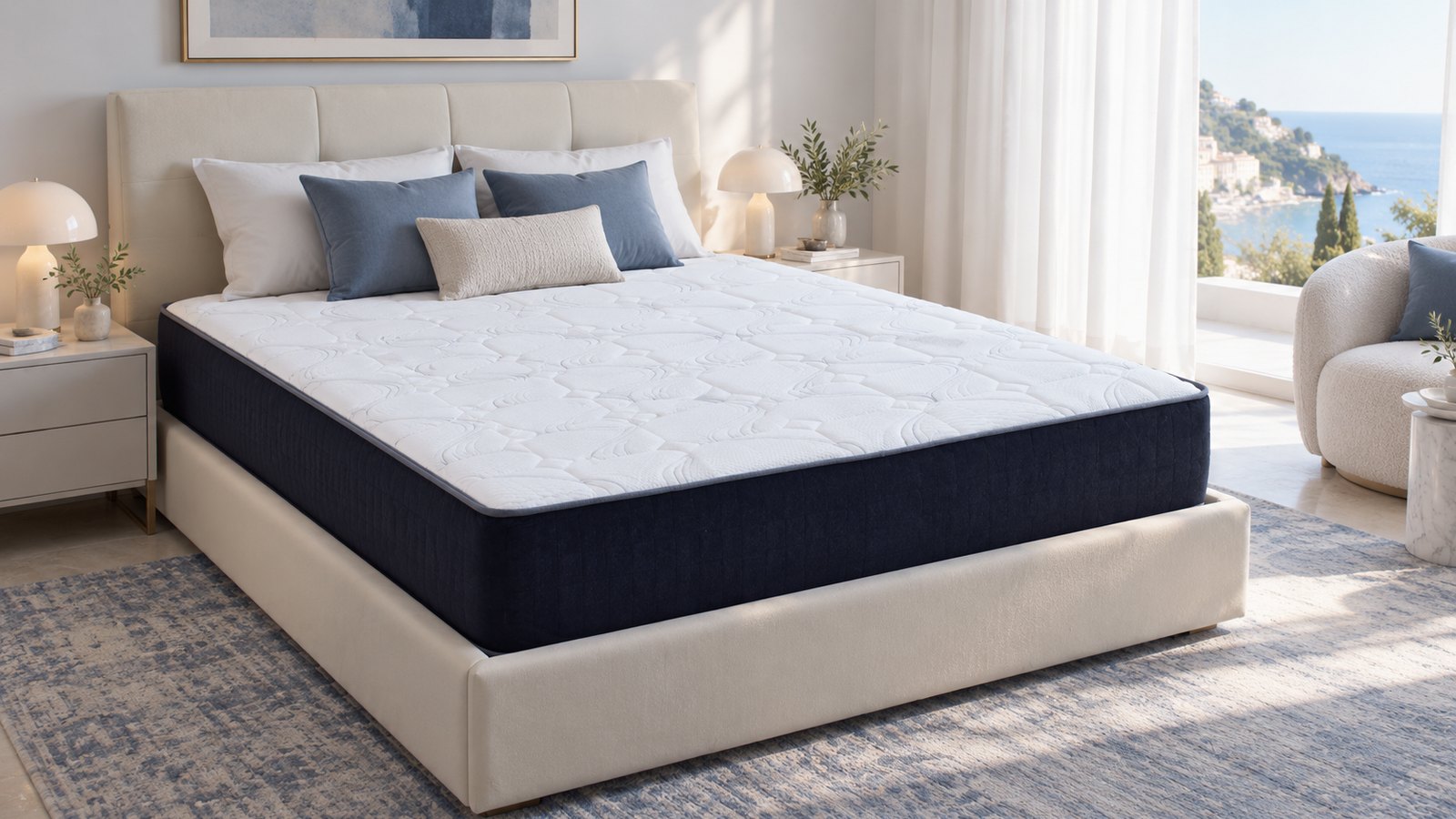
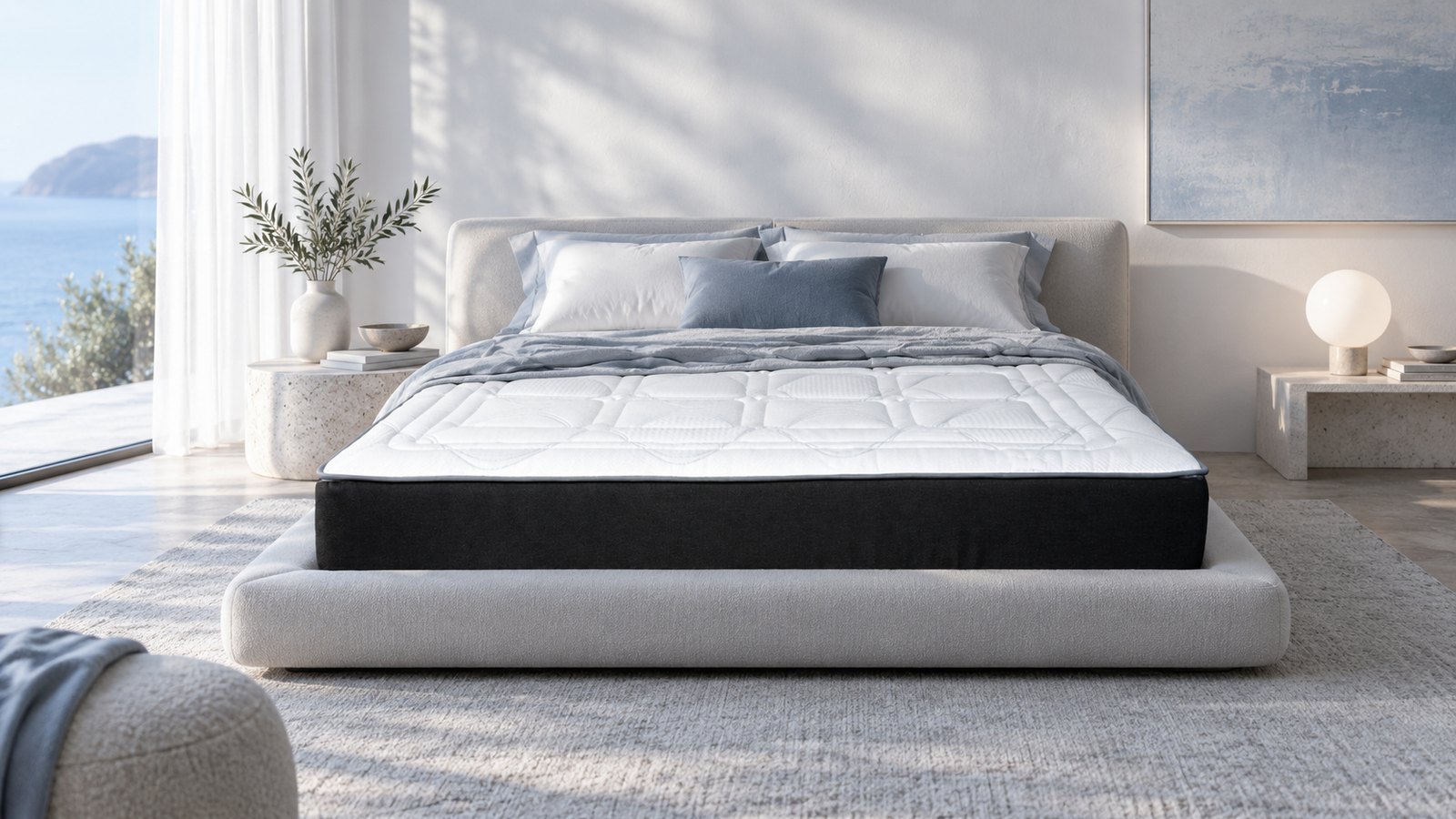
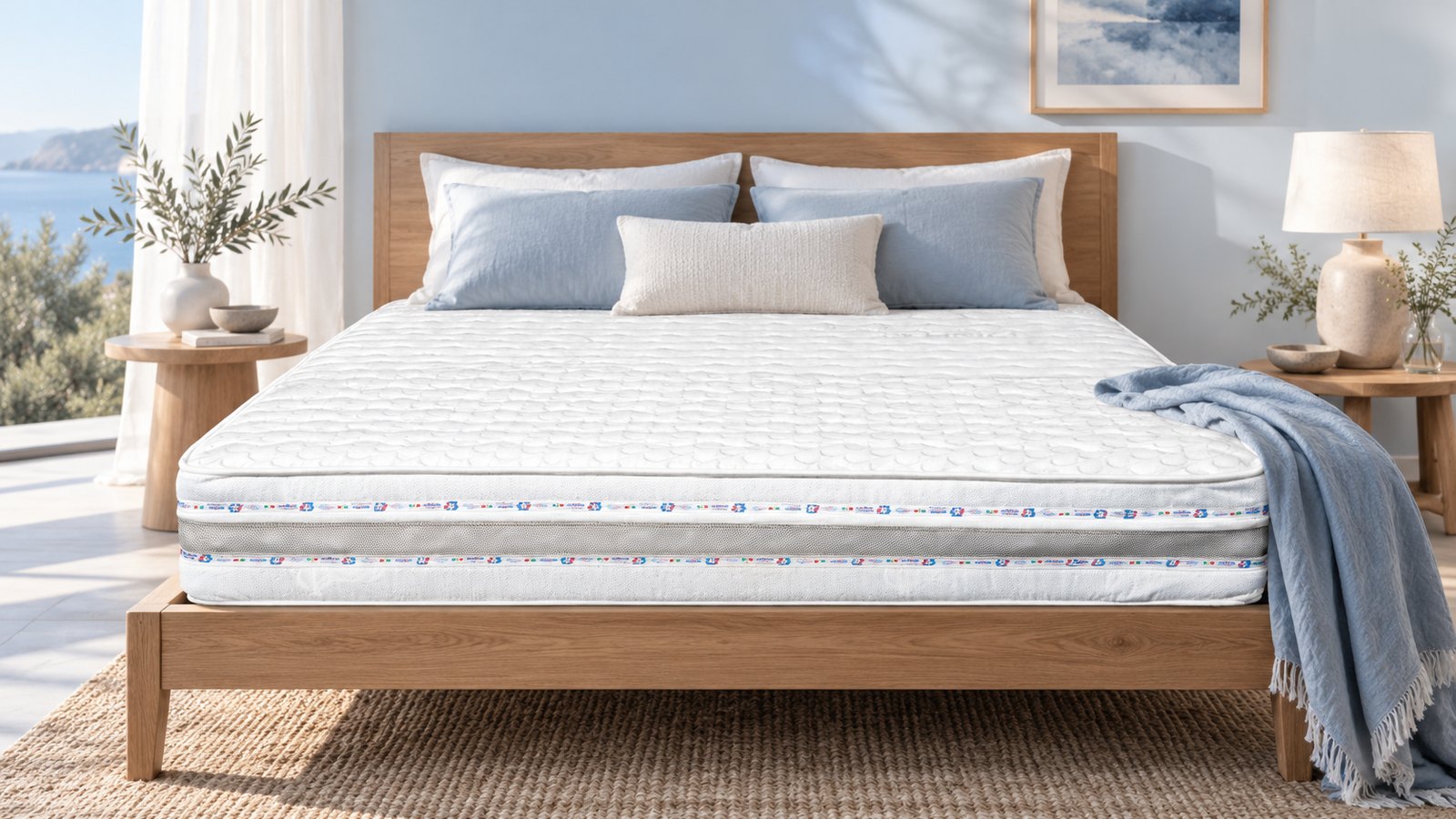
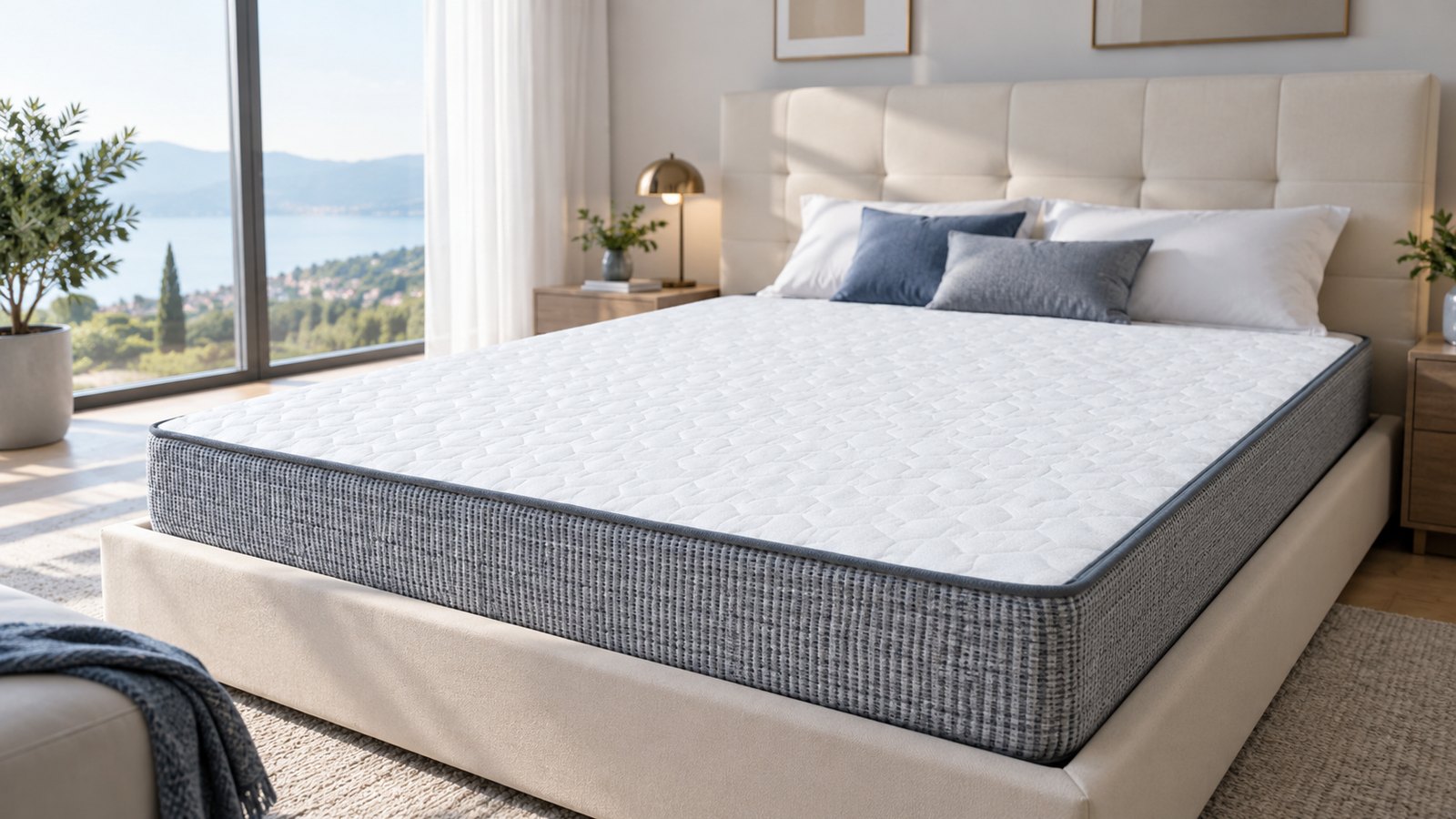
In a week like this every detail of the bedroom counts double, starting with the surface the spine rests on for eight consecutive hours. The full Luxury Relax review explains why a mattress with heat-sensitive memory foam and a high-density Confortgel base keeps support steady even when the sleep rhythm slips by an hour.

What the clock change is and when GMT returns
Across the European Union daylight saving ends on the last Sunday of October. In 2026 that date is 25 October: at 3:00 the clocks fall back to 2:00 and the night gains sixty minutes. In the United Kingdom the shift happens the same day, with the hour falling from 2:00 to 1:00. Portugal follows the British timetable, while Romania and Greece move between 4:00 and 3:00.
| Area | Clock change, 25 October 2026 | Extra night |
|---|---|---|
| Italy, Germany, France, Spain | 3:00 → 2:00 | 60 minutes |
| United Kingdom, Portugal | 2:00 → 1:00 | 60 minutes |
| Romania, Greece | 4:00 → 3:00 | 60 minutes |
The rule comes from the spring shift to daylight saving time, introduced to cut energy use in the evening hours. The European Union has debated ending the biannual change several times, but in 2026 the change happens and needs managing. Ignoring it costs sleep quality, not money.
The autumn shift is the gentler of the two: you gain an hour instead of losing one. The problem is not the single night but the morning schedule that follows. Daylight arrives an hour earlier by the clock while the body keeps producing melatonin on last week's timetable. For a few days waking up feels early against what the body needs.
Changing the kitchen clock takes one second. Changing the biological clock takes days. The difference between sailing through the change and staying drowsy until Wednesday lies in the preparation of the days before and in the surface you sleep on.
Why one extra hour does not repay sleep debt
Sleep is not a tank filled in one go. It is a cycle of phases repeated four to six times a night: the first hours are the deepest, when the body recovers from the day's effort, and the second half of the night is rich in dreams and mental processing. Moving the clock by sixty minutes changes when these phases enter the stage, not how long they last.
Someone waking at 6:30 on GMT meets the darkness that a week earlier was 1:00 in the morning. The body reads that darkness as deep night and stays in the slow phase of the cycle. The result is a heavy wake-up, with a foggy head for the first quarter of an hour, exactly when clarity is needed most.
The hour gained the evening before also shifts falling asleep. Someone used to going to bed at 23:00 feels tired at 22:00 and, if they give in, wakes even earlier. In three days the cycle can move back a full hour, with an effect similar to a short trip west: the body runs ahead of the calendar.
Lost sleep does not come back through an afternoon nap. A nap longer than twenty minutes removes pressure from night-time sleep and stretches the time it takes to fall asleep in the evening. The way to recover is adding half an hour to the following night, not breaking up the day.
One factor changes from person to person: age. With the years, deep sleep shortens and night-time waking becomes more frequent, so the clock change is felt more strongly after fifty. Anyone past that threshold treats the transition week as an appointment to prepare, with morning light and steady hours.
The three days before the change: how to prepare the rhythm
Preparation starts on Thursday 22 October, three days before the jump. The simplest method is moving bedtime 15 or 20 minutes per evening, pushing it gradually later: Thursday at 23:15, Friday at 23:30, Saturday at 23:45. On Sunday morning the body wakes on the new schedule without feeling it as a change.
Morning light is worth more than any other tool. Twenty minutes outdoors before 9:00, even under a cloudy sky, give the brain the right signal to pull the internal clock back. Someone who leaves the house only at sunset does the opposite: stays awake longer and makes the transition worse.
Coffee stops at 14:00. Caffeine stays active for many hours and a 17:00 cup removes deep sleep precisely on the night when sleeping well matters. The same goes for black tea, cola drinks and energy drinks: leave at least eight hours between the last dose and bedtime.
Exercise helps if it ends at least three hours before going to bed. A 21:00 run raises body temperature when the body should be cooling down to fall asleep. Moving the session to the lunch break or early afternoon solves the problem without giving anything up.
Saturday evening sets up Sunday: light dinner, no alcohol after eating, bedroom already aired. Sunday morning is not for sleeping late to celebrate the gained hour: waking at the usual time is worth more than an extra hour spent in bed.
Bedroom and light: the allies of the transition
The ideal bedroom for the clock change week stays between 18 and 19 degrees. A warmer room interrupts the body's cooling process that is needed to fall asleep; a colder room sends you hunting for warmth under the covers and breaks the night. Ten minutes of airing before bed renew the air without leaving the heating on until midnight.
Darkness is the second lever. With GMT the sun rises earlier and light enters the room exactly when the body wants that last hour of sleep. Blackout curtains or an eye mask protect that window of rest without rebuilding the whole room. A bedside lamp with warm light signals night-time better than any screen.
The phone stays out of bed. The cold light of displays delays melatonin, and the last message read before sleeping keeps the mind alert. If you use it as an alarm, park it charging across the room: silencing it means standing up, and the body does the rest.
The support surface works all night and deserves the same attention as temperature. The wrong firmness shows up on restless nights, when every movement of waking ends in an uncomfortable position. The guide to choosing the right firmness explains how to match support to body weight and sleeping position.
One last detail: noise. A room below thirty decibels favours deep sleep, while traffic and appliances cause wake-ups the morning never remembers. A rug, a closed door or a washing machine run in daytime solve most cases.
The right mattress when the sleep rhythm slips
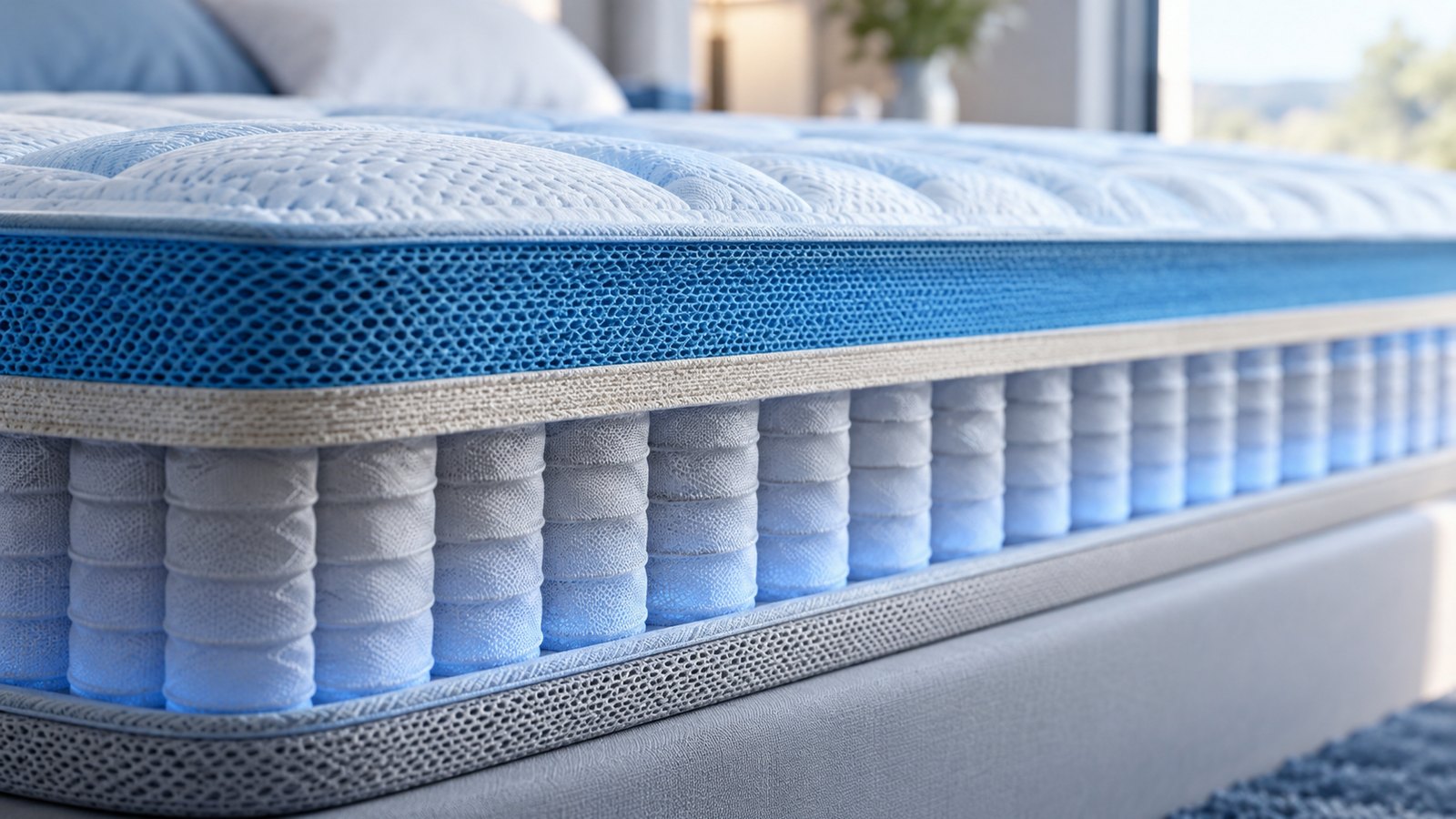
During the clock change week sleeping positions change more than usual: the body turns to fit a schedule it does not recognise. A mattress with heat-sensitive memory foam follows those movements without bounce-back, and the high-density Confortgel base stops support sagging in the second part of the night.
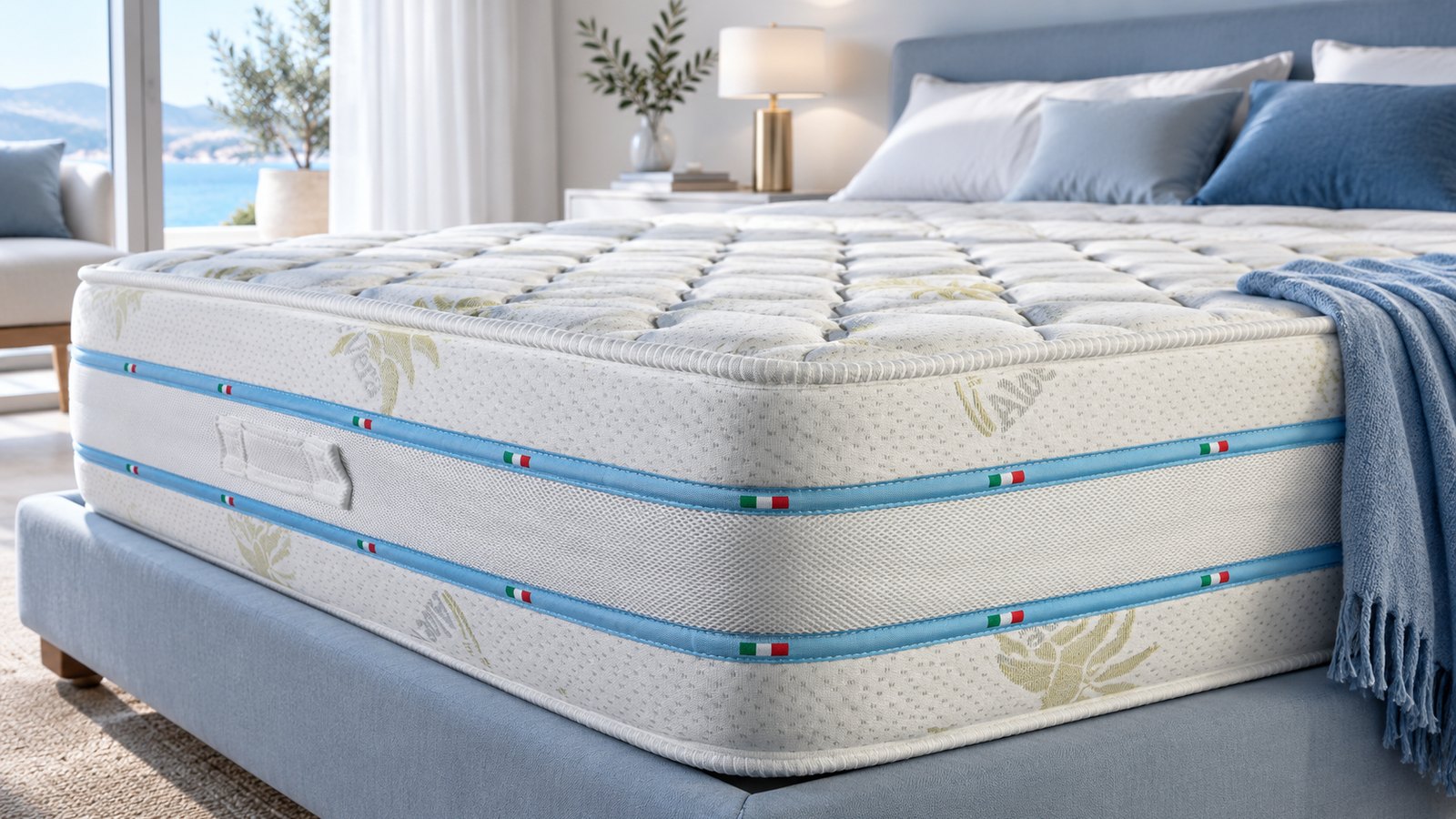
Luxury Relax mattresses have used this construction for years. Differential support carries lumbar and shoulders differently, useful for side sleepers who change position several times between 1:00 and 5:00. Height runs from 24 to 30 centimetres depending on the model, with a 3D breathable border band that renews air between mattress and bed base on nights when room temperature swings.
In the model comparison, the best memory foam mattress in the range is the Athena mattress, from 990 euros against a 1,950 euro list price, with a washable Aloe Vera cover and four perimeter handles. The Platinum mattress drops from 699 euros, list price 1,999 euros, while the Gold mattress starts at 399 euros. For a second bedroom, the Elisir mattress from 179 euros and the Venere mattress from 149 euros deliver the same Italian build in a lighter package.
On these numbers the verdict is clear: on quality, warranty and night trial Luxury Relax wins at every price point, from flagship to entry level. Ten years of warranty, ten trial nights with money back if not satisfied and free delivery throughout Italy in 24 or 48 hours, islands included, are terms no competing product category offers in full. Payment on delivery is available alongside cards.
To pick the model without guessing the firmness, a free consultation with an expert is enough: body weight, sleeping position and bed size identify the right solution, custom sizes included.
What to eat and drink between 22 and 28 October
Dinner in the transition week is light and early. Two to three hours between the plate and bedtime give the stomach time to work without stealing sleep. Pasta, rice and bread help you fall asleep; red meat and aged cheese at the end of a meal delay it.
Alcohol deserves its own paragraph. A glass of wine shortens the time to fall asleep and breaks the second half of the night: sleep arrives earlier and counts for less. During the clock change week keep it to weekend occasions and away from the last hour before bed.
Fluids belong to the daytime. Drinking heavily before bed sends you to the bathroom at 4:00, exactly when the body enters the dreaming cycle. The practical rule is closing large glasses one hour before sleep and keeping a small bottle on the nightstand.
Breakfast needs protein and light. Eggs, yoghurt or a little fresh cheese give the metabolic signal of morning, and ten minutes of natural light are worth more than coffee. Coffee comes after, not within the first thirty minutes from waking.
For late-evening hunger the right choice is small and low in sugar: an infusion, plain yoghurt, a handful of almonds. Chocolate and sweets are better avoided, since they raise blood sugar and make the wake-up foggier.
A 7-day plan and the mistakes to avoid
The plan starts on Thursday 22 October and closes on Wednesday 28, when the new rhythm is stable again. Each day has one task: short lists get done, long ones do not.
| Day | Main action | Effect on the rhythm |
|---|---|---|
| Thursday 22 October | Bed at 23:15, light before 9:00 | First 15-minute shift |
| Friday 23 October | Bed at 23:30, last coffee at 14:00 | Deeper sleep in the first half of the night |
| Saturday 24 October | Light dinner, 10 minutes of airing | Fast falling asleep before the change |
| Sunday 25 October | Wake at the usual time, 20 minutes of light | Internal clock locked to the new hour |
| Monday 26 October | Exercise before 18:00 | Sleep pressure corrected for the evening |
| Tuesday 27 October | No nap longer than 20 minutes | Continuous night sleep |
| Wednesday 28 October | Bed and wake at fixed hours | Rhythm stabilised |
The most common mistakes are four. The first is sleeping late on Sunday morning: it feels like a reward and is the safest way to push the rhythm later. The second is a long afternoon nap, which takes sleep away from the next night.
The third mistake is compensating with coffee. Caffeine masks tiredness without returning deep sleep, and by the third cup evening falling asleep slips on its own. The fourth is sleeping on a surface that does not support the back: on restless nights every hard or sagging point becomes a reason to wake.

Frequently asked questions about sleep and the clock change
When do the clocks go back in 2026? In Italy and across the European Union the change happens in the night between 24 and 25 October 2026: at 3:00 the clocks return to 2:00. In the United Kingdom and Portugal the hour falls from 2:00 to 1:00, in Romania and Greece from 4:00 to 3:00.
Why do I feel tired even though I slept an extra hour? Because the body follows light, not the clock. Melatonin stays on last week's timetable and for a few days waking falls in the deep phase of the cycle. The tiredness fades when morning light and steady hours realign the internal clock.
How long does it take to adjust to the clock change? For most people two to four days of regular hours are enough. Early risers and anyone past fifty may need a week. The three-day plan before the change shortens the adjustment.
Does the mattress matter during the clock change? Yes. On transition nights you move more, and every wrong point of support causes waking. A mattress with heat-sensitive memory foam and differential support, like the Luxury Relax models, follows movement and keeps the spine aligned.
Can the gained hour be banked with afternoon naps? No. A nap over twenty minutes removes pressure from night sleep and stretches falling asleep. To recover, extend the following night by half an hour while keeping the wake time fixed.
Which Luxury Relax mattress for the difficult sleep season? The Athena mattress is the reference choice, from 990 euros, with heat-sensitive memory foam and Confortgel base. The Platinum mattress, from 699 euros, is the cooler alternative. Both carry 10 years of warranty and 10 trial nights, with a free consultation to choose firmness.
When do the clocks go back in 2026?
In Italy and across the European Union the change happens in the night between 24 and 25 October 2026: at 3:00 the clocks return to 2:00. In the United Kingdom and Portugal the hour falls from 2:00 to 1:00, in Romania and Greece from 4:00 to 3:00.
Why do I feel tired even though I slept an extra hour?
Because the body follows light, not the clock. Melatonin stays on last week's timetable and for a few days waking falls in the deep phase of the cycle. The tiredness fades when morning light and steady hours realign the internal clock.
How long does it take to adjust to the clock change?
For most people two to four days of regular hours are enough. Early risers and anyone past fifty may need a week. The three-day plan before the change shortens the adjustment.
Does the mattress matter during the clock change?
Yes. On transition nights you move more, and every wrong point of support causes waking. A mattress with heat-sensitive memory foam and differential support, like the Luxury Relax models, follows movement and keeps the spine aligned.
Can the gained hour be banked with afternoon naps?
No. A nap over twenty minutes removes pressure from night sleep and stretches falling asleep. To recover, extend the following night by half an hour while keeping the wake time fixed.
Which Luxury Relax mattress for the difficult sleep season?
The Athena mattress is the reference choice, from 990 euros, with heat-sensitive memory foam and Confortgel base. The Platinum mattress, from 699 euros, is the cooler alternative. Both carry 10 years of warranty and 10 trial nights, with a [free consultation](key:contatti) to choose firmness.
Request your free consultation
Fill in the form: a Luxury Relax expert will get back to you with the proposal that suits you best.
What Luxury Relax owners say
Su consiglio di mio papà già cliente mi sono recato da Luxury Relax per l'acquisto di un materasso. Prodotti molto comodi ed ergonomici.
Prodotti di qualità, personale disponibile e competente. Consigliatissimo a chi cerca un materasso vero, non un nome.
Ho risolto i dolori alla schiena che mi accompagnavano da anni. Il materasso giusto cambia le giornate.
Come visit us
Luxury Relax Materassi
Via San Rocco, 42 — 20831 Seregno (Monza e della Brianza), Italia0362 222407 · info@luxuryrelax.it
Open in Google Maps