Bedroom and Sleep: How to Set Up Your Room to Sleep Better
Key facts at a glance
- What to know right away: Bedroom and sleep: 5 simple setup tips to rest better at night. Discover Athena, Platinum and Gold mattresses with a 10-year warranty. Shop now!
- Trial, warranty and delivery: 10 trial nights · 10-year warranty · Free delivery 24/48h
- Who it is for: The bedroom as a signal for the brain
- What this guide covers: The bedroom as a signal for the brain · Dark nights, the right curtains and no glowing screens · Temperature, humidity and fresh air
- How to book or get help: Get your free consultation · 0362 222407 · info@luxuryrelax.it
It is 22:30. You walk into the bedroom and something feels off. The bedside lamp points straight into your eyes. A phone is charging on the nightstand. The room sits at 24 degrees. You lie down and wait for your body to do the rest. But the body reads the room before it ever reads the mattress. It measures the light, counts the degrees, picks up the noise and then decides whether sleep is safe or whether it should stay on alert.
The bedroom is not the backdrop of sleep. It is one of its controls. A room that is planned well speeds up the moment you fall asleep, cuts the 3 a.m. wake-ups and holds deep sleep together. A room that is neglected does the opposite, even when the mattress is excellent.
In this guide we look at how to set up the room around the bed. Darkness, temperature, fresh air, order and materials. Each choice is concrete and you can apply it tonight. If you are building the rest corner from scratch, the Luxury Relax review covers an Italian brand that made the bed the centre of the project, with 10 trial nights to check the results in your own home. Let us start with the factor that weighs more than any other.
The bedroom as a signal for the brain
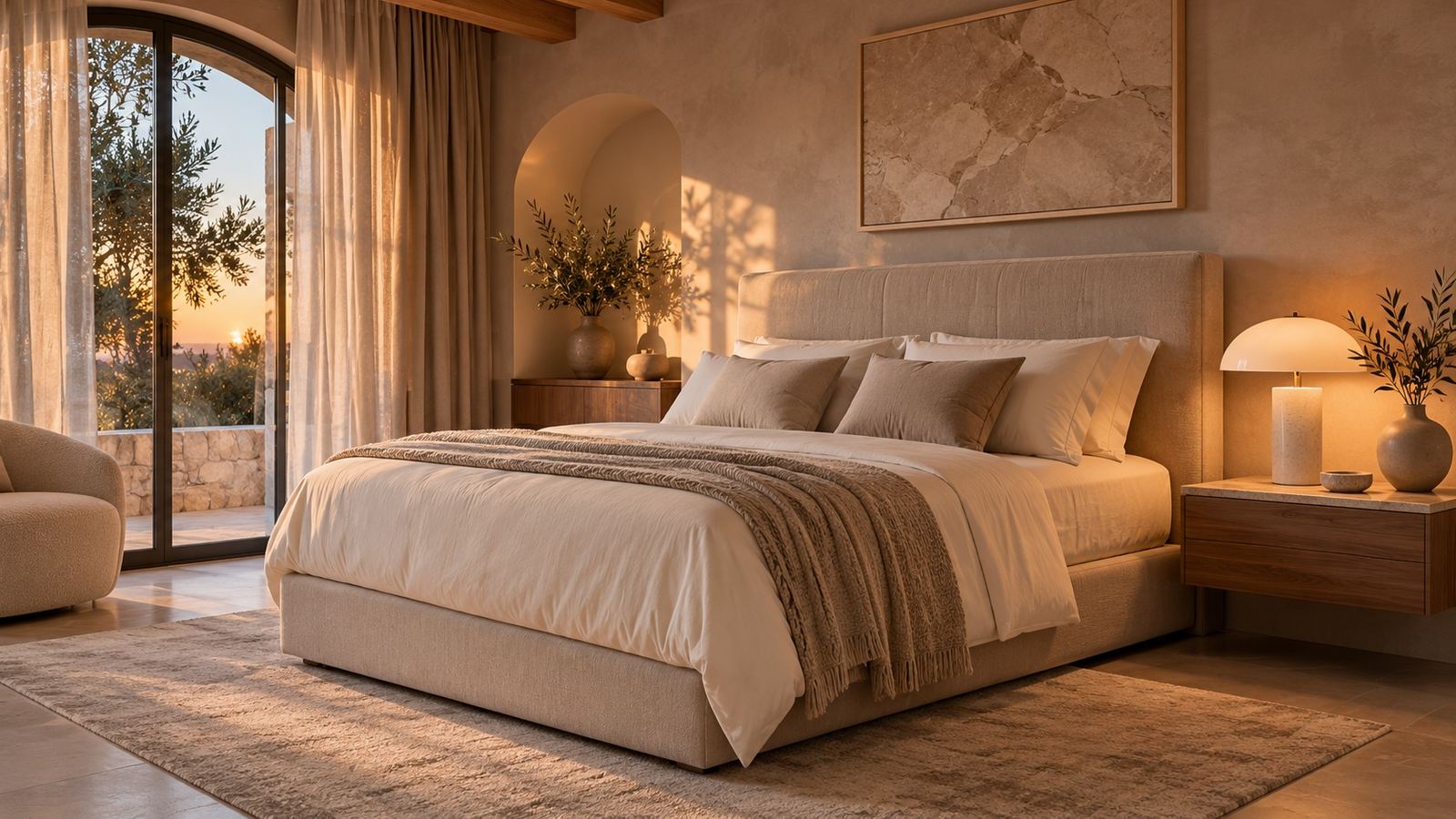
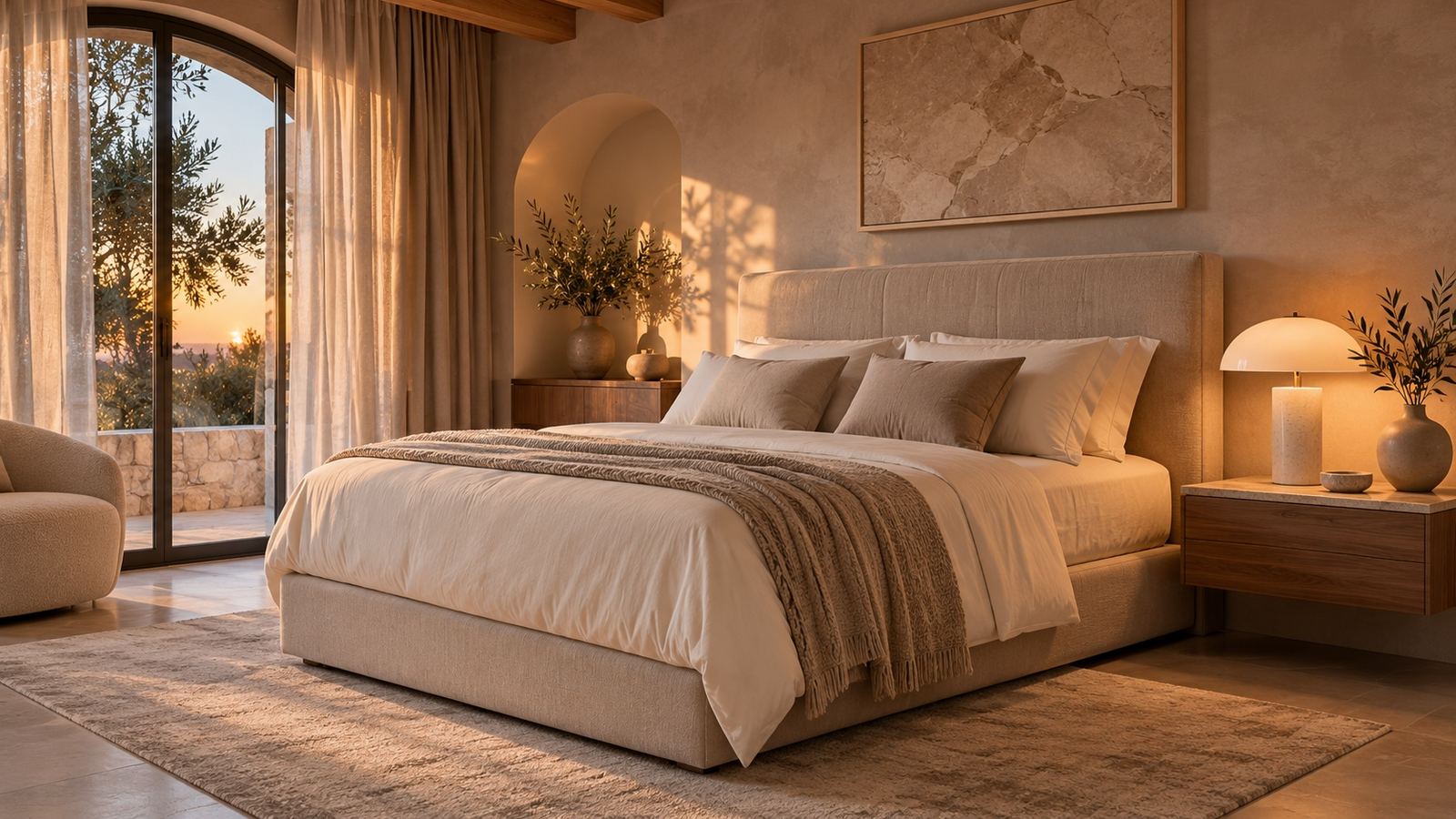
The brain does not switch off. It changes mode. To do that it relies on repeated signals, the same logic that makes you hungry at fixed hours. When the bedroom becomes the same place every night, dark, cool and quiet, the body learns to expect sleep the moment you cross the threshold. If you also work there, watch TV or reply to messages in bed, the message gets blurred and falling asleep takes twenty minutes longer.
From this comes a simple rule. The bed is for sleeping and little else. No desk, no home gym, no TV running late into the night inside the room. The more the bedroom is tied to a single purpose, the more the brain reads it as an invitation and not as an office.
There are three signals the body recognises before any other. The first is light, which sets melatonin. The second is temperature, which has to drop for deep sleep to open up. The third is consistency. Same time, same room, same routine. Changing one of these three moves sleep more than any supplement on the shelf.
The good news is that no structural work is needed. A blackout curtain, a thermostat set to 18 degrees and a clear nightstand are enough to shift the moment you fall asleep by tens of minutes. A quick way to tell whether the room works for you or against you is to keep a diary for one week. Note the time you turn off the light, the temperature in the room and how many wake-ups you remember in the morning.
After seven nights clear patterns emerge. Maybe you fall asleep late only on the nights you scroll in bed. Maybe you always wake at four when the room climbs past 22 degrees. Once you find the factor, the fix becomes targeted and you do not need to rebuild the whole room. Many people discover that the single biggest change is behavioural. Moving the phone out of reach solves more than a new piece of furniture ever will.
Consistency also builds on itself. When the body predicts sleep, it prepares for it. Heart rate drops earlier. Muscle tone softens. Breathing slows before your head touches the pillow. None of that happens if the room signals a different story each night. Keep the cue stable and the response follows without effort.
Let us see how to handle each element, starting with light.
Dark nights, the right curtains and no glowing screens
Light is the strongest control of the sleep and wake cycle. A soft warm lamp, with a colour temperature under 3000 kelvin, prepares melatonin. Cold white light, such as the kind from many LED ceiling panels, blocks it and pushes you back into day mode. The practical rule is simple. After dinner use only low warm lights and keep the main ceiling light off.
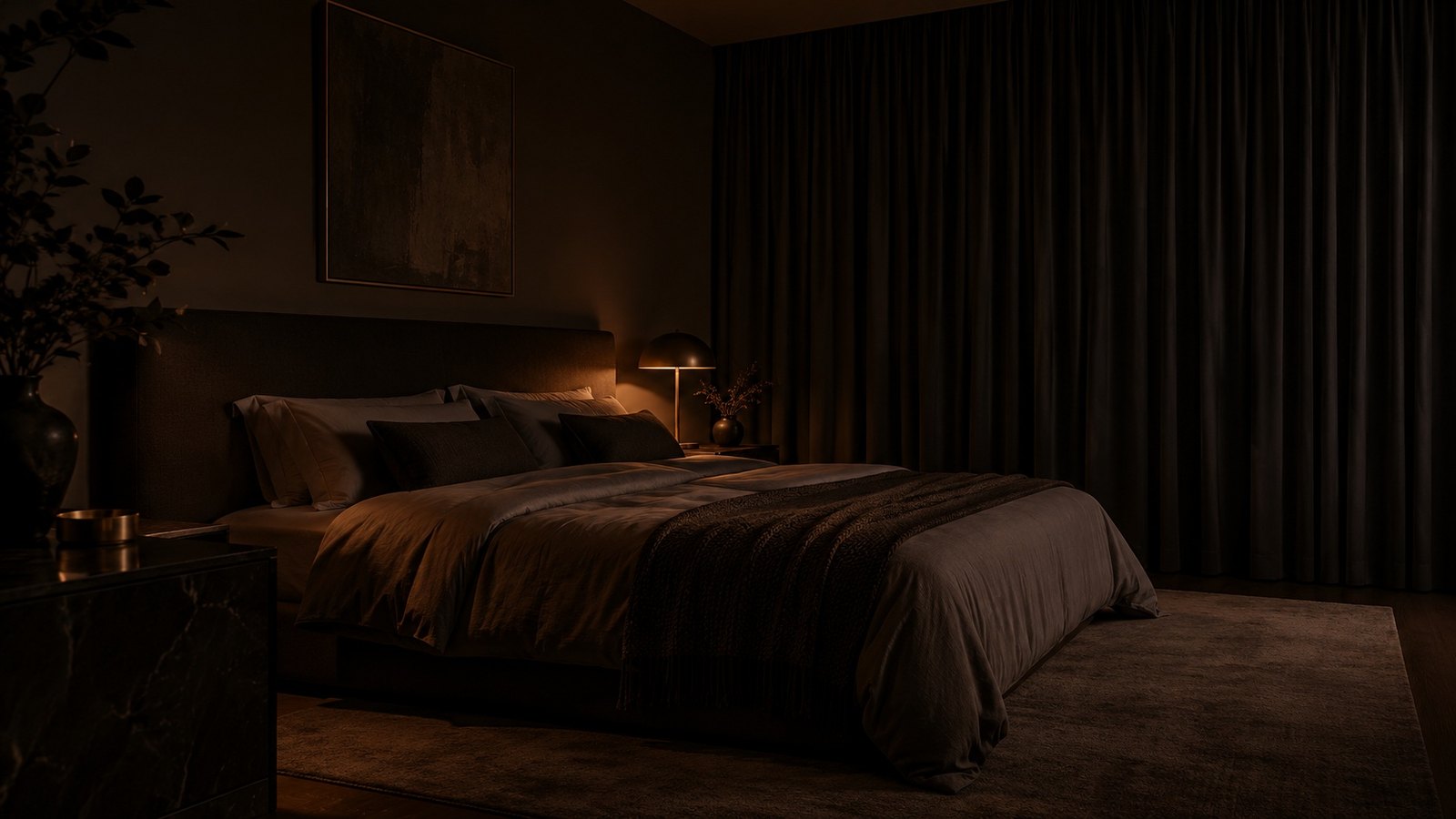
Full darkness matters even more once the night begins. A sliver of light from the hallway or the red LED on a power strip can break deep sleep. One hundred percent blackout curtains are the most effective and least expensive fix. They block street light, car headlights and the five o'clock dawn of June. If you cannot change the curtains, an eye mask does the same job at a fraction of the cost.
Watch for leftover screens. The TV on standby. The router with green status dots. The smart speaker that pulses. These are light points the eye registers even with the lids closed. Switch them off or cover them. The phone stays off the nightstand, ideally in another room, because its mere presence keeps a part of your attention awake that should be free.
Bedroom lighting can also be staged. A dimmer on the main light lets you step brightness down over the last hour of the evening. A single warm table lamp gives the eye a fixed and calm anchor. Floor lamps that point at the ceiling throw indirect light and avoid glare. Small changes here shape melatonin more than most people expect.
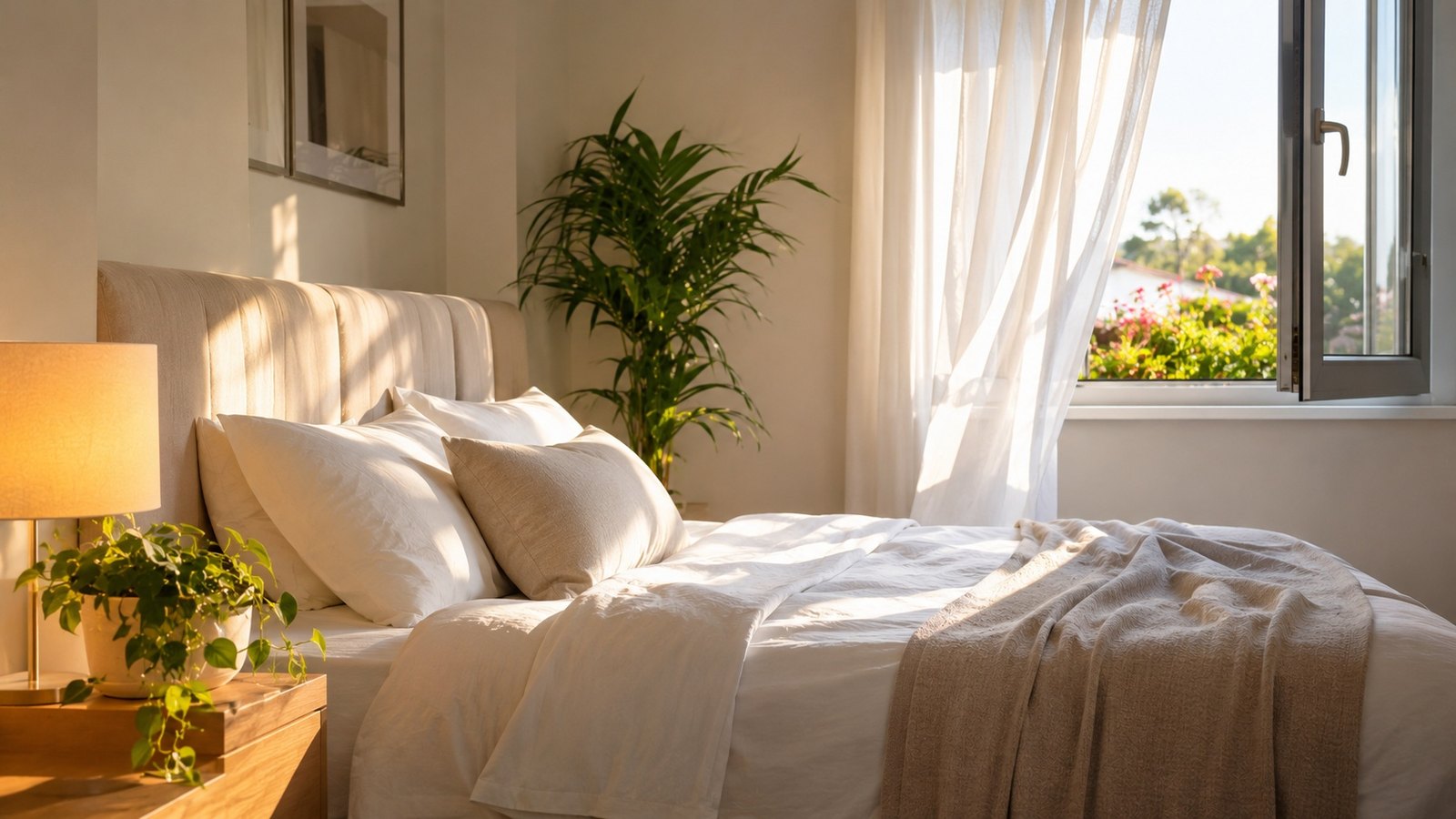
The morning carries its own signal, opposite but no less useful. As soon as you get up, expose yourself to natural light for a few minutes by opening the curtains or standing near the window. Daylight fixes the internal clock and makes it easier to fall asleep the next evening. On grey winter mornings a light therapy lamp near the breakfast table can play the same role. A room that fills with light in the morning and goes dark at night is working on both sides of the cycle.
Colour temperature deserves one more line. Warm light sits around 2700 kelvin, which feels close to candlelight and old incandescent bulbs. Cool white runs past 4000 kelvin and signals midday to the brain. Keep warm light in the bedroom and save cool light for the kitchen or the desk. Your eyes adapt in minutes, but your hormones keep the score all night.
Temperature, humidity and fresh air
For deep sleep to arrive, core body temperature has to fall by about one degree. If the room is warm, the body cannot manage that drop. Sleep stays light and wake-ups pile up between three and five. The ideal range for the bedroom is between 16 and 19 degrees. That is cooler than it first sounds, but it is precisely the chill that opens the door to sleep.
Humidity should sit between 40 and 60 percent. Below that range the dry air irritates the nose and throat and triggers night coughing. Above it, humid air feeds dust mites and mould on the mattress and pillows. A hygrometer that costs a few euros tells you where you stand, and a dehumidifier or humidifier brings you back into range. If your room tends toward damp, the guide on humidity and sleep explains how to manage it step by step.
Fresh air is the third pillar. Ten minutes with the window open before bed renew the carbon dioxide that builds up in a closed room and cool the materials of the bed. Even in summer, when the air conditioning runs, a short burst of open window improves sleep quality more than dropping the thermostat another notch. If the link between heat and rest interests you, the guide on temperature and sleep covers each season in detail.
Ventilation also clears what the room collects all day. Fabric fibres, cleaning product traces, cooking smells that drift down the corridor and pet dander all stay suspended in still air. A quick cross-breeze pushes that load out. Ten minutes is enough. If you live on a noisy street, open the windows right before the final part of your evening routine and close them once the room has turned over.
Seasons change the numbers but not the logic. In summer it pays to cool the bedroom before you get in, lowering the shutters during the day and airing the room in the evening. In winter one degree lower than the rest of the house is enough, plus a humidifier if the heating dries the air. In both cases the goal stays the same. Help the body lose that single degree which opens the door to deep sleep.
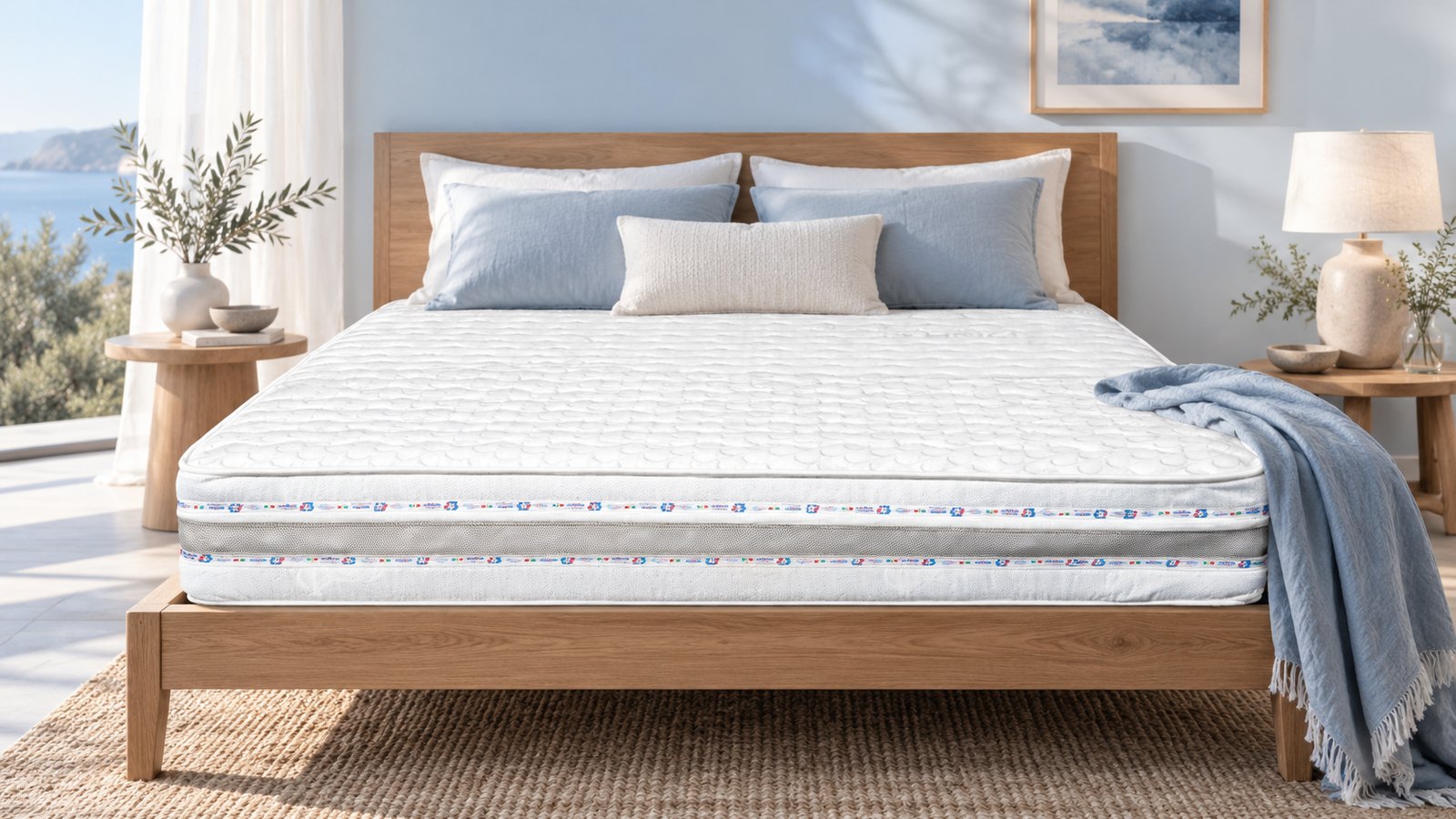
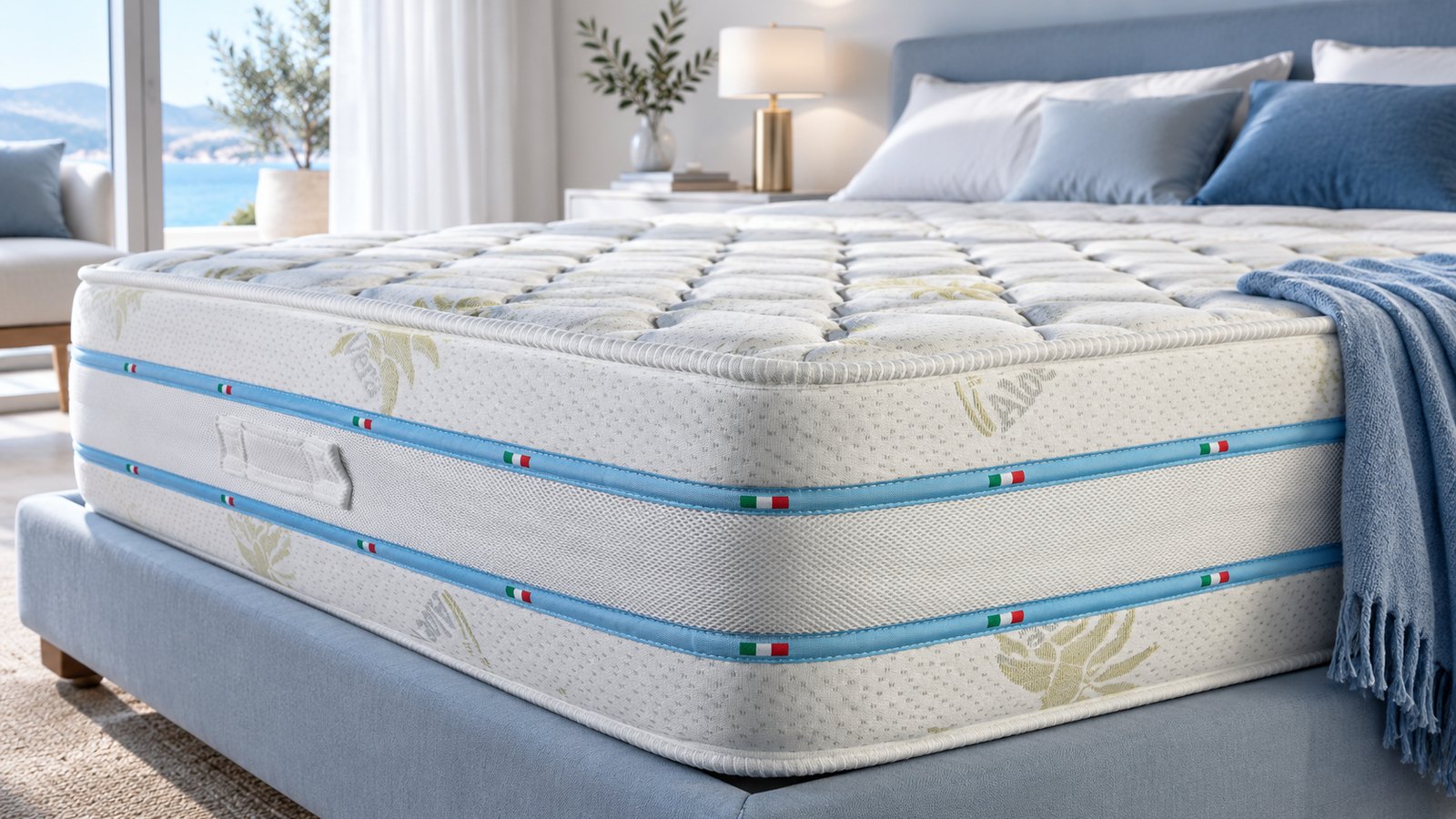
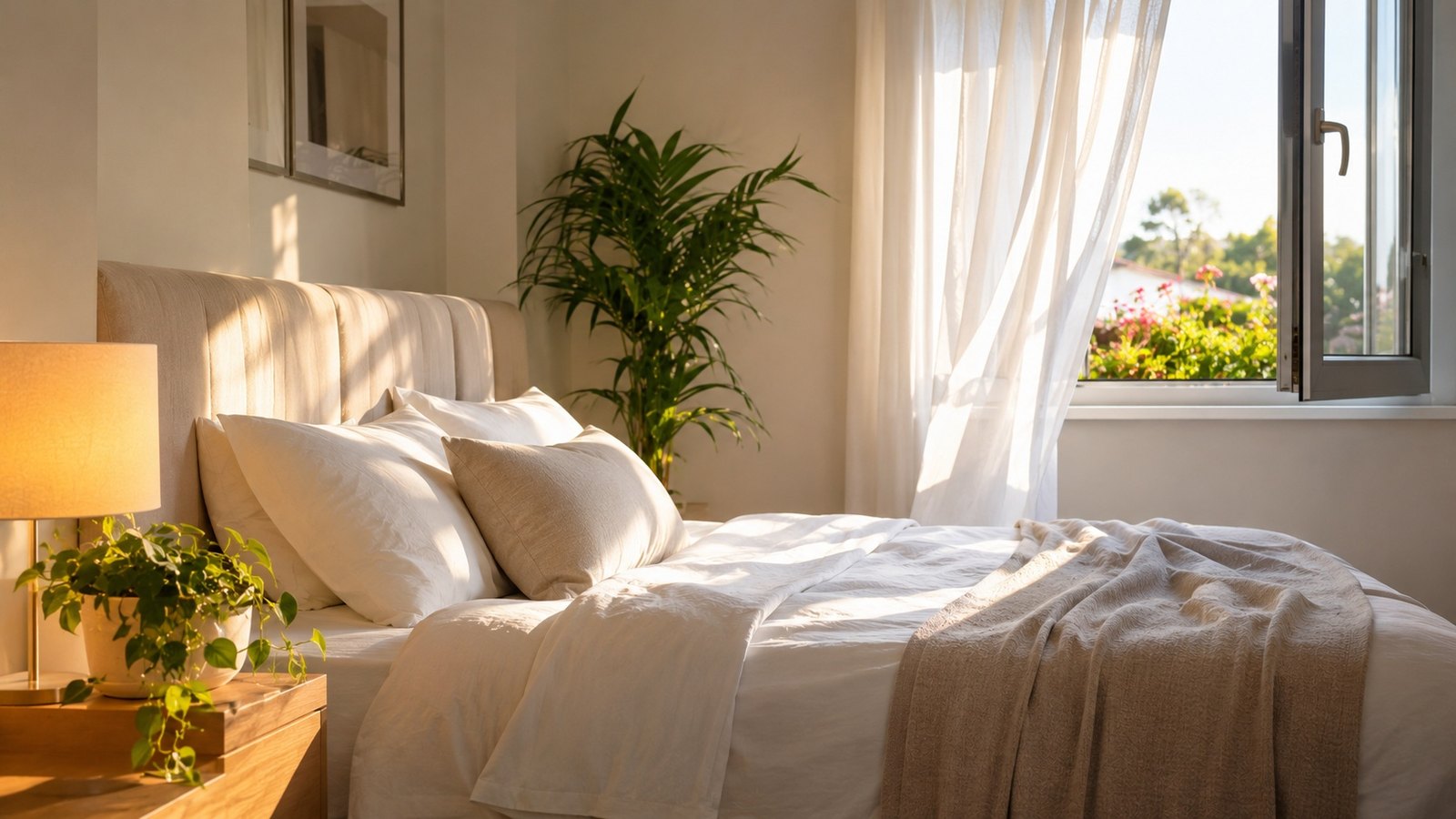
Bedding choices support the thermal work. A mattress that holds heat, a synthetic quilt and a closed room form a stack the body cannot escape from. Breathable layers release warmth faster and let the skin surface drop in temperature. The Aloe Vera washable cover used by Luxury Relax and the 3D perimeter band are designed for exactly this, moving air and moisture away from the sleep surface so the bed does not turn into a heat pocket by the second half of the night.
Order, colours and space around the bed
A cluttered room keeps the brain in problem solving mode. This is not a matter of aesthetics. Objects in sight, a pile of clothes, a desk with the computer still on are promises of activity that the brain keeps processing while you try to sleep. Clearing the field of view from the bed lowers that overactivation and shortens the time it takes to fall asleep.
You do not need an empty room. You need a calm sight line. Store the day's objects out of the visual path. Close the wardrobe rather than leaving the door ajar. Push the laundry basket into a corner the bed cannot see. If a work corner is unavoidable, screen it off with a folding panel or a tall plant and put the laptop away in a drawer at the end of the day. The physical boundary helps the mind build the same one.
Colours count, but less than people think. Neutral and cool tones, such as light grey, sage green or soft blue, support relaxation. Saturated reds and bright oranges work against it. The useful rule is to pick a colour that does not grab attention during the day and does not fight the half light at night. Matte finishes matter too. Glossy surfaces reflect lamps and screens and keep small points of light bouncing around the room.
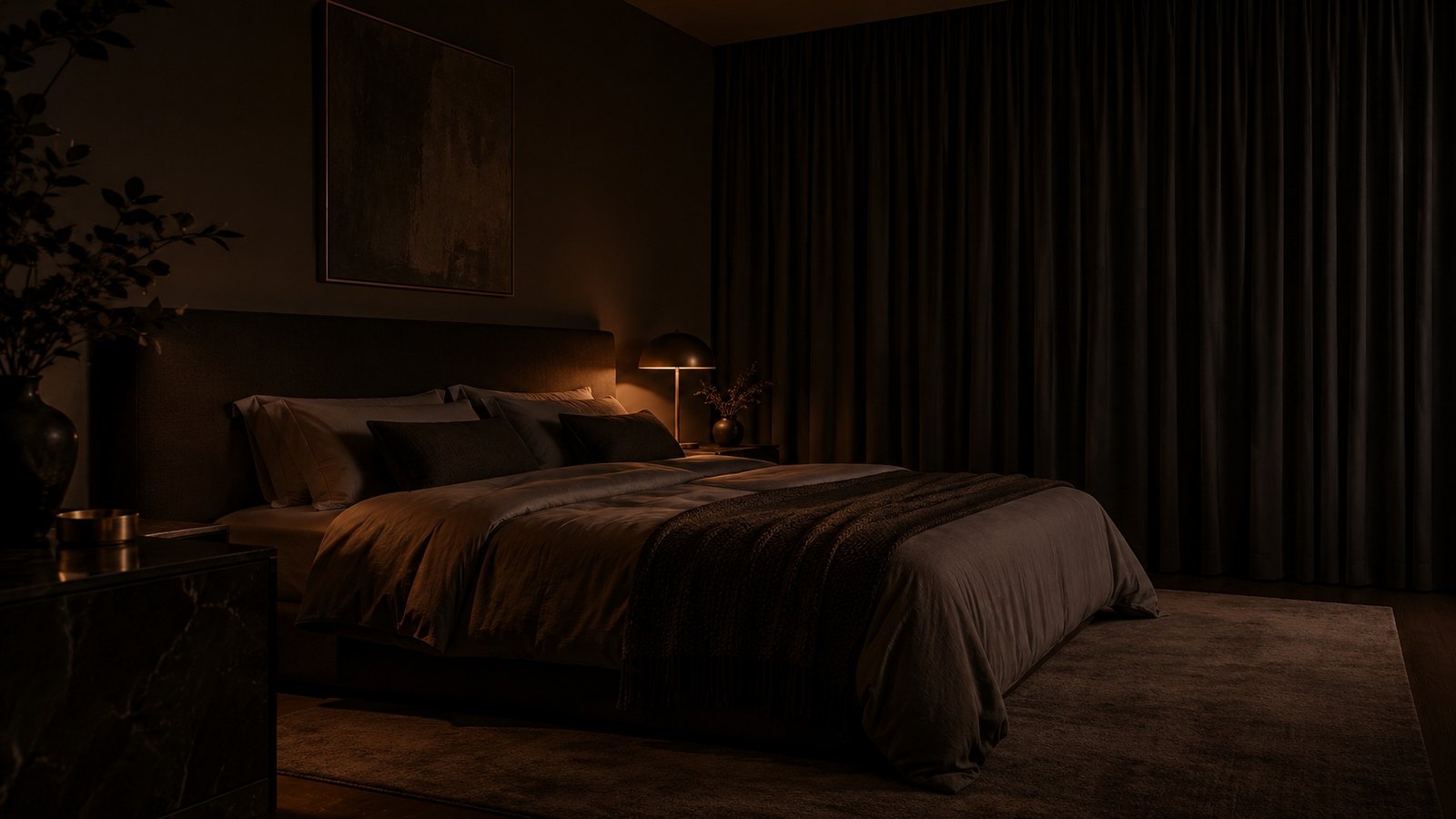
Light on the walls is softer than light from the ceiling. A paint with a slightly warm undertone gives the room depth once the lamps are on. Darker walls can work when the room is large and well lit by day, but in a small bedroom they tend to close in. Test a sample on two walls and watch it under the lamp you actually use at night. The evening view is the one that counts.
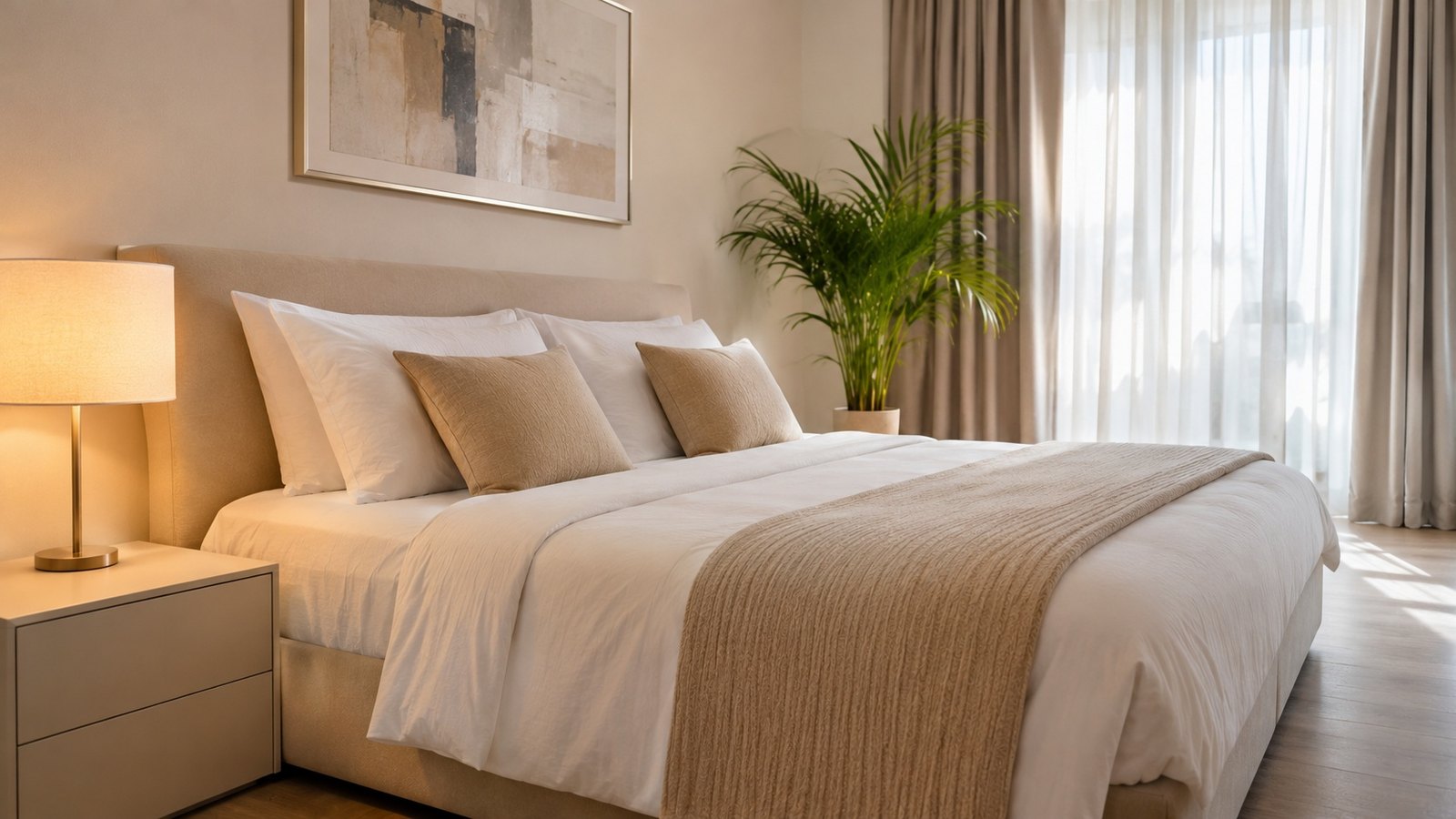
The space around the bed is the last concrete detail. Leave at least 60 cm of walking room on at least one side so you can move without bumping into furniture when you get up at night. The nightstand should sit at the same height as the mattress. That way water, book and glasses stay within reach without bending down. If there is a headboard, it should be stable and pleasant to the touch. It is the surface you lean against when you read before sleep.
Rugs and floor coverings change the first step of the morning. A soft mat beside the bed removes the shock of a cold floor and makes getting up feel less abrupt. Curtains that reach the floor add acoustic softness and cut the echo of the room. Small pieces of fabric absorb sound and reduce the sharp edges of noise that can pull you out of light sleep.
The materials that touch the skin play their part. Sheets and pillowcases in natural fibres, such as cotton or linen, breathe better than synthetic fabrics and keep the bed microclimate stable through the night. The weight of the quilt matters as well. A slightly heavier blanket, without being stifling, raises the sense of contact and helps many people relax. Keep a clean spare set ready. Changing the sheets on a regular schedule reduces dust mites and allergens that cause wake-ups.
Sound is the final layer. Traffic, a boiler, a neighbour's TV. A pair of soft earplugs or a steady low noise from a fan covers sudden peaks without adding anything the brain has to decode. Complete silence can be as disruptive as noise for some people, because the brain hunts for any new sound in a quiet room. A stable background tone gives it nothing to chase.
Mattress, pillow and bed base: the core of rest
Every room choice only works if the core of the bed is right. The mattress has to support the spine in its neutral position, with the shoulders and hips sinking slightly and the lumbar zone held up. This is the principle of differentiated support and it applies to every weight and every sleeping position.
Side sleepers need the shoulder to sink in so the spine runs straight. Back sleepers need the lumbar curve filled so the lower back does not sag. Stomach sleepers need a firmer surface so the hips do not tilt the pelvis. A mattress that treats all three zones the same way forces the body to compensate, and the muscles pay for it by morning.
The pillow finishes the job by keeping the neck in line with the spine. Too high or too low and it cancels the benefit of a good mattress. You wake with a stiff neck and blame the wrong object. As a rule, a side sleeper needs a taller pillow than a back sleeper, and a stomach sleeper needs the flattest one of the three.
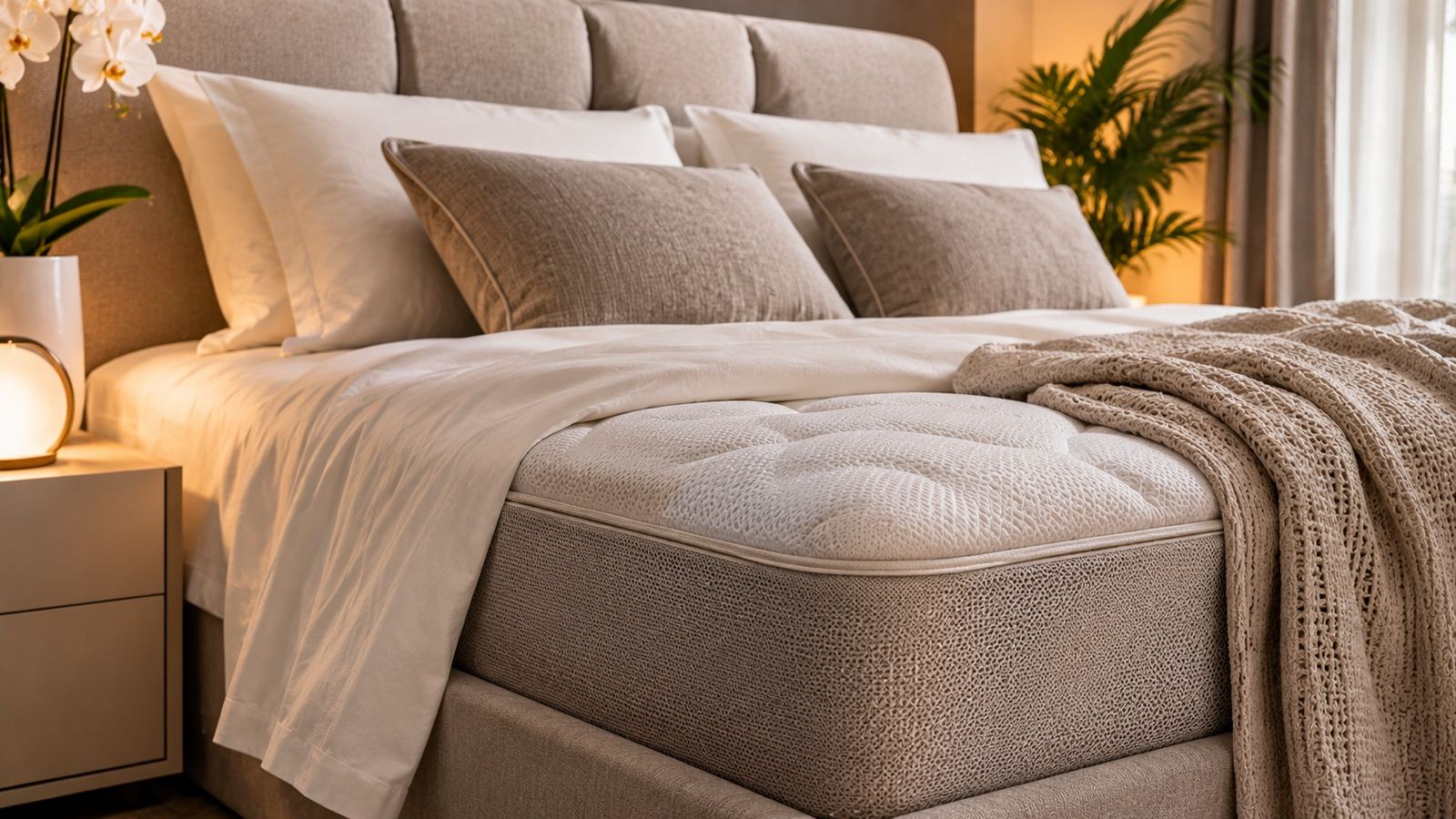
The bed base is not a detail. A flat and rigid base changes how the mattress reacts, while a slatted base with elastic supports lifts the point-by-point response of the comfort layers. Slats also let air circulate under the mattress, which helps with the humidity work described above. A mismatched base can make an excellent mattress feel firm or saggy in all the wrong places.
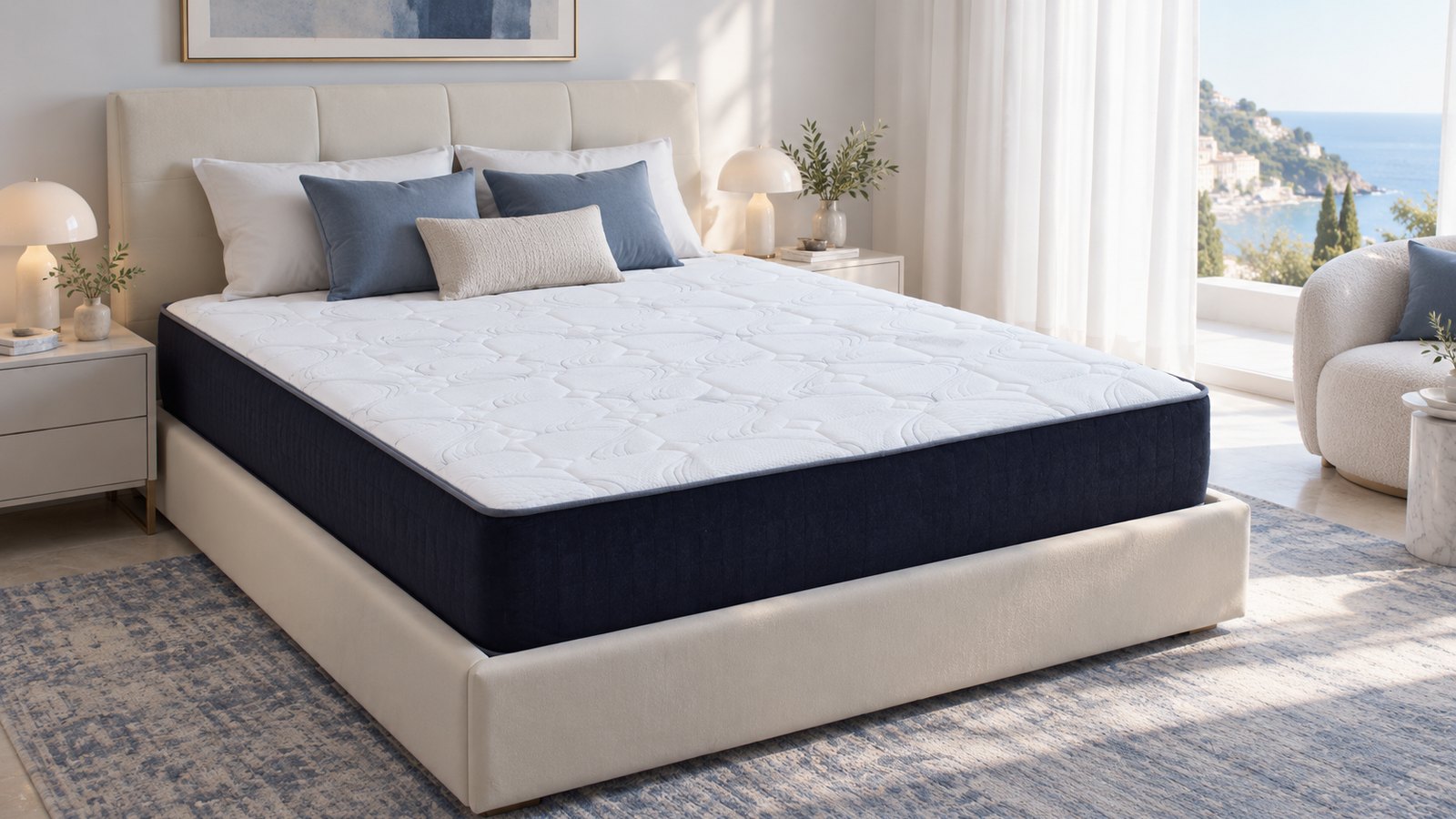
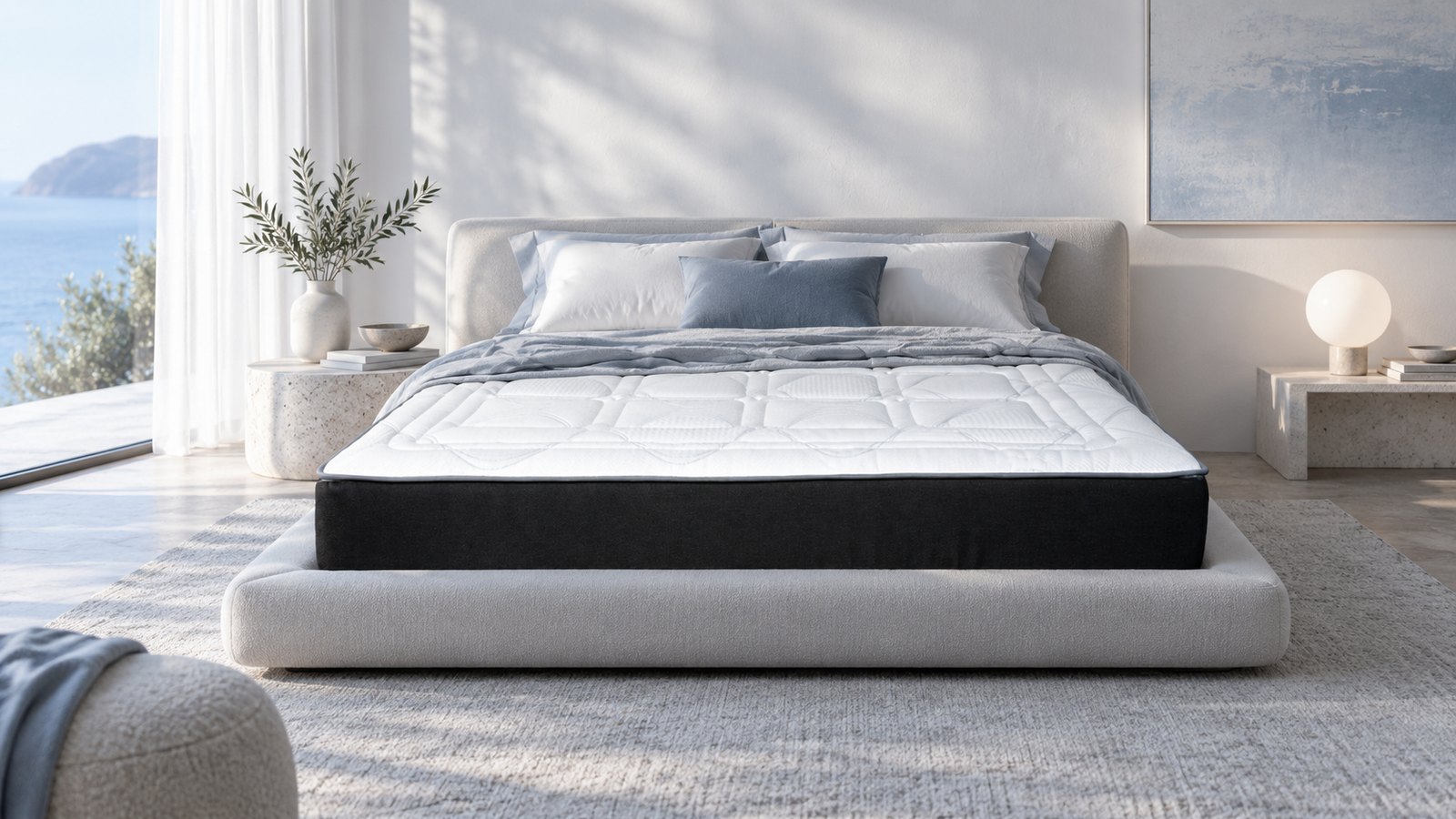
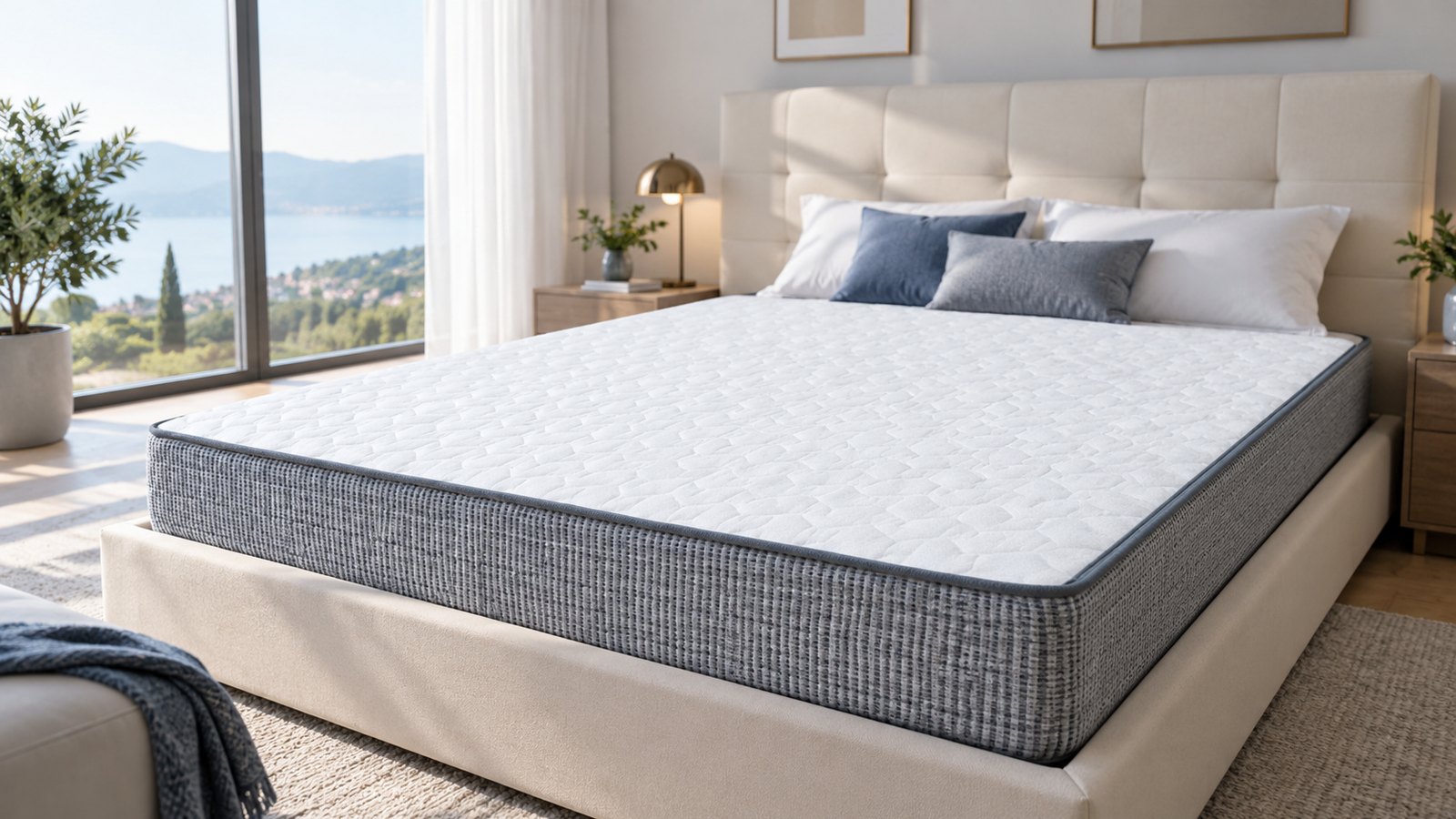
Here Luxury Relax enters with concrete data. The models Athena, Platinum, Gold, Elisir and Venere run from 24 to 30 cm in height, with a washable Aloe Vera cover, a breathable 3D perimeter band and differentiated support. The top of the range Athena starts from 990 euros against a list price of 1,950, with 10 years of warranty, 10 trial nights and free delivery across Italy in 24 or 48 hours.
Each model targets a slightly different need. The taller profiles in the range suit those who prefer a higher bed and a more generous comfort stack. The lower profiles work well with tall headboards and rooms where the bed already dominates the space. All of them share the Aloe Vera cover, which unzips and goes into the wash. That matters for hygiene over years of use, since a cover you can clean keeps the sleep surface fresher than one you can only vacuum.
For couples there is one more criterion. Motion isolation. If one of you moves or gets up at night, a mattress that absorbs movement stops the other one waking. Pocketed springs and layered memory comfort handle this well, and a double or king size gives both of you room to move without knocking into each other. Motion isolation also protects the quality of your deep sleep phases, which are the ones lost first when the bed shakes.
Temperature control in the mattress works with the room climate. The 3D perimeter band vents air along the sides of the mattress, so heat does not collect in the middle of the bed. Combined with a breathable cover and a room at 16 to 19 degrees, the sleep surface stays in the comfort band for the whole night rather than warming up after the second hour.
Longevity is another reason to look at the core before the decor. A mattress that holds its support for years keeps the spine aligned night after night. A mattress that sags in the centre turns every room improvement into a half win. The 10 years of warranty on these models reflect that expectation and give a clear reference point for the lifespan of the product.
To choose the right model for your room and your couple, book a free consultation. An expert answers and helps you configure the complete bed, from mattress to base to pillow.
Recap. Warm low light in the evening, total darkness at night, a room between 16 and 19 degrees with humidity at 40 to 60 percent, a clear field of view and a bed with mattress, pillow and base aligned. These are choices you can make in a weekend and you feel them from the first night.
None of these changes call for building work or a large budget. What they need is consistency. The room repeated every evening in the same way, under the same light and the same temperature, becomes a signal the body learns to follow without effort. At that point sleep arrives before you notice it. Let us look at the questions we receive most often.
Bedroom and sleep: frequently asked questions (FAQ)
What is the ideal bedroom temperature for sleep? Between 16 and 19 degrees. That is the range where core body temperature drops with ease and deep sleep consolidates. Above 22 degrees, night wake-ups increase in a measurable way, even when you feel you slept fine.
Do blackout curtains really make a difference? Yes, they are the most effective single change for sleep. They block street light and early dawn, two frequent causes of waking too soon. If you cannot install them, an eye mask delivers the same result at zero cost.
Does a phone in the bedroom affect sleep? Even when it is switched off. Its presence on the nightstand keeps a background level of attention active and the light from notifications breaks deep sleep. Keep it in another room and use a classic alarm clock if you need one.
What role does the mattress play compared with the room setup? It is the core. Light, temperature and order prepare sleep, but the mattress is what keeps the spine in a neutral position all night. The right mattress, with differentiated support, amplifies every other measure in the room.
How often should the bed setup be renewed? Assess the mattress every 8 to 10 years, or sooner if you wake in pain or notice dips. Check the pillow and the cover every 2 to 3 years. The rest of the room, curtains and lighting, lasts a long time when you choose well from the start.
Can I improve the room without changing everything? Of course. Start with three changes. A blackout curtain, a thermostat at 18 degrees and a clear nightstand. They are cheap, fast and produce the clearest improvement. You upgrade the full bed later, once you have measured those first results.
Ideal Mattress Configurator in 3 Clicks
Answer 3 questions and see which Luxury Relax model fits your sleep best.
Step 1 of 3
Images from this guide
What is the ideal bedroom temperature for sleep?
Between 16 and 19 degrees. That is the range where core body temperature drops with ease and deep sleep consolidates. Above 22 degrees, night wake-ups increase in a measurable way, even when you feel you slept fine.
Do blackout curtains really make a difference?
Yes, they are the most effective single change for sleep. They block street light and early dawn, two frequent causes of waking too soon. If you cannot install them, an eye mask delivers the same result at zero cost.
Does a phone in the bedroom affect sleep?
Even when it is switched off. Its presence on the nightstand keeps a background level of attention active and the light from notifications breaks deep sleep. Keep it in another room and use a classic alarm clock if you need one.
What role does the mattress play compared with the room setup?
It is the core. Light, temperature and order prepare sleep, but the mattress is what keeps the spine in a neutral position all night. The right mattress, with differentiated support, amplifies every other measure in the room.
How often should the bed setup be renewed?
Assess the mattress every 8 to 10 years, or sooner if you wake in pain or notice dips. Check the pillow and the cover every 2 to 3 years. The rest of the room, curtains and lighting, lasts a long time when you choose well from the start.
Can I improve the room without changing everything?
Of course. Start with three changes. A blackout curtain, a thermostat at 18 degrees and a clear nightstand. They are cheap, fast and produce the clearest improvement. You upgrade the full bed later, once you have measured those first results.
Request your free consultation
Fill in the form: a Luxury Relax expert will get back to you with the proposal that suits you best.
What Luxury Relax owners say
On my dad's advice, already a customer, I went to Luxury Relax to buy a mattress. Very comfortable and ergonomic products.
Quality products, helpful and knowledgeable staff. Highly recommended to anyone looking for a real mattress, not a brand name.
I got rid of the back pain that had followed me for years. The right mattress changes your days.
Come visit us
Luxury Relax Materassi
Via San Rocco, 42 - 20831 Seregno (Monza e della Brianza), Italia0362 222407 · info@luxuryrelax.it · WhatsApp 339 4797213
Open in Google MapsDirect Italy Logistics & Seregno Showroom
Direct delivery and support in Seregno (MB) & all of Italy
- Delivery window: Free 24/48h shipping across Italy
- Included cover: 10-night home trial + 10-year Luxury Relax warranty
- Showroom address: Luxury Relax Materassi, Via San Rocco, 42 - 20831 Seregno (Monza e della Brianza)