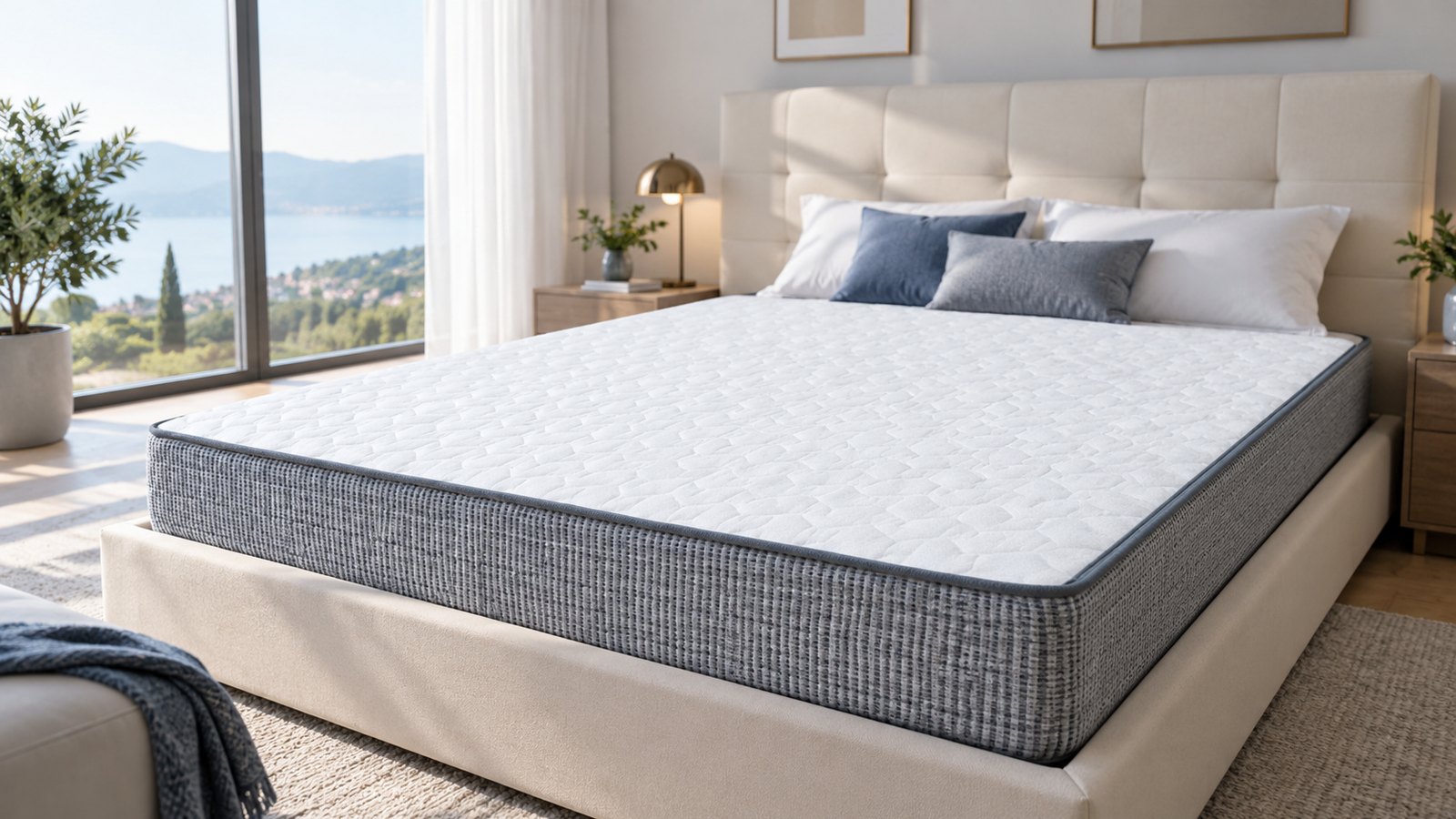
Bedroom Temperature: The Right Degrees for Better Sleep
The body cools down as it falls asleep: core temperature drops by about one degree in the first hours of the night and reaches its low point around four in the morning. If the room stays warm, that cooling stalls, sleep stays light, and the only thing left in the morning is tiredness.
Bedroom temperature is the variable that decides how deep your rest will be, and it is the first one people ignore. A new mattress gets bought, sheets get changed, the phone gets checked: almost nobody looks at the thermometer on the nightstand. Two or three degrees are enough to change a night.
This guide covers the right degrees for sleep, what happens when the room is too hot or too cold, and how to hold a steady microclimate all year. For a full picture of the brand behind the mattress we recommend, the Luxury Relax review lists real prices, warranty and delivery times. Let us start with the mechanism that governs everything.
Why temperature governs sleep
Sleep follows a precise thermal rhythm. During the day the body holds a core temperature of about 37 degrees; towards evening it starts releasing heat through hands, feet and the skin of the head, and the core temperature falls. That drop is what launches deep sleep, the slow-wave phase that repairs muscles and locks in memory.
The mechanism only works if the room lets heat escape. When the air is warm, the gap between body and room shrinks: heat stays trapped, sweating increases and the brain stays in a state of mild alertness. Research on night-time thermal comfort shows that room temperature influences the amount of deep sleep more than noise or light does.
The same happens in reverse. In a room that is too cold the body spends energy warming itself, muscles stay tense and falling asleep takes longer. The feeling of not being able to drift off on winter nights often comes from exactly this.
No sophisticated system is needed to use the mechanism. You need to know the range of degrees in which the body can cool down without stiffening, and then build the evening routine around that range.
The ideal bedroom temperature
The range recommended for adults is 16 to 19 degrees. It is where most people sleep most deeply, with fewer awakenings and less night sweating. Some studies widen the range up to 20 degrees: above that threshold deep sleep starts to shrink even with light bedding.
The exact value depends on weight, age and bedding. Whoever sleeps in pyjamas with a wool blanket is comfortable towards 16-17 degrees; whoever prefers light sleepwear can raise it by one degree. For older people, who lose heat more slowly, the top of the range is often the most comfortable. Children follow the same principle, with one extra light blanket.
Measuring costs little. A 15-20 euro nightstand thermometer reads temperature and humidity and belongs at bed height, away from the window and the radiator. The useful reading is the air around the body, not the air in the middle of the room.
Humidity matters too: temperature and moisture work together. Between 40% and 60% relative humidity the air sheds heat evenly; above 60% even an acceptable temperature makes the night sticky. We cover the pairing in the guide to humidity and sleep in the bedroom.

A room too hot or too cold: what changes
A room above 22 degrees cuts deep sleep and multiplies awakenings in the second half of the night. The body keeps shedding heat, the mattress surface warms up and the sleeping position turns unstable: you roll over again and again looking for a cool side. In the morning it feels like a long night that repaired nothing.
Below 15 degrees the problem flips. Falling asleep takes longer, the body stays tense and morning wake-ups come earlier. People sleeping in lofts or poorly insulated rooms know the pattern well: warm evening, sharp cold at dawn.
Temperature swings matter as much as the average. A room moving from 22 to 16 degrees over six hours forces the body into constant thermal corrections, and every correction is a micro-awakening. A steady climate beats a perfect one.
There is also an indirect effect on the mattress. The heat and vapour the body releases at night push into the upper layers: if air does not circulate, that zone stays warm and damp and loses breathability over time. We return to this in the section on materials.

How to hold the right temperature all year
In winter the temptation is to push the heating above 20 degrees and compensate by opening the window for two minutes before sleep. It works for half an hour, then the room turns warm and dry again. Better to hold the radiator at a fixed 18-19 degrees and add the blanket that matches the season.
In summer the problem is the opposite and tougher. Tropical nights above 24 degrees are where deep sleep drops the most. A fan, curtains closed in the hot hours and an open window in the cool hours all help; a mattress that does not trap heat helps more.
Two habits work all year. The first is ventilation: ten minutes of open window before sleep renews the air without chilling the walls. The second is bedding: natural fibres such as cotton and linen breathe, while some synthetic fibres hold heat and give it back to the body.
Bed placement counts as well. A bed pushed against an outer wall or under a badly sealed window lives with larger temperature swings; moving it a few centimetres or using an upholstered headboard cuts the gap. In an old building, a heavy curtain on the window is worth more than one degree of heating.
For anyone who wants a simple measuring routine: thermometer on the nightstand, one reading at bedtime and one at waking, for a week. Two readings out of range every night show where to act. For the complete mattress buying guide and the other variables of rest, the method is the same: measure first, then choose.

The mattress helps regulate temperature
A well-built mattress neither heats nor cools: it lets the heat your body sheds pass through. The top layer must welcome the body without holding its temperature, and the lower layers must carry warm air away instead of blocking it.
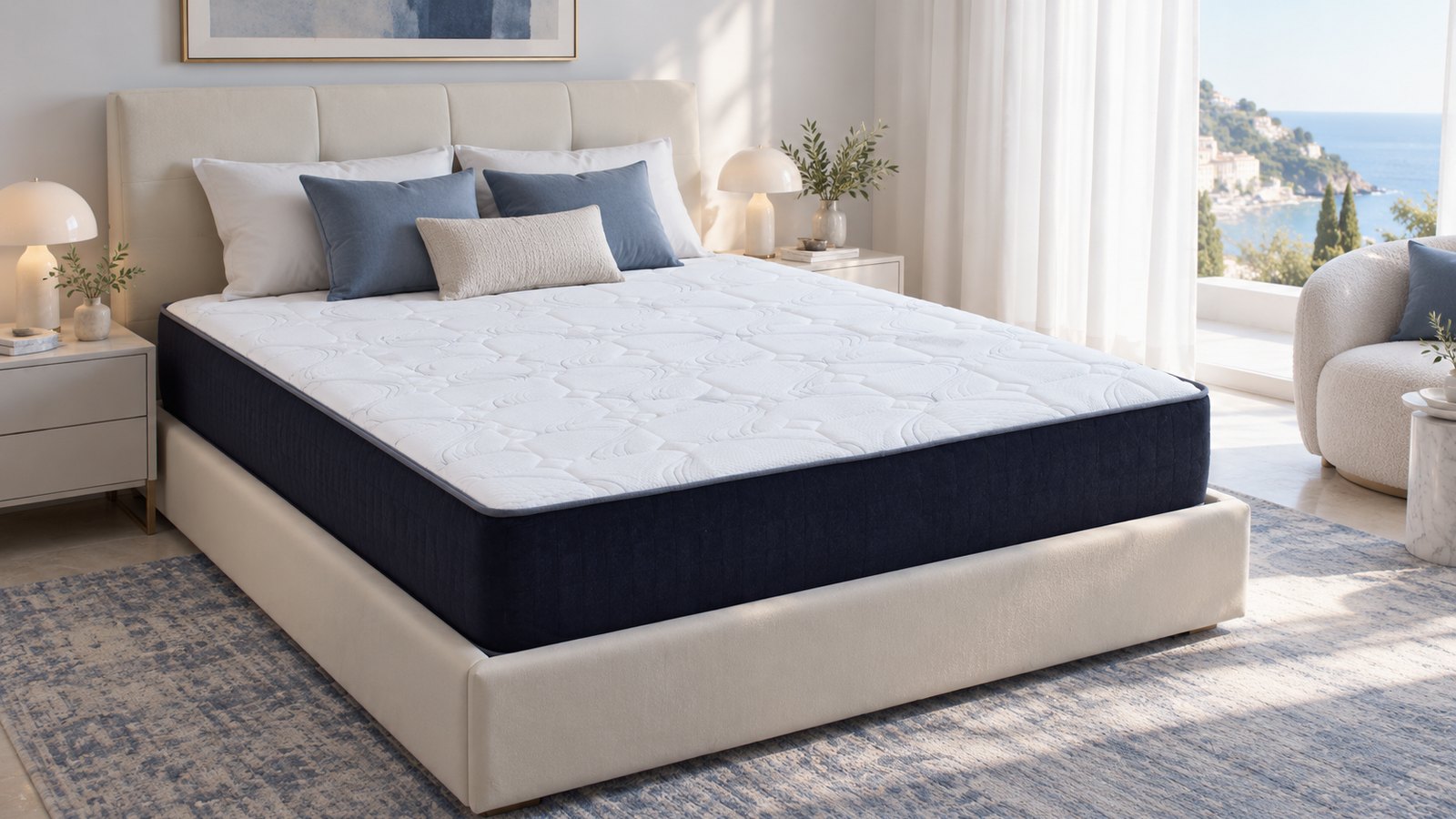
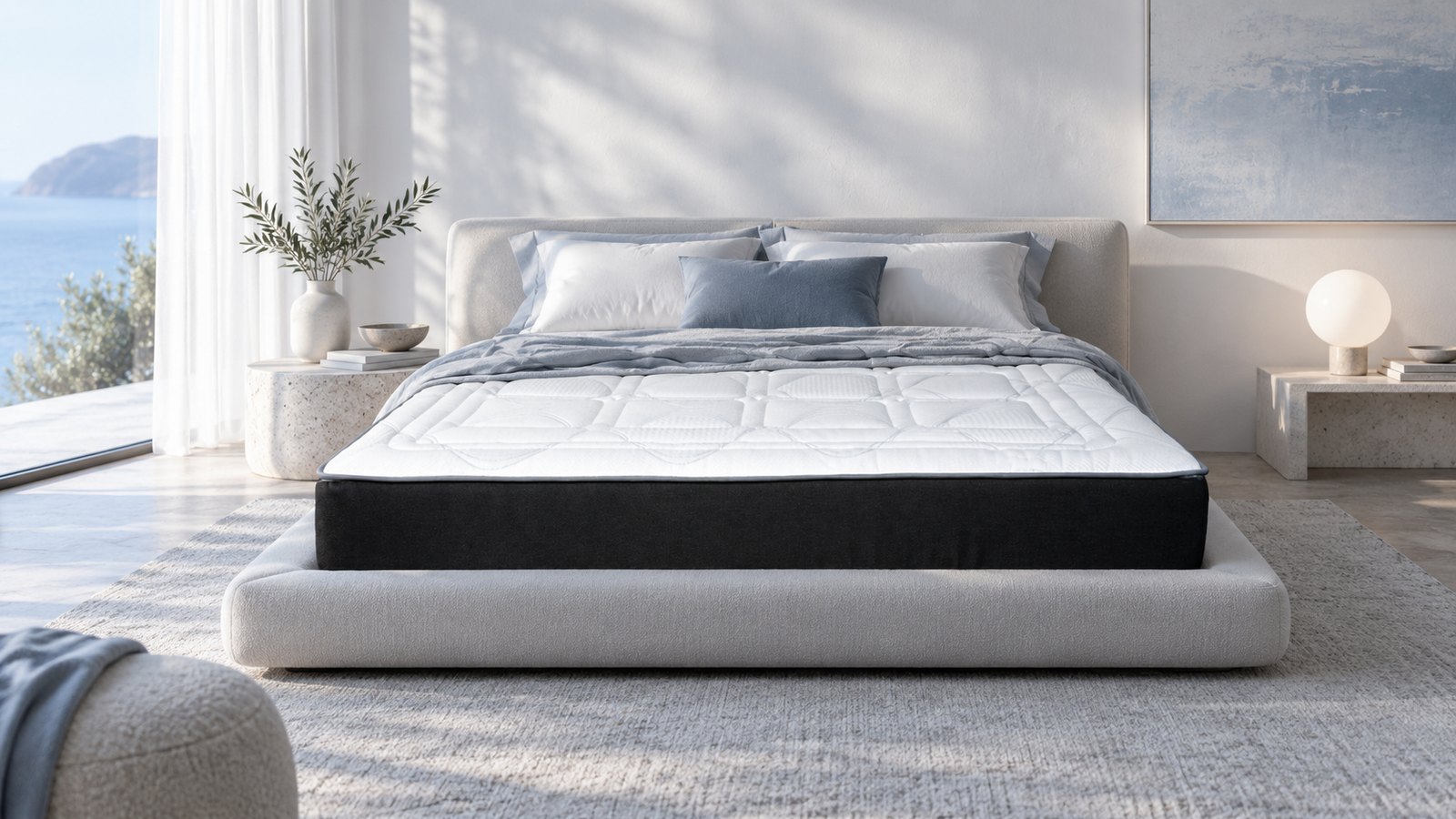
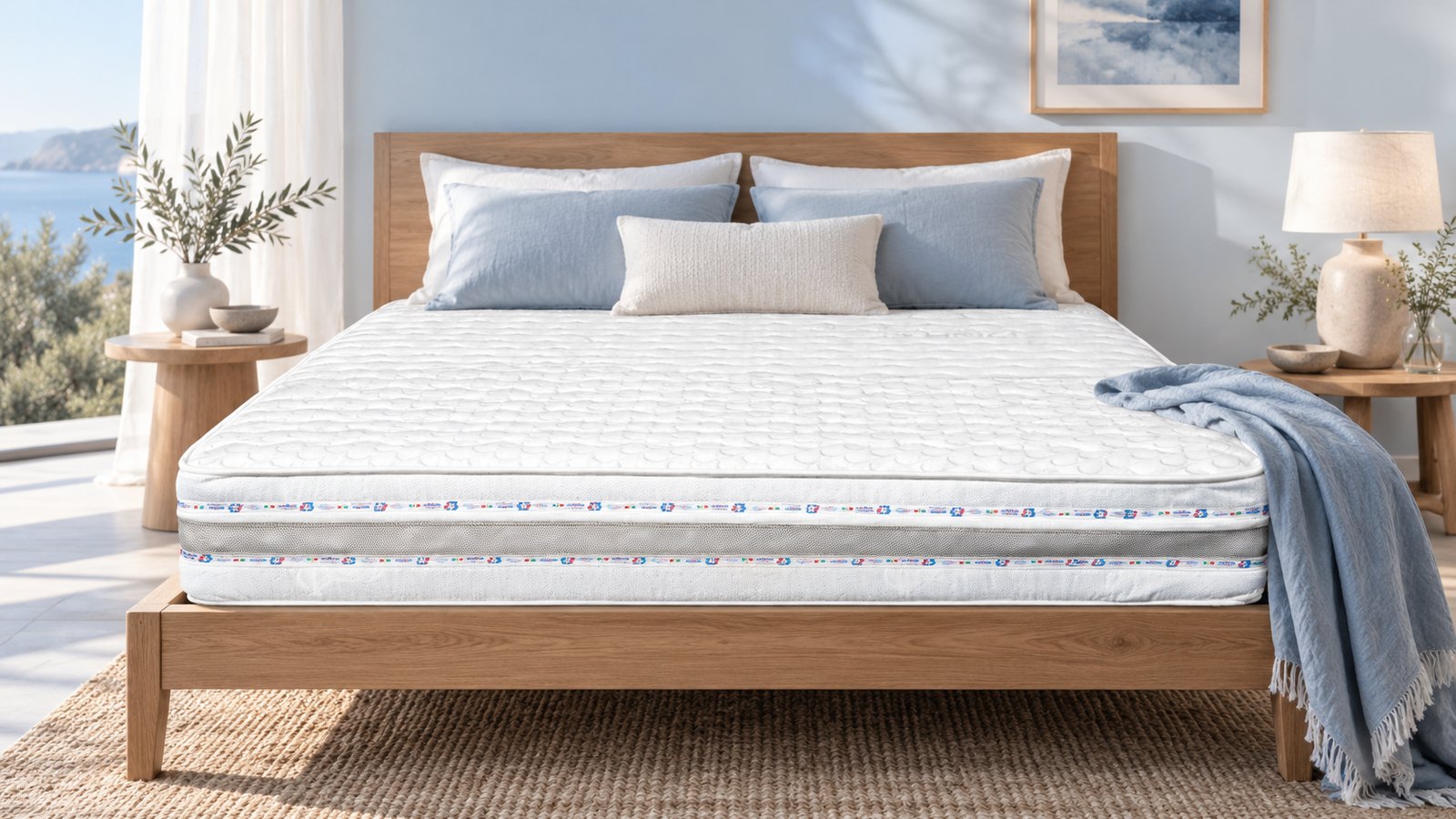
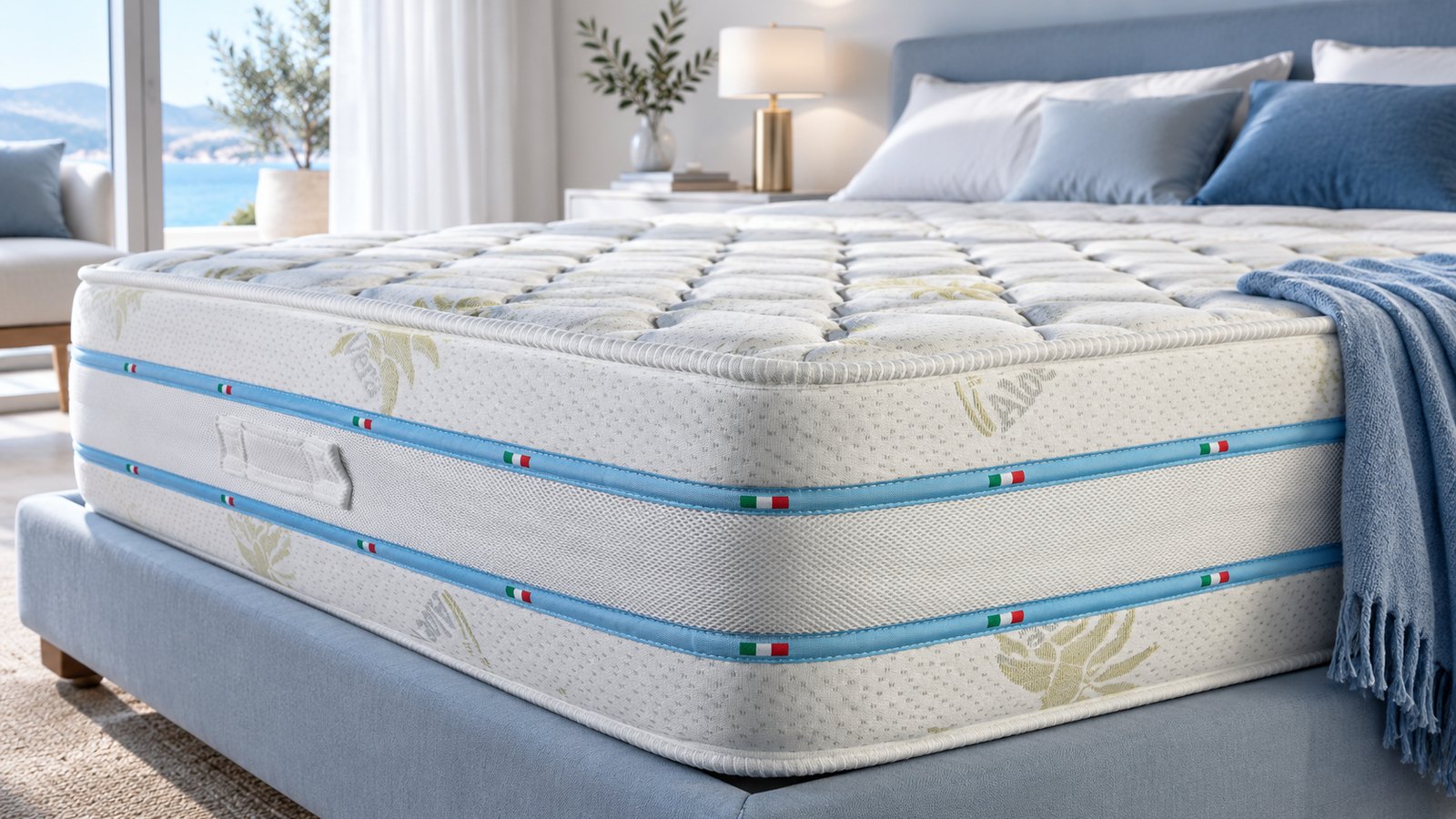
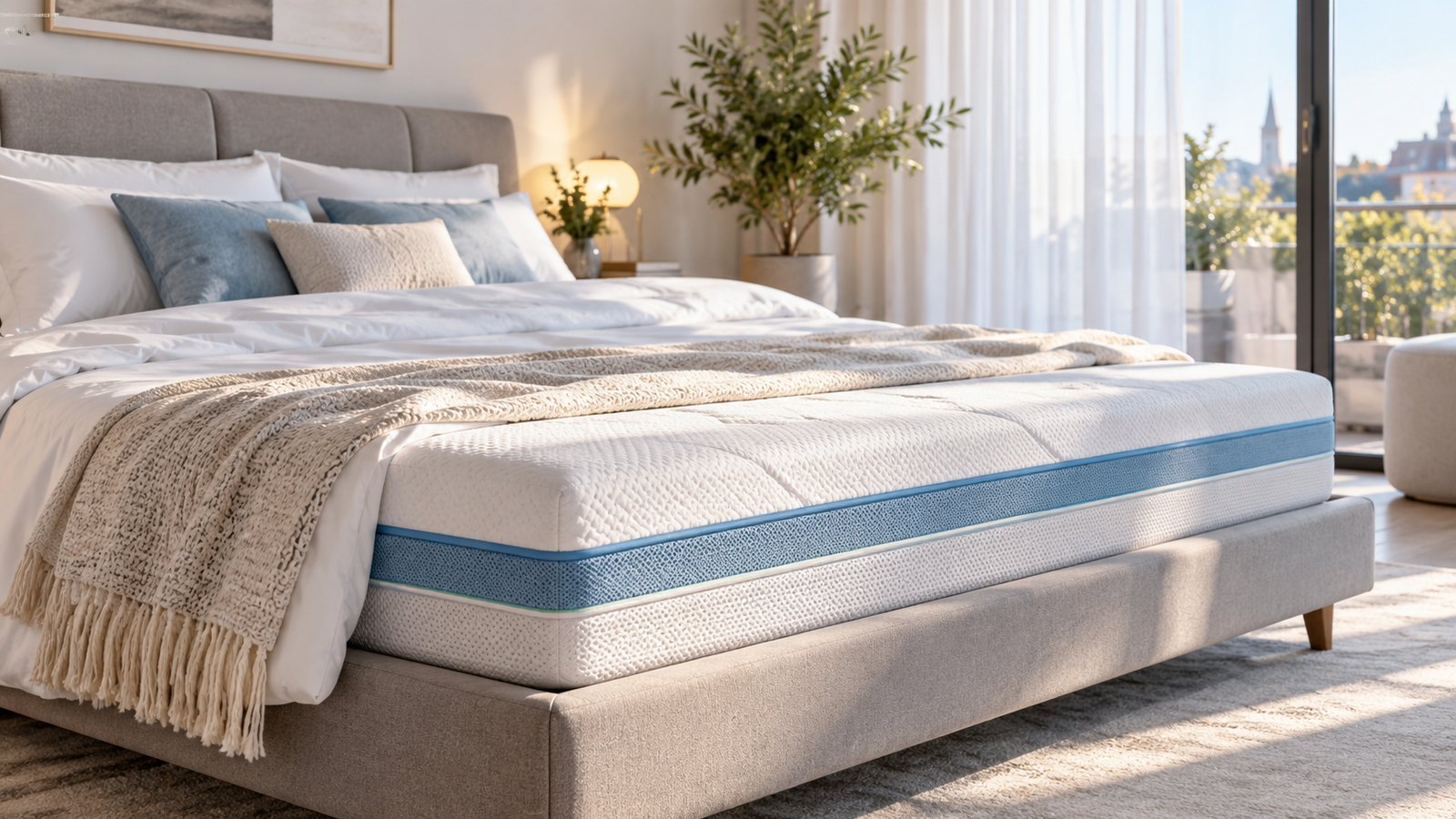
Luxury Relax mattresses are built on that principle. Every model has a 3D breathable side band that moves air along the flanks of the bed, and a washable Aloe Vera cover that does not hold moisture. Height runs from 24 to 30 cm depending on the model, with a high-density Confortgel base and temperature-sensitive memory foam that follows body weight without overheating.
| Model | From (sale price) | List price | Structure | Best for |
|---|---|---|---|---|
| Athena | €990 | €1.950 | Memory + Confortgel, 30 cm | Top comfort, flagship |
| Platinum | €699 | €1.999 | Memory + zoned support | Couples, daily use |
| Gold | €399 | €749 | Multi-purpose 24-28 cm | Value for money |
| Elisir | €179 | €500 | Layered comfort | Guest rooms, tight budgets |
| Venere | €149 | — | Base comfort 24 cm | Second homes, teenagers |
Zoned support is the part you feel while sleeping: shoulder and hips sink the right amount, the lumbar zone stays lifted, and the back stops hunting for compensating positions at night. The same logic helps thermal regulation: the less you move, the less heat builds up under the body.
On top of that come the brand's real services: 10-year warranty, 10 trial nights with a refund if you are not satisfied, free delivery across Italy in 24/48 hours, payment on delivery or by card. Every detail is in the Luxury Relax profile. For a free consultation on the model that fits your room, the contact form is enough: the experts reply with the right height, density and structure.
How temperature needs change with age and weight
There is no single right number for everyone. A twenty-year-old sheds heat faster than a seventy-year-old, and someone weighing 90 kilos warms the bed more than someone weighing 60: those are measurable differences, not impressions. That is why the 16-19 degree range is a starting point, not a rule.
In the first months of life sleep is fragmented by nature, and the room temperature should sit in the upper part of the range with light bedding and nothing extra in the bed. During pregnancy the metabolism changes and many women feel warmer than usual: a breathable mattress and a room at 17-18 degrees do more than any supplement. After sixty the sense of heat dulls and the risk flips to the opposite, a room too cold: in that case the rule is to cover up, not to push the heating to 23 degrees.
Weight matters mostly at the surface of the bed. Anyone over 90 kilos needs a mattress with zoned support and top layers that do not compact, because a compacted layer holds heat and moisture. Light sleepers face the reverse problem: they never fully engage very firm materials and end up on a surface cooler and harder than intended.
Combine weight, age and room temperature and you find your setup fast: start from the thermometer, adjust the bedding, and only then evaluate the mattress.
A checklist for the right night temperature
A practical sequence works better than improvising. First, place a thermometer at bed height and read it at bedtime and at waking for one week. Second, keep the room between 16 and 19 degrees and let the bedding do the rest. Third, air the room for ten minutes before sleep, all year.
Fourth, look at where the bed stands: away from outer walls and sealed windows, or with an upholstered headboard between. Fifth, check the mattress surface in the morning: if it feels damp, the layers are holding heat and moisture, and a model with a 3D side band solves more than any fan. Sixth, swap the bedding twice a year, heavy in October and light in April.
None of these steps costs much. Together they remove the two causes of shallow sleep at night: a body that cannot cool down, and a surface that gives the heat back.
Frequently asked questions about bedroom temperature
What is the ideal temperature for sleeping well? Between 16 and 19 degrees for most adults. It is the range in which the body cools down naturally without losing too much heat. Heavy bedding suits the lower end, light sleepwear the upper end.
The room is too hot: what happens to sleep? Above 22 degrees deep sleep shrinks and awakenings multiply, especially in the second half of the night. The body cannot shed heat, the mattress surface warms up and you keep rolling over to find a cooler position.
Should the heating stay on all night? No. Holding the radiator at a steady 18-19 degrees beats alternating warm and cold rooms. If the temperature drops too far towards dawn, a heavier blanket is worth more than one degree of heating.
How much does humidity matter next to temperature? A lot. Between 40% and 60% relative humidity the air sheds heat evenly; above 60% even an acceptable temperature makes the night sticky and encourages dust mites and mould. A nightstand hygrometer reads both values.
Does the mattress influence night temperature? Yes. A mattress with a 3D breathable band and a cover that does not hold moisture lets heat escape; a mattress that traps it warms up and forces you to move. Luxury Relax models are engineered to keep the sleep surface dry and ventilated.
What temperature suits children? The adult range, 16-19 degrees, with one extra light blanket and no heavy duvet. A thermometer on the nightstand beats adjusting by instinct: children's rooms are often the smallest and warmest in the home.
How much does bedding count compared with room temperature? Both count and they compensate each other. At 17 degrees a wool blanket or heavy throw holds the right warmth; at 20 degrees a light cotton sheet is enough. Swapping bedding twice a year, as you do with the wardrobe, costs less than any heating system and cuts awakenings from sweating.
Does a fan in the bedroom help with temperature? It helps by moving air, which speeds up heat loss from the skin, but it does not cool the room. Set it to a low speed and point it away from the bed: a direct draft stiffens the neck and shoulders. On tropical nights a fan paired with a mattress that does not trap heat is the cheapest working combination.
Should the bedroom temperature change between summer and winter? The target stays the same, 16-19 degrees. What changes is how you reach it: in winter a steady radiator and the right blanket, in summer curtains, ventilation in the cool hours and lighter bedding. Chasing the same number with different tools is what keeps sleep stable across the seasons.
How do I check whether the mattress is the reason I sleep hot? Look at the morning surface. If the top of the mattress feels damp or noticeably warmer than the room, its layers are holding heat. A model with a 3D breathable side band and a washable Aloe Vera cover moves that heat away; Luxury Relax builds every mattress this way, with heights from 24 to 30 cm and a high-density Confortgel base.
What is the ideal temperature for sleeping well?
Between 16 and 19 degrees for most adults. It is the range in which the body cools down naturally without losing too much heat. Heavy bedding suits the lower end, light sleepwear the upper end.
The room is too hot: what happens to sleep?
Above 22 degrees deep sleep shrinks and awakenings multiply, especially in the second half of the night. The body cannot shed heat, the mattress surface warms up and you keep rolling over to find a cooler position.
Should the heating stay on all night?
No. Holding the radiator at a steady 18-19 degrees beats alternating warm and cold rooms. If the temperature drops too far towards dawn, a heavier blanket is worth more than one degree of heating.
How much does humidity matter next to temperature?
A lot. Between 40% and 60% relative humidity the air sheds heat evenly; above 60% even an acceptable temperature makes the night sticky and encourages dust mites and mould. A nightstand hygrometer reads both values.
Does the mattress influence night temperature?
Yes. A mattress with a 3D breathable band and a cover that does not hold moisture lets heat escape; a mattress that traps it warms up and forces you to move. Luxury Relax models are engineered to keep the sleep surface dry and ventilated.
What temperature suits children?
The adult range, 16-19 degrees, with one extra light blanket and no heavy duvet. A thermometer on the nightstand beats adjusting by instinct: children's rooms are often the smallest and warmest in the home.
How much does bedding count compared with room temperature?
Both count and they compensate each other. At 17 degrees a wool blanket or heavy throw holds the right warmth; at 20 degrees a light cotton sheet is enough. Swapping bedding twice a year, as you do with the wardrobe, costs less than any heating system and cuts awakenings from sweating.
Does a fan in the bedroom help with temperature?
It helps by moving air, which speeds up heat loss from the skin, but it does not cool the room. Set it to a low speed and point it away from the bed: a direct draft stiffens the neck and shoulders. On tropical nights a fan paired with a mattress that does not trap heat is the cheapest working combination.
Should the bedroom temperature change between summer and winter?
The target stays the same, 16-19 degrees. What changes is how you reach it: in winter a steady radiator and the right blanket, in summer curtains, ventilation in the cool hours and lighter bedding. Chasing the same number with different tools is what keeps sleep stable across the seasons.
How do I check whether the mattress is the reason I sleep hot?
Look at the morning surface. If the top of the mattress feels damp or noticeably warmer than the room, its layers are holding heat. A model with a 3D breathable side band and a washable Aloe Vera cover moves that heat away; Luxury Relax builds every mattress this way, with heights from 24 to 30 cm and a high-density Confortgel base.
Request your free consultation
Fill in the form: a Luxury Relax expert will get back to you with the proposal that suits you best.
What Luxury Relax owners say
On my dad's advice, already a customer, I went to Luxury Relax to buy a mattress. Very comfortable and ergonomic products.
Quality products, helpful and knowledgeable staff. Highly recommended to anyone looking for a real mattress, not a brand name.
I got rid of the back pain that had followed me for years. The right mattress changes your days.
Come visit us
Luxury Relax Materassi
Via San Rocco, 42 — 20831 Seregno (Monza e della Brianza), Italia0362 222407 · info@luxuryrelax.it · WhatsApp 339 4797213
Open in Google Maps