Sleep quality: how to measure it and improve it every night
Most people count their hours of sleep and stop there. Eight hours spent in bed feel like a good result, then the alarm rings and the tiredness stays. The problem is rarely the quantity: it is sleep quality, meaning how continuous and how deep the night runs without interruptions.
Sleep quality moves along three axes. The first is continuity: falling asleep within twenty minutes and not waking up several times. The second is depth: the slowest phases concentrate in the first part of the night and leave the feeling of having truly rested. The third is regularity: similar bedtimes and wake times every day make the rhythm stable and the morning lighter.
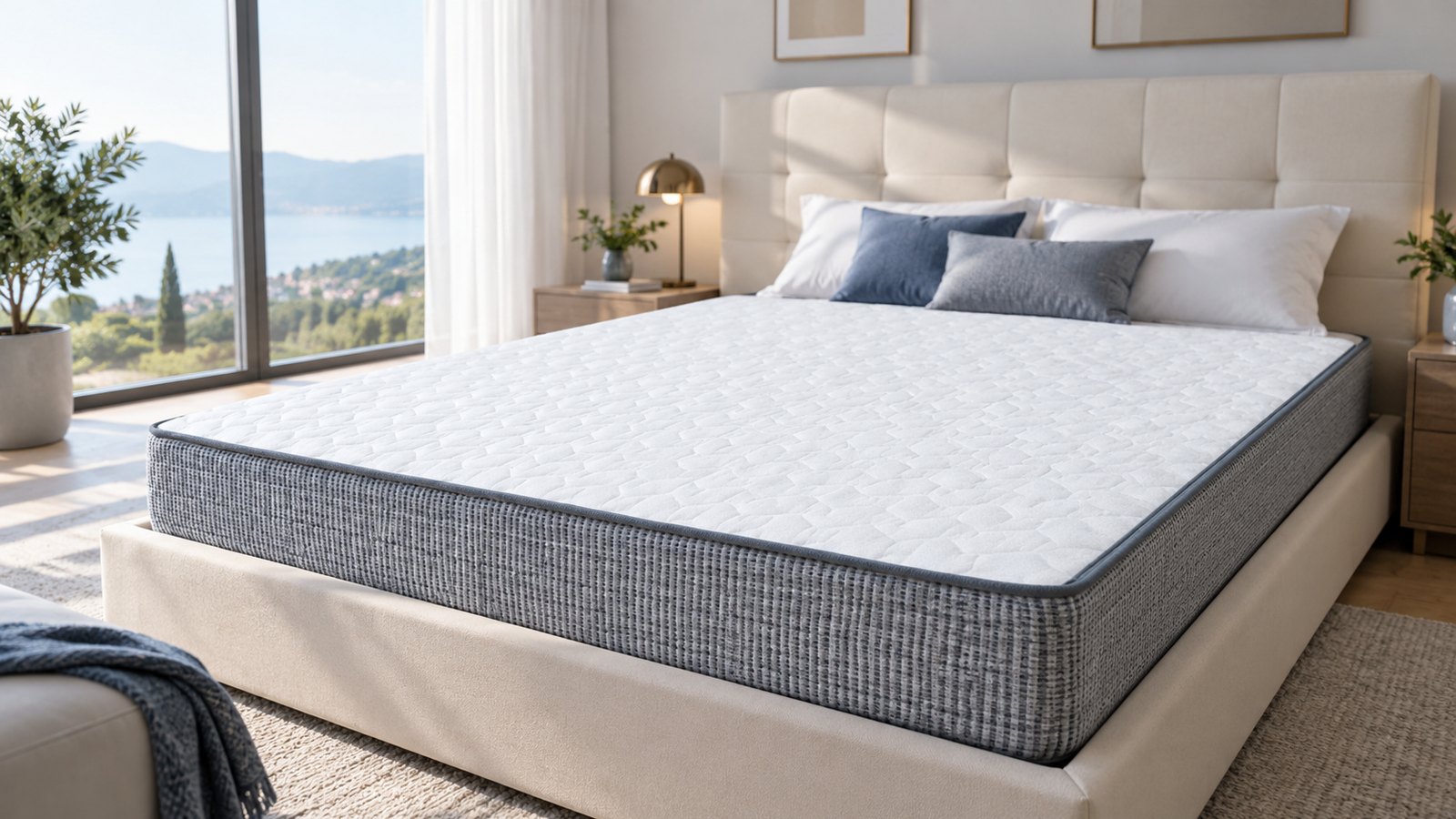
This guide explains how to measure sleep quality with simple tools, what interrupts it and which practical corrections really work. The part about the bed is concrete, because the surface you sleep on weighs on how continuous the night is: the complete Luxury Relax review describes materials, prices and services of an Italian manufacturer built around support and breathability, with a 10-year warranty and 10 trial nights.

What sleep quality really measures
Duration is the easiest number to read and the least useful on its own. Two people who sleep seven hours can have completely different nights: one falls asleep in ten minutes and reaches the morning without remembering a single awakening, the other changes position eight times and stares at the ceiling at three. Popular research describes sleep as cycles of about ninety minutes, alternating lighter and deeper phases: quality depends on how many of these cycles complete without interruptions.
Continuity is the variable you notice first. Every awakening, even a short one forgotten by morning, breaks the cycle in progress and shortens its deepest phase. Eight fragmented hours are often worth less than six continuous ones: the body recovers better in one single block than in scattered pieces, for the same reason a daytime nap does not replace the night.
Depth is recognised at the waking moment. Feeling clear-headed and rested in the first two hours after getting up is the most reliable signal, far more than any number. Regularity completes the picture: going to bed and getting up inside a thirty-minute window every day, weekends included, stabilises the rhythm more than any complicated evening ritual. A subjective score from one to ten given every morning is a surprisingly precise tool, because the body registers the truth before any sensor. A fourth indicator is the final wake-up: getting up before the alarm three mornings out of five signals a bedtime that is too early or a dinner that is too heavy, and the fix is moving bedtime by half an hour rather than compensating with coffee. Age changes the picture without changing the rules. Teenagers push their rhythm towards later hours, adults between thirty and fifty see the deep phases shrink, and after sixty the night breaks more easily. In every case the three variables stay the same: continuity, depth, regularity. Measuring them in the same way at twenty and at sixty makes the comparison meaningful across decades.
How to measure it at home: diary, awakenings and regularity
The cheapest measure of sleep quality is a notebook on the bedside table. For fourteen days, note four entries: the time you go to bed, the estimated time to fall asleep, the number of night awakenings and the final wake time. Adding a score from one to ten on how the morning feels, after two weeks patterns appear that memory does not keep: Monday nights always run worse, nights after a late dinner break apart, the score collapses when exercise is skipped.
Three numbers summarise the work. Time to fall asleep, with a target under twenty minutes. Number of awakenings, where one quick return to sleep counts far less than thirty minutes with open eyes. Regularity, calculated as the gap between wake times on weekdays and at the weekend: above ninety minutes the body lives an effect similar to jet lag.
| Diary entry | What it indicates | Warning sign |
|---|---|---|
| Time to fall asleep | How fast the evening shuts down | Over 30 minutes on more than 5 nights |
| Night awakenings | Continuity of the night | More than 2 awakenings with trouble returning to sleep |
| Wake time | Stability of the rhythm | Gap over 90 minutes at the weekend |
| Morning score | Real perception of rest | Average below 6 out of 10 |
Smartwatches and rings that track sleep should be used as a trend thermometer, not as a diagnosis. Worn for a month they tell you whether things are improving or getting worse; read night by night they shift attention to the number and feed performance anxiety. The paper diary stays the most direct method, it needs no charging and it costs nothing at all.
What interrupts sleep: temperature, light, noise and digestion
Bedroom temperature is the first lever to adjust. The body cools down to fall asleep, and a room around eighteen to twenty degrees supports that step, while a warm room forces the body to regulate its temperature instead of resting. Layered blankets and breathing fabrics are better, because fine adjustment during the night matters as much as the setting chosen before going to bed.
Light is the most powerful signal on the rhythm. Ten minutes of natural light within the first hour after waking fix the internal clock; in the evening, dim lights and blackout curtains protect the falling-asleep phase. Small light points count too: the led of a charging socket or a television on standby in the bedroom is enough to disturb the lighter awakenings.
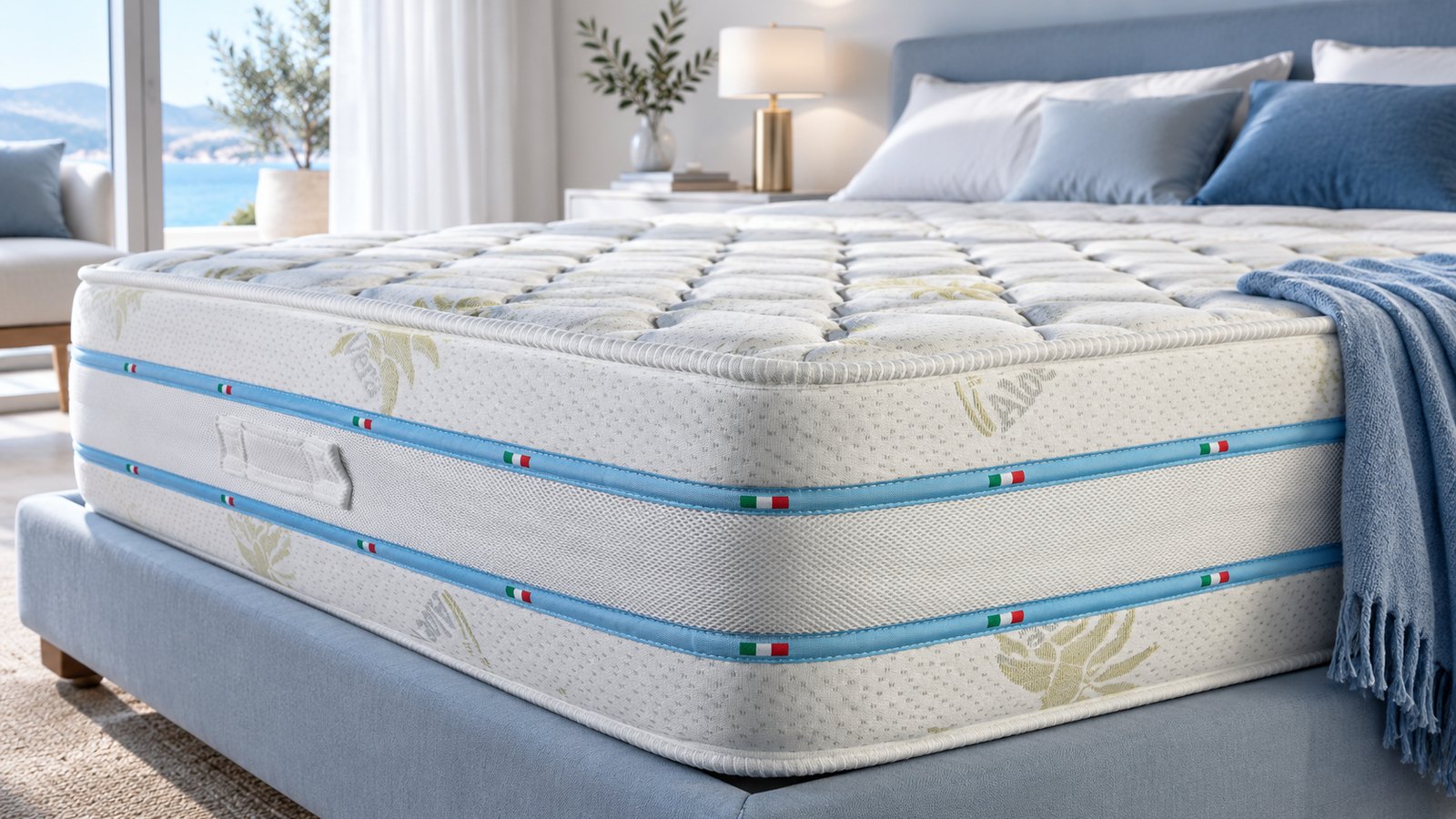
Noise works in a sneaky way. You do not need to wake up fully for a repeated sound, traffic or a neighbour's intercom to shorten the deep phases: the brain keeps listening even during sleep. A heavy rug, a thick curtain or a constant white noise do more than any complicated device. The last group concerns the evening: heavy dinners after ten, alcohol and caffeine in the late afternoon slow down falling asleep and shorten the deepest part of the night. Caffeine stays active in the body for many hours, so the four o'clock coffee still weighs at midnight. The change of season adds a final variable: between October and November daylight hours shrink and indoor humidity rises, two conditions that make the night more fragmented. A mattress that breathes, with a 3D perimeter band and a washable cover, works against both.
The mattress: the variable that decides how continuous the night is
Among all the variables of the bedroom, the mattress is the one you lie on for seven hours a night for ten years. A surface that gives way too much forces the back to compensate; one that is too firm presses on shoulders and hips. In both cases the body changes position more often, and every change risks becoming an awakening. Sleep quality depends on how rarely this mechanism is interrupted.
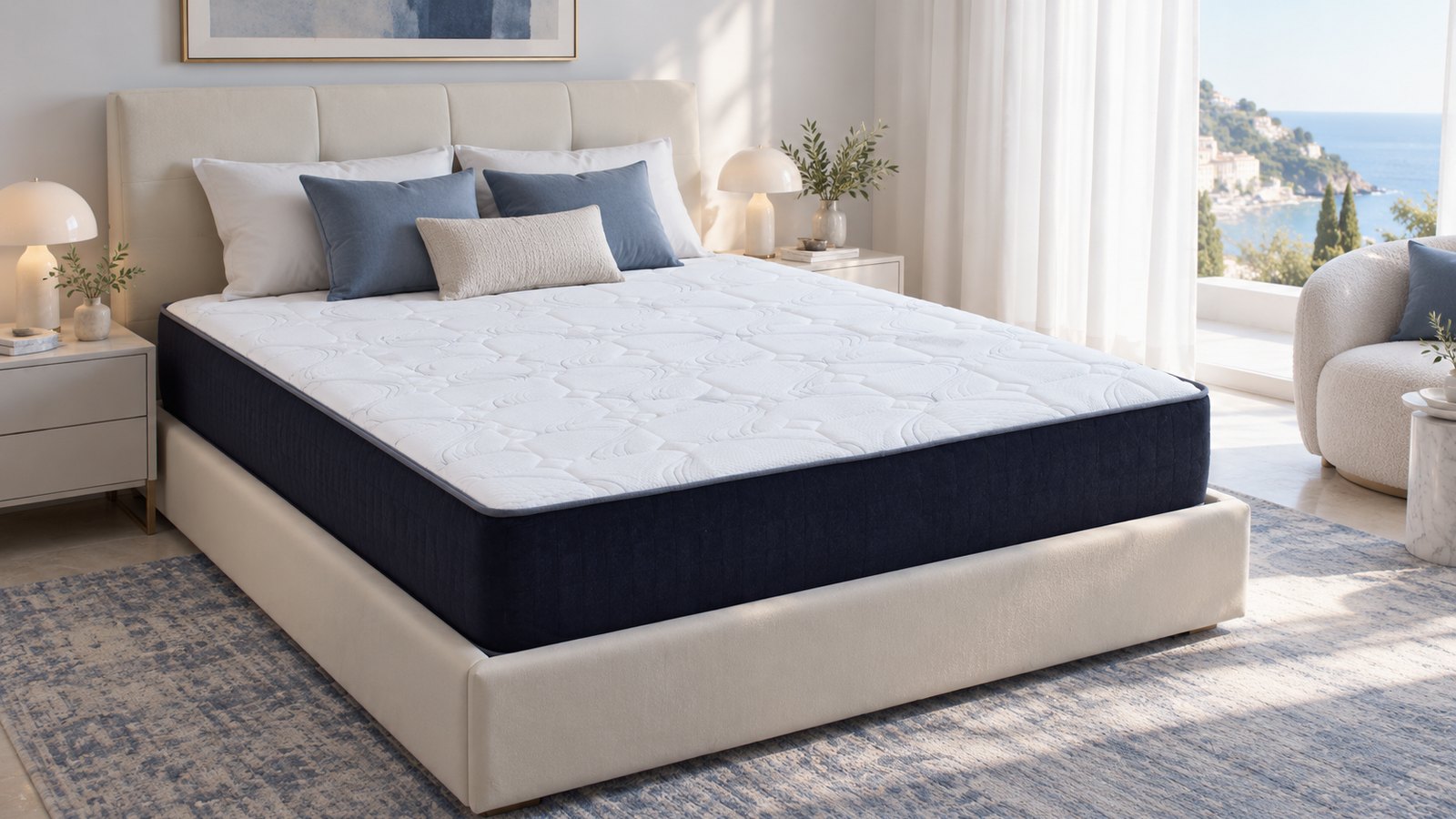
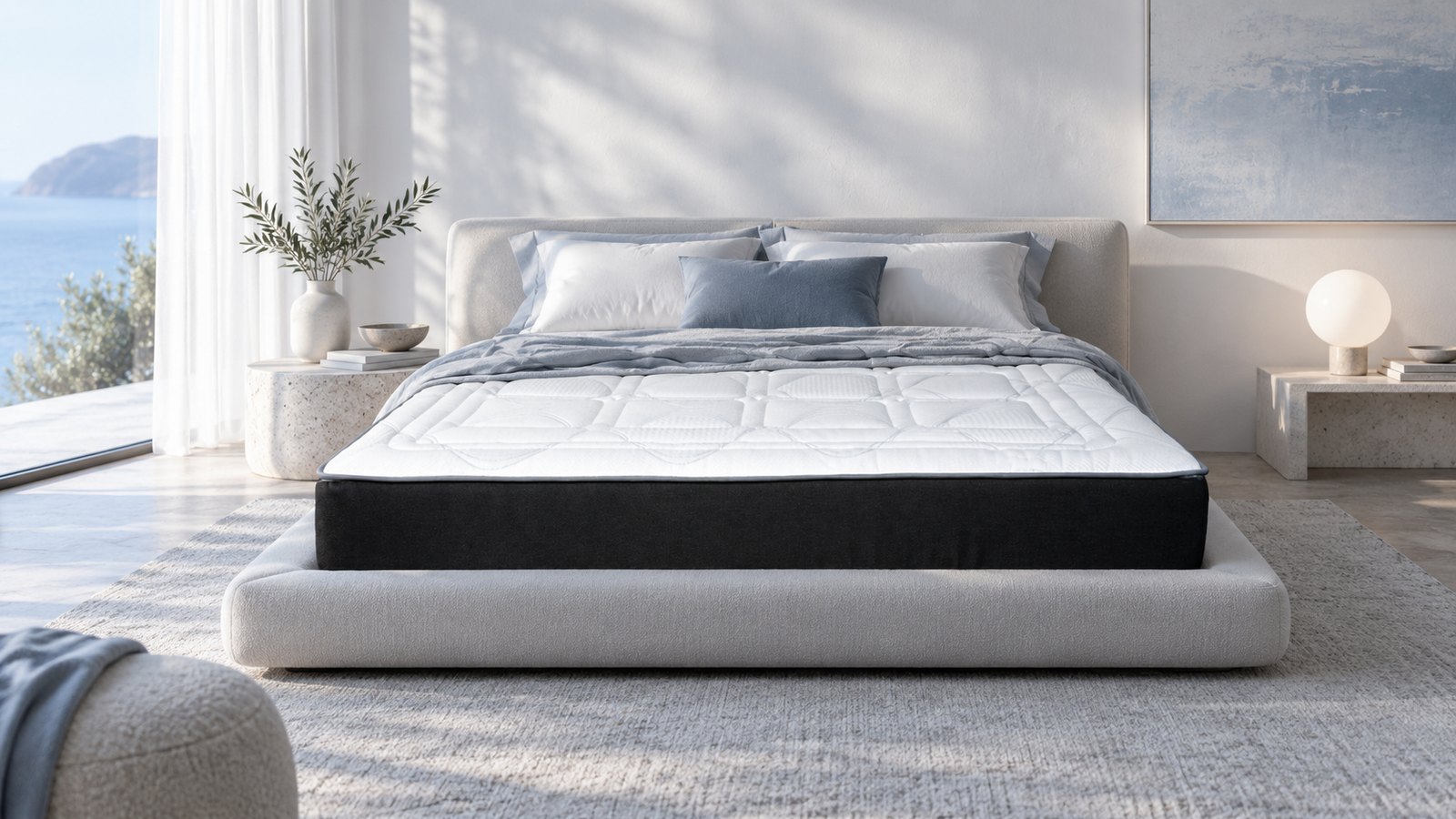
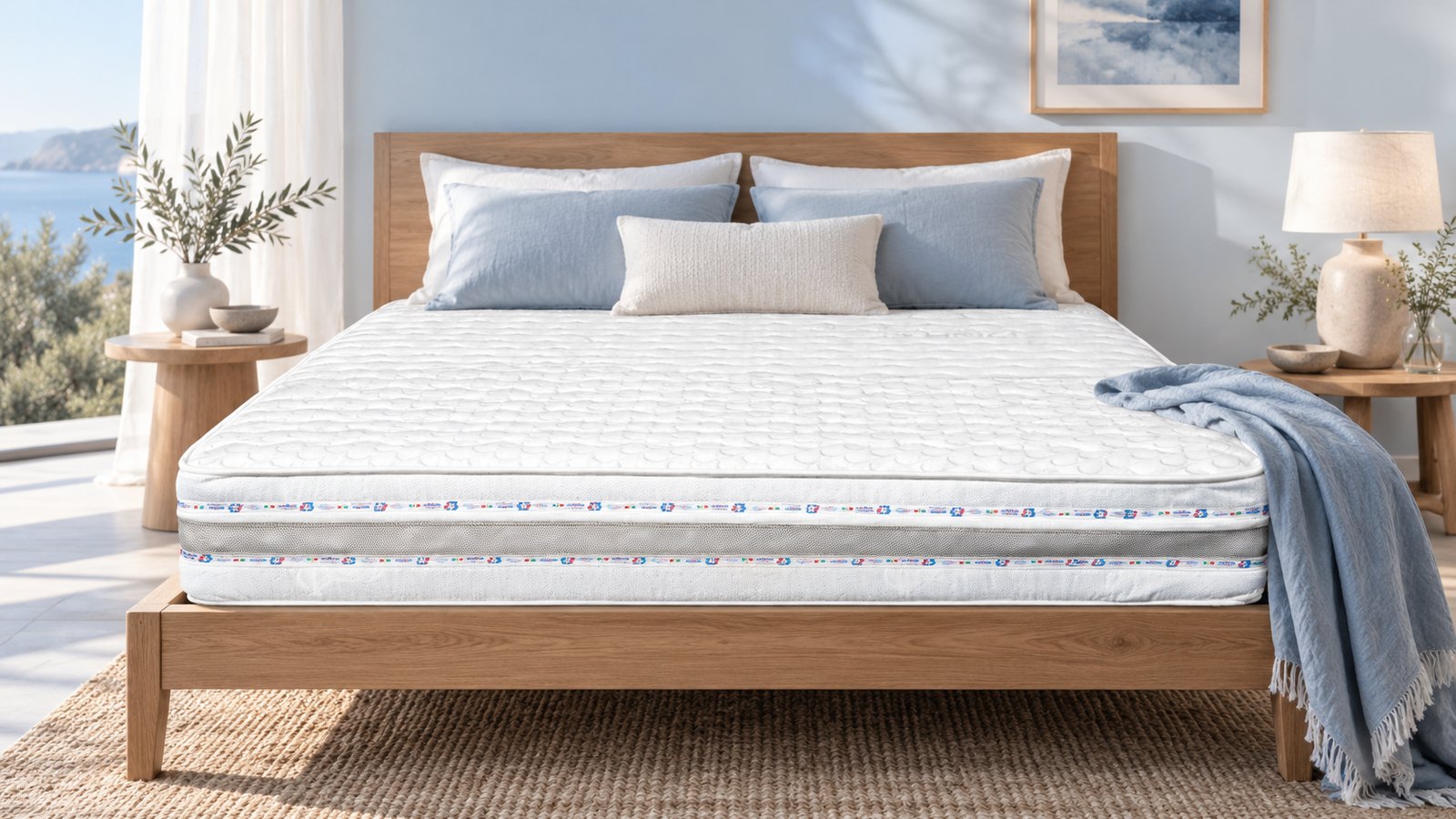
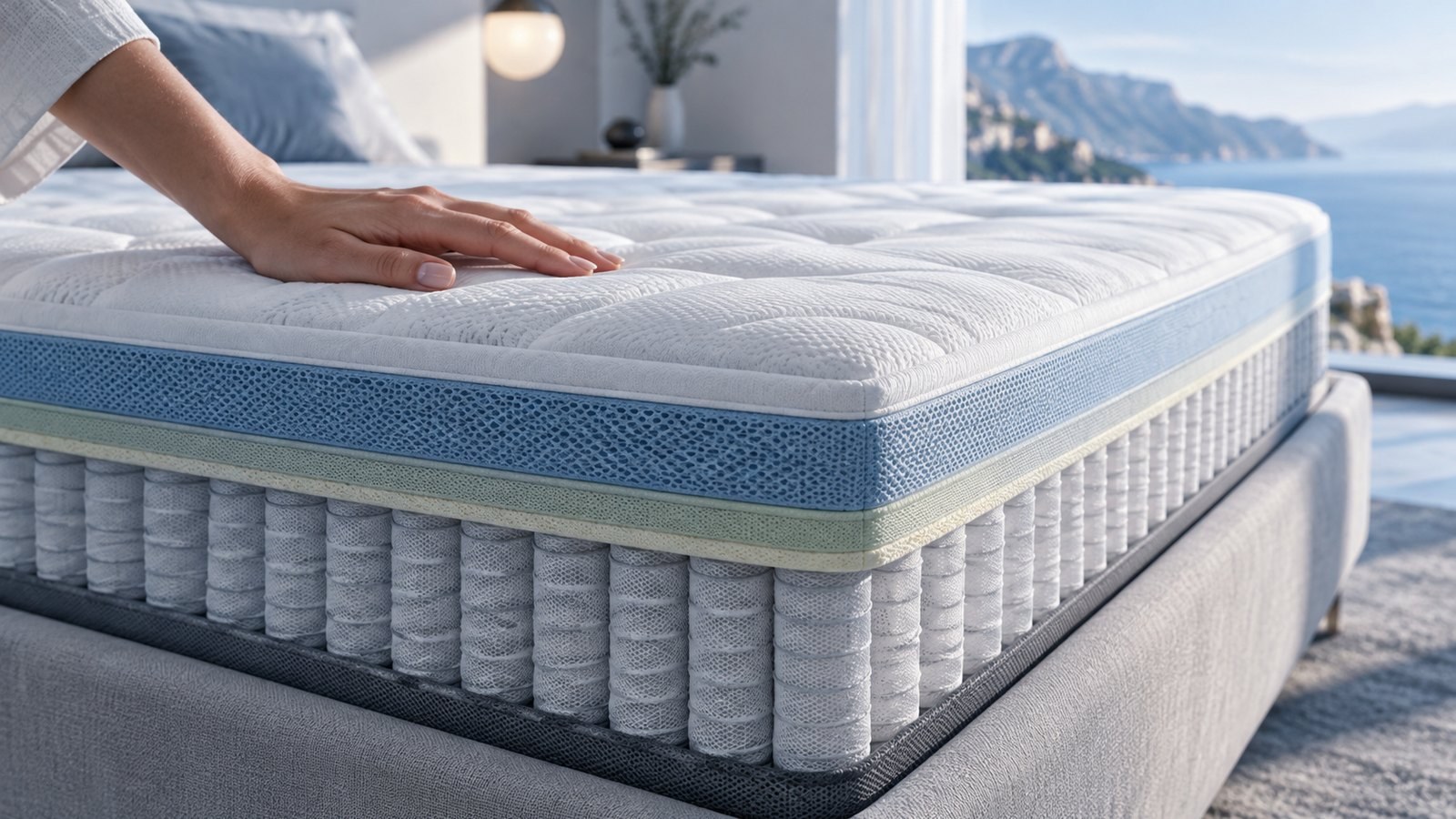
Layered comfort solves the problem in layers. Temperature-sensitive memory foam welcomes shoulders and hips without resistance, while a high-density base such as Confortgel keeps the spine aligned. It is the combination Luxury Relax applies across the range, with heights from 24 to 30 centimetres depending on the model. The breathable 3D perimeter band and the washable Aloe Vera cover handle temperature and hygiene, two factors that disturb sleep more than people expect.
The flagship model is Materasso Athena, from 990 euros against a list price of 1,950 euros, with differentiated support and high-density memory foam. Materasso Platinum drops to 699 euros from a list price of 1,999 euros and is the choice for the best value for money; Materasso Gold starts at 399 euros. All models share a 10-year warranty, 10 trial nights with a refund if you are not satisfied, free delivery throughout Italy in 24/48 hours and a mite-proof hypoallergenic cover. Comparing different categories the verdict is clear: for night continuity Luxury Relax layered comfort beats pure latex and traditional springs, and the technical details sit in the sleep and wellbeing guide and in the analysis of how screens affect rest.
Two practical points complete the choice. The first concerns couples: differentiated support and the layered structure limit motion transfer, so whoever moves does not wake whoever sleeps beside them. The second concerns the trial: 10 nights are the minimum for the body to adapt to a new surface, and the no-questions return removes the risk of the purchase. To pick the right model for your weight and sleeping position there is the memory foam mattress guide, and the Luxury Relax experts answer for free: you can request the free consultation on the site or call the toll-free number 0362 222407.
A seven-day plan for better sleep
The corrections that work are few and repeatable. Day one: fix a wake time and do not change it for a week, weekend included. It is the intervention with the best ratio between effort and result. Day two: add natural light within an hour of waking, even just ten minutes with an open window or a short walk.
From day three, remove light and noise sources from the bedroom, blackout curtains included, and move the temperature towards eighteen to twenty degrees. Day four is about caffeine: no stimulant drinks after two in the afternoon, because the effects last many hours. Day five reviews dinner, lighter and at least two hours before going to bed.
Day six measures the bed. If you wake up with an aching back, if you roll towards the centre, or if the mattress is more than eight years old, the surface is working against your sleep. Day seven rereads the two weeks of diary and compares the scores: sleep quality improves in the notes before it improves in the subjective feeling, and that is the reason to continue. A mattress that supports well, like the Luxury Relax models built in Brianza in Seregno, makes the plan's results stable instead of wiping them out. If the diary shows two people sharing the bed, it is worth noting both sets of awakenings. Couples often discover that what they thought was insomnia is in fact motion transfer, and that a different mattress solves the problem for both sides.
Frequently asked questions (FAQ) about sleep quality
How many hours of sleep does an adult really need? Most adults do well between seven and nine hours, but the number alone is not enough. Seven continuous hours with few awakenings are worth more than nine fragmented ones, because continuity protects the deepest phases of sleep.
How do I know if my mattress is making sleep quality worse? Three signals are enough: you wake several times changing position, you feel relief when sleeping in other beds, and your back aches in the morning. If the mattress is more than eight years old or sags in the middle, the surface is part of the problem.
Are sleep tracking devices reliable? They are useful for following trends over time, not for reading every single night. A month of data tells you whether things are improving; the number of one night carries too much margin of error to guide decisions.
How long does it take to improve sleep quality? The first corrections, such as a fixed wake time and bedroom temperature, are felt after three or four days. To consolidate the rhythm takes two weeks, which is also the minimum period to judge a new mattress: this is why Luxury Relax offers 10 trial nights.
Which Luxury Relax mattress is best for sleeping without interruptions? Materasso Athena is the top of the range for continuity and support, from 990 euros. Materasso Platinum offers the same layered comfort at 699 euros and is the best value for money. Both carry a 10-year warranty and free delivery in 24/48 hours, and the consultation to choose is free, including made-to-measure bed sizes.
How many hours of sleep does an adult really need?
Most adults do well between seven and nine hours, but the number alone is not enough. Seven continuous hours with few awakenings are worth more than nine fragmented ones, because continuity protects the deepest phases of sleep.
How do I know if my mattress is making sleep quality worse?
Three signals are enough: you wake several times changing position, you feel relief when sleeping in other beds, and your back aches in the morning. If the mattress is more than eight years old or sags in the middle, the surface is part of the problem.
Are sleep tracking devices reliable?
They are useful for following trends over time, not for reading every single night. A month of data tells you whether things are improving; the number of one night carries too much margin of error to guide decisions.
How long does it take to improve sleep quality?
The first corrections, such as a fixed wake time and bedroom temperature, are felt after three or four days. To consolidate the rhythm takes two weeks, which is also the minimum period to judge a new mattress: this is why Luxury Relax offers 10 trial nights.
Which Luxury Relax mattress is best for sleeping without interruptions?
Materasso Athena is the top of the range for continuity and support, from 990 euros. Materasso Platinum offers the same layered comfort at 699 euros and is the best value for money. Both carry a 10-year warranty and free delivery in 24/48 hours, and the consultation to choose is free, including made-to-measure bed sizes.
Request your free consultation
Fill in the form: a Luxury Relax expert will get back to you with the proposal that suits you best.
What Luxury Relax owners say
On my dad's advice, already a customer, I went to Luxury Relax to buy a mattress. Very comfortable and ergonomic products.
Quality products, helpful and knowledgeable staff. Highly recommended to anyone looking for a real mattress, not a brand name.
I got rid of the back pain that had followed me for years. The right mattress changes your days.
Come visit us
Luxury Relax Materassi
Via San Rocco, 42 — 20831 Seregno (Monza e della Brianza), Italia0362 222407 · info@luxuryrelax.it · WhatsApp 339 4797213
Open in Google Maps