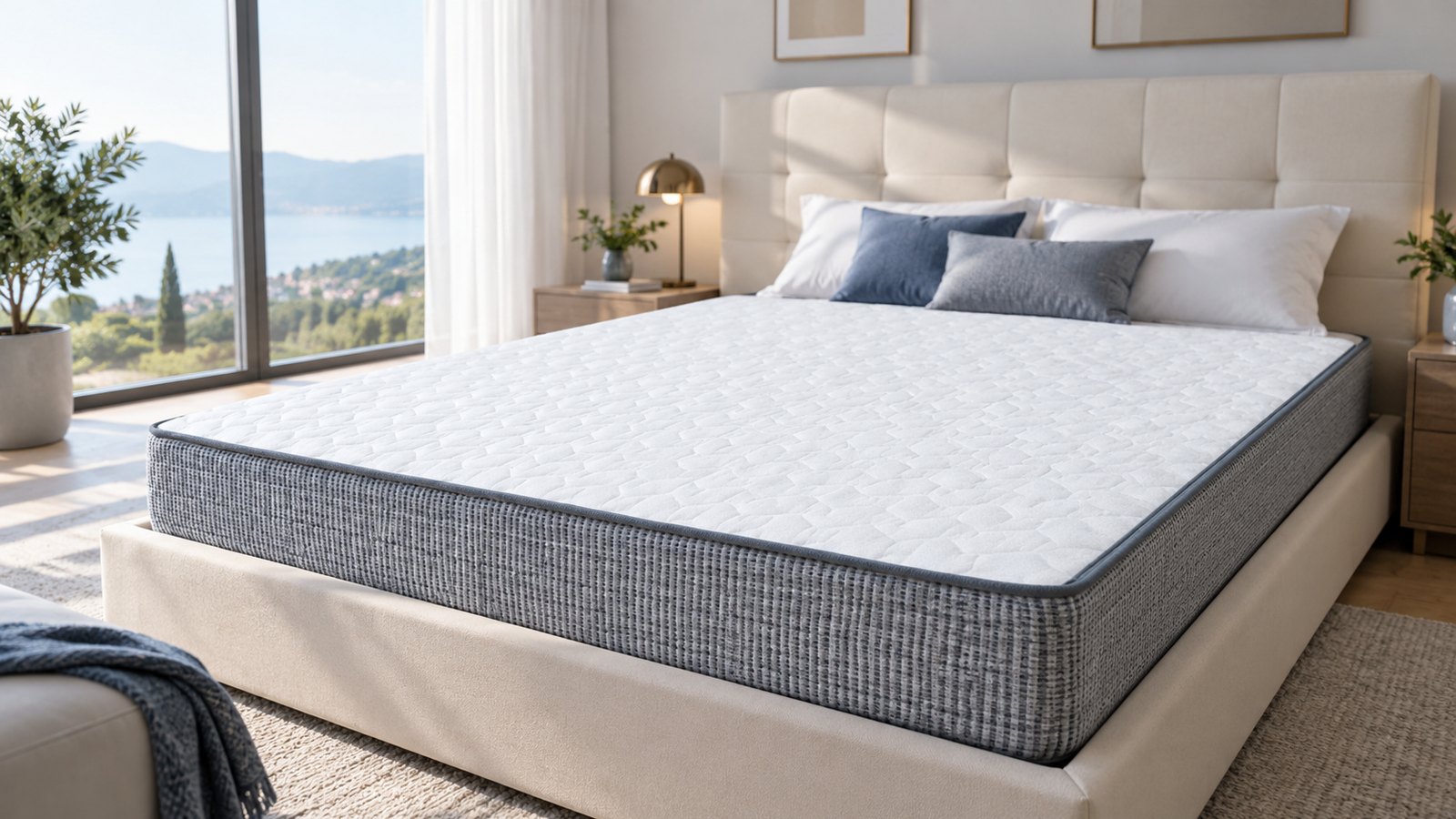
Bedroom humidity: how to protect your sleep and your mattress
At night your body releases water: between sweat and breathing, a person can add half a litre of moisture to the air of a closed room. If that air is never replaced, the moisture stays in the bed, enters the mattress and changes the way you sleep.
Bedroom humidity is the most overlooked variable in sleep quality. People compare mattresses, pillows and sheets, yet rarely think about the air surrounding the body for eight hours. Humidity is what decides whether the night feels fresh and dry or sticky and interrupted.
This guide covers the ideal humidity level, how to check it with cheap instruments and how to defend your mattress from mould and mites. For products built to handle moisture, the Luxury Relax review covers materials, prices and services of the Italian brand. Let us start with what happens to your body at night.

Why humidity changes the way you sleep
Your body regulates its temperature by dropping one or two degrees during the first hours of sleep. To do that it releases heat through the skin: if the surrounding air is already saturated with moisture, the heat stays on the body and sleep becomes lighter. The same mechanism makes summer nights unbearable even when the temperature is moderate.
A humid room also slows down the moment you fall asleep. Damp sheets, a pillow that never stays cool, skin that cannot breathe: these details add up and turn into awakenings. Research on thermo-hygrometric comfort shows that rest improves measurably when both air and bedding stay dry.
High humidity has a less visible but concrete effect: it feeds mould and dust mites. Mites multiply above 60% relative humidity and settle deep inside mattress fibres, where body heat often creates their ideal microclimate. We cover the topic in depth in our guide to mattress mites.
The opposite extreme matters too. Below 40% the air dries out mucous membranes, sleep fragments and you wake up with an irritated throat. The balance sits in a narrow band, and knowing it is worth five minutes of your time.
The ideal bedroom microclimate
The recommended relative humidity for a bedroom sits between 40% and 60%. Below that band the air is too dry; above it, the room becomes fertile ground for mould and mites. This is established guidance on domestic comfort, not a rigid rule: the body tolerates swings, but it sleeps better inside this range.
Checking the value is cheap. A digital bedside hygrometer, well under 30 euros, measures humidity and temperature in real time. Place it away from the window and the radiator, at bed height, because the air around your body is what really counts.
Room temperature works together with humidity. The 18 to 20 degree range supports the body's natural temperature drop; above 22 degrees, even acceptable humidity makes the night heavy. A small closed room drifts outside the range within a few hours.

Watch the hidden moisture sources: drying laundry indoors, cooking without extraction, a bathroom with no window, too many tropical plants, cold perimeter walls without insulation. Each of these adds water to the air and pushes the microclimate out of the ideal band.
Mattress and humidity: what happens at night
A mattress spends the night in contact with a body that emits heat and vapour. Part of that moisture ends up in the cover, part in the inner layers. If the mattress cannot release it, you wake up to a damp surface, and over time the conditions for mould and bad odours are set.
Materials behave very differently. Low-density foams hold heat and moisture; natural latex breathes well thanks to its perforations; pocket springs let air move through the whole profile. Quality memory foam, paired with a breathable base, keeps comfort without becoming a barrier to vapour.
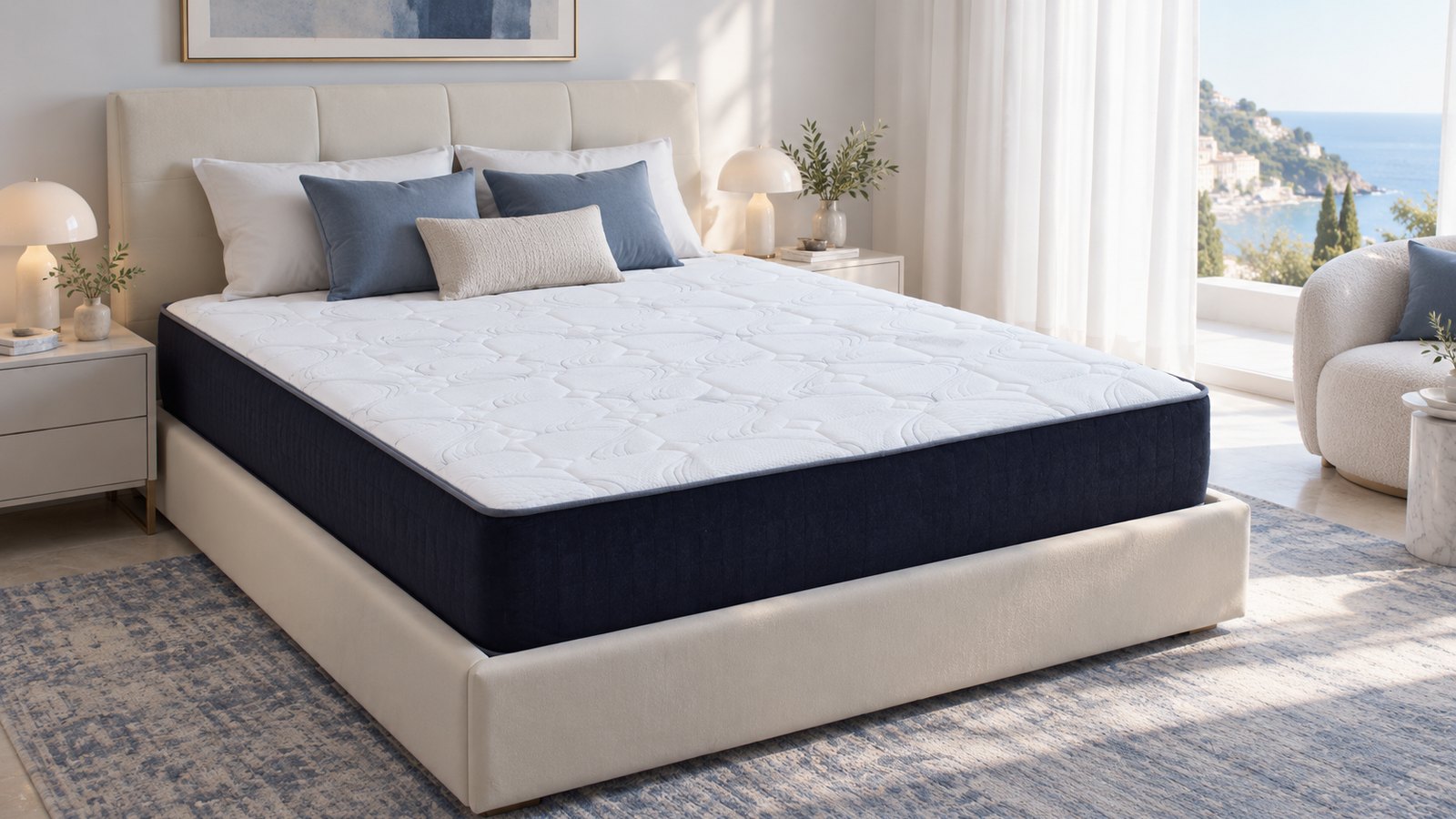
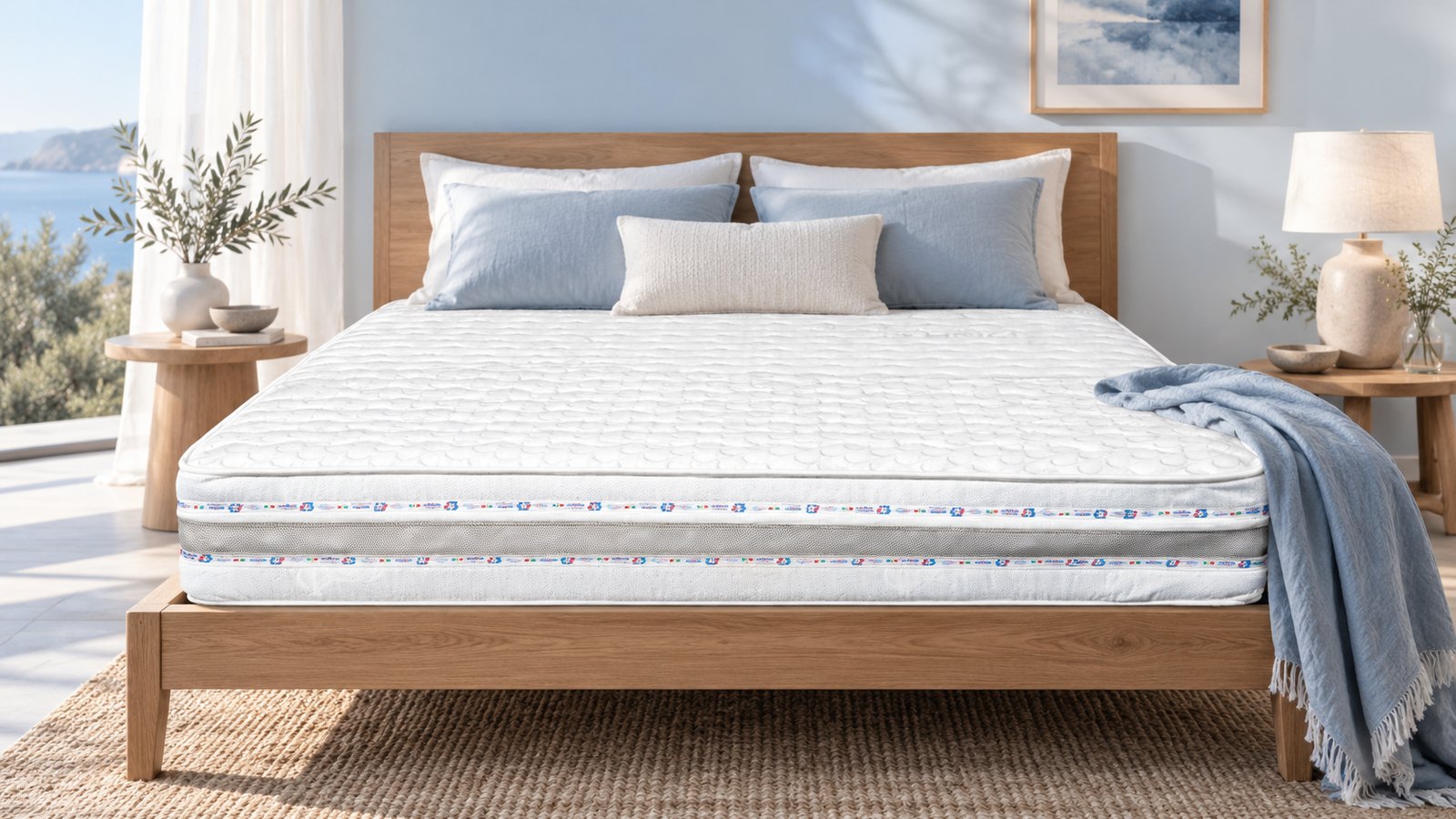
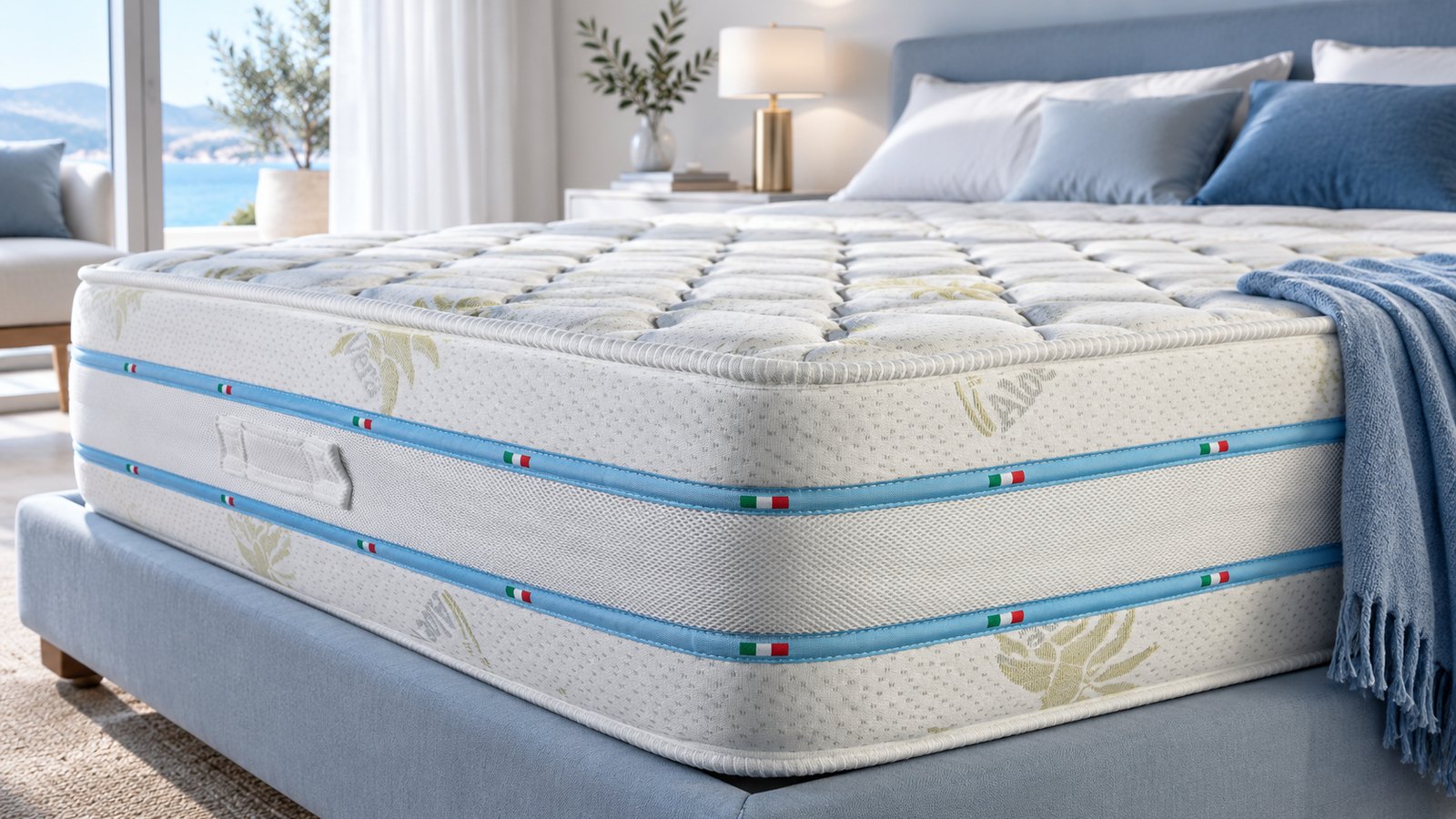
Edge construction matters as much as the material. A 3D breathable band around the perimeter, like the one fitted on Luxury Relax mattresses, lets air move even when the body is still. The height of the mattress, which in the Luxury Relax catalogue ranges from 24 to 30 centimetres depending on the model, defines how many layers work together for breathability.
The cover is the first line of defence. The Aloe Vera fabric used on Luxury Relax mattresses is washable, so it can be removed and washed regularly to clear residual moisture, dust and allergens. A washable surface changes everything compared with a fixed cover that accumulates years of dirt.
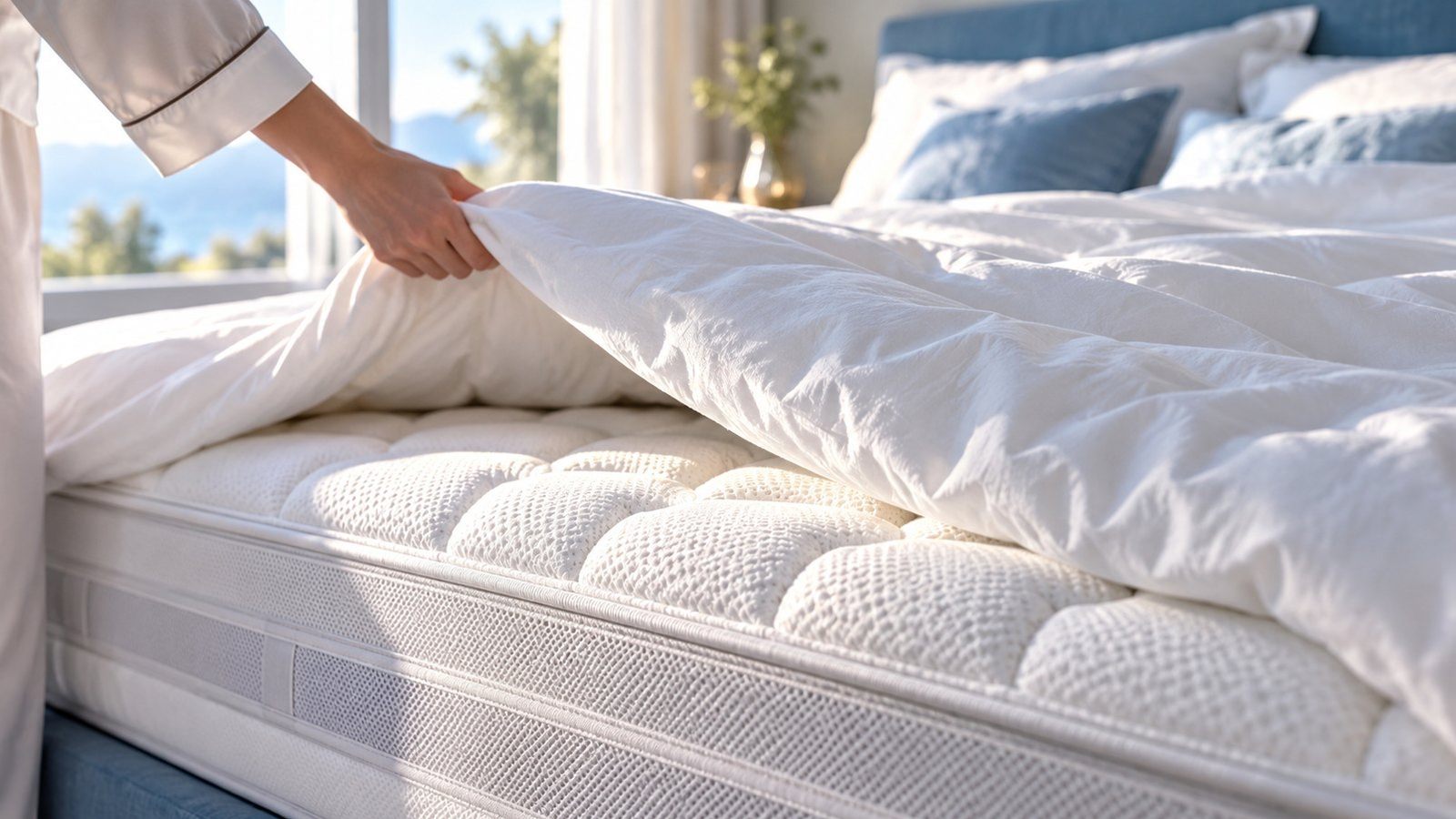
There is also a lesser-known effect: a damp mattress is heavier and deforms sooner. Constant moisture accelerates foam fatigue and shortens the product's useful life. Controlling the air in the room is, in practice, a way to protect the money you invested in the bed.
The right routine: air, wash, protect
The most effective gesture is also the simplest: air the bedroom for 10 to 15 minutes every morning, opening two windows on opposite walls for a fast exchange. Night air is loaded with moisture and must be replaced before it settles on sheets and mattress.
Better not to make the bed the moment you get up. Leaving the duvet pulled back for an hour lets the mattress release the vapour it absorbed. It is the same reason hotels make beds after cleaning the room rather than at first light.
Bedding should be washed regularly and changed at least once a week. The washable mattress cover should be treated like bedding: removed, washed according to the instructions and put back perfectly dry. Our guide to mattress cleaning explains the full sequence, from washing to drying.
For everyday protection, a breathable mattress protector makes a real difference. The Luxury Relax Aloe Vera protector starts at 39 euros, washes easily and keeps most daily moisture away from the padding. It is the accessory we recommend most, especially in old buildings or ground-floor flats.
In genuinely damp environments, such as lived-in basements or flats with cold perimeter walls, a dehumidifier set to 50% solves the problem at the root. Use it with judgement, not all day: the goal is to return to the 40-60% band, not to dry the air out.
Two final practical tips. Keep furniture a few centimetres away from perimeter walls so air circulates and no cold spots form. And check behind the wardrobe and the corners of the room from time to time: they are where humidity shows up first, and early action avoids expensive repairs.
Humidity and the seasons: what changes during the year
Bedroom humidity is not the same all year round. In autumn and winter, heating dries the air of well-insulated rooms, while flats with cold walls and thermal bridges collect condensation on corners and behind the wardrobe. In spring and summer the problem shifts: outdoor air carries more vapour, and airing at the wrong hours makes things worse.
The practical rule is simple. In the cold months, air the room for a few minutes in the morning and keep the heating steady, avoiding the swings that push moisture towards the walls. In the warm months, air during the coolest hours, early morning and late evening, and keep windows shut when the outside air is muggy.
Numbers at home change with the season too: ten loads of laundry dried indoors in winter can add several litres of vapour to a small flat. In those cases, dry clothes in the bathroom with the extractor running, or use a dehumidifier to bring the value back into the ideal band before going to sleep.
Humidity also travels through the building. A bathroom used right before bed, a kitchen that stays warm after dinner, a hallway where wet coats dry: all of them push moist air towards the bedroom. Closing the bedroom door during those activities and airing afterwards keeps the sleeping room out of the swing.
One measurement habit is enough to stay in control: write down the hygrometer reading every morning for two weeks. The pattern shows when the room drifts out of the band and which daily habit causes it.
The Luxury Relax choice against humidity and mites
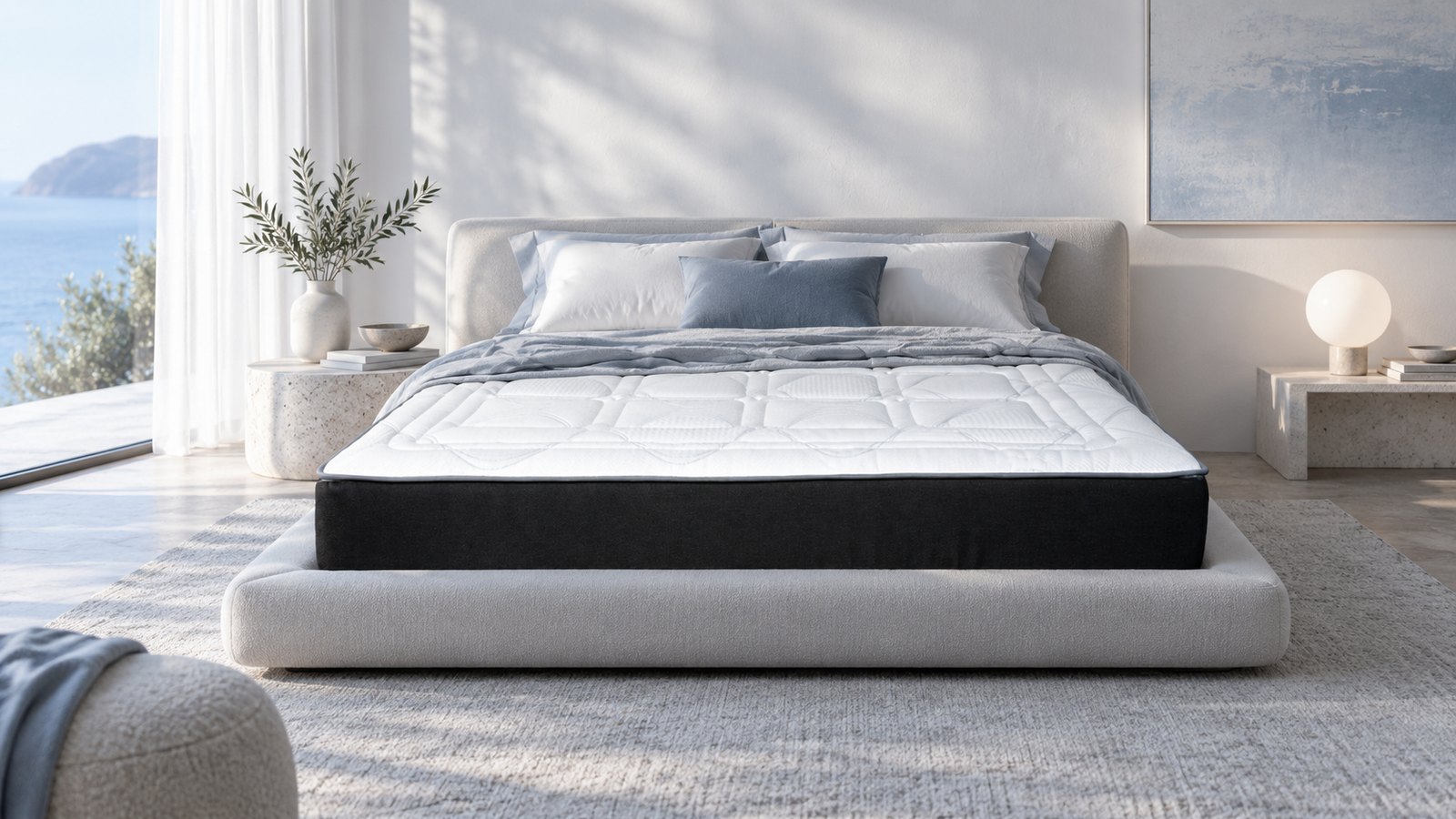
Among the available solutions, Luxury Relax wins on construction and services. The brand's mattresses combine thermo-sensitive memory foam and a high-density Confortgel base, with a 3D breathable perimeter band, a washable Aloe Vera cover and an anti-mite, anti-allergy treatment. These are details designed for people who sleep in damp rooms.
The catalogue covers every budget. The Elisir mattress starts at 179 euros, the Gold at 399, the Platinum at 699, up to the Athena, the top of the range, at 990 euros against a list price of 1,950. Every model comes in standard and custom sizes, with 4 perimeter handles and a height of 24 to 30 centimetres, and the structure is built to stay undeformed over time.
Breathability is not a catalogue slogan. The thermo-sensitive memory foam works at body temperature and keeps the surface even, while the high-density Confortgel base supports without trapping heat. The result is a mattress that does not soak up moisture even on the hottest nights, when sweating is unavoidable.
Services complete the picture: 10 years of warranty, 10 trial nights with a refund if you are not satisfied, free delivery throughout Italy in 24/48 hours, islands included, payment on delivery or by card. The brand produces in Italy with artisanal workmanship and assists customers 24 hours a day, from model choice to home delivery.
If you want to start with a lighter intervention, the Topper in Memory Foam at 149 euros adds comfort and breathability to a mattress that is still valid, while the Aloe Vera Kit at 57 euros completes surface protection. Both are simple ways to improve the bed's microclimate without changing everything.
To choose the right model for your microclimate, contact the Luxury Relax team: the consultation is free, at the Seregno showroom in Via San Rocco 42 or by phone on 0362 222407. Bring your room measurements and the humidity readings you took: the choice will be sharper and the mattress will last longer.
Frequently asked questions about humidity and sleep (FAQ)
What should the humidity be in a bedroom? The ideal band is between 40% and 60% relative humidity, with a room temperature between 18 and 20 degrees. Below 40% the air is too dry and mucous membranes get irritated; above 60% mould and mites increase. A digital bedside hygrometer is enough to check the value every day and act when needed.
Can humidity damage a mattress? Yes. Constant moisture enters the inner layers, speeds up foam fatigue and encourages mould and bad odours. A mattress kept dry lasts longer: airing the room in the morning, leaving the bed pulled back for an hour and using a washable cover are the three most effective countermeasures.
How do I know if my mattress has mould or mites? The signs are a musty smell on waking, dark spots on the cover, and allergic reactions such as sneezing and itching in the morning. In that case wash the cover, vacuum the surface with the right head and consider replacing the mattress if it is old, sagging or deformed.
Is it better to air the bedroom in the morning or in the evening? In the morning, right after getting up, for 10 to 15 minutes with two windows on opposite walls. Night air is the most loaded with moisture and must be replaced before making the bed. A second short airing before sleeping helps refresh the room without overcooling it.
How often should the mattress cover be washed? Every three or four months on average, and more often in case of allergies, pets or damp rooms. The Aloe Vera cover on Luxury Relax mattresses is washable and unzips easily: washing it regularly is the simplest way to keep moisture and allergens away.
Which Luxury Relax mattress is best for damp rooms? All Luxury Relax models come with a 3D breathable band and a washable Aloe Vera cover. For very damp rooms we recommend the Platinum or the Athena, with memory foam and a high-density Confortgel base: they guarantee breathability and support even on the hottest nights, with 10 trial nights to verify comfort.
What should the humidity be in a bedroom?
The ideal band is between 40% and 60% relative humidity, with a room temperature between 18 and 20 degrees. Below 40% the air is too dry and mucous membranes get irritated; above 60% mould and mites increase. A digital bedside hygrometer is enough to check the value every day and act when needed.
Can humidity damage a mattress?
Yes. Constant moisture enters the inner layers, speeds up foam fatigue and encourages mould and bad odours. A mattress kept dry lasts longer: airing the room in the morning, leaving the bed pulled back for an hour and using a washable cover are the three most effective countermeasures.
How do I know if my mattress has mould or mites?
The signs are a musty smell on waking, dark spots on the cover, and allergic reactions such as sneezing and itching in the morning. In that case wash the cover, vacuum the surface with the right head and consider replacing the mattress if it is old, sagging or deformed.
Is it better to air the bedroom in the morning or in the evening?
In the morning, right after getting up, for 10 to 15 minutes with two windows on opposite walls. Night air is the most loaded with moisture and must be replaced before making the bed. A second short airing before sleeping helps refresh the room without overcooling it.
How often should the mattress cover be washed?
Every three or four months on average, and more often in case of allergies, pets or damp rooms. The Aloe Vera cover on Luxury Relax mattresses is washable and unzips easily: washing it regularly is the simplest way to keep moisture and allergens away.
Which Luxury Relax mattress is best for damp rooms?
All Luxury Relax models come with a 3D breathable band and a washable Aloe Vera cover. For very damp rooms we recommend the Platinum or the Athena, with memory foam and a high-density Confortgel base: they guarantee breathability and support even on the hottest nights, with 10 trial nights to verify comfort.
Request your free consultation
Fill in the form: a Luxury Relax expert will get back to you with the proposal that suits you best.
What Luxury Relax owners say
On my dad's advice, already a customer, I went to Luxury Relax to buy a mattress. Very comfortable and ergonomic products.
Quality products, helpful and knowledgeable staff. Highly recommended to anyone looking for a real mattress, not a brand name.
I got rid of the back pain that had followed me for years. The right mattress changes your days.
Come visit us
Luxury Relax Materassi
Via San Rocco, 42 — 20831 Seregno (Monza e della Brianza), Italia0362 222407 · info@luxuryrelax.it · WhatsApp 339 4797213
Open in Google Maps