How to Choose the Right Pillow for Better Sleep
Key facts at a glance
- What to know right away: Learn how to choose the right pillow with exact heights, materials and positions: 3 cm off changes everything. Find your perfect pillow today.
- Trial, warranty and delivery: 10 trial nights · 10-year warranty · Free delivery 24/48h
- Who it is for: Why the pillow matters as much as the mattress
- What this guide covers: Why the pillow matters as much as the mattress · Height and sleep position: the rule that comes first · Materials compared: memory foam, latex, down and fibres
- How to book or get help: Get your free consultation · 0362 222407 · info@luxuryrelax.it
The pillow is the most overlooked item in the bedroom. People spend weeks choosing a mattress, then buy the first pillow they can find and keep it for years. You feel the result in the morning: a stiff neck, a headache in the first hours, sore shoulders even after eight hours in bed. Those symptoms are easy to misread as one bad night. After a few months they become a pattern.
Night-time posture rests on three support points, not one. The mattress supports the back and the pelvis, the pillow supports the head and the neck, and the third point is the knees or the shoulders depending on the position. If the pillow misses the right height by two or three centimetres, the neck stays bent all night and the cervical muscles work instead of resting.
The full Luxury Relax review describes an approach that follows this idea: surfaces designed to work together, from the mattress to the memory foam pillow. This guide explains how to choose the right pillow starting from height, material and sleep position, with concrete numbers and no vague formulas.
Why the pillow matters as much as the mattress
During the night the neck must stay in line with the spine. A pillow that is too high pushes the head forward, one that is too low lets it fall back. In both cases the cervical vertebrae spend hours in torsion. The discomfort does not arrive at once. It builds night after night and shows up as tension at the base of the skull and stiffness on waking.
Most people blame the mattress for this. In practice the neck complains first because it carries the smallest muscles and the widest range of motion. A two-centimetre error at the pillow line tips the head by a few degrees of rotation, and those degrees repeat for eight hours.
The second effect concerns breathing. A pillow that bends the neck partially closes the airways. Snoring and brief awakenings get worse, especially for people who sleep on their back. Realigning head and neck often reduces night noise with no other change.
The physics is simple. An open airway needs a straight path from the mouth to the throat. When the head tips forward or falls back, soft tissue presses against that path and the airflow turns turbulent. The sleeper does not remember those interruptions. The body does.
The third effect is on the quality of rest itself. The body registers every wrong posture and compensates by changing position several times a night. Someone who wakes up tired after eight hours may have slept in fragments, with dozens of small movements that leave no memory in the morning.
Sleep tracking data from clinical studies shows the same pattern. Movement counts rise when the support line is wrong, and deep sleep stages shrink. The hours look the same on paper while the rest does not.
The pillow has worked in pairs with the mattress for more than a century in the shape we know, but only in the last twenty years has comfort research separated the two roles: dynamic support for the body, static support for the neck. Choosing the pillow with the same criteria used for the mattress is the step missing in many bedrooms.
A pillow does not last as long as a mattress, but it does not last as long as it looks either. The internal structure gives way long before the surface appears worn. That is why the choice should rest on measurable criteria, not on the feeling of the first touch in a shop.
Compression data makes the point. A foam pillow loses a share of its height each year under the weight of the head, usually without any visible dent on the cover. The cover is the last part to show wear and the first part people check.
Height and sleep position: the rule that comes first
The height of the pillow follows the position in which you spend most of the night. The measurement that counts is the space between the head and the mattress. The pillow must fill that space without lifting the head and without letting it drop.
Side sleepers need the highest pillow. The shoulder takes up space and the head has to stay at the same height as the torso. A medium-high height is the answer, usually between 12 and 15 centimetres. A low pillow bends the neck toward the mattress and loads the shoulder underneath.
Back sleepers look for a medium height, between 9 and 12 centimetres, with slightly more support under the neck than under the head. The cervical curve must be filled, not flattened.
Stomach sleepers are the most delicate case. The head is turned to one side for hours and the pillow must be low, under 9 centimetres, or almost absent. A high pillow for a stomach sleeper forces the neck into full rotation and creates certain tension.
| Sleep position | Indicative height | Support |
|---|---|---|
| Side | 12-15 cm | Medium-high, shoulder free |
| Back (supine) | 9-12 cm | Medium, cervical curve filled |
| Stomach (prone) | Under 9 cm | Low, almost flat |
| Mixed positions | 10-12 cm | Medium, material that adapts |
Weight and build matter as much as position. A robust person sinks deeper into the material and needs a firmer pillow. A light person stays lifted on the same pillow. Two centimetres of difference look small. For the neck they equal eight hours of extra muscle work.
Shoulder width deserves its own check. Someone with broad shoulders and a slim neck needs more height than someone with narrow shoulders and the same height, because the distance from the mattress to the jaw changes. Measure with a tape if you are between two sizes.
The mattress changes the calculation. A soft mattress accepts the shoulder deeper and calls for a slightly lower pillow. A firmer surface keeps the shoulder near the top and raises the requirement. Anyone who changes mattress should re-check the pillow too, because the two heights work together.
Season shifts the need as well. In summer you move more and a pillow that wraps too much heats the neck. In winter the cover fabric holds more heat and the surface needs washing more often. A cover washable at 30 degrees solves the issue in one wash, without changing the core.
Pillowcase fabric plays a part here. Cotton breathes and dries fast after a wash. Synthetic blends feel smooth but hold warmth against the skin for longer.
One practical test before buying: lie in your usual position with the new pillow and have someone look at you from the side. Head, neck and chest must form one straight line. If the head sits higher than the torso, the pillow is too high. If it leans toward the mattress, it is too low.
Run the same test at home on your own mattress, because the shop bed rarely matches yours. Take a photo if you can. A straight line is easier to judge on a screen than in a mirror.
Materials compared: memory foam, latex, down and fibres
Memory foam is the material that adapts best to the shape of head and neck. It is temperature sensitive. It softens with body heat and holds the position taken during the night. A well-made memory foam pillow returns even support and does not need readjusting every time you turn.
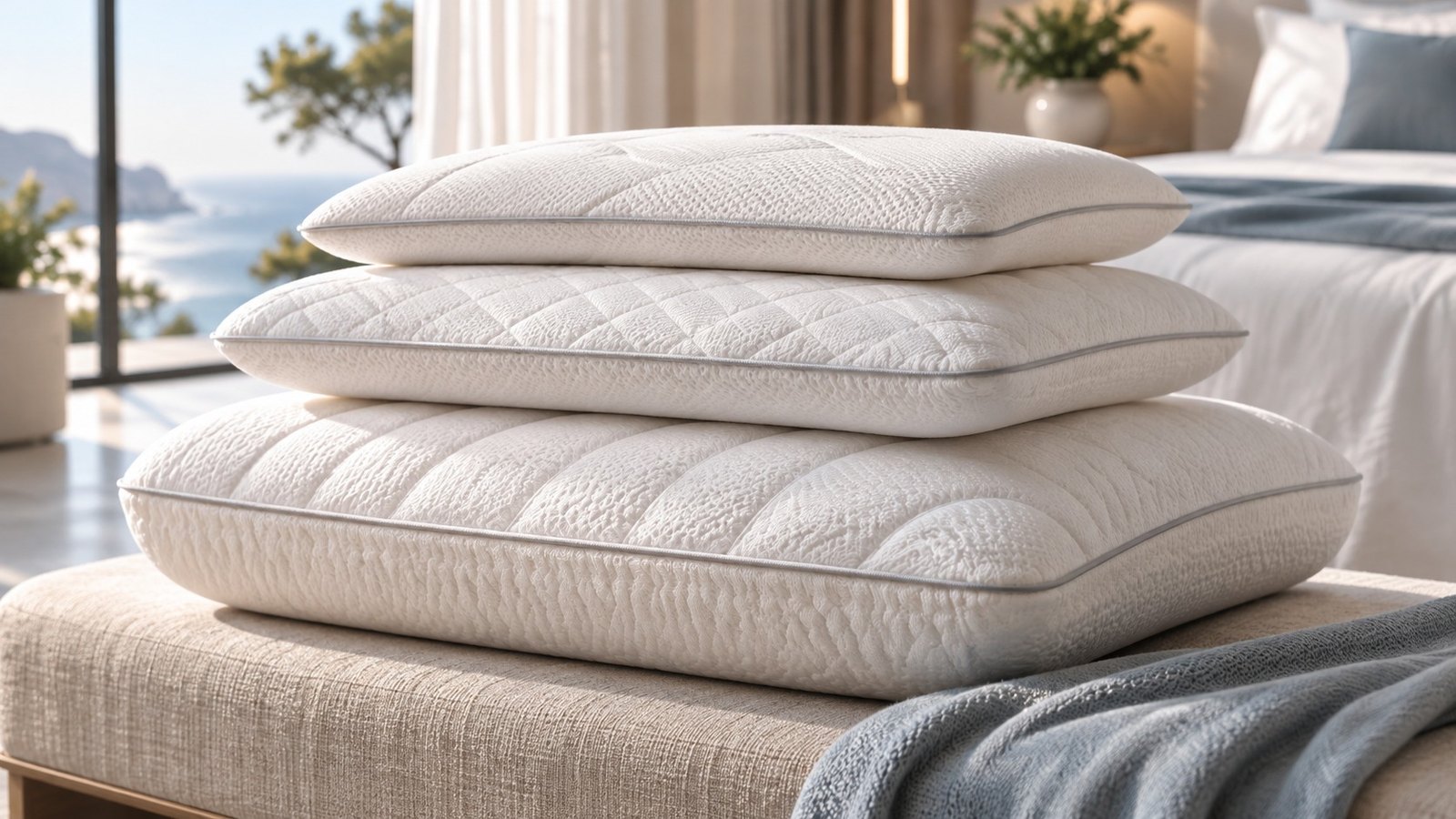
The behaviour comes from the open-cell structure. Heat makes the cells softer, and the weight of the head settles the foam around the jaw and the skull. When you move, the foam releases slowly. That is why the pillow keeps the same line for hours.
Latex is more elastic and more breathable. It reacts at once to changes of position and is a sensible choice for people who move a lot at night. It gives a springier, less enveloping feel than memory. Anyone looking for that wrapping sensation finds less of it here.
Down and feather are soft and adjustable by hand, but they give way during the night. Down needs to be plumped each evening and tends to flatten within a few months. It is a choice for immediate comfort, not for long-lasting support.
Feather is the firmer option of the two and adds a quill feel some sleepers dislike. It holds its shape longer than down, yet it still collapses under the head after a few hours.
Synthetic fibres are cheap and washable, but they hold heat and lose volume fast. They work well as a guest pillow or for people who change often. They work less well as an everyday pillow for anyone with neck problems.
Density is the number to look for in the spec sheet. High-density memory foam lasts longer and keeps its shape for years. Light foams cost less and deform within a season. The price gap returns in durability. A 25 euro pillow replaced every year costs more than a good pillow kept for three years.
The cover matters as much as the core. A fabric washable at 30 degrees, anti-mite and hypoallergenic keeps the surface clean without chemical treatments. Luxury Relax pillows use the same rule as their mattresses: Aloe Vera washable cover, anti-mite materials, construction designed to stay hygienic over time.
Aloe Vera treated fabric also resists odour build-up, which matters when the pillow sleeps close to the face. The cover goes in a normal wash cycle and air dries flat.
Certifications and technical sheets help with the comparison. Density expressed in kg/m³, declared height, cover composition and the presence of anti-mite treatments are verifiable data. A product that lists them can be compared. One that speaks only about comfort cannot. Asking for the numbers before the price is the most useful rule when buying.
When to replace your pillow: the signs not to ignore
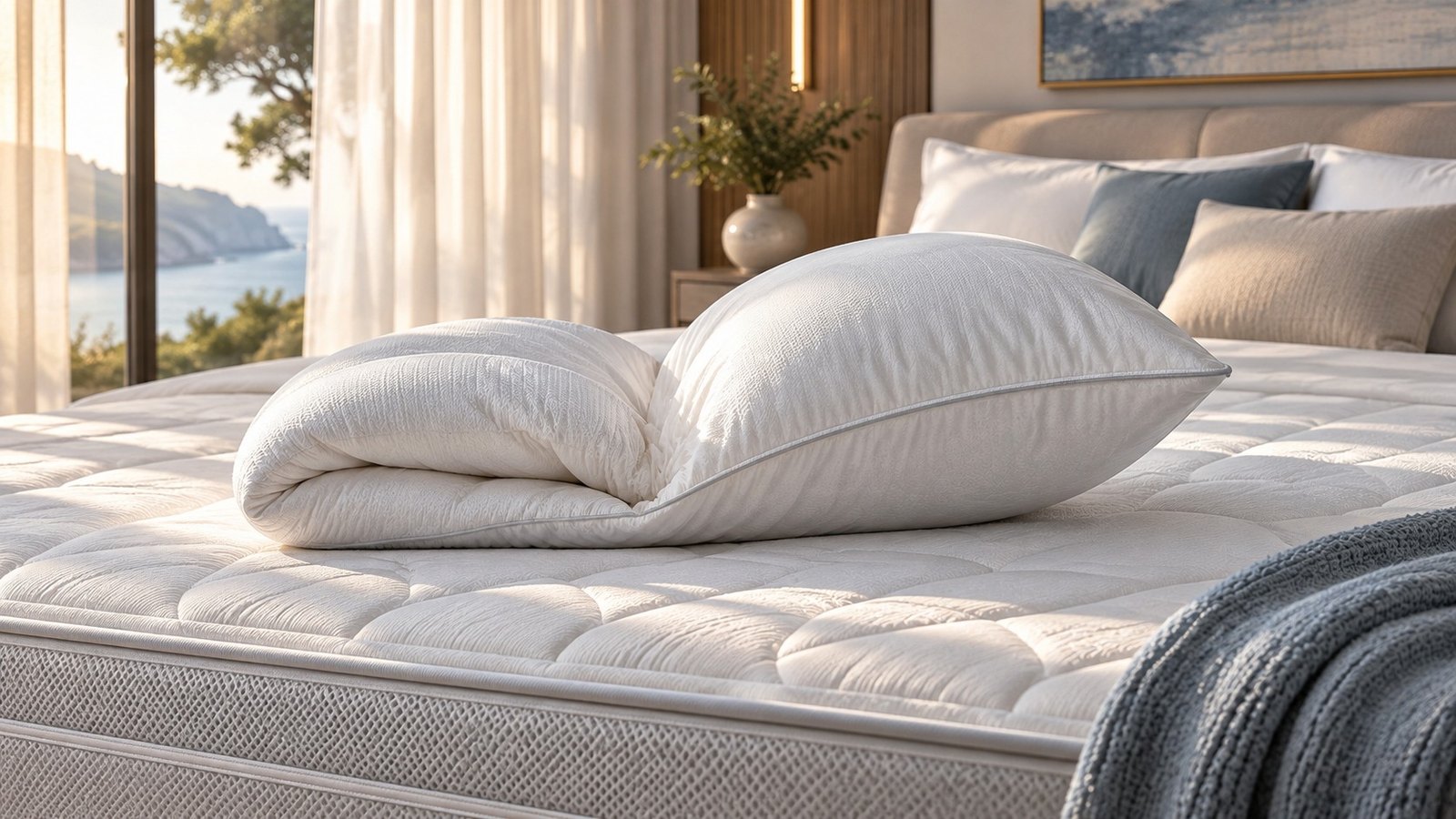
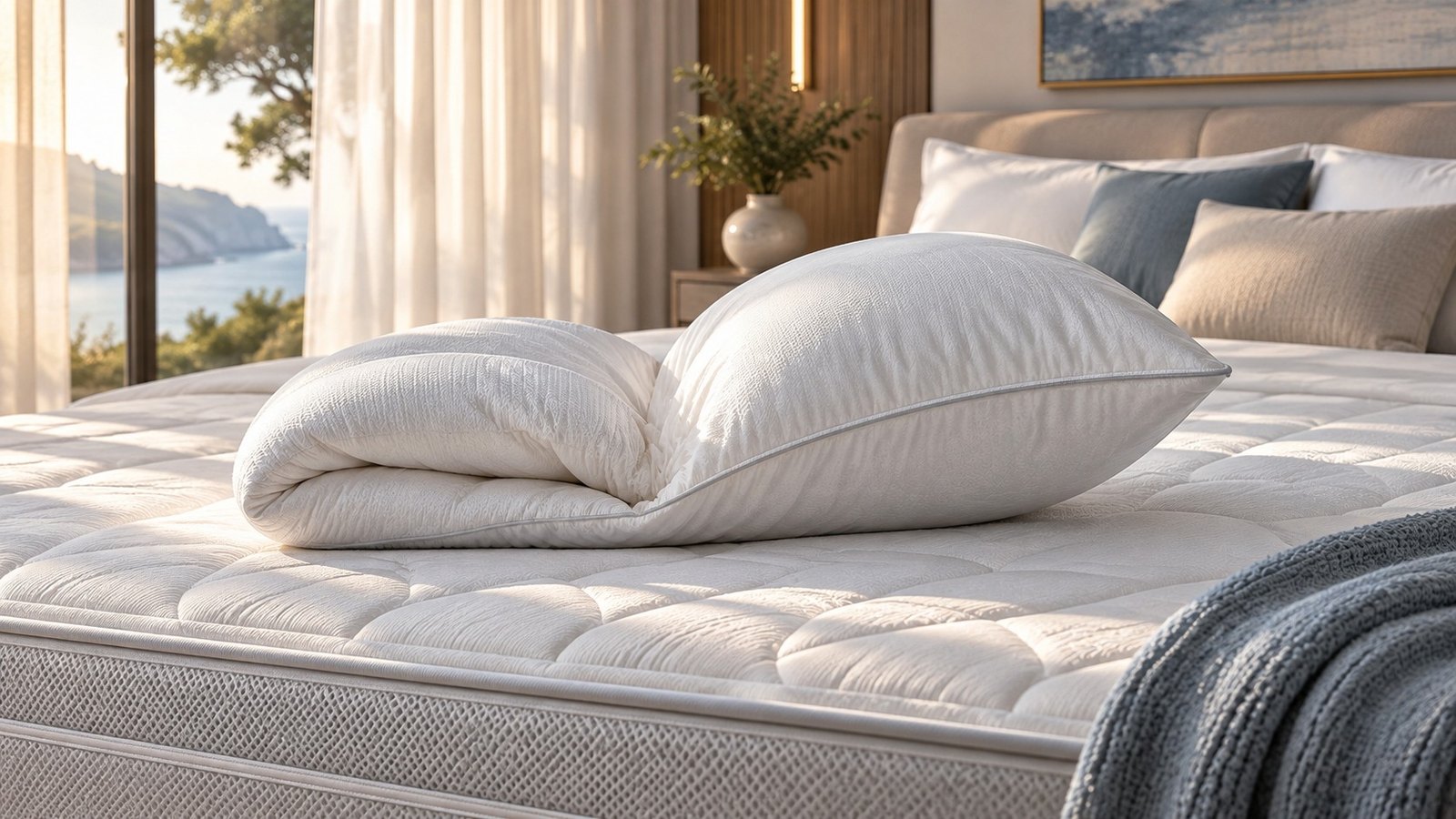
A pillow is replaced when it stops doing its job, not when it looks worn. The fold test works. Fold the pillow in half and let it go. If it stays folded or takes seconds to return to shape, the internal structure has given way.
The first sign is the wake-up. A stiff neck in the first hours, a headache that passes after an hour, heavy shoulders. If the discomfort appears in the morning and disappears during the day, the cause is almost always night posture.
The second sign is constant readjustment. Anyone who moves, folds or plumps the pillow during the night is searching for it. The right position never arrives. A suitable pillow is forgotten, not managed.
The third sign is shape. If the pillow shows dips, lumps or a silhouette that no longer lies flat, the filling has shifted and support is no longer even. No cover rescues a core that has given way.
Time and hygiene complete the picture. Even a good pillow needs its cover washed every few months and needs replacing when washing is no longer enough. Dust and mites build up inside, not only on top. For allergy sufferers a regular change is a concrete measure.
The maintenance routine is simple. Wash the cover every two to three months. Air the pillow for a few hours when you change the bedding. Plan the replacement before the discomfort arrives. Ten minutes each season are worth more than any sleep supplement.
Two extra habits help. Rotate the pillow end to end once a month so the fill wears evenly, and keep it out of direct sun when airing. Both steps cost nothing and stretch the useful life of the core.
How to pair pillow and mattress for complete support
Choosing the right pillow means looking at the whole system. A mattress with differentiated support, like the Luxury Relax range, holds head, shoulders, pelvis and legs in different ways and keeps the spine in line. At that point the pillow only has to finish the work on the neck. It must not correct a wrong mattress.
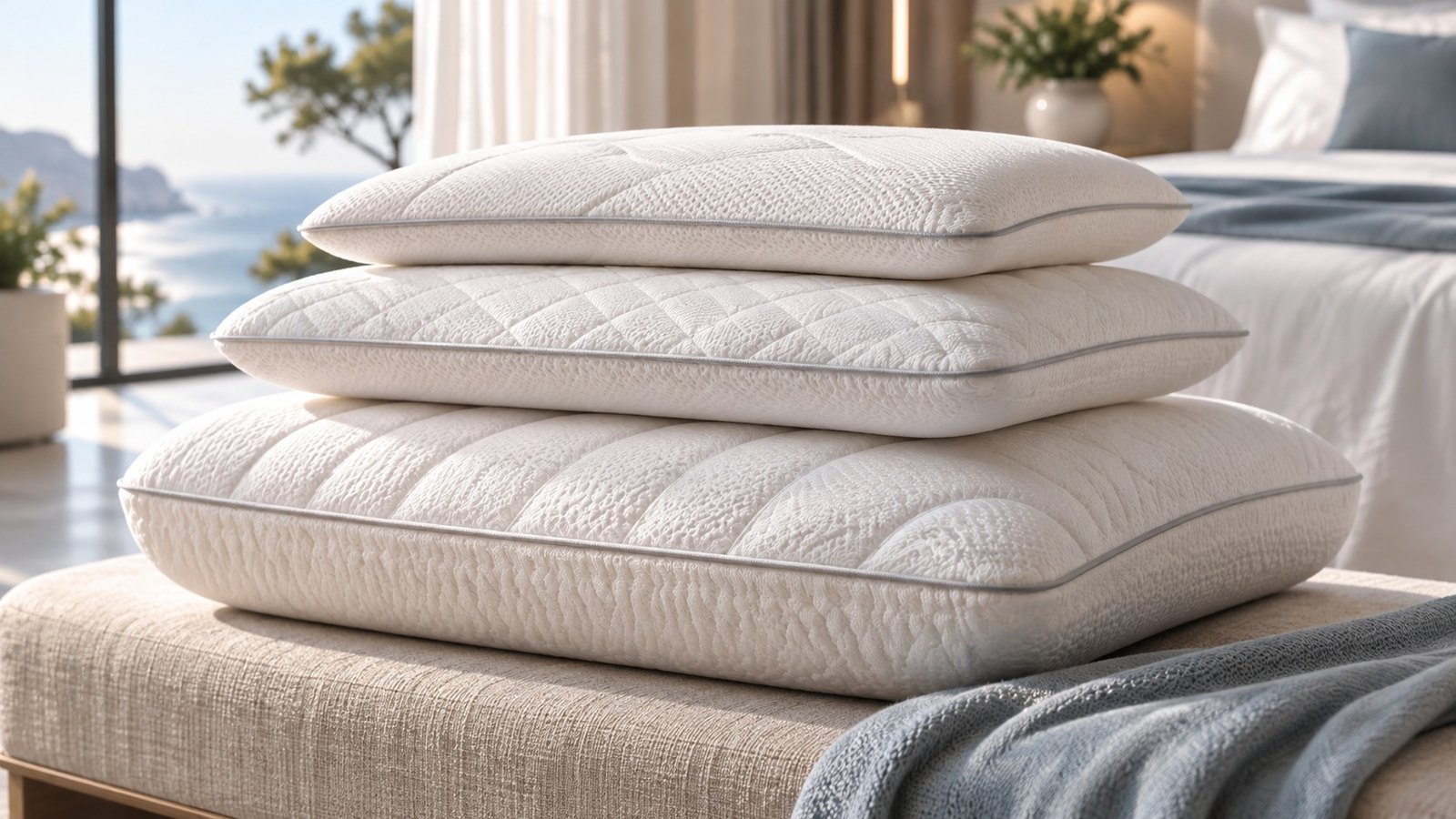
The Luxury Relax "Fiocco Memory" pillow costs 25 euro and uses temperature-sensitive memory foam, the same principle as their best-selling mattresses. For anyone with heavy legs in the evening, the 2x Cuscino Benessere Gambe Memory costs 59 euro and goes under the knees to unload the lumbar area. A detail that looks secondary and improves supine posture.
That leg support changes the angle of the pelvis and reduces the pull on the lower back. The spine settles and the neck then needs less height, which is why the two products work as a pair.
The practical selection rule is this: sleep position first, then height, then material. Side sleepers start from a medium-high memory foam. Back sleepers start from a medium height with cervical support. Stomach sleepers start from a low profile. Material comes after, based on how much you move and how much heat you hold.
Budget follows the same order. Spend on height accuracy before spending on material names, and spend on the core before spending on the cover. A right height in basic foam beats a wrong height in premium foam every night of the week.
The bed context deserves one check. A mattress topper set up wrong changes the height of the support plane and therefore the height of the pillow you need. Even the best mattress for back pain only works if the neck stays in line. Pillow and mattress are two halves of the same system.
Luxury Relax produces in Italy, offers 10 nights trial with money-back guarantee and 10 years warranty on mattresses, with free delivery across Italy in 24-48 hours. The pillow can be tried in the Seregno showroom, at Via San Rocco 42, or at home with the same logic as the night trial. For advice on pairing pillow and mattress, request the free consultation. An expert answers with measurements and models, with no commitment.
Frequently asked questions about choosing a pillow
Should the pillow be chosen before or after the mattress? After. The mattress sets the height of the shoulder and the posture of the torso, and from there you calculate the height of the pillow. Anyone who buys the pillow first risks changing it as soon as the bed is set.
Do I need a different pillow for reading or watching television in bed? Yes, but it is an accessory, not the night pillow. Sitting needs a higher and firmer support. Sleeping needs the height calculated for the position. Using the same pillow for both means accepting a compromise for eight hours.
Which pillow height works for side sleeping? Between 12 and 15 centimetres, so that head and neck stay in line with the torso. The practical test is to lie in your usual position and be watched from the side. The head-neck-chest line must read straight.
Is memory foam better than latex? It depends on what you are after. Memory foam adapts to the shape of head and neck and holds the position, and it is the better choice for neck discomfort. Latex is springier and cooler and suits people who change position often. Material density matters more than the name.
How often should the pillow be replaced? When it stops returning support. Usually between two and three years for a high-density memory foam pillow, sooner for light fibres. The fold test gives the answer. If the pillow stays folded, the structure has given way.
Is a high pillow right for stomach sleepers? No. Stomach sleepers need a pillow under 9 centimetres, almost flat, because the head stays turned to one side for hours and a high pillow forces the neck into full rotation.
Does the pillow affect snoring? Yes. A pillow that bends the neck partially closes the airways and makes snoring worse, especially on your back. Realigning head and neck with the right height is the first change to try.
Is it better to try the pillow before buying? Yes, and the night trial is the only test that counts. Luxury Relax offers 10 nights trial with money-back guarantee, so the pillow is judged in your own bed, with your own mattress and in your own sleep position.
Ideal Mattress Configurator in 3 Clicks
Answer 3 questions and see which Luxury Relax model fits your sleep best.
Step 1 of 3
Images from this guide
Should the pillow be chosen before or after the mattress?
After. The mattress sets the height of the shoulder and the posture of the torso, and from there you calculate the height of the pillow. Anyone who buys the pillow first risks changing it as soon as the bed is set.
Do I need a different pillow for reading or watching television in bed?
Yes, but it is an accessory, not the night pillow. Sitting needs a higher and firmer support. Sleeping needs the height calculated for the position. Using the same pillow for both means accepting a compromise for eight hours.
Which pillow height works for side sleeping?
Between 12 and 15 centimetres, so that head and neck stay in line with the torso. The practical test is to lie in your usual position and be watched from the side. The head-neck-chest line must read straight.
Is memory foam better than latex?
It depends on what you are after. Memory foam adapts to the shape of head and neck and holds the position, and it is the better choice for neck discomfort. Latex is springier and cooler and suits people who change position often. Material density matters more than the name.
How often should the pillow be replaced?
When it stops returning support. Usually between two and three years for a high-density memory foam pillow, sooner for light fibres. The fold test gives the answer. If the pillow stays folded, the structure has given way.
Is a high pillow right for stomach sleepers?
No. Stomach sleepers need a pillow under 9 centimetres, almost flat, because the head stays turned to one side for hours and a high pillow forces the neck into full rotation.
Does the pillow affect snoring?
Yes. A pillow that bends the neck partially closes the airways and makes snoring worse, especially on your back. Realigning head and neck with the right height is the first change to try.
Is it better to try the pillow before buying?
Yes, and the night trial is the only test that counts. Luxury Relax offers 10 nights trial with money-back guarantee, so the pillow is judged in your own bed, with your own mattress and in your own sleep position.
Request your free consultation
Fill in the form: a Luxury Relax expert will get back to you with the proposal that suits you best.
What Luxury Relax owners say
On my dad's advice, already a customer, I went to Luxury Relax to buy a mattress. Very comfortable and ergonomic products.
Quality products, helpful and knowledgeable staff. Highly recommended to anyone looking for a real mattress, not a brand name.
I got rid of the back pain that had followed me for years. The right mattress changes your days.
Come visit us
Luxury Relax Materassi
Via San Rocco, 42 — 20831 Seregno (Monza e della Brianza), Italia0362 222407 · info@luxuryrelax.it · WhatsApp 339 4797213
Open in Google Maps